
Fleshy Hawthorn (Crataegus succulenta)
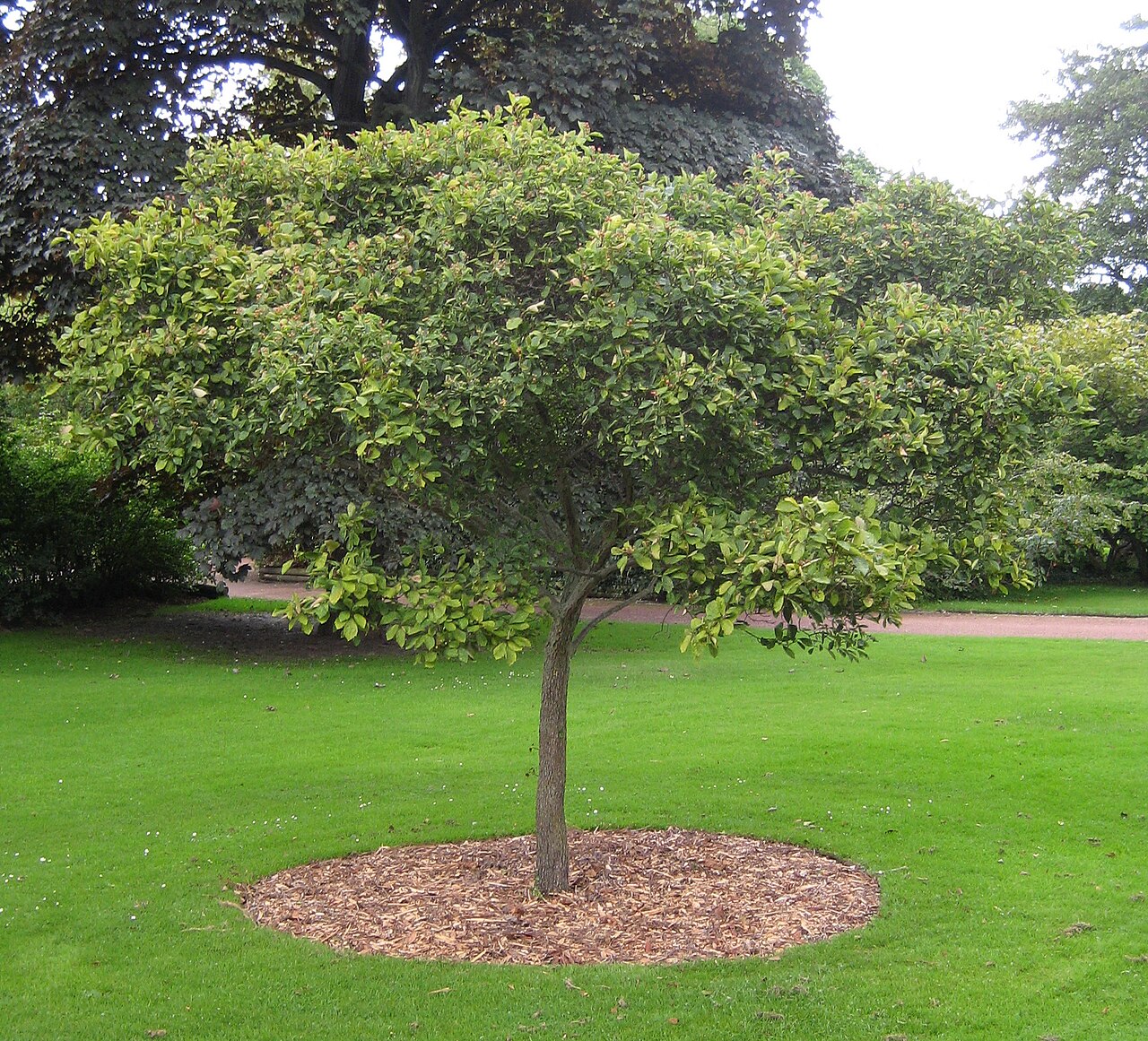
Crataegus succulenta, the Fleshy Hawthorn (also called Succulent Hawthorn or Long-spined Hawthorn), has the distinction of being, by most accounts, the most wide-ranging hawthorn species in North America. It is a thorny, thicket-forming shrub or small tree in the rose family (Rosaceae), found from the northern Great Plains and Rocky Mountain foothills east through the Great Lakes region to New England and the mid-Atlantic, with outlying populations south into the Appalachians and west to Arizona and New Mexico.
Like most hawthorns, Fleshy Hawthorn carries a tangled taxonomic history. The genus Crataegus is famous among botanists for producing huge numbers of local forms and microspecies, many of which have at various times been lumped into or split out of C. succulenta; the closely related, more western and more southern C. macracantha is treated by USDA PLANTS as a synonym of this species, which helps explain its unusually broad mapped range. This page follows that current USDA PLANTS treatment.
Despite the taxonomic complexity, Fleshy Hawthorn is a recognizable, useful plant in the garden: a dense, stout-thorned shrub or small tree with clusters of white spring flowers and bright red, fleshy fall fruit (true to its name) that is a magnet for birds. It thrives in open woodland edges, old fields, fencerows, and pastures across a huge swath of temperate North America.
Identification
Fleshy Hawthorn grows as a shrub or small tree, typically 13 to 26 feet tall, with a rounded to irregular crown. It is often multi-stemmed when grown in the open, but can be trained to a single trunk, as seen in cultivated specimens. Stout, straight or slightly curved thorns up to 3 inches long are scattered along the twigs and especially dense on older trunks, where compound (branched) thorns are common — a useful identification feature.
Bark & Stems
New growth is reddish green and smooth; first-year twigs are shiny dark red-brown, becoming dark gray with age and paler gray on older wood. The numerous stout thorns on the twigs are a key field mark distinguishing this species from smoother-barked trees.
Leaves
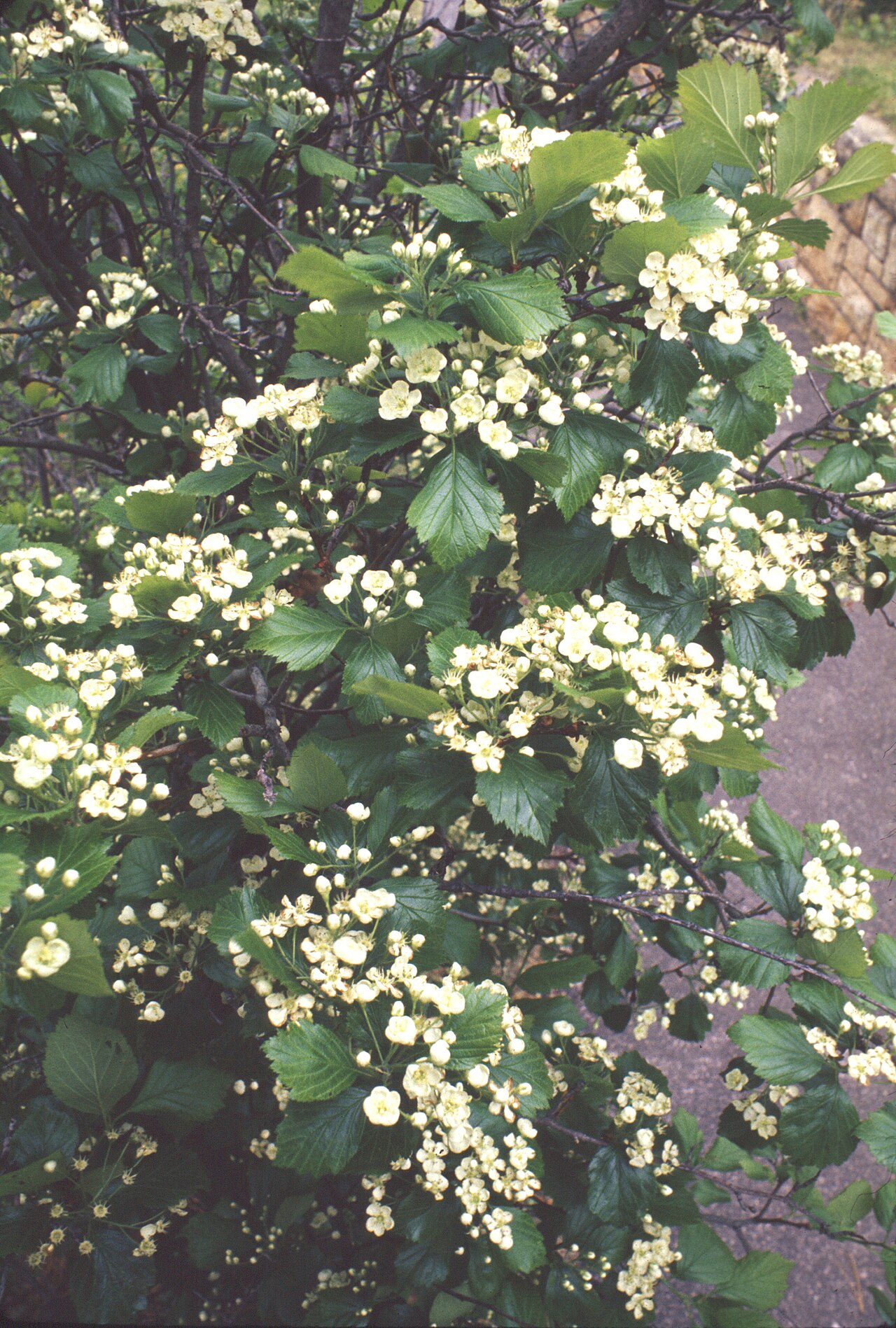
Leaves are simple, alternate, broadly ovate to nearly round, up to 3½ inches long, widest near or below the middle, with sharply toothed margins and shallow lobing toward the tip. The underside is noticeably hairy, especially along the veins, another useful identification trait among the many similar-looking hawthorn species.
Flowers
In late spring, Fleshy Hawthorn produces dense, rounded clusters of 10 to 30 white flowers at the branch tips, each about ⅔ inch across with five petals and 15 to 20 stamens tipped with small pink or white anthers. As in most hawthorns, the flowers have a strong scent that is more appealing to flies and beetles than to people.
Fruit & Seeds
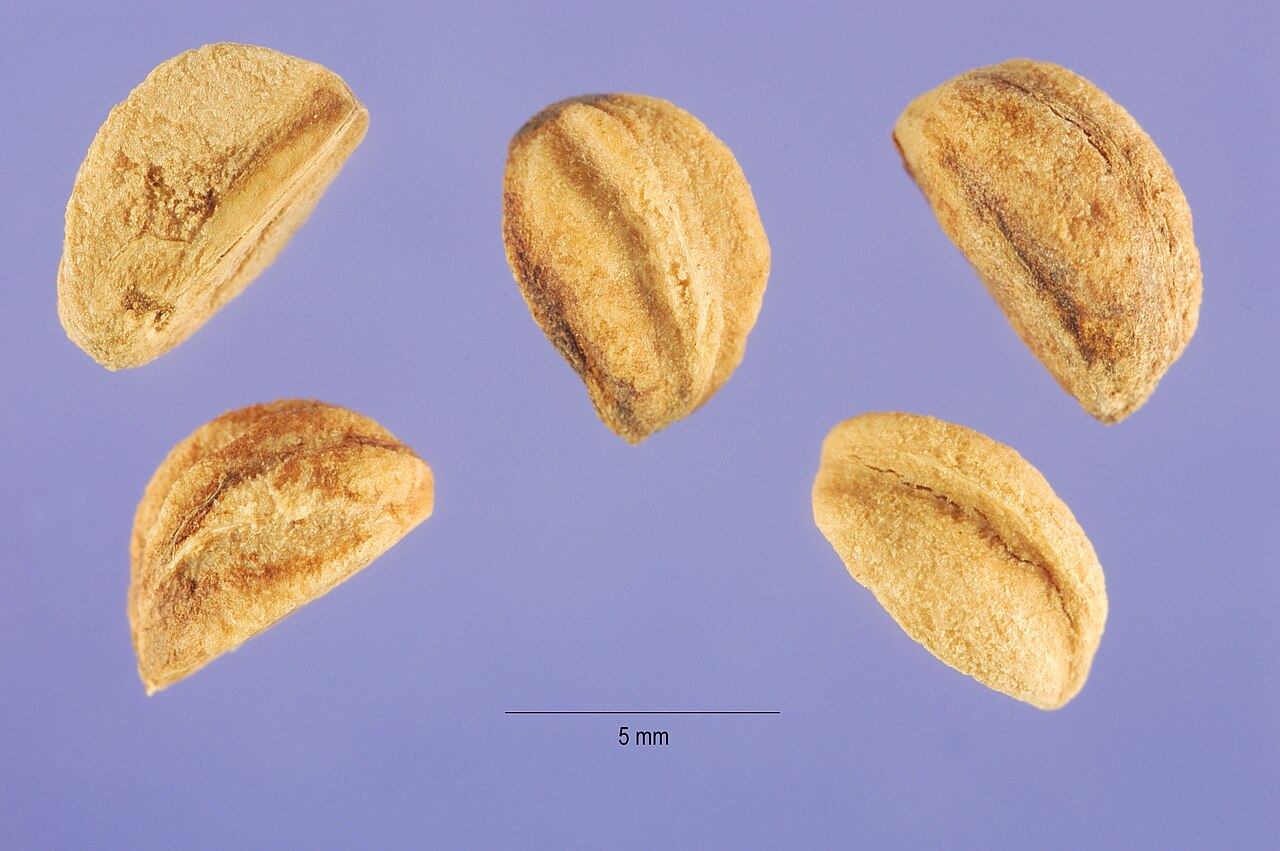
The fruit is a bright red, fleshy pome about ½ to ¾ inch across — true to the “succulenta” and “fleshy” in its name — ripening in early to mid fall and often persisting into winter. Inside are several hard nutlets (seeds), each marked with distinctive ridges. The fruit is notably juicier than many other hawthorns, which tend toward dry, mealy flesh.
Quick Facts
| Scientific Name | Crataegus succulenta |
| Family | Rosaceae (Rose) |
| Plant Type | Deciduous Shrub / Small Tree |
| Mature Height | 13–26 ft |
| Mature Spread | 10–20 ft |
| Growth Rate | Slow to Moderate |
| Sun Exposure | Full Sun to Part Shade |
| Water Needs | Moderate |
| Soil Type | Adaptable; loam, clay-loam or rocky soils |
| Soil pH | 6.0–7.5 |
| Bloom Time | May – June |
| Flower Color | White |
| Fall Color | Yellow to bronze |
| Fruit | Bright red, fleshy pome |
| Deer Resistant | Yes (dense thorns discourage browsing) |
| USDA Hardiness Zones | 3–7 |
Native Range
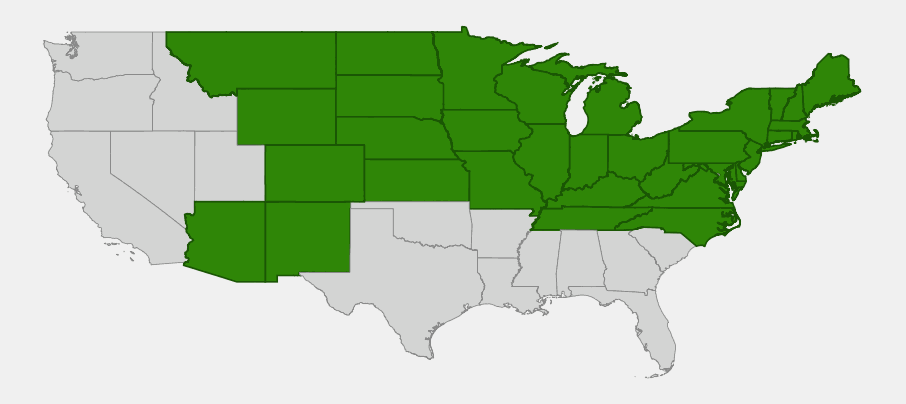
Fleshy Hawthorn has an unusually broad native range for a hawthorn species, reflecting both its genuinely wide distribution and the taxonomic lumping of related forms (including the western Crataegus macracantha) under this name by USDA PLANTS. Its core range runs from Montana, Wyoming, and the Dakotas east through Minnesota, Iowa, Wisconsin, Illinois, Indiana, Michigan, and Ohio, continuing into Missouri, Kentucky, West Virginia, Pennsylvania, New York, and New England (Vermont, New Hampshire, Maine, Massachusetts, Connecticut, and Rhode Island), with scattered populations south through the mid-Atlantic and into the Appalachians as far as North Carolina and Tennessee. Separate, more western populations occur in Colorado, New Mexico, and Arizona.
Within this range, Fleshy Hawthorn is most common in open habitats — old fields, fencerows, pasture edges, open woodlands, and streamside thickets — rather than deep forest. It tends to be most abundant toward the center of its range (the southern Great Lakes states and the northern Plains) and becomes notably rare at the margins: it is considered a very rare hawthorn in New England and in Missouri, and the Arizona and New Mexico populations are more localized, tied to mountain foothill and canyon habitats.
Gardeners in the eastern and central states covered here should note that Crataegus succulenta is one of dozens of similar-looking native hawthorn species, and positive identification often requires close attention to thorn, leaf, and fruit characters rather than general appearance alone.
📋 Regional plant lists featuring Fleshy Hawthorn: Montana & Wyoming · North Dakota, South Dakota & Western Minnesota · Nebraska, Kansas & Eastern Colorado · Utah & Western Colorado · Arizona & New Mexico · Illinois, Iowa & Missouri · Michigan, Wisconsin & Eastern Minnesota · Ohio & Indiana · Kentucky & Tennessee · Maryland, Virginia & West Virginia · North Carolina & South Carolina · New York, Pennsylvania & Northern New Jersey · New Hampshire, Maine & Vermont · Connecticut, Massachusetts & Rhode Island · Delaware, Southern New Jersey & Long Island
Growing & Care Guide
Fleshy Hawthorn’s broad native range reflects just how adaptable it is — this is a tough, low-maintenance plant across a wide range of soils and climates, provided it has decent drainage and at least moderate moisture.
Light
Plant in full sun for the best flowering and fruiting. It tolerates part shade, especially at woodland edges, but becomes leggier and less floriferous as shade increases.
Soil & Water
Fleshy Hawthorn is adaptable to a wide range of soils, from loam to clay-loam to rocky ground, as long as drainage is reasonable. It prefers consistent moisture but, once established, tolerates brief dry spells better than many streamside hawthorns. It is not a good choice for permanently wet or waterlogged sites.
Planting Tips
Give plants room to develop their naturally dense, thorny form — 10 to 15 feet from structures, walkways, or play areas where the stout thorns could be a hazard. Plant container stock in spring or fall. It is an excellent choice for fencerow or hedgerow plantings, where its thorns add a practical barrier function alongside its wildlife value.
Pruning & Maintenance
Minimal pruning is needed; remove dead or damaged wood in late winter. Heavy gloves are essential when working around this plant, as the thorns can exceed 3 inches on older wood. Like other hawthorns, it can be susceptible to cedar-hawthorn rust and fire blight in some regions, particularly where grown near susceptible junipers or other rosaceous plants, but established native plantings are generally resilient.
Propagation
Propagate from seed, which requires an extended period of cold, moist stratification (often over a year) to break dormancy — a common trait among hawthorns. Semi-hardwood cuttings can also be rooted, though with more variable success than seed propagation.
Landscape Uses
Fleshy Hawthorn fits well in:
- Wildlife hedgerows and fencerows, where its thorns and fruit do double duty
- Naturalized woodland-edge plantings
- Bird and pollinator gardens
- Barrier or security plantings along property lines
- Restoration plantings in old-field and prairie-edge habitats
Wildlife & Ecological Value
Fleshy Hawthorn’s dense, thorny growth and abundant, juicy red fruit make it one of the better wildlife shrubs across its very broad range, particularly valuable in the open, fencerow, and old-field habitats it favors.
For Birds
The bright red, persistent fruit is eaten through fall and winter by robins, waxwings, thrushes, grosbeaks, and many other songbirds, often remaining on the branches well after leaf drop when other food sources have dwindled. The dense, thorny branching provides excellent predator-resistant nesting sites, and species such as Eastern Kingbirds are regularly seen nesting and foraging in hawthorn thickets of this type.
For Mammals
White-tailed deer browse the foliage, though the dense thorns limit heavy browsing pressure, and various small mammals eat the fallen fruit. Foxes and other mid-sized mammals also take advantage of fruit and cover in hawthorn thickets.
For Pollinators
The dense spring flower clusters draw a range of bees, flies, and beetles. As with other hawthorns, the somewhat unpleasant floral scent specifically attracts carrion and dung flies, which are effective pollinators for this genus.
Ecosystem Role
As an early-successional, thicket-forming shrub, Fleshy Hawthorn plays an important role in old-field succession, fencerow habitat, and woodland-edge communities across its range, providing structure, food, and shelter in transitional habitats that are often otherwise poor in cover and resources for wildlife.
Cultural & Historical Uses
Like other native hawthorns, Fleshy Hawthorn’s fruit has a history of informal use by Indigenous peoples and early settlers across its range, who gathered the juicy red pomes — notably fleshier than many other hawthorn fruits — to eat fresh or to dry and store for winter use, sometimes mixed with other fruits.
Hawthorns in general have a long history in North America and Europe as hedgerow and fence plants, prized for their dense, thorny growth that makes an effective living barrier for livestock, and Fleshy Hawthorn’s wide natural distribution meant it was a familiar hedgerow component across much of its range for farmers managing field boundaries before modern fencing became widespread.
The genus as a whole also carries long-standing folk associations with protection and boundary-marking in European tradition, a cultural thread that followed settlers to North America and influenced how hawthorns, including native species like this one, were incorporated into farmstead and homestead landscaping.
Frequently Asked Questions
Why does Fleshy Hawthorn have such an unusually large range?
Part of the answer is genuine ecological breadth, but part is taxonomic: USDA PLANTS currently treats the related, more western Crataegus macracantha as a synonym of C. succulenta, which substantially broadens the mapped range. Stricter treatments by Flora of North America describe a somewhat narrower core range centered on the Great Lakes, St. Lawrence Valley, and New England.
How can I tell Fleshy Hawthorn apart from other hawthorns?
Look for the combination of numerous stout thorns (including compound thorns on older wood), hairy leaf undersides, round-topped flower clusters of 10 to 30 blooms, and bright red, notably juicy fruit. Positive identification within the hawthorn genus can be difficult and often benefits from comparison with a regional flora.
Can you eat Fleshy Hawthorn fruit?
Yes, the fruit is edible and was used historically by Indigenous peoples and settlers, eaten fresh or dried. It is juicier than many hawthorn fruits but still mostly seed by volume, so it is more a foraging curiosity than a significant food crop today.
Is Fleshy Hawthorn good for a hedgerow or living fence?
Yes. Its dense, very thorny growth has historically made it a practical hedgerow and boundary plant, and it still works well today for a thorny barrier planting that also feeds birds through the winter.
Does Fleshy Hawthorn tolerate drought?
It prefers moderate, consistent moisture but tolerates brief dry spells reasonably well once established, more so than some of the more strictly streamside hawthorn species. It is not, however, a good choice for hot, dry, exposed sites.

Looking for a nursery that carries Fleshy Hawthorn?
Browse our native plant nursery directory: Arizona · Colorado, Connecticut & Delaware · Iowa, Illinois, Indiana & Kansas · Kentucky, Maine, Maryland, Massachusetts, Michigan, Minnesota, Missouri & Montana · North Carolina, North Dakota, Nebraska, New Hampshire, New Jersey, New Mexico, New York & Ohio · Pennsylvania, Rhode Island, South Dakota, Tennessee, Vermont & Virginia · West Virginia, Wisconsin & Wyoming