
River Hawthorn (Crataegus rivularis)
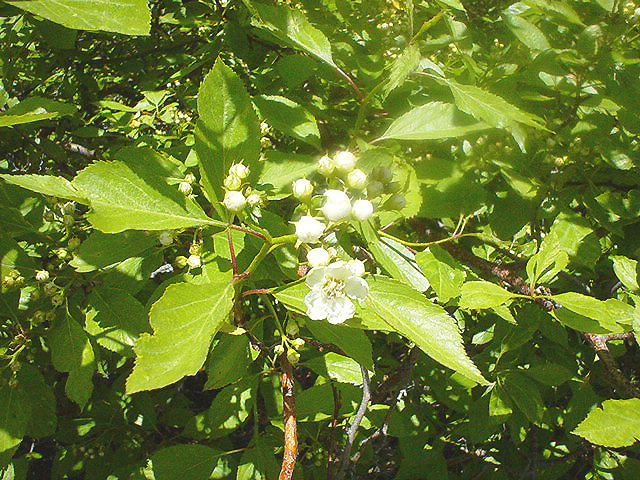
Crataegus rivularis, the River Hawthorn, is a thicket-forming small tree or large shrub of the intermontane West, found along streambanks and in moist canyon bottoms from the Rocky Mountains to the Great Basin. A member of the rose family (Rosaceae), it belongs to the notoriously difficult-to-sort hawthorn genus, but it is one of the more recognizable western species, favoring the narrow, reliably wet corridors that cut through otherwise dry country.
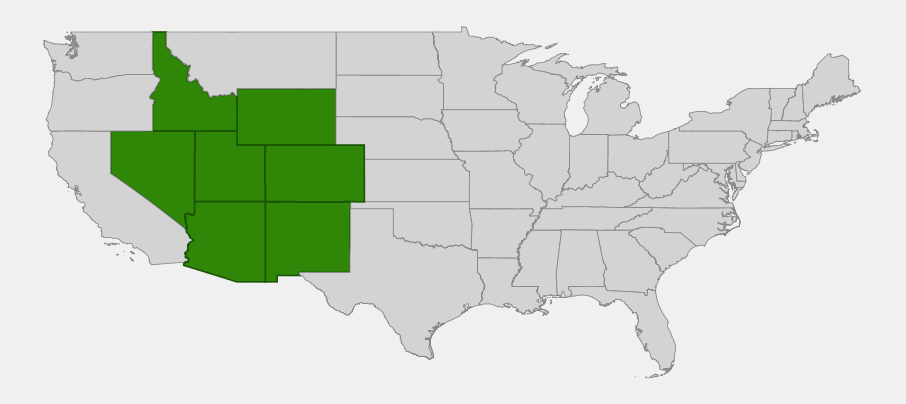
River Hawthorn typically grows 10 to 25 feet tall, often forming dense, thorny thickets along perennial and intermittent streams in Colorado, Utah, Wyoming, Idaho, Nevada, Arizona, and New Mexico. Its sharply toothed, somewhat lobed leaves, small white spring flowers, and dark purple-black fall fruit make it a classic riparian shrub of the intermontane region — the broad belt of basins and ranges between the Pacific coastal mountains and the main spine of the Rockies.
Because it grows almost exclusively along water, River Hawthorn is a valuable plant for streambank stabilization and riparian restoration projects, and its dense, thorny growth makes it an excellent wildlife thicket for nesting birds and small mammals. It is worth noting that some botanists treat this plant as a variety of Black Hawthorn (Crataegus douglasii var. rivularis) rather than a fully distinct species; this page follows the treatment used by Flora of North America and USDA PLANTS, which recognize Crataegus rivularis as a separate species.
Identification
River Hawthorn grows as a thicket-forming shrub or small tree, usually 10 to 25 feet tall, often with multiple stems arising from the base and forming dense, impenetrable stands along stream corridors. Like other hawthorns, its branches bear stout thorns, typically ½ to 1 inch long, that make the thickets effective cover and barriers.
Bark & Stems
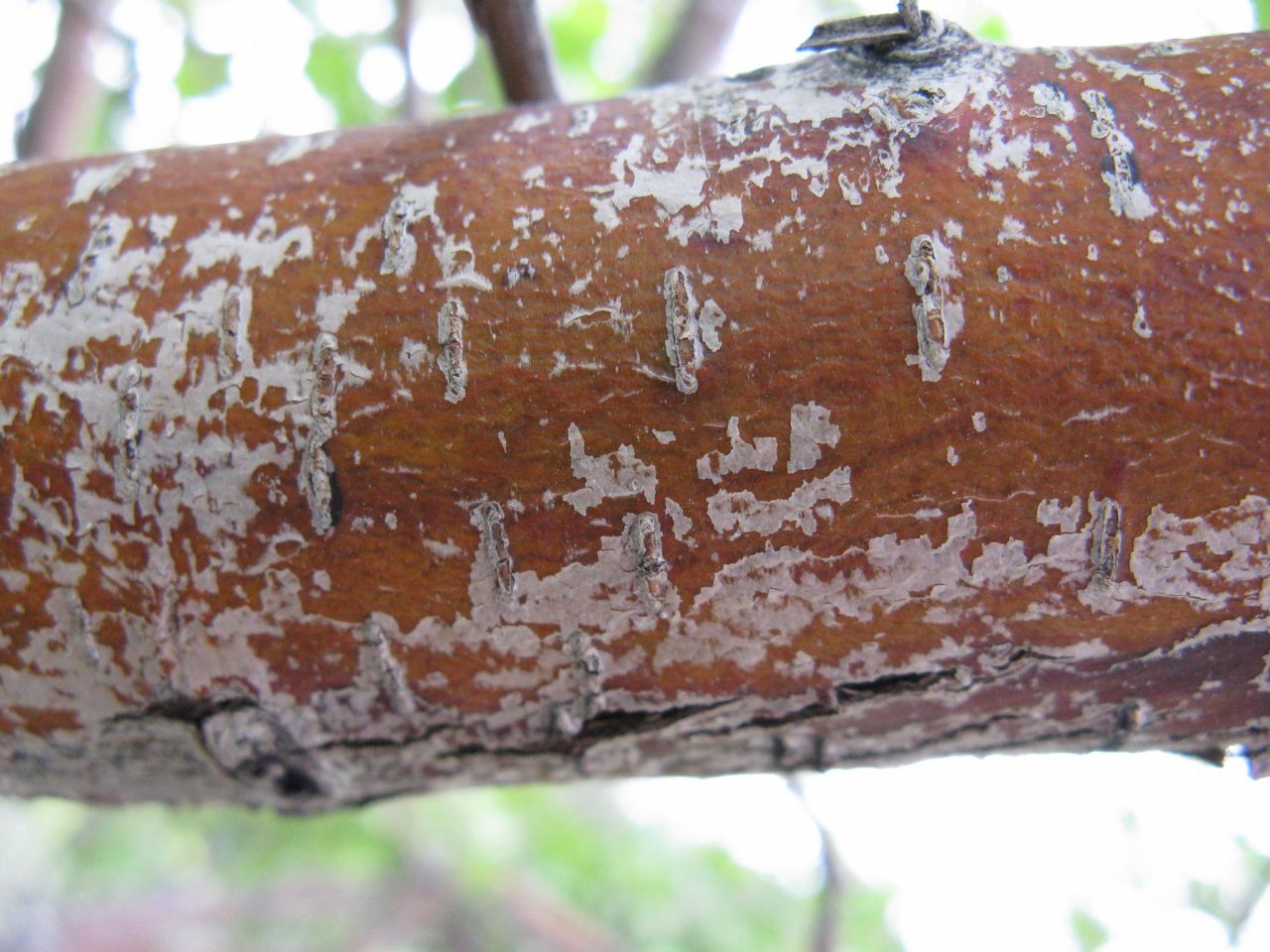
Young twigs and branches are reddish-brown and smooth, developing into gray-brown, scaly bark with age. Older stems and trunks show the flaking, patchy gray-and-rust bark typical of mature hawthorns, as the outer layers peel away in irregular plates.
Leaves
Leaves are simple, alternate, and broadly ovate, 1 to 3 inches long, with sharply toothed margins and shallow to moderate lobing, especially toward the leaf tip. The upper surface is dark green and somewhat glossy; leaves turn yellow to orange in fall before dropping.
Flowers
Flowers appear in late spring in flat-topped clusters (corymbs) of five-petaled white blooms, each about ½ to ¾ inch across, with numerous stamens giving the clusters a slightly fuzzy appearance. Like most hawthorns, the flowers have a strong, somewhat unpleasant scent that draws flies and beetles as well as bees.
Fruit & Seeds
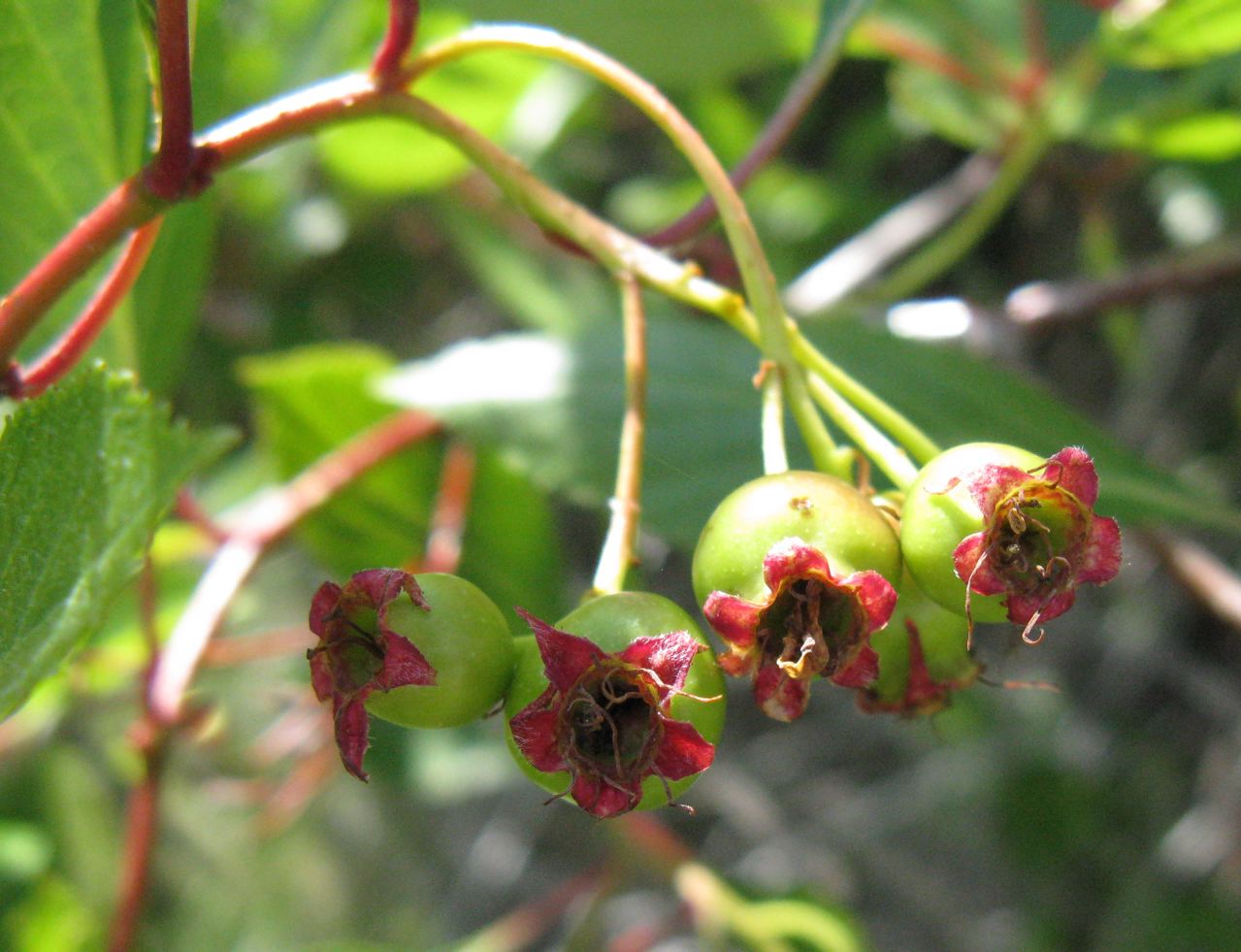
The fruit is a small pome (a miniature apple-like fruit) about ⅓ to ½ inch across, ripening from green to dark purple or nearly black by late summer and fall — one of the field marks separating River Hawthorn from red-fruited hawthorn species in the same region. Each fruit contains several hard nutlets. Fruit often persists into early winter and is an important late-season food source for birds and mammals.
Quick Facts
| Scientific Name | Crataegus rivularis |
| Family | Rosaceae (Rose) |
| Plant Type | Deciduous Shrub / Small Tree |
| Mature Height | 10–25 ft |
| Mature Spread | 8–15 ft |
| Growth Rate | Slow to Moderate |
| Sun Exposure | Full Sun to Part Shade |
| Water Needs | Moderate to High |
| Soil Type | Moist, well-drained; loamy or gravelly streambank soils |
| Soil pH | 6.0–7.5 |
| Bloom Time | May – June |
| Flower Color | White |
| Fall Color | Yellow to orange |
| Fruit | Dark purple to blackish pome |
| Deer Resistant | Yes (thorny growth discourages browsing) |
| USDA Hardiness Zones | 4–7 |
Native Range
River Hawthorn is native to the intermontane region of the western United States, occurring from southern Idaho and western Wyoming south through Utah and western Colorado to Nevada, Arizona, and New Mexico. It is most abundant in intermontane Colorado and Utah, where it is a familiar shrub of canyon-bottom streams in the foothills and lower mountains, and it is one of only two hawthorn species found in Arizona. It is rare in Nevada, occurring at the edges of its range there.
Throughout this range, River Hawthorn is tied closely to water: it grows along perennial and intermittent streams, in canyon bottoms, and at spring seeps, typically between about 4,000 and 8,000 feet elevation. It rarely strays far from reliable moisture, which makes it a useful indicator of riparian habitat in otherwise arid intermontane landscapes.
Some treatments classify River Hawthorn as a variety of Black Hawthorn (Crataegus douglasii var. rivularis) rather than a distinct species, reflecting the well-known taxonomic difficulty of the hawthorn genus. This page follows Flora of North America and USDA PLANTS in treating it as Crataegus rivularis.
📋 Regional plant lists featuring River Hawthorn: Utah & Western Colorado · Montana & Wyoming · Arizona & New Mexico · Idaho, Eastern Oregon & Eastern Washington
Growing & Care Guide
River Hawthorn is a tough, low-maintenance native for anyone gardening near a stream, pond edge, or seasonally wet drainage in the intermontane West — but it does need reliable moisture to thrive, and is not a good choice for dry upland sites.
Light
Plant in full sun to light part shade. Full sun produces the densest flowering and fruiting, while trees along shaded streambanks still grow well but may flower a bit less heavily.
Soil & Water
This species wants consistently moist, well-drained soil — the gravelly loams typical of streambanks and canyon bottoms suit it best. It does not tolerate prolonged drought and should not be planted far from a reliable water source, whether natural or irrigated. It can tolerate occasional flooding and seasonal high water typical of mountain streams.
Planting Tips
Site River Hawthorn along streambanks, pond margins, or in low spots that collect runoff. Give plants room to form thickets — 8 to 12 feet between specimens if a dense screen is wanted, more if a more open form is preferred. Container stock establishes best when planted in fall or early spring.
Pruning & Maintenance
Minimal pruning is needed; remove dead wood and thin crowded stems in late winter if a more open form is desired. Wear heavy gloves when working near this plant — the thorns are sharp and can be an inch long. Established plants are generally untroubled by pests, though hawthorns as a group can be susceptible to rust diseases in wet years.
Propagation
Propagate from seed, which typically requires a period of cold stratification to break dormancy, or from softwood cuttings taken in early summer. Wild seedlings often appear naturally along streambanks where birds have deposited seed.
Landscape Uses
River Hawthorn earns its place in these settings:
- Riparian restoration along streams and drainages
- Wildlife thicket plantings for nesting birds and small mammals
- Streambank stabilization where erosion control is needed
- Living hedgerow or barrier using its dense, thorny growth
- Pond and wetland-edge landscaping
Wildlife & Ecological Value
River Hawthorn’s dense, thorny, streamside thickets make it one of the more valuable wildlife shrubs of the intermontane West, offering food and protective cover in a landscape where good riparian habitat is often scarce.
For Birds
Many songbirds — including thrushes, waxwings, and various sparrows — eat the fall and winter fruit, while the dense, thorny branches provide excellent predator-resistant nesting sites. Riparian-dependent species in particular rely on hawthorn thickets like this one as nesting and foraging habitat along western streams.
For Mammals
Mule deer and elk browse the foliage and twigs, particularly in winter, while black bears and other mammals eat the fruit. Small mammals use the thorny thickets for cover from predators.
For Pollinators
The spring flower clusters, though not particularly showy, attract a range of bees, flies, and beetles. The strong floral scent that gardeners find unpleasant is specifically adapted to draw carrion- and dung-loving flies and beetles, which serve as effective pollinators.
Ecosystem Role
As a streamside shrub, River Hawthorn helps stabilize banks with its root systems, reduces erosion during high flows, and adds structural complexity to riparian corridors that are otherwise often dominated by cottonwoods and willows. Its thickets create important thermal and predator cover in a habitat type that is disproportionately important to intermontane wildlife.
Cultural & Historical Uses
Like many hawthorns, River Hawthorn’s fruit has a history of informal use by Indigenous peoples and early settlers in the intermontane West, who sometimes gathered the tart pomes to eat fresh or dry for later use, though it was a minor food source compared to more productive regional shrubs like serviceberry and chokecherry.
The genus Crataegus as a whole has a long history of use in hedging and living fences in other parts of the world, owing to its dense, thorny growth, and the wood of hawthorns generally is hard and fine-grained, historically used for small tool handles and similar small items where a tough, dense wood was useful, though River Hawthorn’s typically small stem diameters limit this use.
Today, River Hawthorn’s primary significance is ecological rather than cultural — it is increasingly recognized and used by restoration practitioners working on intermontane stream corridors, where its combination of bank-stabilizing roots and high wildlife value make it a practical choice for native riparian plantings.
Frequently Asked Questions
Is River Hawthorn the same plant as Black Hawthorn?
They are closely related but usually treated separately. Some botanists classify River Hawthorn as a variety of Black Hawthorn (Crataegus douglasii var. rivularis), while Flora of North America and USDA PLANTS recognize it as the distinct species Crataegus rivularis, which this page follows. Both are thicket-forming, dark-fruited hawthorns of the interior West.
Does River Hawthorn need to grow right next to water?
In the wild, yes — it is almost always found along streams, canyon bottoms, or spring seeps. In cultivation it can be grown slightly away from a natural water source if given consistent irrigation, but it is not a good candidate for dry, upland garden spots.
Can you eat River Hawthorn fruit?
The small, dark pomes are edible and were used informally by Indigenous peoples and settlers, but they are tart, mealy, and mostly seed, so they are best left for wildlife rather than treated as a foraging crop.
How big does River Hawthorn get?
Most plants reach 10 to 25 feet tall, often as a multi-stemmed thicket rather than a single-trunked tree, with a somewhat narrower spread of 8 to 15 feet.
Is River Hawthorn good for erosion control?
Yes. Its spreading root system and thicket-forming habit make it a useful plant for stabilizing streambanks and reducing erosion along intermontane waterways, in addition to its wildlife value.
