
Distant Phacelia (Phacelia distans)
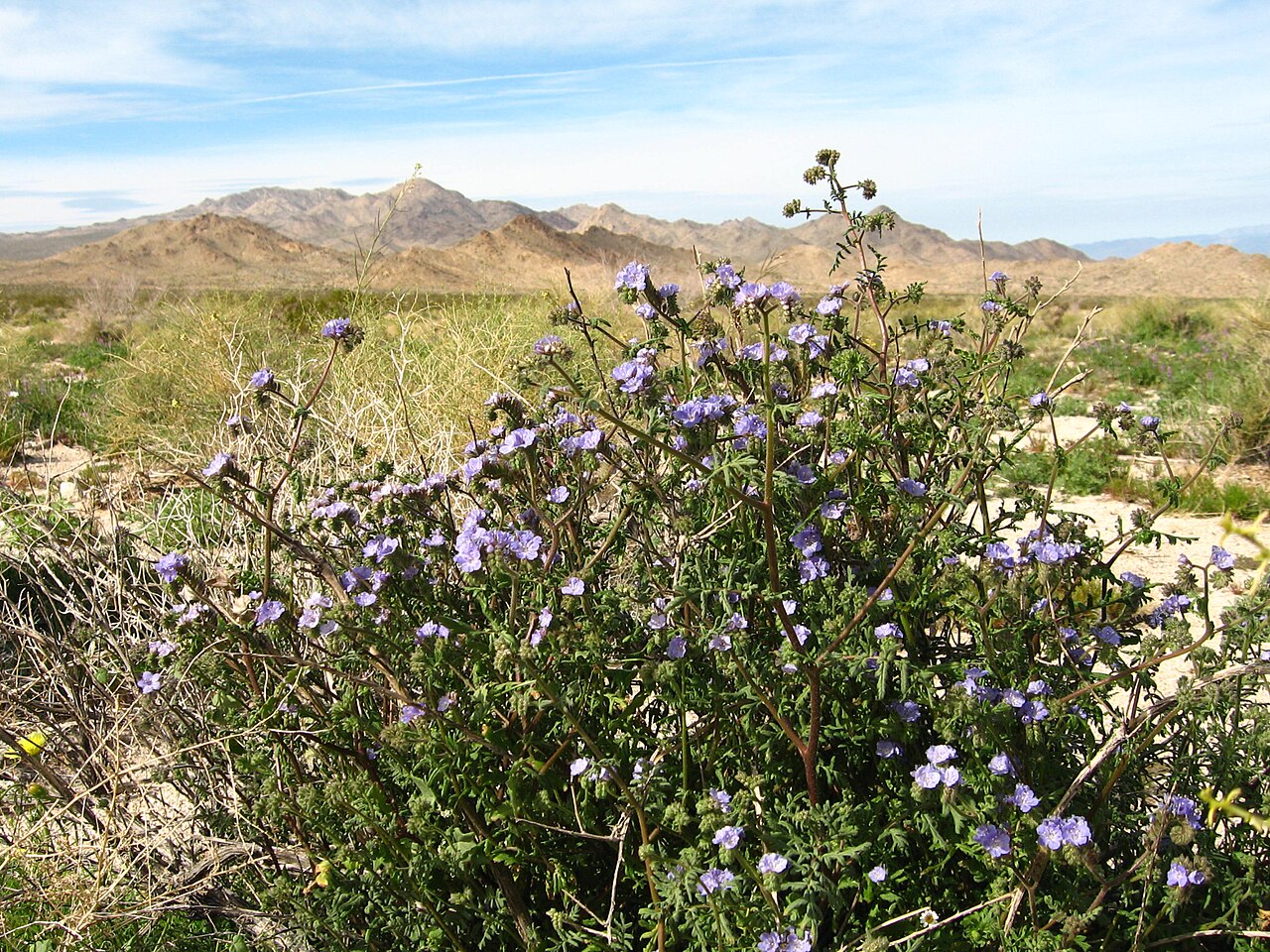
Phacelia distans, known as distant phacelia or distant scorpionweed, is a variable, finely divided desert annual native to the southwestern United States and northwestern Mexico. Like its relative California bluebells, it belongs to the borage family (Boraginaceae, formerly Hydrophyllaceae), and it shares the family’s distinctive coiled flower clusters, called scorpioid cymes, which uncurl gradually as each successive flower opens — the source of the “scorpionweed” common name.
Distant phacelia is a sprawling to upright annual, usually well under three feet tall, with lacy, deeply lobed foliage and loose clusters of small funnel-shaped flowers ranging from pale lavender to deep violet-blue. It is one of the most widespread and adaptable Phacelia species in the desert Southwest, equally at home on open desert flats, rocky slopes, chaparral edges, woodland clearings, and disturbed roadsides, which is part of why it turns up in so many classic desert wildflower photographs.
As a true native of California, Nevada, Utah, and Arizona, distant phacelia plays an important early-season role for desert pollinators, and its ability to germinate and bloom quickly after rain makes it a dependable, if short-lived, presence in desert gardens built around natural rainfall patterns.
Identification
Distant phacelia is a variable annual herb, growing from a low, sprawling (decumbent) habit to a more upright form, with branched or unbranched stems 6 inches to about 2.5 feet long. The entire plant is usually covered in soft or stiff hairs, often glandular, giving the foliage and stems a grayish, slightly sticky texture.
Leaves
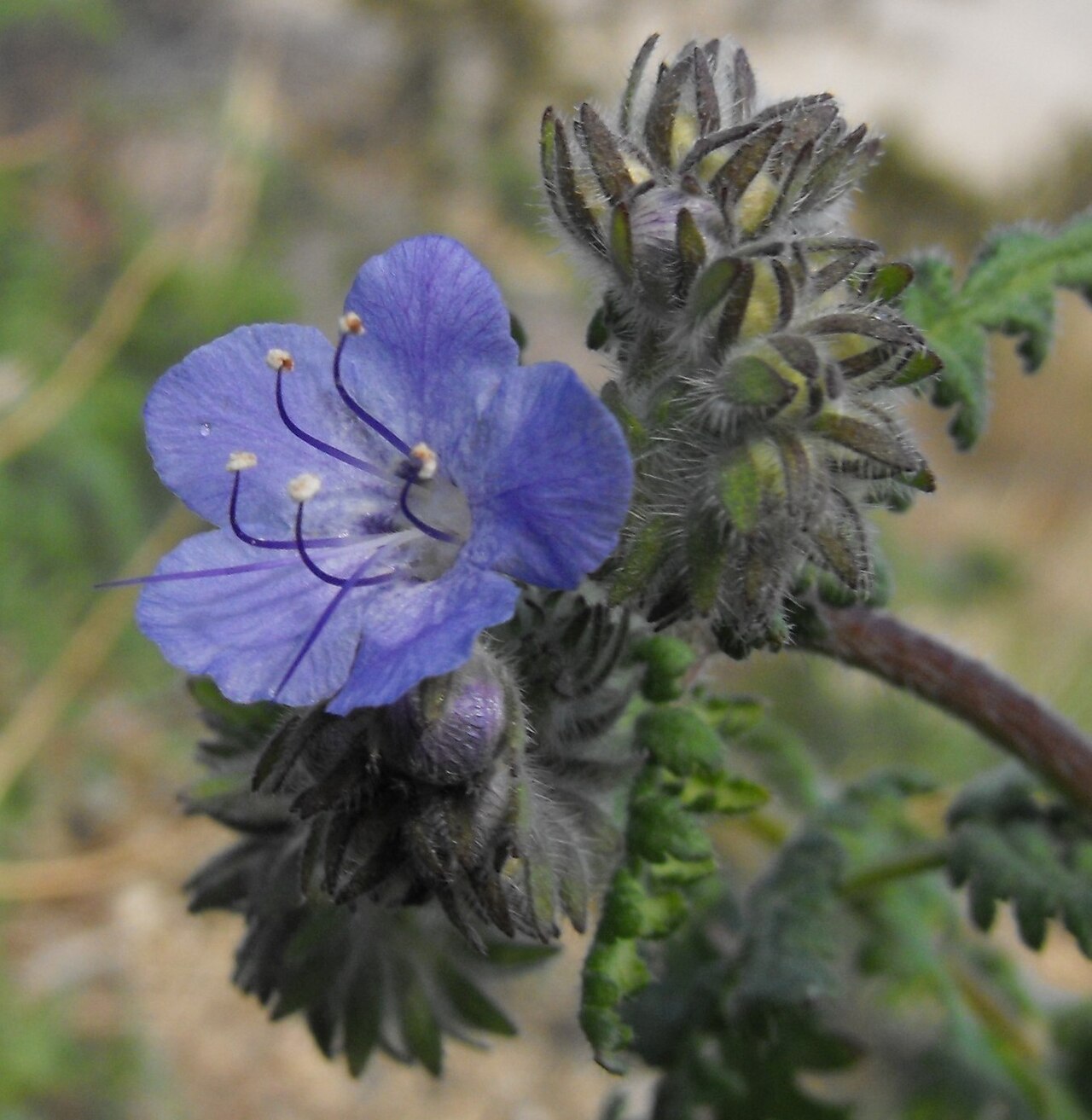
Leaves are up to 4 to 6 inches long and are divided into several narrow, lobed or toothed leaflets, giving the foliage a lacy, fern-like appearance that is one of the easiest ways to distinguish this species from other desert wildflowers at a glance. Leaves are borne on short stalks and are often slightly sticky to the touch from glandular hairs.
Flowers
Flowers are small, under half an inch long, funnel- to bell-shaped, and range in color from nearly white through pale lavender to medium blue-violet, sometimes on the same plant. They are arranged in tight, one-sided coiled clusters (scorpioid cymes) that straighten out as the flowers along the coil open in sequence from the base outward. Protruding stamens give each small flower a slightly shaggy, starburst look.
Fruit & Seeds
After bloom, small hairy seed capsules form within the persistent, bristly calyx, each containing a few seeds. Like other desert annuals, distant phacelia depends on a persistent soil seed bank, germinating heavily in wet years and remaining dormant as seed through drought years.
A note on skin contact: distant phacelia, like several other Phacelia species, is covered in fine glandular hairs that can cause contact dermatitis in sensitive individuals — a mild, itchy rash similar to a poison oak reaction. This is a well-documented trait of the genus, and anyone with sensitive skin should wear gloves when handling fresh plant material or clearing it by hand.
Quick Facts
| Scientific Name | Phacelia distans |
| Family | Boraginaceae (Borage; formerly Hydrophyllaceae) |
| Plant Type | Herbaceous Annual Wildflower |
| Mature Height | 6–32 in (15–80 cm) |
| Mature Spread | 1–3 ft, sprawling to upright |
| Growth Rate | Fast (completes life cycle in one season) |
| Sun Exposure | Full Sun to Part Shade |
| Water Needs | Low once established; needs moisture to germinate |
| Soil Type | Sandy, gravelly, or rocky well-drained soils |
| Soil pH | Neutral to slightly alkaline |
| Bloom Time | February – May, depending on elevation and rainfall |
| Flower Color | White to lavender to blue-violet |
| Fall Color | None; plant dies back after spring bloom |
| Fruit | Small hairy seed capsules |
| Deer Resistant | Yes; hairy, glandular foliage is rarely browsed |
| USDA Hardiness Zones | 7–11 (grown as a cool-season annual) |
Native Range
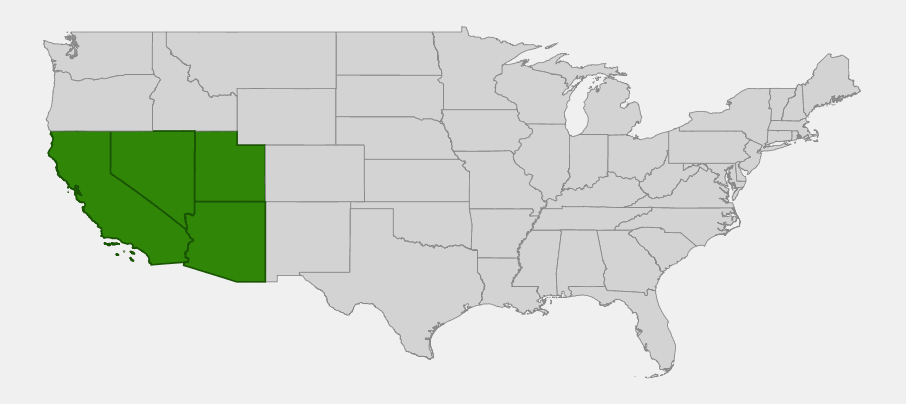
Distant phacelia is native to the desert Southwest, with confirmed populations in California, Nevada, Utah, and Arizona. Its broader natural range extends into northwestern Mexico. It is among the most widespread and commonly encountered Phacelia species across this region, appearing in nearly every major desert and lower-elevation wildland habitat type within its range.
The species grows across a wide range of habitats, including creosote bush scrub, Joshua tree woodland, chaparral, pinyon-juniper woodland, and disturbed sites such as roadsides and old burns, from low desert basins up into lower montane elevations. Distribution can be patchy from year to year, since like many desert annuals it blooms heavily after wet winters and may be sparse or absent during drought.
Records of this species outside its confirmed four-state range, including occasional reports from neighboring states, are generally considered misidentifications of similar Phacelia species rather than true range extensions, so this page limits its native-range claim to California, Nevada, Utah, and Arizona.
📋 Regional plant lists featuring Distant Phacelia: Utah & Western Colorado · Arizona & New Mexico
Growing & Care Guide
Distant phacelia is easy to establish from seed within its climate range and makes a reliable, fast-filling addition to desert wildflower plantings, where its lacy foliage and soft-colored flowers complement bolder desert bloomers.
Light
Give distant phacelia full sun for the showiest bloom, though it also tolerates light, part-day shade, especially at the edges of woodland or chaparral plantings where it occurs naturally.
Soil & Water
Plant in well-drained sandy, gravelly, or rocky soil. Water to germinate seed with fall or winter moisture, then reduce watering — established plants rely mainly on natural rainfall and can rot in soil that stays consistently wet.
Planting Tips
Direct-sow seed in fall, since distant phacelia germinates with cool-season rains and does not transplant well once its taproot is established. Scatter seed over cleared, loosened soil and rake lightly; germination and bloom timing will vary with elevation and winter rainfall.
Pruning & Maintenance
No pruning is required. The plant completes its life cycle in one growing season and dies back naturally after setting seed; removing old growth after it browns is a matter of garden tidiness rather than plant health.
Landscape Uses
Distant phacelia fits naturally into several desert and dryland garden roles:
- Desert wildflower meadows as a filler among larger, showier annuals
- Pollinator gardens for its reliable early-season bee activity
- Naturalistic plantings along desert garden edges and disturbed areas
- Restoration seeding on disturbed desert soils within its native range
Wildlife & Ecological Value
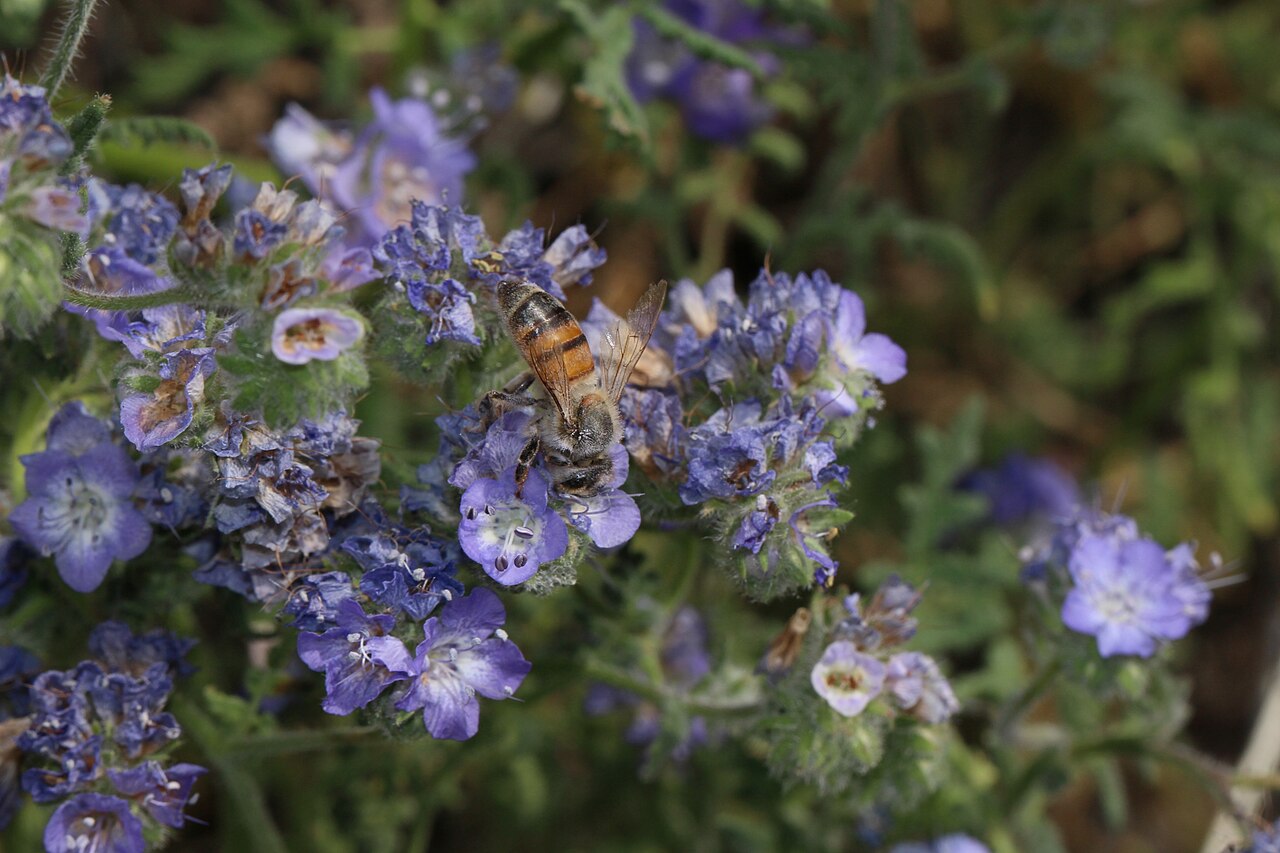
Distant phacelia is one of the more important early-spring nectar and pollen sources in the desert ecosystems where it grows, often blooming in large numbers during good rainfall years.
For Pollinators
The flowers draw a wide range of pollinators, including honeybees, native bees, and various flies and small butterflies. Because distant phacelia often blooms in dense stands following winter rain, it can provide a concentrated, reliable nectar source at a time when little else is flowering in the desert.
For Birds
Seed-eating birds forage on the small seeds once capsules dry, contributing modestly to the diets of desert sparrows and finches during the post-bloom period.
For Mammals
Small desert rodents consume seed from the soil seed bank, and the dense, sprawling growth of larger patches can offer limited ground-level cover for small animals during the growing season.
Ecosystem Role
As one of the more widespread desert annuals in its range, distant phacelia is part of the pulse of spring wildflower growth that follows seasonal rains, helping support pollinator populations and contributing organic matter to desert soils as it dies back each year.
Cultural & Historical Uses
Distant phacelia does not have a well-documented history of use as a food or medicinal plant among Indigenous peoples of the desert Southwest, unlike some other regional wildflowers with established ethnobotanical records. Its primary historical significance has been as a reliable, widespread component of the native desert flora, observed and recorded by botanists cataloging the plant communities of California, Nevada, Utah, and Arizona since the 19th century.
In more recent decades, distant phacelia has drawn attention from backyard pollinator gardeners and desert wildflower enthusiasts for its easy cultivation and its value to native bees, and it is increasingly included in regional wildflower seed mixes aimed at supporting pollinator habitat within its native range.
Frequently Asked Questions
Is distant phacelia the same as scorpionweed?
“Distant scorpionweed” is simply another common name for Phacelia distans; the “scorpionweed” part of the name refers to the coiled, scorpion-tail-like flower clusters shared by many Phacelia species, not to any connection with actual scorpions.
Will distant phacelia cause a skin reaction?
It can for some people. Like several related Phacelia species, its foliage carries fine glandular hairs that may cause contact dermatitis, a mild itchy rash, in sensitive individuals. Wearing gloves when handling fresh plants is a sensible precaution, especially for anyone who reacts to poison oak or similar plants.
Where is distant phacelia native?
It is native to California, Nevada, Utah, and Arizona, with its broader range extending into northwestern Mexico. Reports from outside these states are generally considered misidentifications of similar species rather than confirmed native populations.
Does distant phacelia come back every year on its own?
As an annual, individual plants complete their life cycle in a single season and die after setting seed. However, established plantings reliably reseed themselves in suitable desert garden conditions, so a planted patch often persists and even expands from year to year.
Why does distant phacelia bloom so heavily some years and not others?
Like most desert annuals, its germination and bloom are tied closely to winter and early spring rainfall. Wet years trigger mass germination from the soil seed bank and showy bloom displays, while dry years can leave the species sparse or nearly absent above ground.

Looking for a nursery that carries distant phacelia?
Browse our native plant nursery directory: California · Nevada · Utah · Arizona