
White Mistflower (Ageratina havanensis)
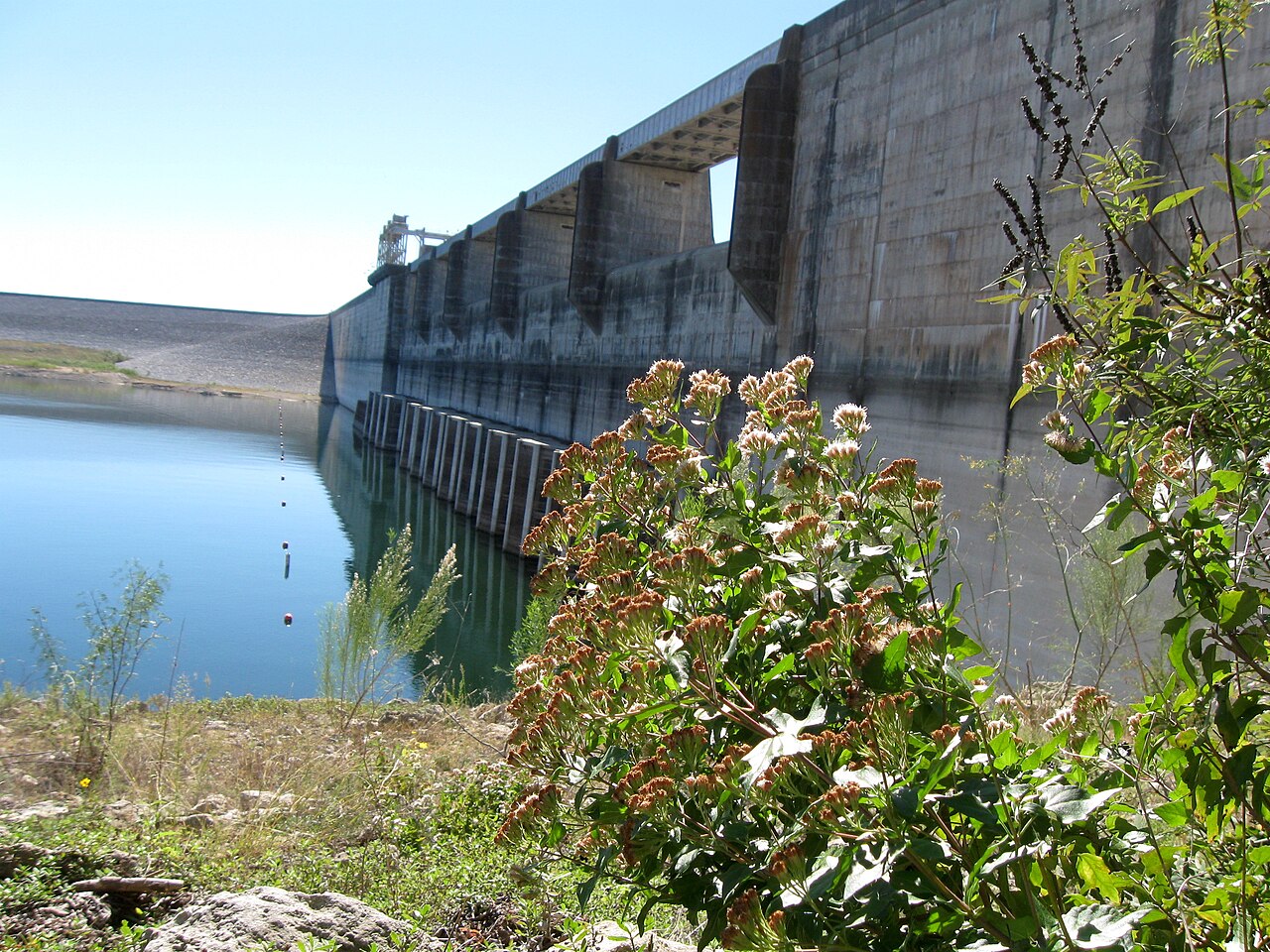
Ageratina havanensis, commonly called White Mistflower or Havana Snakeroot, is a rounded, fine-textured native shrub found only in the rocky, limestone hill country of central and south-central Texas within the United States (it also grows naturally in parts of Mexico and Cuba). In fall, usually October into November, the whole shrub disappears under a haze of small, fuzzy, white to pale pink flower clusters — a spectacular, late-season show that coincides with monarch butterfly migration through Texas.
Growing 3 to 6 feet tall and wide with slender, arching branches and small, triangular, toothed leaves, white mistflower has a soft, airy texture that works well as a filler shrub, informal hedge, or specimen on a dry, rocky slope. It is remarkably drought tolerant once established, thriving in the thin, alkaline soils typical of the Edwards Plateau, and it asks for very little beyond good drainage and a sunny to lightly shaded spot.
For Texas Hill Country gardeners, white mistflower is one of the best fall-blooming native shrubs for pollinators: its late nectar is a magnet for migrating monarchs, queen butterflies, and a wide range of native bees exactly when they need fuel the most. It pairs naturally with other limestone-country natives and asks for nothing more than the rocky, well-drained ground it evolved in.
Identification
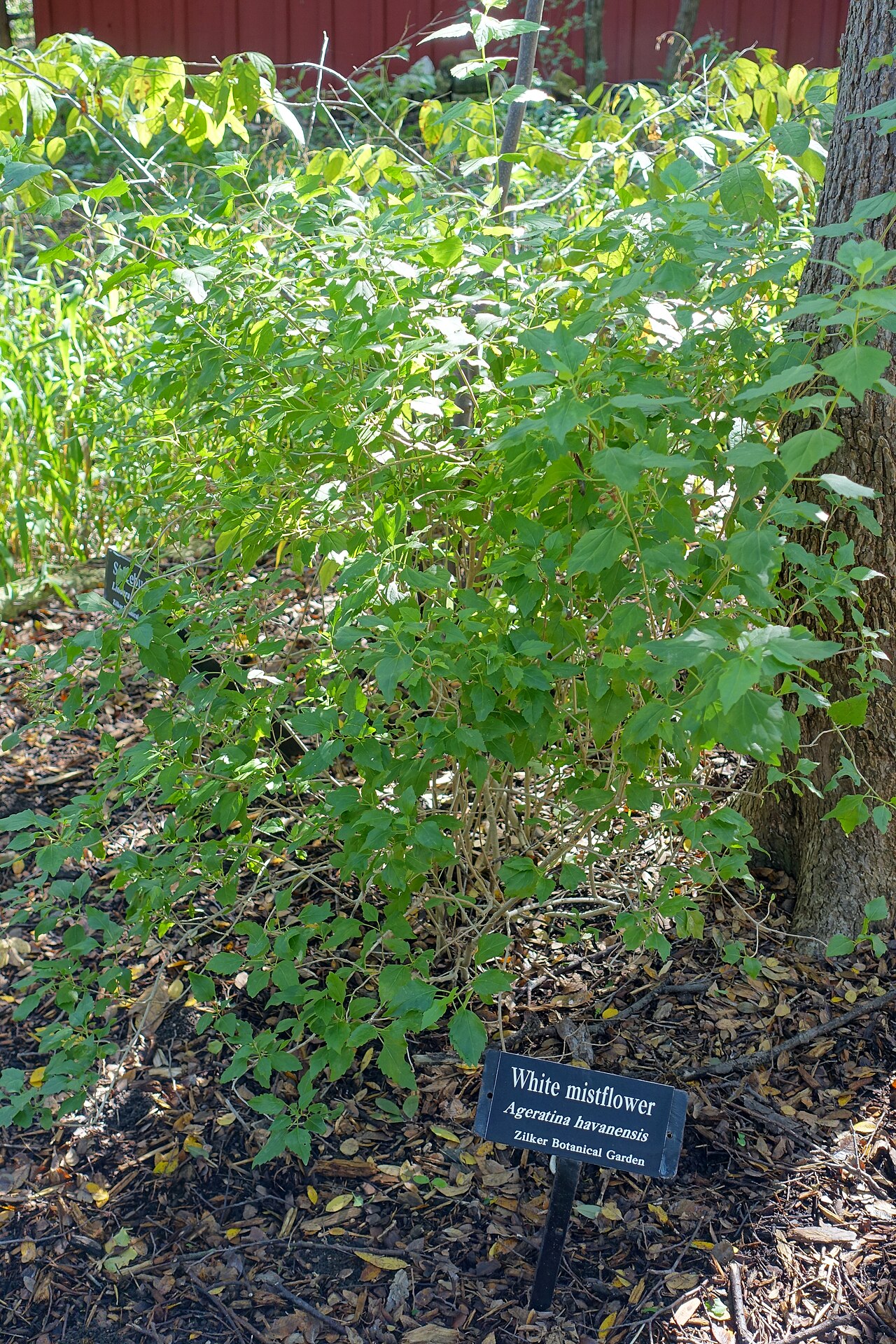
White mistflower grows as a many-branched, rounded to irregular shrub, typically 3 to 6 feet tall and similarly wide, though it can reach larger sizes in ideal conditions. Unlike many of its relatives in the genus Ageratina, it is evergreen to semi-evergreen in mild winters, holding at least some foliage through the cold season in much of its range.
Stems
Stems are slender, woody, and arching, often reddish-brown when young and gray-brown with age. The growth habit is loose and twiggy rather than dense, giving the shrub a graceful, fountain-like form that works well massed or as an informal specimen.
Leaves
Leaves are opposite, small (roughly 1 to 2.5 inches long), broadly triangular to heart-shaped at the base, with coarsely toothed margins and a somewhat rough texture. They are grayish-green to medium green, giving the shrub a soft, muted look even before bloom.
Flowers & Fruit
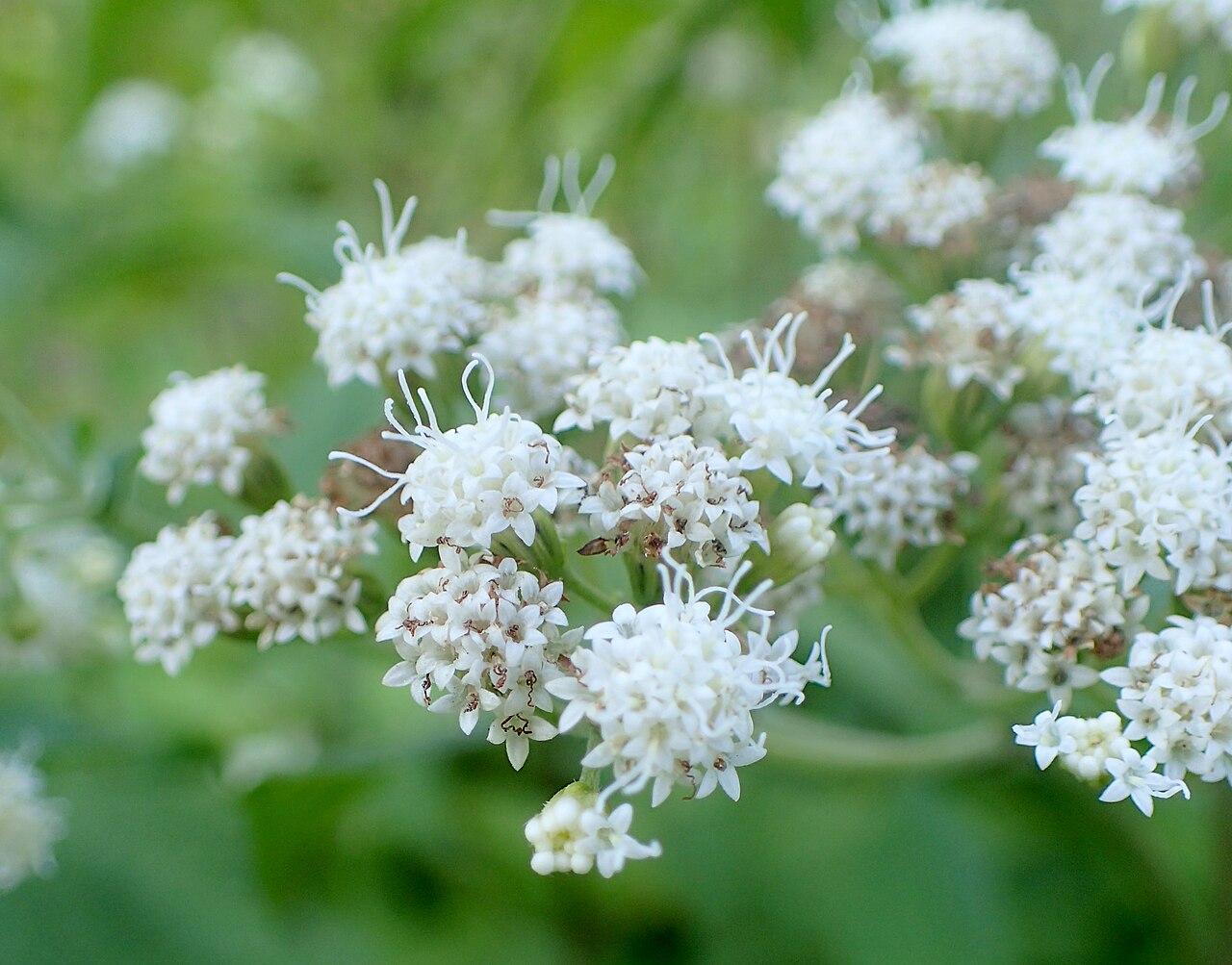
The flower show is the main event: dense, rounded to flat-topped clusters of small tubular flowers, white to pale pink, cover the ends of the branches so thickly that the foliage is nearly hidden. Bloom is concentrated in fall, typically October into November, though occasional flowering can occur in late winter or early spring in mild years. Like other members of the genus, the flowers lack true petals; the fuzzy look comes from the many protruding styles. After bloom, small ribbed achenes with a tuft of fine white hairs form and are carried off by the wind.
Quick Facts
| Scientific Name | Ageratina havanensis |
| Family | Asteraceae (Aster/Daisy) |
| Plant Type | Evergreen to semi-evergreen shrub |
| Mature Height | 3–6 ft |
| Mature Spread | 3–6 ft, rounded form |
| Growth Rate | Moderate |
| Sun Exposure | Full Sun to Part Shade |
| Water Needs | Low to average; drought tolerant once established |
| Soil Type | Thin, rocky, limestone-based soils; well-drained |
| Soil pH | Neutral to alkaline (7.0–8.0) |
| Bloom Time | October – November (occasional late winter rebloom) |
| Flower Color | White to pale pink |
| Fall Color | None distinct; foliage mostly persists (evergreen to semi-evergreen) |
| Fruit | Tiny wind-borne achenes with white pappus |
| Deer Resistant | Moderately (occasionally browsed, rarely seriously damaged) |
| USDA Hardiness Zones | 7–9 |
Native Range
Within the United States, white mistflower is native only to central and south-central Texas, concentrated on the limestone hills and canyons of the Edwards Plateau (the Texas Hill Country) and extending into the Rio Grande Plain to the south. Outside the U.S., the species also occurs naturally in Cuba and in northeastern and east-central Mexico, including Veracruz, Tamaulipas, Coahuila, Nuevo León, San Luis Potosí, and several neighboring states.
In its native habitat, white mistflower grows on dry, rocky limestone slopes, canyon walls, and the edges of oak-juniper woodlands, often rooted directly in thin soil or crevices among exposed rock. This naturally droughty, well-drained setting explains why the species performs so well in Hill Country gardens with minimal irrigation once roots are established.
Because its U.S. range is tightly limited to central and south Texas, white mistflower is not a plant for most of the country — gardeners outside this limestone-hill region should not expect it to thrive, and it is not considered native anywhere else in the United States.
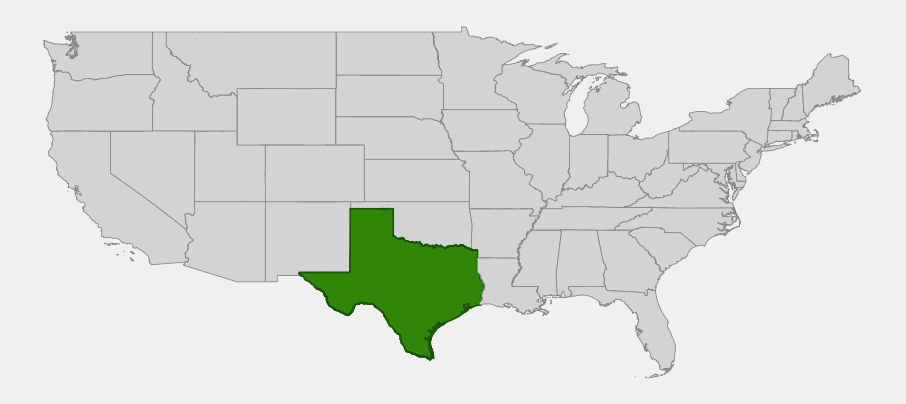
📋 White mistflower’s native range is limited to the Texas Hill Country and is not yet covered by one of our regional plant lists; browse the full native plant directory for other Texas natives.
Growing & Care Guide
White mistflower is tailor-made for the rocky, alkaline, drought-prone conditions of central Texas, and it is just as forgiving in any garden that can offer sharp drainage and plenty of sun. Established plants need almost no supplemental water.
Light
Full sun produces the densest growth and heaviest fall bloom, but white mistflower also tolerates part shade, especially in the hottest parts of Texas, where afternoon shade can help prevent scorch during summer drought. Too much shade will thin out growth and reduce flowering.
Soil & Water
Good drainage matters more than soil richness. White mistflower thrives in thin, rocky, limestone-derived soils and tolerates poor, alkaline ground that would stress many other shrubs. Water regularly the first year to establish a deep root system; after that, established plants need little to no supplemental irrigation except during extreme or prolonged drought.
Planting Tips
Plant in fall or early spring, choosing a site with excellent drainage — a slope, raised bed, or naturally rocky area works well. Avoid heavy clay or poorly drained low spots, where root rot can be a problem. Space plants 3 to 5 feet apart for a natural informal screen or massed planting.
Pruning & Maintenance
Prune lightly after the fall bloom finishes, or in late winter, to shape the shrub and remove any winter-damaged growth; it tolerates fairly hard pruning and resprouts readily if it is cut back after a hard freeze. In colder parts of its Zone 7 range it may freeze back to the ground in a severe winter but typically returns from the roots the following spring.
Landscape Uses
White mistflower fits naturally into several Hill Country garden roles:
- Pollinator gardens — a premier fall nectar source for migrating monarchs
- Xeriscape and rock gardens on thin, rocky, alkaline soil
- Informal hedges or screens massed along a property line
- Slope and bank plantings where drainage is naturally sharp
- Native specimen shrub for a fall-interest focal point
Wildlife & Ecological Value
The late, heavy bloom of white mistflower makes it one of the most valuable fall nectar shrubs in its narrow Texas range, arriving exactly when migrating pollinators most need fuel.
For Pollinators
White mistflower is especially prized for its role in the monarch butterfly’s fall migration through Texas, offering a rich, reliable nectar source along the flyway. Queen butterflies, native bees, and a wide range of other pollinating insects also visit heavily during the October–November bloom window.
For Birds
The dense, twiggy branching provides cover and nesting structure for small songbirds, while the tiny wind-dispersed seeds offer modest supplemental forage for seed-eating birds through winter.
For Mammals
White-tailed deer browse the foliage occasionally but generally do not cause serious damage, making the shrub a reasonably reliable choice in areas with deer pressure, though young plants may benefit from protection while establishing.
Ecosystem Role
As a shrub adapted to thin, rocky limestone soils, white mistflower helps stabilize steep, erosion-prone slopes and canyon edges typical of the Edwards Plateau, while its late bloom fills an important seasonal gap in the pollinator calendar of central Texas.
Cultural & Historical Uses
White mistflower has long been recognized in Texas Hill Country horticulture as a dependable, low-water native for fall color and pollinator support, and it has been grown in Texas native plant gardens and botanical collections, including the Lady Bird Johnson Wildflower Center and Zilker Botanical Garden, for decades as an example of a tough, regionally adapted limestone-country shrub.
The common name “Havana snakeroot” reflects the species’ occurrence in Cuba, where it was first described, while “white mistflower” describes the hazy, mist-like effect of its dense fall flower clusters. There is no established record of food, medicinal, or craft use of the plant by Indigenous peoples of Texas or by Mexican or Cuban traditional communities; its value has always been primarily ornamental and ecological.
In modern Hill Country landscaping, white mistflower has become a signature plant for xeriscape and pollinator-focused gardens, valued specifically for extending bloom and nectar availability into the fall when many other regional natives have finished flowering for the year.
Frequently Asked Questions
Will white mistflower grow outside Texas?
It can succeed in similarly mild, dry, alkaline-soil climates (roughly USDA zones 7–9) with excellent drainage, but it is native only to central and south-central Texas and is not reliably hardy or well-suited to most other parts of the country, especially areas with wet winters or heavy clay soil.
How much water does white mistflower need?
Very little once established. Water regularly the first growing season to build a strong root system; after that, it is quite drought tolerant and typically needs no supplemental irrigation except in extended, severe drought.
Is white mistflower the same plant as blue mistflower?
No. Blue mistflower (Conoclinium coelestinum) is a different, lower-growing perennial with blue-violet flowers. White mistflower is a woody shrub in the related genus Ageratina with white to pale pink flowers and a fall bloom time.
When does white mistflower bloom, and why does that matter?
Mainly in October and November, which is unusually late for a Texas native shrub. That timing lines up closely with the fall monarch butterfly migration through central Texas, making it an especially valuable nectar source at a critical point in the migration.
Does white mistflower need pruning?
Light pruning after bloom or in late winter keeps the shrub tidy and encourages fuller growth. It tolerates fairly hard cutting back, including after a damaging freeze, and typically resprouts vigorously from the base.

Looking for a nursery that carries White Mistflower?
Browse our native plant nursery directory: Texas