
Woolly Desert Marigold (Baileya pleniradiata)
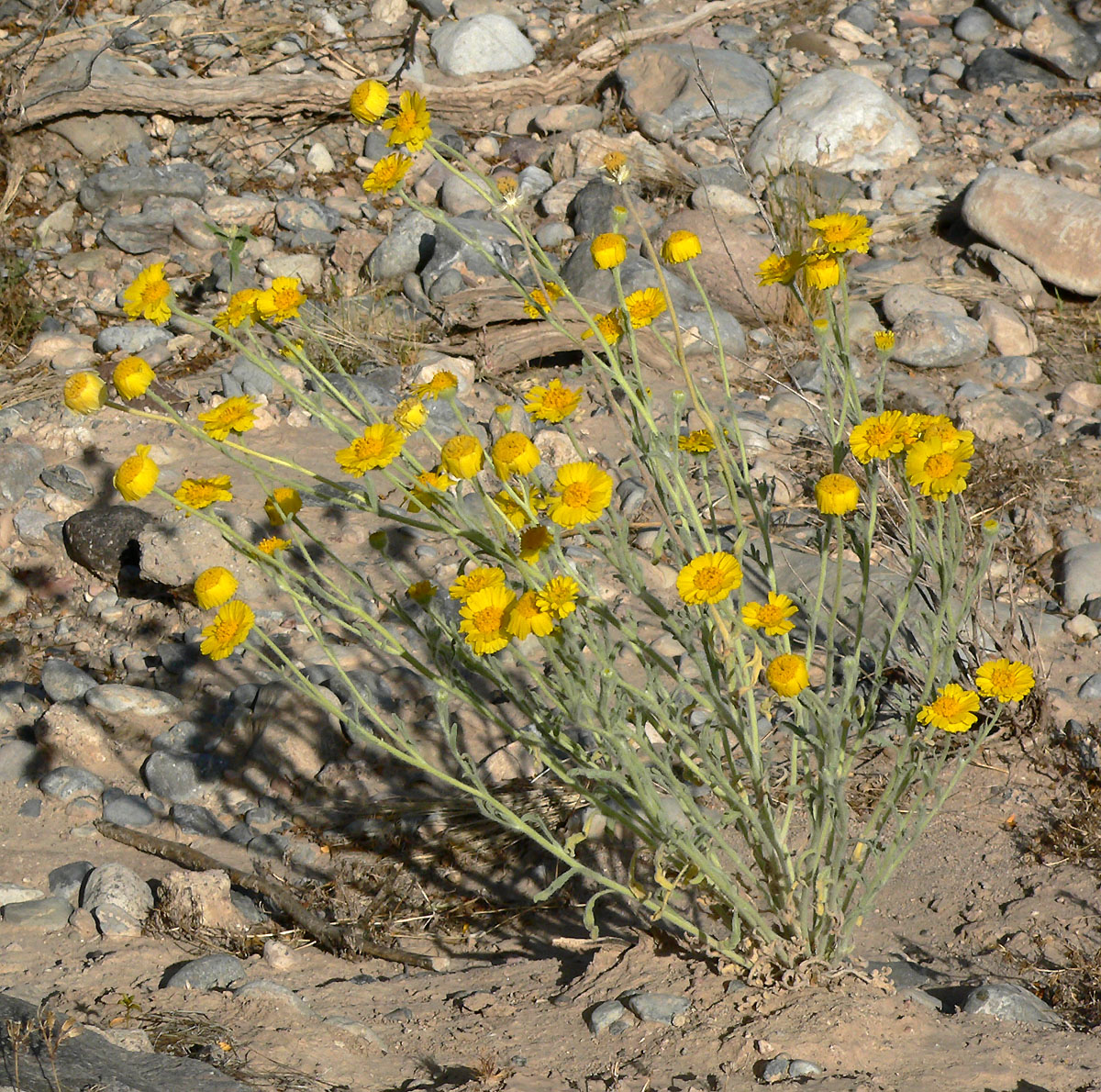
Baileya pleniradiata, commonly called Woolly Desert Marigold, is a small, silvery, long-blooming wildflower of the hottest, driest parts of the American Southwest. Every part of the plant above ground — stems, leaves, and even the undersides of the flower petals — is covered in a dense coat of fine white-gray hairs, giving the whole plant a soft, felted, almost ghostly appearance against the bare desert ground. That wool is not decoration; it reflects intense sunlight and slows moisture loss, letting the plant thrive where few other wildflowers can.
Woolly Desert Marigold belongs to the aster family (Asteraceae) and is closely related to the more widely planted Desert Marigold, Baileya multiradiata, which it resembles closely enough that the two are frequently confused in the field and in nursery trade. B. pleniradiata tends to be a shorter, more sprawling, grayer plant with somewhat smaller flower heads, and it leans more strongly toward an annual or short-lived life cycle, germinating and flowering heavily after rain rather than persisting for many years as a woody-based perennial.
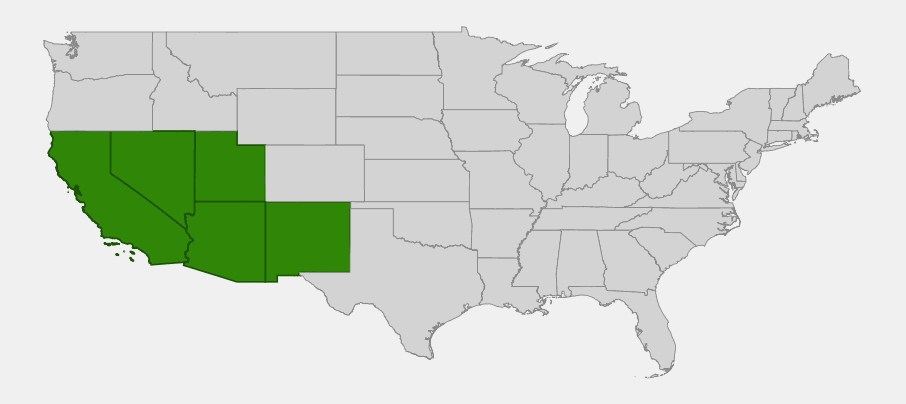
In its native range — the Mojave and Sonoran Desert lowlands of Arizona, California, Nevada, New Mexico, and Utah — Woolly Desert Marigold is one of the most dependable and longest-blooming wildflowers of the warm season, often flowering from late winter through late fall whenever soil moisture allows. It colonizes disturbed sand and gravel readily, making it valuable for desert restoration and roadside plantings as well as for home gardeners wanting carefree color with minimal water.
Identification
Woolly Desert Marigold is a low, clump-forming herb rarely exceeding 18 inches (46 cm) in height, with a rounded, bushy silhouette about as wide as it is tall. Its most obvious identifying trait at any distance is color: the entire plant reads as a soft gray-white rather than green, due to the dense wool covering every surface.
Stems & Leaves
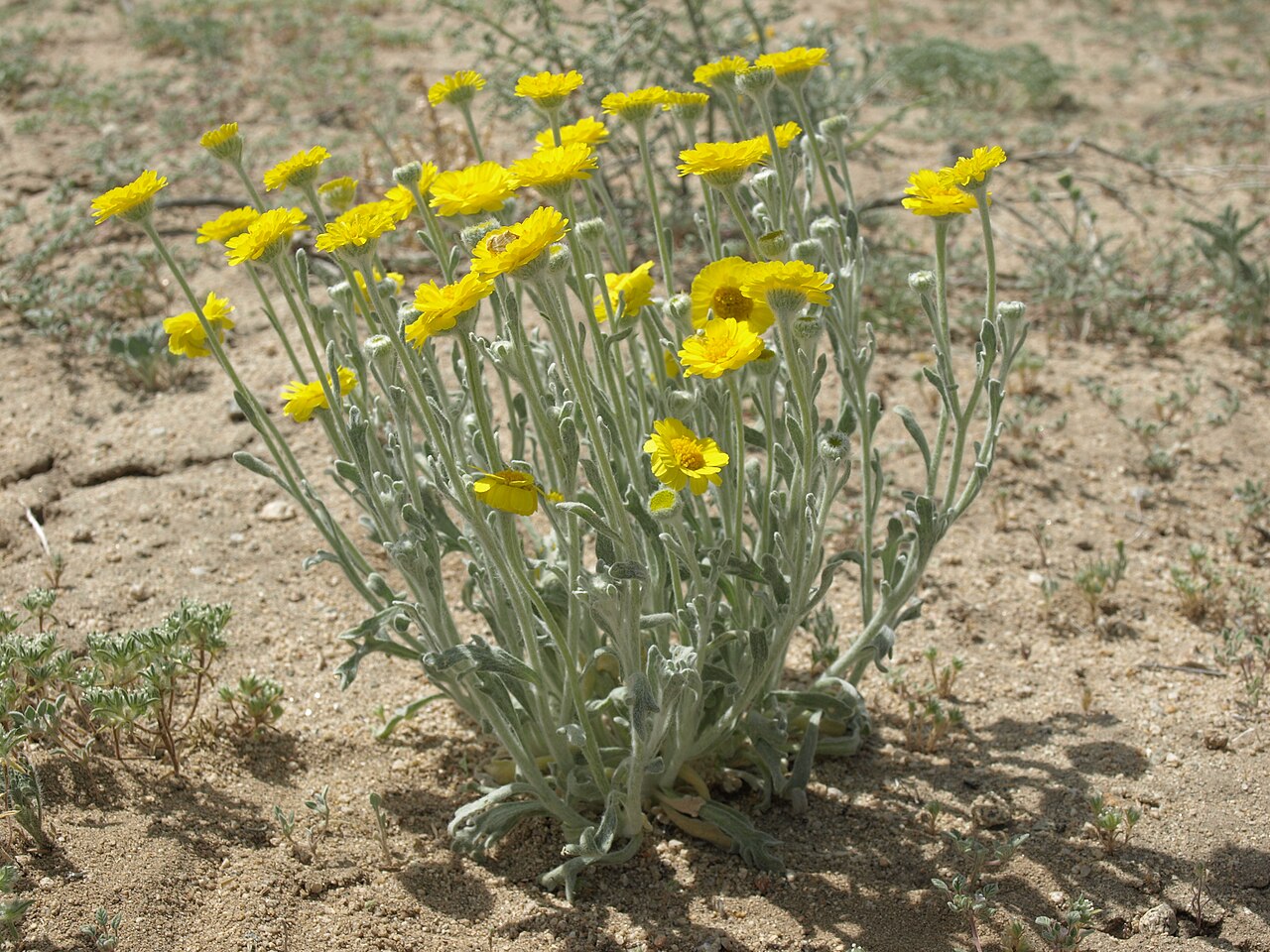
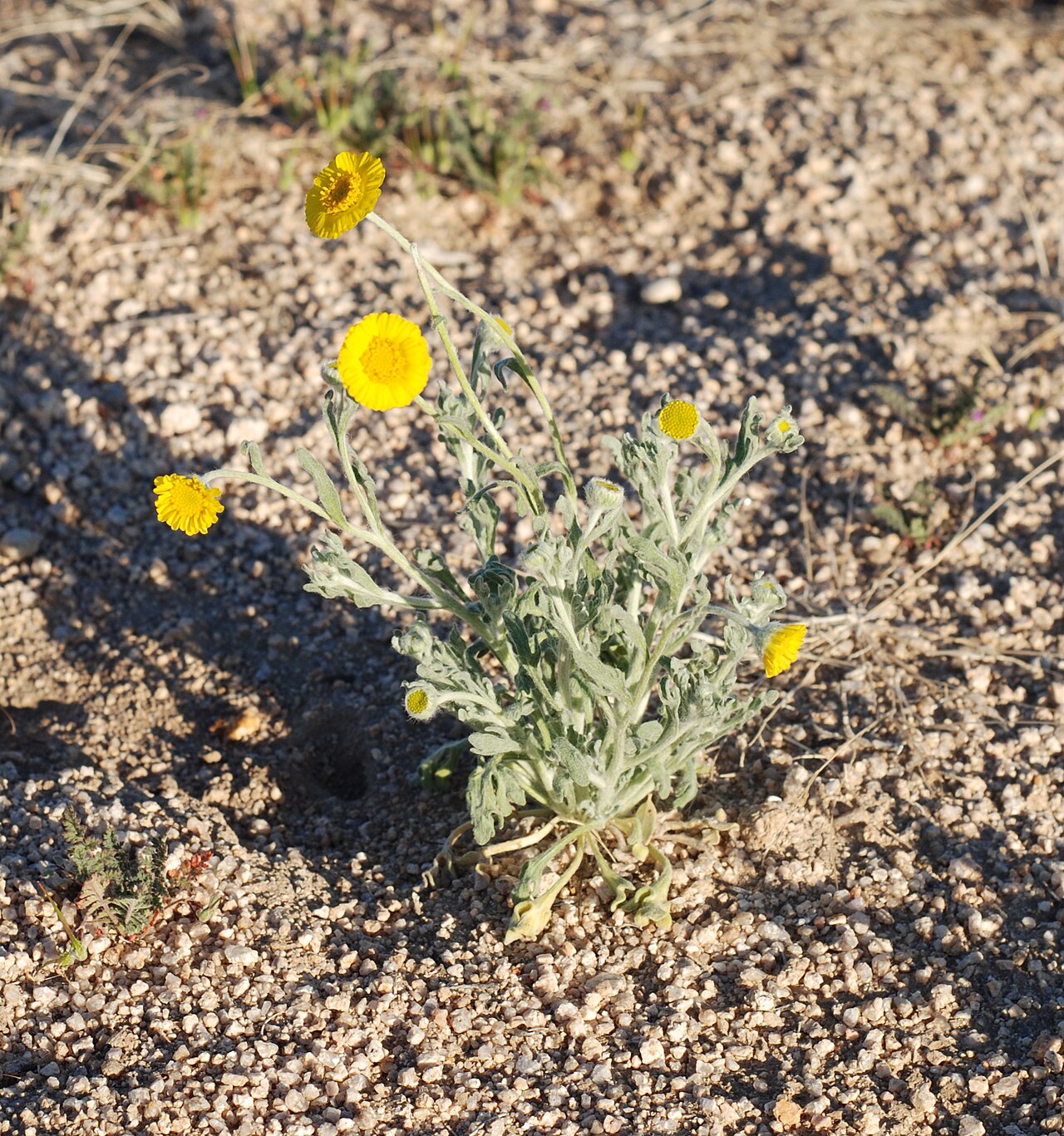
Stems are slender, branching from the base, and thickly woolly like the rest of the plant. Leaves are mostly basal, clustered near the ground, with upper stem leaves reduced and widely spaced; leaf blades are deeply lobed or divided into narrow segments, 1 to 3 inches (2.5–7.5 cm) long, and so densely hairy that the leaf surface itself is hard to see beneath the felt of wool. This heavy pubescence, more pronounced than in its relative B. multiradiata, is the most reliable field mark separating the two species.
Flowers
Flower heads are bright yellow daisies 1 to 2 inches (2.5–5 cm) across, borne singly on upright, woolly stalks that rise above the foliage. Each head has both a center of tiny disk florets and a surrounding ring of 20 to 50 or more strap-shaped ray florets — considerably more rays than the related B. multiradiata, which has markedly fewer, broader rays. True to the species name pleniradiata (“fully rayed”), the flower heads look dense and “full” rather than sparse. Bloom can occur almost any month of the year following adequate rain, but is heaviest from February through June, with a secondary flush in fall.
Fruit & Seeds
After flowering, each head dries into a cluster of small, ribbed, one-seeded achenes, like the rest of the aster family. The dried flower heads persist on the woolly stalks well after the petals fade, giving plants a weathered, straw-colored look through the dry season until the next rain triggers new growth and flowering.
Quick Facts
| Scientific Name | Baileya pleniradiata |
| Family | Asteraceae (Aster/Sunflower) |
| Plant Type | Annual, biennial, or short-lived perennial wildflower |
| Mature Height | 6–18 in (15–46 cm) |
| Mature Spread | 8–16 in (20–40 cm) |
| Growth Rate | Fast; flowers within weeks of germination after rain |
| Sun Exposure | Full Sun |
| Water Needs | Low; thrives on natural desert rainfall |
| Soil Type | Sandy or gravelly, fast-draining; tolerates poor soil |
| Soil pH | 7.0–8.5 (neutral to alkaline) |
| Bloom Time | February – June, with a fall flush after monsoon rains |
| Flower Color | Yellow |
| Fall Color | Not applicable (herbaceous; foliage dries to straw color) |
| Fruit | Small dry achenes; not fleshy or showy |
| Deer Resistant | Yes; bitter and avoided by deer, but toxic to sheep and goats (see Wildlife notes) |
| USDA Hardiness Zones | 8–11 |
Native Range
Woolly Desert Marigold is native to the hot desert lowlands of the American Southwest, found across much of Arizona, the deserts of southeastern California, southern Nevada, southwestern New Mexico, and southern Utah, extending south into the Sonoran Desert of Baja California and Sonora, Mexico, and east into Chihuahua. It is one of the most common and widespread wildflowers of the Mojave and Sonoran Desert floor, often appearing in large numbers along roadsides, washes, and open flats after seasonal rains.
It grows from near sea level in the low Sonoran Desert up to around 5,500 feet (1,700 m) in desert grassland and pinyon-juniper transition zones, as recorded in sites from Death Valley to the White Mountains of California. It favors open, sun-baked ground with sandy or gravelly, fast-draining soil, and is especially abundant in disturbed sites such as roadcuts, graded lots, and wash margins where competition from shrubs is low.
Woolly Desert Marigold is frequently cultivated and planted well outside this native range in warm-winter gardens, but it is not considered native or naturalized as a wild population outside the Mojave–Sonoran desert region described above; gardeners in milder, wetter climates should expect it to behave as an annual rather than a persistent wildflower.
📋 Regional plant lists featuring Woolly Desert Marigold: Arizona & New Mexico · Utah & Western Colorado
Growing & Care Guide
Woolly Desert Marigold is about as low-maintenance as a wildflower gets, provided it is given the hot, dry, sunny conditions it evolved for. It is a poor fit for humid or heavy-clay gardens, but an excellent, reliably self-sowing choice for xeriscapes, rock gardens, and desert-adapted landscapes.
Light
Give it full sun. Plants grown in any significant shade become leggy, sparse-flowering, and prone to rot; this species wants the same unshaded exposure it gets on an open desert flat.
Soil & Water
Fast drainage matters more than fertility. Sandy, gravelly, or decomposed-granite soils suit it best; heavy clay that stays wet will kill it, especially in winter. Once established, Woolly Desert Marigold needs little to no supplemental water beyond natural rainfall in its native range — occasional deep watering during extended dry spells will extend bloom, but overwatering shortens the plant’s life and encourages rot. In irrigated gardens outside its native desert range, treat it as a drought-tolerant annual rather than attempting to keep it alive long-term with regular watering.
Planting Tips
Direct-sow seed in fall or early winter so seedlings can establish during the cooler months ahead of spring bloom; seed needs light to germinate, so scatter it on the soil surface and press in lightly rather than burying it. Nursery-grown plants can be set out in fall or early spring. Avoid amending planting holes with rich organic matter, which holds moisture against the crown.
Maintenance
Deadheading spent flower heads can prolong bloom and tidy the plant’s appearance, but it is not required — the species self-sows readily and often returns on its own from year to year without any care. Cut back dried plants after they finish blooming for the season if a neater look is wanted.
Landscape Uses
Woolly Desert Marigold earns its place in several kinds of low-water gardens:
- Xeriscape and rock gardens — thrives in gravel mulch and reflected heat
- Roadside and slope plantings — colonizes disturbed, sunny ground readily
- Desert wildflower meadows — reseeds for repeat seasonal color
- Container and raised-bed plantings in fast-draining desert soil mixes
- Pollinator gardens — long bloom season supports native bees
Wildlife & Ecological Value
Woolly Desert Marigold plays an outsized ecological role for such a small plant, flowering through most of the year in a landscape where blooming resources are often scarce and seasonal.
For Pollinators
Its long, nearly year-round bloom window makes it a dependable nectar and pollen source for native bees and other insects in the desert, especially valuable during the hot summer and dry stretches when few other wildflowers are flowering. Small native bees, beneficial flies, and butterflies regularly visit the bright yellow heads.
For Birds & Small Wildlife
The dry seed heads provide modest forage for seed-eating birds and small mammals once flowering finishes, and the dense low growth offers minor ground cover for insects and small reptiles in open desert terrain.
Toxicity to Livestock
Woolly Desert Marigold and its close relatives in the genus Baileya are documented range-poisoning plants for sheep and goats; cattle and horses are not typically affected under range conditions. All parts of the green or dried plant are toxic, with flowers and seed heads more potent than leaves. Signs of poisoning in sheep include frothy green salivation, weakness, rapid heartbeat, and trembling, and large quantities (tens of pounds of plant material) are generally needed to cause serious poisoning. Livestock owners grazing sheep or goats on desert rangeland where this species is common should watch for these symptoms, particularly when other forage is scarce.
Ecosystem Role
As one of the most abundant and widespread desert annuals in its range, Woolly Desert Marigold helps stabilize disturbed sandy soils, contributes to the pulse of “wildflower bloom” events that follow desert rains, and forms part of the broader community of Mojave and Sonoran Desert annuals that supports pollinators and seed-dependent wildlife through the year.
Cultural & Historical Uses
Woolly Desert Marigold has no significant history as a food, fiber, or medicinal plant among Indigenous peoples of the Southwest, unlike many desert shrubs and trees; its primary historical significance has been agricultural rather than ethnobotanical, as a recognized cause of sheep and goat losses on arid rangeland. Ranchers and range scientists in Arizona, New Mexico, and Nevada have studied and documented its toxicity since the early twentieth century as part of broader efforts to understand and manage poisonous range plants.
In more recent decades, the plant’s reliability, drought tolerance, and cheerful, long-lasting yellow bloom have made it a popular subject of desert wildflower photography and a staple of Southwestern roadside and native-landscape plantings, where its showier, larger-flowered relative Baileya multiradiata is more often sold commercially.
Frequently Asked Questions
Is Woolly Desert Marigold the same plant as Desert Marigold?
No, though they are closely related and often confused. “Desert Marigold” usually refers to Baileya multiradiata, which has fewer, broader rays and somewhat less dense wool. Baileya pleniradiata, the Woolly Desert Marigold, is grayer and woollier overall, with more numerous, narrower rays, and tends to behave more as an annual.
Is Woolly Desert Marigold toxic?
Yes, to sheep and goats specifically. It is a documented cause of livestock poisoning on Southwestern rangeland, though cattle and horses are not typically affected. It should not be considered edible for people or pets, and livestock owners should be aware of it on grazing land.
How much water does Woolly Desert Marigold need?
Very little once established. In its native desert range it survives on natural rainfall alone. Occasional supplemental water during long dry spells can extend bloom, but this plant does not tolerate constantly moist soil.
Will Woolly Desert Marigold come back every year?
Often, yes, through self-sowing, even though individual plants may behave as short-lived annuals or biennials. In favorable sandy, undisturbed sites it can persist and reseed for many years, creating a recurring patch of yellow bloom.
Can Woolly Desert Marigold be grown outside the desert Southwest?
It can be grown as a warm-season annual in other hot, sunny, dry climates, but it is not native or naturalized outside the Mojave and Sonoran Desert region, and it performs poorly in humid climates or heavy, slow-draining soils.

Looking for a nursery that carries Woolly Desert Marigold?
Browse our native plant nursery directory: Arizona · California · Nevada & New Mexico · Utah