
Desert Mariposa Lily (Calochortus kennedyi)
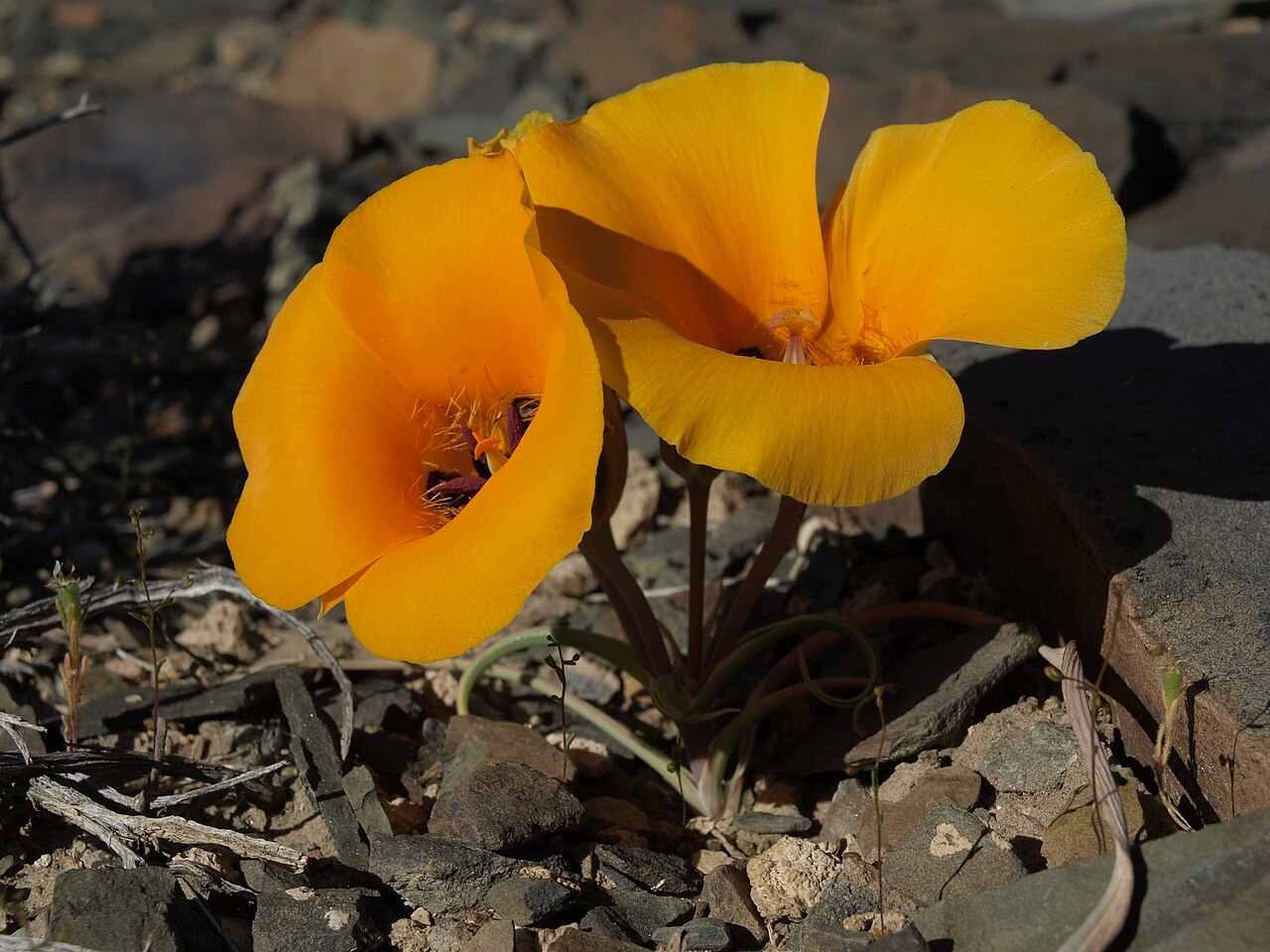
Calochortus kennedyi, commonly called Desert Mariposa Lily, is one of the most brilliant wildflowers of the Southwestern deserts — a low, unassuming plant for most of the year that explodes into flaming orange, red, or yellow bloom after a good wet spring. It belongs to the lily family (Liliaceae), and like its mariposa lily relatives it grows from a small underground bulb (technically a corm) that allows it to survive the long, dry, hot stretches between rains. The name “mariposa” is Spanish for butterfly, a nod to the way the broad, silky petals seem to flutter above the plant’s slender, often leafless stem.
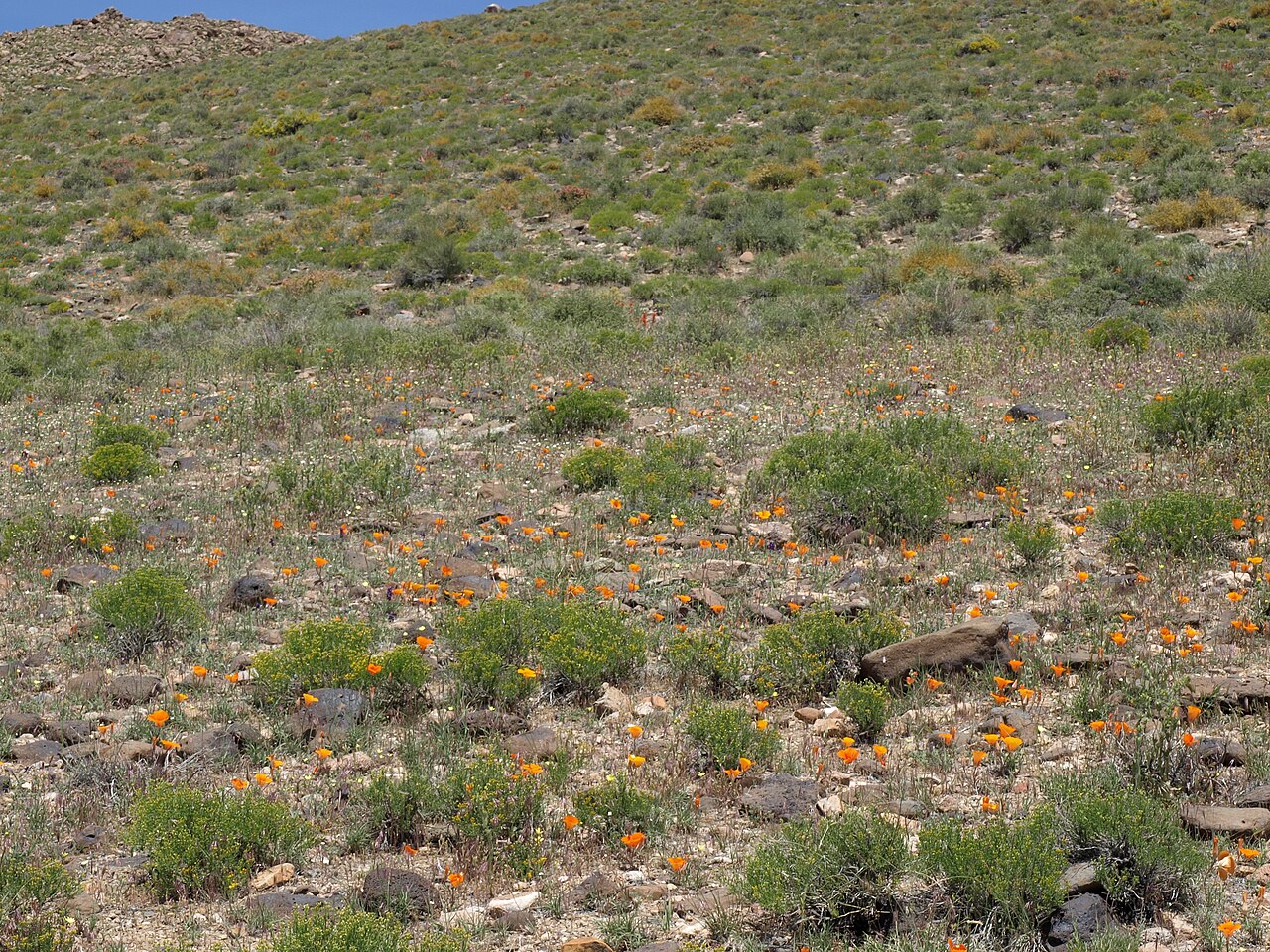
This species is a true desert specialist, found scattered across rocky slopes, sandy flats, and dry washes of the Mojave and Sonoran deserts and the surrounding high-desert country. It spends most years as nothing more than a dormant bulb a few inches underground, sending up a single thin, waxy basal leaf and then a wiry flowering stem only when conditions are right — typically following winter and early spring rains. In a good bloom year, hillsides can be dotted with its cup-shaped flowers for a few unforgettable weeks before the plant retreats underground again for another season or more.
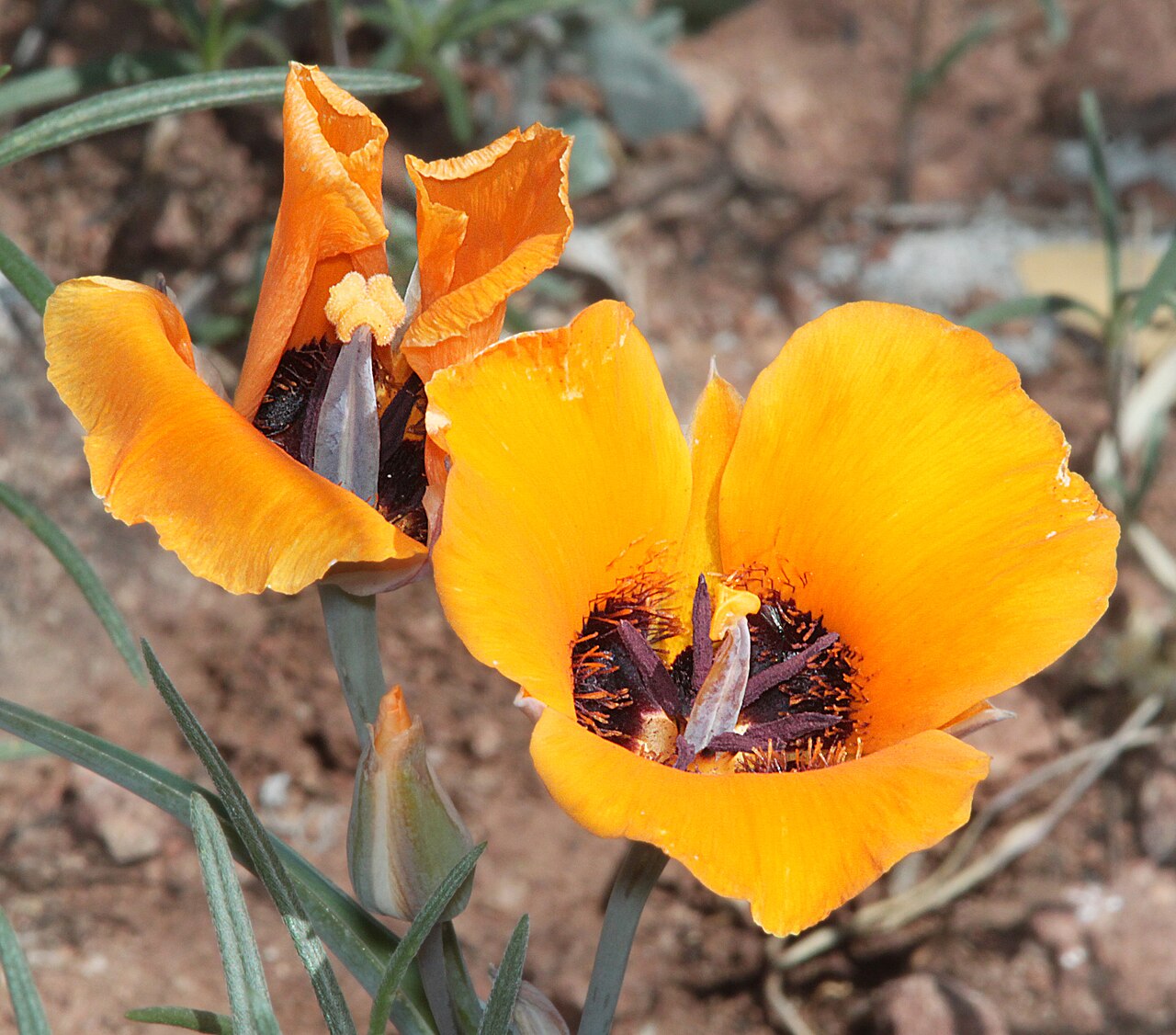
Desert mariposa lily’s flower color varies across its range: vivid vermilion-orange to scarlet blooms predominate in California, while orange and yellow forms become more common farther east in Arizona, Nevada, and Utah. Despite its beauty and the ease of growing it from seed, it is notoriously difficult to keep going in cultivation, and its small, deeply buried bulbs make it a poor candidate for transplanting — gardeners should always buy nursery-propagated seed or bulbs and never dig bulbs from wild populations.
Identification
Desert mariposa lily is a low-growing perennial herb that is easy to overlook until it flowers, at which point its large, saturated orange or red blooms make it one of the most conspicuous wildflowers of its desert habitat.
Stems & Leaves
The plant produces a single slender, unbranched, sometimes twisting flowering stem up to about 20 inches tall, though it is often considerably shorter. A single waxy, grayish-green basal leaf, roughly 4 to 8 inches long, emerges early in the growing season and typically withers by the time the plant flowers, so established plants in bloom often appear nearly leafless.
Flowers
Each plant produces one to six erect, bell- or cup-shaped flowers in a loose, open cluster at the stem tip. The three broad petals, each up to 2 inches long, are usually vivid orange, red, or (farther east in its range) yellow, often with a darker, hairy, gland-marked patch near the petal base that helps guide pollinators to the flower’s center. Three narrower, often reddish-tinged sepals alternate with the petals beneath the bloom.
Fruit & Bulb
After flowering, the plant produces an angled, winged, papery seed capsule up to about 2 inches long that splits open to release numerous flat seeds. Below ground, the plant persists as a small, deeply buried corm (bulb-like storage organ) that allows it to survive years of drought between blooming seasons, re-sprouting a leaf and, when conditions allow, a flowering stem from the same corm.
Quick Facts
| Scientific Name | Calochortus kennedyi |
| Family | Liliaceae (Lily) |
| Plant Type | Perennial Bulb (Corm) Wildflower |
| Mature Height | 4–20 in |
| Growth Rate | Slow |
| Sun Exposure | Full Sun |
| Water Needs | Very Low; needs a dry summer dormancy |
| Soil Type | Rocky, sandy or gravelly, sharply drained |
| Soil pH | Neutral to slightly alkaline |
| Bloom Time | Spring, timing driven by winter rainfall |
| Flower Color | Vermilion-orange to red (west) or orange to yellow (east) |
| Fruit | Angled, winged seed capsule to 2 in |
| Deer Resistant | Moderate |
| USDA Hardiness Zones | 7–10 |
Native Range
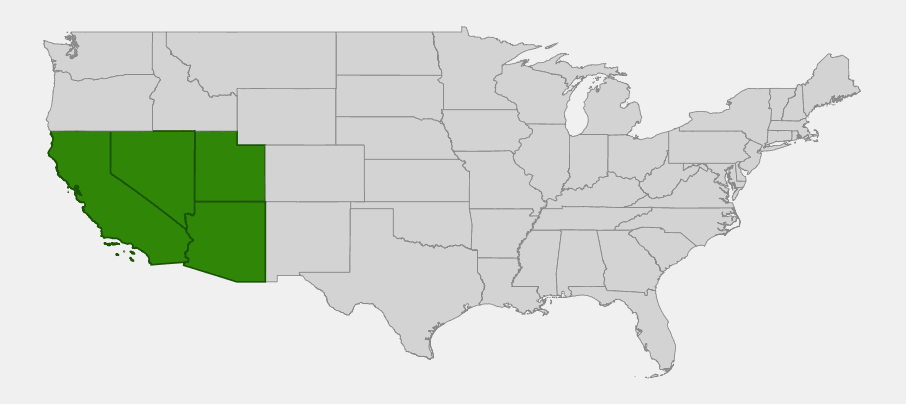
Desert mariposa lily is native to the deserts of the southwestern United States, occurring in Arizona, southern California, southern Nevada, and southern Utah. In California it is centered on the Mojave Desert and the rain-shadowed eastern slopes of the Transverse Ranges; farther east it continues through the desert and high-desert country of Arizona, with outlying populations in the driest parts of southern Nevada and southern Utah. Its range extends south of the U.S. border into the Sonoran Desert region of northern Mexico.
Within this range the species grows on dry, rocky slopes, sandy flats, desert washes, and the lower edges of pinyon-juniper woodland, generally at elevations from near sea level in the low desert up to around 7,000 feet in higher desert mountains and foothills. It is often most visible on volcanic, gravelly, or otherwise well-drained substrates, where competing vegetation is sparse enough to let its small bulbs persist for years between blooms.
Because flowering depends heavily on adequate winter and early-spring rainfall, visible populations can appear and disappear from year to year — a hillside that is a blaze of orange after a wet winter may show almost no blooming plants the following dry year, even though the dormant bulbs are still present underground. This makes the species a useful, if humbling, indicator of a healthy desert wildflower season.
📋 Regional plant lists featuring Desert Mariposa Lily: Arizona & New Mexico · Utah & Western Colorado
Growing & Care Guide
Desert mariposa lily is genuinely one of the hardest native wildflowers to cultivate successfully, and gardeners should set expectations accordingly: this is a project for patient desert-plant enthusiasts, not a reliable bedding plant.
Light
Full sun is essential, matching the open, unshaded desert slopes and flats where this species grows naturally. Any significant shade will weaken or prevent flowering.
Soil & Water
Sharp drainage is non-negotiable — rocky, sandy, or gravelly desert soils that dry out completely between rains are what this species needs to survive. The single hardest part of growing it is replicating its natural wet-winter, bone-dry-summer cycle: bulbs must be kept completely dry from mid-summer through late fall or they are prone to rot, then given moisture again through winter and early spring to trigger growth and flowering. Overwatering during dormancy is the most common way gardeners lose this species.
Planting Tips
Because the bulbs are small, deeply buried, and resent disturbance, desert mariposa lily is best grown from nursery-propagated seed rather than purchased or transplanted bulbs. Seed germinates within several weeks to a few months under cool, moist conditions, but the resulting first-year bulbs are notoriously slow and unreliable about flowering in subsequent years — expect this to be a multi-year project with an uncertain outcome even under good care. Never dig bulbs from wild populations: wild desert mariposa lily colonies are often small, slow to recover, and dependent on a precise rainfall cycle that gardeners cannot easily replicate once a bulb is removed, so any bulbs or seed for planting should come from a reputable native plant nursery.
Pruning & Maintenance
Allow the foliage to die back naturally after flowering rather than cutting it, since the dormant bulb depends on that period of leaf growth to store energy for the following year. Protect plantings from gophers and other burrowing rodents, which readily eat the bulbs.
Landscape Uses
Where conditions allow, desert mariposa lily rewards gardeners with some of the most vivid color in the native desert flora:
- Desert and xeriscape gardens that replicate a dry-summer, wet-winter cycle
- Rock gardens with sharp drainage and full sun
- Native wildflower meadows within its desert range
- Specialty bulb collections for experienced desert gardeners
- Restoration plantings on disturbed desert sites, using local-source seed
Wildlife & Ecological Value
Despite its brief and unpredictable flowering, desert mariposa lily plays a meaningful role in the desert ecosystems where it grows.
For Pollinators
The large, colorful flowers, marked with dark, hairy gland patches near the petal bases, attract native bees and other pollinating insects that are drawn to the color contrast and nectar guides. Because it often flowers in a narrow window tied to rainfall, it can provide an important, if episodic, nectar and pollen source during desert wildflower blooms.
For Wildlife
The underground bulbs are a food source for various desert rodents and other wildlife capable of locating and digging them up, which is part of why the species invests so much energy in deep, well-hidden corms. Seeds from the mature capsules are eaten by small desert mammals and birds after the plant finishes flowering.
Ecosystem Role
As a geophyte (bulb-forming plant) adapted to extreme boom-and-bust desert rainfall, desert mariposa lily is part of a guild of desert wildflowers whose appearance each spring reflects the health of that season’s rains, making it a useful visual indicator species for desert ecologists and naturalists tracking wildflower bloom quality. Its presence in a given area also signals relatively undisturbed rocky or sandy desert soil, since the slow-growing bulbs do not establish or recover quickly on heavily disturbed ground.
Cultural & Historical Uses
Like other mariposa lilies, the bulbs of Calochortus kennedyi are edible and were historically used as a food source by Indigenous peoples of the desert Southwest, who dug and roasted or boiled the starchy corms during lean seasons. However, because the bulbs are small, deeply buried in often rocky or heavy soil, and labor-intensive to gather, they were generally a supplemental rather than staple food, used when other resources were scarce.
The species was formally described in 1877 by botanist Thomas Conrad Porter and named in honor of plant collector William L. Kennedy. The flower’s striking color and form have long made it a favorite subject for botanical illustrators and wildflower photographers, and it remains a highlight of desert wildflower displays in Joshua Tree National Park, the Mojave National Preserve, and other protected desert areas where good bloom years draw visitors specifically to see it.
Today, digging wild bulbs for food or transplanting is strongly discouraged: wild populations recover slowly, flowering is already unpredictable from year to year, and removing bulbs permanently eliminates plants that may take years to be replaced, if they are replaced at all. Anyone interested in growing or learning about this species should rely on photography, seed from reputable native plant sources, or simply enjoying it in its natural desert habitat.
Frequently Asked Questions
Why didn’t my desert mariposa lily bloom this year?
Flowering in this species depends heavily on adequate winter and early-spring rainfall. In dry years, the dormant bulb may simply skip flowering (and sometimes even leaf growth) rather than risk the energy expenditure, re-emerging to bloom again whenever conditions improve. This is normal behavior for the species, not a sign of a dead or failing bulb.
Can I dig up wild desert mariposa lily bulbs to plant in my garden?
No — this should always be avoided. Wild bulbs are small, deeply buried, and slow to recover once a population is disturbed, and removing them can permanently reduce or eliminate a local population that depends on a precise rainfall cycle to persist. Buy seed or nursery-propagated bulbs from a reputable native plant source instead.
Is desert mariposa lily easy to grow in a home garden?
No, it is considered one of the more difficult native bulbs to cultivate. Success requires replicating its natural wet-winter, bone-dry-summer cycle closely, and even experienced growers report inconsistent results, with first-year bulbs from seed often failing to flower reliably in following years.
Are desert mariposa lily bulbs edible?
Historically, Indigenous peoples of the desert Southwest ate the bulbs of this and related mariposa lily species as an occasional food source. This is a matter of historical record, not a recommendation — digging bulbs from wild plants today is discouraged because of the harm it does to already slow-recovering populations.
Why does flower color vary across the range?
Desert mariposa lily shows real color variation from west to east: vivid vermilion-orange to red flowers are most frequent in California populations, while orange and yellow forms become more common farther east in Arizona, Nevada, and Utah. This variation is part of what makes the species so visually striking across its range.

Looking for a nursery that carries Desert Mariposa Lily?
Browse our native plant nursery directory: California · Nevada · Utah · Arizona