
Beach Morning Glory (Ipomoea pes-caprae)
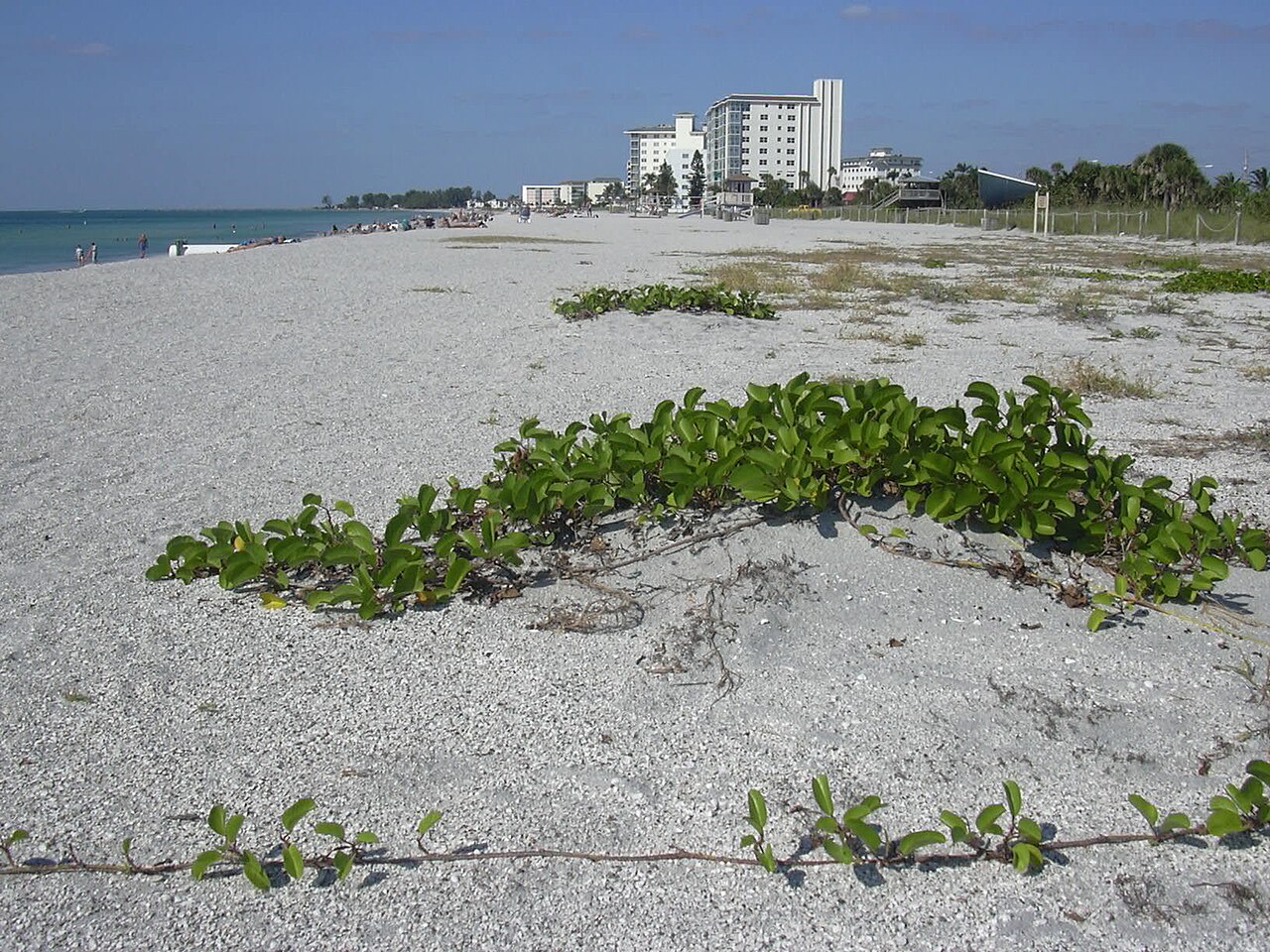
Ipomoea pes-caprae, commonly called Beach Morning Glory, Railroad Vine, Goat’s Foot, or Bayhops — and known in Hawai’i as pōhuehue — is a sprawling, salt-tolerant perennial vine that is one of the most important sand-stabilizing plants on beaches throughout the warmer coasts of North America. It belongs to the morning glory family, Convolvulaceae, and is instantly recognizable by its thick, glossy, two-lobed leaves — shaped like a goat’s cloven hoof, which gives the species its Latin name pes-caprae, “goat’s foot.”
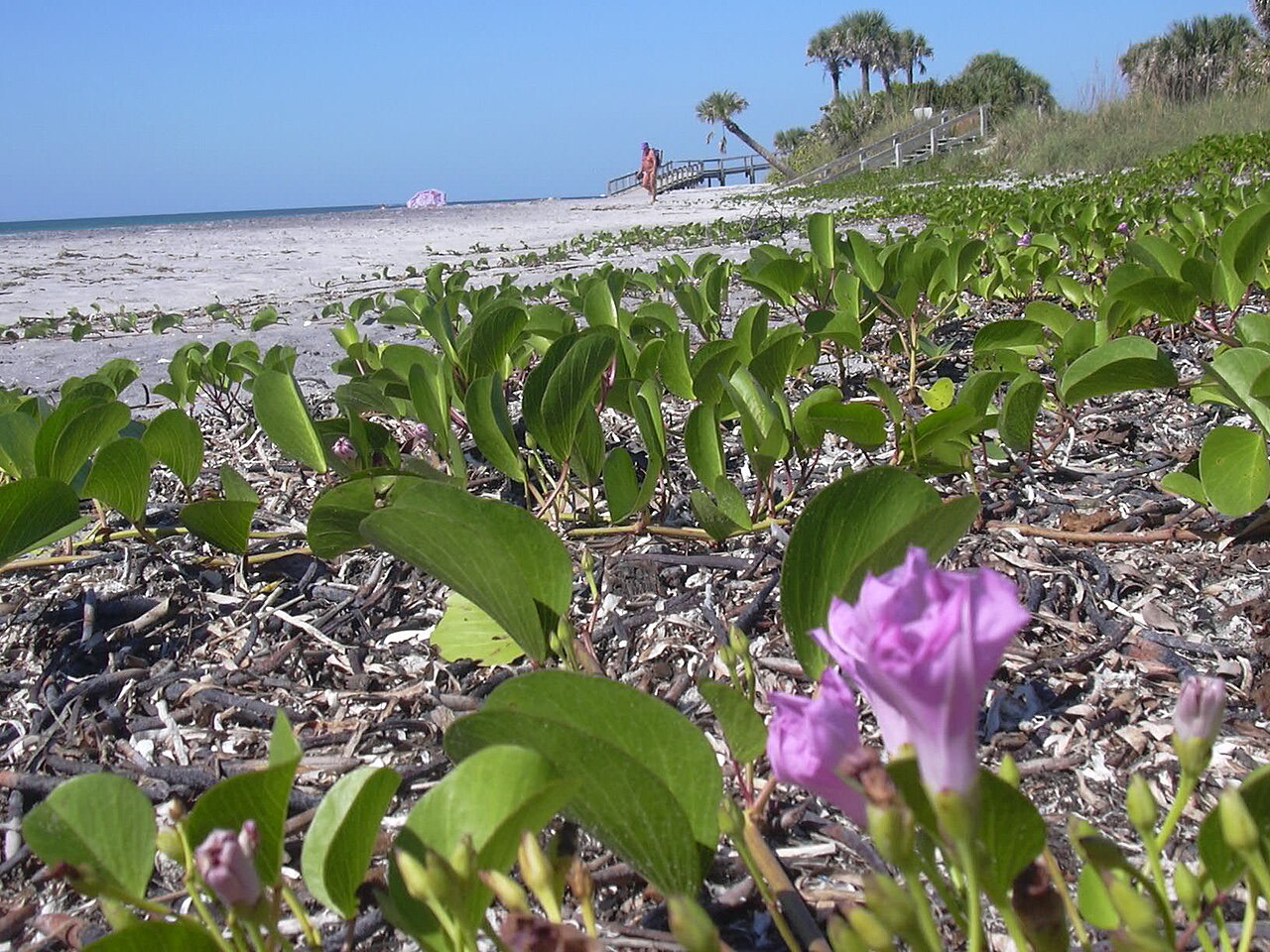
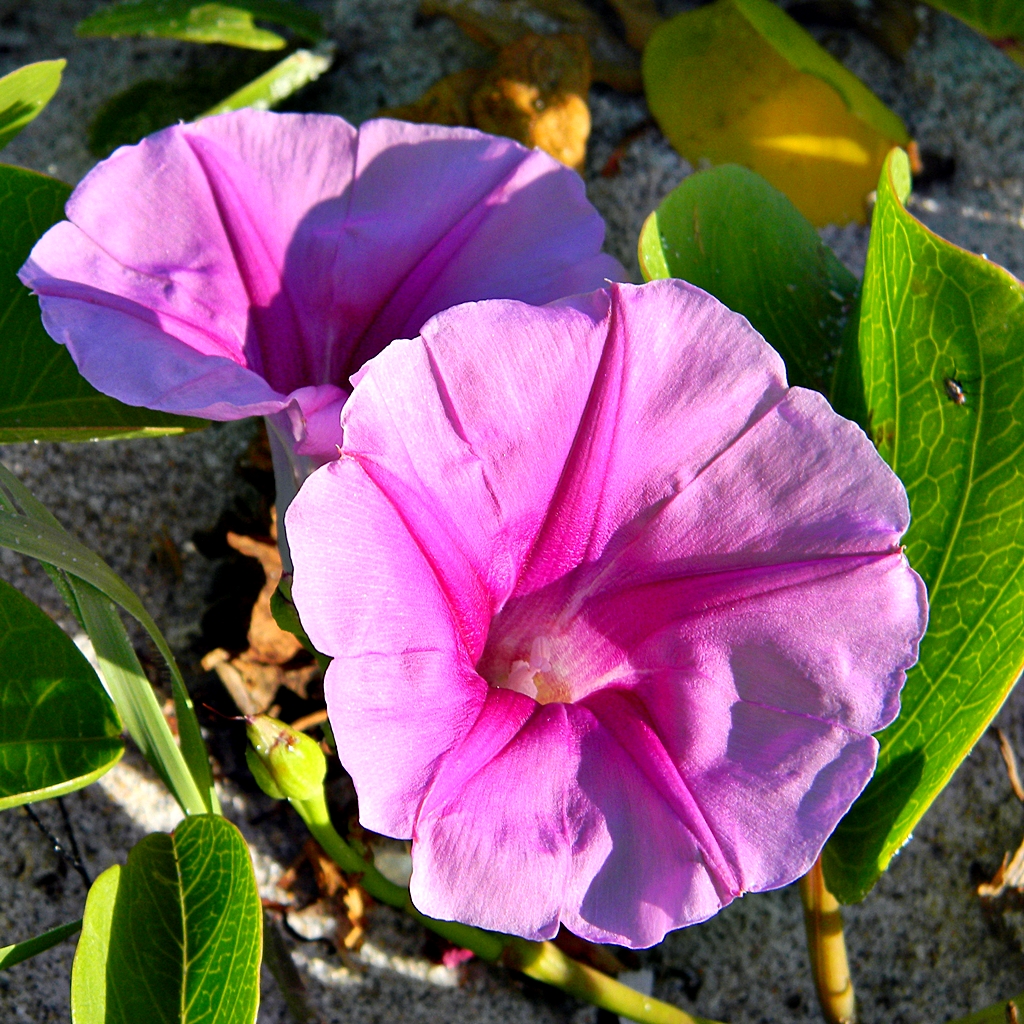
Beach morning glory does not climb; instead it lies flat and trails rapidly across open sand, sending down roots at the nodes as it goes. A single plant can extend 30 feet or more in a season, forming dense mats that bind loose dune sand and blunt the force of wind and waves. Large funnel-shaped flowers in shades of pink to lavender-purple open at dawn and typically close by early afternoon, especially on hot days, giving the plant its “morning glory” name.
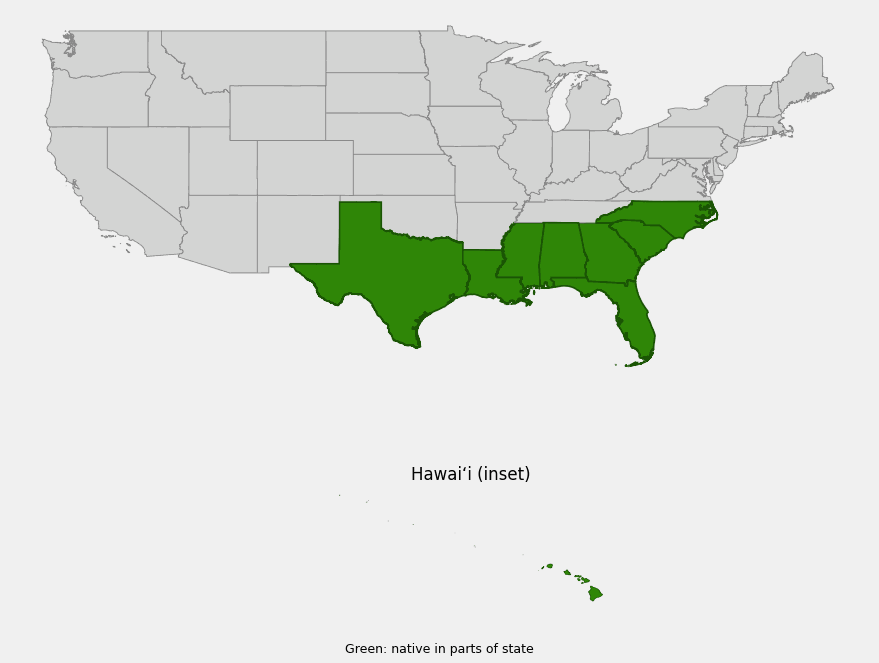
In the United States, beach morning glory grows naturally along the Atlantic coast from North Carolina south through Florida, west along the Gulf Coast to Texas, and on the sandy and rocky shores of the Hawaiian Islands. It is a frontline dune pioneer, usually the first vegetation to colonize bare, wind-blown sand just behind the beach, and it plays an outsized role in preventing beach erosion and building the foundation that other dune plants need to establish.
Identification
Beach morning glory is a low, trailing perennial vine, typically just 4 to 8 inches (10–20 cm) tall where it grows, though individual runners can extend 30 to 100 feet (9–30 m) or more along the sand. It does not twine around supports the way many morning glory relatives do; instead it creeps along the ground, rooting at nodes and forming a dense, mat-like groundcover across open dunes.
Stems
The stems are thick, fleshy, and often tinged reddish-purple, running horizontally across the sand surface. They are tough and somewhat woody at the base in older plants, and resist breakage from wind, foot traffic, and the pull of shifting sand. Roots form at the nodes wherever the stem touches moist sand, anchoring the vine and helping it resprout after storms bury or expose sections of the runner.
Leaves
The leaves are thick, leathery, and glossy dark green, 2 to 4 inches (5–10 cm) long, with a distinctive two-lobed shape resembling a cloven hoofprint — the source of both the common name “Goat’s Foot” and the scientific epithet pes-caprae. Leaves are borne singly on long petioles along the stem and are notably succulent, helping the plant conserve water in the dry, salty, free-draining sand it calls home.
Flowers
Flowers are large and funnel-shaped (morning-glory-shaped), 2 to 3 inches (5–7.5 cm) across, in shades of pink to rosy lavender-purple with a darker throat. Each bloom opens in early morning and typically closes by early-to-mid afternoon, especially under full sun and heat. In South Florida and Hawai’i, beach morning glory can bloom essentially year-round; farther north along its range it blooms mainly from late spring through fall.
Fruit & Seeds
After flowering, the plant produces a round, papery seed capsule about ½ inch (1.3 cm) across that dries and splits to release a small number of hard, dark brown to black seeds. The seeds are buoyant and have a corky, water-resistant seed coat, allowing them to float in seawater and disperse to new beaches and islands — a key reason the species is found on tropical and subtropical shorelines around the world. The seeds, along with the sap and other plant parts, contain compounds that are toxic if ingested; they are not a food plant and should be kept away from curious children and pets.
Quick Facts
| Scientific Name | Ipomoea pes-caprae (L.) R. Br. |
| Family | Convolvulaceae (Morning Glory) |
| Plant Type | Perennial Trailing Vine / Groundcover |
| Mature Height | 4–8 in (10–20 cm) |
| Mature Spread | 30–100+ ft (9–30+ m) of trailing runners |
| Growth Rate | Fast |
| Sun Exposure | Full Sun |
| Water Needs | Low (drought and salt tolerant once established) |
| Soil Type | Loose, sandy, well-drained |
| Soil pH | 6.0–8.0 (tolerant of alkaline, saline sand) |
| Bloom Time | Nearly year-round in Florida and Hawai’i; late spring–fall further north |
| Flower Color | Pink to rosy lavender-purple |
| Fall Color | None (evergreen where winters stay mild) |
| Fruit | Round papery capsule; seeds toxic if eaten |
| Deer Resistant | Yes |
| USDA Hardiness Zones | 9–11 |
Native Range
Beach morning glory is native along the Atlantic coast from North Carolina south through South Carolina, Georgia, and Florida, and west along the Gulf Coast through Alabama, Mississippi, Louisiana, and Texas. It is also native throughout the Hawaiian Islands, where it is known as pōhuehue. The species’ buoyant, corky-coated seeds float in seawater for long periods, which has allowed it to colonize beaches across the tropics and subtropics worldwide — it is considered pantropical, native to sandy and rocky shorelines on every warm ocean coastline.
Within its range, beach morning glory is a true pioneer species, typically the very first plant to establish on bare, actively shifting sand just above the high-tide line — ground too hot, dry, salty, and unstable for most other plants. It often grows alongside other classic dune pioneers such as sea oats, beach sunflower, railroad vine’s frequent companion beach croton (Croton punctatus), and bay bean.
Because it thrives at the very edge of the beach, beach morning glory is frequently damaged or buried by storm surge and high waves, but its ability to resprout from buried nodes and recolonize quickly from floating seed makes it remarkably resilient — one reason coastal restoration projects rely on it so heavily for erosion control.
📋 Regional plant lists featuring Beach Morning Glory: Georgia, Alabama & Mississippi · Arkansas, Louisiana, Eastern Oklahoma & Eastern Texas · North Carolina & South Carolina · Hawai’i
Growing & Care Guide
Beach morning glory is built for the harshest planting site imaginable — bare, blazing, salty beach sand — which makes it almost foolproof once it is sited correctly. It is not a plant for ordinary garden beds; it wants full sun, lean sandy soil, and plenty of room to run.
Light
Give beach morning glory full, all-day sun. It is adapted to open, unshaded dunes and will not perform well, flower freely, or compete against weeds in shade or even partial shade.
Soil & Water
This vine demands loose, fast-draining sandy soil and is highly tolerant of salt spray, salt-laden groundwater, and occasional inundation by storm tides. It needs no irrigation once established and in fact resents heavy, rich, or consistently moist soils, which encourage rot and fungal problems. Water new plantings only until roots establish, typically a few weeks.
Planting Tips
Plant beach morning glory from containers or rooted cuttings directly into open sand on the foredune or upper beach, spacing plants 3 to 4 feet apart to allow room for rapid spread. It establishes quickly from stem cuttings laid along the sand surface, since the nodes root readily when kept lightly moist. Avoid amending the planting hole with compost or topsoil — straight beach sand is what this species expects.
Pruning & Maintenance
Little maintenance is needed. Vines can be trimmed back if they encroach on walkways or neighboring plantings, and old, woody sections can be cut out in spring to encourage fresh growth. The plant tolerates being partially buried by blowing sand and will simply root again from the buried nodes.
Landscape Uses
- Dune stabilization and beach erosion control — its primary and most valuable use
- Coastal restoration plantings after storms or development disturbance
- Salt-tolerant groundcover for oceanfront properties where little else will grow
- Wildlife and pollinator plantings in coastal gardens
- Erosion control on sandy slopes and berms away from the immediate beach
Wildlife & Ecological Value
Beach morning glory is a foundation species of healthy beach-dune ecosystems, providing far more ecological value than its low, unassuming profile suggests.
For Pollinators
The large, nectar-rich flowers attract bees, including native sweat bees and leafcutter bees, as well as skipper butterflies and other beach-adapted pollinators that have few other nectar sources on open sand.
For Birds
Shorebirds and small songbirds use the dense mats of foliage for cover and nesting shelter at the back of the beach, and sea turtle hatchlings benefit indirectly: the stabilized dunes the vine helps build are essential nesting habitat for species like loggerhead and green sea turtles.
For Mammals
Beach mice and other small coastal mammals use the tangled runners for cover from predators, and the vine’s dense growth helps moderate surface sand temperatures, creating a more hospitable microhabitat at the base of the dune.
Ecosystem Role
As a true pioneer species, beach morning glory is often the first plant to colonize bare sand after storms, development, or erosion. Its extensive root and runner network binds loose sand, slows wind, and traps blowing sediment, kickstarting dune formation and creating the stable conditions that sea oats and other later-successional dune plants need to establish. Few plants do more, per square foot, to hold a beach together.
Cultural & Historical Uses
In Hawai’i, pōhuehue holds a notable place in traditional culture. Hawaiian surfers historically used the vine’s long runners in rituals intended to summon good surf, chanting and slapping the water’s surface with the vines — a practice recorded in early Hawaiian ethnographic accounts of surf-calling customs tied to the coastal plants that grew closest to the waves.
Across its range, Indigenous and traditional coastal communities in Florida, the Caribbean, and other parts of its pantropical range have historically used various parts of the plant in folk remedies for ailments such as jellyfish stings and skin irritation, typically by applying crushed leaves externally. These are historical uses, not medical advice — because the plant’s sap and seeds are toxic if ingested, beach morning glory should never be taken internally, and any topical folk use should be approached with caution given the limited scientific documentation of safety and effectiveness.
Beyond its cultural associations, beach morning glory has long been prized simply for the practical service it provides: binding sand, slowing erosion, and giving later dune plants a foothold. Coastal landowners and restoration agencies throughout the Southeast and Gulf Coast have relied on it for generations as one of the most dependable, low-cost tools for protecting beachfront property and habitat.
Frequently Asked Questions
Is beach morning glory the same as railroad vine?
Yes. “Railroad Vine” is a common alternate name, inspired by the way the long, straight runners resemble railroad tracks laid across the sand. “Bayhops,” “Goat’s Foot,” and in Hawai’i “pōhuehue” all refer to the same species, Ipomoea pes-caprae.
Can you eat beach morning glory?
No. The seeds, sap, and other plant parts contain compounds that are toxic if ingested. It is grown strictly as an ornamental and erosion-control groundcover, never as a food plant.
Will beach morning glory grow away from the beach?
It can grow in ordinary sandy, well-drained garden soil in full sun, but it performs best and spreads most vigorously in loose, lean sand with salt exposure. In richer garden soil it tends to be less vigorous and more prone to fungal issues.
How fast does beach morning glory spread?
Very fast. A single plant can send out runners 30 feet or more in a single growing season under good conditions, rooting at nodes along the way, which is exactly what makes it so effective at stabilizing open sand.
Is beach morning glory invasive?
Within its native range along the Southeast and Gulf Coasts and in Hawai’i, it is a valued native dune plant, not invasive. It has, however, become naturalized on beaches well outside its original native range in some other parts of the world, due to its buoyant, ocean-dispersed seeds.

Looking for a nursery that carries Beach Morning Glory?
Browse our native plant nursery directory: Florida, Georgia & Hawai’i · South Carolina & Texas · North Carolina · Alabama · Mississippi & Louisiana