
Wood Nettle (Laportea canadensis)
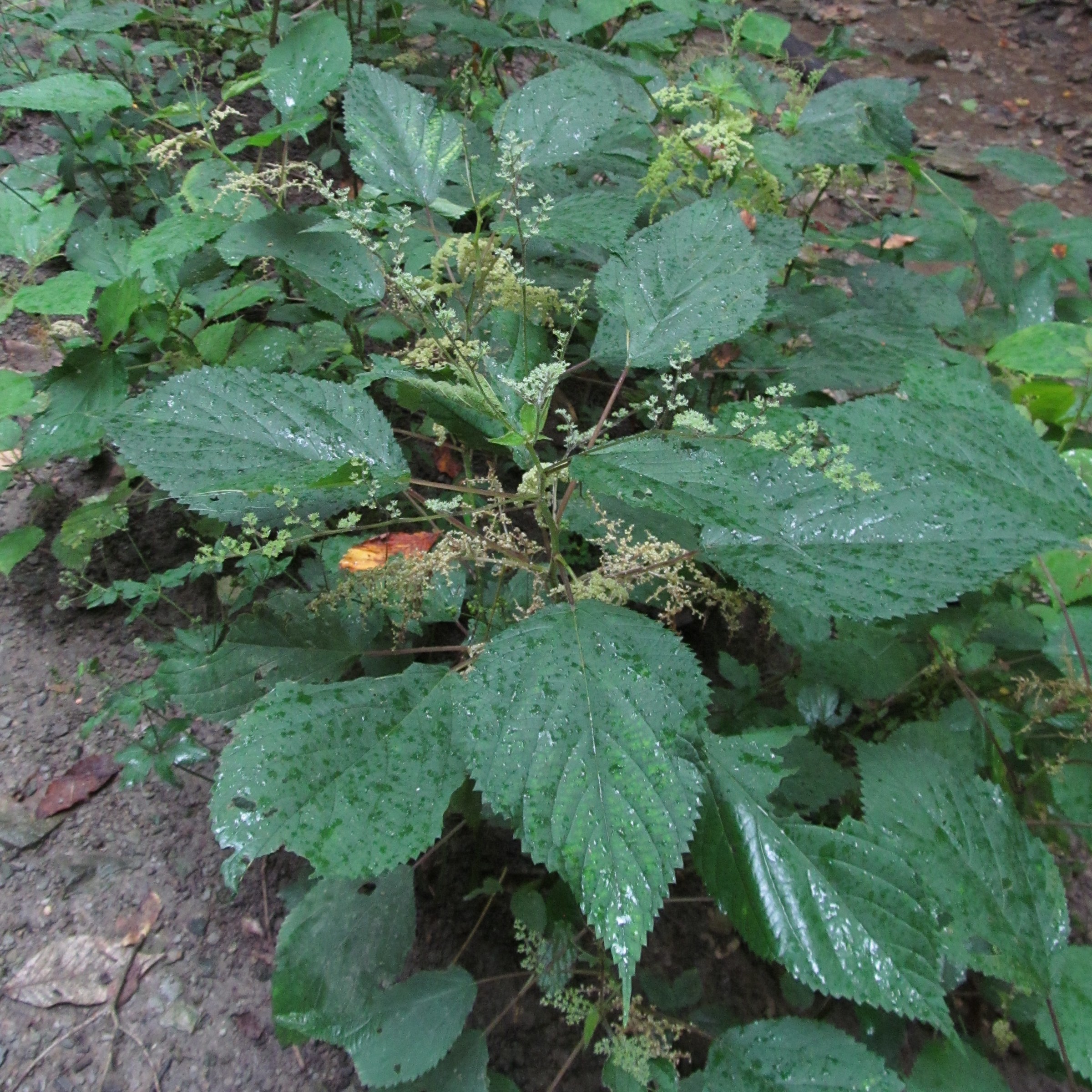
Laportea canadensis, commonly called Wood Nettle or Canada Wood Nettle, is a native herbaceous perennial of moist, shaded woodlands across eastern and central North America. It belongs to the nettle family (Urticaceae) and, like its well-known relative stinging nettle, carries stinging hairs on its stems and leaves that deliver a sharp, burning jolt on contact. Despite that defense, wood nettle is an important and often overlooked part of the native forest floor, forming loose colonies in rich bottomland soils where few other broad-leaved perennials compete.
Wood nettle grows from spreading, somewhat tuberous roots into clumps 1 to 5 feet tall, with large, alternately arranged leaves that set it apart from the common stinging nettle (Urtica dioica), whose leaves are opposite. From early summer into fall it produces loose, drooping sprays of tiny whitish-green flowers that, while inconspicuous individually, create a soft, feathery texture above and among the foliage. The plant spreads readily by rhizome in favorable sites, often forming dense single-species patches in floodplain forests and along shaded streambanks.
For gardeners restoring a moist woodland or streamside planting, wood nettle is a genuinely useful native, valuable as a larval host plant and a filler for difficult wet shade where few other herbaceous natives thrive. It is not, however, a plant for the front border or anywhere people, pets, or bare ankles brush past regularly — its stinging hairs are real and should be respected. Site it with that caution in mind, in a naturalized area rather than along a path.
Identification
Wood nettle is an upright, somewhat coarse perennial forb that forms loose clumps or small colonies. Stems are usually unbranched or sparingly branched, round in cross-section, and covered with a mix of stinging and non-stinging hairs, the stinging ones concentrated on the upper stem and leaf undersides.
Stems
Stems are light green to reddish-green, somewhat translucent and succulent-looking, growing 1 to 5 feet (30–150 cm) tall from fibrous, sometimes tuberous roots. They are brittle and snap easily, and the stinging hairs are most concentrated along the upper two-thirds of the stem. Plants often grow in loose colonial patches from spreading rhizomes rather than as isolated single stems.
Leaves
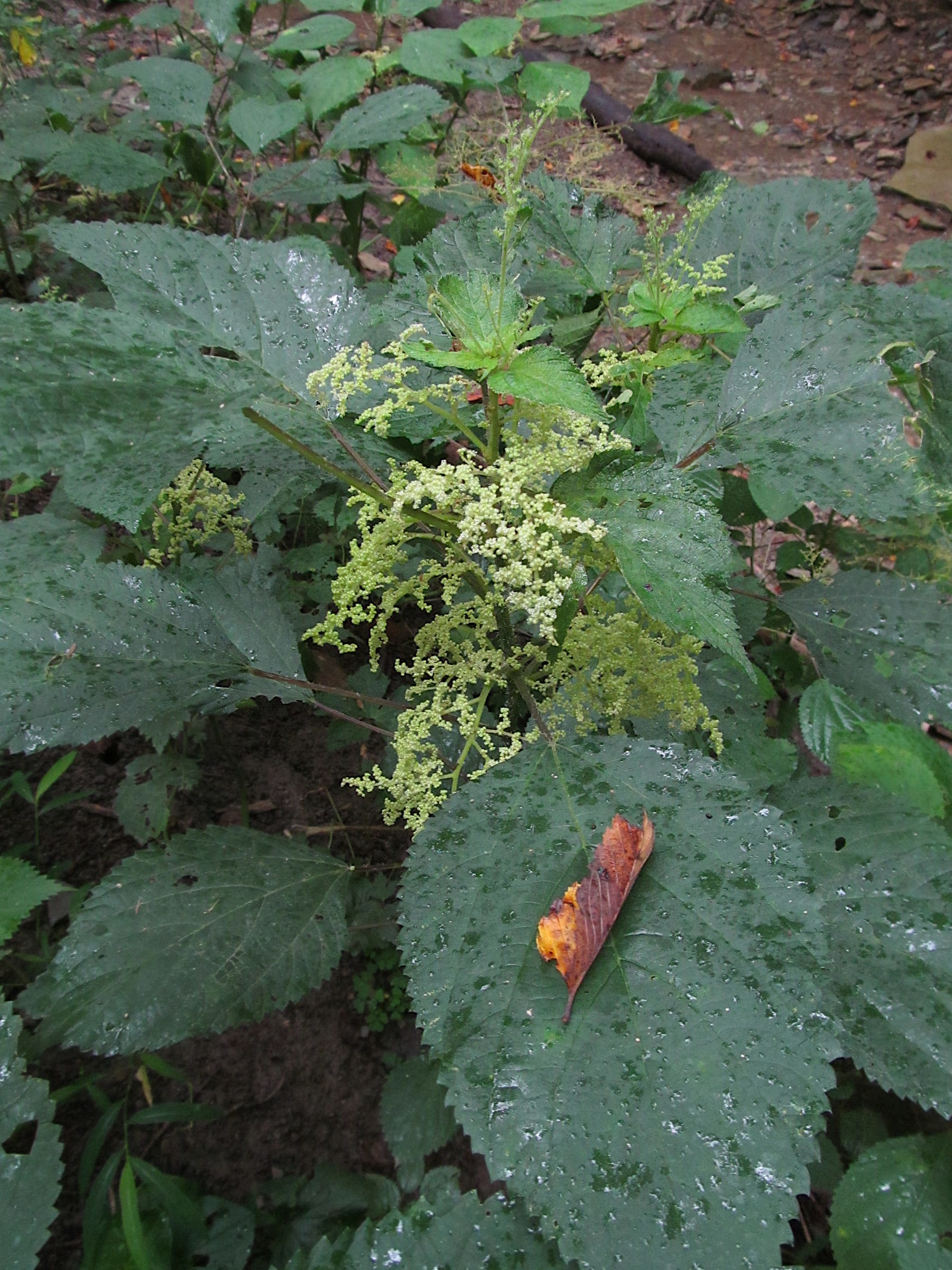
Leaves are alternate (a key difference from stinging nettle’s opposite leaves), broadly ovate to heart-shaped, 3 to 8 inches long, with coarsely toothed margins and a pointed tip. The upper leaf surface is dull green and somewhat rough, with scattered stinging hairs most noticeable along the veins and margins; the undersides carry more hairs still. Leaves are borne on long stalks and tend to cluster toward the upper part of the stem, giving the plant a top-heavy, leafy look.
Flowers & Fruit
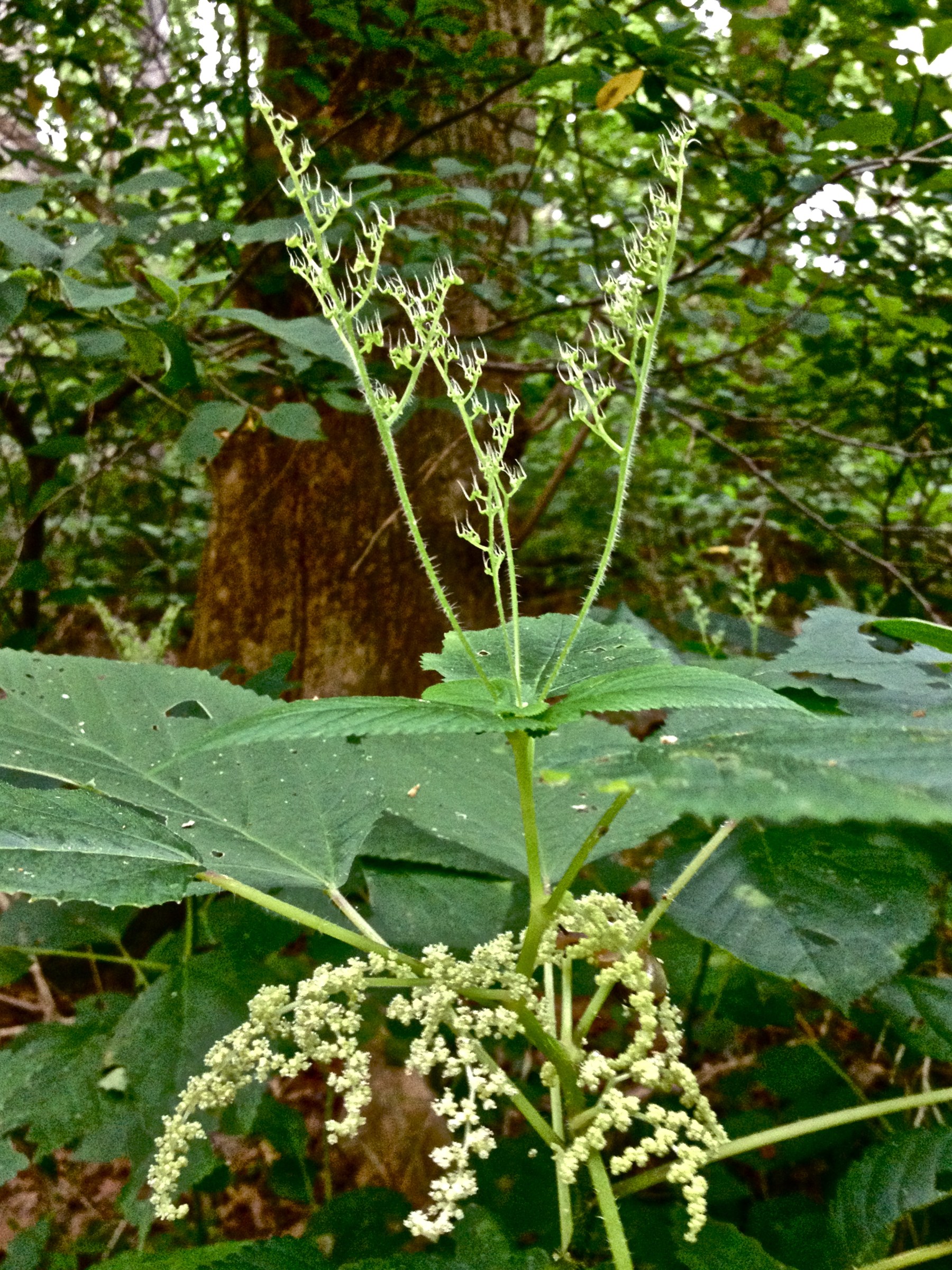
Wood nettle is monoecious, bearing separate male and female flower clusters on the same plant. Male flower clusters emerge from the lower leaf axils, while the more conspicuous female clusters form loose, branching, somewhat drooping panicles near the stem tips, blooming from roughly June through September. The flowers themselves are tiny, whitish-green, and wind-pollinated, lacking petals in any showy sense — their appeal is textural rather than colorful. Tiny flattened achenes follow, each about an eighth of an inch long, maturing in late summer and scattering near the parent plant.
Quick Facts
| Scientific Name | Laportea canadensis |
| Family | Urticaceae (Nettle) |
| Plant Type | Herbaceous perennial forb |
| Mature Height | 1–5 ft (30–150 cm) |
| Mature Spread | Spreads by rhizome into loose colonies 2–4 ft wide |
| Growth Rate | Fast in good conditions |
| Sun Exposure | Part Shade to Full Shade |
| Water Needs | Average to consistently moist; tolerates seasonal wet soil |
| Soil Type | Rich, moist loam; streamside alluvial soils |
| Soil pH | Slightly acidic to neutral (about 5.5–7.0) |
| Bloom Time | June – September |
| Flower Color | Whitish-green |
| Fall Color | None notable; foliage yellows and collapses after frost |
| Fruit | Tiny flattened achenes, inconspicuous |
| Deer Resistant | Yes — stinging hairs discourage browsing |
| USDA Hardiness Zones | 3–8 |
Native Range
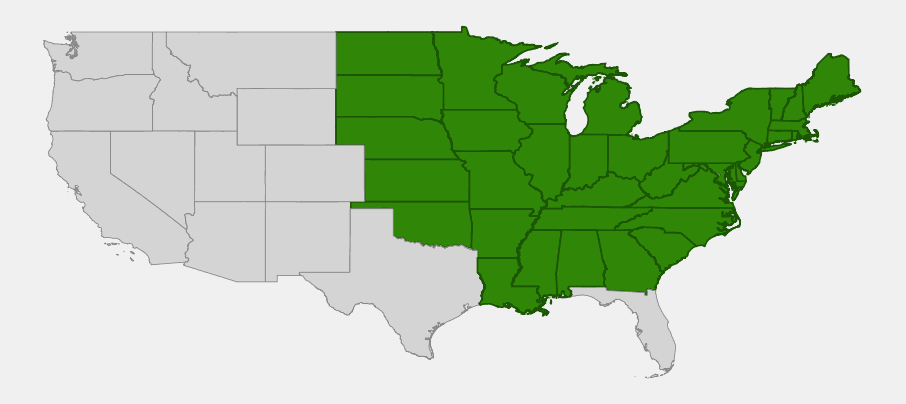
Wood nettle is native to a broad swath of eastern and central North America, from the Canadian Maritimes and New England west across the Great Lakes states into the eastern Great Plains, and south through the Appalachians and the Mississippi and Ohio valleys into the Gulf states. It is common and widespread within this range wherever its narrow habitat requirement — consistently moist, fertile, shaded soil — is met, though it thins out and becomes patchy toward the western and northern edges of its range.
Typical habitat is rich, moist deciduous woodland: floodplain forests, the margins of streams and spring seeps, moist ravines, and low, fertile woods with a closed or partly open canopy. It is frequently found growing with other moisture-loving woodland perennials in soils that stay damp through the growing season but are not permanently flooded. Because it needs both shade and consistent moisture, wood nettle is largely absent from drier upland forests and from open, sunny ground.
Wood nettle is not considered rare or threatened anywhere in its core range; NatureServe ranks it globally secure. It can, however, disappear quickly from sites where woodland is cleared, drained, or where deer pressure and invasive plants degrade the understory, since it depends on an intact, moist forest floor rather than disturbed ground.
📋 Regional plant lists featuring Wood Nettle: New Hampshire, Maine & Vermont · Connecticut, Massachusetts & Rhode Island · New York, Pennsylvania & Northern New Jersey · Delaware, Southern New Jersey & Long Island · Maryland, Virginia & West Virginia · North Carolina & South Carolina · Georgia, Alabama & Mississippi · Arkansas, Louisiana, Eastern Oklahoma & Eastern Texas · Kentucky & Tennessee · Ohio & Indiana · Illinois, Iowa & Missouri · Michigan, Wisconsin & Eastern Minnesota · North Dakota, South Dakota & Western Minnesota · Nebraska, Kansas & Eastern Colorado
Growing & Care Guide
Wood nettle is not a plant most gardeners seek out, but for a moist, shaded naturalized area it is a tough, reliable filler that asks very little once you have given it the damp, rich soil it wants. Handle it with care — both in the garden and whenever you weed around it.
Light
Wood nettle is a true woodland plant, growing best in part shade to full shade beneath a closed or partly open deciduous canopy. It can tolerate a few hours of morning sun if soil moisture stays high, but hot afternoon sun combined with dry soil will stress and scorch the foliage quickly.
Soil & Water
Give wood nettle rich, consistently moist soil — the kind found naturally on floodplains and along streambanks. It tolerates brief flooding and seasonal wet spells better than most garden perennials, but does not do well in average garden soil that dries out between waterings. A woodland loam with steady moisture, supplemented by irrigation in dry summers, keeps the colony vigorous.
Planting Tips
Plant in spring from containers or divisions into a shaded, moist site where its colonizing habit will not be a problem — along a stream corridor, in a rain garden’s shaded margin, or in a naturalized woodland planting well away from paths and play areas. Because the rhizomes spread, give it room to roam or plan to manage the edges of the patch. Wear gloves when handling roots or transplants, since even young growth carries stinging hairs.
Pruning & Maintenance
Wood nettle needs no routine pruning or fertilizing. If the colony spreads further than wanted, cut or pull unwanted stems in spring while wearing heavy gloves and long sleeves; cut material should be composted or discarded with the same caution, since dried stinging hairs can remain irritating. The plant dies back completely after frost and regrows from the rootstock each spring.
Landscape Uses
- Streamside and floodplain restoration, where few other broad-leaved natives tolerate the wet, shaded conditions
- Rain garden shade margins and low spots that stay consistently damp
- Butterfly gardens, as a larval host for the red admiral and eastern comma butterflies
- Naturalized woodland plantings sited well back from paths, patios, and play areas
- Erosion control on shaded, moist slopes and stream margins, thanks to its spreading rhizomes
Wildlife & Ecological Value
Despite its reputation as a plant to avoid touching, wood nettle plays a genuinely useful role in eastern woodland ecosystems.
For Pollinators
The flowers are wind-pollinated rather than insect-pollinated, so they offer little nectar reward, but the plant’s foliage is important in a different way: it serves as a larval host for several butterflies, including the red admiral and eastern comma, whose caterpillars feed on nettle-family leaves and often fold them into shelters.
For Birds
Small songbirds forage through wood nettle colonies for the caterpillars and other insects the foliage supports, and the dense summer growth offers low cover for ground-feeding birds in otherwise open floodplain understories.
For Mammals
Most mammalian herbivores avoid wood nettle because of its stinging hairs, which is part of why it persists in areas with heavy deer browsing pressure where more palatable woodland perennials have been eaten out. This makes it one of the few broad-leaved native forbs that can still be found thriving in deer-heavy forests.
Ecosystem Role
Wood nettle’s dense colonial growth helps stabilize moist soils along streambanks and floodplains, and its rapid spring growth adds structure and shade to the forest floor before the tree canopy fully leafs out. As a native plant that tolerates both shade and periodic flooding, it fills a niche that few introduced or weedy species can occupy as effectively, helping maintain diverse native groundcover in intact bottomland forest.
Cultural & Historical Uses
Several Indigenous peoples of eastern North America historically used wood nettle’s tough stem fibers to make cordage, nets, and textiles, following a tradition shared with other fiber-yielding nettles around the world. The long, strong fibers were stripped from the stems after retting (soaking to break down the outer tissue), then twisted or woven much as other plant fibers were used before the introduction of manufactured cordage.
Young spring shoots of wood nettle have a documented history as a foraged spring green among Indigenous communities and later rural foragers, prepared in the same way as the related stinging nettle: cooked briefly, which deactivates the stinging hairs and renders the leaves safe to eat as a cooked potherb. This is a historical and foraging practice, not a recommendation; raw contact with any part of the growing plant will sting, and correct identification is essential before any foraged use is attempted.
Beyond its practical uses, wood nettle has long been simply a hazard well known to anyone who has walked off-trail through eastern floodplain forests in summer, and its presence is often used informally by hikers and naturalists as a sign of rich, undisturbed bottomland soil.
Frequently Asked Questions
Does wood nettle sting like stinging nettle?
Yes. Wood nettle carries the same type of stinging hairs as common stinging nettle (Urtica dioica), delivering a sharp, burning sensation on contact that can leave red, itchy welts lasting from minutes to a day or more. Wear gloves and long sleeves when working near or handling the plant.
How is wood nettle different from stinging nettle?
The easiest field mark is leaf arrangement: wood nettle has alternate leaves, while common stinging nettle has opposite leaves. Wood nettle also tends to have broader, more heart-shaped leaves and favors shaded, moist woodland rather than the sunnier, disturbed ground stinging nettle often colonizes.
Can you eat wood nettle?
Historically, young spring shoots were cooked and eaten as a potherb by Indigenous peoples and later foragers, since cooking destroys the stinging compounds. This is a historical use, not a safety endorsement from Plant Native; never touch or eat any part of the raw plant, and be certain of identification before considering any foraged use.
Is wood nettle invasive in my garden?
It is native, not invasive, but it does spread by rhizome and can form dense colonies in consistently moist, shaded soil. Give it room in a naturalized area rather than planting it in a small, mixed border where it might outcompete neighbors.
Will wood nettle grow in a dry shade garden?
No. Wood nettle needs consistently moist to wet soil and will struggle or fail in typical dry shade under mature trees. It is best reserved for streamsides, floodplain restoration, or shaded rain garden margins where soil moisture stays high.

Looking for a nursery that carries Wood Nettle?
Browse our native plant nursery directory: ME, MA, MD, MS, KY, MI, MN, MO, LA · NH, NY, NJ, NC, OH, NE, ND, OK · VT, RI, PA, VA, SC, TN, SD · CT, DE, GA · WV, WI · AL, AR · IN, IL, IA, KS