
Mountain Bluebells (Mertensia ciliata)
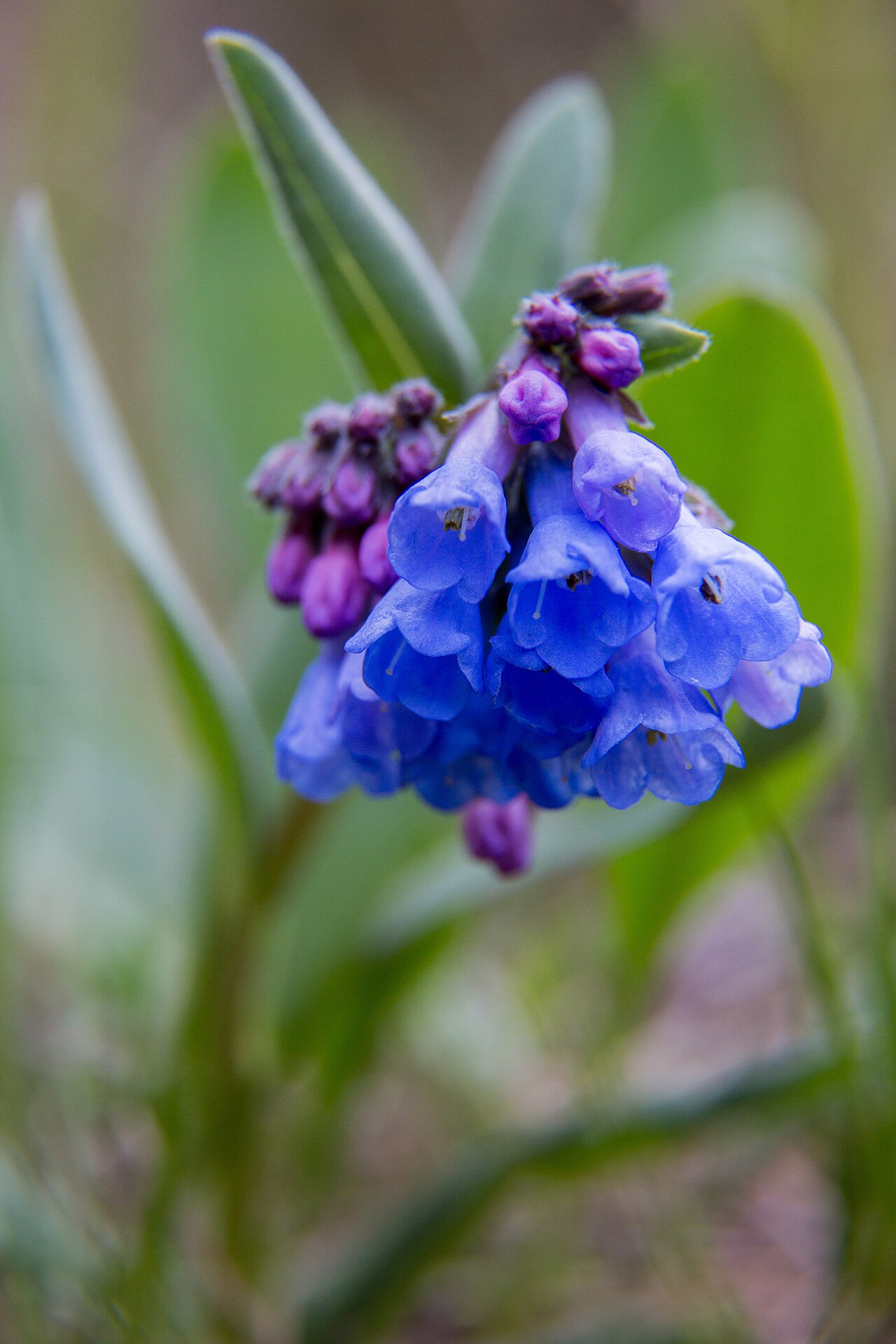
Mertensia ciliata, commonly called Mountain Bluebells (also known as Tall Fringed Bluebells or Streamside Bluebells), is a lush, sprawling perennial wildflower of the high Rocky Mountains and intermountain West. A member of the borage family (Boraginaceae), it is instantly recognizable in midsummer meadows and along snowmelt creeks: pale pink buds unfurl into nodding, tubular-bell flowers that turn true sky blue as they open, hanging in loose clusters above broad, bluish-green leaves. Where it’s happy, Mountain Bluebells doesn’t grow as a scattered wildflower but as a dominant understory, carpeting entire streambanks and wet avalanche chutes in waist-high, blue-flowered drifts.
This is a plant of wet feet and cool summers. Mountain Bluebells is most at home along the margins of subalpine and alpine creeks, in seeping wet meadows, and beneath aspen and spruce-fir groves where snowmelt keeps the soil saturated well into July. It dies back completely to the ground by late summer or early fall, going fully dormant underground as a thick, fleshy rootstock until the following spring’s thaw — a trait shared with many of its moisture-loving relatives in the genus Mertensia.
For a native garden with a consistently damp, part-shaded spot — a rain garden, pond margin, or the north side of a building where snowmelt or irrigation lingers — Mountain Bluebells brings an early- to mid-summer flush of true blue that few other native perennials can match. It pairs naturally with other subalpine wet-meadow species and is a reliable draw for hummingbirds and long-tongued bumblebees.
Identification
Mountain Bluebells is a robust, somewhat succulent-looking herbaceous perennial, typically standing 1 to 4 feet tall, with stout, hollow, often arching stems that can sprawl where the plant grows in dense colonies. The whole plant has a smooth, slightly waxy, blue-green cast (a “glaucous” bloom) that is useful for picking it out from other streamside greenery even before it flowers.
Leaves
Leaves are broadly oval to elliptic, 2 to 8 inches long, with a prominent network of veins and a texture that can feel slightly rough or finely fringed along the margins — the source of the species name ciliata, Latin for “fringed with hairs.” Lower leaves are stalked; upper leaves clasp the stem more closely and become progressively smaller toward the flower clusters. The foliage is thin and tender, and wilts quickly once cut or once summer drought sets in, which is why the plant disappears from view so completely by late summer.
Flowers
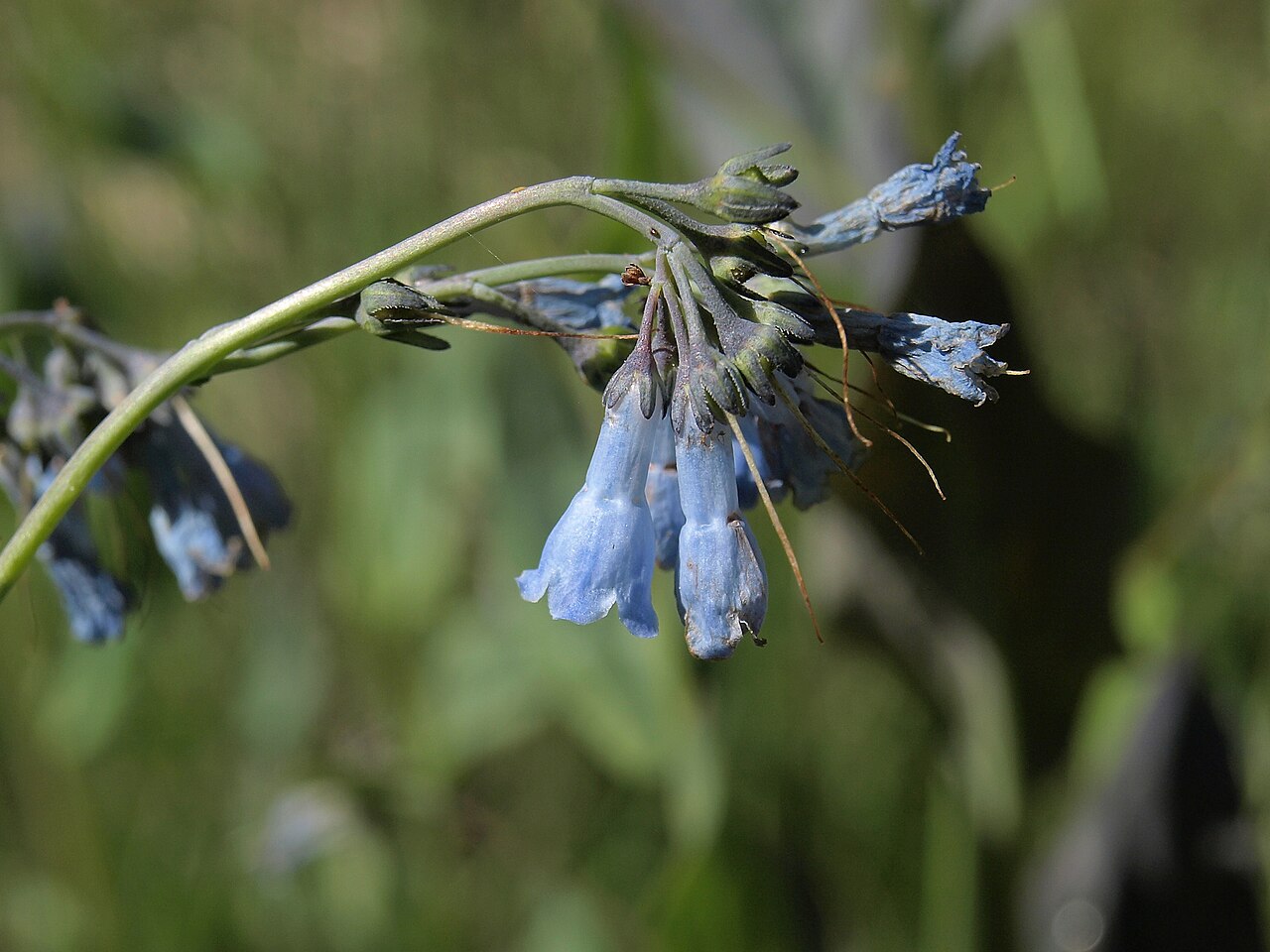
Flowers open from distinctly pink or lavender-pink buds, then shift to a clear sky or cobalt blue as they mature — both colors are often visible together in the same nodding cluster, giving the inflorescence a two-toned look. Each flower is a narrow, bell- or trumpet-shaped tube about ½ to ¾ inch long with five shallow, flared lobes at the mouth, hanging face-down on slender stalks in loose, coiled clusters (botanically, a scorpioid cyme) at the stem tips. Bloom time runs from June into August depending on elevation and snowmelt timing, with the showiest displays following a heavy snow year.
Fruit & Seeds
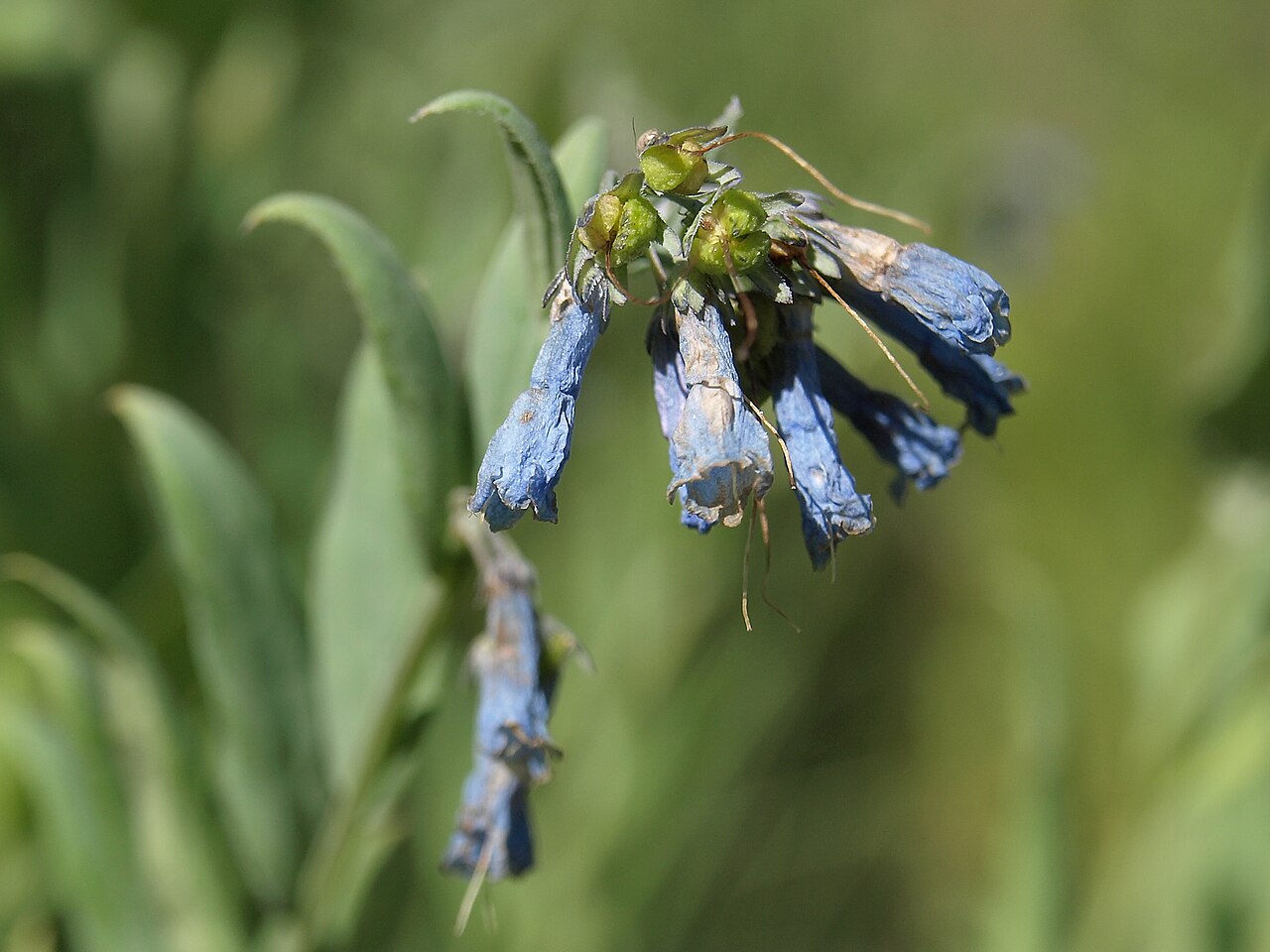
After flowering, each flower produces a small cluster of four wrinkled, bumpy nutlets that mature as the papery calyx dries around them. The nutlets are inconspicuous and quickly shed; most gardeners will never notice the seed stage, since the foliage collapses and yellows at about the same time the nutlets ripen.
Quick Facts
| Scientific Name | Mertensia ciliata |
| Family | Boraginaceae (Borage) |
| Plant Type | Herbaceous Perennial Wildflower |
| Mature Height | 1–4 ft |
| Mature Spread | 1–3 ft, often forming dense colonies |
| Growth Rate | Moderate; spreads by rhizome in favorable sites |
| Sun Exposure | Part Shade to Full Sun (cool climates) |
| Water Needs | High; needs consistently moist to wet soil |
| Soil Type | Rich, organic, moisture-retentive loam |
| Soil pH | 6.0–7.5 (neutral to slightly acidic) |
| Bloom Time | June – August |
| Flower Color | Pink in bud, opening sky blue |
| Fall Color | None; foliage yellows and collapses, going dormant |
| Fruit | Inconspicuous dry nutlets (4 per flower) |
| Deer Resistant | Moderate (browsed occasionally, not preferred) |
| USDA Hardiness Zones | 3–7 |
Native Range
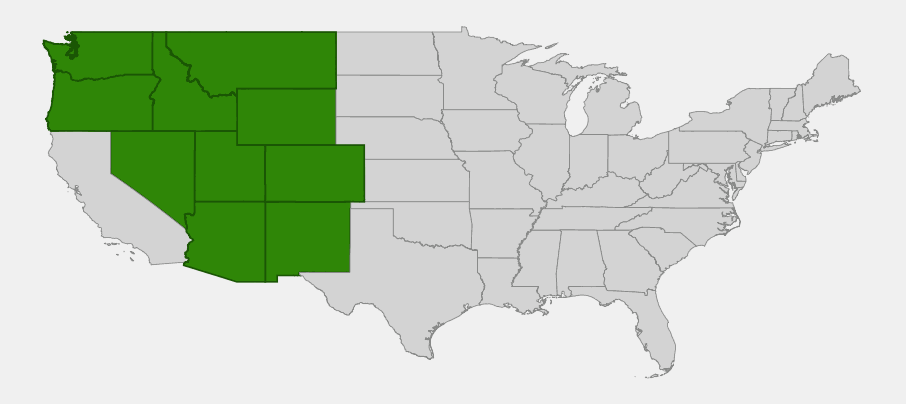
Mountain Bluebells is a plant of the western cordillera, native from the Cascade and northern Rocky Mountains of Washington, Oregon, Idaho, and Montana south through Wyoming, Utah, Nevada, and Colorado to the mountains of Arizona and New Mexico. Throughout this range it is tied to elevation rather than latitude, typically appearing between about 6,000 and 12,000 feet — the subalpine and alpine zones where snowpack lingers longest and summer stays cool.
Within that elevational band, look for it along the banks of rushing creeks and seasonal snowmelt streams, in wet subalpine meadows, seep slopes, and avalanche chutes where deep snow protects the dormant rootstock through winter and releases a flush of moisture each spring. It is frequently found growing with False Hellebore (Veratrum californicum), various willows (Salix spp.), and other moisture-loving subalpine wildflowers, often forming continuous blue-flowered bands along the water’s edge.
Mountain Bluebells is not a lowland or garden-escape plant; it has not naturalized outside its native mountain range and is absent from the Great Plains, the Southeast, and the Pacific lowlands. Gardeners outside its home elevation range who want to grow it successfully need to focus on replicating its two non-negotiable requirements — cool root zones and constant moisture — rather than its native latitude.
📋 Regional plant lists featuring Mountain Bluebells: Idaho, Eastern Oregon & Eastern Washington · Montana & Wyoming · Utah & Western Colorado · Arizona & New Mexico
Growing & Care Guide
Mountain Bluebells rewards gardeners who can give it what it wants and sulks or disappears for those who can’t — this is not a forgiving, plant-anywhere wildflower. Site selection matters more than any other factor in success.
Light
In its high-elevation home, Mountain Bluebells often grows in open, sunny meadows, but at lower garden elevations the combination of more intense sun and warmer air makes part shade — especially afternoon shade — much more forgiving. Morning sun with afternoon shade, or the dappled light under high deciduous canopy, mimics the cool conditions the plant expects.
Soil & Water
This is a plant that wants its roots wet essentially all the time during the growing season — think streambank, not border perennial. Rich, humus-heavy soil that holds moisture without becoming stagnant is ideal. A spot that receives natural seep or snowmelt, the edge of a pond or rain garden, or a bed with reliable supplemental irrigation through summer will keep it happy. Allowing the soil to dry out, even briefly, during the height of the growing season will cause the foliage to collapse early and can weaken the rootstock over winter.
Planting Tips
Plant divisions or container stock in spring as soon as the ground can be worked, while the plant is still actively growing. Set plants at the same depth they were growing in the container, mulch with a couple of inches of leaf litter to keep roots cool, and water in thoroughly. Because the plant goes fully dormant by late summer, mark its location so it isn’t disturbed or mistaken for dead space later in the season.
Pruning & Maintenance
Essentially no pruning is needed. Once the foliage yellows and collapses in late summer, it can be cut back to the ground or simply left to break down in place. Divide congested clumps every three to four years in early spring to maintain vigor and control spread in smaller garden settings.
Landscape Uses
Mountain Bluebells shines in a handful of specific garden roles:
- Rain gardens and bioswales with reliable season-long moisture
- Pond and stream margins in cool-summer climates
- Mountain and high-elevation native gardens above about 6,000 feet
- Woodland seep edges under open deciduous canopy
- Hummingbird and pollinator plantings paired with other early-summer bloomers
- Naturalized meadow restorations in appropriate subalpine settings
Wildlife & Ecological Value
Along the subalpine creeks where it grows in quantity, Mountain Bluebells is one of the more important early- to mid-summer nectar sources at elevation, blooming just as high-country pollinators are becoming active.
For Pollinators
The narrow, tubular flowers are well matched to long-tongued bumblebees, which are the primary pollinators, along with other native bees capable of reaching the nectar at the base of the tube. The dense, coiled flower clusters allow a single foraging bee to work many flowers in quick succession.
For Birds
Broad-tailed and Rufous Hummingbirds, both common at subalpine elevations during the summer breeding season, regularly visit Mountain Bluebells for nectar, and the plant is considered a valuable component of high-elevation hummingbird habitat.
For Mammals
Elk and mule deer browse the foliage lightly, particularly early in the season before the leaves mature; it is not a preferred forage species, but it contributes to the general productivity of subalpine meadows that support large grazing animals.
Ecosystem Role
By colonizing wet, disturbance-prone sites such as avalanche paths and eroding streambanks, Mountain Bluebells helps stabilize soil and moisture in some of the most dynamic microhabitats in the mountain landscape. Its dense summer growth also provides cover for small mammals and ground-nesting insects along stream corridors.
Cultural & Historical Uses
Mountain Bluebells has left a much lighter historical footprint than many lowland native plants, largely because its remote, high-elevation habitat limited regular human contact and harvest. It does not have a well-documented record of traditional food or medicinal use, and no credible historical sources describe it as an edible or medicinal plant for Indigenous communities of the region; where early botanists and travelers mention it at all, it is almost always as a conspicuous and attractive wildflower of the high country rather than a resource plant.
Its main historical significance has been aesthetic and scientific: the striking color change from pink bud to blue flower made it a frequently collected and illustrated species among 19th- and early 20th-century botanical surveys of the Rocky Mountains, and it remains a signature wildflower noted in hiking and natural history accounts of the region today.
In modern horticulture, Mountain Bluebells is valued almost exclusively as an ornamental and ecological restoration plant for high-elevation gardens, used to recreate the look and function of a natural subalpine streambank rather than for any practical household use.
Frequently Asked Questions
Why do Mountain Bluebells flowers start pink and turn blue?
The color shift is caused by a change in cell sap pH as the flower matures, a trait common throughout the genus Mertensia and the wider borage family. Young buds are more acidic and appear pink or lavender; as the flower opens and the pH shifts, the pigment turns a clear blue.
Can I grow Mountain Bluebells at low elevation?
It’s difficult. The plant is adapted to cool summer soil temperatures and constant moisture found at 6,000 feet and above. In lowland gardens with hot summers, it tends to struggle unless given a consistently cool, wet, shaded microclimate such as a north-facing pond edge.
Is Mountain Bluebells the same plant as Virginia Bluebells?
No. Virginia Bluebells (Mertensia virginica) is a different, closely related eastern woodland species with a similar pink-to-blue flower color but a very different range and habitat — moist eastern deciduous forests rather than Rocky Mountain streambanks.
Why did my Mountain Bluebells disappear in late summer?
This is normal. Mountain Bluebells is summer-dormant: the foliage yellows and dies back to the ground by late summer regardless of how well it’s cared for, and the plant re-emerges from its rootstock the following spring.
Do hummingbirds really visit this flower?
Yes — Broad-tailed and Rufous Hummingbirds are regular visitors to Mountain Bluebells in the subalpine meadows where both occur together in summer, making it a good choice for high-elevation hummingbird gardens.

Looking for a nursery that carries Mountain Bluebells?
Browse our native plant nursery directory: Washington · Oregon · Idaho · Montana · Wyoming · Utah · Colorado · Nevada & New Mexico · Arizona