
Graceful Cinquefoil (Potentilla gracilis)
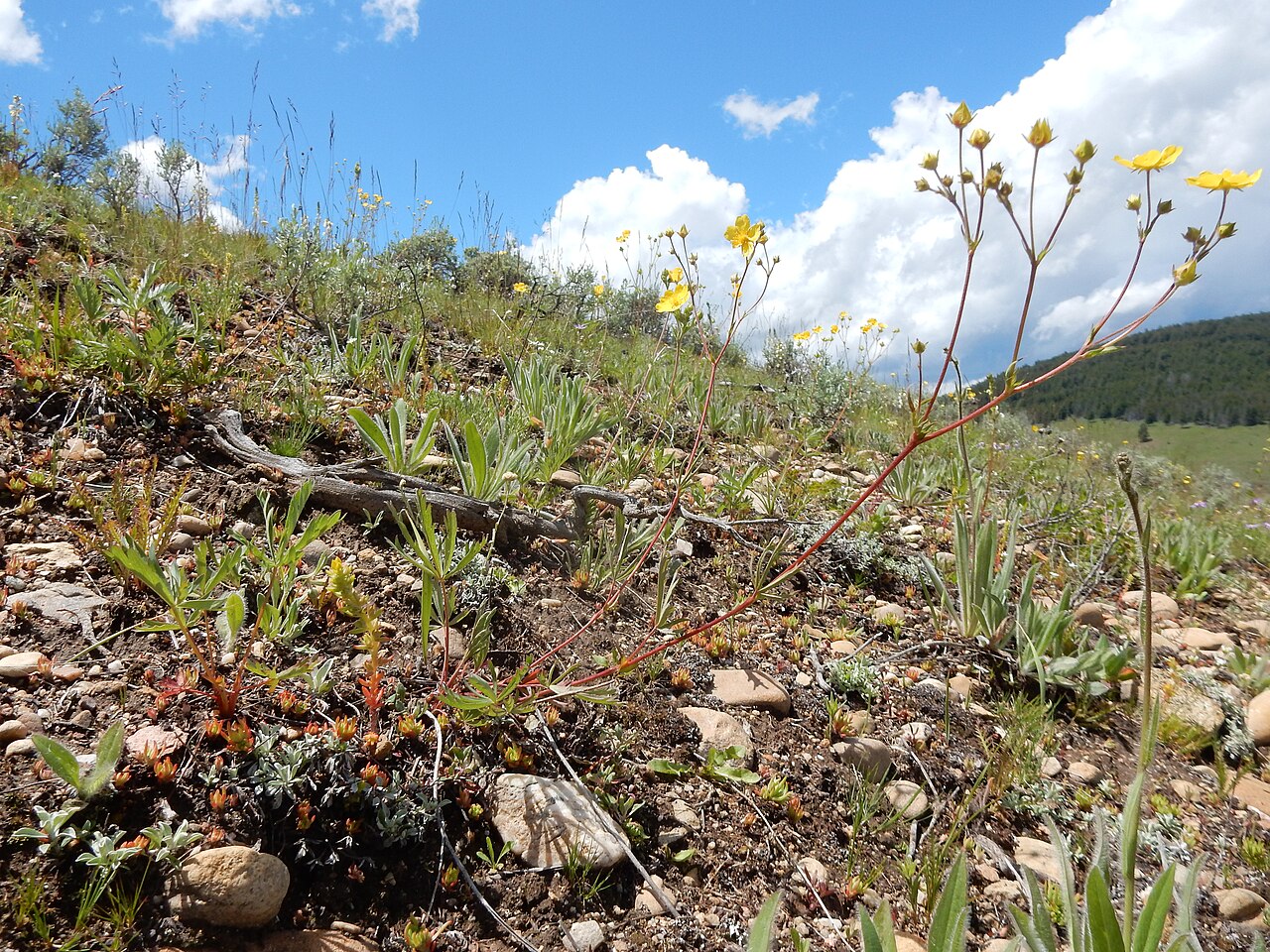
Potentilla gracilis, known as Graceful Cinquefoil or Slender Cinquefoil, is a native perennial wildflower of the mountain West, a member of the rose family (Rosaceae) closely related to strawberries and the other wild cinquefoils. Its deeply divided, fan-shaped leaves and loose sprays of bright yellow flowers are a familiar sight in sagebrush steppe, mountain meadows, and open forest clearings from the Pacific states east to the Dakotas and Michigan.
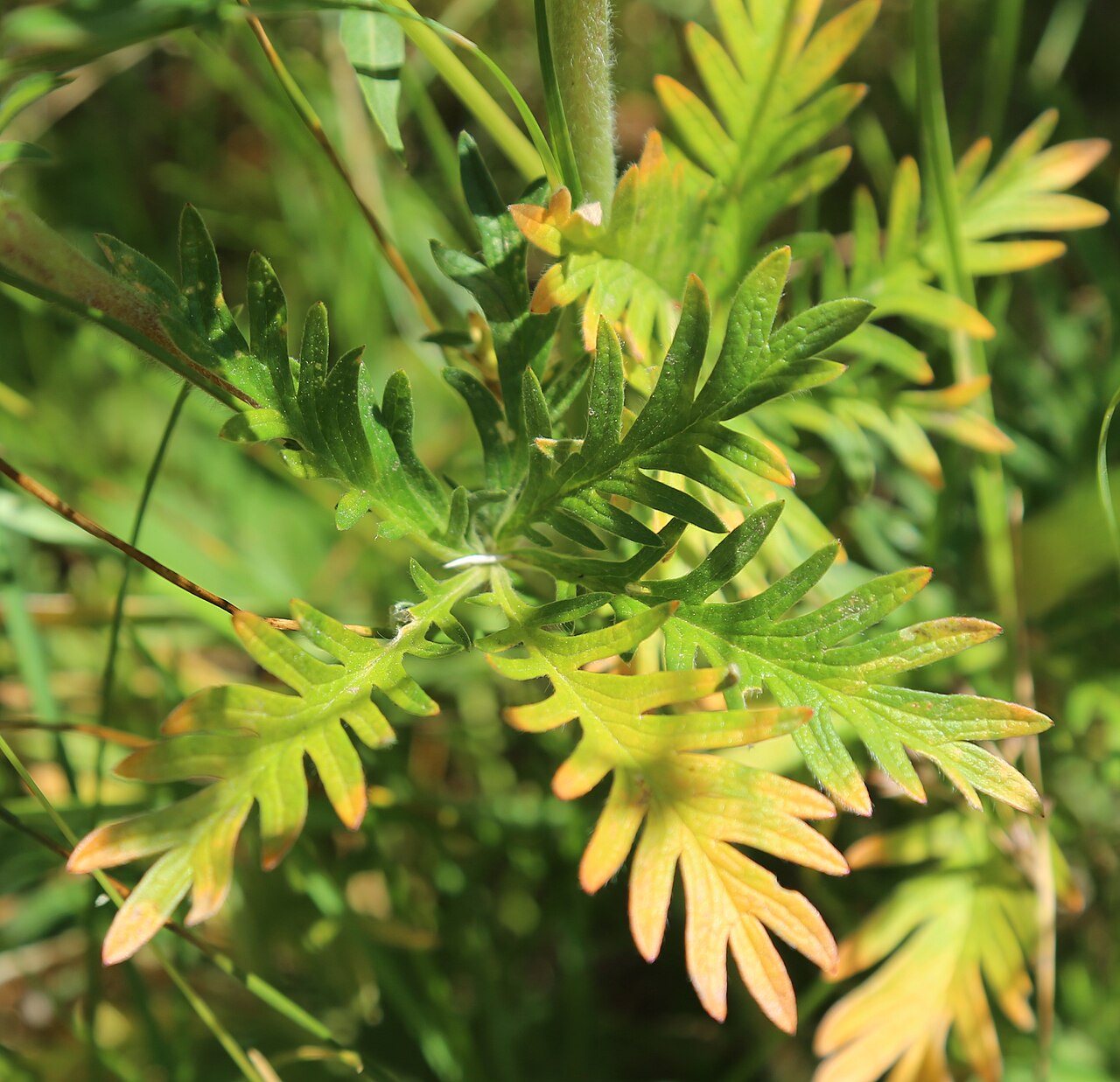
Graceful Cinquefoil grows from a woody basal crown, sending up slender, openly branched flowering stems well above a rosette of palmately divided leaves. Each leaf is cut into five to nine narrow, toothed leaflets that are deep green above and often silvery-white and felted beneath, a detail that distinguishes the native plant at a glance from the non-native, invasive sulphur cinquefoil (Potentilla recta), whose leaf undersides are plain green.
This is an easygoing, deep-rooted perennial for sunny, well-drained native plantings. It tolerates poor rocky soil and considerable drought once established, flowers over a long season, and asks for almost nothing from the gardener beyond good drainage and a sunny spot.
Identification
Graceful Cinquefoil forms a basal rosette of long-stalked leaves from which wiry, branching flowering stems rise 1 to 2 feet tall. The whole plant has a light, airy quality in bloom, with widely spaced flowers held on thin stalks well above the foliage — the trait that gives it both its common name and its species epithet, gracilis, Latin for “slender.”
Stems
Flowering stems are slender, wiry, and sparsely leaved compared with the dense basal rosette, branching openly near the top to hold the flowers well apart from one another. Stems and leaf stalks are covered in fine hairs, ranging from silky to somewhat shaggy depending on the variety.
Leaves
Leaves are palmately compound, with five to nine (typically seven) narrow, deeply toothed leaflets radiating from a central point like fingers from a palm. The upper surface is deep green and often nearly hairless, while the underside is covered in dense white to silvery hairs, giving the leaf a two-toned look that is especially visible when the wind turns the leaves over. In autumn the foliage often takes on yellow to orange tones before dying back.
Flowers
Flowers bloom from early to late summer in loose, open clusters at the tips of the branching stems. Each flower is about ½ to ¾ inch across with five rounded, bright-to-pale yellow petals surrounding a ring of golden stamens. The flowers are held well clear of the foliage on thin, nearly leafless stalks, giving the inflorescence a delicate, see-through quality distinct from the denser flower clusters of many related cinquefoils.
Fruit & Seeds
Each flower matures into a small, dry cluster of single-seeded achenes enclosed by the persistent sepals. The seed heads are small and inconspicuous, and the plant relies on seed production rather than runners to spread, staying in a well-defined clump.
Quick Facts
| Scientific Name | Potentilla gracilis |
| Family | Rosaceae (Rose) |
| Plant Type | Herbaceous Perennial Forb |
| Mature Height | 1–2 ft |
| Mature Spread | 1–1½ ft |
| Growth Rate | Moderate |
| Sun Exposure | Full Sun to Part Shade |
| Water Needs | Low to Moderate |
| Soil Type | Rocky, gravelly or well-drained loam |
| Soil pH | 6.0–7.5 (slightly acidic to neutral) |
| Bloom Time | June – August |
| Flower Color | Bright to pale yellow |
| Fall Color | Leaflets often turn yellow to orange |
| Fruit | Small dry achenes, not ornamental |
| Deer Resistant | Yes (generally unpalatable to deer) |
| USDA Hardiness Zones | 3–8 |
Native Range
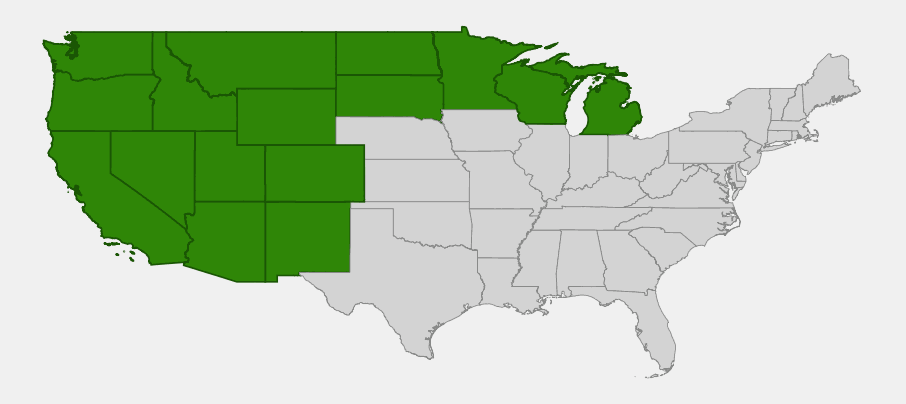
Graceful Cinquefoil is widespread across western and north-central North America. In the United States it ranges from Washington, Oregon, and California east through the Great Basin and Rocky Mountain states — Nevada, Idaho, Utah, Arizona, New Mexico, Montana, Wyoming, and Colorado — and continues into the northern Great Plains and Great Lakes region in North Dakota, South Dakota, Minnesota, Wisconsin, and Michigan.
Across this broad range, Graceful Cinquefoil grows in meadows, open forest, sagebrush steppe, clearings, roadsides, and grasslands from the foothills up into alpine terrain above 9,000 feet. It is a genuinely widespread, adaptable species through the West and the upper Midwest, but gardeners in the Northeast should take note: in New England, where the plant has been found only sparingly in northern New Hampshire, it is regarded by regional botanists as introduced rather than native, so it is not included among this page’s native states or regional lists.
Graceful Cinquefoil is easily confused with non-native cinquefoils, especially the invasive sulphur cinquefoil (Potentilla recta). The native plant can be told apart by its decumbent, sparsely leaved flowering stems and leaves that shrink rapidly in size up the stem, along with the silvery-white (rather than plain green) undersides of the leaflets.
📋 Regional plant lists featuring Graceful Cinquefoil: Western Oregon & Western Washington · Idaho, Eastern Oregon & Eastern Washington · Montana & Wyoming · Utah & Western Colorado · Arizona & New Mexico · Michigan, Wisconsin & Eastern Minnesota · North Dakota, South Dakota & Western Minnesota
Growing & Care Guide
Graceful Cinquefoil is a tough, deep-rooted perennial that thrives on neglect once established, making it a good choice for low-maintenance native beds, meadow plantings, and dry slopes throughout its wide range.
Light
Full sun produces the most compact growth and the heaviest bloom, matching the open meadows and sagebrush flats where it grows wild. It tolerates light shade, especially at lower, hotter elevations, but becomes sparser and less floriferous in more than a few hours of shade.
Soil & Water
Good drainage matters more than soil fertility. Graceful Cinquefoil grows well in rocky, gravelly, or sandy loam and does not need rich garden soil. Water during the first growing season to help the deep taproot establish, then reduce watering; mature plants handle extended summer drought well and generally need no supplemental irrigation except in the driest climates.
Planting Tips
Plant in fall or early spring. Give plants 12 to 18 inches of space to allow the basal rosette to fill out, and avoid low spots where water collects, since standing moisture is the most common cause of failure. It combines well in meadow plantings with native bunchgrasses, which help support its wiry flowering stems.
Pruning & Maintenance
Minimal care is needed. Cutting back spent flower stalks after bloom tidies the plant but is not required for health. Divide crowded clumps in early spring every three to four years if flowering declines or the center of the rosette thins out.
Propagation
Seed is the easiest method: sow outdoors in fall for natural cold stratification, or cold-stratify indoors for eight to ten weeks before a spring sowing. Clump division in early spring is also effective for increasing an established planting.
Landscape Uses
Graceful Cinquefoil’s airy habit and long bloom period suit a range of dry, sunny plantings:
- Wildflower meadows mixed with native bunchgrasses
- Rock gardens and gravel beds with sharp drainage
- Dry slopes and banks that are difficult to irrigate
- Pollinator gardens for its long, reliable bloom season
- Restoration and revegetation projects in sagebrush and montane habitats
Wildlife & Ecological Value
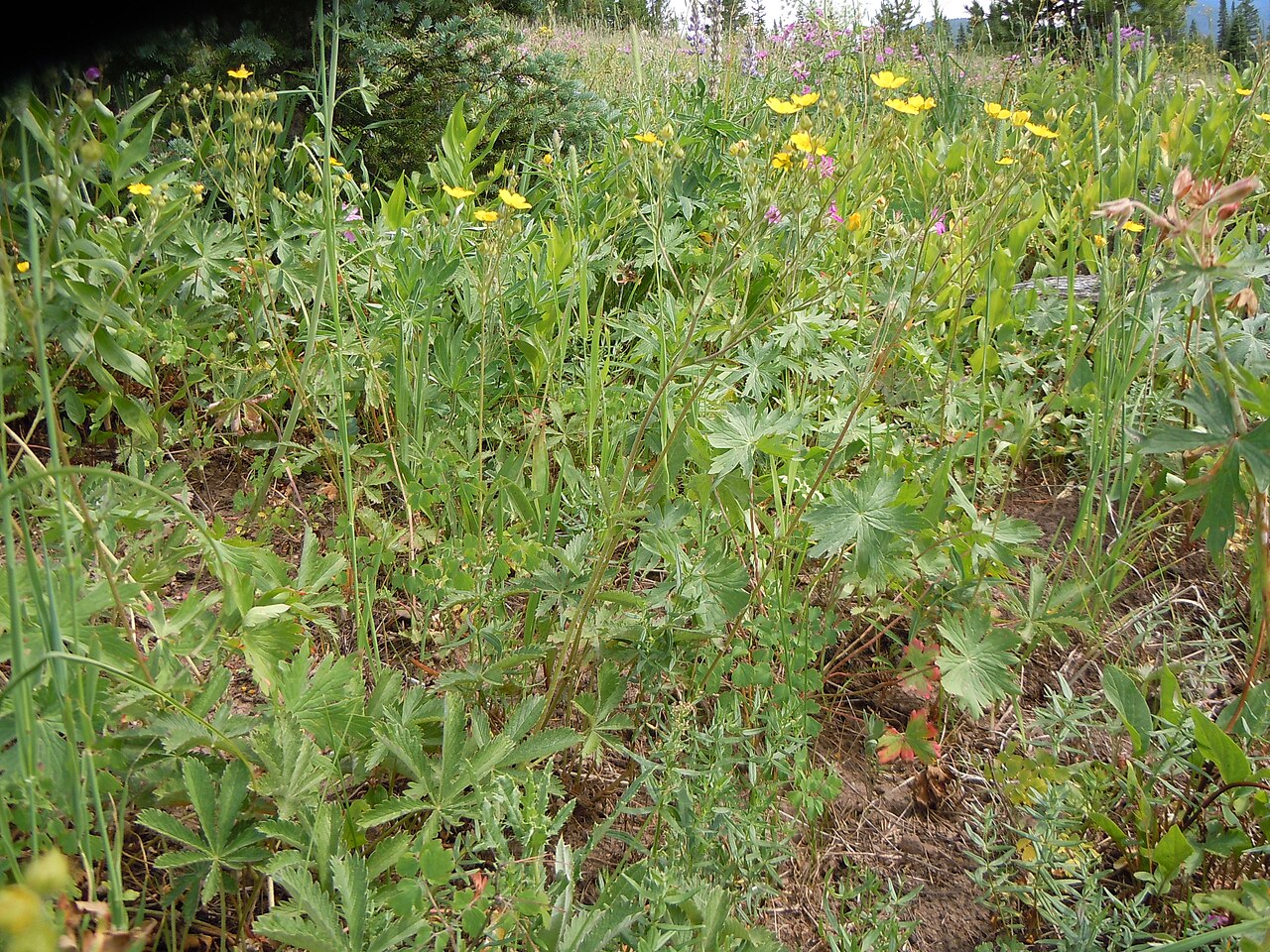
Graceful Cinquefoil is a steady, long-blooming source of nectar and pollen in meadow and sagebrush plant communities across its wide range, and its foliage supports a number of native insects.
For Pollinators
The open, flat flowers attract native bees, including small solitary bees and bumblebees, along with syrphid flies and other short-tongued pollinators. Its long bloom season, often stretching from early to late summer, helps sustain pollinator populations through the middle of the growing season when some spring wildflowers have already finished.
For Birds
Ground-foraging songbirds occasionally take the small seeds, though Graceful Cinquefoil is a minor food source compared with the surrounding grasses and larger-seeded forbs typical of its meadow and steppe habitats.
For Mammals
The foliage is not a preferred browse for deer or elk, making it a reasonably dependable choice in gardens or restoration sites with heavy browsing pressure, though young growth may occasionally be nibbled.
Ecosystem Role
As a common, deep-rooted perennial in meadow and sagebrush steppe plant communities, Graceful Cinquefoil helps hold soil on slopes and disturbed ground, fills space between bunchgrasses and shrubs, and adds bloom-time diversity that benefits the wider pollinator community through the heart of summer.
Cultural & Historical Uses
Like many native cinquefoils, Graceful Cinquefoil has a modest history of use among Indigenous peoples across its range, where the astringent, tannin-rich roots and foliage typical of the genus were occasionally used in traditional preparations. Specific, well-documented ethnobotanical records for this particular species are limited compared with more intensively studied relatives.
The plant has no significant history as a food source and is not used in commercial herbal products today. Its primary importance has long been ecological — as a common, reliable component of sagebrush steppe and mountain meadow plant communities — and, more recently, horticultural, as native plant gardeners and restoration ecologists have recognized its value as a tough, low-water perennial for dry sites.
The species name gracilis, Latin for “slender” or “graceful,” reflects the plant’s thin, widely branching flowering stems, which hold the blossoms well apart from the leafy base in a loose, airy arrangement unlike the denser habit of many related cinquefoils.
Frequently Asked Questions
How can I tell Graceful Cinquefoil apart from invasive sulphur cinquefoil?
Look at the leaf undersides and stem habit. Graceful Cinquefoil has leaflets with silvery-white, felted undersides and decumbent stems with leaves that shrink quickly in size going up the stem. Sulphur cinquefoil (Potentilla recta) has plain green leaf undersides and more upright, leafier stems.
Is Graceful Cinquefoil native to New England?
No. Regional botanists consider it introduced in New England, where it has only been collected sparingly in northern New Hampshire. Its native range is centered on the western United States, the northern Great Plains, and the western Great Lakes states.
Does Graceful Cinquefoil spread by runners like some other cinquefoils?
No. It spreads only by seed from a slowly expanding basal clump, not by stolons or rhizomes, so it will not run through a garden bed the way a strawberry or some groundcover cinquefoils do.
How much water does Graceful Cinquefoil need once established?
Very little. After the first growing season, established plants tolerate significant summer drought and generally need no supplemental watering except during unusually dry stretches, particularly in lower-elevation gardens.
What soil does Graceful Cinquefoil prefer?
Lean, well-drained, rocky or gravelly soil is ideal. It does not need rich garden soil and performs poorly in heavy clay or any spot where water tends to stand after rain.

Looking for a nursery that carries Graceful Cinquefoil?
Browse our native plant nursery directory: California · Oregon · Washington · Nevada, New Mexico & North Dakota · Utah & South Dakota · Arizona · Idaho · Montana, Minnesota & Michigan · Wyoming & Wisconsin · Colorado