Common Cinquefoil (Potentilla simplex)
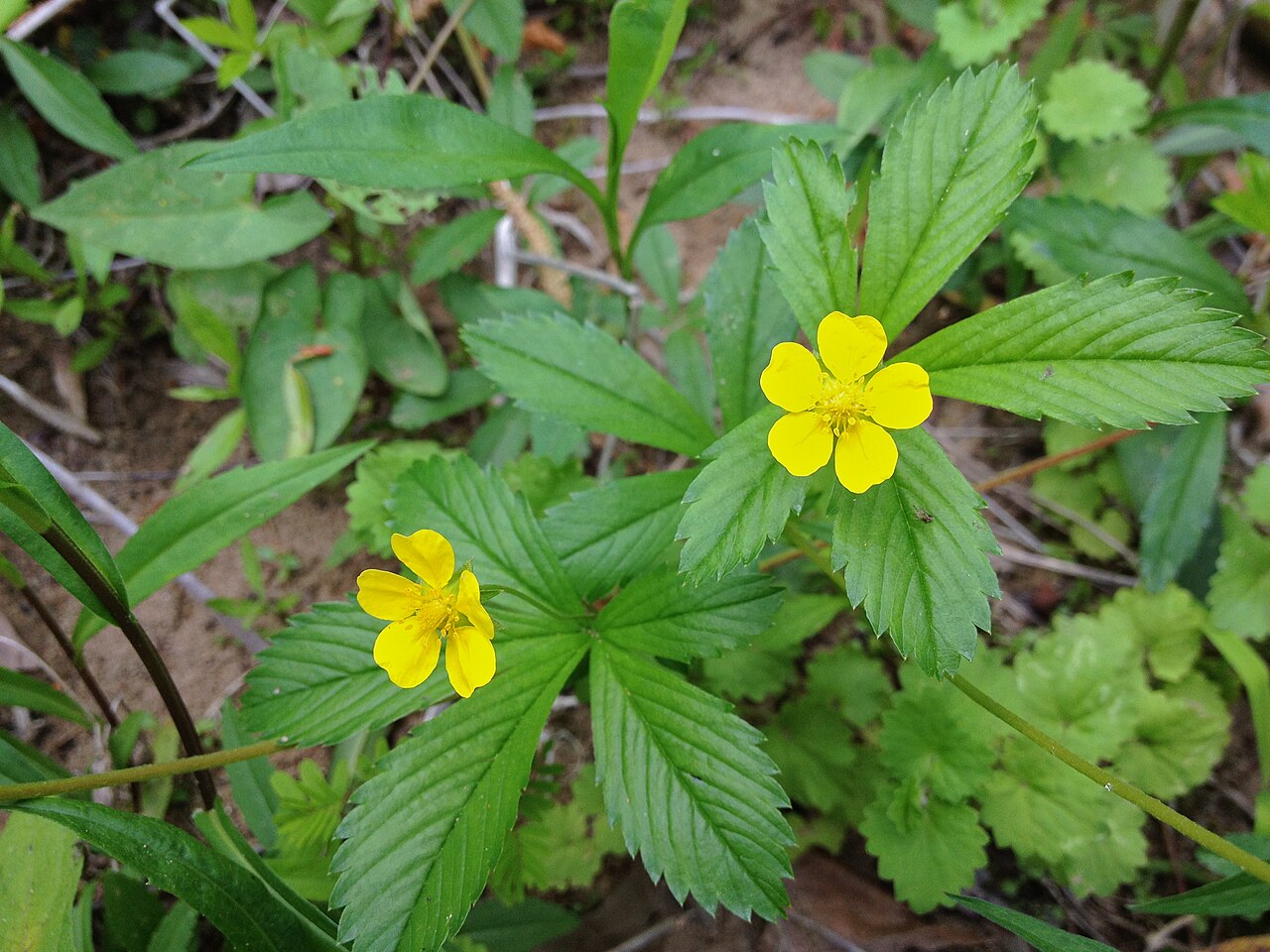
Potentilla simplex, widely known as Common Cinquefoil or Old-field Cinquefoil, is a low, trailing native perennial found across most of the eastern and central United States. A member of the rose family (Rosaceae), it is one of the most familiar wild cinquefoils east of the Rockies — a common, unassuming plant of lawns, meadows, roadsides, and woodland edges that quietly puts out small yellow, five-petaled flowers through much of the spring and early summer.
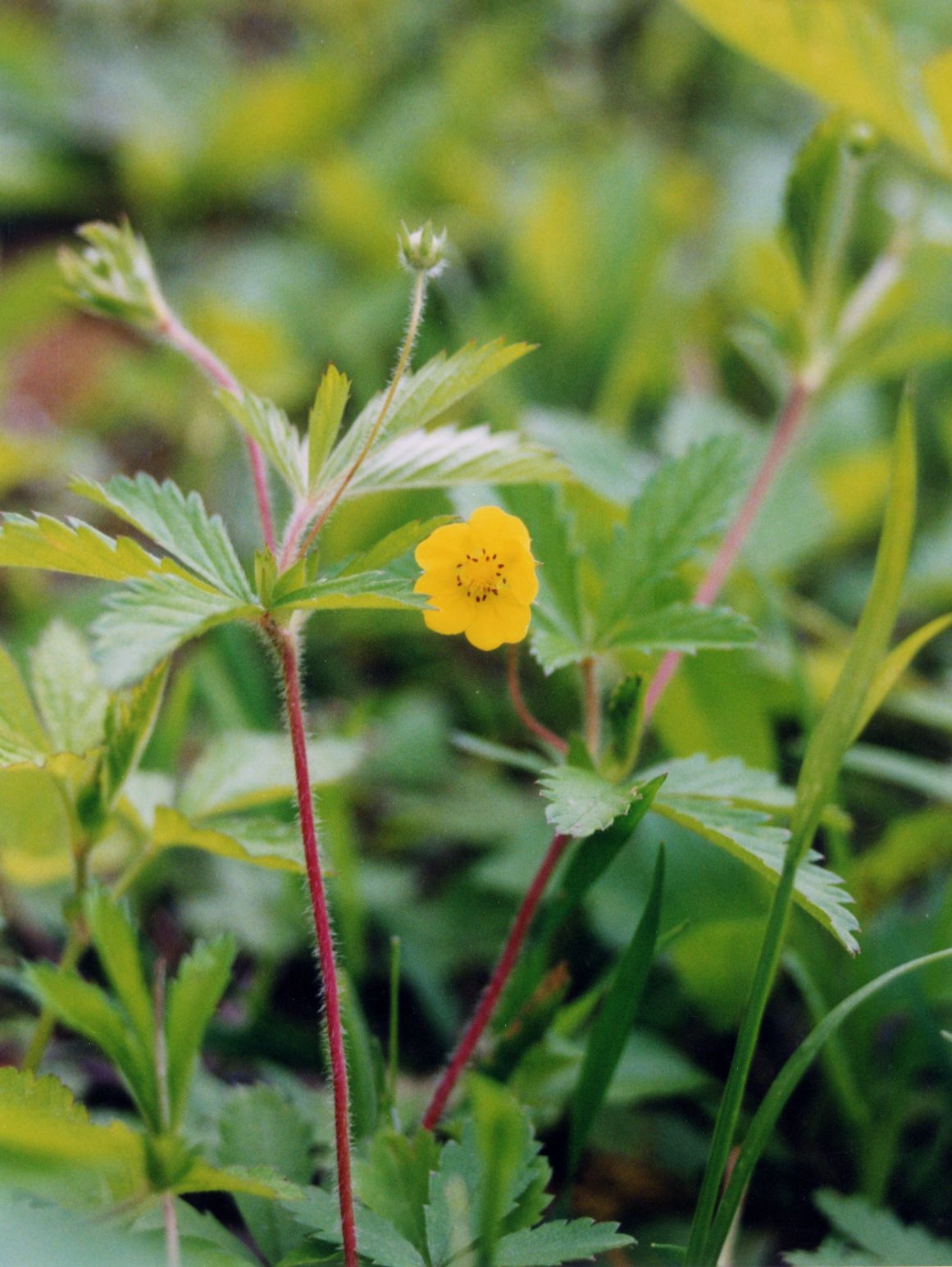
True to its name “five-fingers,” Common Cinquefoil’s leaves are divided into five toothed leaflets arranged like the fingers of a hand, carried on slender stems and stolons that start out green and gradually turn a distinctive reddish color with age. The plant sprawls along the ground rather than standing upright, rooting as it spreads and forming loose mats in favorable spots, though it is far less aggressive than true running groundcovers.
Because it tolerates mowing, poor soil, and part shade, Common Cinquefoil often persists in lawns where other plants struggle, and it is sometimes dismissed as a lawn weed. In a native plant garden, however, its low mat-forming habit, cheerful spring flowers, and tolerance of difficult conditions make it a useful, low-maintenance groundcover for naturalized areas.
Identification
Common Cinquefoil is a low, sprawling perennial, generally under 1 foot tall, that spreads by trailing stems and stolons rather than growing as an upright clump. It roots at nodes along the stolons as it spreads, gradually forming a loose, informal patch.
Stems
The slender stems and stolons are green when young and turn reddish with age, a helpful identification trait. They trail along the ground, often rooting where they touch soil, and can survive light to moderate mowing, which is why the plant frequently turns up in lawns and along mown paths.
Leaves
Leaves are palmately compound with five toothed leaflets, held on long stalks that arise from the stems and stolons. The leaflets are a medium to light green, oblong to elliptical in shape, with coarse teeth along the upper two-thirds of each leaflet margin. The overall leaf shape, radiating from a central point, gives the plant its old folk name, “five-fingers.”
Flowers
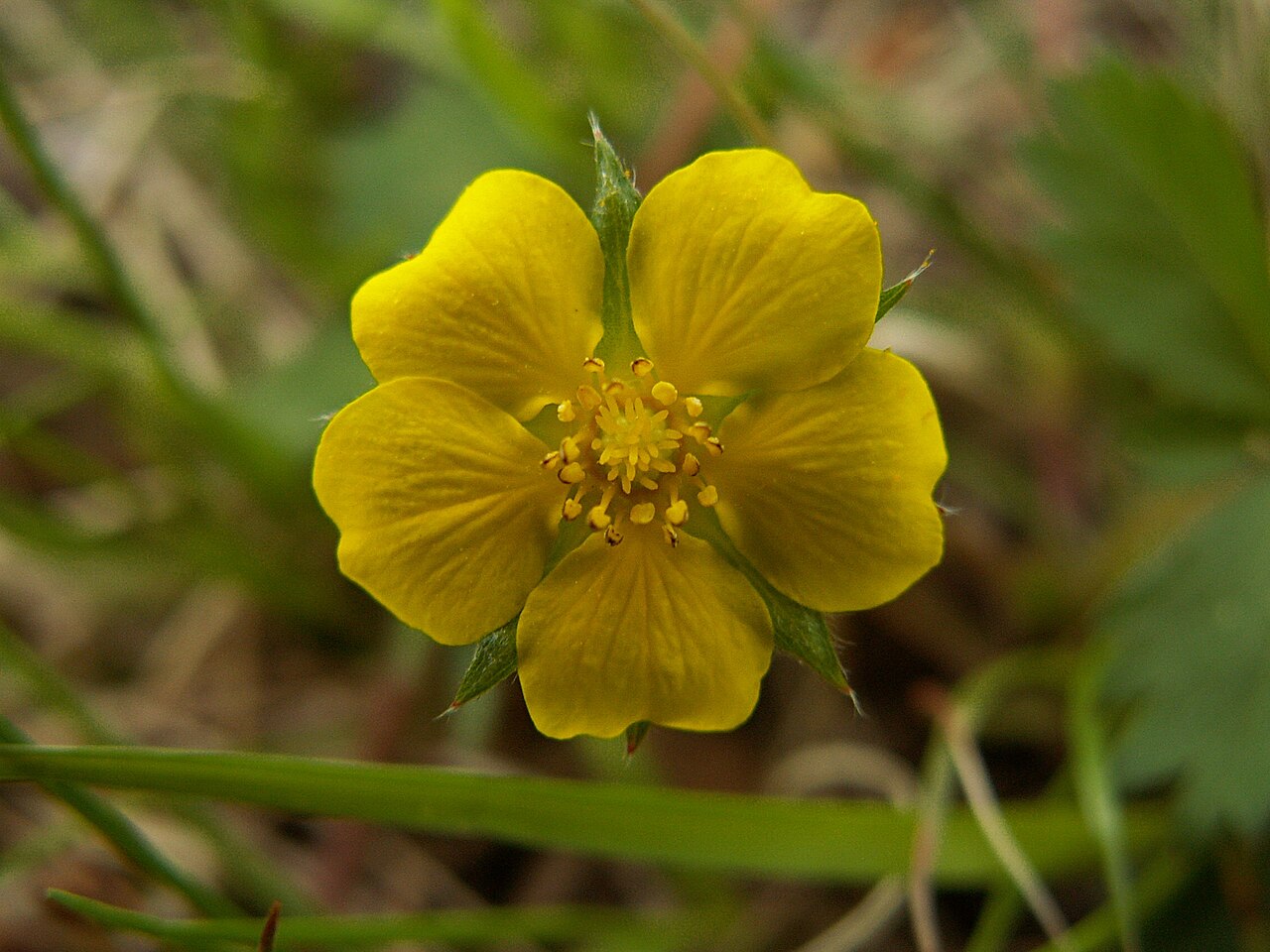
Flowers are solitary, borne on long stalks that arise singly from the leaf axils rather than in branched clusters, typically blooming from mid-spring into early summer. Each flower is bright yellow with five rounded petals surrounding a small cluster of golden stamens, usually under ¾ inch across. The first flower on a stem generally opens from around the second leaf-bearing node.
Fruit & Seeds
After flowering, each bloom develops into a small, dry cluster of single-seeded achenes held within the persistent sepals. The seed heads are small and unremarkable, and while the plant does produce seed, its spread in the garden is driven mainly by the rooting stolons rather than by self-sowing.
Quick Facts
| Scientific Name | Potentilla simplex |
| Family | Rosaceae (Rose) |
| Plant Type | Herbaceous Perennial Groundcover |
| Mature Height | 4–10 in |
| Mature Spread | 1–2 ft (spreading by stolons) |
| Growth Rate | Moderate |
| Sun Exposure | Full Sun to Part Shade |
| Water Needs | Low to Moderate |
| Soil Type | Tolerates poor, dry, sandy or rocky soil |
| Soil pH | 5.0–7.0 (acidic to neutral) |
| Bloom Time | April – June |
| Flower Color | Bright yellow |
| Fall Color | None notable |
| Fruit | Small dry achenes, not ornamental |
| Deer Resistant | Yes (rarely browsed) |
| USDA Hardiness Zones | 3–8 |
Native Range
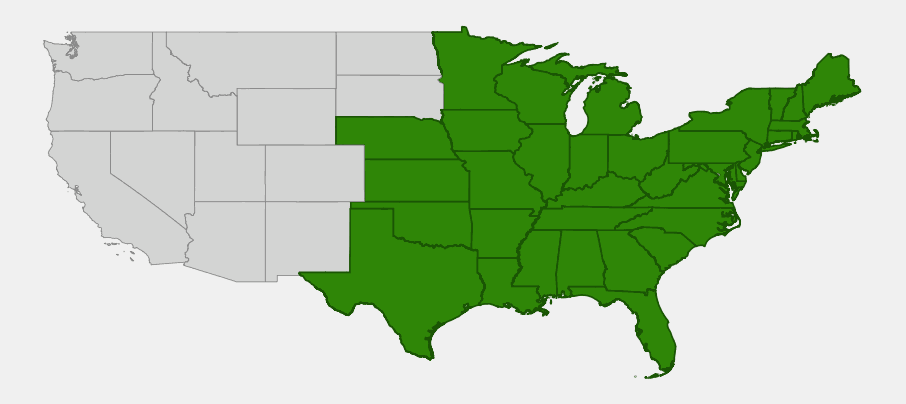
Common Cinquefoil is native across most of the eastern and central United States and adjacent Canada, from Maine south to Florida, west through the Gulf states to eastern Texas, and north through the Mississippi and Ohio valleys to the Great Lakes, with its western edge reaching into Nebraska and Kansas.
It grows in a wide range of open and semi-open habitats: old fields, meadows, lawns, roadsides, open woods, and woodland edges, which is reflected in its common alternate name, Old-field Cinquefoil. It tolerates poor, dry, acidic soils that many other plants find inhospitable, and it often persists in heavily mowed or disturbed ground where it survives thanks to its low, trailing growth habit.
Common Cinquefoil is genuinely common and secure throughout its native range, with no significant conservation concerns. It is sometimes treated as a lawn weed because it tolerates mowing and spreads readily in turf, but it is a true native wildflower rather than an introduced or invasive species, and it offers real value as an unfussy groundcover in naturalized plantings.
📋 Regional plant lists featuring Common Cinquefoil: New Hampshire, Maine & Vermont · Connecticut, Massachusetts & Rhode Island · New York, Pennsylvania & Northern New Jersey · Delaware, Southern New Jersey & Long Island · Maryland, Virginia & West Virginia · North Carolina & South Carolina · Georgia, Alabama & Mississippi · Arkansas, Louisiana, Eastern Oklahoma & Eastern Texas · Kentucky & Tennessee · Ohio & Indiana · Illinois, Iowa & Missouri · Michigan, Wisconsin & Eastern Minnesota · Nebraska & Kansas
Growing & Care Guide
Common Cinquefoil asks for almost nothing once planted, which is exactly why it has made itself at home in old fields and lawns throughout the eastern United States. It is an easy, forgiving groundcover for naturalized or low-maintenance areas.
Light
Common Cinquefoil flowers most heavily in full sun to light shade. It tolerates considerably more shade than many flowering groundcovers, continuing to spread and bloom, if more sparsely, under the dappled light of open woodland.
Soil & Water
This is a plant built for poor soil. It thrives in dry, sandy, rocky, or acidic ground where many other groundcovers fail, and it does not need rich garden soil or regular fertilizing. Water newly planted stock while it establishes; after that, Common Cinquefoil tolerates drought well and needs no routine irrigation except in prolonged dry spells.
Planting Tips
Plant in spring or fall, spacing plants 12 to 18 inches apart to allow the trailing stolons to fill in naturally over a season or two. It is a good choice for difficult spots — dry banks, the edges of woodland paths, or thin turf areas — where a denser, less tolerant groundcover would struggle.
Pruning & Maintenance
Little pruning is needed. Common Cinquefoil tolerates occasional mowing at a high blade setting, which keeps it low and tidy without killing the plant, making it compatible with naturalized lawn areas. If a patch becomes too dense, thin it in early spring by removing some of the rooted stolons.
Propagation
The simplest method is division: dig up rooted sections of stolon in spring or fall and transplant them directly. Seed can also be sown in fall for natural cold stratification, though division is faster and more reliable for establishing a groundcover patch.
Landscape Uses
Common Cinquefoil’s low, spreading habit and tolerance for poor soil suit a number of practical garden roles:
- Naturalized groundcover for dry banks and difficult slopes
- Woodland edge plantings in part shade
- Low-input lawn alternatives in mixed native turf
- Erosion control on thin, poor soils
- Pollinator gardens as an early-season nectar source
Wildlife & Ecological Value
Common Cinquefoil’s early, abundant bloom and widespread presence across old fields and woodland edges make it a modest but genuinely useful contributor to eastern plant communities.
For Pollinators
The simple, open flowers attract a range of small native bees, flies, and other short-tongued pollinators during a bloom period that often begins before many other wildflowers are in flower, making it a useful early-season nectar source in old fields and meadows.
For Birds
Ground-feeding songbirds occasionally eat the small seeds, and the low, mat-forming growth offers some cover for ground-nesting insects and small invertebrates that in turn support insect-eating birds.
For Mammals
The foliage is not a preferred food for deer or rabbits, and the plant is generally left alone by browsing wildlife, which helps it persist and spread even in areas with heavy deer pressure.
Ecosystem Role
As a common early-successional species of old fields and disturbed ground, Common Cinquefoil helps stabilize soil and fill bare patches while other, slower-growing perennials and shrubs establish, playing a quiet but steady role in the recovery of abandoned fields and disturbed open ground across the eastern U.S.
Cultural & Historical Uses
Common Cinquefoil has a long history of use among Indigenous peoples across its eastern range, where the astringent roots and leaves, rich in tannins like those of many Potentilla species, were historically prepared as infusions in traditional practice. As with other cinquefoils, this history is recorded as a cultural and historical use rather than a current recommendation, and the plant is not used in modern commercial herbal products.
The common names “five-fingers” and “cinquefoil” itself (from the French for “five leaves”) both describe the plant’s distinctive palmate leaf, a shape so recognizable that it became a common decorative motif in medieval heraldry long before the plant was documented in North America.
In more recent history, Common Cinquefoil’s tolerance of mowing and poor soil has made it a familiar, if often unnoticed, part of the American lawn and old-field landscape — frequently overlooked as a “weed” despite being a true native wildflower with genuine value for pollinators and low-input landscaping.
Frequently Asked Questions
Is Common Cinquefoil the same as Potentilla reptans or sulphur cinquefoil?
No. Common Cinquefoil (Potentilla simplex) is a native North American species. Potentilla reptans and sulphur cinquefoil (Potentilla recta) are both introduced European species that can become weedy; Common Cinquefoil’s solitary flowers on long axillary stalks and reddening stolons help distinguish it from these look-alikes.
Is Common Cinquefoil a weed, or is it a desirable native plant?
It is a true native wildflower, though its tolerance for mowing and poor soil means it often shows up uninvited in lawns, which has earned it a reputation as a weed. In a naturalized or native planting, it functions as a useful, low-maintenance groundcover rather than a problem plant.
Will Common Cinquefoil take over my garden?
It spreads by rooting stolons and can form a loose mat over time, but it is not aggressive or invasive and is easy to pull back where it isn’t wanted. It spreads far more slowly than true running groundcovers.
Can Common Cinquefoil survive being mowed?
Yes. Its low, trailing growth habit allows it to tolerate regular mowing at a reasonably high blade height, which is part of why it persists in lawns where taller wildflowers cannot survive.
What growing conditions does Common Cinquefoil need?
Very little beyond decent drainage. It tolerates full sun to part shade and thrives in poor, dry, sandy, or acidic soils that challenge many other garden plants, needing no fertilizer and only minimal watering once established.

Looking for a nursery that carries Common Cinquefoil?
Browse our native plant nursery directory: Maine, Massachusetts, Maryland, Mississippi, Kentucky, Michigan, Minnesota, Missouri & Louisiana · New Hampshire, New York, New Jersey, North Carolina, Ohio, Oklahoma & Nebraska · Vermont, Rhode Island, Pennsylvania, Virginia, South Carolina, Tennessee & Texas · Connecticut, Delaware, Georgia & Florida · West Virginia & Wisconsin · Alabama & Arkansas · Indiana, Illinois, Iowa & Kansas