
Oglethorpe Oak (Quercus oglethorpensis)
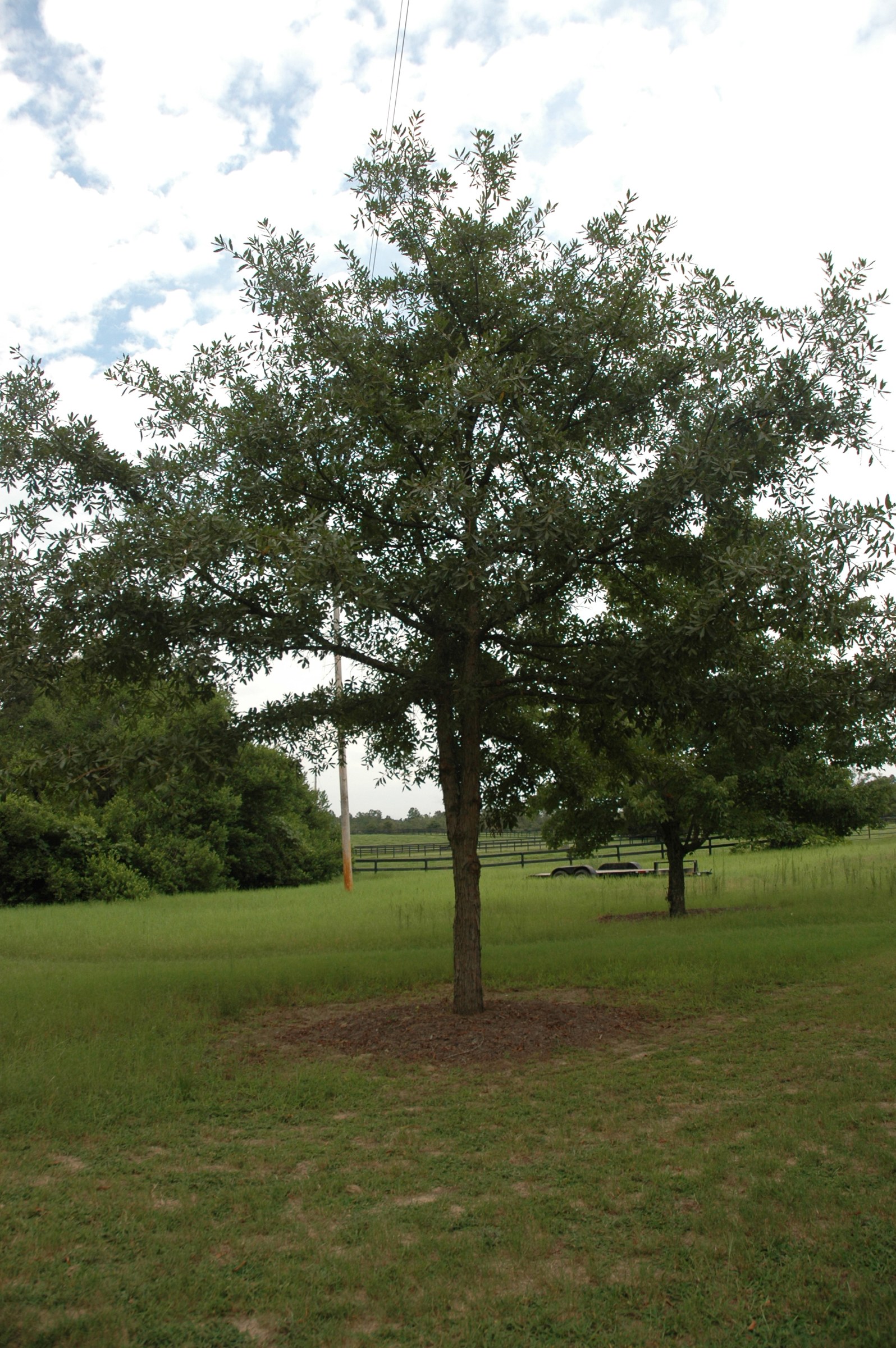
Quercus oglethorpensis, the Oglethorpe Oak, is one of the rarest and least-known oaks native to the United States. First discovered and described from Oglethorpe County, Georgia, it is found naturally in only a handful of disjunct populations scattered across the Piedmont of Georgia and South Carolina and the Gulf coastal plain of Alabama, Mississippi, and Louisiana. The IUCN lists it as globally Endangered, and botanical gardens and conservation nurseries actively propagate it to safeguard the species outside its small, scattered wild stands.
This medium-sized tree, reaching roughly 60 to 80 feet with a trunk up to about 2.5 feet across, has a distinctive look: a dense, rounded crown packed with fine twigs, often with lower branches that droop toward the ground, and narrow, willow-oak-like leaves that are usually flat rather than cupped. It grows naturally on wet clay soils — Piedmont seepage swamps, stream terraces, and the moist hardwood forest just upslope from them — a specific, limited habitat type that helps explain its rarity.
Because wild populations are so few and so vulnerable, Oglethorpe Oak is not a plant to dig, collect seed from indiscriminately, or disturb in the wild. It belongs in conservation plantings and in gardens using nursery-propagated stock sourced responsibly from botanical institutions working to conserve the species, not from wild-collected material.
Identification
Oglethorpe Oak is a member of the white oak group, though its narrow leaves make it easy to mistake for a willow oak or laurel oak at a glance. Its overall form — a tight, twiggy, rounded crown with drooping lower limbs — is one of its most reliable field marks.
Bark & Stems
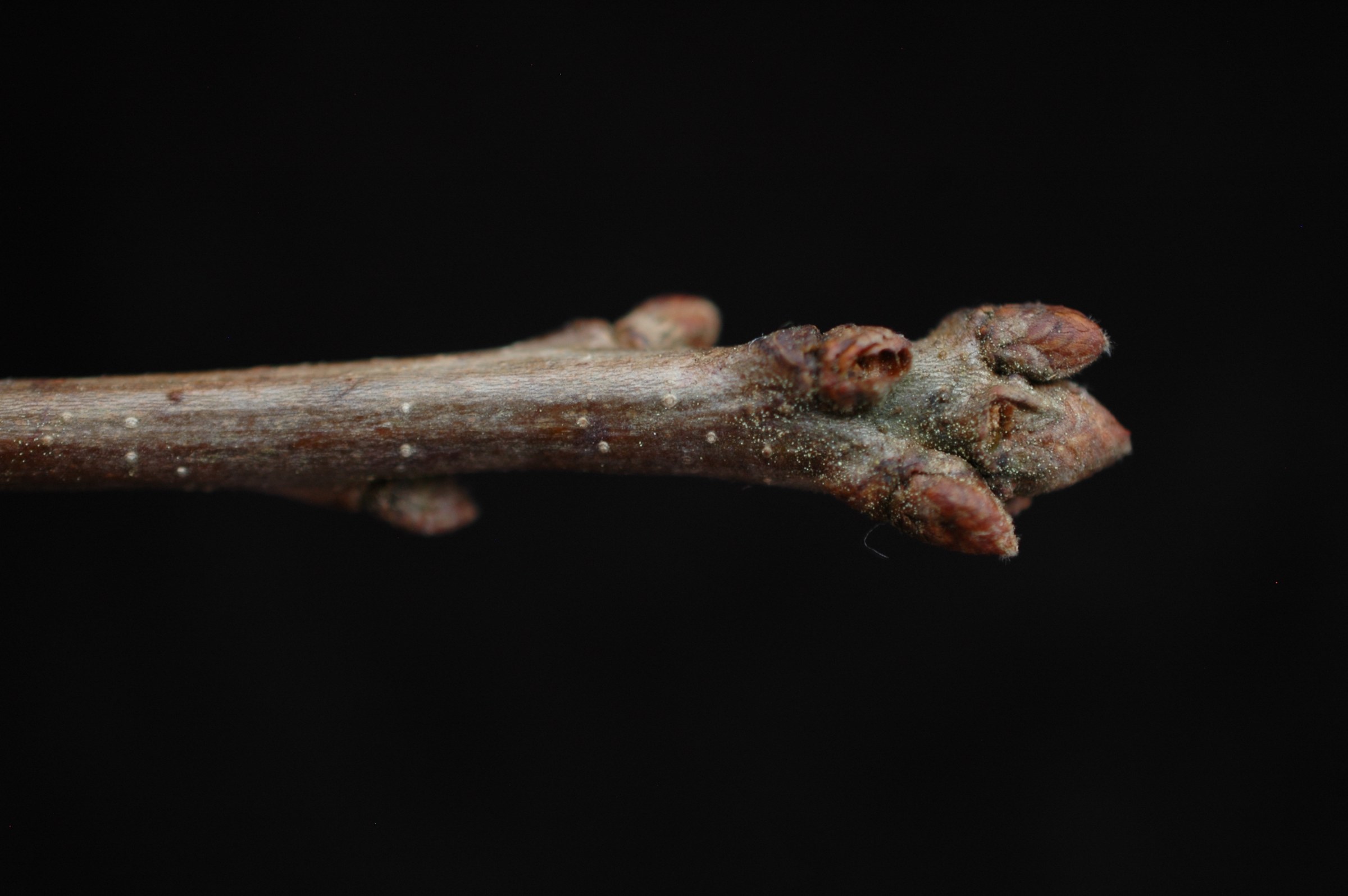
Bark is pale, whitish to light gray, generally smoother than the dark, blocky bark of many white oak relatives. Twigs are slender and the crown is characteristically dense with fine twiggy growth, giving mature trees a noticeably full, bushy silhouette rather than the more open branching typical of many large oaks.
Leaves
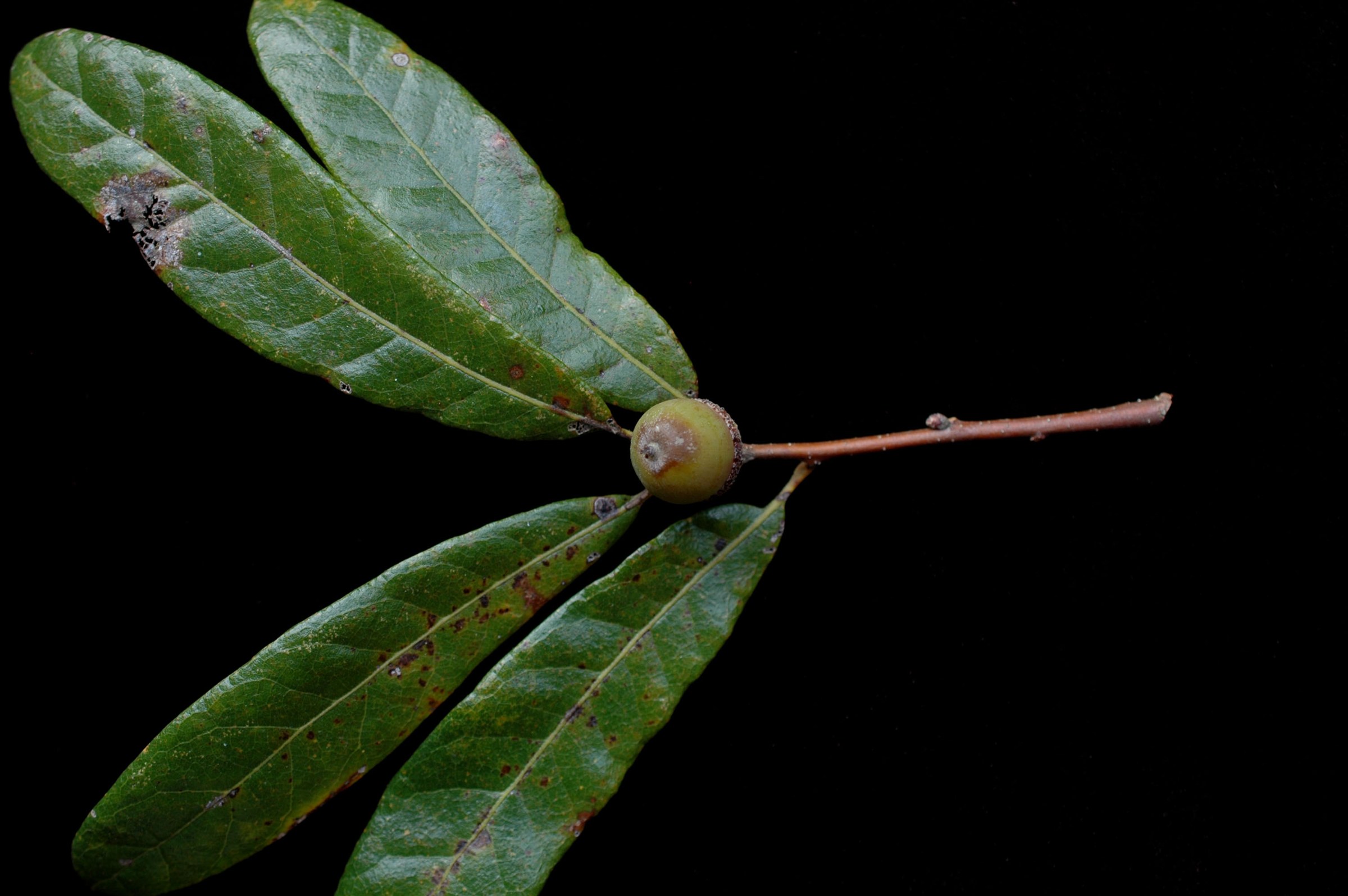
Leaves are narrowly elliptical, up to about 6 inches long, usually lacking lobes and typically flat rather than curled or cupped along the margins — a helpful distinction from some similar-looking oaks. Fall color is a muted red-brown, and like several related oaks, dried leaves often persist on the twigs well into winter.
Flowers
As in all oaks, inconspicuous male catkins appear in spring as new leaves emerge, with small female flowers developing separately on the same tree. Flowering is not ornamentally significant.
Fruit & Seeds
Acorns are small, oval, and borne on short stalks at the leaf axils, maturing in a single season as is typical of the white oak group. Because wild seed sources are so limited and vulnerable, acorns should only be collected through coordinated conservation efforts, never casually from wild trees.
Quick Facts
| Scientific Name | Quercus oglethorpensis W.H. Duncan |
| Family | Fagaceae (Beech) |
| Plant Type | Deciduous Tree |
| Mature Height | 60–80 ft |
| Trunk Diameter | Up to about 2.5 ft |
| Growth Rate | Slow to moderate |
| Sun Exposure | Full Sun to Part Shade |
| Water Needs | Moderate to High |
| Soil Type | Moist to wet clay; seepage swamps, stream terraces |
| Soil pH | 5.5–7.0 |
| Bloom Time | March – April |
| Flower Color | Yellow-green (inconspicuous catkins) |
| Fall Color | Muted red-brown; leaves often persist |
| Fruit | Small acorns, mature in one season |
| Deer Resistant | No |
| USDA Hardiness Zones | 7–9 |
Native Range
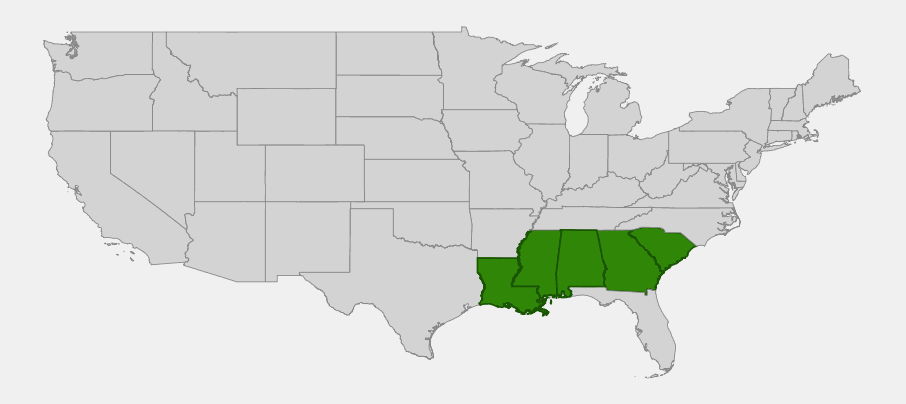
Oglethorpe Oak is endemic to the southeastern United States and is known from only a small number of scattered, disjunct wild populations: the Piedmont of Georgia (where it was first found, in Oglethorpe County) and South Carolina, and separate outlying populations farther south and west in Alabama, Mississippi, and Louisiana. This patchy, widely separated distribution — rather than one continuous range — is itself a hallmark of the species’ rarity.
Within these areas, Oglethorpe Oak is a habitat specialist. In the Piedmont, it grows on wet clay soils in seepage swamps and along stream terraces, as well as in the moist hardwood forest just upslope from these wetter sites. This narrow habitat preference — low, poorly drained clay ground that is neither a true swamp nor typical upland forest — is uncommon and has become increasingly fragmented by agriculture, development, and drainage over the past century, a major factor in the species’ decline.
Because every wild population is small and geographically isolated, Oglethorpe Oak faces genetic as well as habitat-based conservation concerns. Botanical gardens and arboreta across the Southeast maintain conservation collections of the species specifically to preserve its genetic diversity outside these vulnerable wild stands.
📋 Regional plant lists featuring Oglethorpe Oak: North Carolina & South Carolina · Georgia, Alabama & Mississippi · Arkansas, Louisiana, Eastern Oklahoma & Eastern Texas
Growing & Care Guide
Oglethorpe Oak is grown far more often in conservation collections and arboreta than in typical home landscapes, but where it is available from reputable, nursery-propagated sources, it makes an attractive, dense-crowned shade tree for sites with consistently moist soil.
Light
It grows well in full sun to part shade, reflecting its natural habitat at the edge between open seepage wetlands and taller moist hardwood forest. A site with at least several hours of direct sun each day supports the fullest, most densely twigged crown.
Soil & Water
This species wants what its wild habitat provides: heavy, moisture-retentive clay that stays consistently damp, including seasonally wet or seep-fed ground that would stress many other oaks. It is not a drought-tolerant tree and should not be planted on dry, sandy, or excessively well-drained sites. Avoid letting young trees dry out, especially during their first few years.
Planting Tips
Only plant nursery-propagated stock sourced from institutions participating in recognized Oglethorpe Oak conservation efforts — never wild-collected seedlings or seed, given how few and how vulnerable the remaining wild populations are. Choose a low-lying or seasonally moist site with heavy soil, and plant in fall or late winter.
Pruning & Maintenance
Little pruning is required beyond removing dead or damaged wood; the naturally dense, twiggy crown is characteristic of the species and should be left largely to its own form. Keep the root zone consistently moist, particularly during establishment and during dry spells.
Propagation
Propagation is by acorn, following standard white oak practice of sowing fresh seed promptly since it does not store well. Given the species’ endangered status, propagation should be coordinated through botanical gardens or conservation nurseries maintaining documented, responsibly sourced seed lots rather than through casual wild collection.
Landscape Uses
Appropriate, conservation-minded landscape roles include:
- Conservation and arboretum plantings documented to responsible, nursery-propagated sources
- Wet clay or seasonally moist sites within its native Piedmont and Gulf coastal plain range
- Shade tree for consistently moist, heavy-soil landscapes
- Restoration of degraded seepage swamp and stream-terrace habitat in partnership with conservation organizations
Wildlife & Ecological Value
As a true oak, Oglethorpe Oak contributes to the same broad food web that supports hundreds of other wildlife species wherever oaks grow, though its extreme rarity means its overall ecological footprint today is small compared to common bottomland oaks.
For Pollinators
Like other oaks, Oglethorpe Oak is wind-pollinated and not a nectar source, but the moist hardwood and seepage swamp habitat it grows in supports a broader community of flowering plants that do provide forage for native bees and other insects.
For Birds
Acorns provide food for woodpeckers, jays, and other mast-dependent birds where mature trees occur, and the dense, twiggy crown offers good nesting and roosting cover.
For Mammals
Squirrels, deer, and other mast-eating mammals use Oglethorpe Oak acorns where available, similar to their use of other oaks in bottomland hardwood forest, though the species’ rarity means this contribution is localized to its few known populations.
Ecosystem Role
Oglethorpe Oak is a rare native component of Piedmont seepage swamp and stream-terrace forest, a wetland-adjacent habitat type that has been heavily reduced by drainage, conversion to agriculture, and development. Conserving remaining populations and their surrounding wet-clay habitat protects not just the oak itself but the broader hydrology and plant community of these increasingly scarce wetland forest edges.
Cultural & Historical Uses
Oglethorpe Oak has no significant history of commercial timber use or traditional medicinal or culinary use, in large part because it was not formally recognized as a distinct species until 1940, when botanist Wilbur H. Duncan described it from trees found in Oglethorpe County, Georgia — the county, in turn, named for James Oglethorpe, founder of the Georgia colony. Because confirmed wild populations have always been few and scattered, the tree never entered widespread cultivation or commercial use the way more common oaks did.
In recent decades, Oglethorpe Oak has instead become a conservation priority. It is commonly affected by a canker disease related to chestnut blight, a threat that compounds the pressures of habitat loss and small, fragmented population sizes. Botanical gardens, university arboreta, and conservation organizations across the Southeast now maintain living collections and seed banks specifically to safeguard the species’ genetic diversity, making responsibly sourced nursery stock — never wild-collected material — the only appropriate way to add this tree to a landscape today.
Frequently Asked Questions
Is Oglethorpe Oak endangered?
Yes. It is classified as globally Endangered by the IUCN. Wild populations are few, small, and widely scattered across the Piedmont of Georgia and South Carolina and parts of Alabama, Mississippi, and Louisiana, and the species faces ongoing habitat loss and disease pressure.
Can I collect acorns or seedlings from wild Oglethorpe Oaks?
No. Given how rare and vulnerable wild populations are, acorns and seedlings should never be collected from the wild. Responsible propagation is coordinated through botanical gardens and conservation nurseries using documented seed sources.
What disease affects Oglethorpe Oak?
The species is commonly affected by a canker disease related to chestnut blight, which can kill or severely damage affected trees and adds to the conservation pressure already created by its limited habitat and small population sizes.
How is Oglethorpe Oak different from Willow Oak?
The narrow, flat leaves look superficially similar to Willow Oak (Quercus phellos), but Oglethorpe Oak belongs to the white oak group, has a distinctly dense, twiggy, rounded crown with drooping lower branches, and is restricted to a handful of rare wet-clay sites rather than the widespread bottomlands Willow Oak occupies.
Where can I buy an Oglethorpe Oak?
Look specifically for nursery-propagated stock from native plant nurseries or botanical institutions that document responsible, conservation-minded sourcing, rather than general retail nurseries, since wild-collected material should never be sold or planted.

Looking for a nursery that carries Oglethorpe Oak?
Browse our native plant nursery directory: South Carolina · Georgia · Alabama · Mississippi & Louisiana