
Aromatic Aster (Symphyotrichum oblongifolium)
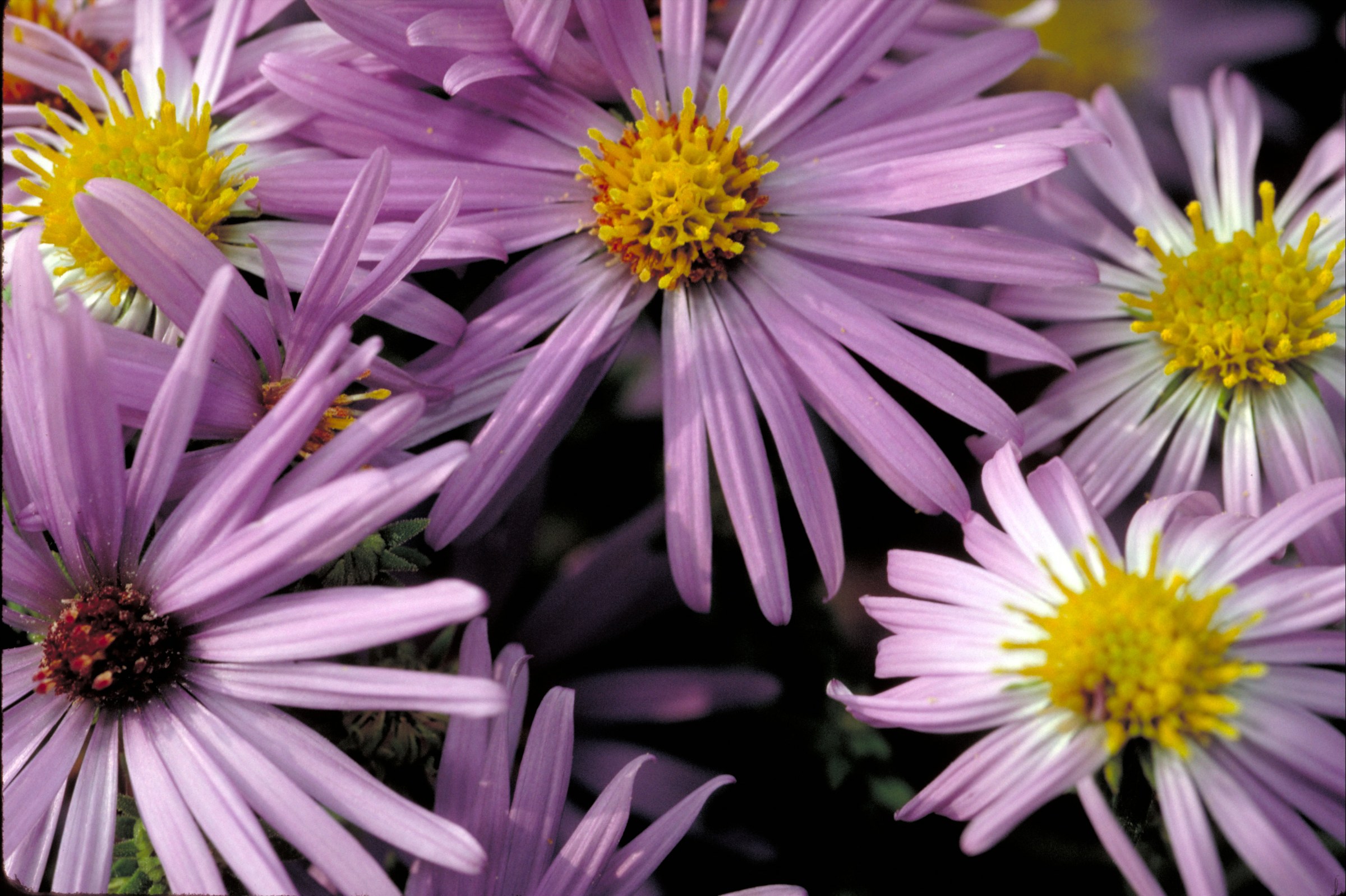
Symphyotrichum oblongifolium (formerly Aster oblongifolius), commonly called Aromatic Aster or oblong-leaved aster, is a bushy, mound-forming perennial wildflower of the central and eastern United States prized for its late-season flower show and its genuinely aromatic, camphor-scented foliage — crush a leaf and you’ll know immediately how it got its name. Few native perennials bloom as dependably or as densely in October, when much of the rest of the garden is winding down.
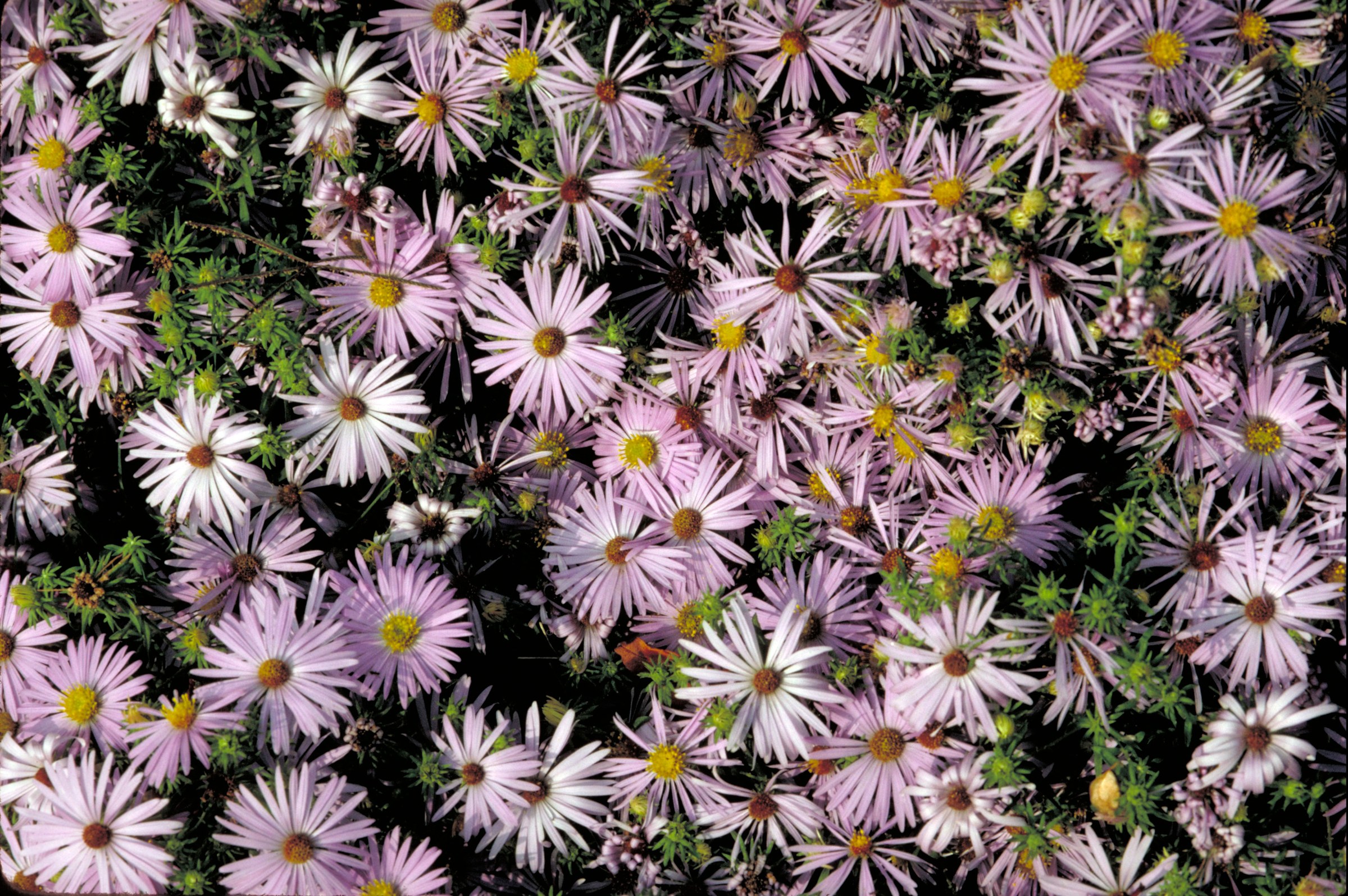
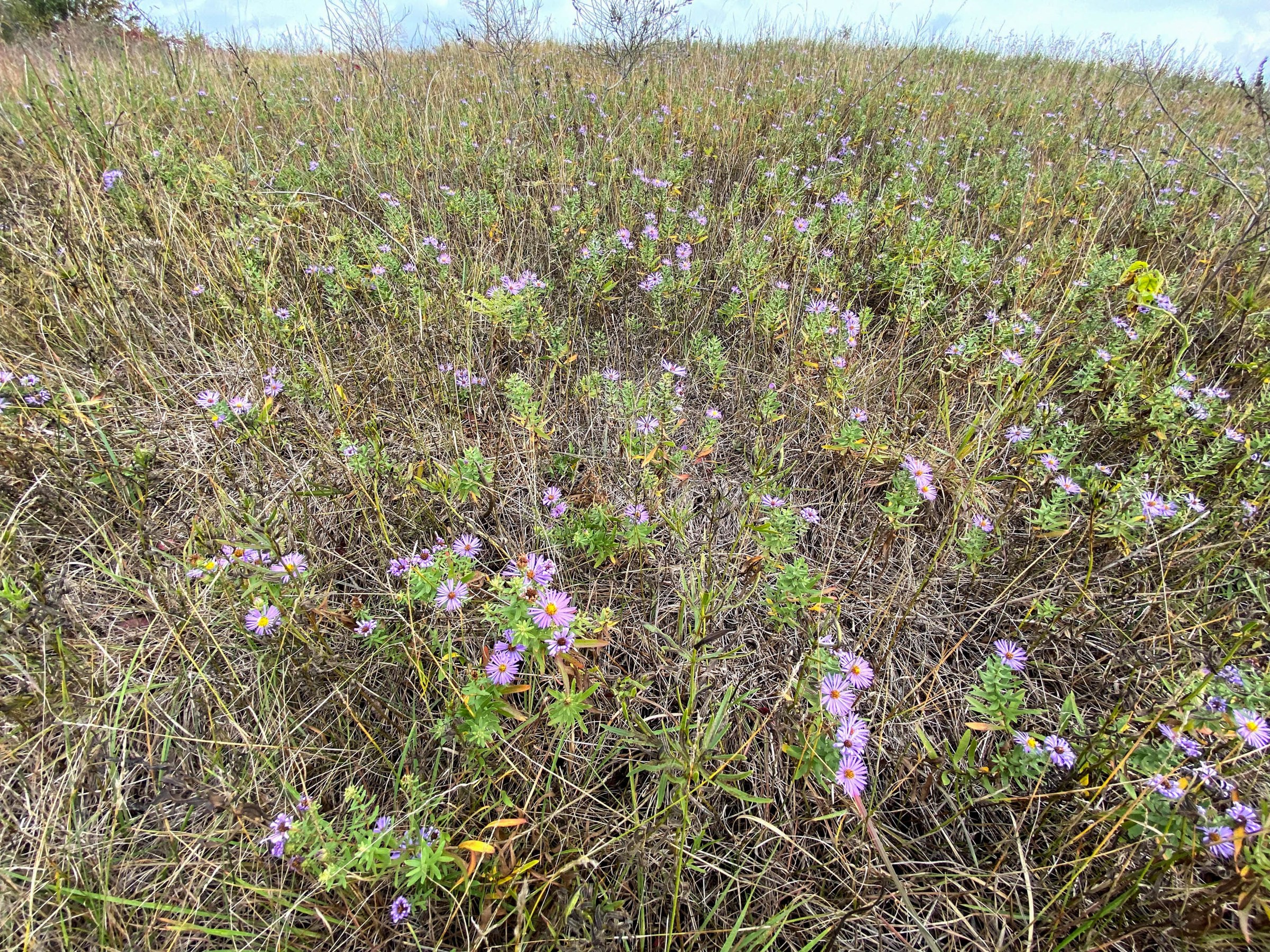
In the wild, Aromatic Aster is found on dry, rocky prairies, glades, limestone bluffs, and open woodland edges — sunny, well-drained sites where it forms low, rounded clumps 1 to 2½ feet tall and often wider than they are tall. Sturdy, many-branched stems are clothed in narrow, slightly rough-textured leaves, and by late summer each stem tip erupts into a crowded spray of small purple to lavender daisy-like flowers with bright yellow centers.
Though an uncommon component of its native plant communities, Aromatic Aster is anything but rare in cultivation — it’s one of the most widely sold native asters in the nursery trade, in part because of its exceptional drought tolerance, compact habit, and reliable fall color. The popular cultivar ‘October Skies’, selected for its tidy mounded form and profuse sky-blue-purple flowers, has introduced many gardeners to this species who might otherwise have overlooked the straight species.
Identification
Aromatic Aster grows as a bushy, much-branched perennial 10 to 31 inches (25–80 cm) tall, spreading from a sturdy woody base (caudex) into a rounded mound often 2 to 3 feet across. The whole plant has a slightly rough, gray-green cast and a distinct aromatic, camphor-like scent when the foliage is bruised or crushed.
Stems
Stems are numerous, upright to arching, and covered in short, stiff hairs that give them a rough feel. They branch freely in the upper half of the plant, each branch tip ending in a flower head, which is what produces the species’ characteristically dense floral display.
Leaves
Leaves are narrow and oblong to lance-shaped, stiff-textured, and clasp the stem at their base. Lower leaves may be shed by bloom time; upper leaves are smaller and crowded near the flower heads. The foliage is aromatic, releasing a camphor-like fragrance when touched.
Flowers
Flower heads are about 1 to 1½ inches across, with 20 to 35 narrow ray florets in shades of violet-blue to purple surrounding a center of yellow disk florets that often turn reddish-purple with age. Bloom runs from August into November, peaking in October, and a well-grown plant can be absolutely covered in flowers at peak bloom.
Fruit & Seeds
Like other asters, the fruit is a small achene tipped with a tuft of bristles that catches the wind for dispersal, ripening a few weeks after flowering.
Quick Facts
| Scientific Name | Symphyotrichum oblongifolium (syn. Aster oblongifolius) |
| Family | Asteraceae (Aster) |
| Plant Type | Herbaceous Perennial Wildflower |
| Mature Height | 1–2½ ft |
| Mature Spread | 2–3 ft |
| Growth Rate | Moderate |
| Sun Exposure | Full Sun |
| Water Needs | Low; excellent drought tolerance once established |
| Soil Type | Dry to average, well-drained; tolerates rocky or alkaline soil |
| Soil pH | Neutral to alkaline |
| Bloom Time | August – November, peak in October |
| Flower Color | Violet-blue to purple with yellow centers |
| Fall Color | Foliage stays gray-green through bloom |
| Fruit | Small bristle-tipped achenes |
| Deer Resistant | Yes, aromatic foliage is rarely browsed |
| USDA Hardiness Zones | 3–8 |
Native Range
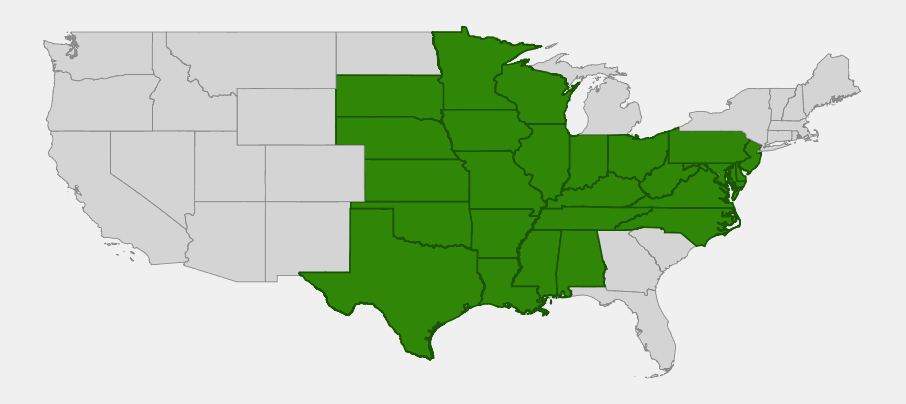
Aromatic Aster is native across a broad swath of the central and eastern United States, from the eastern Great Plains through the Midwest and into the mid-Atlantic and upper South. It is most abundant on the dry prairies, glades, and limestone outcrops of the Ozarks and the tallgrass prairie region, but occurs as far east as Pennsylvania and Virginia and as far south as the Gulf Coast states.
Typical habitats include dry upland prairie, rocky or gravelly glades, limestone and dolomite bluffs, open woodland margins, and roadsides — almost always on well-drained, sunny sites with thin or rocky soil where taller, more competitive vegetation struggles to establish. This preference for lean, dry ground makes it an excellent match for difficult garden spots where many other perennials fail.
As a true prairie and glade specialist, Aromatic Aster evolved alongside periodic fire and grazing disturbance, and it responds well to occasional cutting back or burning that mimics those historical processes by keeping competing vegetation in check.
📋 Regional plant lists featuring Aromatic Aster: New York, Pennsylvania & Northern New Jersey · Delaware, Southern New Jersey & Long Island · Maryland, Virginia & West Virginia · North Carolina & South Carolina · Georgia, Alabama & Mississippi · Arkansas, Louisiana, Eastern Oklahoma & Eastern Texas · Kentucky & Tennessee · Ohio & Indiana · Illinois, Iowa & Missouri · Michigan, Wisconsin & Eastern Minnesota · North Dakota, South Dakota & Western Minnesota · Nebraska, Kansas & Eastern Colorado
Growing & Care Guide
Aromatic Aster is one of the easiest and most forgiving native asters to grow, thriving in exactly the kind of lean, dry, sunny conditions that frustrate many other perennials.
Light
Full sun is essential for the densest, most compact growth and the heaviest bloom. In partial shade, plants stretch, flop, and flower more sparsely.
Soil & Water
This species actively prefers lean, dry, well-drained soil and tolerates rocky, gravelly, or clay soils as long as drainage is good. It is exceptionally drought tolerant once established and is a poor fit for consistently moist or rich soils, where it tends to grow floppy and is more prone to foliar disease. Avoid overwatering and skip the fertilizer — this is a plant that thrives on neglect.
Planting Tips
Plant in spring or fall, spacing plants 18 to 24 inches apart to allow the mounded habit to fill in. It is an excellent choice for rock gardens, gravel gardens, slopes, and other well-drained sites where richer soil would cause other perennials to rot.
Pruning & Maintenance
Pinching or shearing stems back by about a third in early-to-mid summer encourages a bushier, more compact habit and more flower buds, reducing the need for staking. Cut the whole plant back to the ground in late winter after birds have had a chance to take the seed. Divide congested clumps every 3 to 4 years in spring to maintain vigor.
Propagation
Divide established clumps in spring just as new growth emerges. Stem cuttings taken in early summer root readily. Seed can also be sown in fall for spring germination after natural cold stratification.
Landscape Uses
- Dry/xeric gardens and rock gardens where drought tolerance matters
- Pollinator gardens as a key late-season nectar source
- Prairie and meadow plantings alongside warm-season grasses
- Border edging thanks to its tidy, mounded habit
- Slope and bank stabilization on well-drained sites
Wildlife & Ecological Value
Aromatic Aster’s late, abundant bloom makes it one of the most valuable fall nectar sources in the prairie and woodland-edge plant community.
For Pollinators
The flowers draw large numbers of native bees, honey bees, butterflies, and other beneficial insects at a time when few other nectar sources remain, making it especially important for species building up reserves before winter or migration. It also serves as a larval host for several native moth species.
For Birds
Seed-eating songbirds, including finches and sparrows, feed on the ripened achenes through fall and winter, particularly if stems are left standing rather than cut back in autumn.
For Mammals
The aromatic, slightly bitter foliage is rarely browsed by deer and rabbits, which makes Aromatic Aster a reliable choice in gardens with heavy browsing pressure.
Ecosystem Role
As a prairie and glade specialist adapted to thin, dry soils, Aromatic Aster helps stabilize marginal ground and fills a late-season niche in the pollinator calendar that few other native plants occupy as reliably.
Cultural & Historical Uses
There is no significant documented history of medicinal or culinary use of Aromatic Aster among Indigenous peoples or early settlers; its historical significance is modest compared to more widely utilized prairie plants. Its common name instead reflects a simple, practical observation — early botanists and naturalists noted the distinctly aromatic, camphor-like scent released when the foliage is bruised, a feature that persists in field guides to this day.
In more recent decades, Aromatic Aster has become a significant player in the native plant horticulture movement. Its outstanding drought tolerance and tidy habit led to the selection and introduction of garden cultivars, most notably ‘October Skies’ and ‘Raydon’s Favorite’, both selected for compact form and heavy bloom. These cultivars are now widely available at nurseries and have introduced a great many gardeners to native asters who might not otherwise have planted the wild-type species.
Today, Aromatic Aster is valued primarily as a low-maintenance, high-value fall-blooming perennial for native and drought-tolerant gardens, prairie restorations, and pollinator plantings across its range.
Frequently Asked Questions
Is Aromatic Aster the same plant as ‘October Skies’?
‘October Skies’ is a popular cultivar of Aromatic Aster (Symphyotrichum oblongifolium), selected from the wild species for its compact, mounded form and heavy display of sky-blue-purple flowers. It is the same species as wild Aromatic Aster, just a named garden selection.
Why does my aromatic aster smell?
That’s normal — the foliage releases a distinct camphor-like fragrance when brushed or crushed, which is exactly where the common name comes from.
Does Aromatic Aster need rich soil?
No — it actually performs best in lean, dry, well-drained soil and can flop or struggle with disease in overly rich or consistently moist conditions. Avoid fertilizing.
How do I keep Aromatic Aster from flopping?
Pinch or shear the stems back by about a third in early-to-mid summer. This encourages bushier growth and more flower buds, largely eliminating the need to stake plants.
Is Aromatic Aster deer resistant?
Yes, its aromatic, slightly bitter foliage is rarely browsed, making it a reliable choice in gardens with significant deer pressure.

Looking for a nursery that carries Aromatic Aster?
Browse our native plant nursery directory: Alabama & Arkansas · Delaware · Illinois, Indiana, Iowa & Kansas · Kentucky, Louisiana, Maryland, Minnesota, Mississippi & Missouri · Nebraska, New Jersey, North Carolina, Ohio & Oklahoma · Pennsylvania, South Dakota, Tennessee, Texas & Virginia · West Virginia & Wisconsin