Kentucky Wisteria (Wisteria macrostachya)
Wisteria macrostachya, commonly known as Kentucky Wisteria, is a native, woody, deciduous climbing vine of the lower Mississippi and Ohio River valleys. It is one of only two wisterias native to North America, the other being the more coastal American wisteria (Wisteria frutescens). Many botanists today classify Kentucky wisteria as a variety of that species — Wisteria frutescens var. macrostachya — rather than as a fully distinct species, and you will see both treatments in field guides and nursery catalogs. Whichever name is used, it describes the same plant: a well-behaved, cold-hardy native vine that stands in sharp contrast to the aggressive Asian wisterias sold at many garden centers.
Kentucky wisteria takes its common name from its namesake state, though its natural range stretches well beyond Kentucky, through the bottomland forests and riverbanks of the south-central United States. It typically blooms earlier and more reliably than American wisteria, often flowering again lightly in midsummer, and its racemes are longer — among the longest of any wisteria native to this continent.
For gardeners who want the look of wisteria without the risk of releasing an invasive species into the landscape, Kentucky wisteria is one of the best native alternatives available. It climbs by twining rather than by aggressive suckering, dies back to a manageable framework of woody stems, and — unlike its Asian relatives — has never been documented as invasive anywhere in its native range.
Identification
Kentucky wisteria is a high-climbing, twining vine that can reach 15 to 30 feet with support, wrapping counterclockwise around trellises, fence posts, arbors, and tree trunks. Left untended, it becomes a tangled, woody-stemmed climber; trained and pruned, it makes a tidy, long-lived specimen on a sturdy arbor.
Leaves
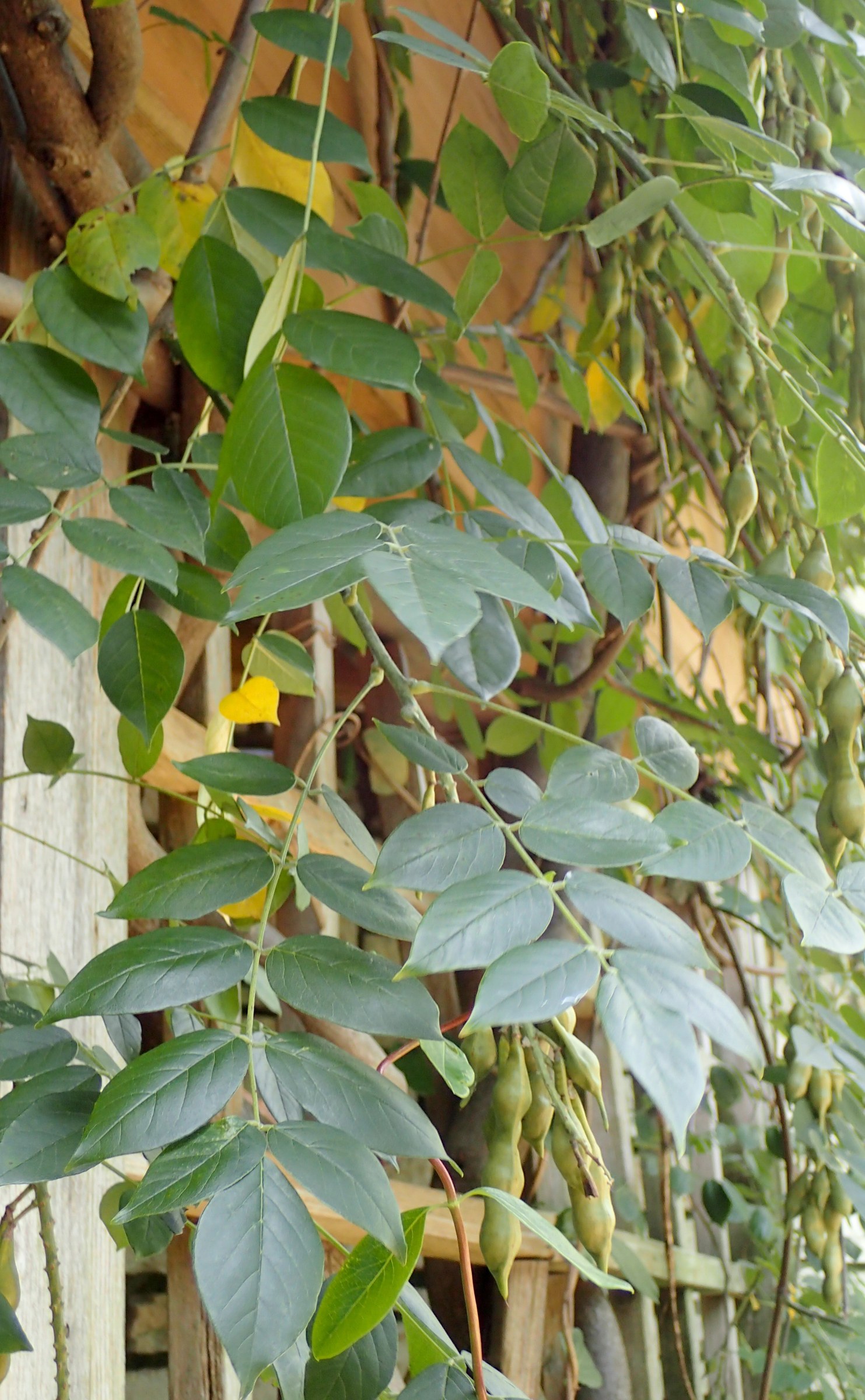
The leaves are pinnately compound, 8 to 15 inches long, with 7 to 13 glossy, dark green leaflets arranged in pairs along the leaf stalk with one terminal leaflet. Each leaflet is oval to lance-shaped with a short pointed tip. Foliage emerges in mid-spring, around the same time as or just before the flowers, and turns a soft yellow in fall before dropping.
Flowers
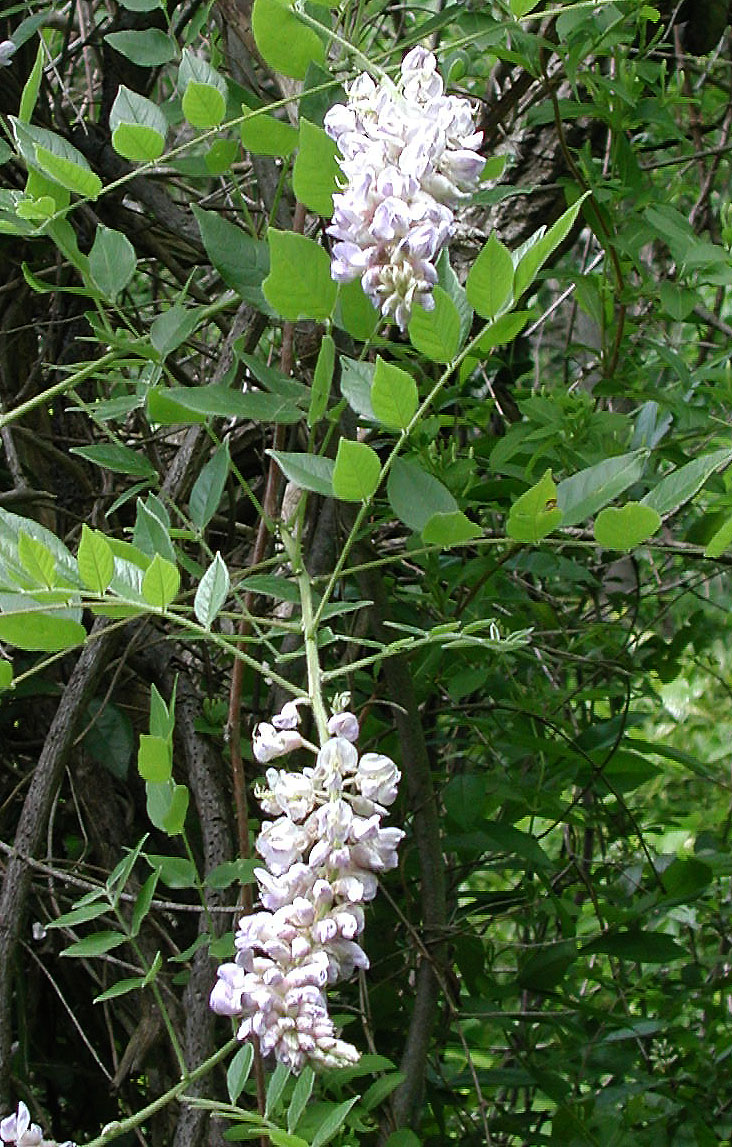
Flowers open in dense, pendant racemes 6 to 12 inches long — among the longest bloom clusters of any native wisteria — in shades of lavender-blue to pale violet, occasionally fading to near-white. Unlike the showier but shorter racemes of American wisteria, Kentucky wisteria’s blooms are only lightly scented. Flowering begins in mid-to-late spring on new growth, which means a hard late freeze or an overly aggressive pruning is less likely to eliminate the year’s bloom entirely, and plants often produce a lighter second flush of flowers in summer.
Seed Pods
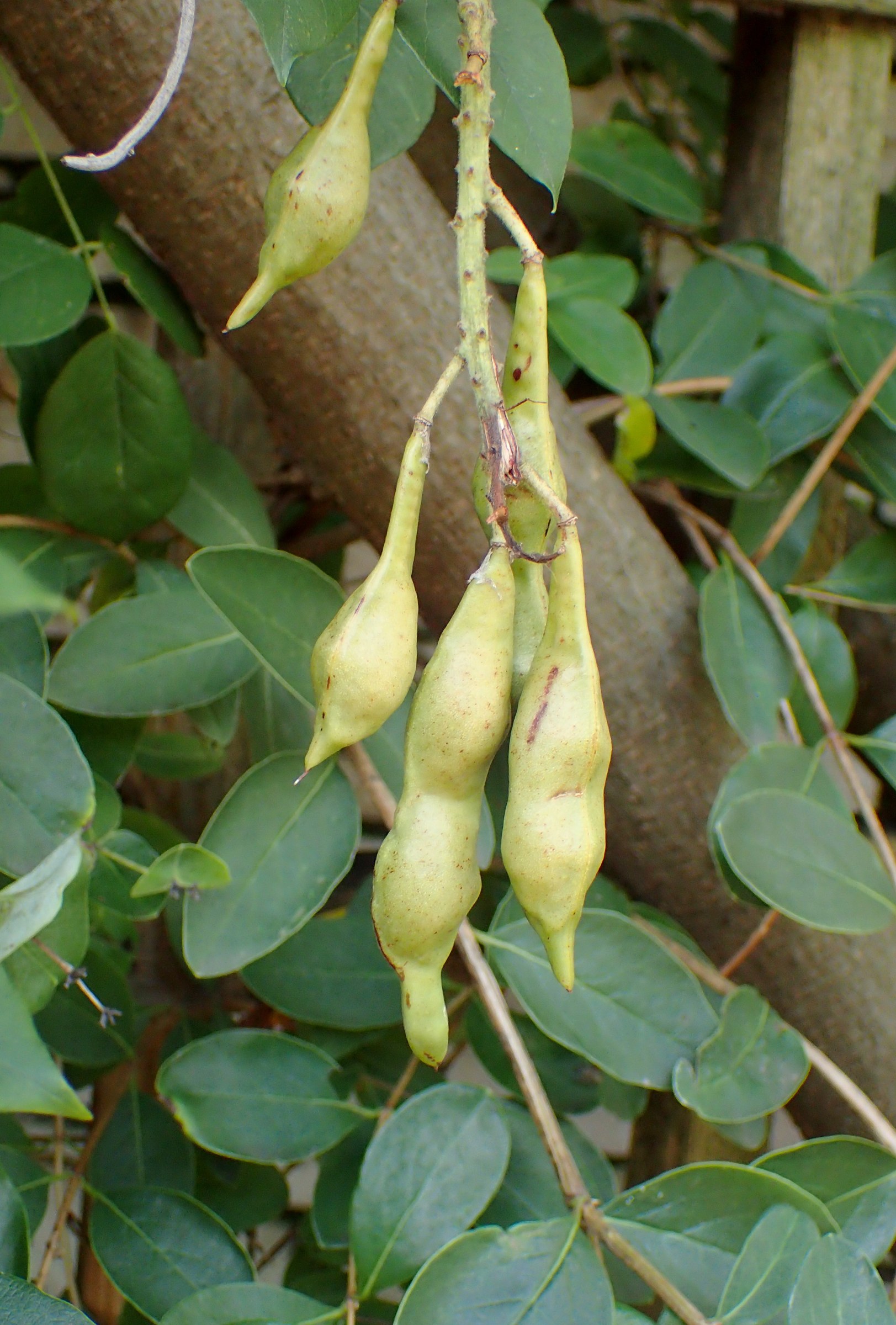
Flowers are followed by smooth, flattened, bean-like seed pods 3 to 5 inches long that mature from green to tan and persist on the vine well into winter. All parts of Kentucky wisteria — especially the seeds and pods — are toxic if ingested, containing compounds that can cause nausea, vomiting, abdominal pain, and diarrhea. Plant it well away from areas where young children might be tempted to pick up the pods, and keep livestock from browsing it.
Quick Facts
| Scientific Name | Wisteria macrostachya (syn. Wisteria frutescens var. macrostachya) |
| Family | Fabaceae (Pea/Legume) |
| Plant Type | Deciduous Woody Vine |
| Mature Height | 15–30 ft with support |
| Growth Rate | Moderate to fast once established |
| Sun Exposure | Full Sun to Part Shade |
| Water Needs | Moderate to High; prefers consistently moist soil |
| Soil Type | Moist, fertile; tolerates clay and seasonal flooding |
| Soil pH | Slightly acidic to neutral |
| Bloom Time | April – May, light rebloom in summer |
| Flower Color | Lavender-blue to pale violet |
| Fall Color | Soft yellow |
| Fruit | Flattened bean-like pods, 3–5 in, toxic if eaten |
| Deer Resistant | Yes |
| USDA Hardiness Zones | 5–9 |
Native Range
Kentucky wisteria is native to the south-central United States, centered on the Mississippi River embayment and extending from the Gulf Coast of Louisiana and east Texas north through Arkansas, Mississippi, Missouri, and Illinois to Kentucky and Tennessee. Within this range it grows in bottomland hardwood forests, swamp margins, and along riverbanks and streamsides, often climbing into the canopy of the flood-tolerant trees that share its habitat.
This native range does not extend to the Atlantic Seaboard or the Pacific states; a vine sold or planted as “wisteria” in those regions is far more likely to be the related native American wisteria or, much more commonly in the nursery trade, one of the invasive Asian species discussed below. Always confirm the species before planting, especially outside Kentucky wisteria’s core Mississippi-valley range.
Kentucky wisteria is not currently considered rare or at risk across its range, though, like many bottomland species, its habitat has been reduced by wetland drainage and river channelization over the past century.
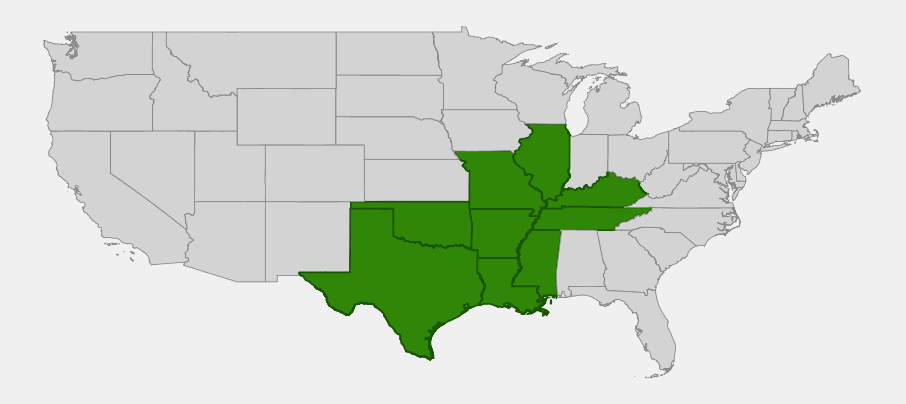
📋 Regional plant lists featuring Kentucky Wisteria: Arkansas, Louisiana, Eastern Oklahoma & Eastern Texas · Georgia, Alabama & Mississippi · Kentucky & Tennessee · Illinois, Iowa & Missouri
Growing & Care Guide
Kentucky wisteria rewards gardeners with a strong, sturdy support and consistent moisture, flowering reliably without the decades-long wait sometimes associated with wisterias grown from seed.
Light
Full sun produces the heaviest bloom, though the vine tolerates light shade, especially in the hottest parts of its range. Expect fewer flowers in deep shade.
Soil & Water
This is a bottomland native and appreciates moist, fertile soil; it tolerates occasional flooding and clay far better than most ornamental vines. Water deeply during the first two growing seasons to establish a deep root system, after which established plants handle short dry spells without trouble.
Planting Tips
Give Kentucky wisteria a genuinely strong support from the start — a wooden arbor, metal pergola, or heavy fence, not a mailbox post or a small trellis. Plant container-grown stock in fall or early spring, and set the support in place before planting so young growth has something to climb immediately. The widely sold cultivar ‘Summer Cascade’ was selected from this species for its extended bloom season and is a popular nursery-propagated choice when straight-species plants are hard to find.
Pruning & Maintenance
Prune after the main spring flowering to control size and encourage branching, and again in late winter to remove dead or crossing wood. Because Kentucky wisteria blooms on new growth, an overly hard late-winter pruning rarely sacrifices the whole season’s flowers the way it can with some Asian wisterias. Keep an eye on young vines and redirect wayward shoots onto their support before they wrap around nearby shrubs or downspouts.
Landscape Uses
Kentucky wisteria is well suited to:
- Arbors and pergolas strong enough to support a mature woody vine
- Screening along a sturdy fence line
- Rain gardens and wet-soil sites where it tolerates occasional flooding
- Native alternative plantings replacing invasive Chinese or Japanese wisteria
- Wildlife and pollinator gardens as a nectar source for native bees
Wildlife & Ecological Value
For Pollinators
The nectar-rich flowers attract native bumblebees and carpenter bees, which are strong enough to force open the keel-shaped petals of a typical pea-family flower and reach the nectar inside — a task too difficult for many smaller insects.
For Wildlife
Dense, mature wisteria vines provide cover and nesting structure for songbirds. The seeds and foliage are not a significant wildlife food source, and the toxicity that makes the pods risky for pets and children also limits their appeal to most wildlife.
Ecosystem Role
As a legume, Kentucky wisteria hosts nitrogen-fixing bacteria in root nodules, contributing to soil fertility in the bottomland forests where it naturally grows. Its deep, extensive root system also helps stabilize soil along the riverbanks and floodplain margins it favors.
Native Wisteria vs. Invasive Wisteria
Kentucky wisteria and American wisteria are frequently confused with — and sold alongside — two Asian species, Chinese wisteria (Wisteria sinensis) and Japanese wisteria (Wisteria floribunda), both of which are documented invasive species across large parts of the eastern and southern United States. Asian wisterias escape cultivation readily, smother and girdle mature trees under their weight, and form dense monocultures in forest edges and riparian corridors, displacing native vegetation.
A few features help distinguish Kentucky wisteria from its Asian relatives: its flower racemes open in a cluster nearly all at once rather than progressively from base to tip; its leaflets are fewer and typically glossier; and its overall growth, while vigorous, has not been documented as invasive anywhere within or beyond its native range. When buying a wisteria for the garden, ask specifically for Wisteria macrostachya or Wisteria frutescens by name — labels simply reading “wisteria” at a general nursery are frequently one of the Asian species. For a closely related native option more suited to the Atlantic Seaboard, see our page on American wisteria.
Frequently Asked Questions
Is Kentucky wisteria the same plant as American wisteria?
They are closely related natives, and many botanists treat Kentucky wisteria as a variety of American wisteria (Wisteria frutescens var. macrostachya). Horticulturally they’re easy to tell apart: Kentucky wisteria has longer flower racemes and a more south-central native range, while American wisteria is found along the Atlantic Seaboard and Gulf Coast.
Is Kentucky wisteria invasive?
No. Unlike Chinese and Japanese wisteria, Kentucky wisteria is native to North America and has not been documented as invasive. The wisterias responsible for invasive spread in the eastern U.S. are the Asian species, not this one.
Are the seeds or pods of Kentucky wisteria safe to eat?
No. All parts of the plant, especially the seeds and pods, are toxic if ingested and can cause vomiting, abdominal pain, and diarrhea. Keep pods away from children and pets.
What is ‘Summer Cascade’ wisteria?
‘Summer Cascade’ is a cultivar selected from Kentucky wisteria, chosen for vigorous, extended summer rebloom. It is simply a named selection of this native species, not a separate kind of wisteria.
How long does it take Kentucky wisteria to bloom?
Container-grown, nursery-propagated plants typically bloom within two to three years of planting, much faster than the decade or more sometimes required by seed-grown Asian wisterias.

Looking for a nursery that carries Kentucky Wisteria?
Browse our native plant nursery directory: AR · IL · KY, LA, MO, MS · OK · TN, TX