Mexican Buckeye (Ungnadia speciosa)
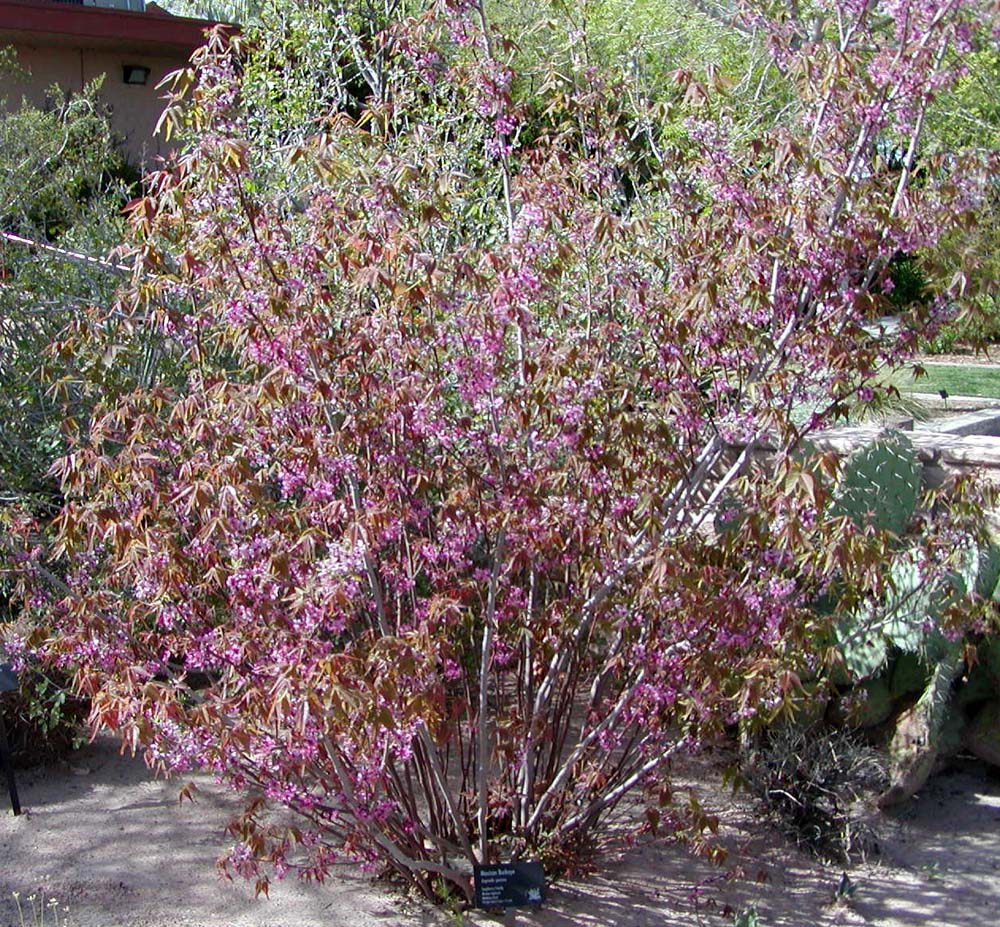
Ungnadia speciosa, commonly called Mexican buckeye, is the sole species in its genus and one of the earliest and showiest bloomers of the Texas Hill Country and Trans-Pecos each spring. Despite the common name, it is not a true buckeye at all — it belongs to the soapberry family (Sapindaceae) rather than the horse chestnut family — but its palmately compound leaves and clustered pink flowers give it a strong family resemblance that earned it the name among early Texas settlers.
Growing as a large, multi-stemmed shrub or small tree, usually 10 to 20 feet tall, Mexican buckeye produces a spectacular flush of rose-pink to magenta flowers directly on bare branches in early spring, days to weeks before the bronze-tinted new leaves emerge. For a few weeks each year, a mature specimen in full bloom is one of the most eye-catching native plants in its range, often mistaken by visitors for a redbud despite being an entirely unrelated species.
Mexican buckeye thrives on the same lean, rocky limestone soils that support Ashe juniper and Texas persimmon, and it tolerates drought, heat, and poor soil with ease once established. It makes an excellent specimen plant, screen, or naturalized shrub for xeric Texas and New Mexico gardens — just remember that, true to its buckeye-like name, every part of the plant should be treated as toxic to people and livestock.
Identification
Mexican buckeye typically grows as a multi-trunked large shrub or small tree, 10 to 20 feet tall and often nearly as wide, with an upright, somewhat open branching habit. It frequently forms thickets from root sprouts where conditions favor it, especially along rocky drainages.
Bark & Stems
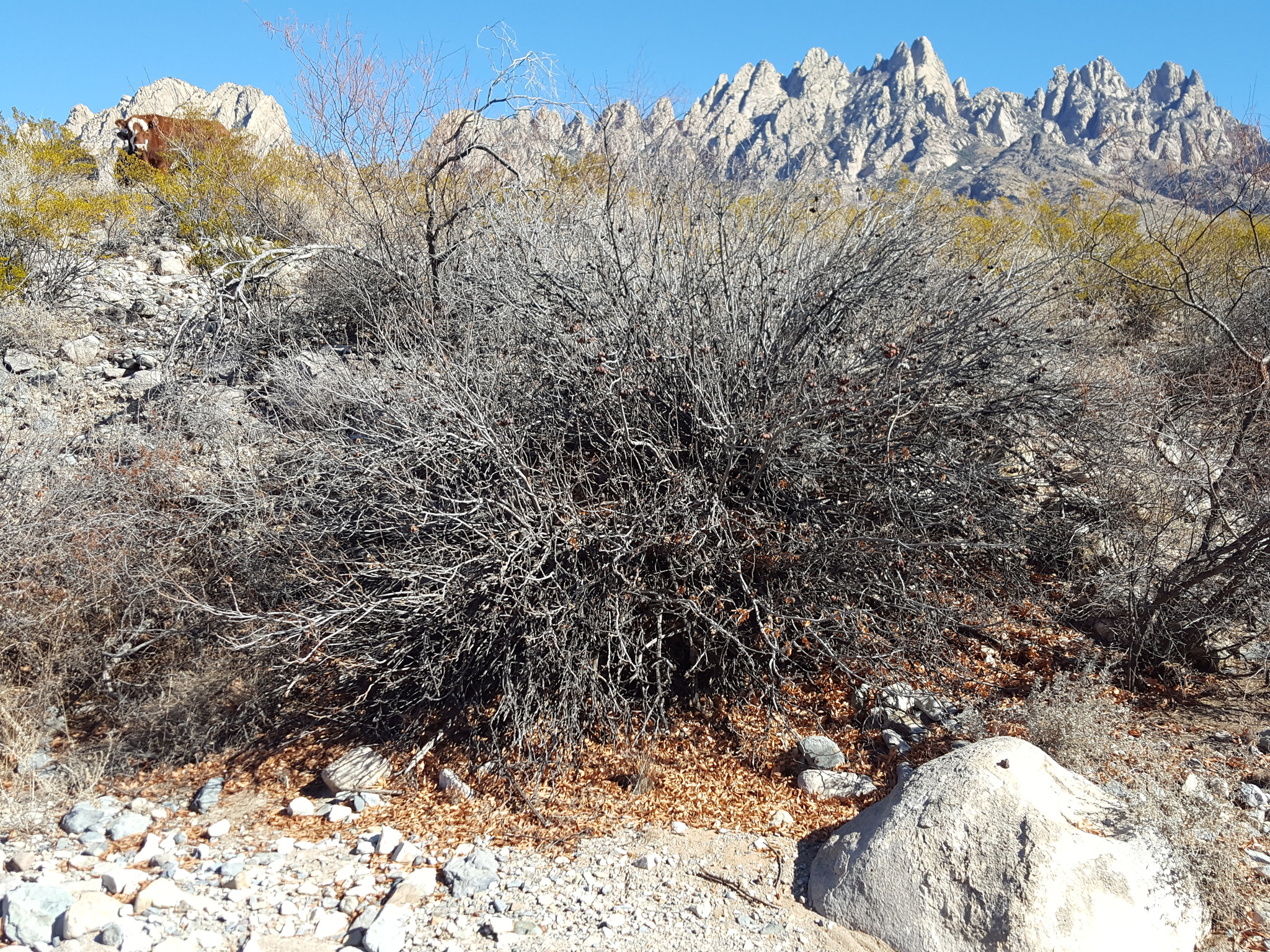
Young stems are smooth and gray-brown, becoming slightly furrowed and darker with age. The multi-stemmed, clumping growth habit is typical, with several main trunks arising from the base rather than a single dominant trunk, though careful pruning can train it into more of a single-trunk small tree form.
Leaves
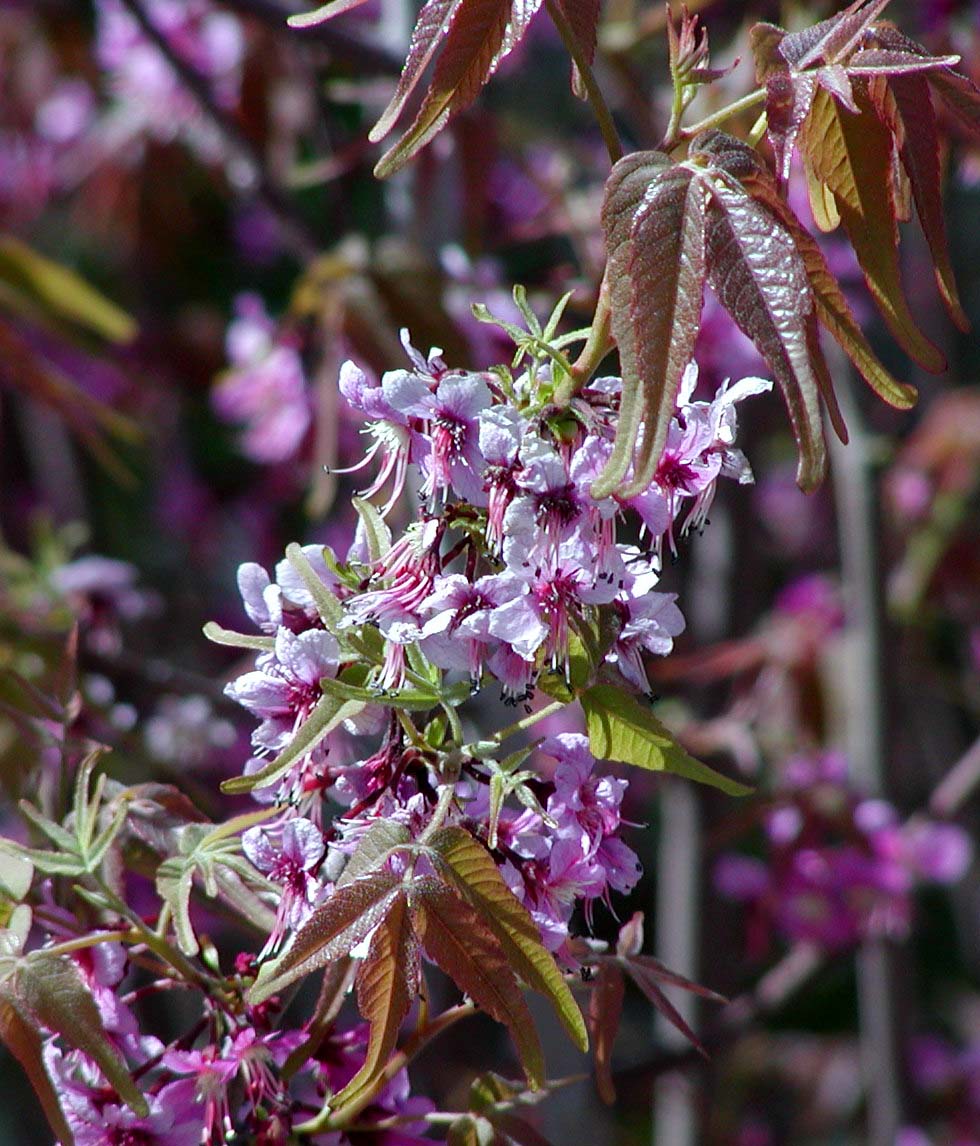
Leaves are deciduous, alternate, and pinnately compound, with 3 to 7 leaflets, each leaflet 2 to 4 inches long, lance-shaped to elliptical, and finely toothed along the margins. New spring growth emerges with a distinctive bronze-to-reddish cast before maturing to a rich medium green through summer. Fall color is generally a modest yellow, though it can vary by year and site.
Flowers
The flowers are the plant’s defining feature: fragrant, four- or five-petaled, rose-pink to magenta blossoms about 3/4 inch across, clustered densely along bare branches in early spring — typically February through April depending on latitude and elevation — well before the leaves unfurl. This leafless flowering habit, shared with a handful of other early Texas spring bloomers, makes the shrub extremely conspicuous against the still-dormant winter landscape.
Fruit & Seeds
Fruit is a distinctive three-lobed, leathery brown capsule, 1 to 2 inches across, maturing in late summer and persisting into fall and winter after splitting open. Each lobe holds one to three hard, round, shiny dark brown to black seeds resembling small buckeyes or marbles. The capsules are a reliable identification feature even in winter, often remaining on bare branches long after the seeds have dropped or been taken by wildlife.
Quick Facts
| Scientific Name | Ungnadia speciosa |
| Family | Sapindaceae (Soapberry) |
| Plant Type | Deciduous large shrub / small tree |
| Mature Height | 10–20 ft |
| Mature Spread | 8–15 ft |
| Growth Rate | Slow to moderate |
| Sun Exposure | Full Sun to Part Shade |
| Water Needs | Low once established |
| Soil Type | Rocky, limestone-based; tolerates clay and caliche |
| Soil pH | 7.0–8.5 (alkaline preferred) |
| Bloom Time | February – April |
| Flower Color | Rose-pink to magenta |
| Fall Color | Yellow (modest) |
| Fruit | Three-lobed brown capsules with dark round seeds |
| Deer Resistant | Good |
| USDA Hardiness Zones | 7–9 |
Native Range
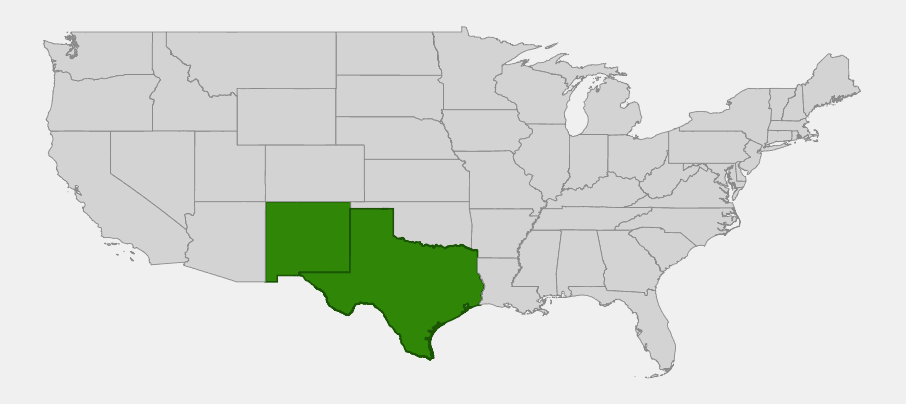
Mexican buckeye is native to central and western Texas, southern New Mexico, and northeastern Mexico. In Texas it is widespread across the Edwards Plateau, the Trans-Pecos, and the southern and western Rolling Plains, generally wherever limestone or other calcareous rock is close to the surface. In New Mexico its range is more limited, confined mainly to the southern part of the state near the Texas border.
Typical habitat is rocky hillsides, canyon slopes, and stream bottoms, where the shrub often grows directly from cracks and ledges in limestone outcrops or along the gravelly margins of intermittent creeks. It is notably shade tolerant for a plant of such sunny, exposed habitats, and is frequently found as an understory shrub beneath Ashe juniper and various oaks as well as in full sun on open rocky slopes.
Mexican buckeye is not rare or protected, and it is a familiar, welcome sight each spring across its Texas range, but like many plants of thin limestone soils it can be slow to recolonize after significant habitat disturbance such as large-scale land clearing.
📋 Regional plant lists featuring Mexican buckeye: South and West Texas · Arizona & New Mexico
Growing & Care Guide
Mexican buckeye is a forgiving, low-maintenance native once it has a season or two to settle in, and its tolerance for rocky, alkaline, drought-prone ground makes it a natural fit for xeric landscaping across its range.
Light
Full sun produces the heaviest flowering, but Mexican buckeye also grows well in part shade, especially as an understory shrub beneath oaks and junipers, where it adopts a more open, reaching form. It is adaptable to both conditions, which makes it useful in a variety of garden settings.
Soil & Water
This species is built for thin, rocky, alkaline soils and tolerates clay, caliche, and limestone-derived ground with ease — in fact it often struggles in rich, consistently moist garden soil, which can encourage root problems. Water regularly during the first growing season to establish a deep root system, then taper off; mature plants are quite drought tolerant and need no supplemental irrigation beyond natural rainfall in most of their range.
Planting Tips
Plant in fall or early spring, choosing a well-drained site such as a slope, raised bed, or rocky outcrop rather than a low spot that collects water. Because it naturally grows as a multi-stemmed clump, give it room to develop several trunks rather than crowding it against structures or other shrubs. It transplants reasonably well from container stock when young.
Pruning & Maintenance
Mexican buckeye needs little pruning. Remove dead wood and thin out crowded stems after flowering if a more open form is desired, or leave it alone to develop its natural thicket-forming habit. Root sprouts can be removed if a more controlled, single- or few-trunked form is preferred.
Propagation
Propagate from seed collected in fall once capsules have dried and split open; seeds benefit from scarification and a period of cold stratification to improve germination. Semi-hardwood cuttings are possible but less reliable than seed propagation for home gardeners.
Landscape Uses
- Specimen planting for a dramatic early-spring flower display on bare wood
- Xeriscape and rock garden plantings on thin, well-drained soils
- Informal screen or hedge when allowed to form multi-stemmed thickets
- Wildlife gardens, for early nectar and seasonal cover
- Erosion control on rocky slopes and limestone outcrops
Wildlife & Ecological Value
Mexican buckeye contributes meaningfully to the seasonal rhythm of wildlife activity across its limestone-country range, especially in early spring when resources are scarce.
For Pollinators
The fragrant, early-blooming flowers are a significant nectar source for native bees and other pollinating insects at a time when few other woody plants are flowering, making this shrub valuable for supporting pollinator activity in the shoulder season between winter and the main spring bloom.
For Birds
While the toxic seeds themselves are not a food source for most birds, the dense branching structure of mature shrubs provides nesting sites and cover, and the early flowers draw in insects that in turn support insect-eating songbirds during nesting season.
For Mammals
Deer and livestock generally avoid browsing Mexican buckeye, likely due to its toxic foliage and seeds, which makes it a useful, reliably deer-resistant shrub in areas with heavy browsing pressure.
Ecosystem Role
As one of the showiest and most reliable early bloomers on thin limestone soils, Mexican buckeye helps anchor rocky slopes against erosion with its root system and adds structural and seasonal diversity to juniper-oak woodlands that might otherwise offer little flowering interest before true spring arrives.
Cultural & Historical Uses
Mexican buckeye has long been recognized by Texas Hill Country residents as a herald of spring, its leafless pink flowers appearing on hillsides and along creek bottoms well before most other native plants break dormancy. The common name reflects an old folk resemblance to true buckeyes (Aesculus species) in the shape of its seeds and capsules, even though the two plants are not closely related botanically.
The hard, dark seeds have occasionally been strung as beads or used in folk jewelry, a practice noted historically among both Indigenous peoples and early Texas settlers in the plant’s range, though this should be understood as a historical craft use rather than a safe modern practice given the seeds’ toxicity. The wood has no significant commercial history, as the shrub’s modest size and irregular, multi-stemmed form have never made it useful for lumber.
In recent decades, Mexican buckeye has become an increasingly popular choice in Texas and New Mexico native-plant and xeriscape landscaping, valued for its dramatic, low-water spring display and its tolerance of the same difficult rocky soils that frustrate many other ornamental shrubs.
Frequently Asked Questions
Is Mexican buckeye toxic?
Yes. Like true buckeyes, all parts of the plant — especially the seeds — contain compounds considered toxic if ingested by people or livestock. Admire the flowers and capsules, but do not eat any part of this plant, and keep children and grazing animals away from fallen seeds.
Is Mexican buckeye related to true buckeyes?
No. Despite the similar common name and seed appearance, Mexican buckeye belongs to the soapberry family (Sapindaceae), while true buckeyes belong to a different lineage within the Sapindaceae broadly defined but in the separate genus Aesculus. The resemblance is mostly in the seeds, not close botanical kinship.
Why does Mexican buckeye bloom before it leafs out?
Flowering on bare wood before leaf-out is a strategy shared by several early-spring bloomers; it makes the flowers highly visible to pollinators and avoids competing with the plant’s own foliage for insect attention, at a time of year when very few native plants are blooming in its range.
How much water does Mexican buckeye need?
Very little once established. Water regularly through the first growing season to help it develop a deep root system, then rely mainly on natural rainfall — this is a genuinely drought-tolerant shrub suited to low-water landscaping.
Does Mexican buckeye form a single trunk or multiple stems?
Left to grow naturally, it typically develops as a multi-stemmed clumping shrub, often spreading by root sprouts. With selective pruning when young, it can be trained into more of a small, single- or few-trunked tree form.

Looking for a nursery that carries Mexican Buckeye?
Browse our native plant nursery directory: Texas · New Mexico