Western Soapberry (Sapindus saponaria var. drummondii)
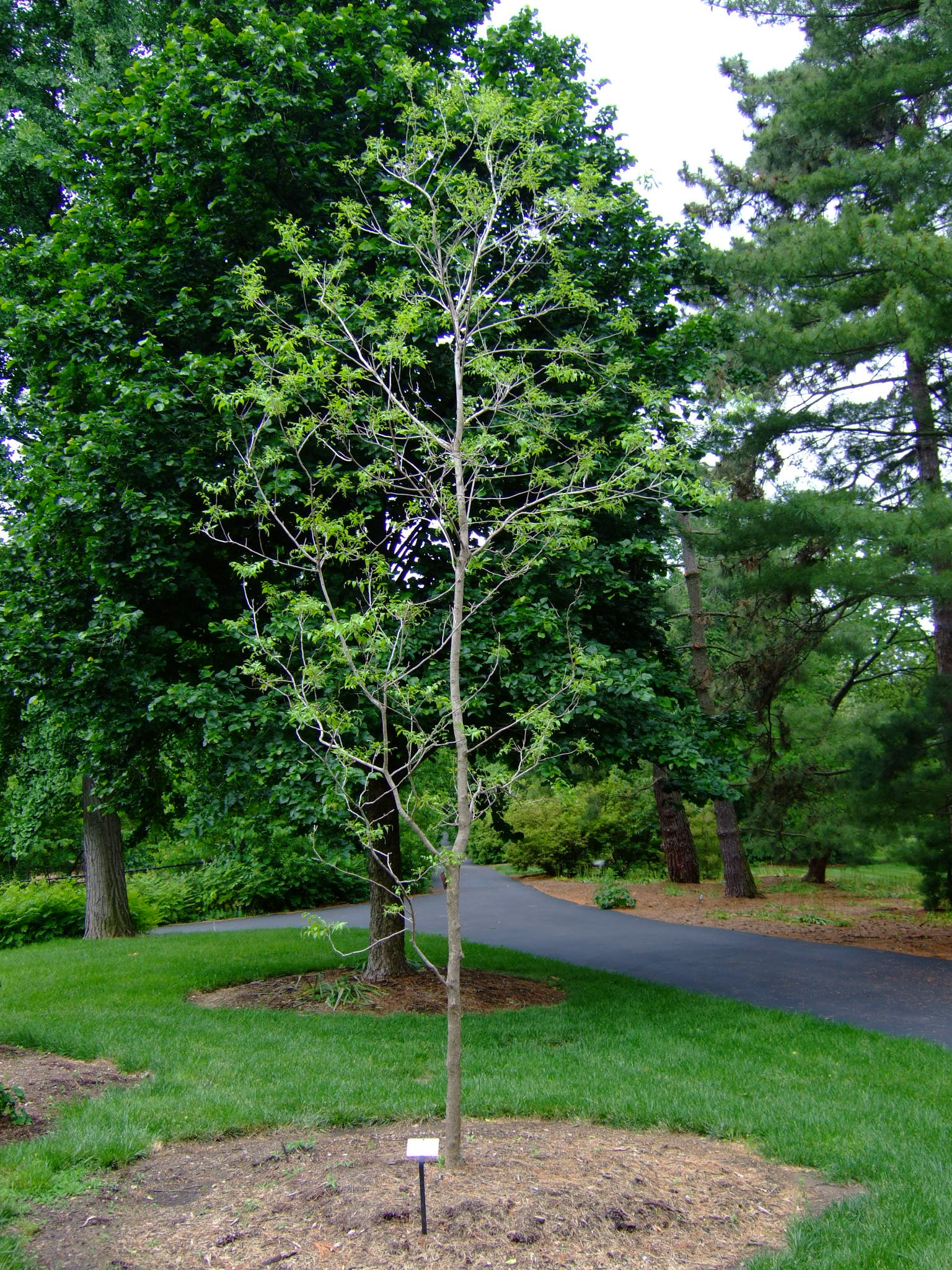
Sapindus saponaria var. drummondii — still widely sold and keyed under its older name, Sapindus drummondii — is the Western Soapberry, a tough, drought-proof shade tree of the southern Great Plains and desert Southwest. It belongs to the Sapindaceae, the soapberry family, which also includes maples and buckeyes, and it is one of the very few medium-sized deciduous trees that will thrive on thin caliche soil, cracked clay, or a dry limestone bluff without supplemental water once established. Ranchers and homesteaders across Texas and Oklahoma have long valued it as reliable shade in places few other trees will grow.
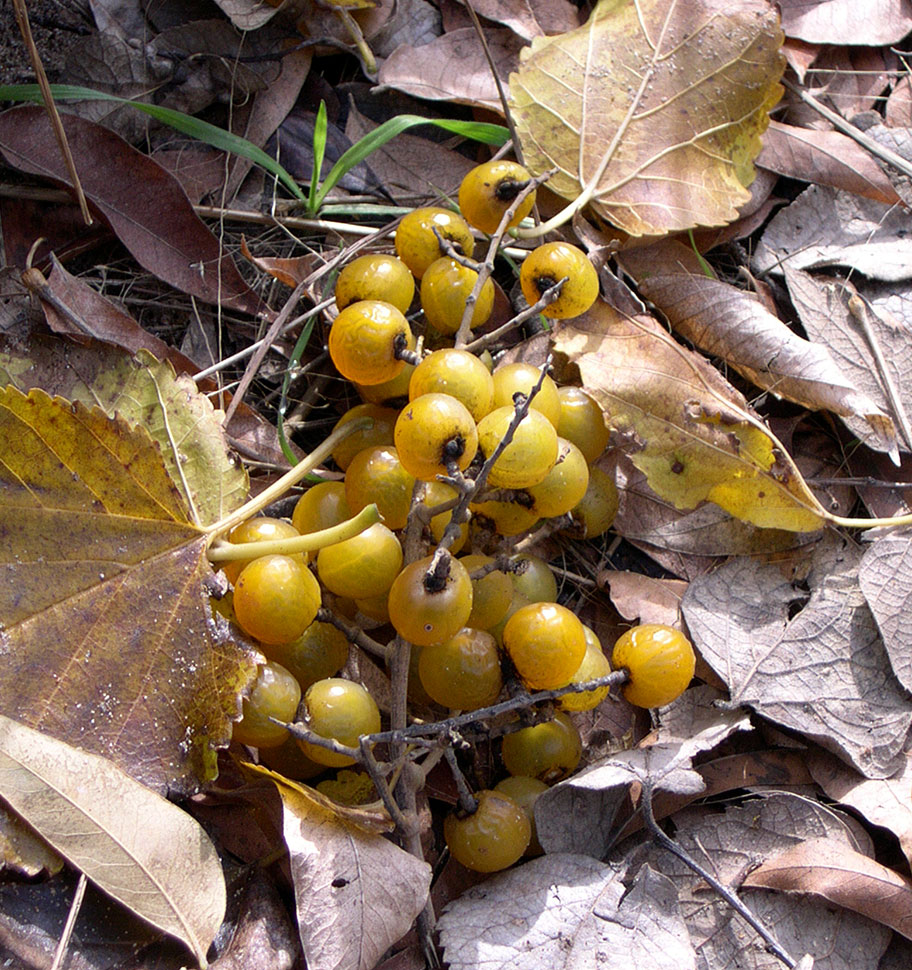
The tree is easy to recognize by its pinnately compound leaves, made up of 8 to 19 narrow, slightly sickle-shaped leaflets arranged along a central stalk with no single leaflet at the tip. In late spring it produces airy, upright clusters of small cream-white flowers, followed by round, amber to golden fruits that hang on bare branches well into winter, turning wrinkled and raisin-like as they dry. Those translucent fruits contain saponins — natural soap compounds — and gave the tree both its common and scientific names.
Western Soapberry is not a fast grower and it is not flashy, but it is exceptionally durable: resistant to drought, wind, caliche, and most pests, and able to sucker from its roots to form small groves over time. For a native shade tree on a dry Texas Hill Country lot, a Panhandle homestead, or a xeric New Mexico yard, it is hard to beat.
Identification
Western Soapberry typically grows 20 to 50 feet tall with a rounded, somewhat open crown and a trunk 1 to 2 feet in diameter. It often grows as a single-trunked tree but can form thickets where root suckers are allowed to grow, since mature trees spread by underground runners.
Bark & Stems
Young bark is light gray and relatively smooth; with age it becomes gray-brown and breaks into narrow, flat-topped ridges with shallow furrows. Twigs are slender and grayish, with small, inconspicuous buds pressed close to the stem.
Leaves
Leaves are alternate, pinnately compound, 6 to 15 inches long, with 8 to 19 lance-shaped leaflets 1.5 to 4 inches long. The leaflets are often slightly curved or asymmetrical at the base, somewhat sickle-shaped, with smooth margins and a short-pointed tip. There is usually no terminal leaflet (an even number of leaflets), which helps separate this species from pecan and other compound-leaved trees. Foliage is light to medium green through the growing season and turns clear yellow in fall, one of the more reliable sources of autumn color on the southern plains.
Flowers
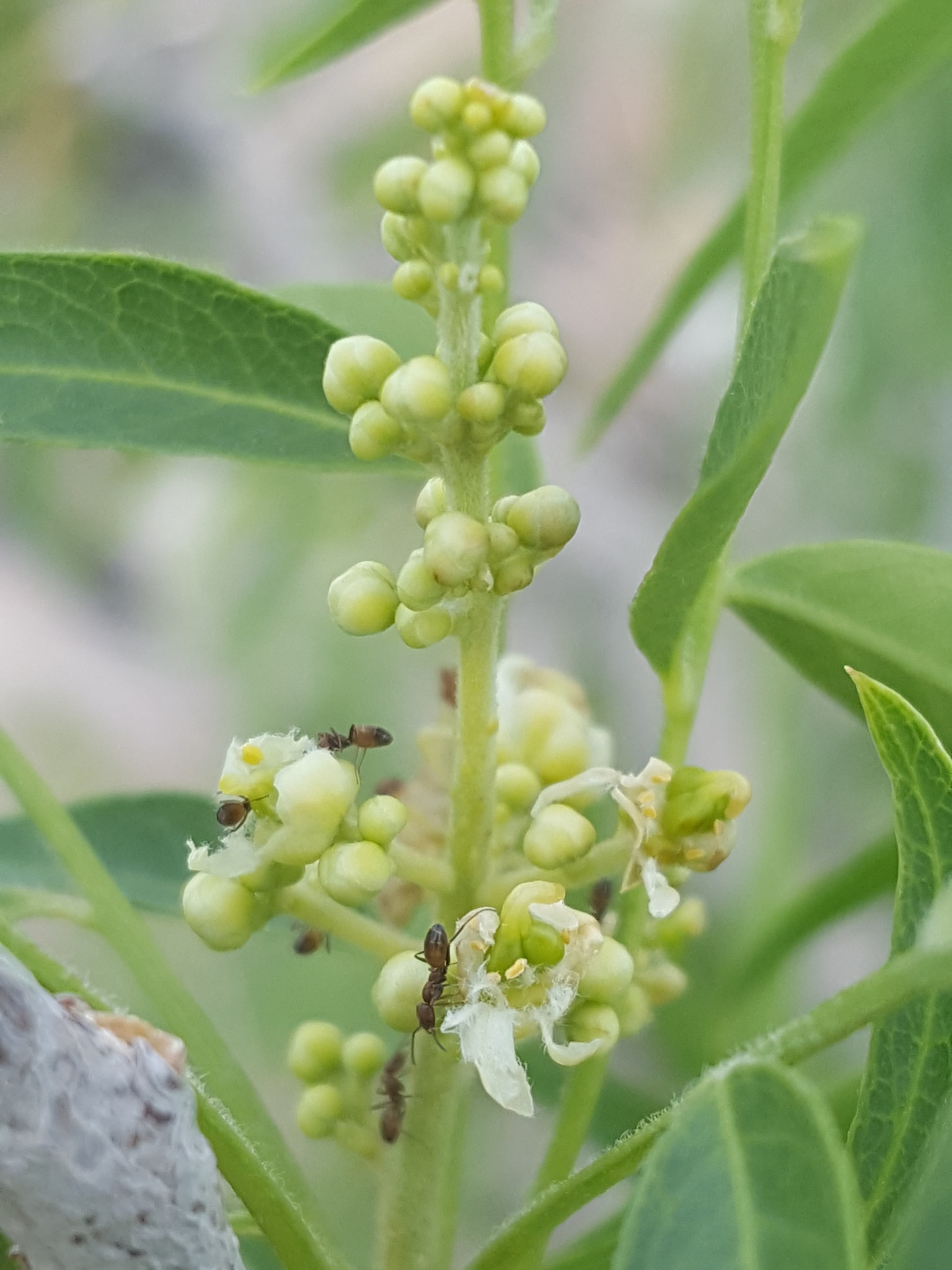
Small, five-petaled, cream to white flowers are borne in branched, upright clusters (panicles) 6 to 10 inches long at the ends of branches, blooming in May and June after the leaves emerge. Individual flowers are only about a quarter-inch across but the full cluster is showy against the foliage, and it draws a steady traffic of small bees and other pollinators.
Fruit & Seeds
The fruit is a round, one-seeded drupe about half an inch across, translucent amber to golden when ripe in fall, drying to a dark, wrinkled, raisin-like husk that often persists on the bare tree through winter. Inside is a single hard, black, round seed. The fruit pulp is rich in saponins, the same soap-forming compounds found in the related soapberries used across the tropics as a traditional detergent; the fruit is toxic if eaten in quantity and should not be regarded as a human or livestock food.
Quick Facts
| Scientific Name | Sapindus saponaria var. drummondii (syn. Sapindus drummondii) |
| Family | Sapindaceae (Soapberry) |
| Plant Type | Deciduous Tree |
| Mature Height | 20–50 ft |
| Mature Spread | 20–35 ft |
| Growth Rate | Slow to moderate |
| Sun Exposure | Full Sun to Part Shade |
| Water Needs | Low once established |
| Soil Type | Tolerant of caliche, clay, limestone, or sand; well-drained |
| Soil pH | 6.5–8.5 (adapts to alkaline soils) |
| Bloom Time | May – June |
| Flower Color | Cream-white |
| Fall Color | Clear yellow |
| Fruit | Amber drupes, drying dark and wrinkled; persist into winter; toxic if eaten |
| Deer Resistant | Yes (saponins in foliage and fruit discourage browsing) |
| USDA Hardiness Zones | 6–9 |
Native Range
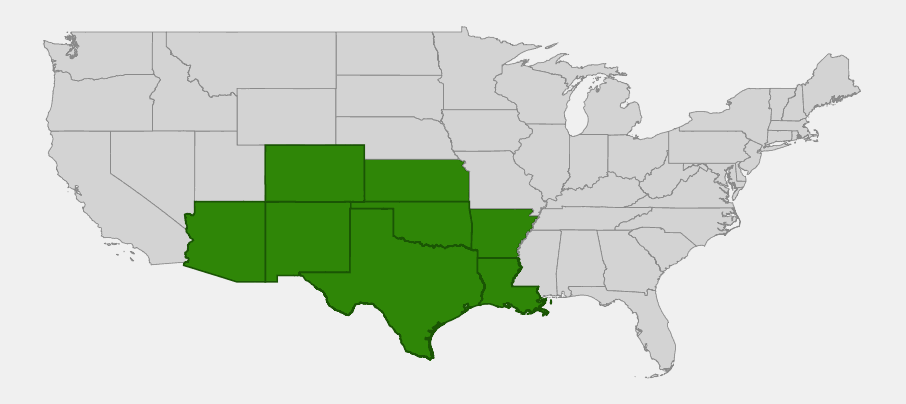
Western Soapberry ranges across the southern Great Plains and parts of the desert Southwest, from southeastern Arizona and New Mexico east through Colorado’s southeastern plains, Kansas, Oklahoma, and Texas, and into Arkansas and Louisiana. It is most abundant in central and western Texas and Oklahoma, where it is a familiar tree along creek bottoms, fencerows, and limestone canyons.
It typically grows on dry upland sites, limestone slopes, caliche hillsides, and the margins of streams and draws where few other broadleaf trees persist, often in association with mesquite, netleaf hackberry, Texas persimmon, and junipers. Because it tolerates both drought and periodic flooding along intermittent drainages, it is a common pioneer tree on disturbed or eroded ground across its range.
Western Soapberry is sometimes planted well outside this native range as a tough, low-water shade tree, including in parts of California and the Mountain West, but it is not native there; treat plantings beyond the Southern Plains and desert Southwest as introduced landscape trees rather than habitat restoration.
📋 Regional plant lists featuring Western Soapberry: Arizona & New Mexico · Nebraska, Kansas & Eastern Colorado · Arkansas, Louisiana, Eastern Oklahoma & Eastern Texas · South & West Texas
Growing & Care Guide
Western Soapberry is the kind of tree that rewards patience: it grows slowly at first while building a deep root system, then settles in as one of the most trouble-free shade trees for hot, dry, alkaline sites where oaks and maples struggle.
Light
Plant in full sun for the strongest form and best fall color, though it also tolerates partial shade, especially as a young tree establishing beneath a nurse canopy. In deep shade it becomes leggy and flowers poorly.
Soil & Water
This tree is prized precisely because it is not fussy about soil. It performs well in caliche, heavy clay, rocky limestone, and sandy loam alike, and tolerates a wide alkaline pH range. Water regularly during the first two growing seasons to establish a deep taproot; after that, established trees need little or no supplemental irrigation except during extreme, prolonged drought. Good drainage is more important than soil fertility — it does not want wet feet for extended periods.
Planting Tips
Plant young trees in fall or early spring from containers; bare-root transplanting is difficult because of a long taproot. Because mature trees sucker from the roots, give Western Soapberry room — at least 20 to 25 feet from structures, patios, or septic lines — or plan to mow or remove suckers if a single-trunk form is wanted. It makes an excellent shade tree for a rural homestead, ranch yard, or dry parking-lot island where few other trees will establish.
Pruning & Maintenance
Prune young trees to establish a single leader and remove crossing branches; mature trees need little pruning beyond removing dead wood. Root suckers can be mowed, cut, or left to form a loose grove, depending on the look you want. The tree is largely free of serious pests and diseases, though it can be slow to recover from major storm damage.
Landscape Uses
Western Soapberry fills several difficult landscape niches:
- Dry shade tree for caliche or clay soils where little else will grow
- Street or parking-lot tree tolerant of heat, reflected sun, and poor soil
- Windbreak or grove planting, since root suckers naturally thicken stands over time
- Erosion control on dry slopes and canyon draws
- Fall color accent in regions where autumn foliage is otherwise scarce
- Wildlife tree for pollinator-friendly bloom and winter structure
Wildlife & Ecological Value
Western Soapberry contributes food, cover, and structure to dry-land wildlife communities, though its saponin-laden fruit limits which animals rely on it for food.
For Pollinators
The May and June flower clusters attract a wide range of small native bees, honeybees, wasps, and flies, making Western Soapberry a useful nectar source during a period when little else blooms on dry Southern Plains rangeland.
For Birds
Few birds eat the saponin-rich fruit directly, but the open branching structure and persistent winter fruit clusters provide perching and nesting sites, and the tree hosts caterpillars of several native moth species that in turn feed songbirds.
For Mammals
The high saponin content of the leaves and fruit makes Western Soapberry unpalatable to deer and livestock, which is why the species is often left standing — and increasing — in heavily grazed pastures. Small mammals occasionally cache the hard seeds.
Ecosystem Role
As one of the few broadleaf trees able to colonize thin, alkaline, drought-prone soils across the Southern Plains, Western Soapberry provides rare vertical structure and shade in otherwise open grassland and shrubland, stabilizing soil on slopes and draws and creating microhabitat for understory plants and wildlife that would not otherwise have shelter.
Cultural & Historical Uses
The soap-forming saponins in the fruit give this tree both its common and scientific names, and that property shaped centuries of practical use across its range. Indigenous peoples throughout Texas, Oklahoma, and northern Mexico crushed the ripe fruits in water to create a sudsy lather used for washing clothing, hair, and skin, and the resulting foam was sometimes used in ceremonial contexts as well.
European settlers and pioneers on the Southern Plains adopted the same practice out of necessity in places where manufactured soap was scarce, and the hard, round black seeds were historically strung as beads or used as marbles and game pieces by children — a use that persists informally today. The wood, though not commercially significant, has occasionally been used for tool handles and small turned items because of its strength and fine grain.
Today Western Soapberry is grown primarily as a low-maintenance native shade tree, valued by Southwestern and Great Plains gardeners precisely for the drought tolerance and alkaline-soil adaptability that made it useful to earlier generations relying on its soap-producing fruit.
Frequently Asked Questions
Is Western Soapberry fruit edible?
No. The fruit contains saponins, soap-like compounds that are toxic if ingested in quantity and can cause gastrointestinal upset. The fruit was historically used externally as a cleaning agent, not eaten. Keep children and pets from eating the berries.
How fast does Western Soapberry grow?
It is a slow starter, often adding less than a foot per year while it establishes a deep taproot, then grows at a more moderate pace once established. Full maturity can take several decades, which is part of why mature specimens are so valued on older rural properties.
Will Western Soapberry spread by root suckers in my yard?
Yes, mature trees commonly send up suckers from lateral roots, especially if the soil is disturbed or the main trunk is damaged. This can be an asset for a naturalized grove or windbreak, or a maintenance chore if you want a single clean trunk — plan accordingly when siting the tree.
Is Western Soapberry drought tolerant?
Very. It is one of the most drought-tolerant shade trees native to North America, adapted to thin caliche soils and extended dry periods on the Southern Plains. Established trees rarely need supplemental irrigation outside of extreme, multi-year drought.
Is Western Soapberry deer resistant?
Yes. The saponins that make the fruit toxic also make the foliage unpalatable to deer and livestock, so Western Soapberry is a reliable choice in areas with heavy deer browsing pressure.

Looking for a nursery that carries Western Soapberry?
Browse our native plant nursery directory: Arizona & Arkansas · New Mexico & Oklahoma · Colorado · Kansas · Texas · Louisiana