Greenleaf Manzanita (Arctostaphylos patula)
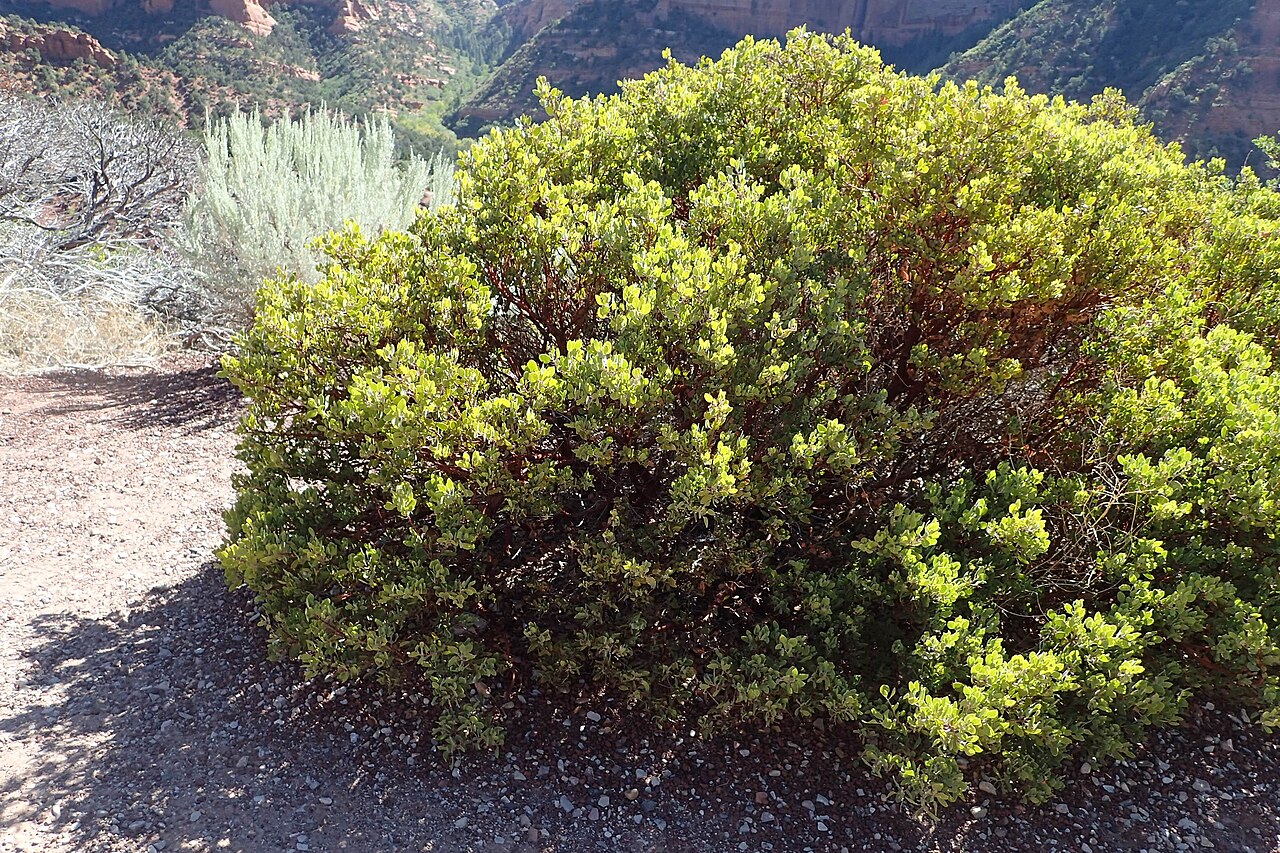
Arctostaphylos patula, commonly called greenleaf manzanita, is the most widespread montane manzanita of the western United States — a dense, rounded evergreen shrub that carpets dry, open slopes from the Cascades and Sierra Nevada east across the Great Basin to the Rocky Mountains. A member of the heath family (Ericaceae), it takes its common name from its bright apple-green, rounded leaves, which set it apart from the grayer or duller foliage of most other manzanita species.
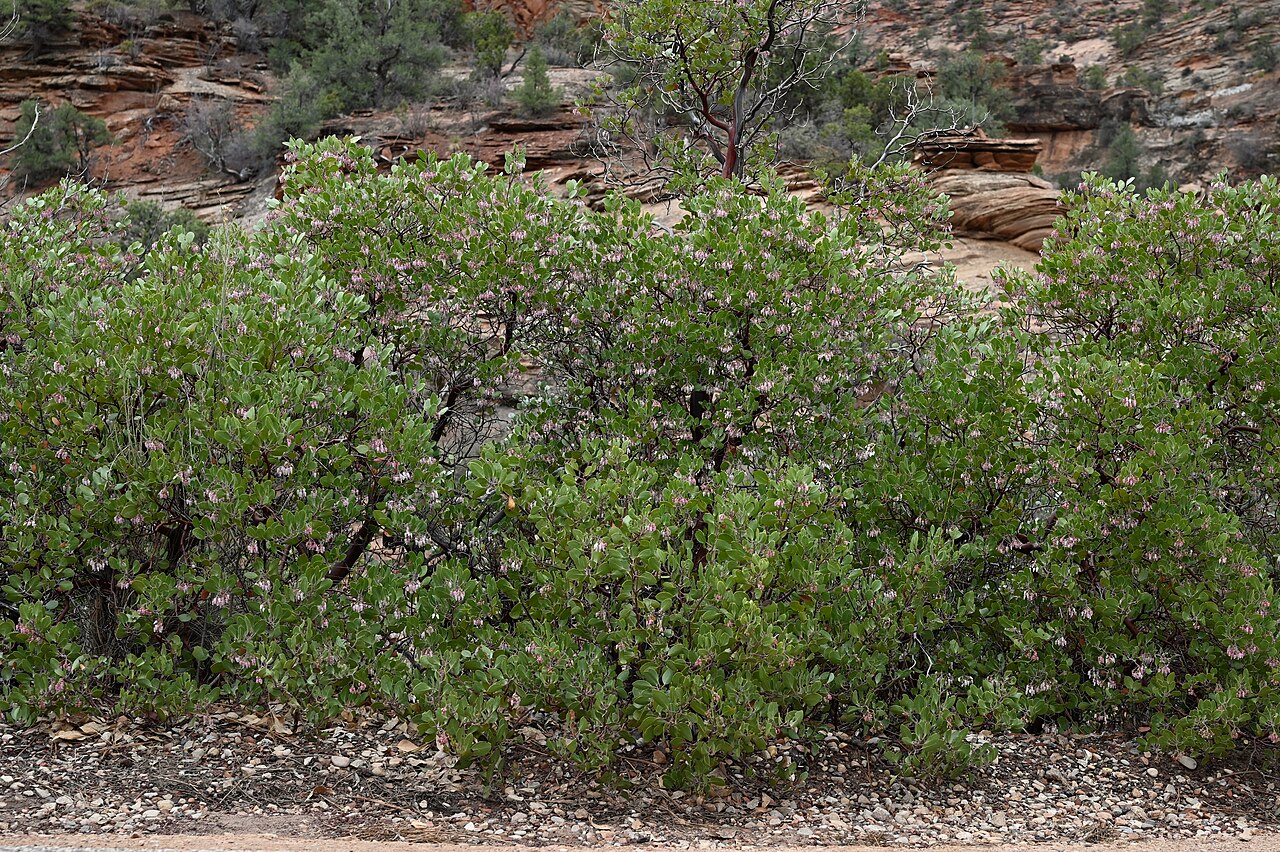
Greenleaf manzanita is the dominant manzanita of montane chaparral and open coniferous forest across much of the interior West, often forming extensive, nearly solid mounds 2 to 6 feet tall beneath ponderosa pine, Jeffrey pine, and other dry-forest conifers. Its smooth, deep red-brown bark and tidy, rounded form make it one of the most recognizable understory shrubs of mid-elevation western mountains.
Tough, long-lived, and remarkably drought- and cold-hardy, greenleaf manzanita thrives across an enormous elevational and climatic range — from Cascade foothills to Rocky Mountain slopes above 9,000 feet. In the garden it offers evergreen structure, spring flowers for early pollinators, and the kind of low-maintenance resilience that only a true mountain native can deliver.
Identification
Greenleaf manzanita grows as a dense, rounded to mounding evergreen shrub, typically 2 to 6 feet tall and often wider than tall, though it can reach taller, more open forms in partial shade. Plants frequently form large, interconnected thickets through underground burls that resprout vigorously after fire or cutting.
Bark & Stems
The bark is smooth and deep red-brown to mahogany on older wood, peeling in thin strips, with younger twigs often finely hairy and reddish. Most plants develop a woody basal burl — a swollen, fire-adapted root crown that stores energy and dormant buds, allowing the shrub to resprout rapidly after fire or browsing damage.
Leaves
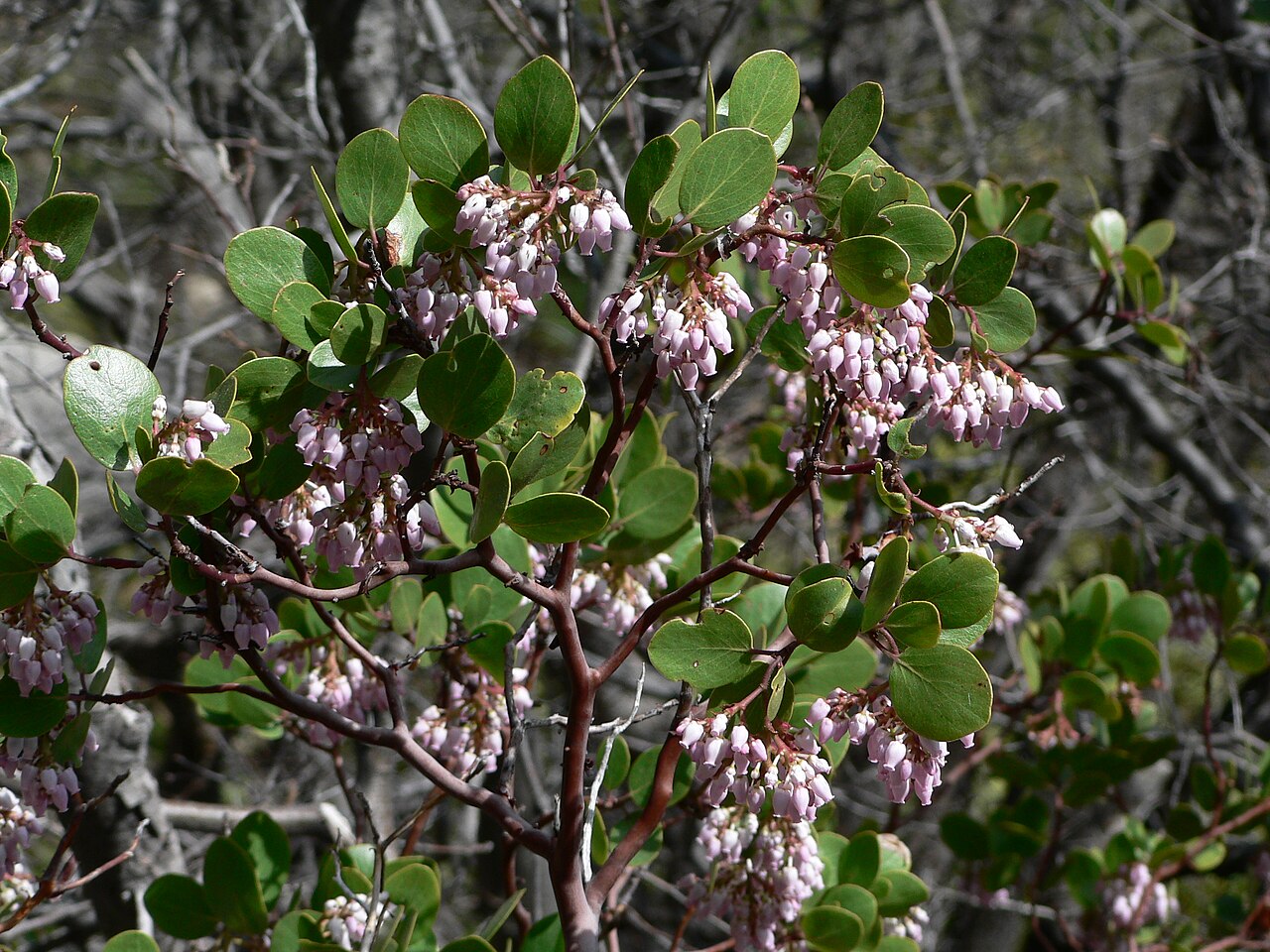
Leaves are evergreen, thick and leathery, broadly oval to nearly round, 1 to 2 inches long, and a distinctive bright yellow-green to true green — notably brighter than the gray-green or blue-green foliage typical of most other manzanitas. Leaves stand nearly upright on short stalks, an orientation that helps reduce direct midday sun exposure at high elevation.
Flowers
Small, urn-shaped flowers bloom in drooping clusters from April through June depending on elevation, ranging from white to soft pink. Each flower is about ¼ inch long, with the inverted-vase shape characteristic of the heath family, and the blooms are an important early-season nectar source at a time when few other montane shrubs are flowering.
Fruit & Seeds
The fruit is a flattened, berry-like drupe about ⅓ to ½ inch across, ripening from green to deep reddish-brown by late summer. The thick-walled seeds require fire scarification or prolonged cold stratification to germinate, and wild stands regenerate strongly from both seed and resprouting burls after wildfire passes through.
Quick Facts
| Scientific Name | Arctostaphylos patula |
| Family | Ericaceae (Heath) |
| Plant Type | Evergreen Shrub |
| Mature Height | 2–6 ft |
| Mature Spread | 4–8 ft |
| Growth Rate | Slow to Moderate |
| Sun Exposure | Full Sun to Part Shade |
| Water Needs | Low once established |
| Soil Type | Rocky, sandy or gravelly; well-drained |
| Soil pH | 5.5–7.0 (acidic to neutral) |
| Bloom Time | April – June |
| Flower Color | White to pink |
| Fall Color | None (evergreen) |
| Fruit | Reddish-brown berries, ⅓–½ in |
| Deer Resistant | Moderate (browsed in winter when forage is scarce) |
| USDA Hardiness Zones | 5–9 |
Native Range
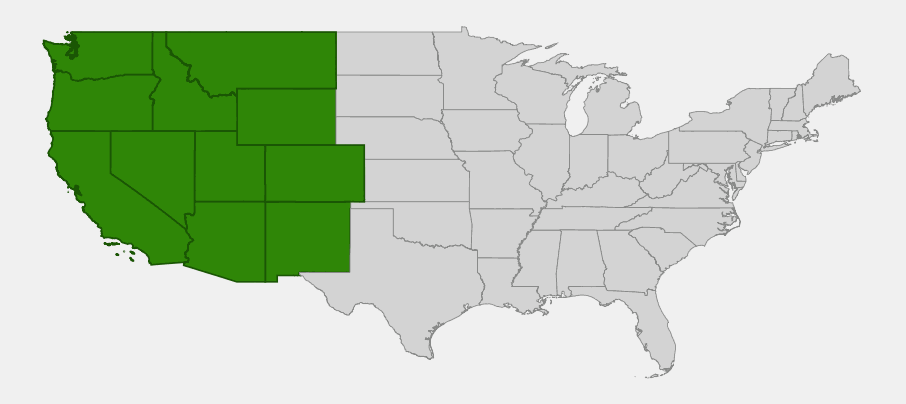
Greenleaf manzanita has the broadest range of any western manzanita, occurring from Washington south through Oregon and California to northern Baja California, and east across the Great Basin and Rocky Mountains to Montana, Wyoming, Colorado, Utah, Arizona, and New Mexico. It is especially dominant in the Sierra Nevada and the mountains of the Great Basin, where it forms some of the most extensive manzanita stands in the West.
The species typically grows at middle to upper elevations, from about 3,000 to 10,000 feet, in dry montane chaparral, open ponderosa and Jeffrey pine forest, and the edges of sagebrush steppe transitioning to forest. It tolerates cold winters, heavy snowpack, and summer drought better than most other manzanita species, which explains its exceptionally wide elevational and latitudinal range.
Greenleaf manzanita is absent from the wetter, maritime side of the Pacific Northwest; within Oregon and Washington it occurs mainly east of the Cascade crest and in the Blue Mountains, not in the moist coastal and western valley forests. Gardeners west of the Cascades should look to more shade- and moisture-tolerant native shrubs instead.
📋 Regional plant lists featuring greenleaf manzanita: California and Nevada · Idaho, Eastern Oregon, and Eastern Washington · Utah and Western Colorado · Arizona and New Mexico · Montana and Wyoming
Growing & Care Guide
Greenleaf manzanita is one of the toughest native shrubs available to mountain-West gardeners, equally at home in dry Sierra foothill gardens and high, snowy Rocky Mountain yards.
Light
Best in full sun, which produces the densest, most compact form and heaviest flowering. In hotter, lower-elevation gardens, light afternoon shade can help reduce summer stress, but at higher elevations full sun is rarely a problem.
Soil & Water
Good drainage is essential — rocky, sandy, or gravelly soils mimic its native mountain slopes. Water regularly during the first one to two growing seasons to establish a deep root system, then reduce irrigation sharply; established plants are highly drought-tolerant and, like most manzanitas, prone to root rot if watered through summer. Avoid heavy clay soils and low spots where water collects.
Planting Tips
Plant small container stock in fall or early spring, giving the root system time to establish before summer heat or winter cold sets in. Space plants 4 to 6 feet apart to accommodate their mature spread, and avoid disturbing the root zone once established, since manzanitas transplant poorly after their first year or two in the ground.
Pruning & Maintenance
Minimal pruning is needed; remove only dead wood, ideally in late summer when fungal disease risk is lowest. Because greenleaf manzanita resprouts from a basal burl, plants that are top-killed by fire, heavy browsing, or hard pruning will often regrow from the base — a useful trait for rejuvenating an old, leggy specimen, though recovery can take several years.
Landscape Uses
Greenleaf manzanita’s dense form and resilience suit a range of mountain and dry-climate gardens:
- Slope and bank stabilization on dry, rocky sites
- Evergreen foundation planting with year-round structure
- Fire-wise and xeriscape landscaping in mountain communities
- Wildlife gardens for early-season pollinators and berry-eating birds
- Native understory restoration beneath open pine canopy
Wildlife & Ecological Value
As the most widespread manzanita of the interior West, greenleaf manzanita is a cornerstone shrub of montane wildlife habitat across eleven states.
For Pollinators
Spring flowers provide an essential early nectar source for native bees and bumblebees emerging at mid- to high elevation, often before most other montane shrubs have begun blooming. The dense, interconnected thickets also offer shelter for ground-nesting bees and other beneficial insects.
For Birds
Grouse, quail, and a variety of songbirds eat the berries, while the dense evergreen cover provides important nesting habitat and winter shelter at elevations where few other shrubs stay green year-round.
For Mammals
Mule deer and elk browse greenleaf manzanita foliage, particularly in winter when other forage is buried under snow or scarce, and black bears feed on the berries in late summer and fall. Small mammals use the dense mounding growth for cover from predators.
Ecosystem Role
Greenleaf manzanita is a classic fire-adapted shrub: its basal burl allows it to resprout quickly after fire, often faster than competing conifers, helping stabilize soil and provide early post-fire wildlife habitat. Across its enormous range it also plays a key role in binding soil on steep, erosion-prone mountain slopes and in sustaining the understory diversity of dry western conifer forests.
Cultural & Historical Uses
Indigenous peoples across greenleaf manzanita’s extensive range — including Great Basin Paiute, Shoshone, and Sierra Nevada foothill tribes — made use of the berries as a food source, most commonly grinding them into a meal or soaking them to prepare a tart cider-like drink, since the raw fruit is dry and mealy. Some Plateau tribes also prepared a tea from the leaves for traditional ceremonial and everyday use, a historical practice noted here for cultural context rather than as a modern recommendation.
The hard, dense wood was occasionally used for small tools and implements, and the smooth, colorful bark has long been appreciated simply as a distinctive feature of the western mountain landscape. This page does not describe any medicinal use of greenleaf manzanita.
Today the species is valued mainly for habitat restoration and low-water native landscaping across its wide range, from Sierra Nevada foothill gardens to high-elevation Rocky Mountain plantings, where few other evergreen shrubs can match its combination of cold-hardiness and drought tolerance.
Frequently Asked Questions
What makes greenleaf manzanita different from other manzanita species?
Its bright, true-green rounded leaves set it apart from the grayer or blue-green foliage of species like bigberry or pinemat manzanita. It is also unusually wide-ranging, tolerating both Sierra Nevada chaparral and high Rocky Mountain winters that would kill most other manzanitas.
Is greenleaf manzanita native to my state?
It is native across eleven western states: California, Nevada, Oregon, Washington, Idaho, Utah, Arizona, New Mexico, Colorado, Wyoming, and Montana. In Oregon and Washington it occurs mainly east of the Cascades, not in the moist, western maritime regions of those states.
How cold-hardy is greenleaf manzanita?
Very — it is rated for USDA zones 5 through 9 and survives heavy mountain snowpack and sustained winter cold across its Rocky Mountain range, a trait that distinguishes it from most other manzanita species, which are limited to milder coastal or chaparral climates.
Will my greenleaf manzanita come back after a fire or hard pruning?
Often, yes. Most plants develop a woody basal burl that stores energy and dormant buds, allowing the shrub to resprout from the base after fire, browsing damage, or accidental hard pruning, though full recovery can take several growing seasons.
How much water does greenleaf manzanita need?
Very little once established. Regular watering for the first one to two years helps establish a deep root system, after which mature plants are highly drought-tolerant and can be damaged by summer irrigation, which promotes root rot.

Looking for a nursery that carries greenleaf manzanita?
Browse our native plant nursery directory: California · Nevada & New Mexico · Oregon · Idaho · Utah · Arizona · Colorado · Wyoming · Montana