Arroyo Willow (Salix lasiolepis)
Salix lasiolepis, the arroyo willow, is one of the most widespread and adaptable native willows of the western United States, found along creeks, seasonal washes and arroyos from the cool forests of the Pacific Northwest to the desert canyons of the Southwest and the Trans-Pecos of Texas. Its name comes from the Spanish “arroyo,” the dry streambed that fills with water only during rain, reflecting the plant’s comfort with the boom-and-bust water cycles typical of much of its range.
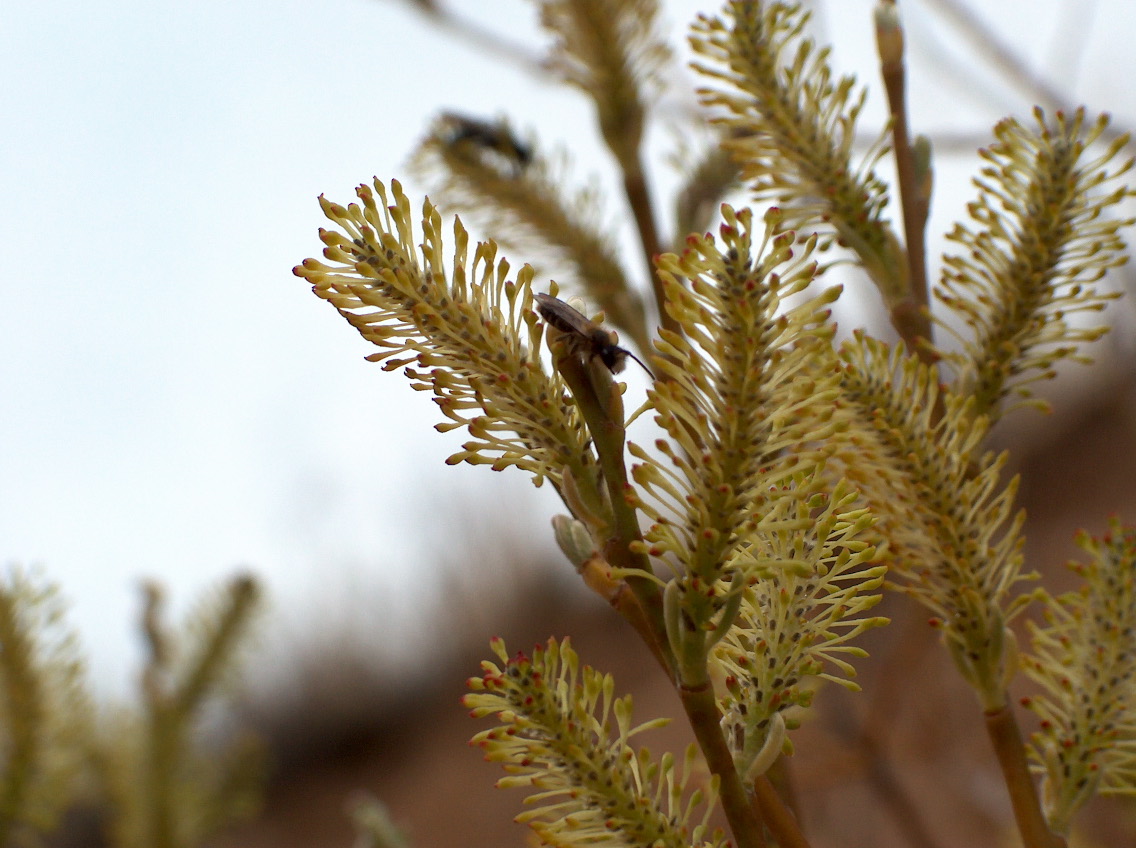
Arroyo willow is usually a large, multi-stemmed shrub rather than a true tree, forming dense thickets that stabilize streambanks, filter runoff and provide some of the most important early-season wildlife habitat in the arid West. Its fuzzy, silvery spring catkins — among the first flowers to appear after winter in many areas — are a critical early nectar and pollen source for native bees emerging from dormancy.
For restoration plantings, erosion control and wildlife gardens near water across a huge span of the West, arroyo willow is both a workhorse and a keystone species, supporting far more insect and bird life than its modest, often-overlooked appearance would suggest.
Identification
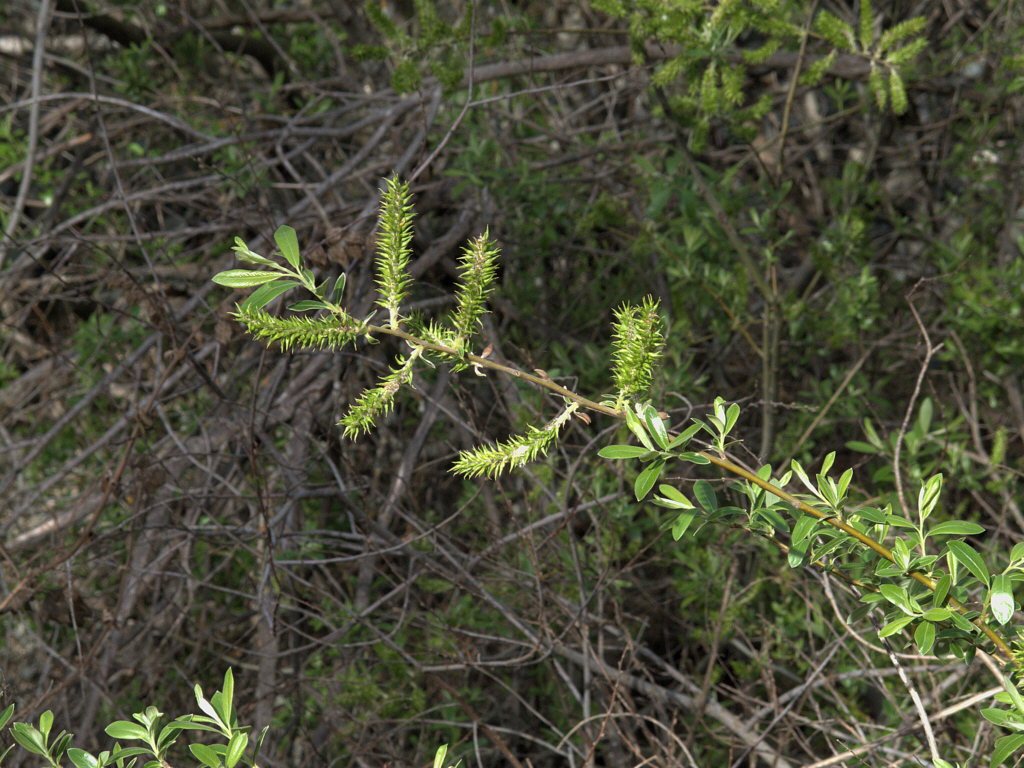
Arroyo willow typically grows as a large, multi-trunked shrub 10 to 20 feet tall, occasionally developing into a small single-trunked tree to 25 or 30 feet in favorable streamside conditions. It spreads readily by root sprouts, often forming dense thickets along watercourses.
Bark & Stems
Young twigs are slender, yellowish-brown to reddish-brown, and often covered with fine, silky hairs, especially near the growing tips — the source of the species name lasiolepis, meaning “woolly-scaled.” Older bark becomes gray and somewhat furrowed, typical of mature willows.
Leaves
Leaves are deciduous, alternate, narrowly oblong to lance-shaped, 2 to 5 inches long, with a dark green, often slightly glossy upper surface and a distinctly pale, whitish to grayish, finely hairy underside — a strong field mark when the wind turns the leaves over. Margins are smooth to finely toothed and often rolled slightly under. Small, leaf-like stipules are frequently present at the base of the leaf stalk on vigorous shoots.
Flowers
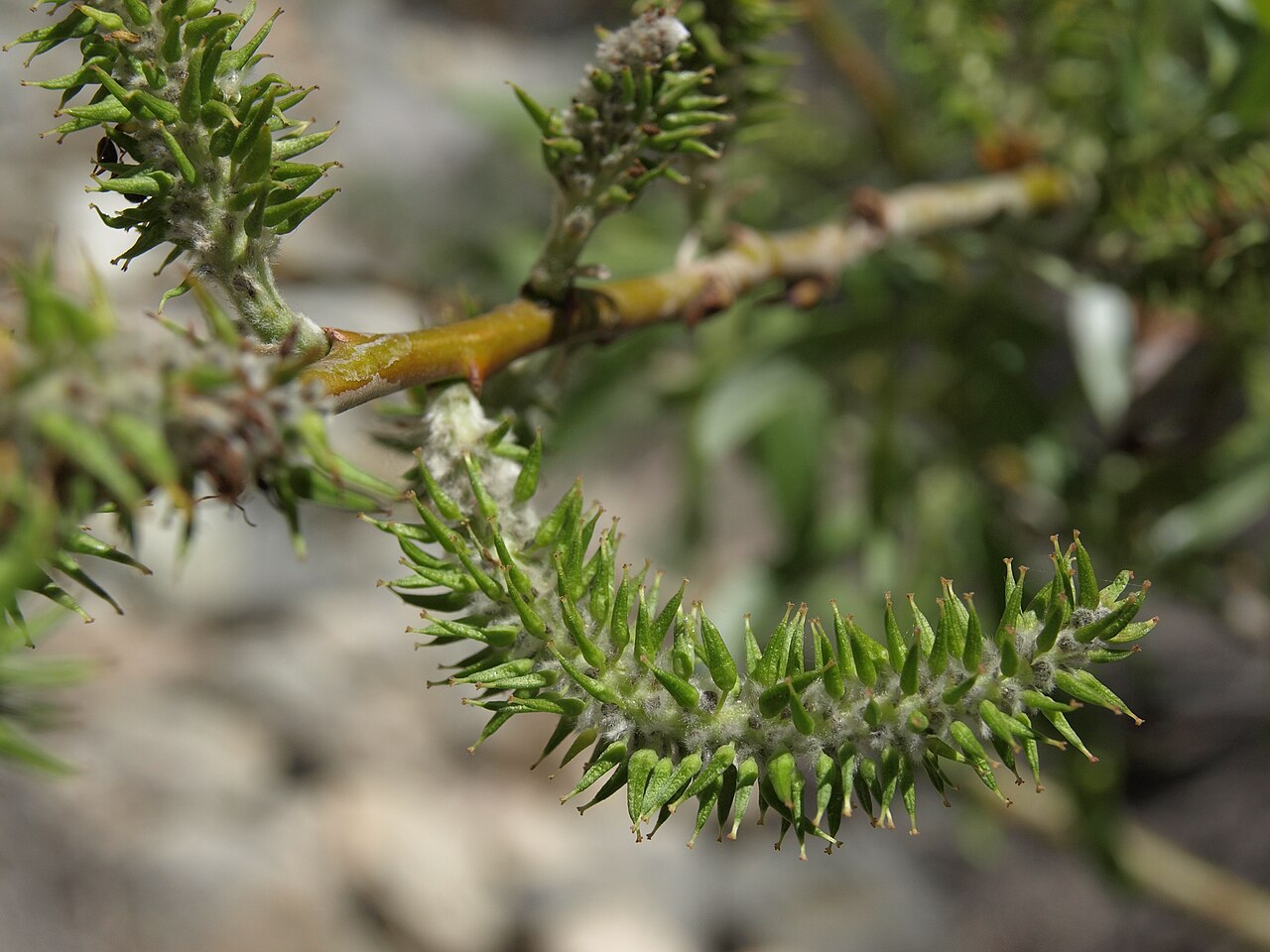
Like all willows, arroyo willow is dioecious, with separate male and female plants, and blooms in late winter to early spring before or as the leaves emerge. Catkins are stout, silvery and fuzzy when young, 1 to 2 inches long, turning bright yellow with pollen on male plants as flowering peaks. The early bloom time makes arroyo willow an important nectar source well before most other natives are flowering.
Fruit & Seeds
Female catkins mature into clusters of small, narrow seed capsules that split open to release tiny seeds attached to tufts of cottony hair, allowing wind and water dispersal. Seed release typically follows soon after flowering, in spring, and viable seed remains fertile for only a short time, so germination is closely tied to the timing of spring moisture.
Quick Facts
| Scientific Name | Salix lasiolepis |
| Family | Salicaceae (Willow) |
| Plant Type | Deciduous Shrub / Small Tree |
| Mature Height | 10–20 ft (to 30 ft as a small tree) |
| Mature Spread | 10–15 ft, forms dense multi-stemmed thickets |
| Growth Rate | Fast |
| Sun Exposure | Full Sun to Part Shade |
| Water Needs | High to moderate; tolerates intermittent arroyo flow |
| Soil Type | Sandy, gravelly or loamy streambank and wash soils |
| Soil pH | Slightly acidic to slightly alkaline (6.0–7.5) |
| Bloom Time | February – April (before or with leaf-out) |
| Flower Color | Silvery-gray, turning yellow with pollen (male) |
| Fall Color | Pale yellow, not showy |
| Fruit | Small capsules with cottony-tufted seeds, spring |
| Deer Resistant | No (browsed by deer and livestock) |
| USDA Hardiness Zones | 6–10 |
Native Range
Arroyo willow has an exceptionally broad native range for a western willow, extending from Washington and Oregon south through California, and east across Nevada, Idaho, Utah, Arizona and New Mexico, reaching into the Trans-Pecos and south Texas borderlands as well as northern Mexico. Across this huge range it is consistently tied to one habitat type: the margins of streams, seasonal washes and arroyos, regardless of whether the surrounding landscape is coastal forest, high desert or Chihuahuan Desert scrub.
Typical habitat includes streambanks, river terraces, seeps, canyon bottoms and the beds of intermittent desert washes that carry water only after rain. In the Southwest, arroyo willow is often one of the few woody plants able to establish in these boom-and-bust arroyo channels, since its roots can access residual soil moisture long after surface water has disappeared. It commonly grows alongside cottonwoods, other willow species and, at higher elevations, alders and sycamores.
Because it tolerates both perennial streamflow and the drier, intermittent conditions of desert arroyos, arroyo willow fills a wider ecological niche than most other western willows, which helps explain why its range spans such a dramatic gradient of climates, from humid Pacific coastal forest to arid Trans-Pecos canyon country.
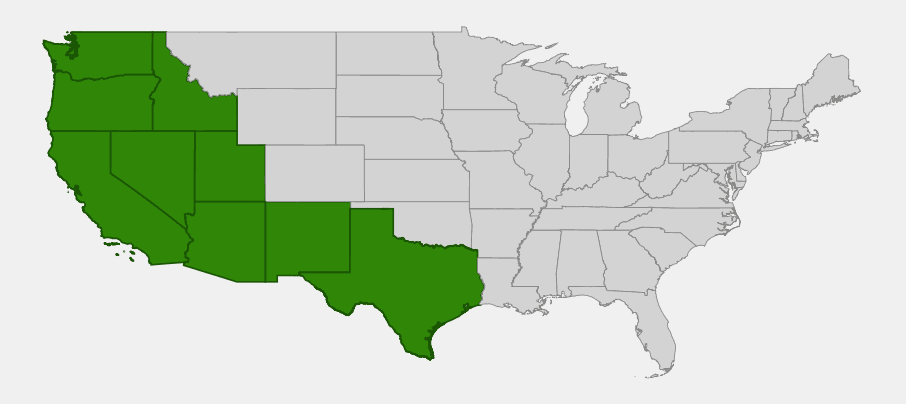
📋 Regional plant lists featuring Arroyo Willow: California & Nevada · Western Oregon & Western Washington · Idaho, Eastern Oregon & Eastern Washington · Utah & Western Colorado · Arizona & New Mexico · South & West Texas
Growing & Care Guide
Arroyo willow is forgiving and fast once it has adequate moisture, making it one of the easiest native shrubs to establish for streamside and wash-edge plantings across a very wide range of climates.
Light
Plant in full sun to light part shade. Full sun produces the densest growth and heaviest spring bloom, while a little afternoon shade can help reduce stress on young plants in the hottest parts of its desert range.
Soil & Water
Arroyo willow thrives in sandy, gravelly or loamy soils typical of streambanks and wash bottoms. It needs reliable moisture to establish — ideally a location with a shallow water table, seasonal wash flow, or supplemental irrigation for the first two to three years. Once established, it tolerates the boom-and-bust moisture cycle of desert arroyos better than most woody plants, surviving extended dry spells between flood events by tapping residual subsurface moisture.
Planting Tips
Plant container stock or willow cuttings (which root readily, a hallmark of the willow genus) in late fall through early spring. Because the species is dioecious, include multiple individuals from different sources if seed production for wildlife or restoration purposes matters. Space plants 8 to 12 feet apart to allow for the dense, multi-stemmed thickets arroyo willow naturally forms.
Pruning & Maintenance
Little pruning is required. Remove dead or storm-damaged wood in late winter, and thin crowded stems if a more open form is wanted. Because arroyo willow sprouts vigorously from the root crown, it tolerates hard pruning or even coppicing well, which is sometimes used in restoration settings to rejuvenate old stands or control thicket size.
Landscape Uses
- Erosion control on streambanks, wash edges and disturbed arroyo channels
- Riparian and wash restoration across a very wide climate range, from coastal to desert
- Wildlife and pollinator gardens, especially valuable for its very early spring bloom
- Living fences or screens where dense multi-stemmed growth is wanted near water
- Basket and craft material for gardeners interested in traditional willow weaving
- Stormwater and bioswale plantings that see intermittent flooding and dry spells
Wildlife & Ecological Value
Few western native shrubs support as much early-season wildlife activity as arroyo willow, which often blooms before almost anything else in its habitat.
For Pollinators
Arroyo willow’s late-winter and early-spring catkins are a critical nectar and pollen source for native bees emerging from overwintering, including many solitary bee species, as well as honeybees and a range of early-flying butterflies and beetles. Willows in general are also larval host plants for numerous butterfly and moth species, including several admirals and sphinx moths.
For Birds
The dense thickets provide excellent nesting cover for riparian songbirds, including willow flycatchers — a species whose name reflects its close habitat association with willow thickets like this one. Seeds and the abundant insect life the shrub supports provide food for a wide range of birds through spring and summer.
For Mammals
Deer and livestock readily browse arroyo willow foliage and young shoots, and beaver use willow stems for both food and dam-building material wherever the two overlap. Dense streamside thickets also provide cover and travel corridors for a variety of small mammals moving through otherwise open or arid terrain.
Ecosystem Role
Arroyo willow’s root systems stabilize streambanks and wash edges, reducing erosion during flood events common to arid Southwest watersheds. Its dense growth slows and filters runoff, improving water quality, while its thickets create the structurally complex riparian habitat that many specialist bird and insect species depend on across a landscape that is otherwise often sparse and open.
Cultural & Historical Uses
Indigenous peoples across arroyo willow’s wide range made extensive use of its flexible stems for basketry, house framing and cordage, a tradition documented among many California and Southwest tribes who prized willow for its combination of strength and pliability. The inner bark and other plant parts were used in some traditions as a source of salicin, the compound related to aspirin found throughout the willow genus, for treating pain and fever.
The Spanish-derived name “arroyo willow” itself reflects the plant’s long association with the seasonal washes and intermittent streams of the Southwest, landscape features central to both Indigenous and later Spanish and Mexican land use, where the presence of willow thickets signaled accessible groundwater even in otherwise arid terrain.
In more recent decades, arroyo willow has become a standard species in Southwestern and Californian stream and wash restoration projects, valued for its rooting ease from cuttings, rapid establishment, and ability to anchor disturbed banks quickly after flood events or construction activity.
Frequently Asked Questions
Is arroyo willow the same as other California willows?
No. Several willow species grow in California, including red willow and black willow, and they can be tricky to tell apart. Arroyo willow is distinguished by its pale, finely hairy leaf undersides, woolly young twigs and catkins, and its strong association with both perennial streams and intermittent desert arroyos across a very wide range.
Can arroyo willow survive a dry arroyo that only floods occasionally?
Yes, better than most woody plants. Its roots can access residual subsurface moisture between flood events, which is part of why it is one of the most successful native shrubs in intermittent desert wash habitats across the Southwest.
Do I need both male and female plants?
Only if seed production matters for wildlife or restoration purposes. Arroyo willow is dioecious, with separate male and female plants; a single plant of either sex will grow and bloom normally, but only female plants produce seed, and only when pollen from a nearby male plant is available.
How fast does arroyo willow grow?
Very fast when planted with adequate moisture, often several feet per year, which is why it is a popular choice for quickly reestablishing bank stability and shade after flood damage or construction disturbance.
Can arroyo willow cuttings be rooted directly in the ground?
Yes. Like most willows, arroyo willow roots readily from dormant hardwood cuttings pushed directly into moist soil, a technique widely used in restoration work to establish new plants quickly and inexpensively along disturbed streambanks.

Looking for a nursery that carries Arroyo Willow?
Browse our native plant nursery directory: California · Oregon · Washington · Idaho · Utah & Texas · Arizona · New Mexico