Lewis Monkeyflower (Erythranthe lewisii)
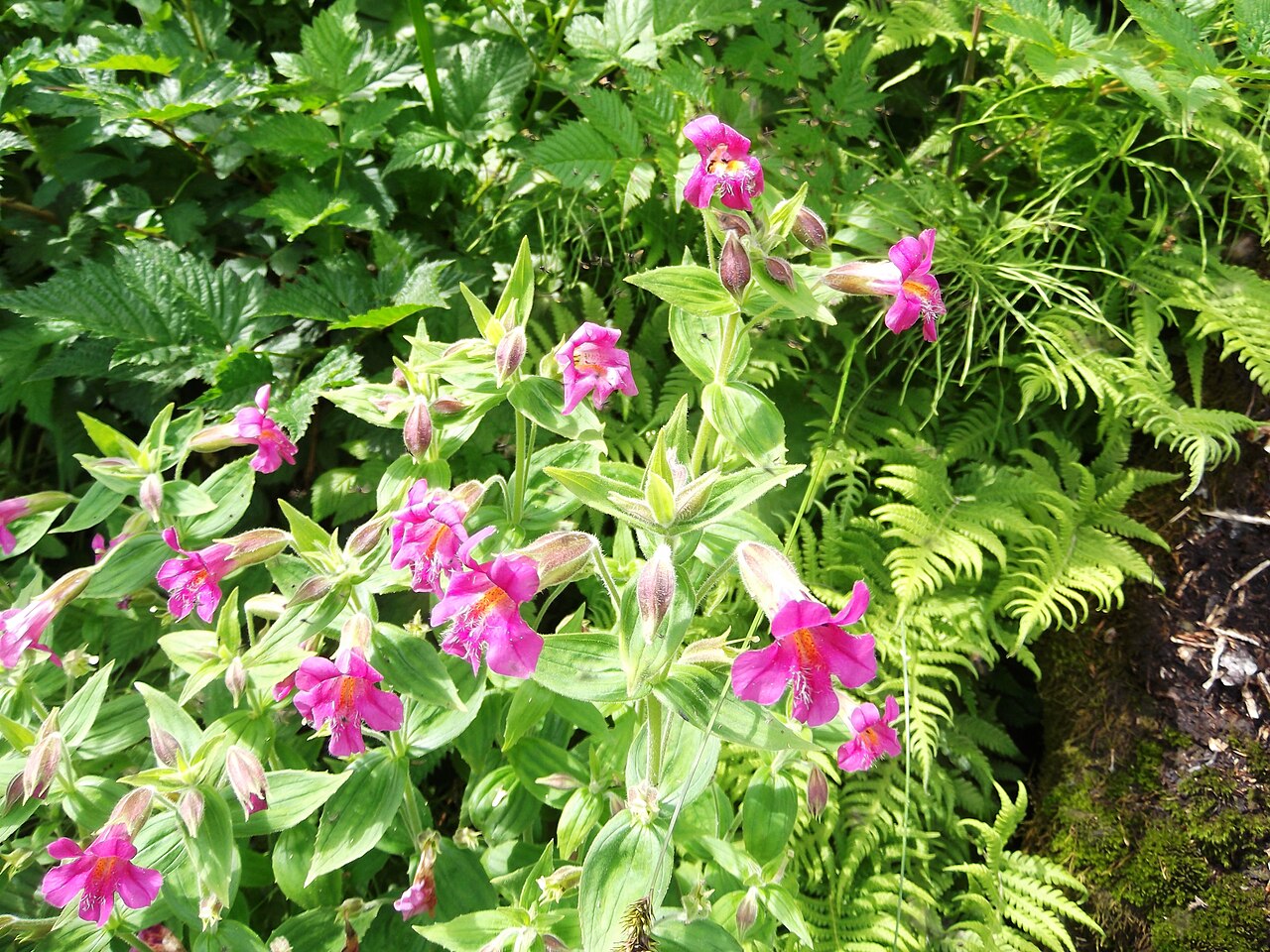
Erythranthe lewisii (long known as Mimulus lewisii), commonly called Lewis Monkeyflower or Lewis’s Monkeyflower, is a showy perennial wildflower of the phrymaceae family found along streams, seeps, and snowmelt-fed meadows throughout the mountains of the western United States. Named for Meriwether Lewis, who collected it during the 1806 return leg of the Lewis and Clark Expedition, it produces some of the most vivid magenta-pink flowers of any high-elevation wildflower, often forming dense colonies that color entire stream banks through mid and late summer.
Lewis monkeyflower grows from sea level in the Pacific Northwest up to around 11,000 feet in the Sierra Nevada and Rocky Mountains, always tied to a reliable source of moisture: alpine and subalpine streambanks, wet meadows, seeps, and snowmelt channels. Sticky-hairy stems and leaves, large tubular-and-flared flowers, and a yellow, hairy “landing pad” on the lower lip that guides bumblebees toward the nectar are all distinctive field marks of this widespread montane species.
For gardeners with a consistently damp spot — a streamside, pond margin, rain garden, or boggy low point — Lewis monkeyflower is an outstanding native perennial, offering weeks of intense color and strong pollinator traffic. It does not tolerate drying out, so it is not a plant for an average dry garden bed, but where conditions suit it, few western natives put on a more striking summer display.
Identification
Lewis monkeyflower is an erect, clump-forming perennial, typically 1 to 2½ feet tall, with multiple stems rising from a spreading rhizomatous base. The whole plant is covered in fine, glandular hairs that give the foliage and stems a slightly sticky feel.
Stems & Leaves
Stems are stout, hairy, and often branched, forming loose to dense clumps over time as the rhizome spreads along a streambank. Leaves are opposite, oval to elliptic, 1 to 3 inches long, with toothed margins and three to five prominent veins radiating from the base — a useful identification feature distinguishing it from similar monkeyflowers. The foliage is bright green and glandular-hairy throughout.
Flowers
The flowers are the plant’s signature feature: large, 1 to 2 inches long, tubular at the base and flaring into five broad, rounded lobes in vivid magenta to rose-pink, with darker pink veining radiating across the petals. The throat is marked with a patch of yellow, densely hairy tissue that serves as both a visual nectar guide and a textured landing platform for pollinating bumblebees. Flowers are borne singly or in small clusters in the leaf axils and bloom over a long season, typically June through September depending on elevation and snowmelt timing.
Fruit & Seeds
After pollination, each flower develops into a narrow, two-chambered capsule that dries and splits to release large numbers of tiny seeds, which wash downstream along the wet channels the plant favors, helping it colonize new stretches of suitable habitat.
Quick Facts
| Scientific Name | Erythranthe lewisii (syn. Mimulus lewisii) |
| Family | Phrymaceae (Lopseed) |
| Plant Type | Herbaceous perennial |
| Mature Height | 1–2.5 ft |
| Mature Spread | 1–2 ft, spreading by rhizome |
| Growth Rate | Moderate to fast |
| Sun Exposure | Full Sun to Part Shade |
| Water Needs | High; needs consistently moist to wet soil |
| Soil Type | Rich, moist to wet; gravelly streambank soils |
| Soil pH | 5.5–7.0 (slightly acidic to neutral) |
| Bloom Time | June – September |
| Flower Color | Magenta to rose-pink with yellow throat |
| Fall Color | None; dies back to the rhizome |
| Fruit | Small two-chambered capsules with tiny seeds |
| Deer Resistant | No (browsed where deer are common) |
| USDA Hardiness Zones | 4–9 |
Native Range
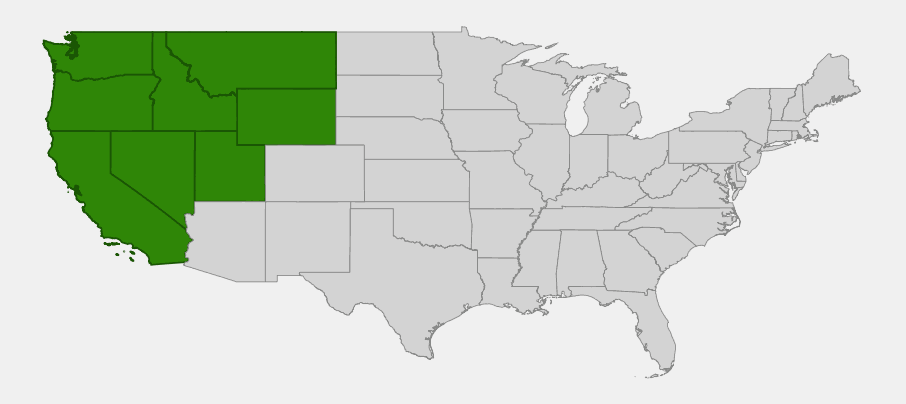
Lewis monkeyflower ranges widely across the mountainous West, from the Cascade Range of Washington and Oregon south through the Sierra Nevada and Coast Ranges of California, east through the Rocky Mountains of Idaho, Montana, and Wyoming, and south into the mountains of Utah and Nevada. BONAP county-level data confirm native populations concentrated through the Cascades, Sierra Nevada, northern Rockies, and the Wasatch and Great Basin ranges of Utah and Nevada.
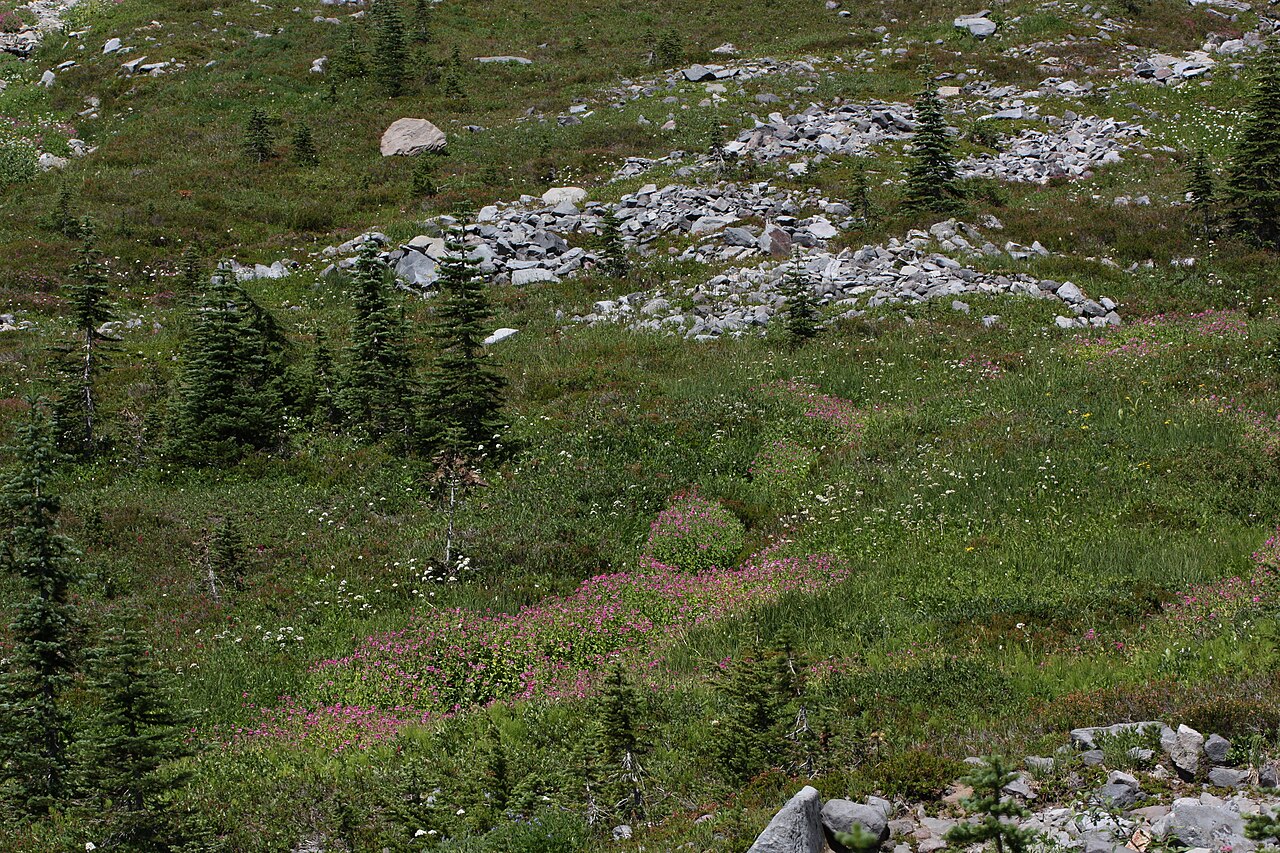
Throughout this range it is tied closely to water: streambanks, wet meadows, seeps, springs, and the margins of snowmelt channels in the subalpine and alpine zones. It is one of the most conspicuous wildflowers along high mountain trails in summer, often growing in dense colonies that follow the exact course of a trickling stream or seep across an otherwise dry talus slope or meadow.
Lewis monkeyflower is not documented as native in Colorado, Arizona, or New Mexico by county-level records, despite occurring in several neighboring states; gardeners in those states should confirm a locally native monkeyflower species rather than assuming this one is appropriate.
📋 Regional plant lists featuring Lewis Monkeyflower: California & Nevada, Western Oregon & Western Washington, Idaho, Eastern Oregon & Eastern Washington, Utah & Western Colorado, Montana & Wyoming
Growing & Care Guide
Lewis monkeyflower is easy to grow wherever its one essential requirement can be met: dependable, year-round moisture. Given a streamside, pond edge, or consistently damp low spot, it is a vigorous, long-blooming, low-maintenance perennial.
Light
Full sun produces the heaviest bloom where soil stays reliably moist; in warmer, drier gardens, part shade helps prevent the roots and foliage from drying out between waterings.
Soil & Water
Plant in rich, organic soil that stays consistently moist to wet — this species does not tolerate drying out, even briefly, once established in summer heat. It thrives at the edge of a pond, stream, rain garden, or any spot with a naturally high water table, and appreciates a gravelly or sandy component in the soil that mimics its native streambank habitat.
Planting Tips
Plant in spring after the last frost, siting it directly at a water’s edge or in a boggy low point in the garden. Space plants 12 to 18 inches apart; established clumps spread by rhizome and will fill in over a few seasons. Division in spring is an easy way to propagate established clumps.
Pruning & Maintenance
Deadheading spent flowers can extend the bloom season. Cut plants back to the base after flowering finishes in fall; they will resprout from the rhizome the following spring. Divide crowded clumps every three to four years to maintain vigor.
Landscape Uses
Lewis monkeyflower is a specialist plant for wet garden situations:
- Streamside and pond-margin plantings where it can access constant moisture
- Rain gardens and bioswales that stay damp through summer
- Bog gardens paired with other moisture-loving natives
- Mountain or alpine-themed gardens at higher, cooler elevations
- Pollinator gardens near a reliable water feature
Wildlife & Ecological Value
Lewis monkeyflower is a well-studied pollination specialist and an important nectar source in the high-elevation plant communities where it grows.
For Pollinators
The large, flared, magenta flowers with their hairy yellow throat are specifically adapted for pollination by bumblebees, which land on the hairy lower lip and push into the tube to reach nectar, picking up pollen in the process. This species is a classic subject of pollination-biology research, often studied alongside its close, hummingbird-pollinated relative Erythranthe cardinalis (scarlet monkeyflower) to illustrate how flower shape and color evolve in response to different pollinators.
For Birds
While bees are the primary pollinators, hummingbirds will also visit the flowers opportunistically, and the dense streamside colonies provide cover and foraging habitat for small songbirds moving along mountain drainages.
Ecosystem Role
As a common colonizer of wet, disturbed ground along streambanks and snowmelt channels, Lewis monkeyflower helps stabilize soil in these moisture-dependent microhabitats and provides a reliable nectar resource through the middle of the growing season, when many other subalpine wildflowers have finished blooming.
Cultural & Historical Uses
Lewis monkeyflower carries a direct connection to American exploration history: it was collected by Meriwether Lewis on July 1, 1806, near Lolo Creek in present-day Montana during the return journey of the Lewis and Clark Expedition, and it was later named in his honor by botanist George Don. The species became one of the signature wildflower discoveries credited to the expedition’s extensive botanical collections.
Beyond its role in exploration history, Lewis monkeyflower has long been significant to botanical science as a model species for studying flower-pollinator coevolution. Comparative studies between Lewis monkeyflower (bee-pollinated) and its close relative scarlet monkeyflower (hummingbird-pollinated) have become foundational examples in evolutionary biology for understanding how flower color, shape, and nectar reward shift in response to different pollinators, including documented cases of natural hybridization between the two species where their ranges overlap.
Today the species is grown primarily as an ornamental for wet gardens and is a favorite of hikers and wildflower photographers for the vivid color it brings to otherwise subdued subalpine streambanks and talus slopes.
Frequently Asked Questions
Why does my Lewis monkeyflower keep wilting?
This almost always means the soil has dried out. Lewis monkeyflower needs consistently moist to wet soil and will wilt quickly if it dries, even for a short period. Site it at a water’s edge or in a reliably damp spot rather than a typical garden bed.
What is the difference between Lewis monkeyflower and scarlet monkeyflower?
Lewis monkeyflower (Erythranthe lewisii) has large, flared magenta-pink flowers pollinated mainly by bumblebees, while scarlet monkeyflower (Erythranthe cardinalis) has narrower, red, tubular flowers pollinated mainly by hummingbirds. The two are closely related and occasionally hybridize where their ranges overlap.
Is Erythranthe the same plant as Mimulus lewisii?
Yes. Botanists reclassified most western monkeyflowers, including this species, from the genus Mimulus into Erythranthe in recent years. Many references, nurseries, and the USDA PLANTS database still use the older name, Mimulus lewisii.
Can Lewis monkeyflower grow in a regular flower bed?
Only if that bed stays consistently moist to wet. In a typical well-drained garden bed it will struggle and decline; it performs best in a dedicated wet spot, rain garden, or streamside planting.
Do hummingbirds pollinate Lewis monkeyflower?
Bumblebees are the primary pollinators, drawn in by the hairy yellow throat that serves as a landing pad, though hummingbirds will visit the flowers opportunistically as well.

Looking for a nursery that carries Lewis Monkeyflower?
Browse our native plant nursery directory: California · Oregon · Washington · Idaho · Montana · Wyoming · Utah · Nevada