Copper Globemallow (Sphaeralcea angustifolia)
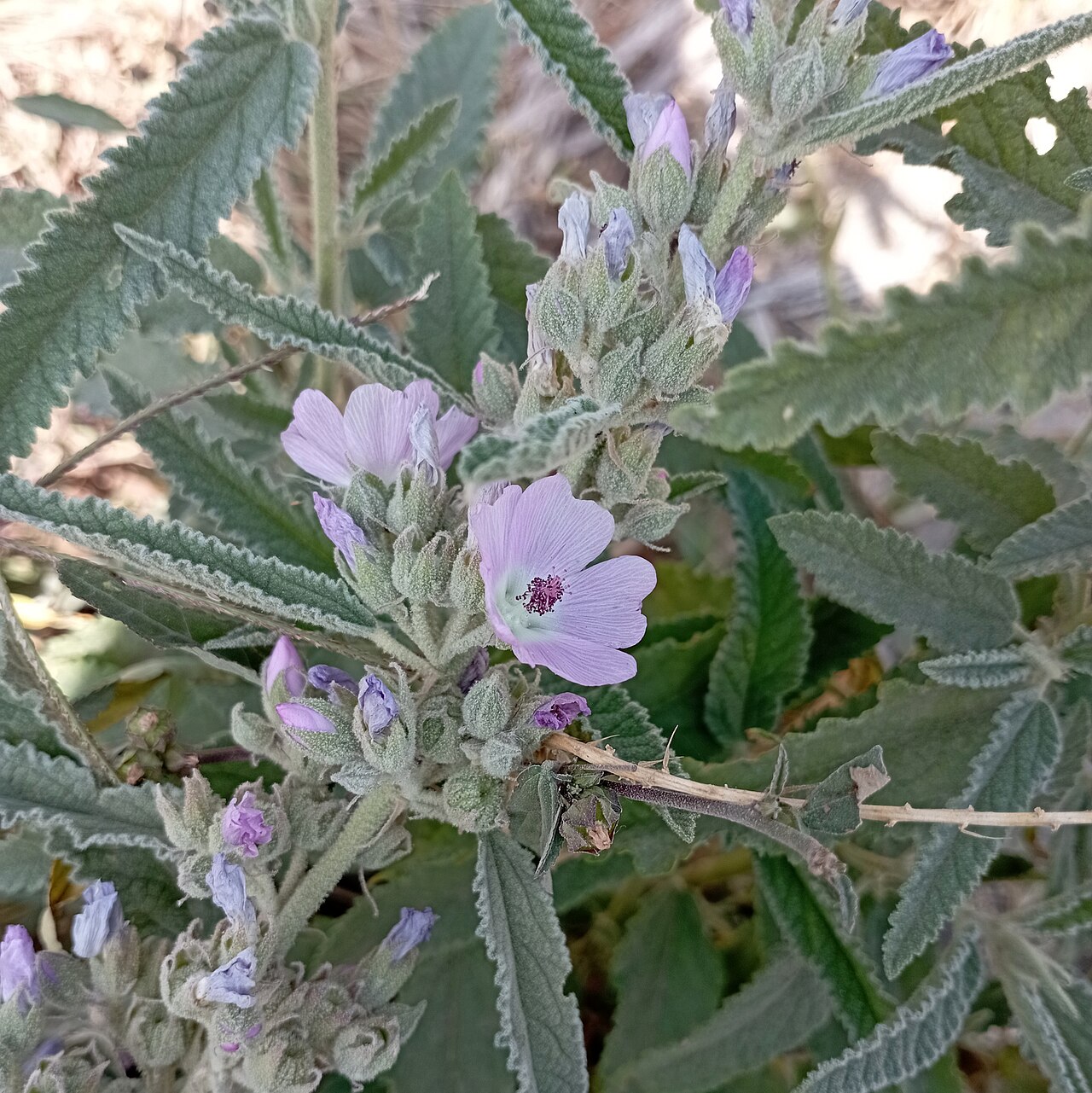
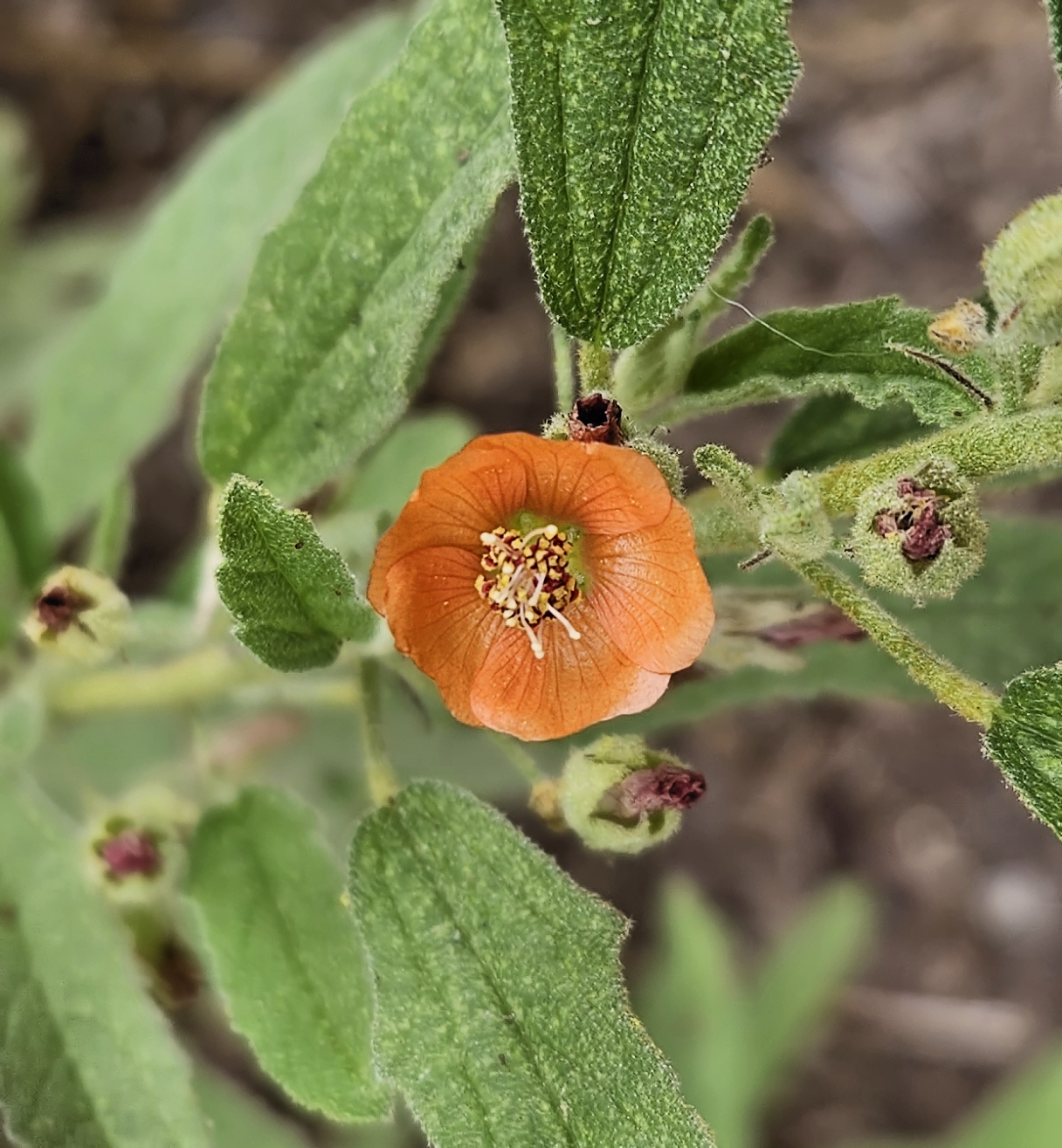
Sphaeralcea angustifolia, commonly called Copper Globemallow or narrow-leaved globemallow, is a tough, long-blooming perennial of the warm deserts and plateaus of the American Southwest. A member of the mallow family (Malvaceae) — the same family as hollyhocks and hibiscus — it produces a loose, many-stemmed clump of gray-green, felt-textured foliage topped by cup-shaped flowers that open over a remarkably long season. Despite the “copper” in its common name, the flower color is notably variable: some populations produce the classic coppery-orange blooms that give the plant its name, while others, especially at higher elevations or in rockier soils, bloom in soft pink or pale lavender. All forms share the same wedge-shaped, crinkled petals and the fuzzy, wavy-toothed leaves typical of the genus.
Copper globemallow is a plant built for dry, sun-baked ground. It thrives in rocky slopes, desert washes, roadside embankments, and limestone flats where few other flowering perennials can compete, sending down a deep taproot that lets it keep blooming through long rainless stretches. Mature plants form an airy, upright clump 2 to 5 feet tall, with stems that are woolly-haired and gray-green, giving the whole plant a soft, silvery look even in harsh light.
For southwestern gardeners who want color without irrigation, copper globemallow is hard to beat. It asks for almost nothing — full sun, sharp drainage, and to be left alone — and repays that neglect with months of bloom that pollinators, especially native bees, visit heavily. It is an excellent choice for xeriscapes, desert wildflower meadows, and naturalized plantings throughout its range in Arizona, Nevada, New Mexico, Utah, and Texas.
Identification
Copper globemallow is an erect, multi-stemmed perennial herb or subshrub reaching 2 to 5 feet in height, occasionally taller in favorable sites. The entire plant has a soft, grayish cast from a dense covering of star-shaped (stellate) hairs on stems, leaves, and flower buds — a classic mallow-family trait that also helps the plant conserve moisture in hot, dry habitats.
Leaves
Leaves are alternate, lance-shaped to narrowly triangular, and up to about 2 inches long. Margins are wavy to shallowly lobed with small, rounded teeth, and the surface has a soft, felted texture from fine hairs on both sides. The gray-green color and crinkled, toothed edges are good field marks that distinguish copper globemallow from smoother-leaved relatives.
Flowers
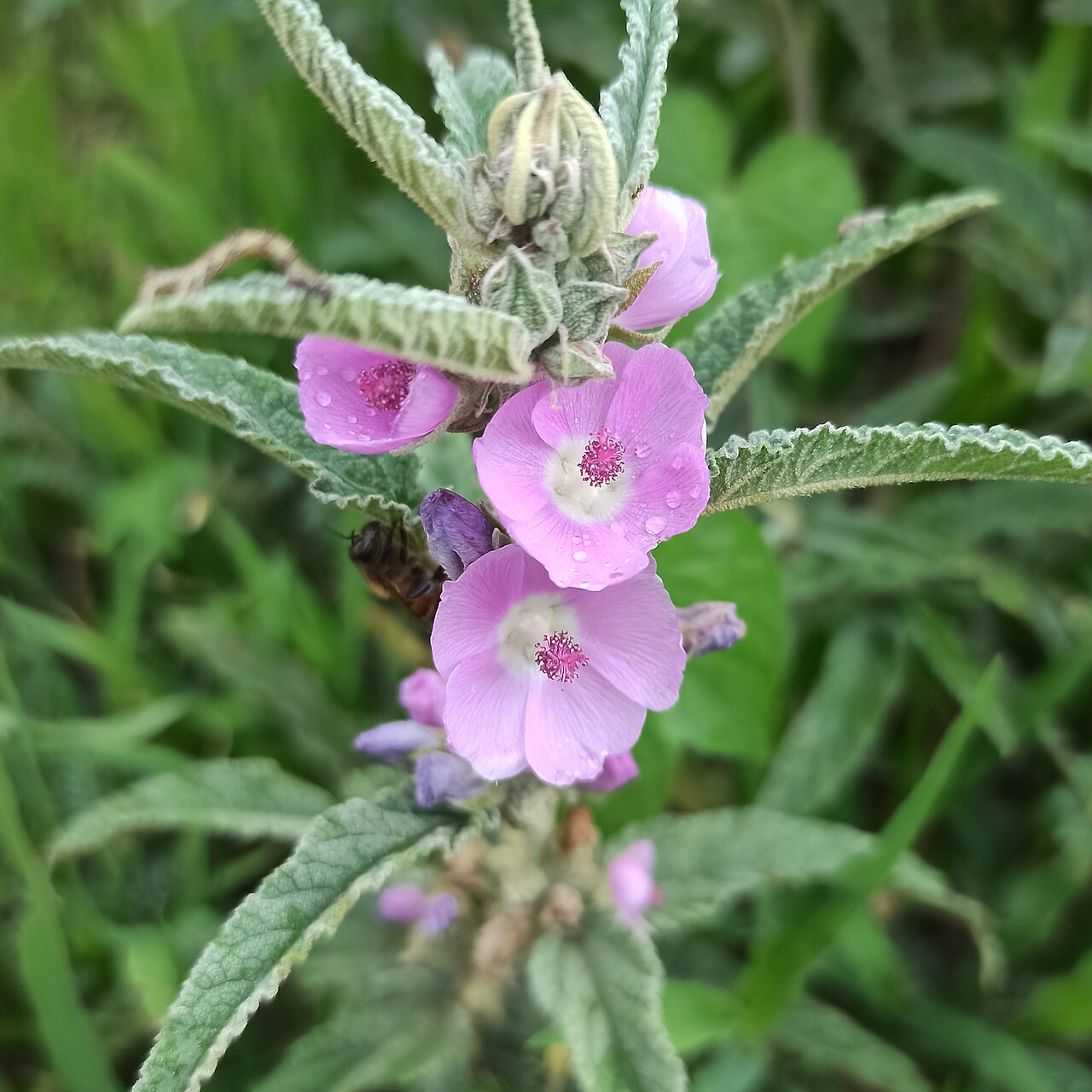
Flowers are borne in loose, leafy spikes at the stem tips, each about ½ to 1 inch across with five broad, wedge-shaped petals and a central column of fused yellow stamens typical of the mallow family. Color ranges from coppery orange to salmon, pink, or pale lavender depending on the population, and individual flowers open in succession over many weeks from spring through fall, with bloom often resuming after summer rains.
Fruit & Seeds
After flowering, each bloom is followed by a small, disc-shaped fruit (a schizocarp) that splits into several wedge-shaped segments, each holding one or two seeds — a structure shared across the globemallow genus and sometimes described as resembling a tiny wheel of cheese.
Quick Facts
| Scientific Name | Sphaeralcea angustifolia |
| Family | Malvaceae (Mallow) |
| Plant Type | Perennial Herb / Subshrub |
| Mature Height | 2–5 ft |
| Mature Spread | 2–3 ft |
| Growth Rate | Moderate to fast |
| Sun Exposure | Full Sun |
| Water Needs | Low |
| Soil Type | Rocky, sandy or caliche; sharply drained |
| Soil pH | 6.5–8.5 (neutral to alkaline) |
| Bloom Time | Spring through fall |
| Flower Color | Coppery orange, salmon, pink or lavender |
| Fall Color | None notable (gray-green year-round) |
| Fruit | Small disc-shaped schizocarp, inconspicuous |
| Deer Resistant | Yes, generally |
| USDA Hardiness Zones | 7–10 |
Native Range
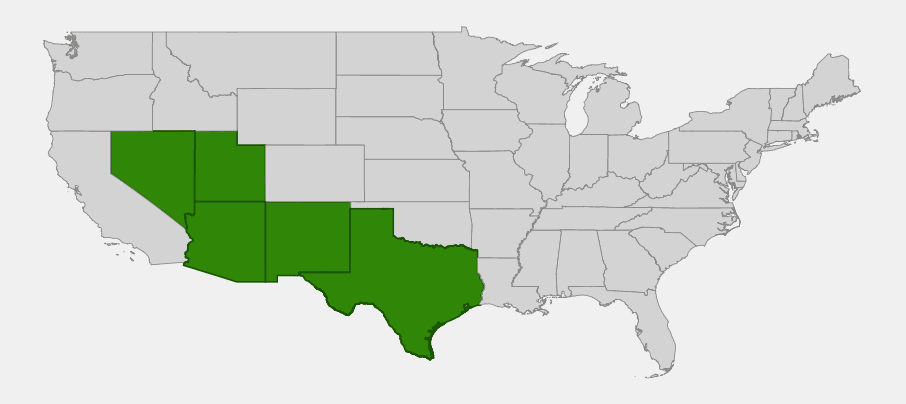
Copper globemallow is native to the warm deserts, grasslands, and plateau country of the southwestern United States, ranging across Arizona, Nevada, New Mexico, Utah, and Texas, and continuing south through much of northern and central Mexico. It is most abundant in the Sonoran and Chihuahuan Desert regions, where it is a familiar roadside and rangeland wildflower.
Within this range it favors open, disturbed, or rocky ground: desert washes, caliche flats, limestone hillsides, grassland edges, and roadcuts, generally from near sea level up into piñon-juniper woodland. It is often one of the first perennials to recolonize disturbed soil, and established plants can be found blooming along highway shoulders throughout the desert Southwest.
Copper globemallow is not a plant of moist or shaded habitats; it is absent from the wetter, more temperate parts of the states where it occurs and is concentrated instead in the hot, dry lowlands and foothills that define its desert and plateau range.
📋 Regional plant lists featuring Copper Globemallow: Arizona & New Mexico · California & Nevada · South & West Texas · Utah & Western Colorado
Growing & Care Guide
Copper globemallow is about as low-maintenance as a long-blooming perennial gets, provided it has the one thing it truly needs: excellent drainage. Give it full sun and lean soil, and it will reward you with flowers nearly year-round in mild climates.
Light
Plant in full sun. Copper globemallow is a true sun-lover from open desert and grassland habitat, and it becomes leggy and sparse-flowering in shade. In the hottest low-desert gardens it tolerates a half-day of afternoon shade without much loss of bloom.
Soil & Water
Sharp drainage is essential — rocky, sandy, or caliche soils suit it best, and heavy clay that holds winter moisture will rot the roots. Once established, copper globemallow needs little to no supplemental water and is one of the more drought-tolerant perennials available for southwestern gardens; established plants can go through entire summers on rainfall alone in much of its range. In cultivated beds, an occasional deep soak during the hottest months extends bloom but is not required for survival.
Planting Tips
Set out container plants in fall or early spring so roots can establish before summer heat arrives. Space plants 2 to 3 feet apart to allow for their mature spread. Avoid amending planting holes with rich organic matter, which can hold too much moisture around the taproot; native, unimproved soil is usually best.
Pruning & Maintenance
Cut plants back by about half in late winter or early spring to encourage dense new growth and heavier bloom; left unpruned, stems can become woody and sparse at the base. Copper globemallow self-sows readily in open soil, so remove spent flower spikes if volunteer seedlings are not wanted.
Propagation
Propagate from seed sown in fall, or from stem cuttings taken in spring. Seed benefits from light scarification to improve germination. Established plants also spread modestly from the base and can occasionally be divided.
Landscape Uses
Copper globemallow fits naturally into:
- Xeriscapes and waterwise gardens as a long-blooming color anchor
- Desert wildflower meadows mixed with brittlebush, penstemon and desert marigold
- Rock gardens and gravel plantings where drainage is sharp
- Roadside and slope plantings for erosion control on dry banks
- Pollinator gardens targeting native bees
Wildlife & Ecological Value
Copper globemallow is a reliable nectar and pollen source through much of the growing season, when many other desert flowers have finished blooming.
For Pollinators
The flowers are especially attractive to native bees, including specialist globemallow bees in the genus Diadasia, which forage almost exclusively on Sphaeralcea flowers. Honeybees and a range of other generalist pollinators also visit regularly.
For Birds
Seed-eating birds forage on the small ripened fruit segments, and the dense clumping growth offers low cover for ground-foraging species in open desert and grassland habitat.
For Mammals
Foliage is browsed lightly by rabbits and other small mammals, and the plant’s deep taproot and persistent woody base help stabilize loose desert soils where it grows in colonies.
Ecosystem Role
As an early colonizer of disturbed ground, copper globemallow helps re-establish plant cover on roadcuts, washes, and other bare soil, and its long bloom season helps sustain pollinator populations across seasonal gaps when other desert wildflowers are not in flower.
Cultural & Historical Uses
Globemallows in the genus Sphaeralcea have a long history of use among Indigenous peoples of the Southwest and northern Mexico, who used the mucilaginous sap from stems and roots as a soothing poultice for minor skin irritations and as an ingredient in traditional remedies, reflecting the same mucilage-rich chemistry found in related mallow-family plants such as marshmallow.
The fibrous stems of various globemallow species were sometimes used in cordage and basketry work, and the plants were valued generally as reliable, drought-hardy forage for livestock on arid rangeland, where they persist even in dry years when many other forbs disappear.
Today copper globemallow’s main value is horticultural: as water scarcity drives growing interest in regionally appropriate, low-water landscaping across the Southwest, it has become an increasingly popular choice in native plant nurseries from Texas to California.
Frequently Asked Questions
Why is it called “copper” globemallow if the flowers are sometimes pink?
Flower color in Sphaeralcea angustifolia is genuinely variable across its range — some populations bloom in the classic coppery-orange shade the common name describes, while others produce salmon, pink, or pale lavender flowers. Both forms are the same species and equally valuable in the garden.
Is copper globemallow drought tolerant?
Yes, exceptionally so. Once established it typically needs no supplemental irrigation in most of its native range and is one of the better choices for true xeriscape plantings.
Does copper globemallow spread aggressively?
It self-sows readily in open, disturbed soil but is not aggressive in a planted, mulched bed. Deadheading spent flower spikes limits volunteer seedlings if a tidier look is preferred.
What pollinators does copper globemallow attract?
It is especially valuable to specialist globemallow bees (Diadasia species) that forage almost exclusively on Sphaeralcea flowers, along with honeybees and other generalist native bees.
Can copper globemallow handle clay soil?
Not well. It evolved in rocky, fast-draining desert and plateau soils, and heavy clay that stays wet, especially in winter, can rot its roots. Raised beds or soil amendment with coarse sand or gravel help in heavier-soil gardens.

Looking for a nursery that carries Copper Globemallow?
Browse our native plant nursery directory: Arizona · Nevada & New Mexico · Texas & Utah