Elephant’s Head (Pedicularis groenlandica)
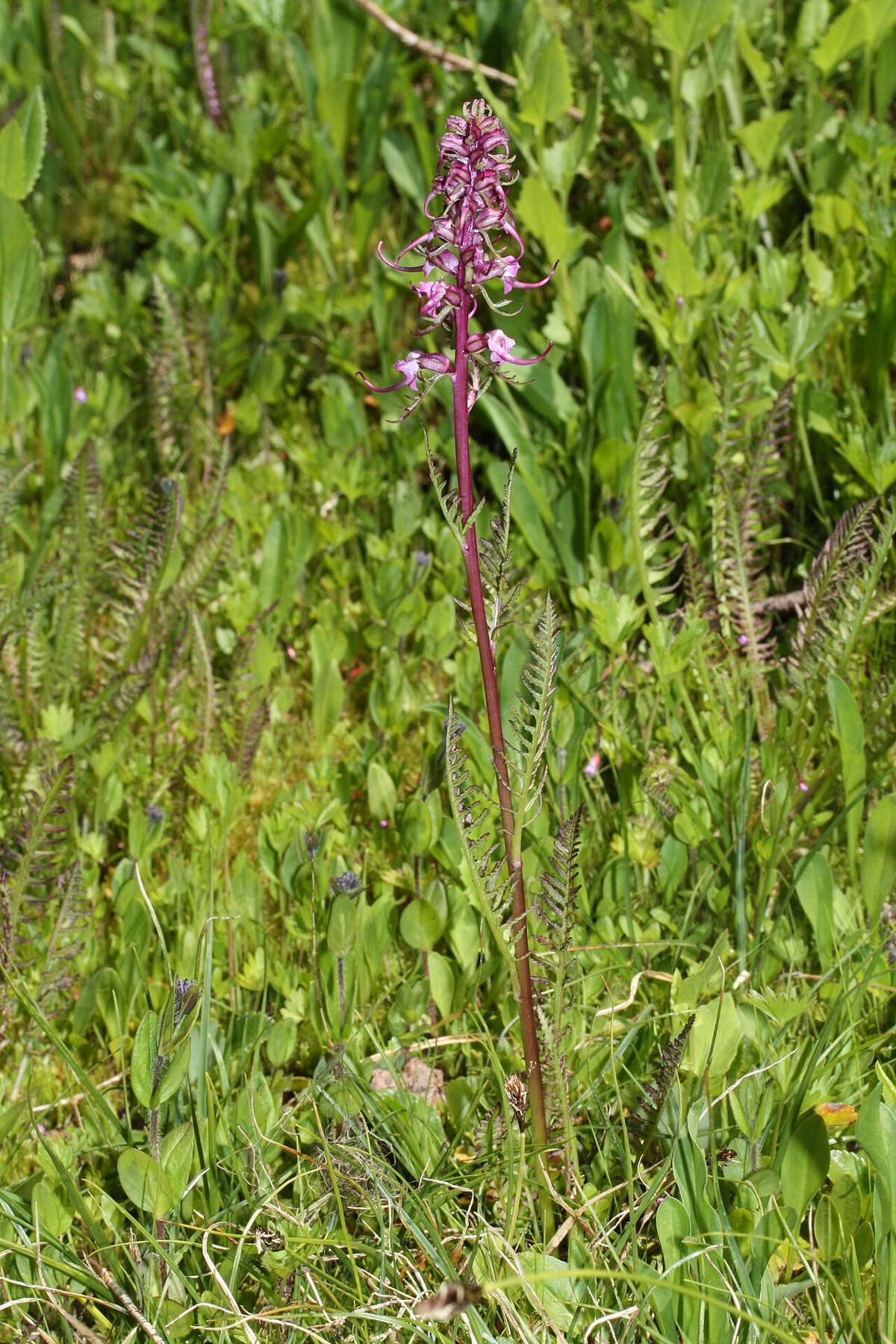
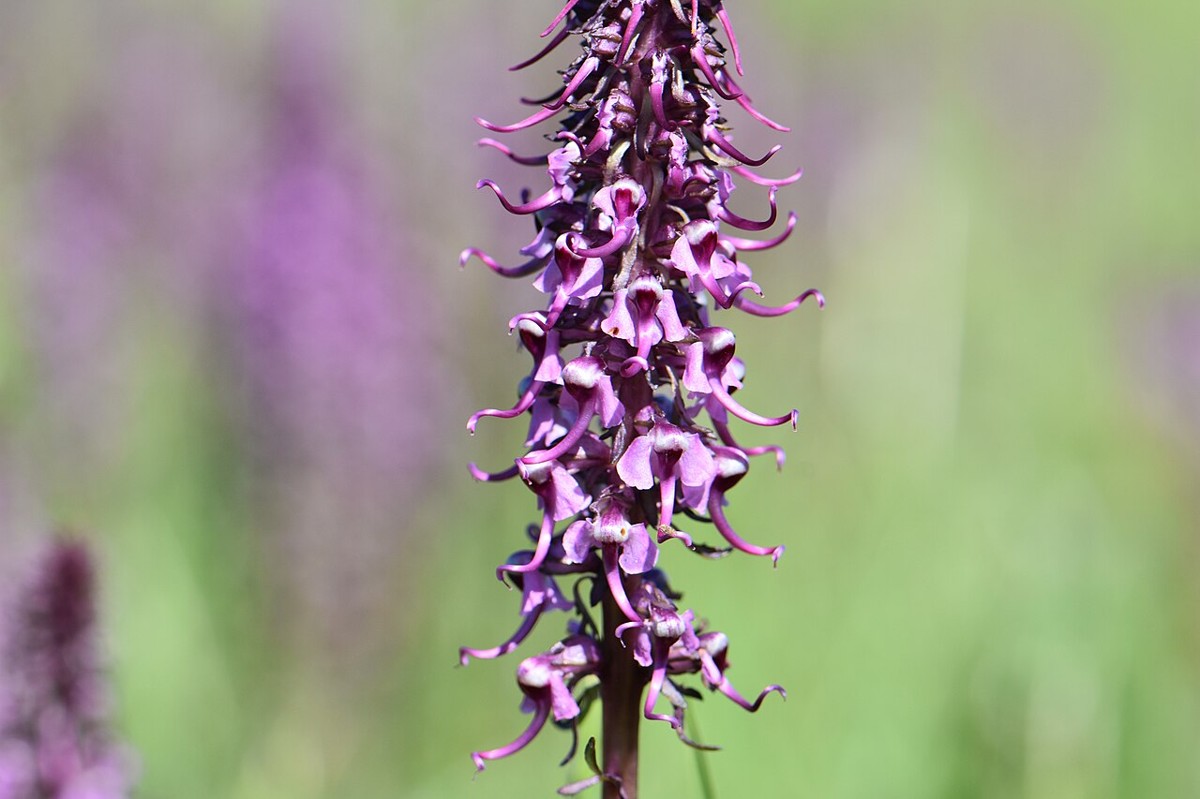
Pedicularis groenlandica, commonly called elephant’s head or elephant head lousewort, is a short-lived perennial wildflower of wet, high-elevation meadows across the mountains of the western United States. It is one of the most unmistakable wildflowers in the Rockies, Sierra Nevada, and Cascades: each magenta-pink flower is shaped, in uncanny detail, like the head of an elephant, complete with a curled, upswept trunk and two flaring ears. Dozens of these tiny elephant faces are packed into a dense spike atop a single upright stem, usually 6 to 24 inches tall.
Elephant’s head belongs to the broomrape family (Orobanchaceae) and, like many of its lousewort relatives, is a hemiparasite — its roots tap into the roots of nearby sedges and grasses for extra water and nutrients while still carrying out its own photosynthesis. This habit, combined with its strict need for consistently saturated soil, makes it a reliable indicator of healthy subalpine and alpine wetlands: wherever you find a stand of elephant’s head blooming in July, you are standing in a real, functioning mountain fen or wet meadow.
For gardeners, elephant’s head is a specialty plant rather than a general landscape choice. It is difficult to establish outside of a true bog garden or pond margin because it needs saturated, mineral-rich soil, cool roots, and often a partner sedge to parasitize. Where those conditions exist — a high-elevation rain garden, an artificial fen, or the wet edge of a mountain property — it rewards the effort with one of the most striking native flower spikes in North America.
Identification
Elephant’s head grows as a clump of fern-like basal leaves with a single, mostly unbranched flowering stem rising above them. The whole plant has a slightly reddish or purplish cast to its stems, which helps it stand out against the green of the surrounding sedges even before it blooms.
Leaves
The leaves are fern-like, finely and deeply cut (pinnatifid) into narrow, toothed segments, giving them a feathery, almost carrot-top texture. Most leaves cluster at the base of the plant, with a few smaller leaves alternating up the flowering stem. The foliage is dull green, sometimes with a reddish tinge, and stays low and inconspicuous until the flower spike emerges.
Flowers
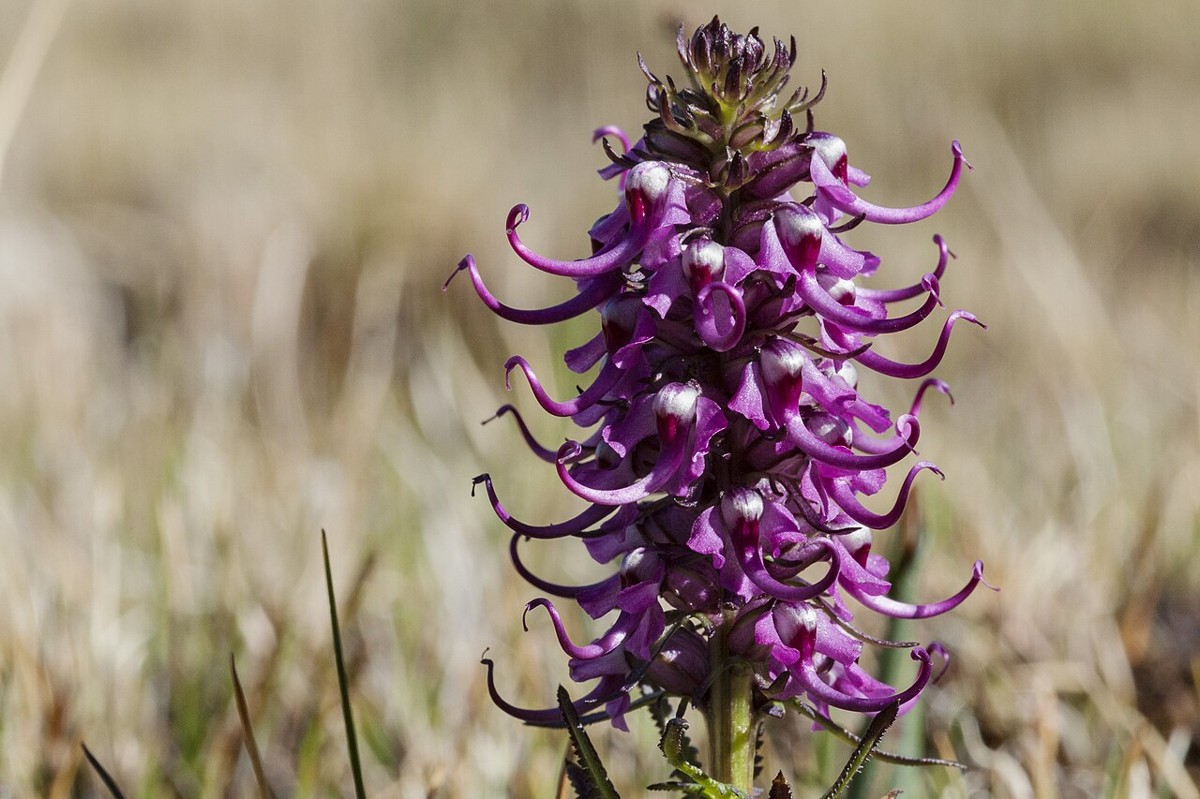
The flowers are the plant’s signature feature. Each individual bloom is tubular and two-lipped: the upper lip (galea) is drawn out into a long, narrow, upward-curving beak that looks exactly like an elephant’s trunk, while the lower lip spreads into two rounded lobes that read as the ears. Flowers are usually a rich magenta-pink to rose-purple, occasionally paler, and are crowded in a dense spike (a raceme) at the top of the stem, opening from the bottom up over several weeks in summer.
Fruit & Seed
After flowering, each flower is replaced by a small, flattened, beaked capsule holding numerous tiny seeds. The capsules dry and split open in late summer, and the fine seeds are dispersed by wind and water across the wet meadow.
Quick Facts
| Scientific Name | Pedicularis groenlandica |
| Family | Orobanchaceae (Broomrape) |
| Plant Type | Perennial wildflower (root hemiparasite) |
| Mature Height | 6–24 in |
| Mature Spread | 6–12 in clump |
| Growth Rate | Moderate, where conditions suit it |
| Sun Exposure | Full Sun to Part Shade |
| Water Needs | Wet; requires saturated soil year-round |
| Soil Type | Saturated, organic-rich muck or peaty meadow soil |
| Soil pH | Neutral to slightly acidic |
| Bloom Time | June – August (snowmelt-dependent) |
| Flower Color | Magenta-pink to rose-purple |
| Fall Color | None notable |
| Fruit | Small beaked capsules with fine seed, late summer |
| Deer Resistant | Generally yes |
| USDA Hardiness Zones | 2–7 (high-elevation, cold-adapted) |
Native Range
Elephant’s head is widespread across the high country of the western United States, from the Cascades and Sierra Nevada east through the Great Basin ranges to the central and southern Rocky Mountains, with an outlying presence in Alaska. It grows at subalpine to alpine elevations, typically between about 6,000 and 12,000 feet, wherever snowmelt keeps a meadow saturated through the growing season.
Typical habitat is a wet subalpine or alpine meadow, streamside sedge flat, or the saturated margin of a mountain pond or fen, usually growing among sedges (Carex) and rushes (Juncus) that supply it with host roots. Because it depends on both the right elevation and consistently wet ground, its distribution within any given state is patchy, tracking high basins and headwater meadows rather than lowlands.
Elephant’s head has no significant conservation concerns across most of its range, though individual wetland populations can be vulnerable to grazing, trampling, and water diversion, since the species cannot tolerate drying out. Protecting high mountain wetlands protects this plant along with the broader meadow community it depends on.
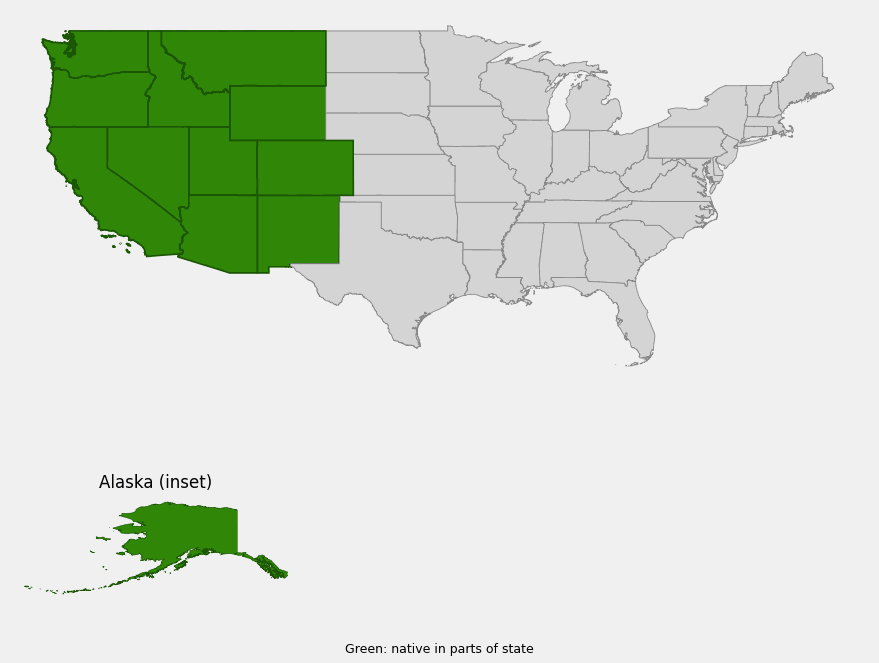
📋 Regional plant lists featuring Elephant’s Head: Alaska · California & Nevada · Western Oregon & Western Washington · Idaho, Eastern Oregon & Eastern Washington · Montana & Wyoming · Utah & Western Colorado · Nebraska, Kansas & Eastern Colorado · Arizona & New Mexico
Growing & Care Guide
Elephant’s head is one of the more demanding native wildflowers to cultivate because it needs both saturated soil and, often, a living sedge host nearby. It is best suited to a dedicated bog garden, constructed fen, or the edge of a cold, slow-moving pond rather than an ordinary perennial border.
Light
In the wild, elephant’s head grows in open, sunny meadows at high elevation, where cool nights offset strong daytime sun. In garden settings at lower elevation, give it full sun in cool climates and light afternoon shade in hotter regions to keep roots from overheating.
Soil & Water
Soil must stay saturated or very nearly so throughout the growing season; this is the single most important factor in success or failure. Organic, peaty, or mucky soils that mimic a subalpine meadow work best. Because the species is a root hemiparasite, planting it near an established clump of native sedge (Carex) improves its vigor and longevity. Never let the root zone dry out, even briefly.
Planting Tips
Start from fresh, locally sourced seed rather than transplanting wild plants, which rarely survive a move. Sow seed in fall or early winter directly into saturated, sedge-rich soil so it can experience natural cold stratification; germination the following spring is often sparse and uneven. Because of its host dependence and narrow soil requirements, elephant’s head is more realistic as a long-term bog-garden project than a quick addition to a planting bed.
Pruning & Maintenance
Little pruning is needed; remove spent flower stalks after seed has matured and dispersed if you want a tidier look, or leave them to self-sow. Keep the bog or fen area free of competing weeds, and top up water during dry spells so the root zone never drains out.
Propagation
Propagation is by seed, ideally sown fresh in fall onto consistently wet, sedge-rich soil. Because the seedlings benefit from a host plant’s roots nearby, scattering seed into an existing stand of native sedge improves establishment over sowing into bare wet soil.
Landscape Uses
- Bog gardens and constructed fens that replicate a subalpine wet meadow
- Pond and stream margins with consistently saturated, cool soil
- High-elevation native gardens alongside sedges, shooting stars and marsh marigold
- Restoration plantings in degraded mountain wetlands and fens
Wildlife & Ecological Value
Elephant’s head is a dependable nectar source in wet mountain meadows during the brief high-elevation growing season, and its presence usually signals a healthy wetland ecosystem.
For Pollinators
The flowers are pollinated mainly by bumblebees, which are strong enough to pry open the curved beak and trigger the flower’s pollen release. Long-tongued bees and some butterflies also visit. Because elephant’s head often blooms in large stands, it can be an important mid-summer nectar source at elevations where few other flowers are blooming yet.
For Birds
Hummingbirds occasionally visit the flowers for nectar, and the dense wet meadows elephant’s head grows in support insects that in turn feed many mountain-breeding songbirds.
For Mammals
Elk and deer graze through subalpine meadows where elephant’s head grows, though the plant itself is not a preferred forage species. Small mammals use the surrounding sedge meadow for cover and foraging.
Ecosystem Role
As a root hemiparasite, elephant’s head is physically woven into the sedge meadow community it grows in, and its presence is considered an indicator of a functioning, undisturbed subalpine wetland. These wet meadows also store snowmelt and slowly release it downstream through the summer, so protecting the habitat benefits water resources well beyond the meadow itself.
Cultural & Historical Uses
Elephant’s head has a long history as a plant that caught the eye of travelers and botanists in the high country, most often noted for the striking resemblance of its individual flowers to tiny elephant heads rather than for practical use. Some Indigenous peoples of the western mountains knew the plant and its relatives within their regional flora, though it was not a major food, medicine, or material plant compared with more abundant meadow and forest species.
Today its main cultural role is as a beloved sight on high-country hikes, often photographed and shared for its whimsical flower shape. It remains primarily a wild, high-elevation specialty rather than a plant with a significant history of cultivation or trade.
Frequently Asked Questions
Why is it called elephant’s head?
Each individual flower has an upper lip drawn into a long, curved beak that looks like an elephant’s trunk, with two rounded lower lobes that read as ears, so a flower spike looks like a column of tiny elephant heads.
Can I grow elephant’s head in a regular garden bed?
Not successfully in most cases. It needs soil that stays saturated all season and often benefits from growing near a host sedge, so it is best attempted only in a bog garden, constructed fen, or pond margin that can keep the root zone consistently wet.
Is elephant’s head parasitic on other plants?
It is a hemiparasite, meaning it photosynthesizes on its own but also taps into the roots of nearby sedges and grasses for extra water and nutrients. It does not kill its hosts under normal conditions.
Where is the best place to see elephant’s head in the wild?
Look for wet subalpine meadows in the Sierra Nevada, Cascades, and Rocky Mountains in mid to late summer, generally between about 7,000 and 11,000 feet, wherever snowmelt keeps the ground saturated.
Is elephant’s head rare or endangered?
No, it is widespread and secure across its western mountain range, though individual wetland populations can be sensitive to trampling, grazing pressure, and changes in water flow.

Looking for a nursery that carries Elephant’s Head?
Browse our native plant nursery directory: Alaska & Arizona · California · Colorado · Idaho · Montana · Nevada & New Mexico · Oregon · Utah · Washington · Wyoming