Drummond’s Wild Onion (Allium drummondii)
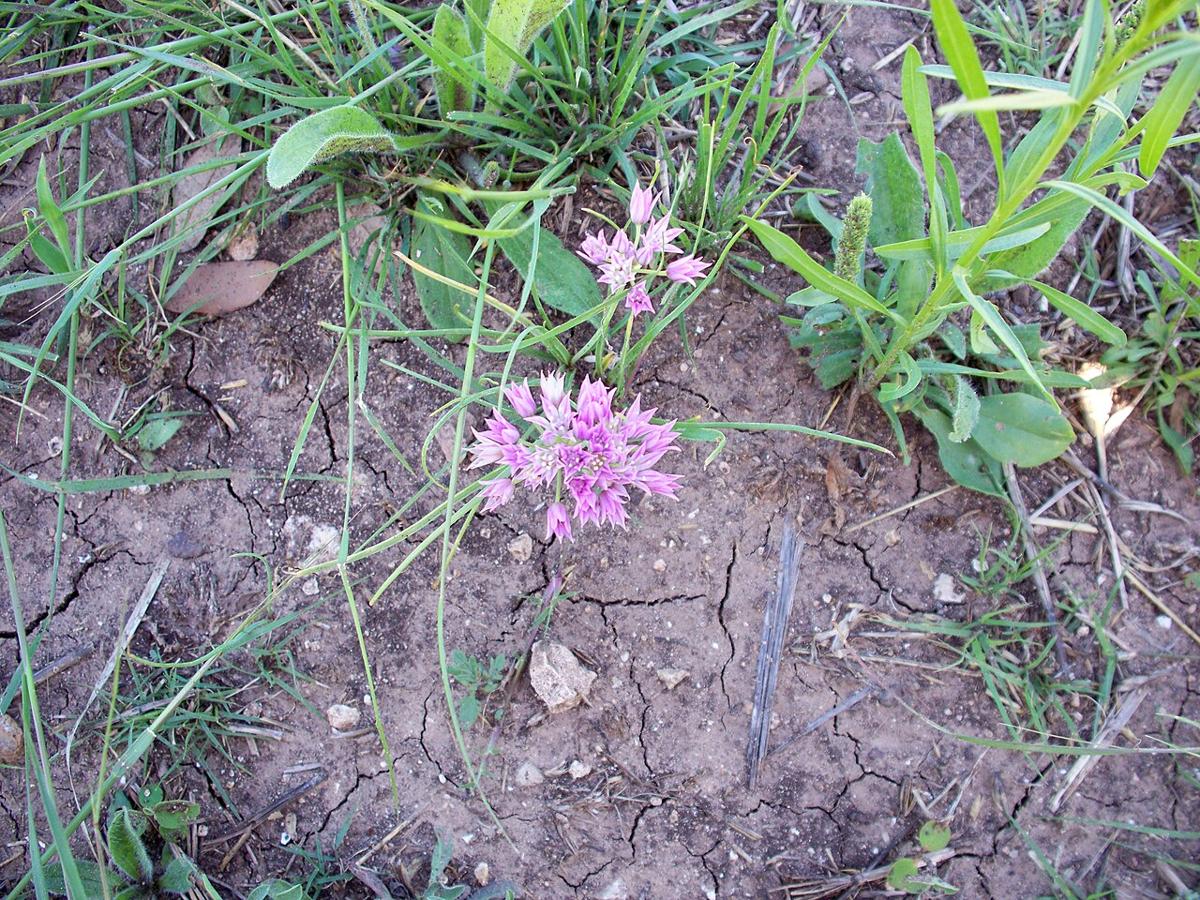
Allium drummondii, commonly called Drummond’s Wild Onion or Drummond’s Onion, is a small, early-blooming perennial bulb of the southern Great Plains and Texas prairies. A member of the Amaryllidaceae (onion family), it pushes up slender, grass-like leaves and a single rounded umbel of pink to white, star-shaped flowers each spring, then disappears underground for the rest of the year once seed has set. It is one of the first wildflowers to bloom on shortgrass and mixed-grass prairie, often flowering alongside the earliest spring ephemerals.
Standing just 4 to 12 inches tall, Drummond’s Wild Onion is easy to overlook until its papery, six-petaled flowers open in clusters of 6 to 20 atop a thin, leafless stalk. The flower color ranges from pale pink to nearly white, sometimes with a darker pink midvein on each tepal. Like other true onions, every part of the plant releases a distinct onion or garlic scent when bruised or crushed, a reliable field character for confirming identification.
Thriving on dry, rocky or clay prairie soils that bake hard in summer, Drummond’s Wild Onion is a true dry-prairie specialist, going fully dormant by early summer to avoid the region’s punishing heat. It is a worthwhile, low-maintenance addition to a native prairie garden or rock garden, though its brief above-ground season means it is best paired with later-blooming companions that fill in after it disappears.
Identification
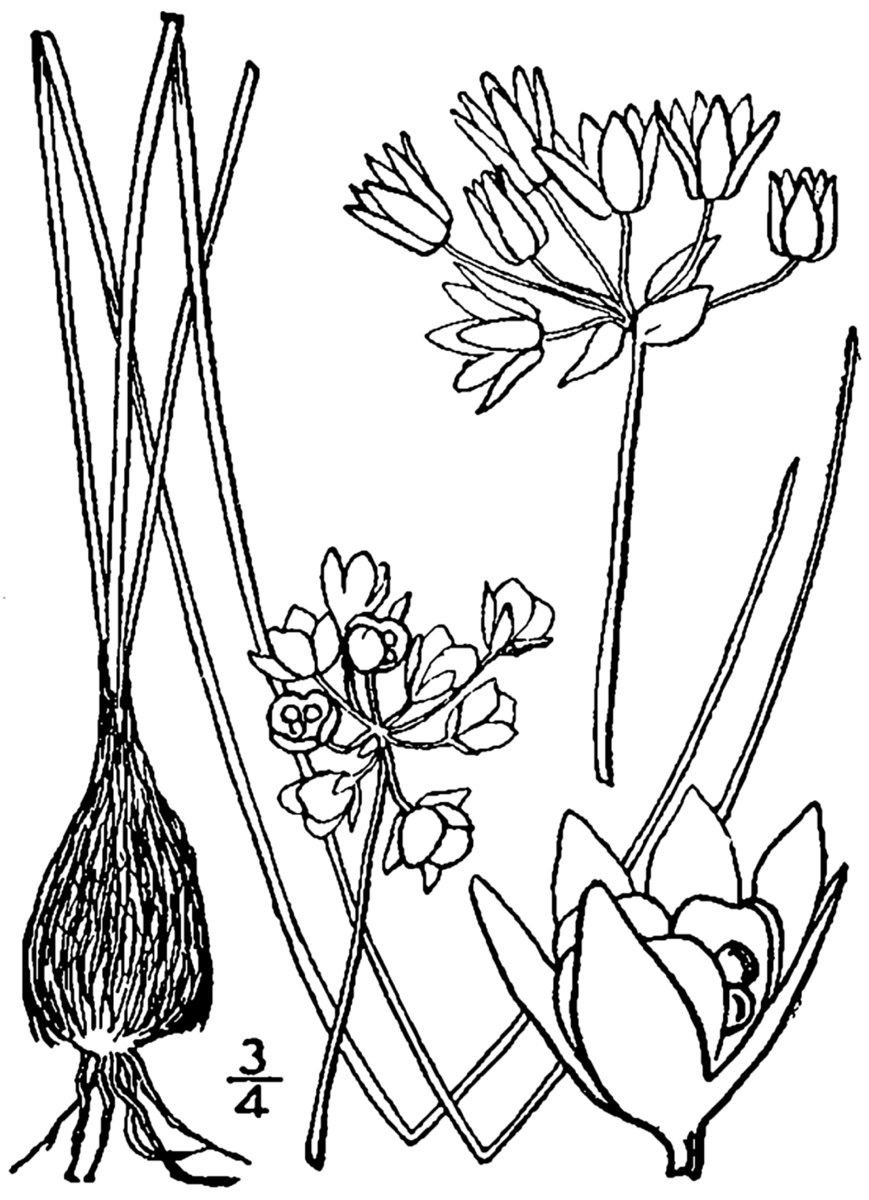
Drummond’s Wild Onion grows from a small, fibrous-coated bulb and sends up a single flowering stalk each spring, reaching 4 to 12 inches tall at bloom.
Bulb
The bulb is ovoid, about ½ to ¾ inch across, coated in fibrous, grayish outer layers, and often found just a few inches below the soil surface in open, well-drained prairie ground.
Leaves
Leaves are narrow, grass-like, and basal, typically 2 to 4 per bulb, usually withering by the time flowers fully open — a trait shared with many spring-blooming geophytes that complete growth before summer heat and drought set in.
Flowers
Flowers are borne in a single terminal umbel of 6 to 20 blooms atop a slender, leafless scape. Each flower has six papery tepals, pale pink to white, often with a deeper pink midrib, opening from March into May depending on latitude and season.
Fruit & Seeds
After bloom, small three-lobed seed capsules form and dry in place, releasing black seeds by early summer as the whole plant withers back to the dormant bulb below ground.
Quick Facts
| Scientific Name | Allium drummondii |
| Family | Amaryllidaceae (Onion) |
| Plant Type | Perennial Bulb / Spring Ephemeral Wildflower |
| Mature Height | 4–12 in |
| Mature Spread | 2–4 in |
| Growth Rate | Slow (bulb offsets gradually) |
| Sun Exposure | Full Sun |
| Water Needs | Low |
| Soil Type | Dry, rocky or clay prairie soil; well-drained |
| Soil pH | 6.5–8.0 (neutral to alkaline) |
| Bloom Time | March – May |
| Flower Color | Pale pink to white |
| Fall Color | None; dormant below ground by summer |
| Fruit | Small three-lobed capsule |
| Deer Resistant | Yes (onion scent deters browsing) |
| USDA Hardiness Zones | 5–9 |
Native Range
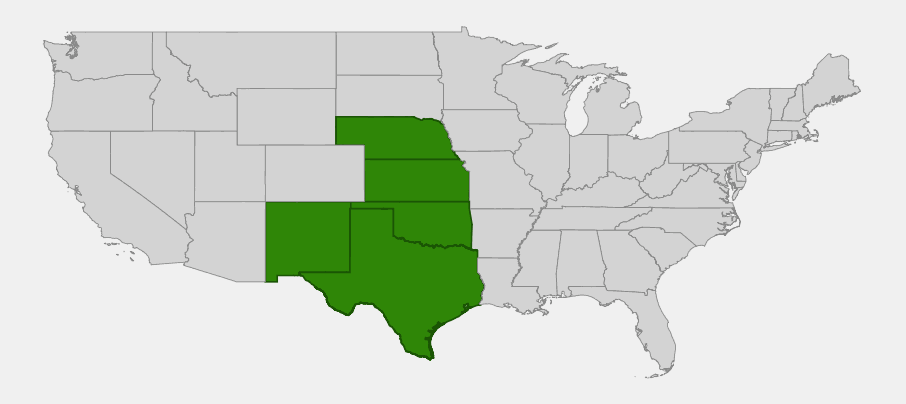
Drummond’s Wild Onion is native to the southern Great Plains, with confirmed county-level populations across Nebraska, Kansas, Oklahoma, New Mexico, and Texas. It is a characteristic plant of shortgrass and mixed-grass prairie, most abundant on the plains and rolling clay prairies of Texas and Oklahoma, and reaching its northern native limit in southern and central Nebraska.
Across this range, Drummond’s Wild Onion favors open, sun-baked prairie, caliche or clay flats, and rocky limestone outcrops where competing vegetation stays sparse enough for the small bulbs to persist. It typically grows in full sun on sites with minimal tree or shrub cover.
Field botanical data did not show reliable county-level native records for eastern Colorado at the time of writing, so this guide does not include Colorado in Drummond’s Wild Onion’s confirmed native range, though gardeners just across the border in neighboring states covered here can grow it as a true native.
📋 Regional plant lists featuring Drummond’s Wild Onion: Nebraska, Kansas & Eastern Colorado · Arkansas, Louisiana, Eastern Oklahoma & Eastern Texas · Arizona & New Mexico · South and West Texas
Growing & Care Guide
Drummond’s Wild Onion rewards gardeners who can give it the lean, dry, sun-baked conditions of its native prairie — and little else.
Light
Full sun is essential; this prairie bulb does not tolerate shade and will fail to bloom or persist in shaded beds.
Soil & Water
Plant in lean, well-drained soil — clay, caliche, or rocky prairie soil suits it far better than rich, amended garden beds, which promote rot in the dormant bulb. Water lightly during the brief spring growing season, then withhold water entirely through summer dormancy; the bulb needs to dry out to survive and will rot in consistently moist soil.
Planting Tips
Plant bulbs in fall, 2 to 3 inches deep, in a sunny, well-drained spot such as a rock garden, gravel bed, or dry prairie planting. Mark the planting location, since the foliage disappears completely by early summer and the dormant bulb is easy to disturb by accident.
Pruning & Maintenance
No pruning is needed. Allow foliage to yellow and wither naturally after bloom before it disappears for the season; this recharges the bulb for next year’s flowering.
Landscape Uses
- Dry prairie and shortgrass restorations
- Rock gardens and gravel beds with sharp drainage
- Early-spring interest among dormant warm-season grasses
- Xeriscaping in low-water, prairie-style landscapes
Wildlife & Ecological Value
As one of the earliest prairie wildflowers to bloom, Drummond’s Wild Onion provides a disproportionately important nectar source in a season when few other flowers are available.
For Pollinators
Early-season native bees and small flies rely on Drummond’s Wild Onion’s umbels as some of the first nectar and pollen sources on the spring prairie, when little else is in bloom.
For Birds
The plant offers little direct food value to birds, though the open prairie habitat it occupies supports ground-nesting grassland birds more broadly.
For Mammals
The onion scent and taste generally deter deer, rabbits, and rodents from browsing the foliage or digging up the bulbs, making it one of the more reliably unbothered spring wildflowers on the prairie.
Ecosystem Role
By completing its growth cycle before the heat of summer, Drummond’s Wild Onion fills an early-season niche in the prairie plant community, contributing flowering diversity and soil cover at a time when many warm-season prairie grasses and forbs are still dormant.
Cultural & Historical Uses
Like many wild onions of the Great Plains, Drummond’s Wild Onion was historically gathered by Indigenous peoples of the region as a seasonal food flavoring, its pungent bulb used much like cultivated onion or garlic to season other foods when fresh in spring.
The species is named for Scottish botanist Thomas Drummond, who collected extensively across Texas and the southern plains in the early 19th century, contributing many Great Plains species to Western botanical science during that period of exploration.
Today, Drummond’s Wild Onion has little commercial use but is increasingly sought by native-plant gardeners and prairie restoration projects for its early bloom and historical role as one of the signature small wildflowers of the southern shortgrass prairie.
Frequently Asked Questions
Is Drummond’s Wild Onion edible?
Like other true wild onions, the bulb has historically been used as a food flavoring. This guide does not provide food-safety advice; if foraging any wild onion, be certain of correct identification, since some toxic lookalikes exist in other plant families.
Why did my Drummond’s Wild Onion disappear after spring?
This is normal. It is a spring ephemeral that goes fully dormant below ground by early summer to survive the heat and drought of the southern plains. It will return the following spring from the same bulb.
Can I grow Drummond’s Wild Onion in rich garden soil?
It is best avoided. Rich, consistently moist soil promotes bulb rot during summer dormancy. Lean, well-drained prairie or rock-garden conditions mimic its native habitat far more successfully.
How do I tell Drummond’s Wild Onion from other small pink prairie wildflowers?
Crush a leaf or flower stem — a distinct onion or garlic scent confirms it belongs to the genus Allium, distinguishing it from unrelated pink-flowered prairie plants that lack this smell.
Is Drummond’s Wild Onion the same as Prairie Onion?
No. Prairie Onion (Allium stellatum) is a related but distinct species found farther north and east on the Great Plains. Drummond’s Wild Onion (Allium drummondii) is the more southern and western of the two, centered on Texas and Oklahoma.

Looking for a nursery that carries Drummond’s Wild Onion?
Browse our native plant nursery directory: Nebraska, Oklahoma & New Mexico · Kansas · Texas