Zizotes Milkweed (Asclepias oenotheroides)
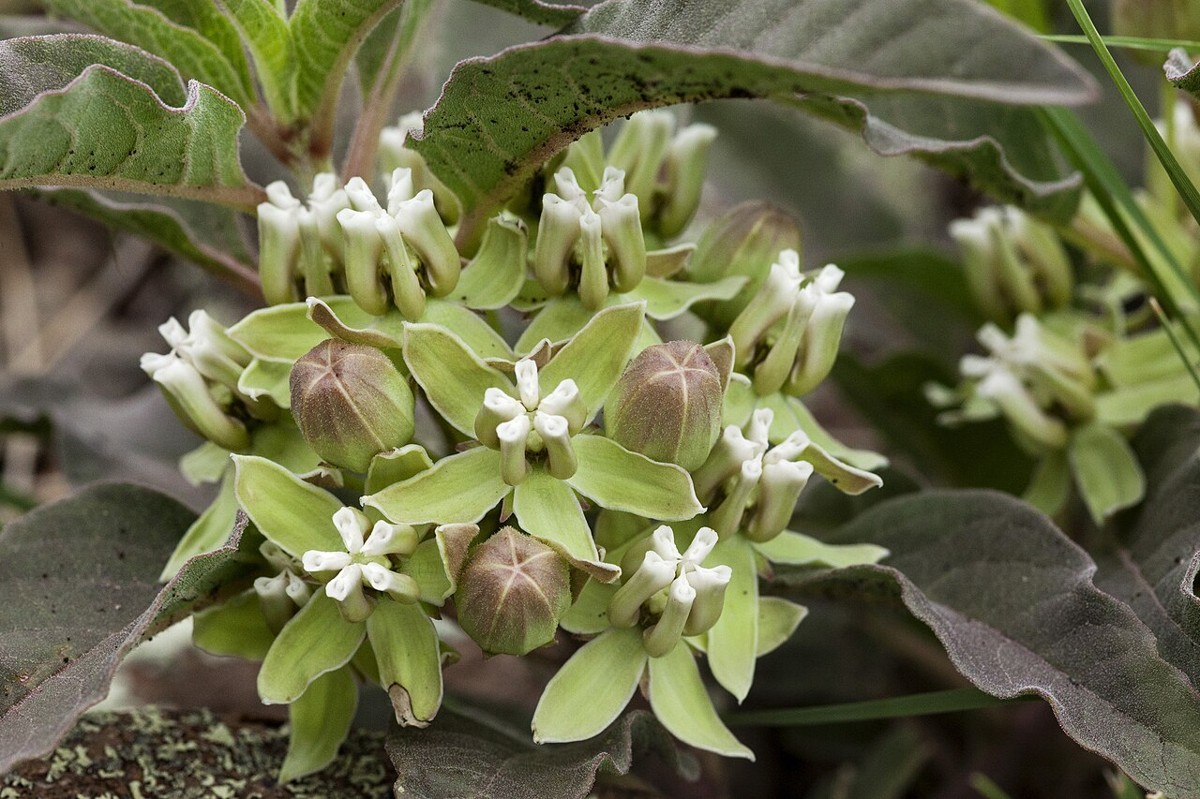
Asclepias oenotheroides, commonly known as Zizotes Milkweed or Hierba de Zizotes, is a low-growing, drought-tough perennial milkweed of the desert Southwest and south-central plains. A member of the Apocynaceae (dogbane/milkweed family), it forms sprawling to semi-upright clumps of broad, soft, grayish-green leaves topped with tight clusters of unusual greenish-white to cream flowers. Unlike the tall, upright milkweeds of eastern prairies, Zizotes Milkweed hugs the ground, making it a distinctive, low-profile presence on dry rangeland and roadsides.
Growing 6 to 18 inches tall with a sprawling, often many-branched habit, Zizotes Milkweed is well adapted to the hot, arid conditions of its native range. Its broad, velvety leaves and compact flower clusters give it a different look from the narrow-leaved milkweeds more familiar to eastern gardeners, but it provides the same essential service: as a monarch butterfly host plant, it is a critical, if often overlooked, resource in Texas, New Mexico, Arizona, and Oklahoma.
Because it tolerates heat, drought, and poor rocky or caliche soil better than almost any other milkweed, Zizotes Milkweed is an excellent low-water choice for native plant gardens, pollinator plantings, and rangeland restoration throughout its native Southwestern and south-central range.
Identification
Zizotes Milkweed forms a low, spreading to loosely upright clump, usually 6 to 18 inches tall, often wider than tall, with multiple stems branching from the base.
Stems
Stems are slender, often reclining or sprawling along the ground before turning upward, and typically covered in fine, soft hairs. Like all milkweeds, stems and leaves exude a white, milky latex sap when broken.
Leaves
Leaves are opposite, broadly oval to heart-shaped, 2 to 5 inches long, soft-textured and grayish-green, often with a slightly velvety feel from fine pubescence — notably broader and softer than the narrow leaves of most other milkweed species.
Flowers
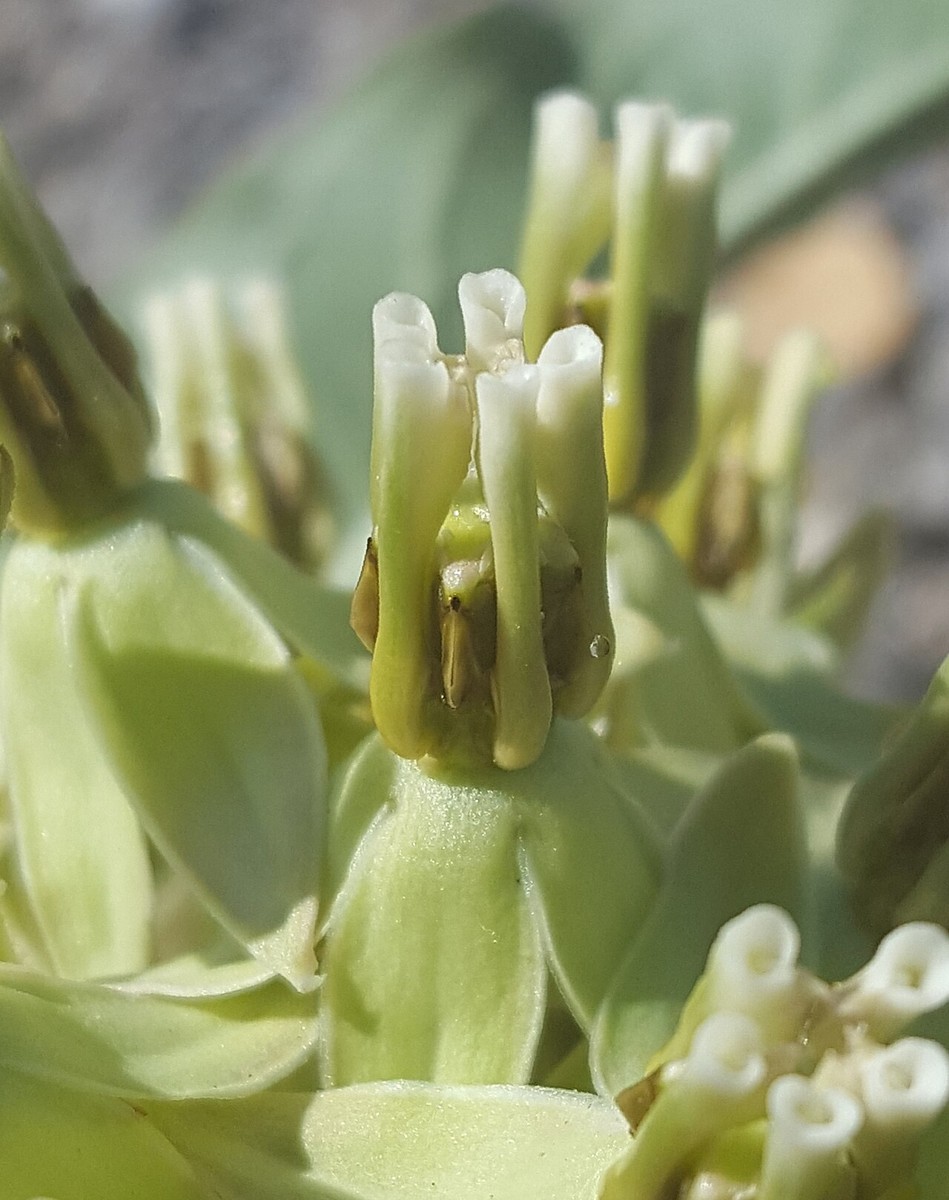
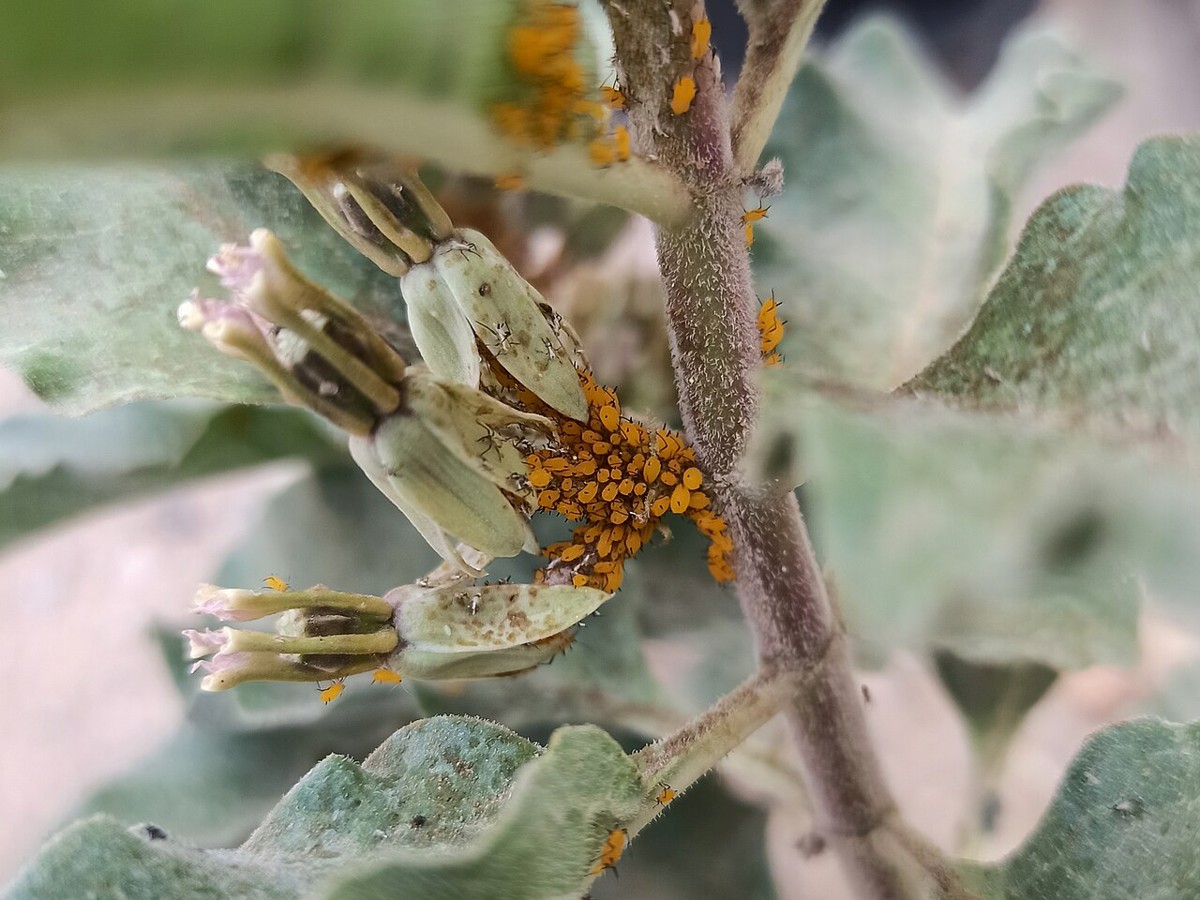
Flowers are borne in tight, rounded umbels at the stem tips and leaf axils, each flower greenish-white to pale cream with a distinctive milkweed hood-and-horn structure. Bloom occurs from spring through fall, with flowering often continuing intermittently through the hot summer in the southern part of its range.
Fruit & Seeds
Seed pods are slender, spindle-shaped follicles that split open when mature to release flat brown seeds, each attached to a tuft of silky white hairs (coma) that carries it on the wind, typical of the milkweed genus.
Quick Facts
| Scientific Name | Asclepias oenotheroides |
| Family | Apocynaceae (Dogbane/Milkweed) |
| Plant Type | Low, Spreading Perennial Wildflower |
| Mature Height | 6–18 in |
| Mature Spread | 1–2 ft |
| Growth Rate | Slow to moderate |
| Sun Exposure | Full Sun |
| Water Needs | Low |
| Soil Type | Rocky, caliche, or sandy; well-drained |
| Soil pH | 6.5–8.5 (tolerates alkaline soil) |
| Bloom Time | Spring – Fall |
| Flower Color | Greenish-white to cream |
| Fall Color | None notable |
| Fruit | Slender seed pods with silky-tufted seeds |
| Deer Resistant | Yes |
| USDA Hardiness Zones | 7–10 |
Native Range
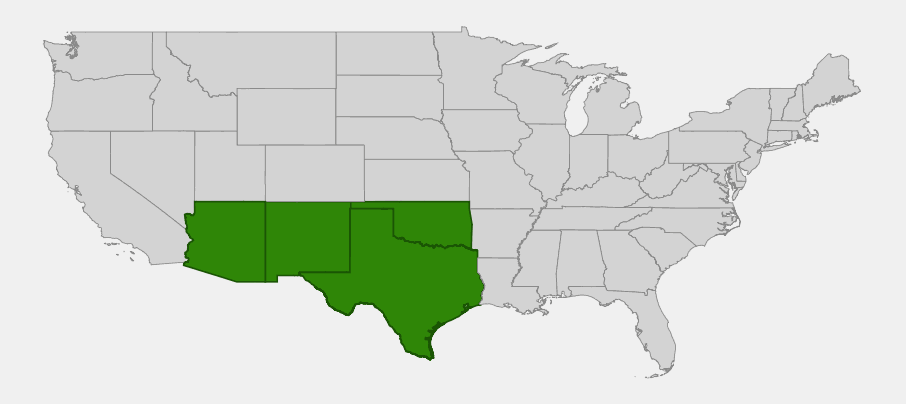
Zizotes Milkweed is native to the arid and semi-arid Southwest and south-central United States, with confirmed county-level populations across Arizona, New Mexico, Oklahoma, and Texas. It is most abundant and widespread across Texas, where it occurs from the Trans-Pecos through central and south Texas, and reaches into southeastern Arizona and southern-central New Mexico in dry grassland and desert scrub habitat.
Within this range, Zizotes Milkweed typically grows on dry rangeland, caliche flats, rocky hillsides, and roadsides at low to moderate elevations, often alongside other drought-adapted grassland and desert scrub species. It tolerates the intense summer heat of its range better than most other milkweeds.
County-level botanical data did not confirm a reliably native presence in Louisiana or Colorado despite scattered records there, so this guide’s regional lists reflect only the confirmed native range in Arizona, New Mexico, Oklahoma, and Texas.
📋 Regional plant lists featuring Zizotes Milkweed: Arizona & New Mexico · South and West Texas · Arkansas, Louisiana, Eastern Oklahoma & Eastern Texas
Growing & Care Guide
Zizotes Milkweed is an easygoing choice for gardeners dealing with hot, dry, challenging sites where many other pollinator plants struggle.
Light
Full sun is essential for strong growth and reliable flowering. It does not perform well in shade.
Soil & Water
This species thrives in lean, rocky, or caliche soil with excellent drainage, and actually performs poorly in rich, consistently moist garden soil, where it is prone to root rot. Once established, it needs little to no supplemental irrigation, drawing on deep roots to survive extended drought and summer heat.
Planting Tips
Plant container stock in spring after the soil has warmed, spacing plants 12 to 18 inches apart to allow for their spreading habit. Like many milkweeds, it can be slow to establish a visible top growth in its first year while the root system develops.
Pruning & Maintenance
Little maintenance is needed. Cut back dead growth in late winter before new growth emerges. The plant generally needs no fertilizer and resents overwatering far more than neglect.
Landscape Uses
- Monarch and pollinator gardens in hot, dry climates
- Xeriscaping and low-water landscaping
- Rangeland and rock garden plantings
- Roadside and erosion-prone dry slope plantings
Wildlife & Ecological Value
As a true milkweed, Zizotes Milkweed plays an outsized ecological role relative to its modest size, supporting a specialized community of insects across its arid native range.
For Pollinators
Zizotes Milkweed is a larval host plant for monarch butterflies, allowing their caterpillars to feed on its leaves and sequester the plant’s defensive toxins. Its flowers also attract a wide range of native bees, wasps, and other butterflies for nectar, particularly valuable in the hot months when many other wildflowers have finished blooming.
For Birds
While not a primary food source for birds, the insects the plant supports — including caterpillars and aphids — provide an important protein source for insect-eating songbirds foraging through dry rangeland and scrub.
For Mammals
The milky latex sap contains bitter cardiac glycosides that make the foliage unpalatable and mildly toxic to most mammals, so Zizotes Milkweed is rarely browsed by deer, rabbits, or livestock.
Ecosystem Role
As one of relatively few milkweed species adapted to true desert and semi-arid rangeland conditions, Zizotes Milkweed fills a critical monarch host-plant niche across a swath of the Southwest where narrow-leaved eastern milkweeds cannot survive, helping sustain monarch migration corridors through Texas, New Mexico, Arizona, and Oklahoma.
Cultural & Historical Uses
The common name “Zizotes,” derived from Spanish, reflects the plant’s long familiarity to Mexican and Texan rural communities, where various milkweeds have traditionally been noted — though generally avoided as food or medicine — due to their toxic latex sap.
Historically, some regional folk traditions in Texas and northern Mexico used preparations from related milkweed species externally for skin ailments, though such uses are not well documented specifically for this species and are presented here as history rather than guidance; the plant’s sap is toxic if ingested and can irritate skin and eyes.
Today, Zizotes Milkweed’s primary significance is ecological and increasingly horticultural, as awareness of monarch butterfly decline has driven growing interest in regionally appropriate, drought-tolerant milkweed species for home gardens and habitat restoration across its native Southwestern range.
Frequently Asked Questions
Is Zizotes Milkweed toxic?
Yes, like all milkweeds its milky sap contains cardiac glycosides that are toxic if ingested and can irritate skin or eyes on contact. It should never be considered edible, though monarch caterpillars have evolved to safely feed on the foliage.
Will Zizotes Milkweed survive in my garden if I live outside Texas, New Mexico, Arizona, or Oklahoma?
It can be grown as an ornamental in similar hot, dry climates, but it is only confirmed native to the four states covered in this guide. Gardeners elsewhere should choose a milkweed species native to their own region when planting for ecological value.
Why does Zizotes Milkweed grow so low and spreading compared to other milkweeds?
Its low, sprawling habit is an adaptation to the hot, exposed, arid conditions of its native range, reducing water loss and heat stress compared to the taller, upright growth habit of milkweeds native to moister eastern regions.
Does Zizotes Milkweed need a lot of water to get established?
Light, regular watering during the first growing season helps roots establish, but it should never be kept consistently wet — overwatering is the most common cause of failure with this species once planted in well-drained soil.
Do monarch butterflies use Zizotes Milkweed?
Yes. It is a recognized larval host plant for monarch butterflies throughout its native Southwestern and south-central range, making it valuable for supporting monarch breeding populations in hot, dry climates where other milkweeds don’t thrive.

Looking for a nursery that carries Zizotes Milkweed?
Browse our native plant nursery directory: Arizona · New Mexico & Oklahoma · Texas