Knifeleaf Condalia (Condalia spathulata)
Condalia spathulata, commonly known as Knifeleaf Condalia or Costilla, is a low, densely spiny evergreen shrub native to the thorn scrub and shortgrass grasslands of central and south Texas. It belongs to the Rhamnaceae (buckthorn family), sharing that family with the related and more widely known Brasil (Condalia hookeri) and Lotebush (Ziziphus obtusifolia), two other common shrubs of the South Texas Plains.
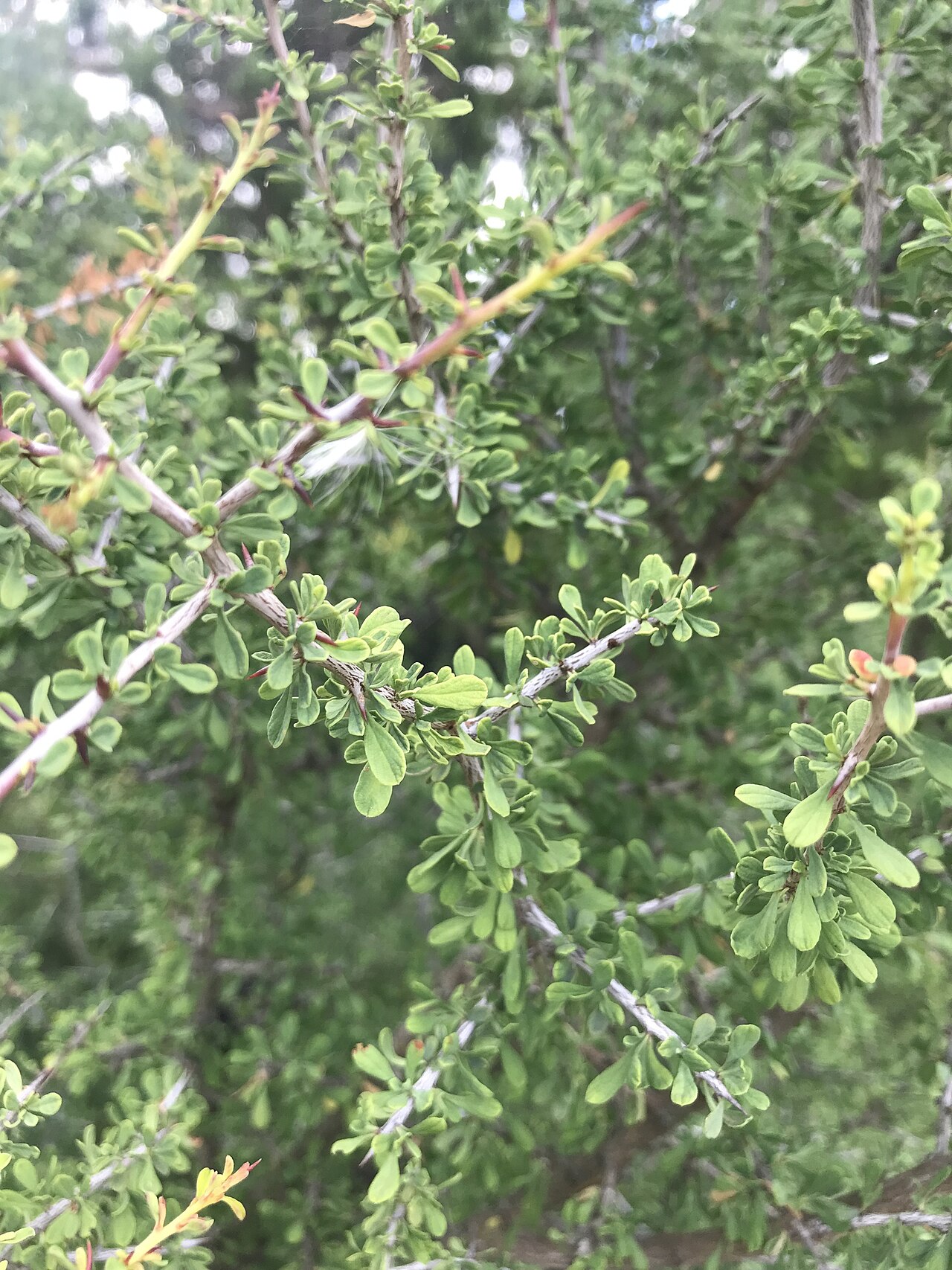
True to its name, Knifeleaf Condalia bristles with stiff, sharp-tipped spine-like branchlets, forming an almost impenetrable tangle that makes it one of the thorniest small shrubs in its range. Its small, narrow, evergreen leaves are clustered in tight bundles called fascicles along the rigid stems, giving the plant a fine, almost wiry texture year-round rather than the broader foliage of many of its thornscrub neighbors.
Unlike its taller relative Brasil, which can reach 15 feet, Knifeleaf Condalia stays low and wide, typically forming a dense, irregular dome seldom more than 2 to 3 feet tall, occasionally taller in favorable sites. This compact, thorny form makes it a valuable component of wildlife thickets and barrier plantings in dry south and central Texas gardens, where its small purple-black fruits also draw birds and other wildlife through the growing season.
Identification
Knifeleaf Condalia is a low, densely branched evergreen shrub, typically growing as a wide, irregular dome 2 to 3 feet tall and often wider than tall, occasionally reaching as much as 6 feet in height under favorable conditions. The plant’s defining feature is its mass of rigid, spine-tipped branchlets that interlock to form a nearly impenetrable thicket.
Stems
Branches are stiff, gray to grayish-brown, and heavily armed with sharp, knife-like thorns formed from modified branchlets. This dense thorniness, combined with the low sprawling habit, makes the shrub extremely effective as a protective thicket for small wildlife, even as it discourages casual handling by gardeners.
Leaves
Leaves are small, narrow, and evergreen, persisting year-round rather than dropping seasonally — a trait that distinguishes Knifeleaf Condalia at a glance from the similar-looking but deciduous Lotebush. Leaves are arranged in tight clusters called fascicles along the stems, giving the plant a fine, textured appearance even in the depths of a dry Texas summer.
Flowers & Fruit
Small, inconspicuous greenish flowers appear along the branches from April into July. They give way to small drupe fruits that ripen to a deep purple-black, similar in appearance to the fruit of its relatives Brasil and Lotebush. The juicy purple pulp has a history of informal foraging use in south Texas, though the fruit is small and seedy and mainly valued today as wildlife food rather than a garden crop.
Quick Facts
| Scientific Name | Condalia spathulata |
| Family | Rhamnaceae (Buckthorn) |
| Plant Type | Evergreen Shrub |
| Mature Height | 2–3 ft, occasionally to 6 ft |
| Mature Spread | 3–5 ft, wide dome shape |
| Growth Rate | Slow |
| Sun Exposure | Full Sun |
| Water Needs | Low |
| Soil Type | Rocky, gravelly, or sandy; well-drained |
| Soil pH | 6.5–8.5 (slightly acidic to alkaline) |
| Bloom Time | April – July |
| Flower Color | Green (inconspicuous) |
| Fall Color | Evergreen (no fall color change) |
| Fruit | Small purple-black drupe |
| Deer Resistant | Yes (dense thorns discourage browsing) |
| USDA Hardiness Zones | 8–9 |
Native Range
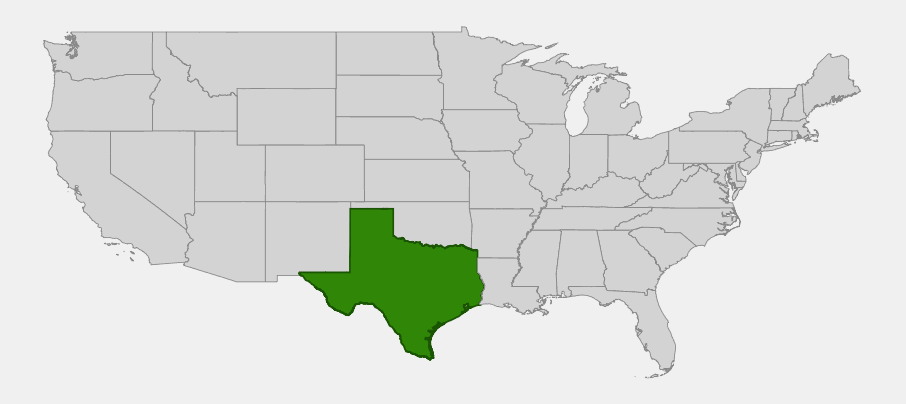
Knifeleaf Condalia is native to central and southern Texas, with its range continuing south into northeastern Mexico (Coahuila, Nuevo León, and Tamaulipas). Although some general references list it more broadly for the Southwest, county-level native records are concentrated specifically in south-central Texas; it is not documented as native to Arizona or New Mexico despite occasionally appearing in broader state-level distribution lists.
Within its Texas range, Knifeleaf Condalia grows along stream banks, on low hills, sandstone bluffs, and gravelly slopes, and in both shrublands and shortgrass grasslands, generally at low elevations from near sea level up to about 2,000 feet. It is a characteristic component of South Texas Plains thornscrub, growing alongside Brasil and Lotebush as one of the three common spiny, purple-fruited shrubs of that region.
The species tolerates heat, drought, and the thin, rocky or sandy soils typical of its native range, and it is frequently found on disturbed sites as well as in more intact native thornscrub and grassland communities.
📋 Regional plant lists featuring Knifeleaf Condalia: South and West Texas
Growing & Care Guide
Knifeleaf Condalia is a tough, low-water shrub best suited to naturalistic south and central Texas gardens where its thorny, wildlife-sheltering habit is an asset rather than a drawback.
Light
Plant in full sun. In the wild it grows in open grasslands and thornscrub with little shade, and full sun produces the densest, most compact growth.
Soil & Water
Knifeleaf Condalia adapts well to rocky, gravelly, or sandy, well-drained soils and tolerates both slightly acidic and alkaline conditions. It is drought tolerant once established and needs minimal supplemental irrigation in its native range beyond the first year or two after planting.
Planting Tips
Site Knifeleaf Condalia away from walkways and play areas given its dense network of sharp thorns, and use gloves and long sleeves when handling or pruning. It works well planted in a naturalistic thornscrub or wildlife border rather than as a foundation plant near the house. It is not commonly available at mainstream nurseries and may require sourcing from south Texas native-plant specialists.
Pruning & Maintenance
This shrub requires very little maintenance. Occasional shaping can control its spread if needed, but heavy pruning is rarely necessary and the plant’s naturally dense, thorny dome form is best left alone in most landscape settings. Wear sturdy gloves for any hands-on work with this species.
Landscape Uses
Knifeleaf Condalia fills a specific but valuable niche in south Texas native landscaping:
- Wildlife thickets providing dense, thorny shelter for birds and small mammals
- Barrier or security plantings, thanks to its nearly impenetrable thorny growth
- Naturalistic thornscrub restoration alongside Brasil and Lotebush
- Low-water, low-maintenance borders in south and central Texas
- Deer-resistant plantings, where its thorns discourage browsing
Wildlife & Ecological Value
Knifeleaf Condalia is a quietly important component of South Texas Plains thornscrub, valued by wildlife more for its structure and fruit than for any single standout feature.
For Birds & Small Mammals
The dense, thorny, evergreen growth provides excellent protective cover for small birds and mammals, offering secure nesting and escape habitat that few unarmed shrubs can match. The small purple-black drupes that ripen through the growing season are readily eaten by birds and other wildlife, adding Knifeleaf Condalia to the small suite of South Texas Plains shrubs — alongside Brasil and Lotebush — that supply fruit through much of the year.
Ecosystem Role
As a low, dense, thorny evergreen, Knifeleaf Condalia adds structural complexity near ground level in thornscrub and grassland communities that might otherwise lack dense low cover, complementing the taller, more open growth of associated shrubs like Brasil. Its evergreen habit also means it offers cover and some food resources even during the leafless winter months when many of its deciduous neighbors, like Lotebush, have dropped their foliage.
Cultural & Historical Uses
Knifeleaf Condalia has not been widely documented in formal ethnobotanical or archeological records from south Texas, unlike some of its thornscrub neighbors. However, informal accounts from South Texas Plains naturalists describe its small purple drupes, along with those of the related Brasil and Lotebush, as having been casually eaten in the field by both people and wildlife, prized for their thick, juicy, deep-purple pulp — a small-scale foraging tradition rather than a documented Indigenous or settler food source.
Beyond this informal use, the species has no significant recorded history of medicinal or craft use, and its primary value — both historically and today — lies in its ecological role as dense, thorny wildlife cover in the South Texas Plains landscape.
Frequently Asked Questions
Is Knifeleaf Condalia the same as Lotebush?
No, though they are related and often grow side by side in South Texas thornscrub. Lotebush (Ziziphus obtusifolia) is deciduous with gray-green branches, while Knifeleaf Condalia keeps its small evergreen leaves year-round and stays lower and more densely thorny.
Are Knifeleaf Condalia berries edible?
The small purple-black drupes have a history of informal foraging use in South Texas, with naturalists describing the pulp as juicy and tasty. That said, this is historical, informal foraging knowledge rather than a safety guarantee, and the fruit is mainly valued today as food for birds and wildlife.
How tall does Knifeleaf Condalia get?
Most plants form a low, wide dome 2 to 3 feet tall, occasionally reaching up to 6 feet under favorable conditions. It typically spreads wider than it grows tall.
Is Knifeleaf Condalia native to Arizona or New Mexico?
No. While some general plant databases list it more broadly, county-level native records concentrate specifically in central and south Texas, with the species also occurring in adjacent northeastern Mexico. It should not be assumed to be a reliable native choice for Arizona or New Mexico gardens.
Why is it called “Knifeleaf” Condalia?
The name references the plant’s dense covering of stiff, sharp, knife-like thorns formed from modified branchlets, which make it one of the thorniest low shrubs in its South Texas Plains habitat.

Looking for a nursery that carries Knifeleaf Condalia?
Browse our native plant nursery directory: Texas