Wavy Scaly Cloak Fern (Astrolepis sinuata)
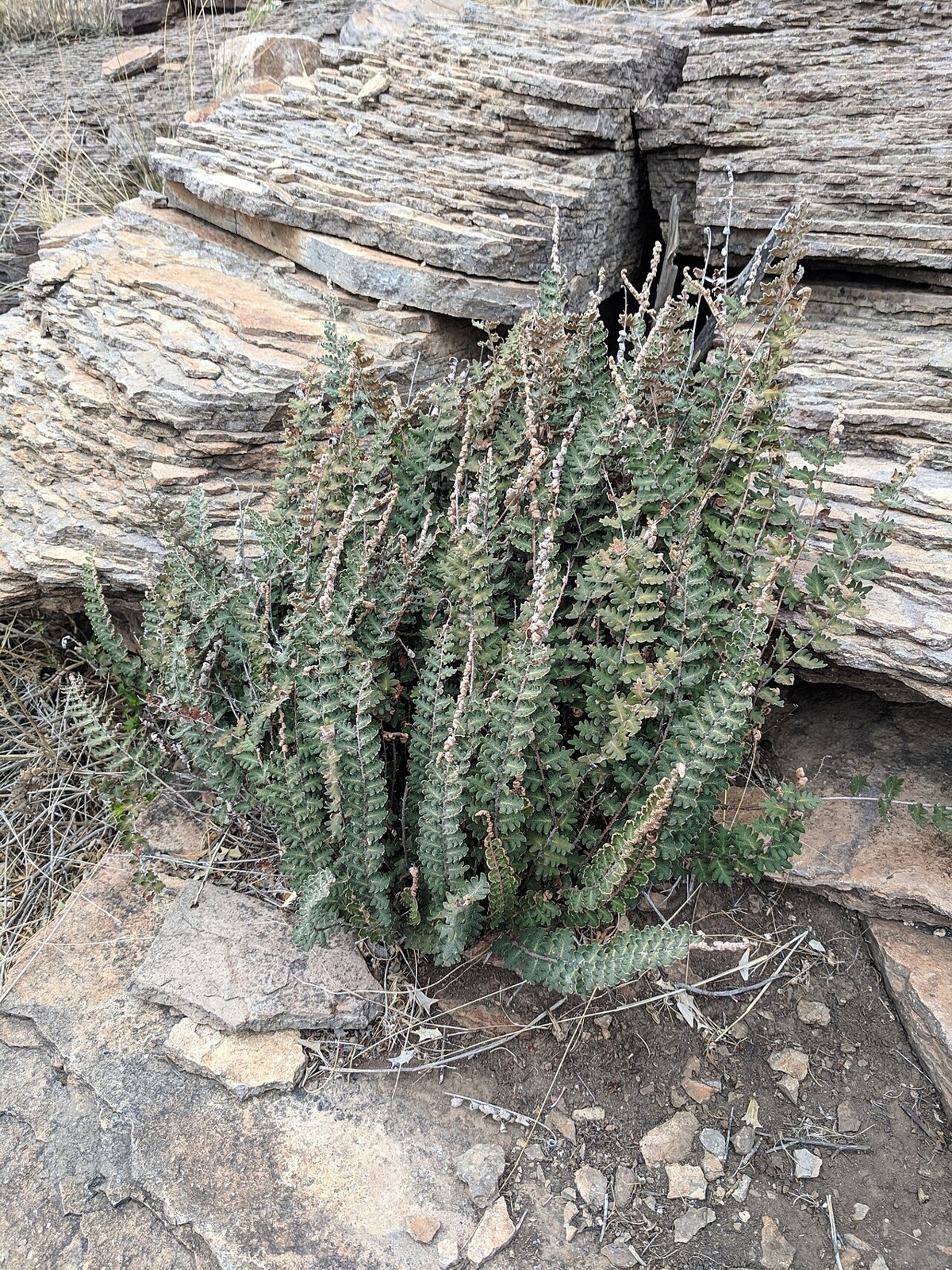
Astrolepis sinuata, commonly called wavy scaly cloak fern or wavy scale cloakfern, is a small, tough, drought-tolerant fern of rocky outcrops and canyon walls across the desert Southwest. Unlike the thin, delicate fronds most people picture when they think “fern,” this species is covered on both leaf surfaces in a dense coat of pale, star-shaped scales, an adaptation that helps it survive baking sun and long dry spells on exposed limestone and igneous rock.
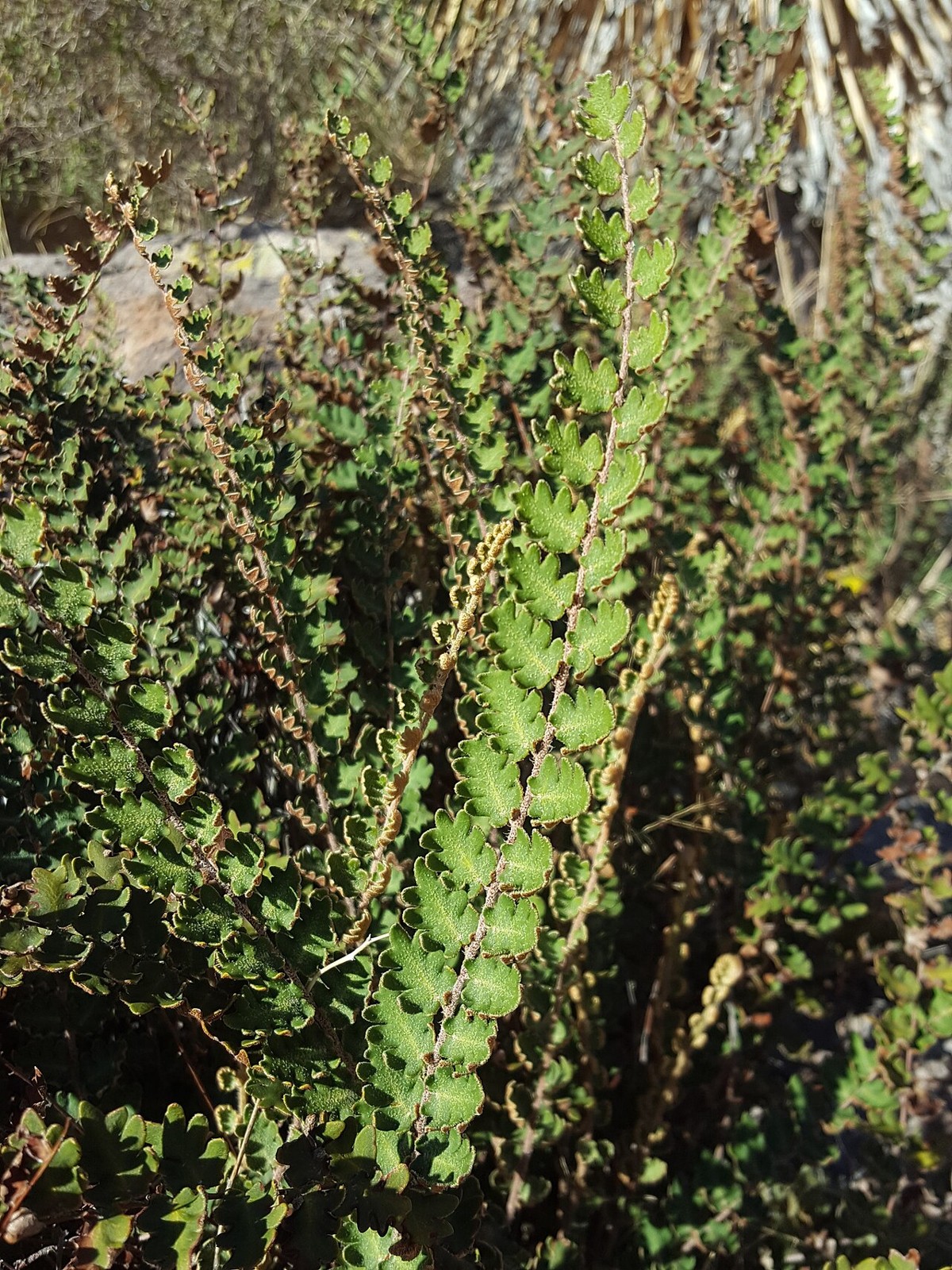
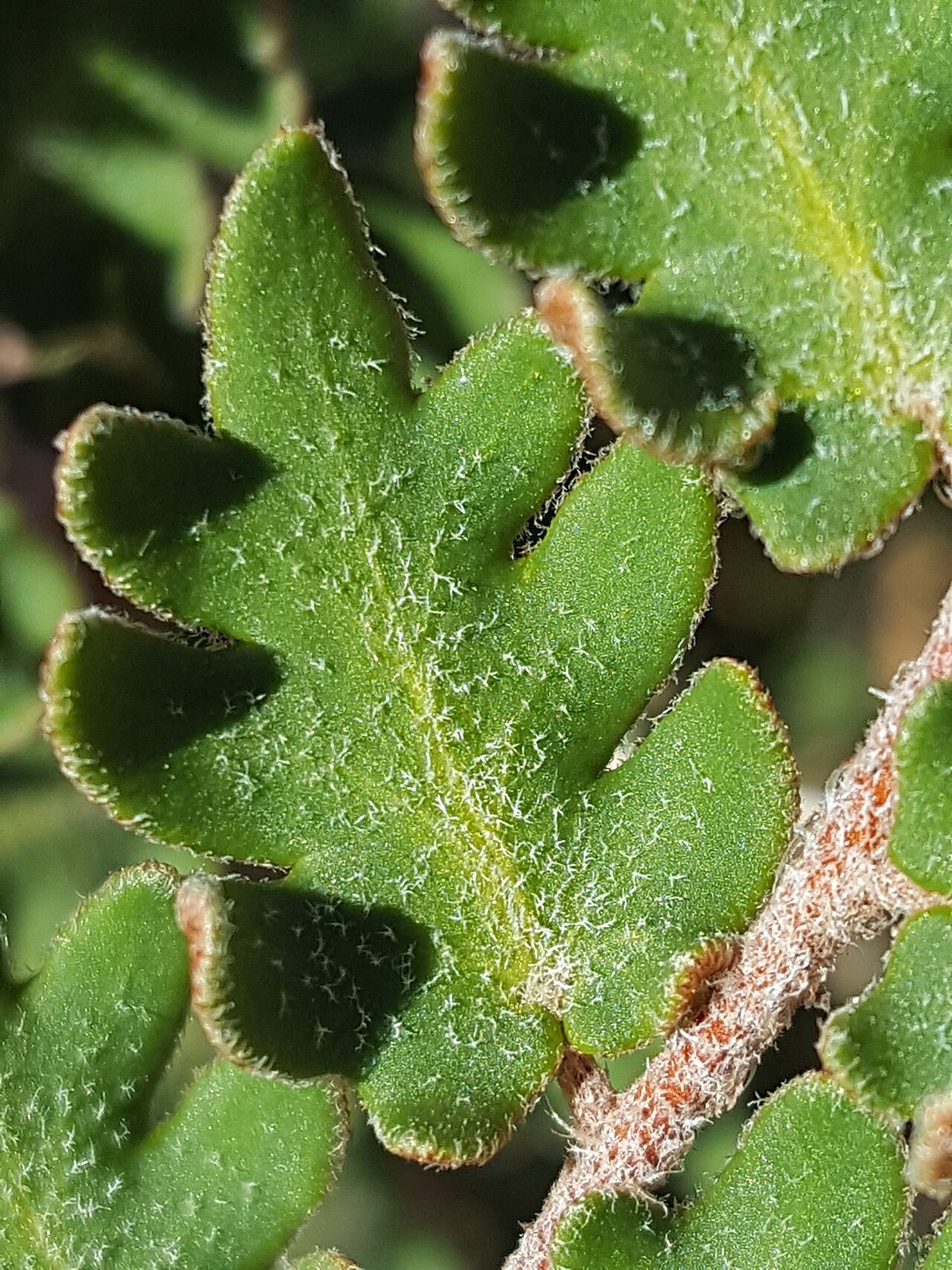
The fronds are once-pinnate (divided into a single row of leaflets on each side of the stalk), with each leaflet having a distinctively wavy, scalloped margin that gives the species both its common and scientific names — sinuata is Latin for “wavy” or “sinuous.” In dry weather the fronds curl inward to reduce water loss, then unfurl again after rain, a trait shared with many other “resurrection ferns” of arid rock habitats.
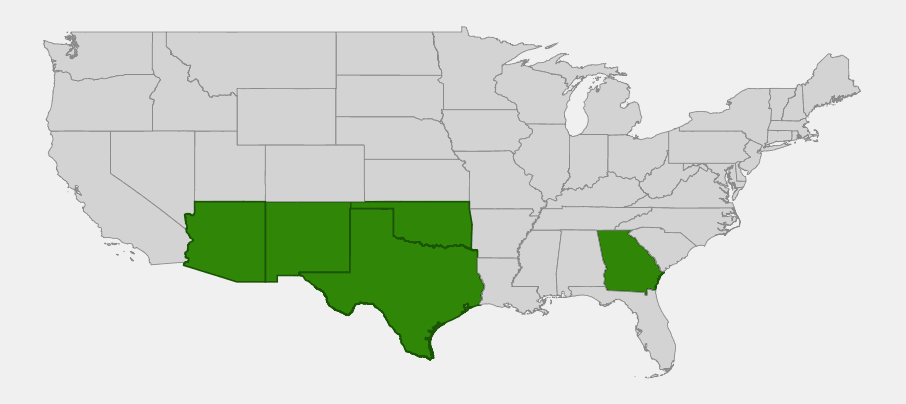
Wavy scaly cloak fern is native to Arizona, New Mexico, Texas, and a narrow strip of the Oklahoma panhandle and south-central Oklahoma, with a well-documented disjunct population on granite outcrops in Georgia far to the east. Within this range it is a true rock-dweller, rooting in cracks and crevices on cliffs, canyon walls, and boulders rather than in ordinary garden soil, which makes it a specialty plant best suited to rock gardens and crevice plantings rather than general landscape use.
Identification
Wavy scaly cloak fern is identified by its small size, once-pinnate fronds with wavy-margined leaflets, and the dense covering of pale scales on both frond surfaces, a texture unlike the smooth or merely hairy fronds of most other ferns.
Growth Form
Plants form small, tufted clumps of fronds rising from a short, scaly rhizome wedged into rock cracks. Mature clumps are usually 4 to 12 inches tall, occasionally larger in favorable sites, with fronds radiating outward from the base.
Fronds
Fronds are narrow and once-pinnate, meaning each frond has a single row of rounded to oblong leaflets (pinnae) along a central stalk, rather than the more finely divided fronds of many other ferns. Each leaflet has a distinctly wavy, scalloped edge. Both the upper and lower surfaces are covered in small, pale, star-shaped scales that give the whole plant a grayish, felted look, especially when dry.
Drought Response
Like several of its relatives in the cloak fern and lip fern groups, wavy scaly cloak fern is a “resurrection fern”: in extended dry periods the fronds curl tightly inward and appear shriveled and lifeless, then re-expand and green up within a day or two of rain. This is a normal survival strategy, not a sign of a dying plant.
Reproductive Structures
As a fern, wavy scaly cloak fern reproduces by spores rather than flowers or seeds. Spore-producing structures (sori) form along the margins of the leaflet undersides, protected beneath the scaly covering, and are most visible on mature fronds in the growing season.
Quick Facts
| Scientific Name | Astrolepis sinuata |
| Family | Pteridaceae (Maidenhair fern) |
| Plant Type | Evergreen rock fern |
| Mature Height | 4–12 in |
| Mature Spread | 6–12 in, tufted clump |
| Growth Rate | Slow |
| Sun Exposure | Part sun to part shade |
| Water Needs | Very low once established |
| Soil Type | Rock crevices; thin, sharply drained mineral soil |
| Soil pH | Neutral to alkaline (tolerates limestone and granite) |
| Bloom Time | Not applicable (fern; spore-bearing) |
| Flower Color | None (reproduces by spores) |
| Fall Color | None (evergreen gray-green; curls when dry) |
| Fruit | None; spores borne on frond undersides |
| Deer Resistant | Yes |
| USDA Hardiness Zones | 7–10 |
Native Range
Wavy scaly cloak fern is native to the arid rocky uplands of the southwestern United States, found across Arizona, New Mexico, and most of Texas, with additional populations in the Oklahoma panhandle and south-central Oklahoma. A notable disjunct population occurs far outside this core range on granite outcrops in the Georgia Piedmont, an isolated occurrence that has long interested botanists studying how dryland-adapted rock ferns persist on isolated outcrop “islands” far from their main range.
Throughout its range, this fern grows almost exclusively on rock: limestone ledges, igneous boulders, canyon walls, and rocky slopes, usually in crevices where a little soil and moisture collect. It is typically found from near sea level to around 7,000 feet in the Southwest, often in partial shade on north- or east-facing rock faces that stay slightly cooler and moister than open, south-facing exposures.
Wavy scaly cloak fern is not listed as federally threatened or endangered, and its wide range across the Southwest keeps the species secure overall, though the Georgia outlier population and some other peripheral occurrences are of particular interest for conservation and monitoring given their isolation.
📋 Regional plant lists featuring Wavy Scaly Cloak Fern: South & West Texas · Arizona & New Mexico · Georgia, Alabama & Mississippi
Growing & Care Guide
Wavy scaly cloak fern is a specialty plant for rock gardeners rather than a typical bed-and-border fern. Grown correctly, tucked into rock crevices with sharp drainage, it is remarkably tough and long-lived; grown in ordinary garden soil, it tends to struggle and rot.
Light
Provide part sun to part shade. In the wild this fern often grows on north- or east-facing rock faces that receive some direct sun but avoid the harshest afternoon exposure. Too much deep shade reduces vigor, while constant intense afternoon sun in hot climates can scorch the fronds.
Soil & Water
This is fundamentally a crevice plant, not a soil plant. Tuck it into rock cracks or a well-built crevice garden with minimal but sharply drained mineral soil or grit; it does not want to sit in a normal garden bed with organic, moisture-retentive soil. Water lightly to establish new plantings, then rely mainly on natural rainfall; established plants tolerate extended drought by curling their fronds and reviving after rain, but they do not tolerate constantly wet or boggy conditions.
Planting Tips
Plant in spring into a rock garden, dry-stacked stone wall, or crevice planting with vertical or angled rock cracks that mimic its natural cliff and boulder habitat. Firm the roots into a small pocket of gritty soil within the crevice, and water in gently. This species is difficult to establish in flat, open ground and is best reserved for true rock-garden settings.
Pruning & Maintenance
Little maintenance is needed. Remove only fronds that are fully dead and brown, taking care not to disturb curled, dormant-looking fronds during dry spells, since these are very likely to revive rather than die. Do not fertilize; this fern is adapted to mineral rock crevices with essentially no added nutrients.
Landscape Uses
- Crevice gardens and rock gardens, its best and most natural setting
- Dry-stacked stone walls with planting pockets
- Xeriscape plantings that pair ferns with other low-water natives
- Desert and canyon-themed gardens within its native climate range
- Container culture in a shallow trough with gritty, fast-draining mix
Wildlife & Ecological Value
As a small, rock-dwelling fern, wavy scaly cloak fern’s wildlife role is modest but meaningful within the specialized plant communities of rocky Southwestern habitats.
For Pollinators
As a spore-reproducing fern, it has no flowers and provides no nectar or pollen resources; it plays no direct role in pollinator support.
For Birds
The dense, evergreen clumps tucked into rock crevices can offer minor shelter for small lizards and insects that in turn support insectivorous birds foraging on canyon walls and rocky slopes, though the fern itself is not a direct food source for birds.
For Mammals
The tough, scaly fronds are not a preferred browse for mammals, and the plant’s rocky, often inaccessible growing sites naturally limit contact with grazing animals.
Ecosystem Role
Wavy scaly cloak fern is part of the specialized community of rock-crevice plants that colonize otherwise bare cliff faces and boulders, contributing to the slow process of soil formation and moisture retention in crevices over time. Its presence often signals a stable, long-undisturbed rock face, and the isolated Georgia population is of particular scientific interest as a relict of past climatic conditions that allowed desert-adapted species to persist on isolated granite “islands” far from the main Southwestern range.
Cultural & Historical Uses
Wavy scaly cloak fern has no significant documented history of food, medicinal, or material use among Indigenous peoples of the Southwest. Small, scaly rock ferns of this type are generally not useful as food or fiber plants, and this species’ main significance has always been ecological and botanical rather than practical.
Botanically, the species and its relatives in the genus Astrolepis (and the related cloak ferns and lip ferns) have long interested researchers studying how plants survive extreme drought through “resurrection” physiology — the ability to lose most of their water content and appear dead, then rapidly rehydrate and resume normal function after rain. This drought-survival strategy has made cloak ferns a subject of ongoing scientific study relevant to understanding desiccation tolerance in plants generally.
The disjunct Georgia population has also drawn particular attention from botanists and conservationists as an unusual example of a desert-adapted species persisting far outside its main range on isolated granite outcrops, a pattern seen in a handful of other dryland plants in the southeastern Piedmont.
Frequently Asked Questions
Why do the fronds curl up and look dead sometimes?
This is normal drought behavior, not a sign of a dying plant. Wavy scaly cloak fern is a “resurrection fern” that curls its fronds tightly during dry periods to reduce water loss, then uncurls and greens up again within a day or two after rain.
Can I grow this fern in regular garden soil?
It generally does poorly in ordinary garden beds with moisture-retentive soil. This is a rock-crevice specialist that needs sharp drainage and a crevice, wall, or rock-garden setting to thrive; regular soil often leads to rot.
Is it really native to Georgia, so far from the Southwest?
Yes. While the main range of wavy scaly cloak fern is Arizona, New Mexico, Texas, and Oklahoma, a well-documented disjunct population grows on granite outcrops in the Georgia Piedmont, an isolated occurrence of considerable interest to botanists.
Does this fern produce flowers or seeds?
No. As a true fern, it reproduces by spores rather than flowers and seeds. The spores form in small structures along the undersides of the leaflet margins.
How much water does wavy scaly cloak fern need?
Very little once established. It is adapted to long dry periods between rains in rocky Southwestern habitats, and the biggest risk in cultivation is overwatering or planting it where water collects rather than underwatering.

Looking for a nursery that carries Wavy Scaly Cloak Fern?
Browse our native plant nursery directory: Texas · Arizona · New Mexico & Oklahoma · Georgia