Field Sedge (Carex praegracilis)
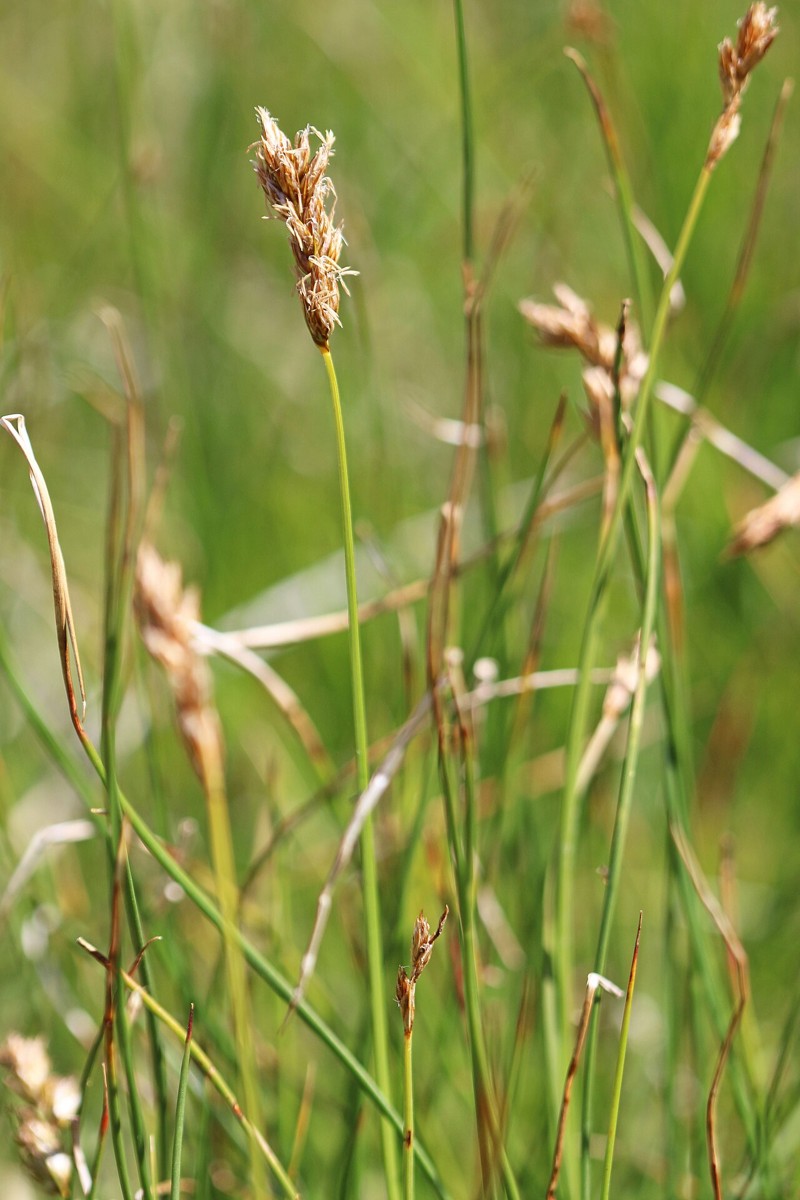
Carex praegracilis, known as Field Sedge or Clustered Field Sedge, is one of the most widely distributed native sedges in North America, and also one of the most garden-adaptable. Unlike many sedges that are tied to a narrow set of soils or a single region, Field Sedge grows across an enormous swath of the continent — from the Pacific Coast through the Rocky Mountains and across much of the Great Plains and Upper Midwest — and tolerates everything from seasonally wet meadows to dry, compacted, alkaline soils that defeat most other plants.
That toughness and breadth of range have made Field Sedge a workhorse species in native landscaping, where it is used as a low, spreading groundcover and lawn alternative in climates far too dry, cold, or heavy-soiled for California Meadow Sedge and other coastal relatives. It spreads by rhizome to form a dense sod, stays low without regular mowing, and shrugs off the kind of compacted, disturbed soil found in parking strips, detention basins, and reclaimed sites.
Gardeners from the Pacific Northwest to the northern Great Plains and the Upper Midwest can find a native, water-wise lawn and groundcover option in Field Sedge — a plant equally at home stabilizing a rangeland swale in Montana or filling in a low-water parking strip planting in Colorado or Minnesota.
Identification
Field Sedge is a rhizomatous perennial that spreads steadily to form a dense, even sod rather than isolated clumps. Unmanaged plants reach 8 to 20 inches tall, with much of that height coming from slender flowering stems that rise above a lower mat of foliage; mowed or grazed stands stay low and dense, typically 3 to 6 inches tall.
Leaves & Stems
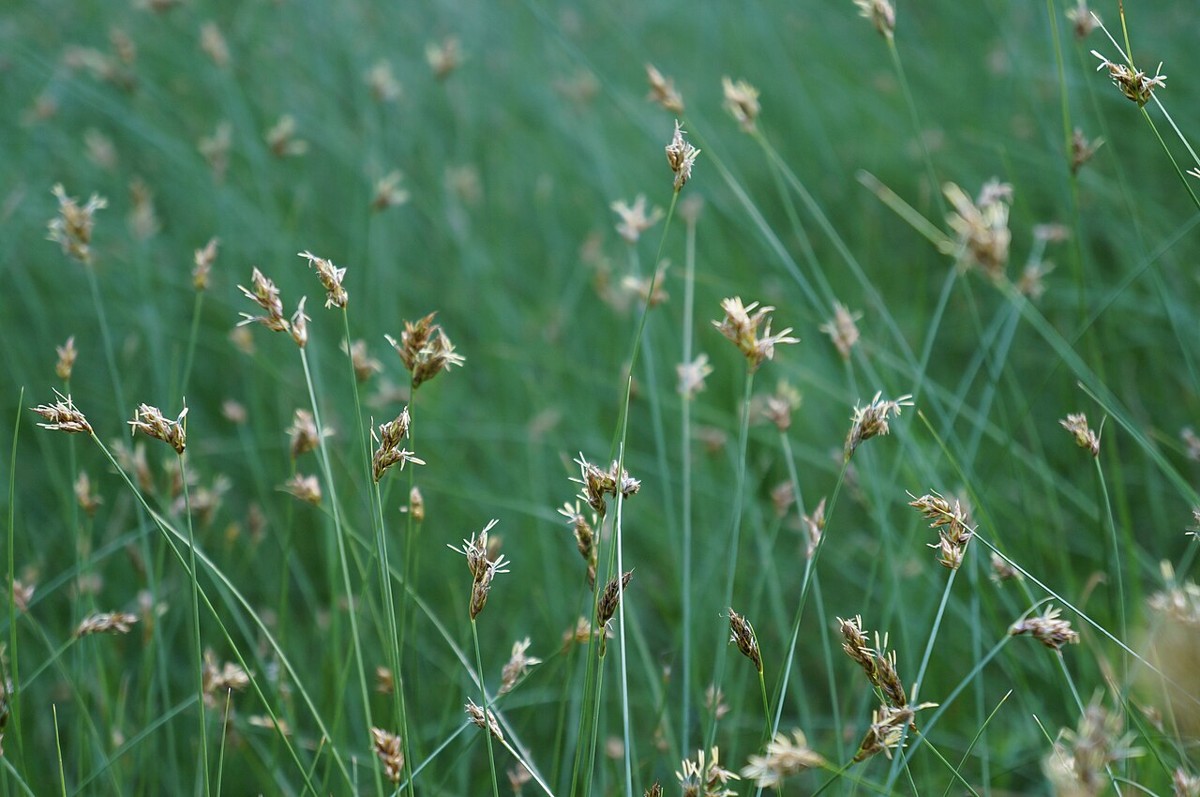
Leaves are narrow and grass-like, about 1/16 to 1/8 inch (1.5–3 mm) wide, medium green, and somewhat stiffer than the coastal meadow sedges. Flowering culms are sharply triangular in cross-section and noticeably taller than the leaves, often standing well above the foliage mat in unmowed stands — a useful field mark distinguishing Field Sedge from lower, more uniformly dense lawn-type sedges.
Flowers
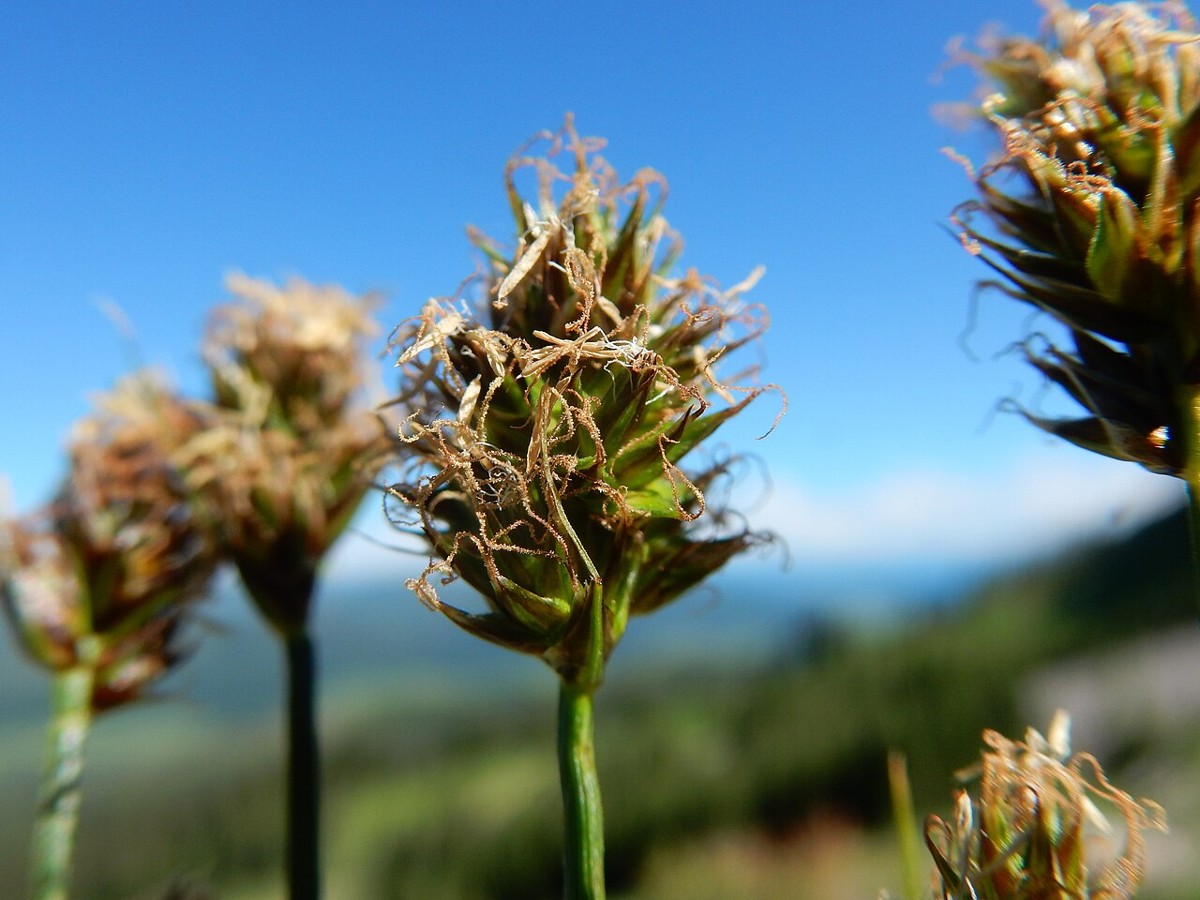
Flowering heads are compact and brownish, with each spikelet bearing both male and female flowers (the spikelets are “androgynous,” with male flowers at the tip and female flowers below), giving the inflorescence a shaggy, bristly look when the thread-like stigmas emerge. Several spikelets cluster into a congested, somewhat star-shaped head at the top of each stem, blooming from April into June depending on elevation and latitude. The pale, straw-colored to golden-brown spikes stand out clearly against the green foliage.
Fruit & Seeds
Small, flattened achenes develop inside beaked perigynia packed into the congested spikelet clusters, ripening through early summer. Because Field Sedge spreads so effectively by rhizome, seed production is a secondary means of spread in most populations and in garden plantings, where mowing often removes seed heads before they mature.
Quick Facts
| Scientific Name | Carex praegracilis W. Boott |
| Family | Cyperaceae (Sedge) |
| Plant Type | Rhizomatous Perennial Groundcover Sedge |
| Mature Height | 8–20 in unmowed; 3–6 in mowed |
| Mature Spread | Spreading indefinitely by rhizome into a continuous sod |
| Growth Rate | Moderate to fast once established |
| Sun Exposure | Full Sun to Partial Shade |
| Water Needs | Low to Moderate once established |
| Soil Type | Adaptable; tolerates clay, compacted, and alkaline soils |
| Soil pH | 6.0–8.5 (tolerates alkaline soils) |
| Bloom Time | April – June |
| Flower Color | Straw-brown to golden-brown |
| Fall Color | Fades to tan-gold; semi-dormant in hard freezes |
| Fruit | Small achenes in congested, bristly spikelet clusters |
| Deer Resistant | Yes |
| USDA Hardiness Zones | 3–9 |
Native Range
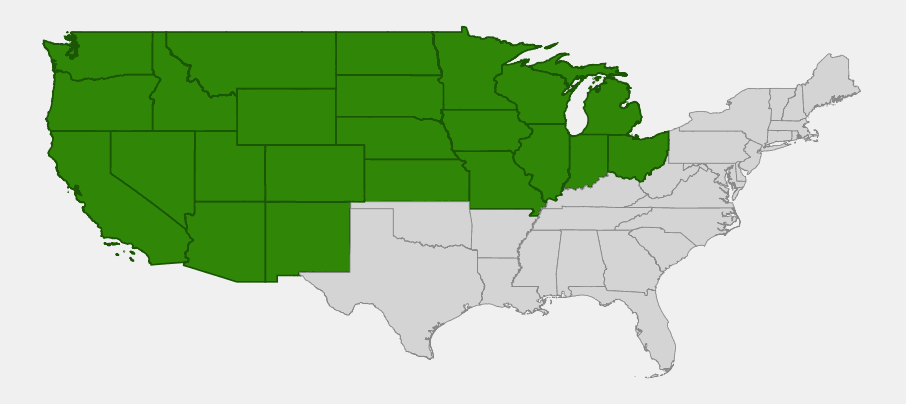
Field Sedge has one of the broadest native ranges of any North American sedge, extending from the Pacific Coast states of Washington, Oregon, and California eastward across Nevada, Idaho, Utah, Arizona, and New Mexico, through the Rocky Mountain states of Montana, Wyoming, and Colorado, and across the northern and central Great Plains in North Dakota, South Dakota, Nebraska, and Kansas. Its range continues into the Upper Midwest and western Great Lakes region, including Minnesota, Iowa, Missouri, Illinois, Wisconsin, Indiana, Michigan, and Ohio.
Across this huge range, Field Sedge occupies disturbed and open sites with seasonally variable moisture: alkaline flats, vernally wet meadows and swales, roadsides, old fields, and the margins of ponds and ditches. It is especially associated with fine-textured soils that are wet in spring and dry by late summer — exactly the boom-and-bust moisture pattern that defeats many other groundcovers but suits Field Sedge’s deep, spreading rhizome system.
Because of this adaptability, Field Sedge functions almost like an ecological generalist among native sedges, able to establish in heavily disturbed sites (old agricultural ground, graded slopes, compacted urban soils) where more habitat-specific sedges cannot gain a foothold — making it a particularly valuable species for restoration and low-water landscaping across a very wide geography.
📋 Regional plant lists featuring Field Sedge: California & Nevada · Arizona & New Mexico · Idaho, Eastern Oregon & Eastern Washington · Western Oregon & Western Washington · Utah & Western Colorado · Nebraska, Kansas & Eastern Colorado · Montana & Wyoming · North Dakota, South Dakota & Western Minnesota · Michigan, Wisconsin & Eastern Minnesota · Illinois, Iowa & Missouri · Ohio & Indiana
Growing & Care Guide
Field Sedge is prized above all for its toughness: it tolerates a wider range of soils, climates, and neglect than almost any other native groundcover sedge, making it a reliable choice from the Pacific Northwest through the northern Plains and Upper Midwest.
Light
Field Sedge grows well in full sun and tolerates partial shade, though dense stands and the most vigorous spread occur in full sun. In hot, dry climates, light afternoon shade can help it stay green later into summer.
Soil & Water
This is one of the most soil-adaptable native sedges available, tolerating heavy clay, compacted urban soils, and notably alkaline or saline conditions that would stress most other groundcovers. It prefers soils that are moist in spring and can dry out by late summer, matching its native boom-and-bust moisture pattern, and it handles both occasional standing water and extended summer drought once established. Regular water during the first year speeds establishment and rhizome spread.
Planting Tips
Plant plugs or small pots on a grid, typically 8 to 12 inches apart, in fall or spring. Keep new plantings consistently moist through the first growing season while the rhizome network knits together; established plantings need far less supplemental water. Field Sedge is well suited to large-scale plantings such as detention basins, roadside swales, and reclaimed or graded sites where establishing conventional turf or ornamental groundcovers is difficult.
Pruning & Maintenance
Mowing is optional. A single mowing in late winter or early spring removes old growth and keeps plantings tidy, and occasional mowing through the growing season (2–4 times) will keep a lawn-style planting lower and denser if desired. Left unmowed, Field Sedge takes on a looser, meadow-like appearance with visible flowering stems.
Landscape Uses
Its exceptional range and soil tolerance make Field Sedge useful across a wide variety of landscape settings:
- No-mow or low-mow lawn alternative across a very broad climate range
- Stormwater basins and bioswales that cycle between wet and dry
- Erosion control on roadsides, slopes, and disturbed ground
- Reclamation plantings on compacted or graded soils
- Alkaline or saline sites where few other groundcovers succeed
Wildlife & Ecological Value
Across its very wide range, Field Sedge contributes habitat value in settings from prairie wetlands to urban stormwater plantings.
For Birds
Dense Field Sedge stands provide ground-level cover for sparrows and other grassland and wetland-margin birds, while ripening seed heads in unmowed plantings offer a minor seasonal food source for seed-eating species.
For Insects & Other Wildlife
The dense root and rhizome mat supports soil invertebrates, and the foliage provides cover for small mammals and amphibians in wetter portions of its range, such as vernal swales and basin margins. As a wind-pollinated plant it offers little floral resource for pollinators, but its structural cover is valuable in otherwise sparse disturbed-ground settings.
Ecosystem Role
Field Sedge is an important early colonizer and soil stabilizer on disturbed, compacted, and alkaline ground across its range, often among the first native perennials able to establish on such sites. Its spreading rhizomes knit together loose or eroding soil, while its tolerance of both wet and dry extremes lets it persist through the variable precipitation typical of western rangelands and Great Plains grasslands.
Cultural & Historical Uses
Field Sedge does not have a widely documented history of specific material use by Indigenous peoples comparable to long-rhizomed basketry sedges, though as a common and recognizable wetland-margin and meadow plant across much of its vast range, it would have been a familiar part of the landscape wherever it grew.
Its modern significance is primarily practical and ecological rather than historical: land managers and restoration ecologists across the West and Great Plains have long used Field Sedge to revegetate disturbed sites, and in the past two decades it has become one of the most widely planted “sedge lawn” species in regions too cold, dry, or alkaline for the coastal meadow sedges popular in California.
Because of its wide native range, Field Sedge is also valued by restoration practitioners as a genuinely local-native option across many different regions — a rare case where a single groundcover species can be sourced and planted as a true native almost anywhere from the Pacific Coast to the Great Lakes.
Frequently Asked Questions
Will Field Sedge grow in heavy clay or alkaline soil?
Yes — this is one of its standout strengths. Field Sedge tolerates heavy clay, compacted soils, and alkaline or saline conditions better than most other native groundcovers, which is why it is so widely used in stormwater and reclamation plantings.
Is Field Sedge the same plant as California Meadow Sedge?
No, though they are used similarly. Carex praegracilis (Field Sedge) has a vastly larger native range across the interior West, Great Plains, and Upper Midwest, while Carex pansa (California Meadow Sedge) is restricted to the immediate Pacific Coast.
Does Field Sedge need regular mowing?
No. Mowing is optional; a single late-winter mow keeps plantings tidy, and unmowed stands simply take on a looser, meadow-like look with visible flowering stems.
How much water does Field Sedge need once established?
Very little in most of its range — it is adapted to a wet-spring, dry-summer cycle and tolerates extended drought once its rhizome system is established, though occasional deep watering keeps it greener through hot summers.
Can Field Sedge handle foot traffic?
It tolerates light, occasional foot traffic reasonably well once established, though like other native sedge lawns it is not as wear-resistant as conventional turfgrass under heavy, constant use.

Looking for a nursery that carries Field Sedge?
Browse our native plant nursery directory: California · Oregon · Washington · Arizona · Colorado · Idaho, Illinois, Indiana, Iowa & Kansas · Michigan, Minnesota, Missouri & Montana · Nebraska, Nevada, New Mexico, North Dakota & Ohio · South Dakota & Utah · Wisconsin & Wyoming