Sugarbowls (Clematis hirsutissima)
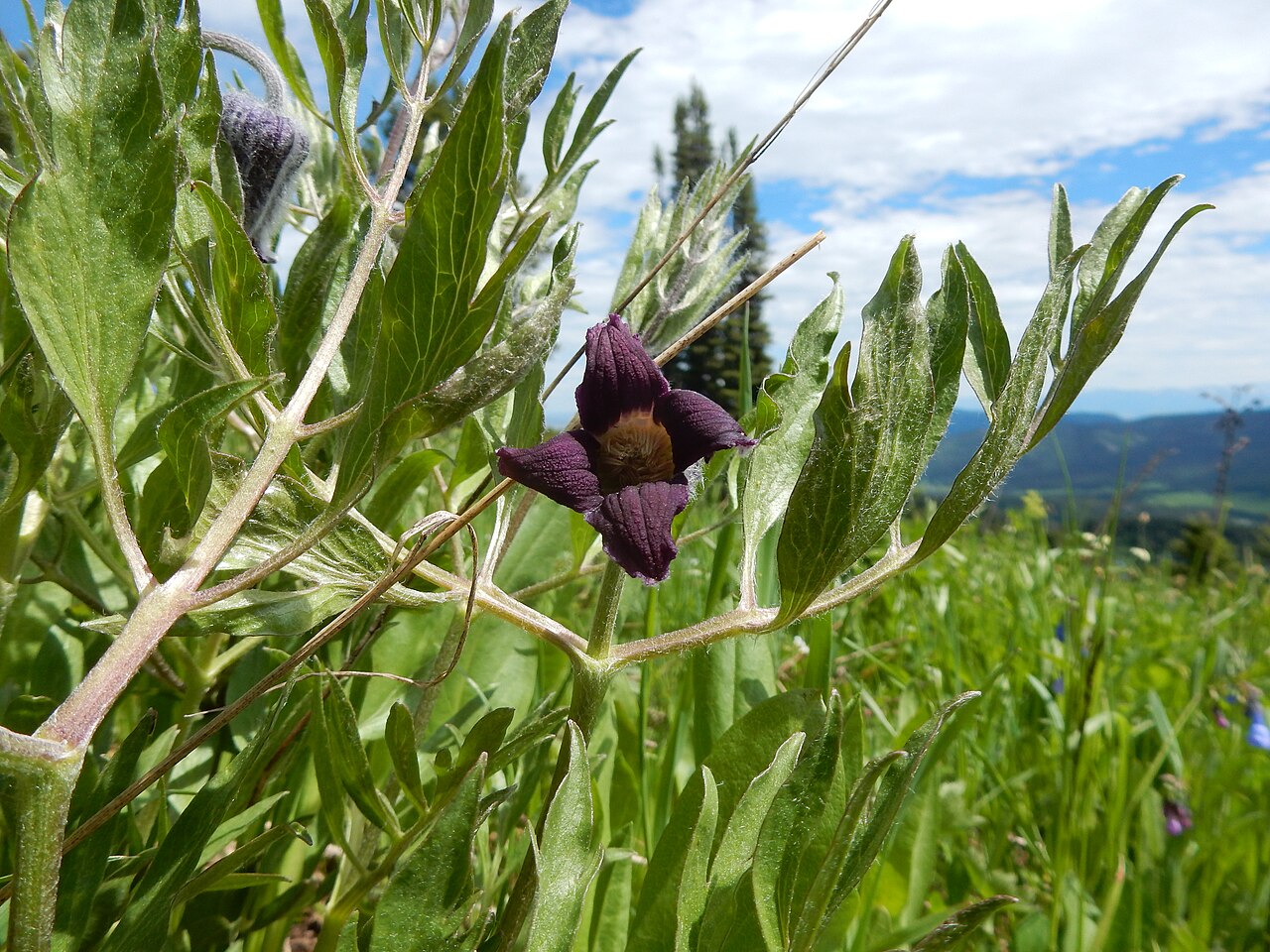
Clematis hirsutissima, commonly called Sugarbowls (also Hairy Clematis, Vase Flower, or Lion’s Beard), is one of the few clematis in North America that is not a vine at all. Instead of climbing, it grows as a low, bushy clump of silvery-hairy, deeply cut leaves topped by a scattering of thick, nodding, urn-shaped flowers in deep violet-blue to purple — the “sugar bowl” the common name describes. It is a true plant of the Rocky Mountain West, at home in sagebrush steppe, open grassland, and the sunny edges of ponderosa pine forest from the eastern slope of the Cascades to the Front Range of Colorado.
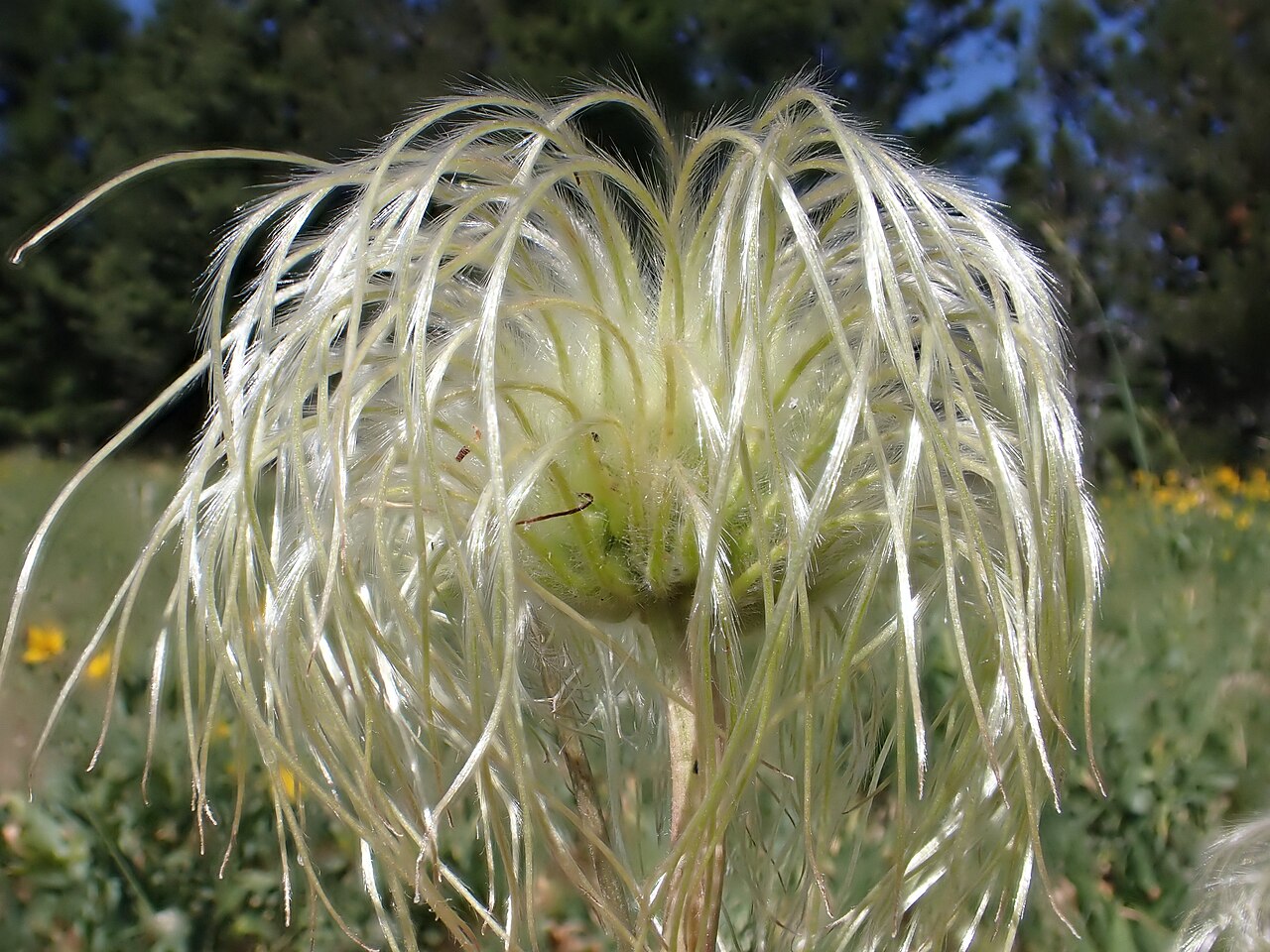
The flower itself is the plant’s signature feature. There are no true petals; instead, four to five thick, fuzzy, dark violet sepals curve together into a cup-and-saucer or sugar-bowl shape that nods at the tip of a leafless stalk, never fully opening the way most garden flowers do. As the bloom matures, the whole structure gradually turns upright, and the sepals fall away to reveal a round, silvery seed head made of dozens of long, feathery, plumed achenes — nearly as showy as the flower itself and the source of the alternate name “lion’s beard.”
Sugarbowls is a tough, drought-adapted plant for dry, well-drained gardens anywhere within its native range. It needs almost no supplemental water once established, dies back and rests through the heat of summer, and returns reliably each spring from a deep, woody root crown. For rock gardens, xeriscapes, and native plantings across the Intermountain West and southern Rockies, it offers an unusual flower shape and texture that few other regional wildflowers can match.
Identification
Sugarbowls grows as an erect, non-climbing, clump-forming herbaceous perennial, typically 1 to 2 feet tall, arising each spring from a thick, deep, woody taproot and crown. Unlike the vining clematis of woodlands and streambanks, it never twines or climbs and needs no support.
Stems & Leaves
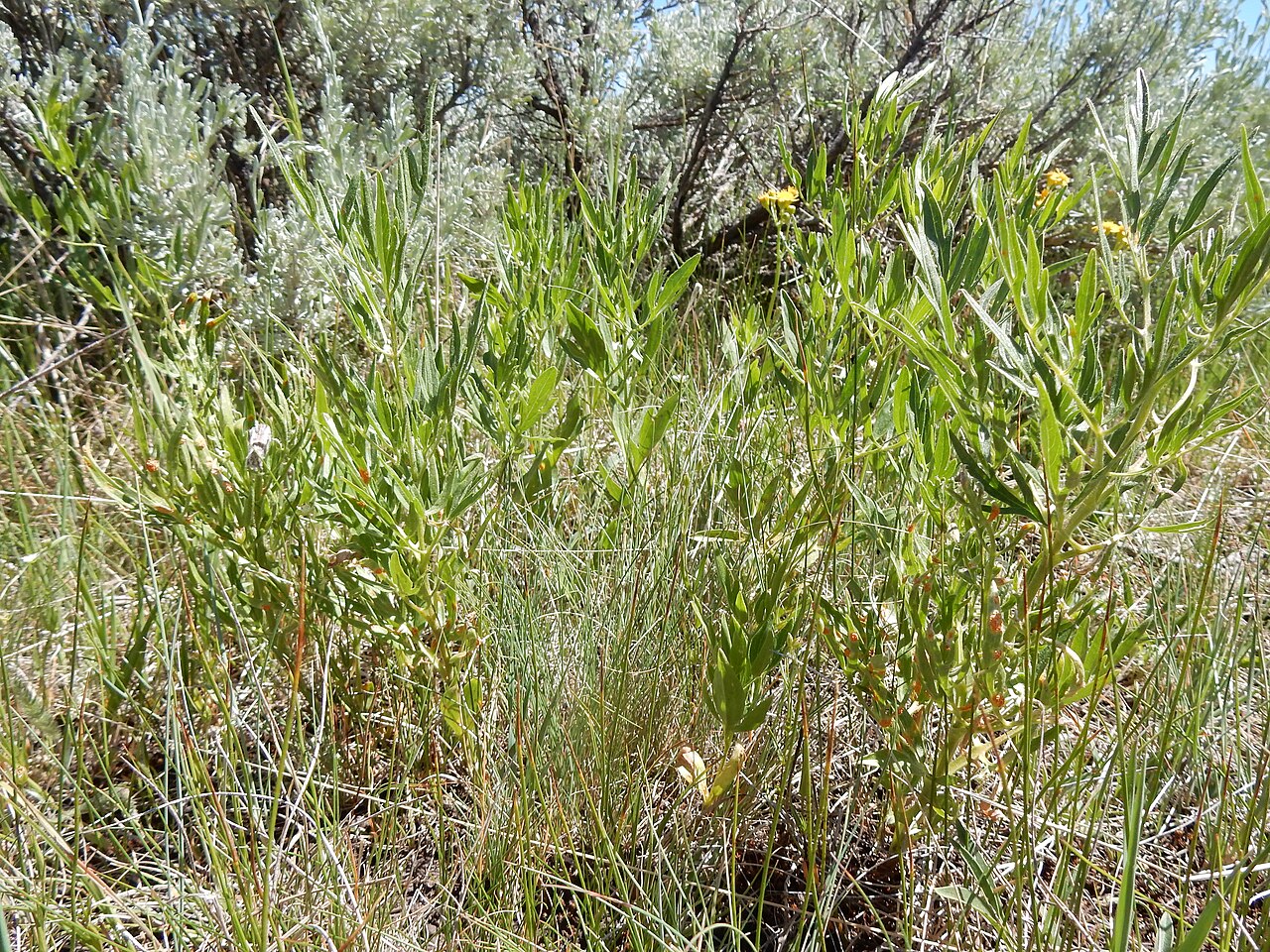
Stems are stiff, upright, and covered in soft to dense hairs, ranging from sparsely hairy to very shaggy depending on the variety. The leaves are compound, divided two to three times into narrow, lance-shaped segments, giving the whole plant a finely cut, almost fern-like or silvery texture. Leaf surfaces are sparsely to densely silky-haired, which, combined with the gray-green color common in dry sagebrush country, helps the plant blend into its surroundings when not in bloom. Plants are sometimes dormant and nearly invisible above ground during the hottest part of summer.
Flowers
A single flower tops each flowering stem from April through June. The flower is broadly cylindric to urn-shaped, made of four (occasionally five) thick, leathery, deep violet-blue to dark purple sepals, 1 to nearly 2 inches long, with margins that are thin, crisped, and often paler at the edge. The outer surface is densely woolly-hairy, while the flower nods downward on its stalk when fresh and gradually turns upright as the seed head matures. Rare individuals bear pink or white flowers instead of the usual purple.
Fruit & Seeds
After flowering, the sepals fall away and the enlarging seed head becomes the plant’s second ornamental phase: a dense, rounded cluster of achenes, each tipped with a long (to about 3 inches), silvery, plumose tail. Backlit by morning sun, a field of these seed heads can look like a scatter of small, glowing mop-heads across a dry meadow — one of the most recognizable sights of the sagebrush-steppe wildflower season.
Quick Facts
| Scientific Name | Clematis hirsutissima |
| Family | Ranunculaceae (Buttercup) |
| Plant Type | Non-vining, clump-forming herbaceous perennial wildflower |
| Mature Height | 1–2 ft |
| Mature Spread | 1–1.5 ft, as a dense basal clump |
| Growth Rate | Slow |
| Sun Exposure | Full sun to part shade |
| Water Needs | Low; dry, well-drained sites once established |
| Soil Type | Dry, well-drained, often gravelly or rocky soils |
| Soil pH | Neutral to slightly alkaline |
| Bloom Time | April – June |
| Flower Color | Deep violet-blue to purple; rarely pink or white |
| Fall Color | None; foliage goes dormant by mid-to-late summer |
| Fruit | Silvery, long-plumed achene clusters, early summer |
| Deer Resistant | Yes |
| USDA Hardiness Zones | 3–8 |
Native Range
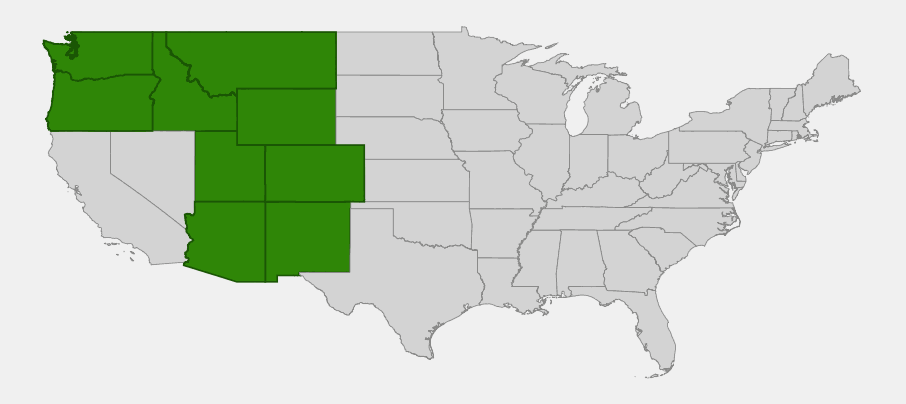
Sugarbowls is native to the interior mountain West, from south-central British Columbia and eastern Washington and Oregon east through Idaho, Montana, and Wyoming, and south through Utah, Colorado, New Mexico, and into northeastern Arizona. Within this broad area it is a plant of mid-elevation, dry open country rather than dense forest, and BONAP county-level records show it concentrated through the northern and central Rockies, the Columbia Plateau, and the Colorado Plateau, with its eastern edge generally ending at the mountain front rather than spreading out onto the High Plains.
Typical habitat is dry grassland, sagebrush steppe, and the open, sunny understory or edges of ponderosa pine and other dry montane forest, usually on gravelly or rocky soils at moderate to fairly high elevation. It tolerates the short growing seasons, cold winters, and intense summer sun of these habitats, going dormant below ground once the dry heat of midsummer sets in.
Because its native range is defined largely by elevation and dry, open habitat rather than by state lines, gardeners should treat whole-state native status with some caution: Sugarbowls is well documented through the mountains and intermountain basins of these nine states, but it should not be assumed native to the lower, wetter, or more easterly parts of any of them.
📋 Regional plant lists featuring Sugarbowls: Idaho, Eastern Oregon & Eastern Washington · Montana & Wyoming · Utah & Western Colorado · Arizona & New Mexico
Growing & Care Guide
Sugarbowls rewards gardeners who can offer it the lean, fast-draining conditions of its native sagebrush and foothill habitats. It is not a plant for rich, moist garden beds, but it is outstanding in a rock garden or dry native planting within its range.
Light
Plant Sugarbowls in full sun to light part shade. In the wild it grows in open sagebrush flats and grassland as well as the dappled light at the edge of ponderosa pine stands, so it tolerates some shade but flowers most reliably with several hours of direct sun. For general background on clematis light and support needs across the genus, see our overview of growing and propagating clematis — though, unlike the vining species it describes, Sugarbowls needs no trellis or structure at all.
Soil & Water
Good drainage is essential. Give it gritty, gravelly, or rocky soil rather than rich garden loam, and avoid any site that stays wet, especially in winter, since soggy soil quickly rots the woody crown. Water occasionally through the first year to help the deep taproot establish, then cut back sharply; established plants expect only natural rainfall and resent regular summer watering, which can shorten their life. This makes it an excellent fit for the kind of water-wise beds described in our guide to low-maintenance native plants for Colorado.
Planting Tips
Set out container-grown plants in spring or fall, disturbing the taproot as little as possible, since Sugarbowls transplants poorly once well established. Choose a permanent spot — a rock garden pocket, a gravel bed, or the foot of a boulder — rather than planning to move it later. Space plants about 12 to 18 inches apart to leave room for the mature clump without crowding.
Pruning & Maintenance
Almost no pruning is required. Once the foliage yellows and the plant goes summer-dormant, old flowering stems can be cut back to the crown, or simply left in place until they break down over winter. The plant needs no feeding in typical native soils; a yearly top-dressing of gravel mulch, rather than compost, best mimics its natural setting and helps prevent crown rot.
Propagation
Seed is the standard method. Collect the plumed achenes once they are fully dry and silvery, and sow in fall so winter cold and moisture provide natural stratification, or give stored seed 60 to 180 days of cold-moist stratification before a spring sowing. Germination is often slow and uneven, so patience is needed. Mature clumps can also be divided carefully in early spring, though the deep taproot makes successful division trickier than with most garden perennials; many growers find seed more reliable. These seed-based techniques echo the general clematis propagation principles covered in our clematis propagation guide, even though Sugarbowls skips the cuttings and layering methods used for vining relatives.
Landscape Uses
- Rock gardens and gravel beds, where its compact size and unusual flower shape stand out against stone
- Xeriscape and water-wise plantings across the Intermountain West; see further ideas in our guide to native Colorado plants for landscaping
- Sagebrush-steppe and high-desert native gardens, paired with big sagebrush and native bunchgrasses
- Pollinator gardens seeking an early-season nectar source before summer wildflowers peak
- Dried arrangements, since the plumed seed heads hold their form well after cutting
Wildlife & Ecological Value
Though modest in stature, Sugarbowls contributes to the web of life in dry sagebrush and montane grassland communities across its range.
For Pollinators
The nodding, urn-shaped flowers are visited by bumblebees and other native bees strong enough to push into the partly closed bloom, as well as by small flies. Because it flowers early in spring, Sugarbowls provides one of the first significant nectar and pollen sources in sagebrush country, before most other wildflowers have opened.
For Birds
Ground-nesting and brush-dwelling birds of sagebrush and grassland habitats, such as sparrows and towhees, forage among the clumps of sagebrush and grasses where Sugarbowls typically grows, using the surrounding cover more than the plant itself.
For Mammals
Like most clematis, the foliage contains irritating compounds that discourage browsing, so Sugarbowls is largely left alone by deer, elk, and livestock, helping it persist in heavily grazed rangeland where more palatable wildflowers have been reduced.
Ecosystem Role
As a long-lived, deep-rooted perennial of sagebrush steppe and dry grassland, Sugarbowls is part of the diverse understory that stabilizes soil and adds plant diversity to these widespread but increasingly pressured rangeland communities of the interior West.
Cultural & Historical Uses
Written records of traditional use of Sugarbowls by Indigenous peoples of the Rocky Mountain region are limited compared to more widely documented plants of the same areas. As with other clematis, the foliage and sap contain irritant compounds, and there is no well-documented history of it being used as a food plant.
Its main historical significance has been botanical and horticultural. Nineteenth-century collectors working through the Rocky Mountain territories, including Frederick Pursh, who first described the species, were struck by its unusual non-vining habit and sugar-bowl flower shape among a genus otherwise known for climbing vines. In recent decades it has become a favorite of rock gardeners and native plant enthusiasts, particularly the compact, large-flowered variety scottii, prized for xeriscaping in its native range.
Frequently Asked Questions
Is Sugarbowls a vine like other clematis?
No. Sugarbowls is one of the few North American clematis that does not climb. It grows as a low, bushy clump of finely cut, hairy leaves and needs no trellis, fence, or other support.
Why do the flowers never fully open?
The thick, leathery sepals stay fused into a cup or urn shape through the whole bloom period, which is normal for this species — it is not a sign of a problem. The flower gradually turns upright as it finishes blooming and begins forming its feathery seed head.
How much water does Sugarbowls need?
Very little once established. It is adapted to dry sagebrush and grassland habitats and is best grown in gritty, fast-draining soil with only occasional deep watering; regular garden-bed irrigation can cause crown rot.
Why did my Sugarbowls disappear in midsummer?
This is normal. The plant often goes dormant above ground during the hottest, driest part of summer, surviving on its deep taproot, and returns the following spring. Avoid digging in the dormant area, since the crown is still alive below ground.
Is Sugarbowls toxic?
Like other clematis, the foliage and sap contain irritant compounds (protoanemonin) that can cause skin or digestive irritation if handled or eaten carelessly. It should be treated as toxic if ingested and is not used as a food or medicinal plant.

Looking for a nursery that carries Sugarbowls?
Browse our native plant nursery directory: Idaho · Oregon · Washington · Montana · Wyoming · Utah · Colorado · New Mexico · Arizona