Pale Leatherflower (Clematis versicolor)
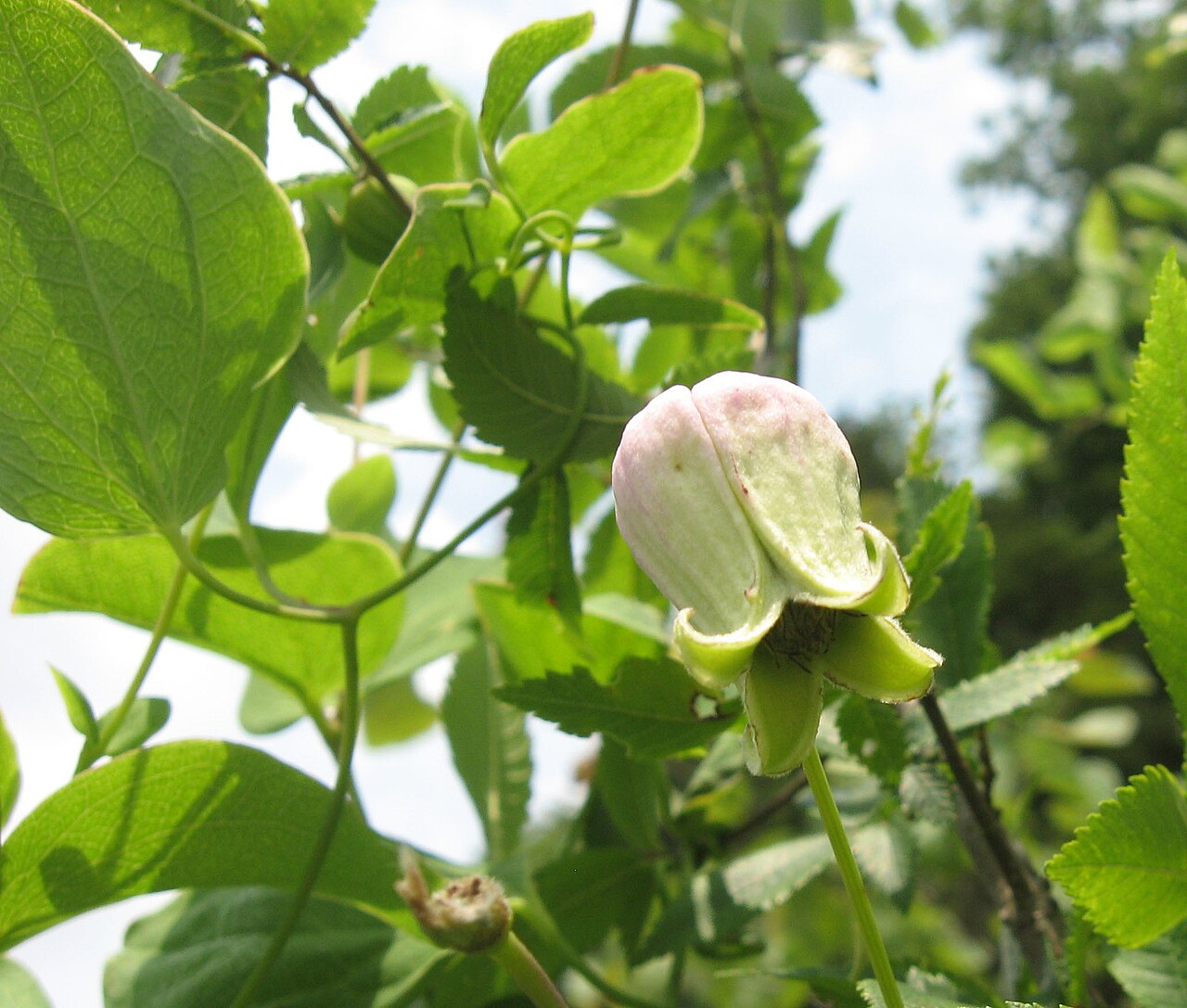
Clematis versicolor, commonly called Pale Leatherflower, is a slender, low-climbing native vine of the Interior Low Plateau and Ozark-Ouachita region, prized by wildflower gardeners for its small, thick-petaled, urn-shaped flowers that nod from the leaf axils like tiny lanterns. Unlike the large-flowered clematis hybrids common in nurseries, pale leatherflower belongs to a group of native species with leathery, never fully opening blooms — a quiet, textural charm rather than a showy display.
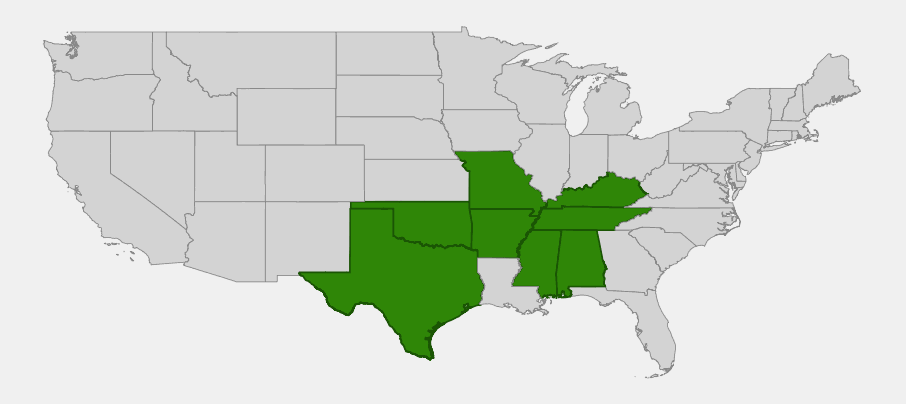
The species grows on limestone glades, rocky bluffs and open calcareous woodlands scattered from south-central Kentucky and Tennessee west through the Ozark and Ouachita uplands of Missouri, Arkansas and eastern Oklahoma, with outlying populations in Alabama, Mississippi and Texas. Its flowers are pale pinkish-cream to dusty rose on the outside with a greenish-yellow interior, giving the species its “versicolor” (variously colored) name, and the four thick, pointed sepals curve outward only slightly at the tips, keeping the bloom mostly closed.
For a native rock garden, limestone glade restoration, or a trellis in a dry, sunny spot with alkaline soil, pale leatherflower is an easy, low-maintenance vine that asks for little once established. Because several related leatherflower species can be confused with it, always confirm plant identity before buying, and choose nursery-propagated plants to support the trade in these regionally distinctive native vines.
Identification
Pale leatherflower is a slender, deciduous, herbaceous-to-semi-woody vine that climbs by twining leaf petioles rather than tendrils, typically reaching 3 to 6 feet in a season, dying back substantially in winter in the colder parts of its range.
Leaves
Leaves are opposite and pinnately compound, usually with 4 to 8 ovate to heart-shaped leaflets 1 to 3 inches long, coarsely toothed along the margins. The leaflet stalks twist and wrap around supports as the vine climbs, a trait typical of clematis in general. Foliage is medium to dark green and has a somewhat rough, slightly hairy texture.
Flowers
Flowers arise singly from the leaf axils on long stalks and hang downward in a distinctive urn or bell shape, about ¾ to 1¼ inches long. The four thick, leathery sepals (clematis lacks true petals) are pale pinkish to dusty rose on the outer surface and pale yellow-green within, and they remain mostly closed, curving outward only at the tips rather than flaring open like a garden clematis. Bloom time runs from May into August, often continuing sporadically through the summer.
Fruit & Seeds
After pollination, flowers develop into a cluster of flattened seeds, each tipped with a long, feathery, silvery plume (the persistent style), forming a fluffy seed head typical of the genus. These plumed seed clusters are often as ornamental as the flowers and aid wind dispersal in open, rocky habitats.
Quick Facts
| Scientific Name | Clematis versicolor |
| Family | Ranunculaceae (Buttercup) |
| Plant Type | Deciduous climbing/trailing vine |
| Mature Height | 3–6 ft (trailing or climbing) |
| Mature Spread | 2–4 ft at the base, climbs further with support |
| Growth Rate | Moderate |
| Sun Exposure | Full Sun to Part Shade |
| Water Needs | Low to average; drought tolerant once established |
| Soil Type | Rocky, well-drained, calcareous (limestone-derived) |
| Soil pH | Neutral to alkaline, about 6.5–8.0 |
| Bloom Time | May – August |
| Flower Color | Pale pink to dusty rose outside, greenish-yellow within |
| Fall Color | None notable; foliage dies back |
| Fruit | Plumed, feathery seed clusters, late summer–fall |
| Deer Resistant | Yes, generally |
| USDA Hardiness Zones | 5–8 |
Native Range
Pale leatherflower is native to the Interior Low Plateau and the Interior Highlands of the south-central United States. Its core range runs from south-central Kentucky and central Tennessee through the Ozark and Ouachita Mountains of southern Missouri, northern and central Arkansas, and eastern Oklahoma, with additional populations reported in north-central Alabama, Mississippi and Texas.
Across this range, the species favors dry, rocky, calcium-rich sites: limestone glades, dolomite and limestone bluffs, rocky open woodlands and cedar glades, where thin soil over bedrock keeps competition from taller vegetation low and sunlight reaches the ground. It often grows scrambling low over rocks and through open shrubs rather than climbing high into tree canopies.
Pale leatherflower is not federally listed, but because it is tied to a naturally patchy habitat type — limestone and dolomite glades — that has itself been reduced by agriculture, quarrying and fire suppression, some state natural heritage programs track it as uncommon. Protecting remaining glade habitat is the most effective way to conserve wild populations.
📋 Regional plant lists featuring Pale Leatherflower: Kentucky & Tennessee · Georgia, Alabama & Mississippi · Arkansas, Louisiana, Eastern Oklahoma & Eastern Texas · Illinois, Iowa & Missouri
Growing & Care Guide
Pale leatherflower is an easygoing native vine once given the dry, rocky, alkaline conditions it experiences in the wild. It is not a plant for rich, moist garden beds, but for a lean, sunny, well-drained spot it needs very little care.
Light
Full sun to light shade suits this species best, mirroring the open glades and rocky woodland edges where it grows naturally. More shade is tolerated but tends to reduce flowering and produce a leggier vine.
Soil & Water
Good drainage and an alkaline to neutral soil pH are the keys to success. Rocky, gravelly or limestone-derived soils suit it well, and heavy clay should be amended with grit if that is all that is available. Established plants are drought tolerant and need little supplemental water beyond normal rainfall; like most clematis, the roots prefer to stay cool, so a layer of mulch or a low companion plant at the base helps even though the top growth wants full sun.
Planting Tips
Plant in spring or fall in a lean, well-drained bed, siting the crown slightly below soil level as with many clematis to encourage resilience if top growth is damaged. Give the vine something to scramble over or a small trellis, fence or shrub to climb through, since it climbs by twining leaf stalks rather than tendrils or adhesive structures.
Pruning & Maintenance
Cut back dead growth in late winter before new shoots emerge; because flowers form on new growth through the season, hard pruning does not sacrifice bloom. The vine is generally pest- and disease-free and needs no fertilizer in appropriately lean soil, where excess fertility tends to produce weak, floppy growth rather than better flowering.
Propagation
Pale leatherflower can be grown from fresh seed, which benefits from a period of cold stratification before germinating in spring, or from softwood cuttings taken in early summer and rooted in a well-drained medium. Division is difficult given the plant’s root structure, so seed or cuttings from nursery stock are the most practical way to start new plants.
Landscape Uses
- Limestone glade and prairie restoration within its native range
- Rock gardens and dry stone walls, where it can scramble over and through crevices
- Small trellises and low fences in a sunny, dry garden bed
- Native plant collector gardens focused on regional clematis diversity alongside other leatherflower species
- Companion planting with other glade and prairie natives adapted to thin, rocky soil
Gardeners wanting more flowering vine options for the region can browse our roundups of flowering vines for Missouri, flowering vines for Oklahoma and flowering vines for Tennessee, though most featured there tolerate richer soil than pale leatherflower prefers.
Wildlife & Ecological Value
Though modest in size, pale leatherflower’s unusual flower form and plumed seeds support a range of small pollinators and contribute texture to the glade and woodland-edge plant community.
For Pollinators
The partly closed, urn-shaped flowers are visited mainly by bumblebees and other larger bees strong enough to force their way in to reach nectar and pollen, a pollination strategy shared with several related native leatherflower species. This specialized flower shape excludes many smaller, less capable pollinators.
For Birds & Mammals
The feathery, plumed seed heads provide incidental nesting material for small birds in late summer. Browsing pressure from deer and rabbits is generally light, since clematis foliage is not a preferred forage, which helps this species persist even where browsing on other natives is heavy.
Ecosystem Role
As a specialist of limestone and dolomite glades, pale leatherflower is part of a distinctive, biodiversity-rich plant community found on thin, rocky, calcium-influenced soils throughout the Interior Low Plateau and Ozark-Ouachita region. These glade communities, often called the “deserts of the East,” support a disproportionate number of regional endemic and specialist plant species, and protecting vines like pale leatherflower generally means protecting the broader glade ecosystem.
Cultural & Historical Uses
Pale leatherflower was described by botanists John Kunkel Small and Per Axel Rydberg in the early twentieth century as part of a broader effort to classify the diverse viorna-group clematis species of the eastern and central United States, a group distinguished by their thick, leathery, nodding flowers quite unlike the familiar open-faced garden clematis of Asian origin.
There is no significant documented history of Indigenous or settler use of this species for food, medicine or materials, consistent with the generally limited traditional use of native clematis species, some of which contain irritant compounds in fresh foliage and sap that discouraged casual handling or consumption.
Today pale leatherflower’s main significance is botanical and horticultural: a regionally distinctive native vine valued by glade and prairie restoration projects and by native-plant gardeners drawn to the understated charm of its nodding, urn-shaped blooms.
Frequently Asked Questions
Do pale leatherflower flowers ever open fully?
No. Unlike large-flowered garden clematis, pale leatherflower belongs to a group of native species whose thick, leathery sepals stay mostly closed in an urn or bell shape, curving outward only slightly at the tips even at full bloom.
What kind of soil does pale leatherflower need?
It needs lean, rocky, well-drained soil that is neutral to alkaline, reflecting its native habitat on limestone and dolomite glades. Rich, moist or acidic garden soil is not a good match for this species.
Is pale leatherflower the same as the clematis sold at garden centers?
No. Most clematis sold in nurseries are large-flowered hybrids of Asian origin. Pale leatherflower is a distinct native species in the viorna group, with small, thick, nodding flowers rather than large, flat, open blooms.
How do I tell pale leatherflower apart from other native leatherflowers?
Flower color and precise shape vary subtly among the related species, and confirming identity from leaves alone is difficult; comparing plants to a regional flora or verified photographs, and buying from a nursery that labels plants by confirmed species, is the most reliable approach. See our profiles of the related purple leatherflower and scarlet leatherflower, and our roundup of flowering vines for Alabama, for comparison.
Does pale leatherflower need a trellis?
It benefits from something to climb, such as a small trellis, low fence or shrub, since it climbs by twining leaf stalks, but it can also be allowed to scramble along the ground or over rocks in a glade-style planting without support.

Looking for a nursery that carries Pale Leatherflower?
Browse our native plant nursery directory: Kentucky, Mississippi & Missouri · Tennessee & Texas · Alabama & Arkansas · Oklahoma