Smooth Hedgenettle (Stachys tenuifolia)
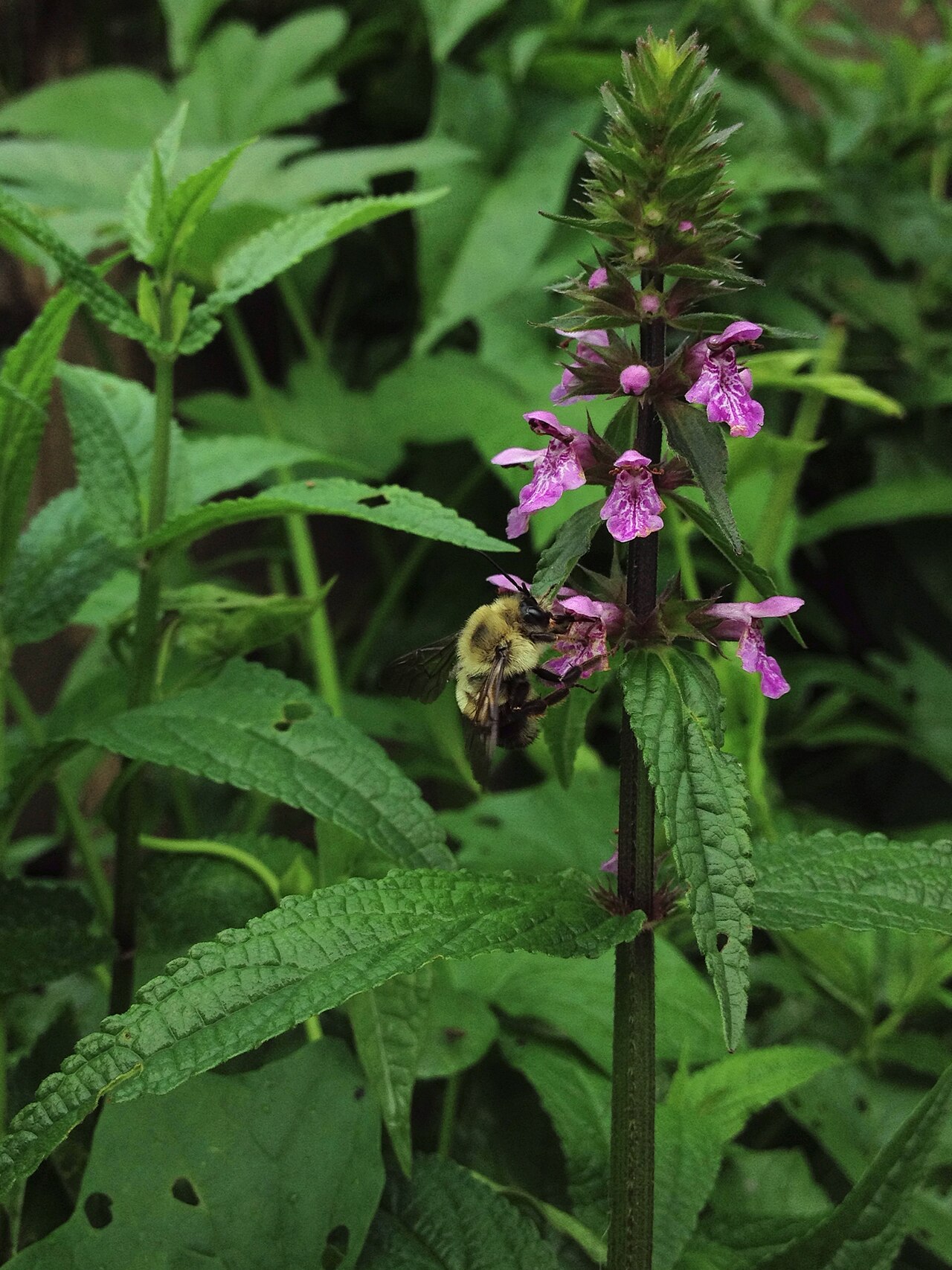
Stachys tenuifolia, commonly known as Smooth Hedgenettle or Slender Betony, is a native perennial wildflower of the mint family found across the moist meadows, streambanks and bottomland woods of the eastern and central United States. Despite the “nettle” in its name, it carries no sting at all — the name comes only from a passing resemblance to true nettles in leaf shape. Gardeners searching for a native substitute for the Mediterranean lamb’s ear (Stachys byzantina) often land on this plant’s showier, pink-flowered cousins, and smooth hedgenettle is a good reminder that the genus has plenty of well-behaved native members too.
The plant forms an upright clump 1 to 3 feet tall from slender rhizomes, with square stems typical of the mint family, paired lance-shaped leaves, and whorled spikes of small, hooded, pink to pale purple flowers in summer. Unlike the fuzzy, silver-leaved garden lamb’s ear, smooth hedgenettle has plain green foliage that is smooth or only lightly hairy — hence “tenuifolia,” meaning thin-leaved, and the common name “smooth.” It spreads gradually by rhizome to form loose colonies rather than a single clump, making it a useful filler for naturalized wet meadows and pollinator plantings.
Smooth hedgenettle is not a showstopper in the way a native aster or coneflower is, but it earns its keep in a rain garden, woodland edge or streamside planting where few other flowering perennials tolerate consistently moist, part-shaded soil. Bees, including long-tongued bumblebees that can reach into the tubular flowers, visit it reliably through its summer bloom window.
Identification
Smooth hedgenettle is an herbaceous perennial that dies back to the ground each winter and resprouts from spreading rhizomes each spring, often forming loose colonial patches over a few seasons.
Stems & Leaves
Stems are square in cross-section, as in all mints, 1 to 3 feet tall, and mostly unbranched below the flower spike. They are smooth to sparsely hairy, a trait that separates this species from several hairier Stachys relatives. Leaves are opposite, lance- to oblong-shaped, 2 to 5 inches long, with low, rounded teeth along the margin and short leaf stalks. The foliage is matte green on both surfaces, without the silvery wool of ornamental lamb’s ear.
Flowers
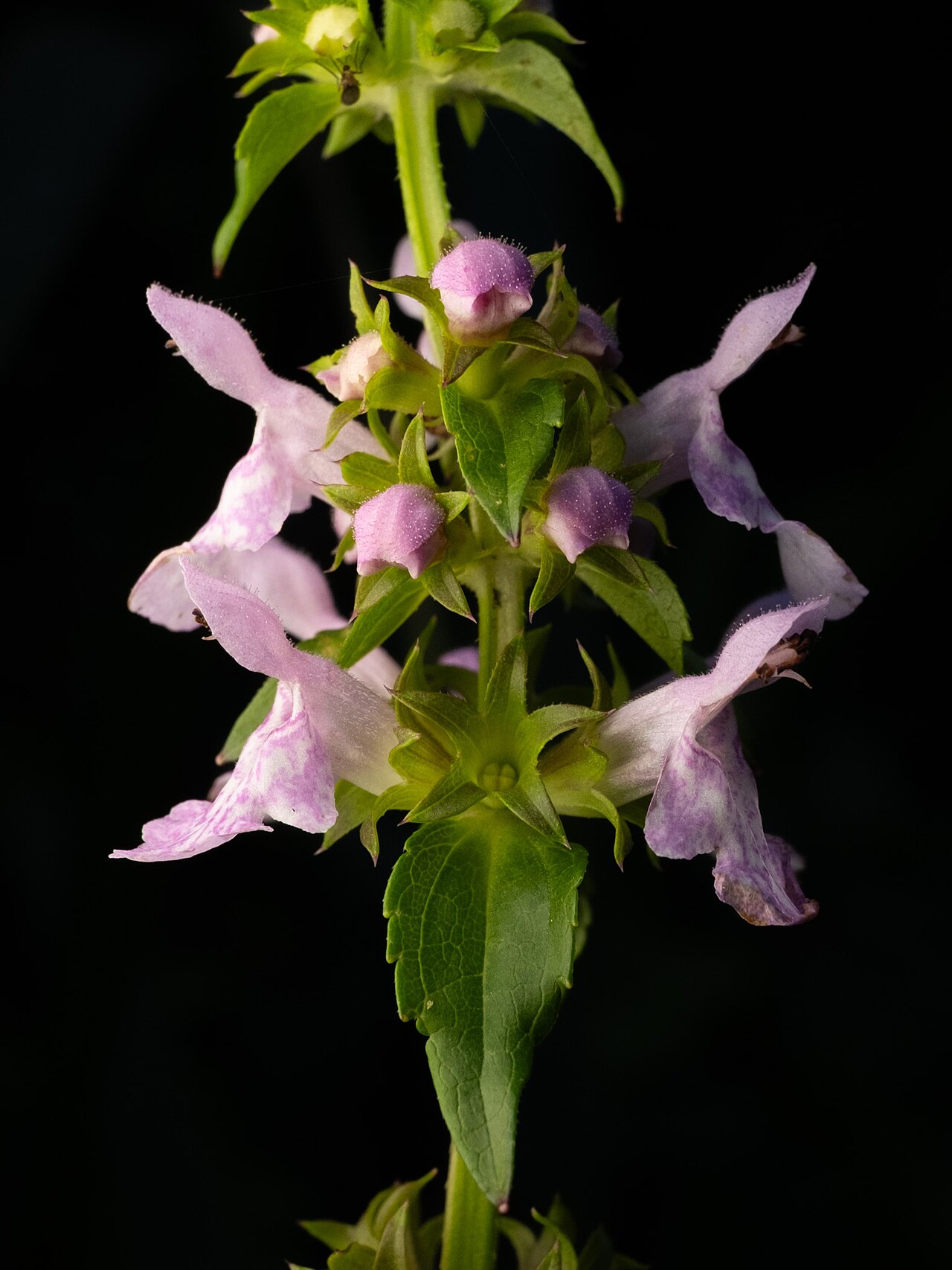
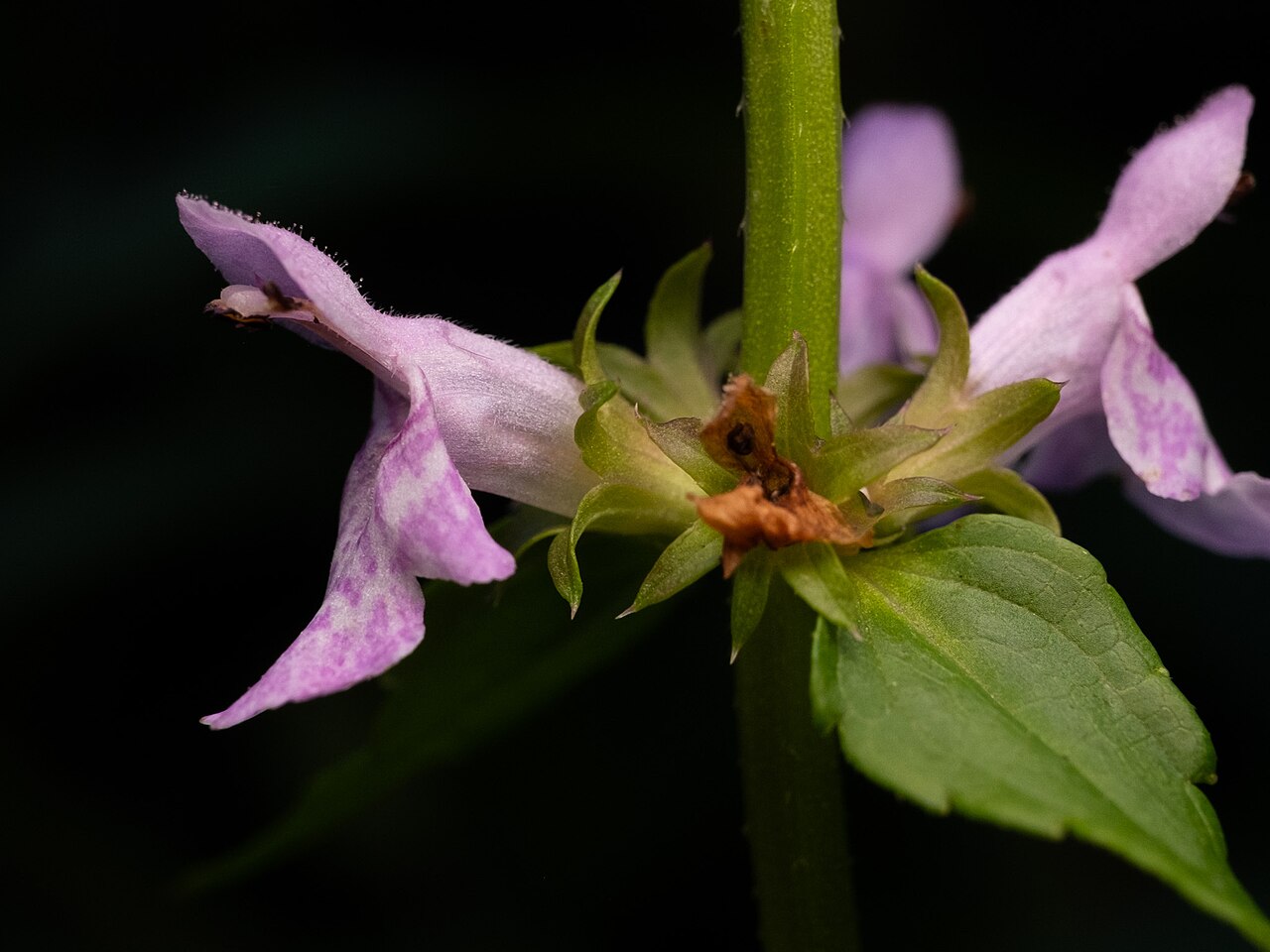
Flowers appear in whorled clusters (verticillasters) stacked along a terminal spike from roughly June through August, depending on latitude. Each flower is tubular and two-lipped — a hallmark of the mint family — about ½ inch long, pink to pale lavender-pink with darker purple mottling in the throat. The upper lip forms a small hood over the lower, three-lobed landing petal that guides bees to the nectar.
Fruit & Seeds
After flowering, each flower produces four small, smooth nutlets held in the persistent calyx. Seed set is usually light; the plant relies more on rhizome spread than on seedlings to expand a planting.
Quick Facts
| Scientific Name | Stachys tenuifolia |
| Family | Lamiaceae (Mint) |
| Plant Type | Herbaceous rhizomatous perennial |
| Mature Height | 1–3 ft |
| Mature Spread | 1–2 ft clumps, spreading slowly by rhizome |
| Growth Rate | Moderate |
| Sun Exposure | Part Shade to Full Sun with moisture |
| Water Needs | Average to wet; not drought tolerant |
| Soil Type | Moist clay, loam or sand |
| Soil pH | Neutral, adaptable |
| Bloom Time | June – August |
| Flower Color | Pink to pale purple |
| Fall Color | None notable; foliage dies back |
| Fruit | Four small nutlets in the calyx |
| Deer Resistant | Moderate (aromatic mint foliage is usually avoided) |
| USDA Hardiness Zones | 3–8 |
Native Range
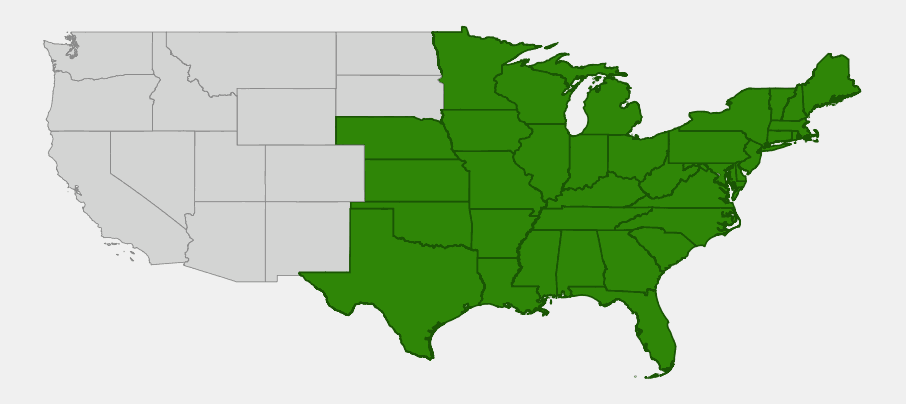
Smooth hedgenettle is native across a broad swath of the eastern and central United States, from New England and the Great Lakes south to the Gulf Coast and west to the eastern edges of the Great Plains. It is common in Illinois, Indiana, Ohio and the mid-Atlantic, becomes more scattered toward the western edge of its range in eastern Kansas and Nebraska, and reaches the Gulf Coast in Louisiana and eastern Texas. In Florida it is confined to the panhandle and is not found in the peninsula. It also occurs in New Brunswick, Canada, at the northeastern edge of its range.
Typical habitat is consistently moist ground: wooded floodplains, stream and river banks, wet meadows, the margins of marshes and ditches, and damp roadsides. It is usually found in part shade at the edge of bottomland forest or in full sun where soil stays reliably wet, and it tolerates occasional standing water better than most garden perennials. Common wild associates include jewelweed, wood nettle, blue vervain and sedges in wet meadow and floodplain-forest settings.
Because it depends on damp soil, smooth hedgenettle is not a plant for an average dry garden bed; it is best matched to the low, wet corner of a landscape or a rain garden that other perennials struggle with.
📋 Regional plant lists featuring Smooth Hedgenettle: New Hampshire, Maine & Vermont · Connecticut, Massachusetts & Rhode Island · New York, Pennsylvania & Northern New Jersey · Delaware, Southern New Jersey & Long Island · Maryland, Virginia & West Virginia · North Carolina & South Carolina · Georgia, Alabama & Mississippi · Arkansas, Louisiana, Eastern Oklahoma & Eastern Texas · Kentucky & Tennessee · Ohio & Indiana · Illinois, Iowa & Missouri · Michigan, Wisconsin & Eastern Minnesota · North Dakota, South Dakota & Western Minnesota · Nebraska, Kansas & Eastern Colorado
Growing & Care Guide
Smooth hedgenettle is an easy, low-fuss native for the one part of the yard most perennials dislike: a spot that stays damp. Give it steady moisture and it largely takes care of itself.
Light
It grows well from part shade into full sun, provided the soil does not dry out. In the wild it is most often found at woodland edges and in partly shaded floodplain openings; in full sun it needs consistently moist soil to avoid wilting on hot afternoons.
Soil & Water
This species wants moisture: clay, loam or sandy soils that stay evenly damp to wet are ideal, and it tolerates brief flooding better than almost any other flowering perennial on a typical native plant list. It is a poor choice for dry, sandy or well-drained upland beds — pair it instead with rain gardens, pond margins, low swales and streamside plantings.
Planting Tips
Set out container plants in spring or fall and water generously until established. Space plants 12 to 18 inches apart; they will fill in as rhizomes spread, so give the colony room to expand rather than crowding it against drought-loving neighbors. It transplants and divides easily in spring.
Pruning & Maintenance
Cut the dead stems back in late winter before new growth emerges. Because it spreads by rhizome, it can be more vigorous than a typical “well-behaved” perennial in consistently wet, open soil; dividing the clump every few years keeps it in bounds in a smaller garden bed.
Propagation
The easiest method is division of the rhizomes in early spring or fall. Seed can also be collected from the dried calyxes in late summer and sown outdoors in fall for natural cold stratification, though germination is typically modest.
Landscape Uses
- Rain gardens and bioswales, where it tolerates both wet feet and seasonal dry-down
- Streamside and pond-margin plantings alongside sedges and blue vervain
- Woodland-edge pollinator beds in part shade
- Native alternative to ornamental Stachys species for gardeners who want the genus’s bee-friendly flowers without a non-native groundcover; see our guide to plants that look like lamb’s ear
- Naturalized wet meadow restoration plantings
Wildlife & Ecological Value
Smooth hedgenettle quietly supports pollinators and small wildlife through the heat of summer, when it fills a niche many showier perennials leave empty in wet ground.
For Pollinators
The tubular, two-lipped flowers are well suited to long-tongued bumblebees, which push into the hooded blossoms to reach nectar and pick up pollen in the process. Other native bees and the occasional hummingbird will visit as well, especially where it grows in larger colonies that make a worthwhile foraging stop.
For Birds
Dense colonies of hedgenettle provide ground-level cover for sparrows and other small birds foraging in wet meadows and floodplain thickets. The small nutlets are eaten by some seed-eating songbirds, though they are a minor food source compared with the insects the plant attracts.
For Mammals
The aromatic, square-stemmed mint foliage is not a preferred browse for deer and rabbits, which makes this species useful in wet spots where other perennials get grazed down. It offers low ground cover for small mammals moving through streamside vegetation.
Ecosystem Role
By colonizing consistently saturated soil, smooth hedgenettle helps stabilize streambanks and wet meadow margins, and its summer bloom period fills a gap between spring ephemerals and late-summer asters and goldenrods in damp habitats.
Cultural & Historical Uses
Smooth hedgenettle has no significant history as a food or medicinal plant among the documented ethnobotanical record, unlike some of its showier Stachys relatives. It has generally been treated as an unremarkable, if reliable, member of wet meadow and floodplain plant communities rather than a plant of direct cultural importance.
Its main modern relevance is horticultural and ecological: as native plant gardening has grown, species like smooth hedgenettle have been rediscovered as useful, regionally appropriate substitutes for ornamental, non-native Stachys species such as lamb’s ear, which is widely grown for its foliage but offers far less to native pollinators and cannot handle wet soil the way this species can. Our roundup of plants that look like lamb’s ear covers several other fuzzy- or soft-leaved options for gardeners making the switch to native plantings.
Botanically, smooth hedgenettle has at times been treated with several infraspecific names (such as var. hispida or var. platyphylla) reflecting minor regional variation in leaf hairiness and shape; current treatments generally keep these within a single, variable species, Stachys tenuifolia.
Frequently Asked Questions
Is smooth hedgenettle the same as the lamb’s ear sold at garden centers?
No. Garden lamb’s ear is Stachys byzantina, a fuzzy, silver-leaved Mediterranean species grown for its foliage. Smooth hedgenettle is a different, native Stachys species with plain green leaves and showy pink flowers, grown more for pollinator value than for foliage texture.
Does smooth hedgenettle sting like a true nettle?
No. Despite the common name, it has no stinging hairs. The name likely comes from a general resemblance in leaf shape and growth habit to stinging nettle, not from any irritant properties.
Can smooth hedgenettle handle a normal, dry garden bed?
Not well. It is adapted to consistently moist to wet soil and will struggle and decline in average, well-drained garden conditions. Reserve it for rain gardens, pond edges or naturally damp low spots.
Will smooth hedgenettle spread aggressively in my garden?
In consistently wet, open soil it can spread readily by rhizome and form sizable colonies over a few seasons. In a small bed, plan to divide it periodically; in a larger wet meadow or restoration planting, that spreading habit is an asset.
Is smooth hedgenettle good for pollinators?
Yes, particularly for long-tongued bumblebees, which are well matched to its tubular, hooded flowers. Planting it alongside other wet-meadow natives extends the pollinator season through the summer months.

Looking for a nursery that carries Smooth Hedgenettle?
Browse our native plant nursery directory: Alabama & Arkansas · Connecticut, Delaware & Georgia · Illinois, Indiana, Iowa & Kansas · Kentucky, Louisiana, Maine, Maryland, Massachusetts, Michigan, Minnesota, Mississippi & Missouri · Nebraska, New Hampshire, New Jersey, New York, North Carolina, Ohio & Oklahoma · Pennsylvania, Rhode Island, South Carolina, Tennessee, Texas & Vermont · West Virginia & Wisconsin