
Wild Goose Plum (Prunus munsoniana)
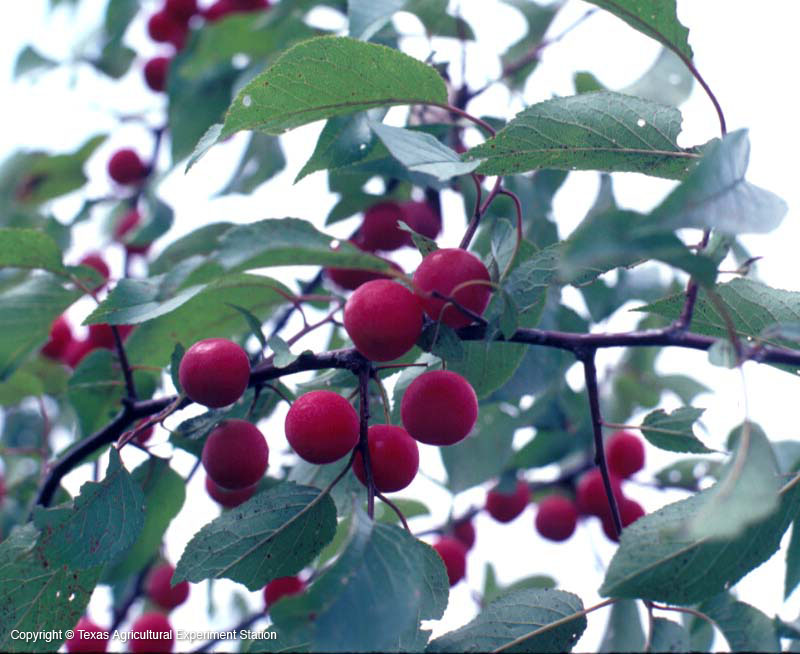
Prunus munsoniana, commonly called Wild Goose Plum (also Munson Plum or Munson’s Plum), is a small, thicket-forming native tree or large shrub in the rose family (Rosaceae), found across the central and south-central United States. It is sometimes listed under the older synonym Prunus rivularis, which still appears in some older references and nursery catalogs alongside the common names creek plum and hog plum.
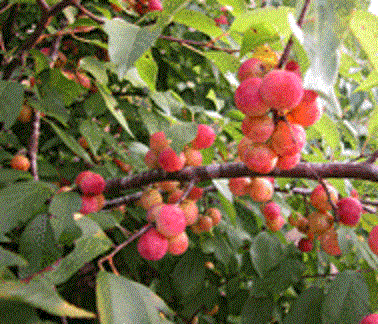
Wild Goose Plum typically grows 10 to 25 feet tall, forming dense thickets via root suckers, with glossy leaves, abundant white spring flowers, and heavy crops of small, round, bright red to orange-red fruit in mid- to late summer. The common name reportedly traces back to a 19th-century account of a seedling grown from a pit found in the crop of a wild goose, a story often repeated (with some skepticism) in old horticultural literature; the tree was later popularized by Texas nurseryman T.V. Munson, who gave it its other common name.
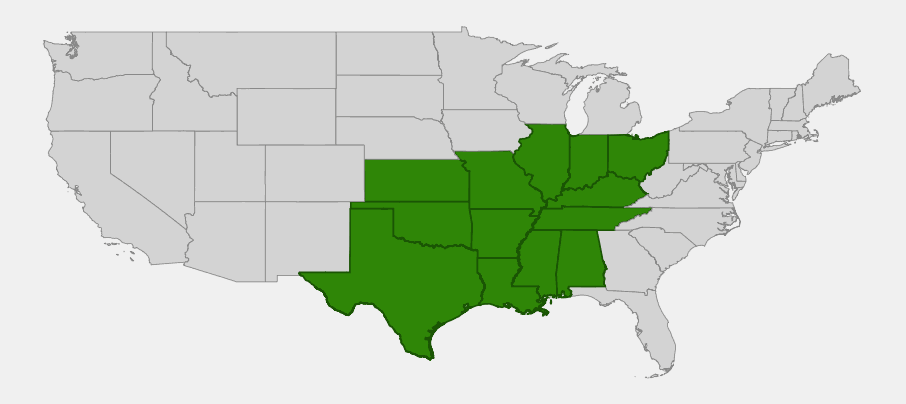
For gardeners within its native range — the lower Midwest and mid-South, from Ohio and Kansas south to Texas, Louisiana, and Mississippi — Wild Goose Plum offers a tough, fast-establishing small tree with spring flowers, summer fruit for people and wildlife alike, and genuine value as a thicket-forming hedgerow plant.
Identification
Wild Goose Plum shares the general look of other native thicket plums, but its fruit color, leaf shape, and suckering habit help distinguish it from close relatives like American plum and Chickasaw plum.
Bark & Stems
Bark on young stems is smooth and reddish-brown, developing darker, slightly scaly furrows with age. Twigs often bear short, sharp spur shoots, and the plant readily spreads by root suckers, forming dense thickets over time if left unchecked — useful for hedgerows, but worth planning for in a smaller garden.
Leaves
Leaves are simple, alternate, lance-shaped to elliptical, 2 to 4 inches long, tapering to a narrow point, with finely toothed margins. The upper surface is glossy dark green; leaves are generally narrower and more tapered than those of American plum, giving the foliage a willowy appearance.
Flowers
In early to mid-spring, before or as the leaves emerge, the plant produces abundant clusters of small, white, five-petaled flowers along the branches, giving the whole shrub or small tree a cloud-like white appearance for a week or two. The flowers are fragrant and heavily visited by early-season pollinators.
Fruit & Seeds
The fruit is a round drupe, roughly ½ to ¾ inch across, ripening from green to bright red or orange-red (occasionally yellow) in July or August — notably earlier than many other native plums. The skin is thin, the flesh juicy and tart to sweet-tart, and each fruit contains a single hard stone. Wild Goose Plum is known for producing especially heavy, reliable fruit crops.
Quick Facts
| Scientific Name | Prunus munsoniana (syn. Prunus rivularis) |
| Family | Rosaceae (Rose) |
| Plant Type | Deciduous Small Tree / Thicket-Forming Shrub |
| Mature Height | 10–25 ft |
| Mature Spread | 10–20 ft (wider if suckers are not controlled) |
| Growth Rate | Fast |
| Sun Exposure | Full Sun |
| Water Needs | Low to Moderate |
| Soil Type | Adaptable; prefers well-drained loam or clay, often calcareous |
| Soil pH | 6.0–7.5 (neutral to slightly alkaline) |
| Bloom Time | April–May |
| Flower Color | White |
| Fall Color | Yellow to bronze, not showy |
| Fruit | Red to orange-red plum, ripening July–August |
| Deer Resistant | No (deer browse foliage and twigs) |
| USDA Hardiness Zones | 5–8 |
Native Range
Wild Goose Plum is native to the lower Midwest and mid-South, with a range centered on Ohio, Illinois, Missouri, and Kansas, extending south through Kentucky, Tennessee, Arkansas, and Oklahoma to Louisiana, Mississippi, Alabama, and Texas, with disjunct or naturalized occurrences noted in a few other areas. It is most common in Missouri and the surrounding region, where it occurs nearly statewide except in a few corners.
The species favors open, sunny habitats: prairie edges, streambanks, woodland margins, old fields, pastures, roadsides, and abandoned homesites. It thrives in disturbed, open ground and readily colonizes such sites by root suckering, often forming dense thickets that provide valuable early-successional habitat.
Because Wild Goose Plum tolerates a wide range of soils and disturbance, it has remained common and secure across most of its range, unlike some of the rarer species in this guide. It is, however, sometimes confused in the trade and in older references with closely related plums such as Chickasaw plum and American plum, so gardeners seeking the true species should confirm the source.
📋 Regional plant lists featuring Wild Goose Plum: Georgia, Alabama & Mississippi · Arkansas, Louisiana, Eastern Oklahoma & Eastern Texas · Illinois, Iowa & Missouri · Ohio & Indiana · Kentucky & Tennessee · Nebraska, Kansas & Eastern Colorado
Growing & Care Guide
Wild Goose Plum is easy to grow, tolerant of a wide range of conditions, and quick to establish — making it one of the more forgiving native fruiting trees for a sunny, open site.
Light
Needs full sun for best flowering and fruiting. In shade, plants grow leggy, flower sparsely, and produce little fruit, so give it an open, unshaded location.
Soil & Water
Adaptable to a wide range of soils, from clay to loam, including neutral to slightly alkaline ground. It tolerates occasional drought once established but fruits best with consistent moisture through spring and early summer. Good drainage helps avoid root problems, though it is less fussy about soil than many ornamental fruit trees.
Planting Tips
Plant bare-root or container stock in late fall or early spring. Because it spreads by root suckers, give it room — either plan for a naturalized thicket, or be prepared to mow or cut back suckers regularly to keep it as a single specimen. Plant at least two individuals if a good fruit crop is desired, since cross-pollination improves yields in many native plums.
Pruning & Maintenance
Prune in late winter to remove dead or diseased wood and to control the spread of root suckers if a contained shape is wanted. Watch for black knot, a fungal disease common on native plums that causes dark, swollen growths on branches; prune out and destroy affected wood promptly to limit spread.
Propagation
Propagates readily from root suckers, which can be dug and transplanted, or from stratified seed sown in fall. Suckers are the fastest and most reliable method for gardeners wanting to establish a thicket or hedgerow quickly.
Landscape Uses
- Wildlife hedgerow or thicket planting along property edges or fence lines
- Pollinator garden — an excellent early nectar source while in spring bloom
- Edible landscaping for homeowners interested in foraging or jam-making from the fruit
- Erosion control and naturalized plantings on disturbed, sunny ground
Wildlife & Ecological Value
Wild Goose Plum is a highly valuable wildlife plant, offering food and shelter across the full growing season.
For Pollinators
The abundant white spring flowers are a major early-season nectar and pollen source for native bees, honeybees, and a variety of other pollinating insects, blooming at a time when few other food sources are available.
For Birds
Ripe fruit is eaten by numerous bird species, and the dense, thorny-twigged thickets the plant forms provide excellent nesting cover and predator protection for songbirds.
For Mammals
Fruit is readily eaten by raccoons, opossums, foxes, and other mammals, while deer browse the foliage and young twigs. The thicket-forming habit also provides valuable cover for small mammals.
Ecosystem Role
As an aggressive, sun-loving colonizer of disturbed ground, Wild Goose Plum plays an important early-successional role, stabilizing soil on old fields and roadsides while providing structure and food that support a wide range of wildlife until longer-lived trees reestablish.
Cultural & Historical Uses
Wild Goose Plum has a long history of use for jams, jellies, and preserves throughout its native range, prized for its heavy, reliable fruit crops and tart-sweet flavor. Indigenous peoples and early settlers alike gathered the fruit from wild thickets, and the species was later taken up by horticulturists for breeding improved plum varieties.
The tree’s connection to Texas nurseryman T.V. Munson, a pioneering breeder of native American grapes and fruits in the late 19th century, gave rise to its alternate common name, Munson Plum. Munson and others promoted native plums like this one as rootstock and breeding material for hardier, more regionally adapted orchard varieties.
The folk story behind “Wild Goose Plum” — that the original tree grew from a seed found in a wild goose’s crop — has been repeated in horticultural writing since at least the 19th century, though its literal accuracy is uncertain. True or not, the name has stuck, and the fruit remains a popular foraged treat in its native range today.
Frequently Asked Questions
Can you eat Wild Goose Plum fruit?
Yes. The ripe, red to orange-red fruit is edible and commonly used for jams, jellies, and preserves. It has a tart-sweet flavor typical of wild plums and is popular for foraging within its native range.
Does Wild Goose Plum spread aggressively?
Yes, it spreads by root suckers and can form dense thickets if not managed. This is a feature for hedgerow or wildlife plantings but something to plan for in a small garden bed.
What is the difference between Wild Goose Plum and American Plum?
Wild Goose Plum tends to have narrower, more tapered leaves, ripens its fruit earlier (July–August versus later for American plum in many areas), and often shows a more pronounced thicket-forming habit, though the two species can overlap in appearance.
How do I control black knot disease on Wild Goose Plum?
Prune out and destroy any branches showing dark, swollen growths as soon as you notice them, cutting well below the visible infection, and avoid planting new plums too close to infected trees.
Does Wild Goose Plum need a second tree to produce fruit?
Many native plums, including this one, fruit more heavily with cross-pollination from a second, genetically different plant nearby, so planting two or more individuals is recommended for a reliable crop.
Two close relatives are already profiled here: Wild Plum (American Plum) and Chickasaw Plum. For more regionally specific plum-growing advice, see our guides for Missouri and Texas.

Looking for a nursery that carries Wild Goose Plum?
Browse our native plant nursery directory: Ohio & Oklahoma · Indiana, Illinois & Kansas · Missouri, Kentucky, Louisiana & Mississippi · Tennessee & Texas · Arkansas & Alabama

