
Satinleaf (Chrysophyllum oliviforme)
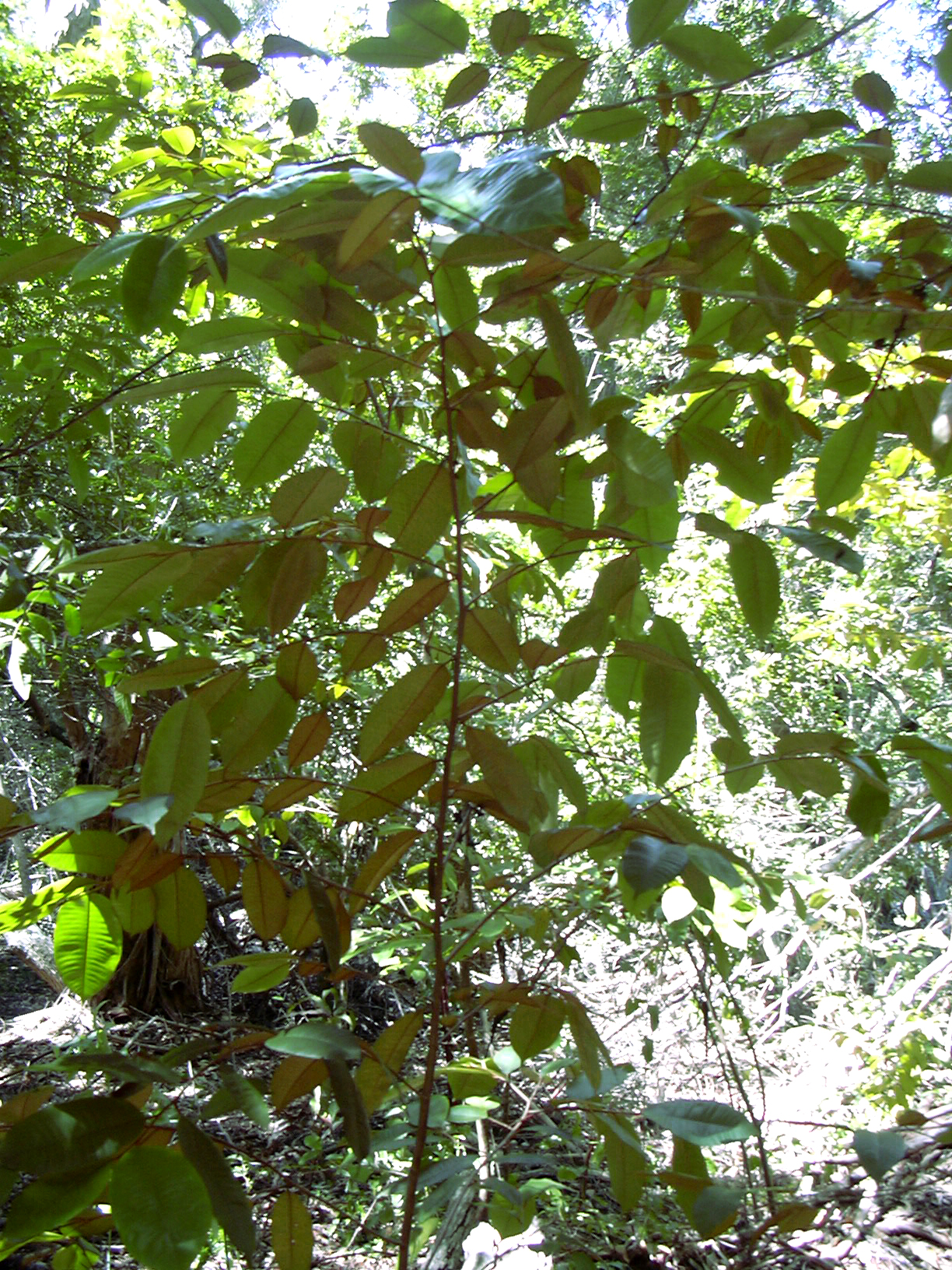
Chrysophyllum oliviforme, commonly known as Satinleaf, Damson Plum, or Wild Star-Apple, is a small evergreen tree native to the southern tip of Florida, the Bahamas, and the Greater Antilles. It belongs to the Sapotaceae, the same tropical family as sapodilla and chicle, and is prized in South Florida landscaping for one standout feature: leaves that are glossy dark green on top and a shimmering coppery brown underneath, flashing between colors with every breeze.
In the wild, satinleaf is a classic component of South Florida’s tropical hardwood hammocks — dense, broadleaf forest islands scattered across Miami-Dade and the Florida Keys — growing alongside other hammock natives such as Gumbo Limbo and Pigeon Plum. Its understated creamy flowers and small purple-black fruit feed a range of birds and pollinators, and the fruit, while edible, has a notably chewy, gum-like texture that makes it more of a wildlife food than a garden snack.
For South Florida gardeners wanting a well-mannered native shade or specimen tree that thrives in limestone soils and tolerates both drought and occasional flooding, satinleaf is an excellent, under-planted choice — ornamental enough for a front yard, tough enough for hammock restoration, and a worthy native alternative among the evergreen trees recommended for Florida landscapes.
Identification
Satinleaf is usually a shrub or small tree 10 to 16 feet tall, though under good conditions in cultivation or favorable hammock sites it can reach 30 feet or more, with a single trunk 8 to 12 inches in diameter and gray-brown, fissured bark.
Leaves
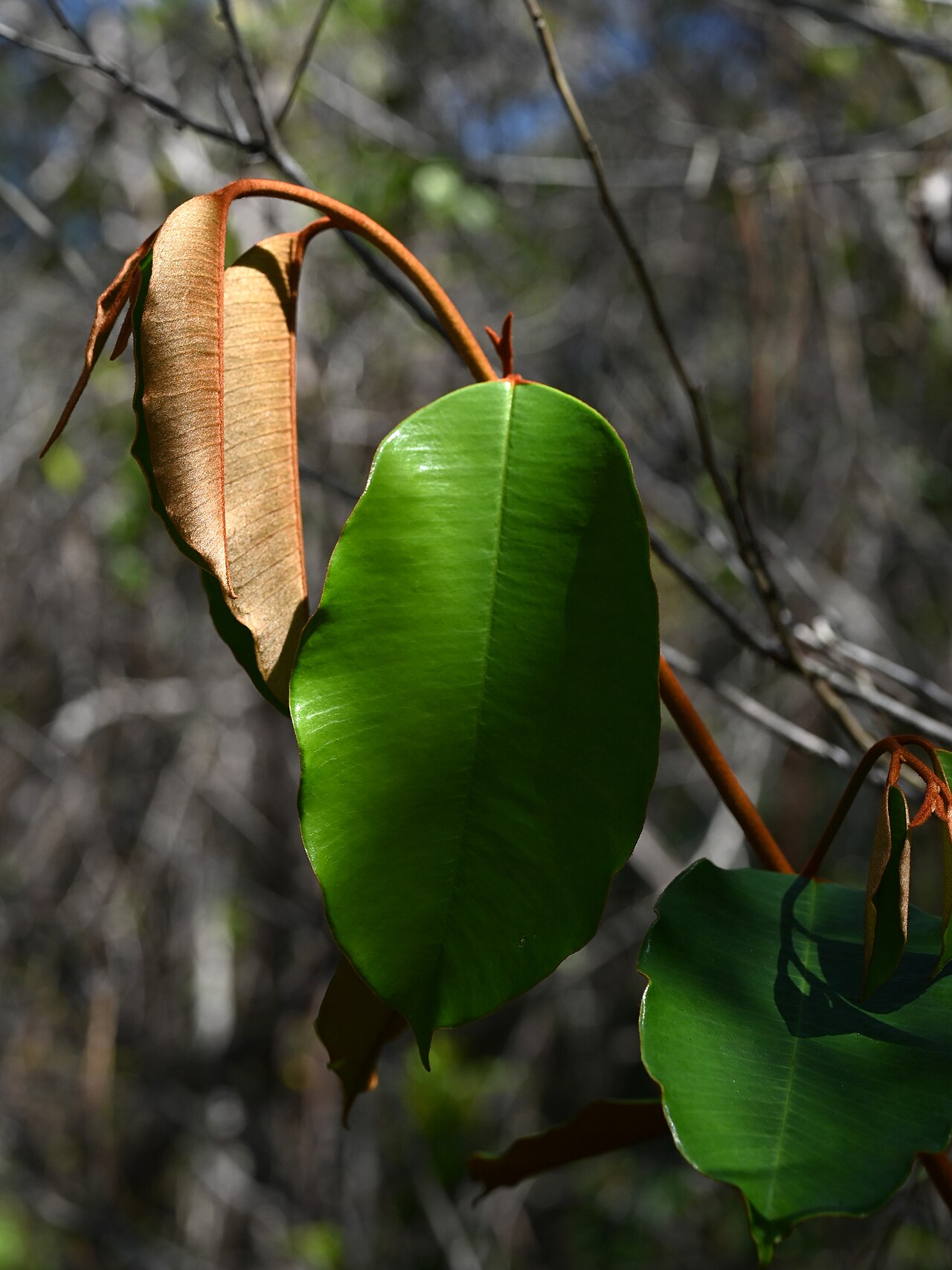
The leaves are the tree’s signature: alternate, simple, ovate, 1 to 4 inches long, with smooth margins and fine pinnate veins. The upper surface is a shiny, almost lacquered dark green, while the underside is covered in fine coppery-brown hairs that give it a soft, satiny sheen — the source of both the common name and much of its ornamental appeal. Leaves are evergreen and present year-round.
Flowers
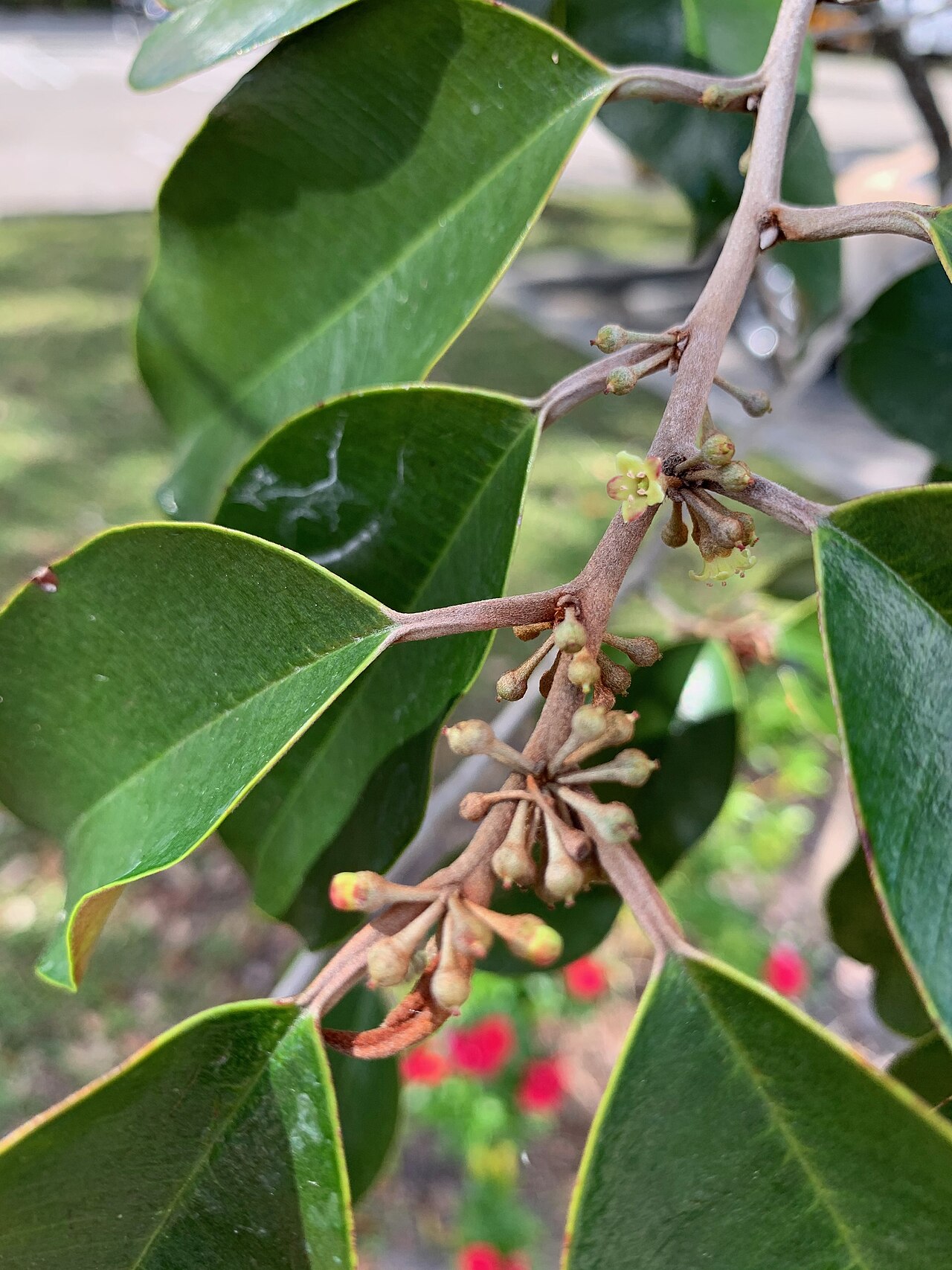
Small, creamy yellow-white flowers with five petals cluster along the twigs at the leaf axils. In Florida, satinleaf can flower nearly year-round, though flowering is heaviest in warmer months. The blossoms are inconspicuous individually but numerous, and are pollinated mainly by small insects.
Fruit
The fruit is a small, olive-sized drupe that ripens from green to a dark purple-black, with a gummy skin surrounding a sweet but chewy white pulp and several hard black seeds. Fruit typically matures by late winter, several months after flowering.
Quick Facts
| Scientific Name | Chrysophyllum oliviforme |
| Family | Sapotaceae (Sapodilla) |
| Plant Type | Evergreen Small Tree / Large Shrub |
| Mature Height | 10–30 ft |
| Growth Rate | Slow to Moderate |
| Sun Exposure | Full Sun to Partial Shade |
| Water Needs | Low to Moderate |
| Soil Type | Limestone, sandy, or well-drained loam |
| Flower Color | Creamy yellow-white |
| Fruit | Purple-black drupe, edible but chewy |
| USDA Hardiness Zones | 10–11 |
Native Range
Satinleaf is native to the southern tip of Florida — chiefly Miami-Dade County and the Florida Keys — as well as the Bahamas and the Greater Antilles. It is not native elsewhere in the continental United States; it is sometimes grown as an introduced ornamental in Hawaiʻi, where it does not occur naturally. In the wild, it grows from near sea level in coastal hammocks to the slightly elevated limestone outcrops that support South Florida’s tropical hardwood hammock forests.
Within these hammocks it grows as an understory to mid-canopy tree alongside other South Florida natives such as Gumbo Limbo (Bursera simaruba), Pigeon Plum (Coccoloba diversifolia), and West Indian Mahogany (Swietenia mahagoni). Tropical hardwood hammock is one of Florida’s most biodiverse and most reduced native plant communities, having lost much of its historical extent to coastal development.
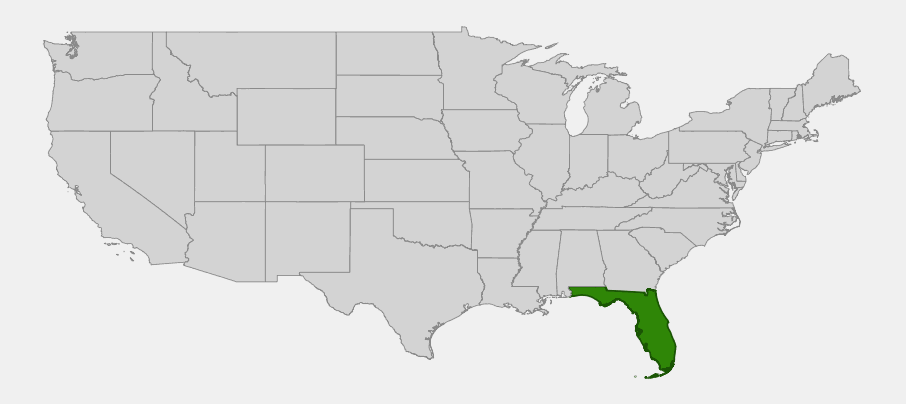
📋 Regional plant lists featuring Satinleaf: none yet — no plantnative.org regional list currently covers South Florida; see our full native plant directory for other Florida-native species.
Growing & Care Guide
Satinleaf is a forgiving, low-maintenance native for South Florida landscapes, adapted to the region’s limestone soils, seasonal rainfall, and occasional drought.
Light
Satinleaf grows well in full sun to partial shade. In its native hammock habitat it often starts life in the shaded understory, so young trees tolerate shade well; mature trees develop fuller, more compact canopies in brighter light, which also shows off the leaf’s two-toned color best.
Soil & Water
It is well adapted to the thin, rocky, alkaline limestone soils typical of South Florida and also grows in sandy or loamy soils, as long as drainage is reasonable. Established trees are drought tolerant, though regular watering during the first year or two speeds establishment. It also tolerates the brief seasonal flooding common in hammock depressions.
Planting Tips
Choose a site with room for a 15- to 25-foot canopy and plant in spring or early summer ahead of the rainy season. Container-grown nursery stock establishes readily; mulch generously to retain soil moisture while the root system develops. Satinleaf is sensitive to prolonged cold, so it should only be planted within its hardy range in South Florida.
Pruning & Maintenance
Minimal pruning is needed beyond removing dead or crossing branches. The tree naturally develops an attractive, rounded form and rarely requires shaping. It is relatively pest- and disease-free in cultivation.
Landscape Uses
- Specimen or accent tree for its striking two-toned leaves
- Hammock restoration plantings in South Florida
- Wildlife gardens — fruit and flowers support birds and pollinators
- Shade tree for smaller residential lots
- Hedgerow or screen planting in mixed native groupings
Wildlife & Ecological Value
Satinleaf’s small creamy flowers attract native bees and other pollinating insects, while its purple-black fruit is eaten by a variety of birds, which disperse the seeds throughout the hammock. Various hammock wildlife, including raccoons and other mammals, also feed on the ripe fruit.
Ecosystem Role
As a mid-canopy tree in tropical hardwood hammock, satinleaf contributes to the dense, multi-layered structure that makes these forests so valuable for wildlife and so effective at buffering interior hammock conditions from heat, wind, and salt spray. Because hammock habitat has been heavily reduced by coastal development, every planting that recreates this structure — including satinleaf alongside associates like Gumbo Limbo and Pigeon Plum — supports a disproportionately biodiverse but shrinking native plant community.
Cultural & Historical Uses
Satinleaf’s fruit has long been eaten casually by South Florida residents and throughout its Caribbean range, though the thick, gummy skin and chewy texture mean it has never been cultivated commercially the way its relative, star apple (Chrysophyllum cainito), has been in the tropics. The wood has seen minor local use for small carpentry, but satinleaf’s primary importance, historically and today, is ornamental and ecological rather than economic. Its striking foliage made it a long-favored landscape tree in Miami and the Keys well before its role in native hammock restoration gained wider recognition.
Frequently Asked Questions
Can you eat satinleaf fruit?
Yes, the ripe purple-black fruit is edible, with a sweet but notably chewy, gum-like texture. It is most often eaten casually off the tree rather than used in cooking, and is at least as valuable as a wildlife food as a human snack.
Why are the leaves two different colors?
The glossy dark green top and coppery, satin-textured underside are a natural feature of the species, caused by fine hairs on the leaf’s lower surface. This contrast is most visible when wind flips the leaves, which is part of why the tree is so popular ornamentally.
How cold-hardy is satinleaf?
Satinleaf is a tropical species suited to USDA zones 10–11 and is sensitive to freezing temperatures. It should only be planted in South Florida and similarly frost-free areas, not further north in the state.
Is satinleaf fast-growing?
It grows at a slow to moderate pace, generally slower than many popular ornamental trees, which contributes to its naturally tidy, compact form and reduces the need for pruning.
Is satinleaf related to star apple?
Yes — both belong to the genus Chrysophyllum in the Sapotaceae. Star apple (Chrysophyllum cainito) is a larger, commercially cultivated tropical fruit tree and satinleaf’s closest relative, but unlike satinleaf, it is not native to Florida.

Looking for a nursery that carries Satinleaf?
Browse our native plant nursery directory: Florida

