
Spanish Stopper (Eugenia foetida)
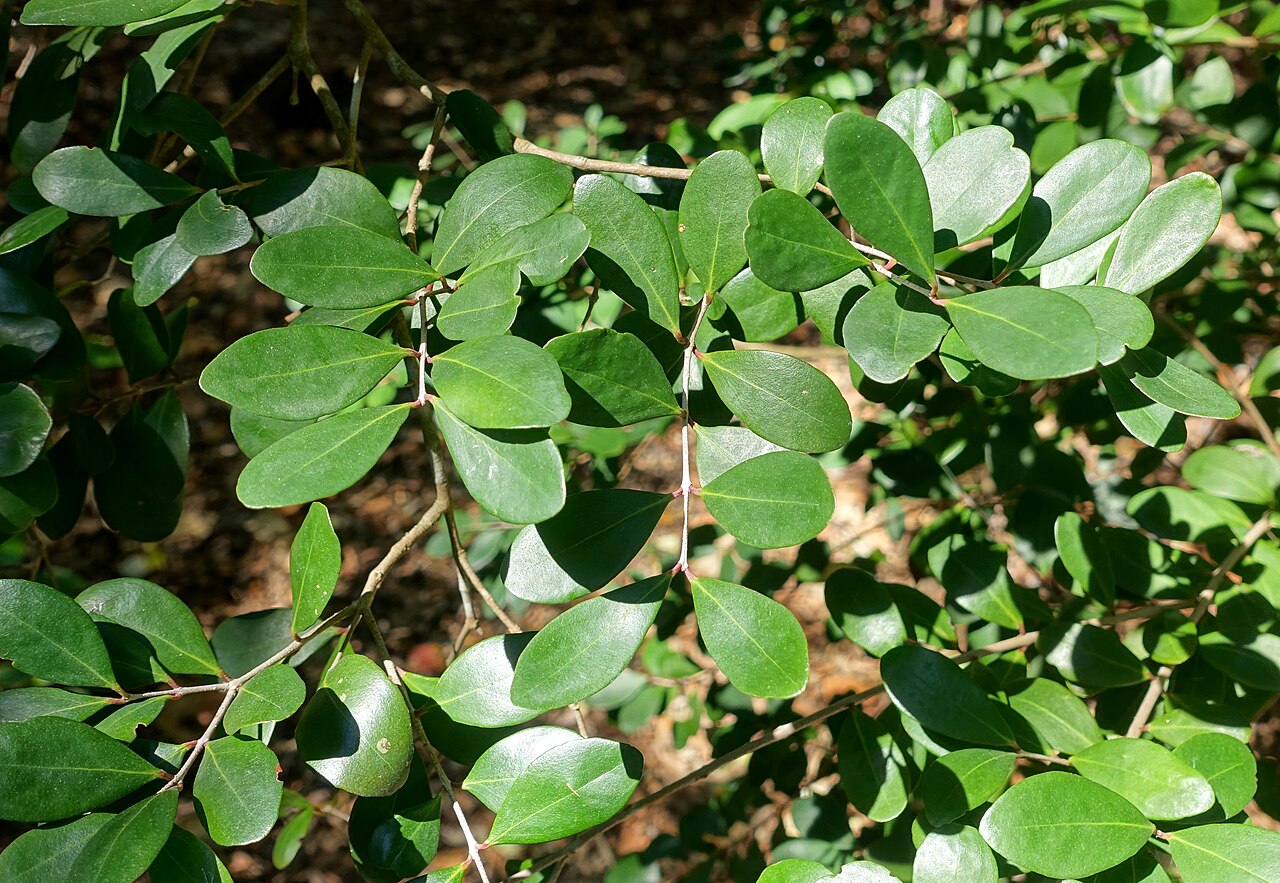
Eugenia foetida, commonly called Spanish Stopper or Boxleaf Stopper, is a dense, small evergreen tree or large shrub native in the United States only to the coastal hammocks of southern and central peninsular Florida. It belongs to a group of related native Florida “stopper” species in the myrtle family, all valued for their fine-textured, aromatic foliage and tidy, easily shaped growth habit.
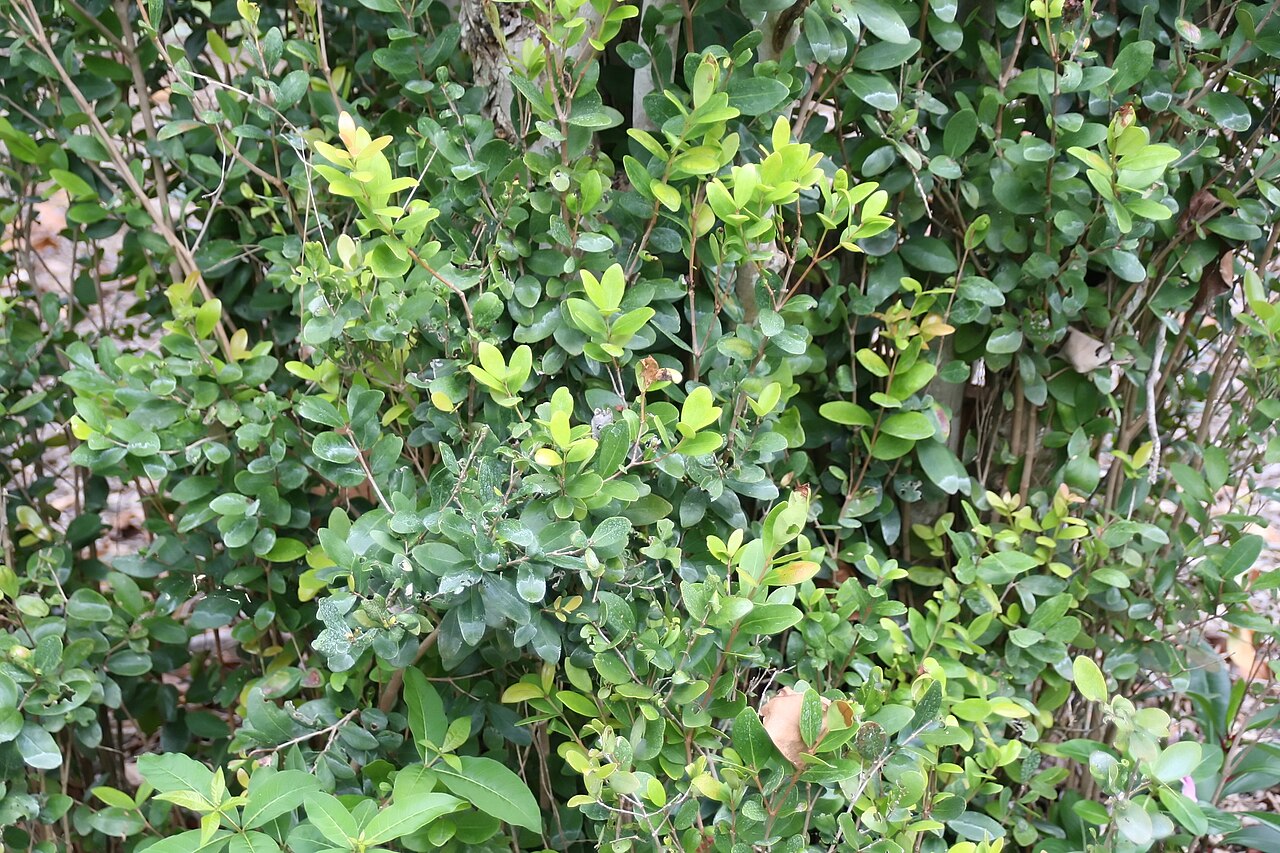
Spanish stopper typically grows 10 to 20 feet tall, often as a multi-stemmed, rounded shrub or small tree with dense, fine-textured, glossy dark green foliage and smooth, pale gray to tan bark that exfoliates in thin flakes with age. Small white flowers appear intermittently through the warm months, followed by small black fruit relished by hammock birds. The common name “stopper” is shared across several related Florida Eugenia and Myrcianthes species and, by most accounts, refers to historical use of the astringent fruit or bark as a folk remedy for digestive upset.
Because of its naturally dense, compact form, fine-textured leaves, and good tolerance of both sun and salt exposure, Spanish stopper has become a popular landscape plant in South and Central Florida, used extensively as a hedge, screen, and small specimen tree well beyond its immediate native hammock habitat.
Identification
Spanish stopper is identified by its small, opposite, glossy evergreen leaves with a translucent gland-dotted surface typical of the myrtle family, smooth pale bark, and a naturally dense, twiggy growth habit.
Bark & Stems
Bark is smooth and pale gray to light tan, often mottled, and peels or flakes in thin, papery patches on older stems — a trait shared by several related Florida stopper species. Young twigs are slender and finely hairy, aging to smooth gray-brown.
Leaves
Leaves are opposite, simple, elliptical to oblong, typically 1 to 2.5 inches long, leathery, glossy dark green above and paler below, with tiny translucent oil glands visible when held up to light — a hallmark of the myrtle family that also gives the crushed foliage a faint, slightly unpleasant odor behind the species name foetida.
Flowers
Small, four-petaled white flowers, about 0.25 inch across, appear in small axillary clusters mainly from spring through fall, with flowering often triggered by rainfall; the blossoms are modest but numerous and attract a range of small pollinating insects.
Fruit & Seeds
The fruit is a small, rounded berry about 0.25 to 0.4 inch across, ripening from green through red to black, each containing one or two seeds. Fruit ripens over an extended period and is quickly consumed by hammock and garden birds.
Quick Facts
| Scientific Name | Eugenia foetida |
| Family | Myrtaceae (Myrtle) |
| Plant Type | Evergreen shrub or small tree |
| Mature Height | 10–20 ft |
| Mature Spread | 8–15 ft |
| Growth Rate | Slow to moderate |
| Sun Exposure | Full Sun to Part Shade |
| Water Needs | Low to moderate |
| Soil Type | Limestone-based or sandy, well-drained soils |
| Soil pH | Neutral to alkaline |
| Bloom Time | Spring–fall, intermittent |
| Flower Color | White |
| Fall Color | Evergreen; no notable fall color |
| Fruit | Small black berry, ripens over extended period |
| Deer Resistant | Yes |
| USDA Hardiness Zones | 10 – 11 |
Native Range
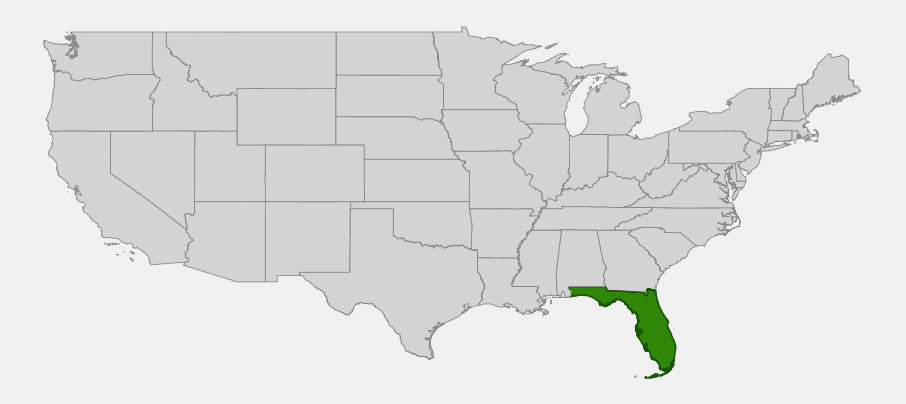
In the United States, Spanish stopper is native to the coastal and inland hammocks of southern and central peninsular Florida, roughly from the Florida Keys and Miami-Dade County northward along both coasts into the central peninsula. It has limited cold tolerance, which sets the approximate northern boundary of its natural range.
Within Florida, Spanish stopper grows in tropical and subtropical hardwood hammocks, coastal strand vegetation, and pine rockland edges, usually as an understory or edge species beneath or alongside larger hammock trees. It tolerates a range of light conditions from fairly deep hammock shade to full coastal sun.
Outside Florida, Spanish stopper is found throughout the Caribbean, including the Bahamas, Cuba, and other Antillean islands, where it occupies similar dry coastal and hammock forest habitats.
📋 Regional plant lists featuring Spanish Stopper: none yet — no plantnative.org regional list currently covers peninsular Florida hammock shrubs; see our full native plant directory for other Florida-native species.
Growing & Care Guide
Spanish stopper is one of the most widely planted native Florida hammock shrubs in cultivation, prized for its naturally dense, fine-textured form and reliable performance as a hedge or specimen plant in both coastal and inland Florida landscapes.
Light
Spanish stopper grows well across a wide range of light conditions, from full sun to fairly deep part shade, making it a versatile choice for both open yards and shaded understory plantings beneath larger trees.
Soil & Water
This species tolerates both limestone-based and sandy Florida soils, provided drainage is reasonably good. It is moderately drought tolerant once established and benefits from occasional deep watering during extended dry periods, especially young plants still developing a deep root system. It also has good tolerance for salt spray, making it suitable for near-coastal plantings.
Planting Tips
Space plants 4 to 8 feet apart for a hedge or screen, or give specimen plants room to develop their naturally rounded, multi-trunked form. Spanish stopper transplants readily from containers and establishes relatively quickly compared with some other native hammock species.
Pruning & Maintenance
Spanish stopper responds very well to shearing and shaping, which is part of why it is so popular as a formal or informal hedge in Florida landscapes; left unpruned, it naturally develops an attractive, dense, rounded form without much intervention. It is generally free of serious pests and diseases.
Landscape Uses
Spanish stopper is widely used as:
- Hedge or privacy screen, formal or informal
- Small specimen tree for patios and courtyards
- Coastal and salt-tolerant landscape planting
- Hammock restoration and native wildlife gardens
Wildlife & Ecological Value
Spanish stopper’s dense evergreen foliage and extended fruiting period make it a dependable, year-round wildlife resource in Florida landscapes and natural hammocks alike.
For Birds
The small black fruits, which ripen over an extended period through much of the year, are readily eaten by mockingbirds, cardinals, catbirds, and many migrating songbirds, while the dense branching offers excellent nesting cover and shelter from both weather and predators.
For Mammals
Small hammock mammals use the dense shrub layer Spanish stopper forms for cover, and fallen fruit is taken opportunistically by ground-foraging wildlife.
For Pollinators
The small white flowers, though modest individually, are produced in good numbers over a long bloom season and attract native bees, small butterflies, and other pollinating insects, particularly after rain triggers a flowering flush.
Ecosystem Role
As a dense, mid-story hammock shrub, Spanish stopper contributes to the layered structure that gives South Florida hammocks their characteristic closed-canopy microclimate, and its long, staggered fruiting season helps provide a more continuous food supply for hammock wildlife than species that fruit only briefly.
Cultural & Historical Uses
The common name “stopper,” shared by Spanish stopper and several related Florida Eugenia and Myrcianthes species, is widely attributed to historical folk use of the astringent fruit or bark as a home remedy intended to “stop” diarrhea and other digestive upset, a practice documented across the Caribbean region among several related myrtle-family plants with similarly astringent fruit.
Beyond this folk remedy tradition, Spanish stopper has no significant documented history of major commercial or construction use, likely owing to its relatively small stature compared with larger hammock timber trees; its primary modern significance in Florida is horticultural, as one of the most reliably available and widely planted native hammock shrubs in the nursery trade.
Frequently Asked Questions
Why is it called “Spanish stopper”?
The “stopper” name, shared by several related Florida myrtle-family shrubs, traces to historical folk use of the astringent fruit or bark as a home remedy for digestive upset. “Spanish” likely reflects the species’ wide Caribbean and historically Spanish-colonial range.
Is Spanish stopper a good hedge plant?
Yes, it is one of the most popular native Florida hedge plants, thanks to its naturally dense, fine-textured, easily shaped growth habit and good tolerance for shearing.
Does Spanish stopper tolerate salt and coastal conditions?
Yes, it has good salt tolerance and is a reliable choice for near-coastal Florida landscapes, in addition to inland hammock sites.
Where does Spanish stopper grow natively in the U.S.?
Only in southern and central peninsular Florida, within tropical hardwood hammocks and coastal strand habitat; it is also found throughout the Caribbean.
How much sun does Spanish stopper need?
It is adaptable to a wide light range, performing well from full sun to fairly shaded hammock understory conditions, which adds to its versatility in the landscape.

Looking for a nursery that carries Spanish Stopper?
Browse our native plant nursery directory: Florida
Spanish stopper pairs well with other Florida hammock natives such as Saw Palmetto and Pigeon Plum. For design ideas that welcome birds and pollinators, see our pollinator garden design basics.

