
Creek Plum (Prunus rivularis)
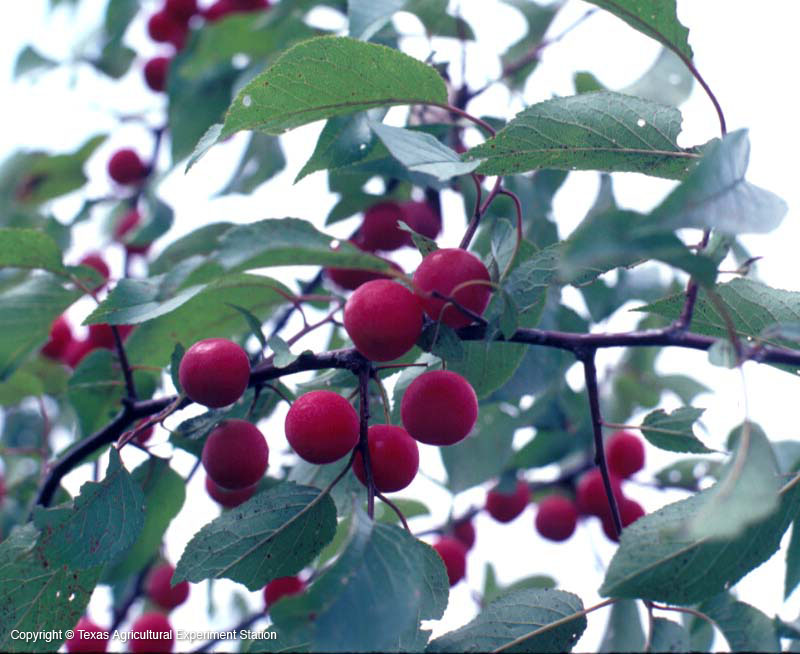
Prunus rivularis, commonly known as Creek Plum (also called Hog Plum or Thicket Plum), is a thicket-forming native shrub to small tree of the southern Great Plains. Its Latin name literally means “of streams,” a nod to the creek banks, draws, and limestone canyons where it is most often found. It belongs to the rose family (Rosaceae) and is a close cousin of American plum (Prunus americana) and Chickasaw plum (Prunus angustifolia), sharing their habit of spreading by root suckers into dense, wildlife-rich colonies.
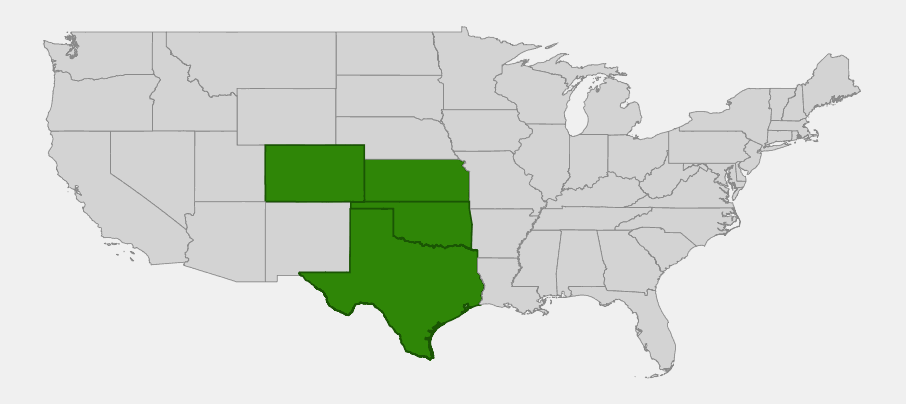
Creek plum is native to a fairly compact range centered on south-central Kansas, southeastern Colorado, Oklahoma, and central Texas, where it grows on stony upland sites, in wooded canyons, and along valley bottoms and creek corridors. It is one of the earliest native shrubs to bloom each spring, covering its bare branches in small white flowers well before the leaves emerge, followed in summer by clusters of tart, cherry-sized red to yellow plums.
For gardeners in the southern Plains, creek plum is a tough, low-maintenance choice for erosion control, wildlife hedgerows, and naturalized plantings. It tolerates heat, drought, and poor rocky soils that defeat many other woody plants, while still delivering a strong early pollinator bloom and fruit that feeds birds and mammals through the summer.
Identification
Creek plum typically grows as a many-stemmed thicket-forming shrub or small tree, usually 3 to 15 feet tall, though old thickets in favorable sites can reach taller. Because it spreads by root suckers, a single planting slowly expands into a dense colony of upright stems rather than staying as an isolated single-trunked specimen.
Bark & Stems
Young twigs are slender, reddish-brown, and smooth, sometimes ending in a short, stiff spine-like tip typical of wild plums. Older bark darkens to gray-brown and develops shallow fissures and small horizontal lenticels. The wood is dense and the stems are notably wiry and resilient, allowing the thickets to resist wind and browsing pressure.
Leaves
Leaves are simple, alternate, and up to about 2½ inches long, ovate to narrowly elliptic, tapering to a point. The margins carry small, gland-tipped teeth, a helpful identification feature shared with other native plums. New leaves emerge after the flowers and are a glossy medium green above, paler beneath, turning undistinguished yellow-green in fall before dropping.
Flowers & Fruit
Flowers open in early spring, from late February into April depending on latitude, appearing in clusters of two to four along the bare branches before or just as the leaves unfold. Each flower is white, about ½ inch wide, with five rounded petals — a showy, fleeting display that makes creek plum easy to spot from a distance against the still-dormant landscape.
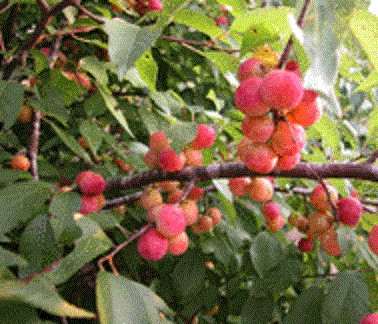
The fruit is a small drupe, roughly ½ to ¾ inch in diameter, ripening from green to red or sometimes yellow by mid-to-late summer. It is tart but edible, with a single large stone, and has long been gathered for jelly even though its flavor is generally considered less refined than that of Chickasaw plum.
Quick Facts
| Scientific Name | Prunus rivularis |
| Family | Rosaceae (Rose) |
| Plant Type | Deciduous thicket-forming shrub / small tree |
| Mature Height | 3–15 ft |
| Growth Habit | Colonial, spreads by root suckers into thickets |
| Growth Rate | Moderate |
| Sun Exposure | Full Sun to Light Shade |
| Water Needs | Low to moderate; drought tolerant once established |
| Soil Type | Rocky, calcareous or clay soils; well-drained |
| Soil pH | Neutral to alkaline |
| Bloom Time | Late February – April, before leaves |
| Flower Color | White |
| Fruit | Tart red to yellow plums, ½–¾ in, ripening summer |
| Deer Resistant | No (browsed by deer; thickets also used as cover) |
| USDA Hardiness Zones | 5–8 |
Native Range
Creek plum’s native range is centered on the southern Great Plains: south-central Kansas and southeastern Colorado, south through Oklahoma to central and south-central Texas. It is a plant of stony upland prairie breaks, wooded canyons, limestone outcrops, and the draws and bottoms along intermittent and permanent creeks — habitats that reflect its scientific name, from the Latin rivularis, “of a brook or stream.”
Within this range it often grows alongside other tough, drought-adapted woody plants such as American plum, roughleaf dogwood, and various hawthorns, forming dense thicket communities on slopes and canyon rims where few other shrubs can establish. Because its native range is fairly narrow and specific, creek plum is sometimes confused in nursery and seed catalogs with the more widespread American and Chickasaw plums; gardeners outside its core range are usually better served by those related species, which are more broadly native.
📋 Regional plant lists featuring Creek Plum: Nebraska, Kansas & Eastern Colorado · Arkansas, Louisiana, Eastern Oklahoma & Eastern Texas · South & West Texas
Growing & Care Guide
Creek plum is built for tough conditions. In its native canyons and prairie breaks it survives drought, poor rocky soil, and grazing pressure, which makes it a forgiving choice for low-input native landscaping once it’s given room to spread.
Light
Plant creek plum in full sun for the best flowering and fruit set. It tolerates light shade along woodland edges and canyon rims, the kind of partial cover it often grows under in the wild, but flowering is noticeably reduced in heavier shade.
Soil & Water
Creek plum is adapted to rocky, calcareous, and clay soils and does not need rich garden loam to thrive. It is drought tolerant once established and generally needs no supplemental watering beyond its first one to two growing seasons, except during extended dry spells. Good drainage matters more than fertility; avoid soils that stay saturated for long periods.
Planting Tips
Because creek plum spreads by root suckers, give it plenty of room from garden beds, foundations, and mowed turf where an expanding thicket would be unwelcome. It is best used where a naturalizing colony is the goal — a slope, a fence line, or a wildlife border — rather than as an isolated specimen. Plant container stock in fall or early spring, and expect several years before a thicket fills in.
Pruning & Maintenance
Little pruning is required. Remove dead or damaged stems in late winter, and thin out excess suckers at the colony’s edge if you need to control its spread. Creek plum tolerates occasional hard cutback and resprouts readily from the root crown, which is part of why it persists so well on disturbed, grazed, or periodically burned prairie sites.
Landscape Uses
- Erosion control on rocky slopes, canyon rims, and creek banks
- Wildlife hedgerows and screening, especially paired with American plum or Chickasaw plum
- Naturalized prairie-edge plantings where a thicket habit is welcome
- Pollinator gardens, for its early, reliable spring bloom
- Dry, rocky sites where few other flowering shrubs tolerate the conditions
Wildlife & Ecological Value
Creek plum pulls far more ecological weight than its modest size suggests, especially in the early spring weeks when little else in the southern Plains landscape is blooming.
For Pollinators
The early, abundant white flowers are an important nectar and pollen source for native bees emerging in late winter and early spring, along with honeybees and a range of other flying insects, at a time of year when few other woody plants are in bloom.
For Birds
Dense creek plum thickets provide excellent nesting cover and protection from predators for small songbirds, mockingbirds, and other thicket-dwelling species. Fruit-eating birds take the ripe plums through summer, helping disperse the seeds.
For Mammals
The fruit is eaten by raccoons, foxes, coyotes, and other mammals, and deer browse the foliage and twigs, particularly in winter. The thorny, tangled stems of a mature thicket also give rabbits and other small mammals cover from predators.
Ecosystem Role
As a colonial shrub on erosion-prone rocky slopes and creek banks, creek plum helps stabilize soil with its spreading root systems. Its thickets add structural diversity to otherwise open grassland and canyon habitats, creating shelter belts that many prairie wildlife species depend on.
Cultural & Historical Uses
Like other native wild plums, creek plum fruit has long been gathered by both Indigenous peoples and later settlers of the southern Plains for fresh eating and for jelly and preserves, though its tart flavor is generally considered less refined than that of Chickasaw plum. The wood, like that of other small native plums, has seen only minor local use, mostly as firewood, given the shrub’s small stem diameter.
Historically, creek plum thickets along canyon rims and draws also served a practical role for rural landowners as natural windbreaks and living fences, their dense, thorny growth discouraging livestock movement across property lines long before wire fencing was common.
Frequently Asked Questions
Is creek plum the same as Chickasaw plum?
No. Creek plum (Prunus rivularis) is a distinct species native mainly to Kansas, southeastern Colorado, Oklahoma, and central Texas, while Chickasaw plum (Prunus angustifolia) has a much broader native range across the southern and eastern United States. The two are closely related and similar in appearance, but creek plum’s fruit is generally considered more tart and less flavorful.
Can you eat creek plums?
Yes. The fruit is edible raw or cooked, though it is tart and best known for jelly and preserves rather than fresh eating. Leave some fruit for birds and wildlife, which rely on it through the summer.
How fast does creek plum spread?
Creek plum spreads gradually by root suckers, slowly expanding from a single planting into a multi-stemmed thicket over several years. Where a spreading colony isn’t wanted, suckers at the colony’s edge can be mowed or cut back each year.
Does creek plum need another plum nearby to fruit?
Like many plums, creek plum generally produces more fruit with cross-pollination from a genetically different plant nearby, whether another creek plum or a related wild plum species flowering at the same time. A single isolated plant may flower well but set less fruit.
Is creek plum drought tolerant?
Yes. It is well adapted to the rocky, often dry uplands and canyons of its native range and needs little supplemental water once established, making it a practical choice for low-water native landscaping in its region.

Looking for a nursery that carries Creek Plum?
Browse our native plant nursery directory: Colorado · Kansas · Oklahoma · Texas
Related reading: Native Hedgerows for Birds · The Best Texas Native Plants for Landscaping

