
Sarvis Holly (Ilex amelanchier)
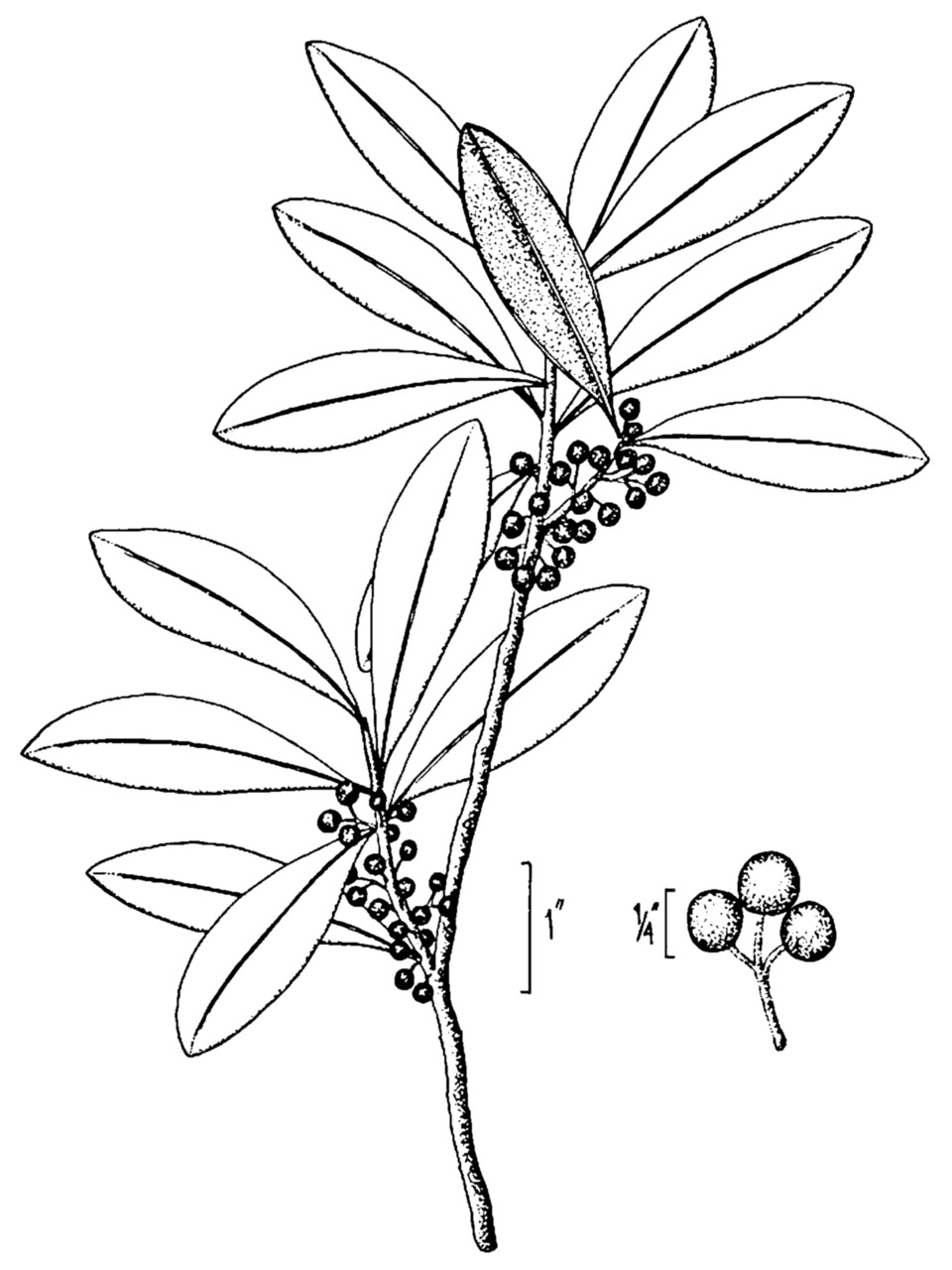
Ilex amelanchier, commonly known as Sarvis Holly (also called Swamp Holly or Serviceberry Holly), is one of the rarest native hollies of the southeastern coastal plain. It is a deciduous, single-stemmed shrub or small tree that grows almost exclusively in blackwater floodplains and the clay-based depression wetlands known as Carolina bays, from southeastern North Carolina south and west to the Gulf Coast. Its species name honors its resemblance to serviceberry (Amelanchier), a nod from the botanists who first described it.
Sarvis holly is a close relative of winterberry (Ilex verticillata) and mountain holly (Ilex mucronata), sharing their deciduous habit and showy fall fruit display, but it is considerably rarer in the wild — recorded from only a handful of counties across its entire range. Despite this rarity, it is slow but long-lived once established and is available commercially, making it a worthwhile choice for gardeners wanting a genuinely uncommon native plant for a wet site.
For gardeners in the Southeast with a consistently moist or seasonally flooded spot, sarvis holly offers a long season of interest: unremarkable spring flowers give way to a striking fall and winter display of dull, velvety rosy-red berries set against bare branches, after the plant’s leaves — unlike most hollies — drop for winter.
Identification
Sarvis holly grows as a large, upright, deciduous shrub or small single-stemmed tree. Unlike the broadleaf evergreen hollies most gardeners picture, it drops its leaves in fall, revealing an open branching structure that displays its fruit clearly through the winter months.
Leaves
The leaves are dull green above and noticeably lighter green beneath, with fine, raised, pubescent (hairy) white veins visible on the lower surface — a useful identification feature up close. Leaf shape and texture recall serviceberry foliage, which is the basis for the species’ common and scientific names.
Flowers & Fruit
Like other hollies, sarvis holly is dioecious, meaning individual plants are either male or female; a female plant needs a male plant of the same species nearby to set fruit. Flowers are small and inconspicuous, appearing on new growth in spring. The fruit, which follows on female plants, is a dull, velvety rosy-red drupe that ripens in fall and persists into winter, standing out beautifully against the bare gray branches once the leaves have dropped.
Bark & Form
Sarvis holly typically grows as a single-stemmed shrub or small tree rather than the multi-stemmed thicket form common in many native shrubs. Growth is slow, and plants are slow to reach maturity, but they are correspondingly long-lived once established.
Quick Facts
| Scientific Name | Ilex amelanchier |
| Family | Aquifoliaceae (Holly) |
| Plant Type | Deciduous single-stemmed shrub / small tree |
| Mature Height | 8–15 ft |
| Growth Rate | Slow |
| Sun Exposure | Full Sun to Part Shade |
| Water Needs | High; highly tolerant of flooding |
| Soil Type | Coarse to medium-textured, acidic, moist to wet soils |
| Soil pH | Acidic |
| Bloom Time | Spring, on new growth |
| Fruit | Dull, velvety rosy-red drupes; fall into winter (female plants only) |
| Fall/Winter Interest | Persistent red fruit on bare branches |
| Rarity | Rare in the wild; recorded in only a few counties across its range |
| USDA Hardiness Zones | 7–9 |
Native Range
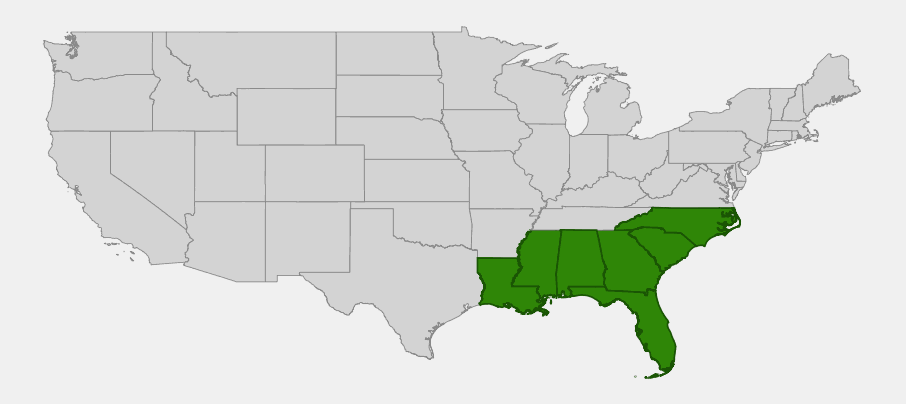
Sarvis holly occurs in a narrow band of the southeastern coastal plain, from southeastern North Carolina — its northern range limit, where it has been documented in only about seven counties — south through South Carolina, Georgia, Florida, Alabama, and Mississippi, to Louisiana. Throughout this range it is rare and local rather than common, occurring in scattered populations tied to very specific wetland habitats.
Typical habitat is blackwater river floodplains and the clay-based depression wetlands of the Carolina bays, where standing or slow-moving acidic water and coarse to medium-textured soils create the consistently wet conditions this holly needs. It tolerates flooding extremely well, a trait reflected in one of its common names, swamp holly.
📋 Regional plant lists featuring Sarvis Holly: North Carolina & South Carolina · Georgia, Alabama & Mississippi · Arkansas, Louisiana, Eastern Oklahoma & Eastern Texas
Growing & Care Guide
Sarvis holly’s main requirement is consistent moisture — give it a genuinely wet site and it is a low-maintenance, long-lived, pest-free native shrub with few demands beyond that.
Light
Sarvis holly grows well in full sun to part shade. In the wild it is often found in open to lightly wooded wetlands, so either condition suits it as long as soil moisture stays high.
Soil & Water
This is a wetland species and performs best with coarse- to medium-textured, acidic soil that stays consistently moist to wet. It is highly tolerant of flooding and periodic standing water, making it well suited to low spots, pond edges, and rain gardens that others natives might find too wet. It also shows some drought tolerance once established, but will not thrive in a typical dry garden bed.
Planting Tips
Because sarvis holly is dioecious, plant both a male and a female if you want fruit; a single plant of either sex will grow and flower but a female alone will not set berries. Choose a permanently or seasonally wet site and be patient — this is a slow-growing shrub that takes time to reach size, but it rewards that patience with a long lifespan.
Pruning & Maintenance
Sarvis holly can be pruned to shape as needed. Because next year’s flowers and fruit form on new growth, pruning right after flowering in spring, rather than in winter, preserves the coming season’s fruit display. The species has no known serious disease or insect pest problems.
Landscape Uses
- Rain gardens and other consistently wet planting areas
- Native plant and winter-interest gardens, for its persistent red fruit display
- Accent planting, foundation planting, borders, or informal hedges
- Conservation and restoration plantings in Carolina bay and floodplain wetland habitats
- Pairing with other deciduous hollies such as winterberry holly or possumhaw (deciduous holly) for an extended season of berry display
Wildlife & Ecological Value
As a deciduous holly with persistent winter fruit, sarvis holly provides food and habitat value typical of its genus, concentrated in the colder months when resources are scarcer.
For Birds
The bright red berries that persist through fall and winter, after the leaves have dropped, are an important food source for overwintering and migrating songbirds, much like the berries of related deciduous hollies such as winterberry.
For Pollinators
Though individually small, the spring flowers attract native bees and other pollinating insects, which are necessary for fruit set on female plants given the species’ dioecious habit.
Ecosystem Role
Sarvis holly is a specialist of blackwater floodplain and Carolina bay wetlands, habitats that are themselves uncommon and ecologically important. Because the species is rare and tied closely to these wetland types, individual populations and the habitats that support them are worth protecting, and garden plantings of nursery stock help take pressure off wild populations while supporting the pollinators and birds that use the plant.
Cultural & Historical Uses
Sarvis holly has no significant documented history of use by Indigenous peoples or settlers, unlike some better-known hollies such as yaupon, which was used to brew a ceremonial tea. Its primary significance has always been ecological and, more recently, horticultural — valued today chiefly as an uncommon, long-lived native shrub for wet native plant gardens rather than for any traditional practical use.
Frequently Asked Questions
Is sarvis holly evergreen or deciduous?
Deciduous. Unlike the broadleaf evergreen hollies most people picture, sarvis holly drops its leaves in fall, which actually helps show off its red winter fruit on the bare branches.
Do I need a male and female plant to get berries?
Yes. Sarvis holly is dioecious, with separate male and female plants. Only female plants produce berries, and they need a male plant of the same species growing nearby to be pollinated.
How wet does the soil need to be?
Very wet is fine. Sarvis holly is highly tolerant of flooding and naturally grows in blackwater floodplains and seasonally inundated Carolina bay wetlands, making it a good choice for low, poorly drained spots where many other shrubs struggle.
Is sarvis holly rare?
Yes, it is one of the rarer native hollies, recorded from relatively few counties across its entire range despite being available from specialty native plant nurseries. Choosing nursery-propagated plants for your garden helps take pressure off these limited wild populations.
How fast does sarvis holly grow?
Slowly. It takes time to reach mature size, but established plants are correspondingly long-lived, making it a worthwhile long-term investment for a wet native garden.

Looking for a nursery that carries Sarvis Holly?
Browse our native plant nursery directory: North Carolina · South Carolina · Georgia & Florida · Alabama · Mississippi & Louisiana
Related reading: Native Hedgerows for Birds

