
Buccaneer Palm (Pseudophoenix sargentii)
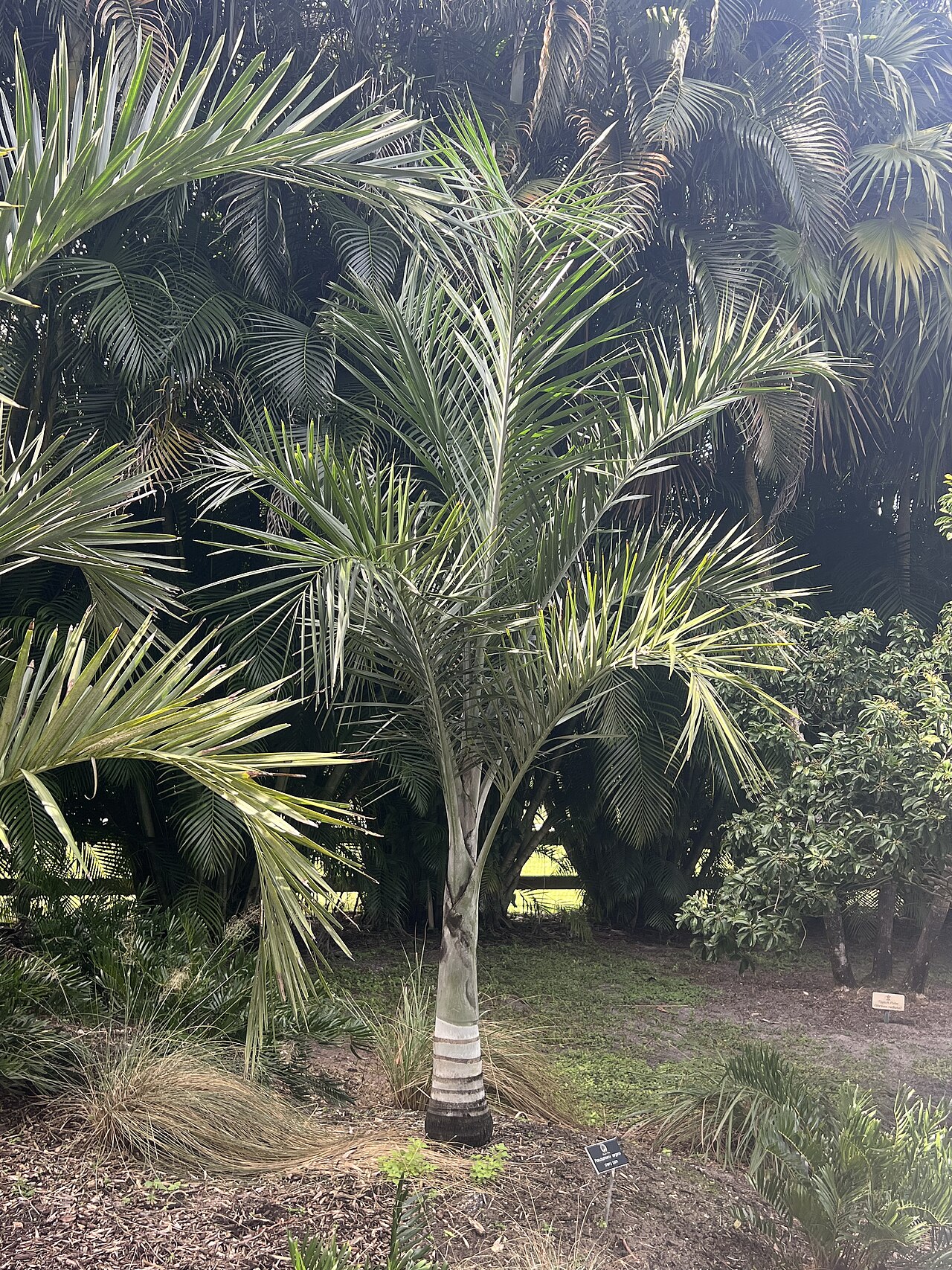
Pseudophoenix sargentii, the Buccaneer Palm (also called Florida cherry palm or Sargent’s cherry palm), is one of the rarest native palms in the continental United States, confirmed wild today on only a handful of islands in the Florida Keys. It grows in the rockland hammocks that cap exposed limestone along the Keys and the Miami Rock Ridge, a plant so closely tied to that thin strip of habitat that losing the hammock essentially means losing the palm. Where red mangrove and black mangrove dominate Florida’s tidal shoreline, buccaneer palm belongs to the drier, shadier hammock just behind it — rooted in bare rock, not mud.
This is a modestly sized, single-trunked feather palm, usually 10 to 25 feet tall, with a smooth gray trunk that is often swollen near the base and marked by closely spaced leaf-scar rings, giving it a distinctive bamboo-like or “bottle” look even without a crownshaft. The arching, blue-green to gray-green fronds and pale, waxy stem distinguish it at a glance from Florida’s more common native palms, and in late summer it produces showy clusters of red to maroon, cherry-sized fruit that give the palm both its “cherry palm” nickname and much of its ornamental appeal.
Buccaneer palm is listed as endangered by the State of Florida, and a state permit is required to collect it from the wild — reputable nurseries propagate it from Florida seed stock specifically to protect the genetic integrity of the native population. In the landscape it is slow-growing, salt- and drought-tolerant, and well suited to the same limestone-based, alkaline soils that define its native hammock habitat, making it a strong, low-maintenance choice for South Florida gardens that want a genuinely native palm rather than one of the many non-native ornamentals sold under similar names.
Identification
Buccaneer palm is a solitary, self-cleaning feather palm without a true crownshaft; instead, the smooth gray trunk itself — pale, ringed, and often noticeably swollen toward the base — is the palm’s most reliable field mark, especially on younger plants growing in rocky hammock understory.
Bark & Stems
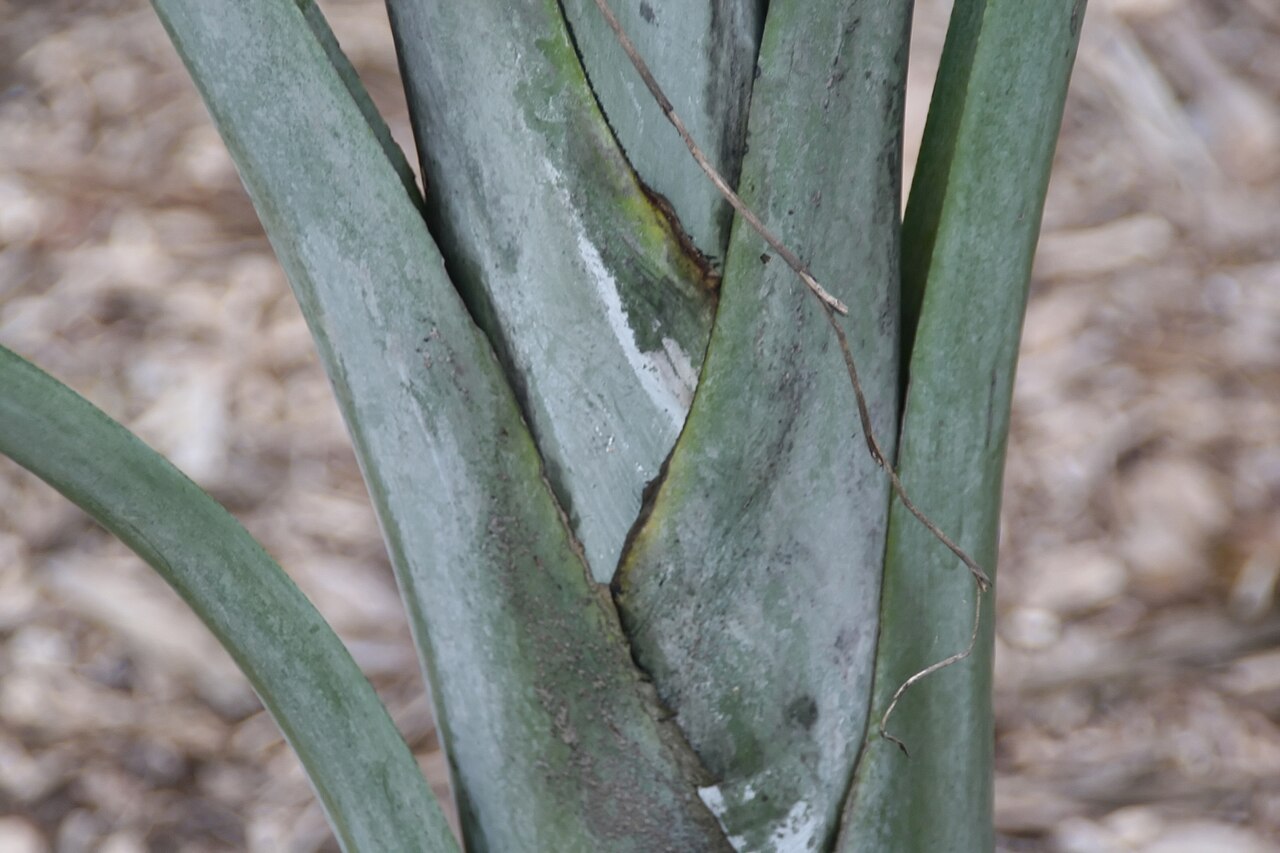
The trunk is gray to grayish-white, smooth, and closely ringed with the scars of old leaf bases, frequently bulging or bottle-shaped near the ground before tapering upward. Unlike royal palm or other crownshaft palms, buccaneer palm has no green crownshaft; the leaf bases simply wrap and then shed cleanly, leaving the ringed pattern behind.
Leaves
Fronds are pinnate (feather-shaped), 4 to 8 feet long, arching gracefully from the crown with a waxy, blue-green to gray-green cast on both leaflet surfaces — a useful identification clue, since few other Florida native palms show such a consistently glaucous blue-green frond color. A mature crown typically holds a modest number of fronds, giving the canopy an open, airy look rather than a dense one.
Flowers
Small, pale yellow-green flowers are borne in loose, branched clusters (inflorescences) that emerge among or just below the leaves. Buccaneer palm flowers are perfect (containing both male and female parts), unusual among palms, and are not showy, but the inflorescence itself becomes conspicuous as it matures into fruit.
Fruit & Seeds
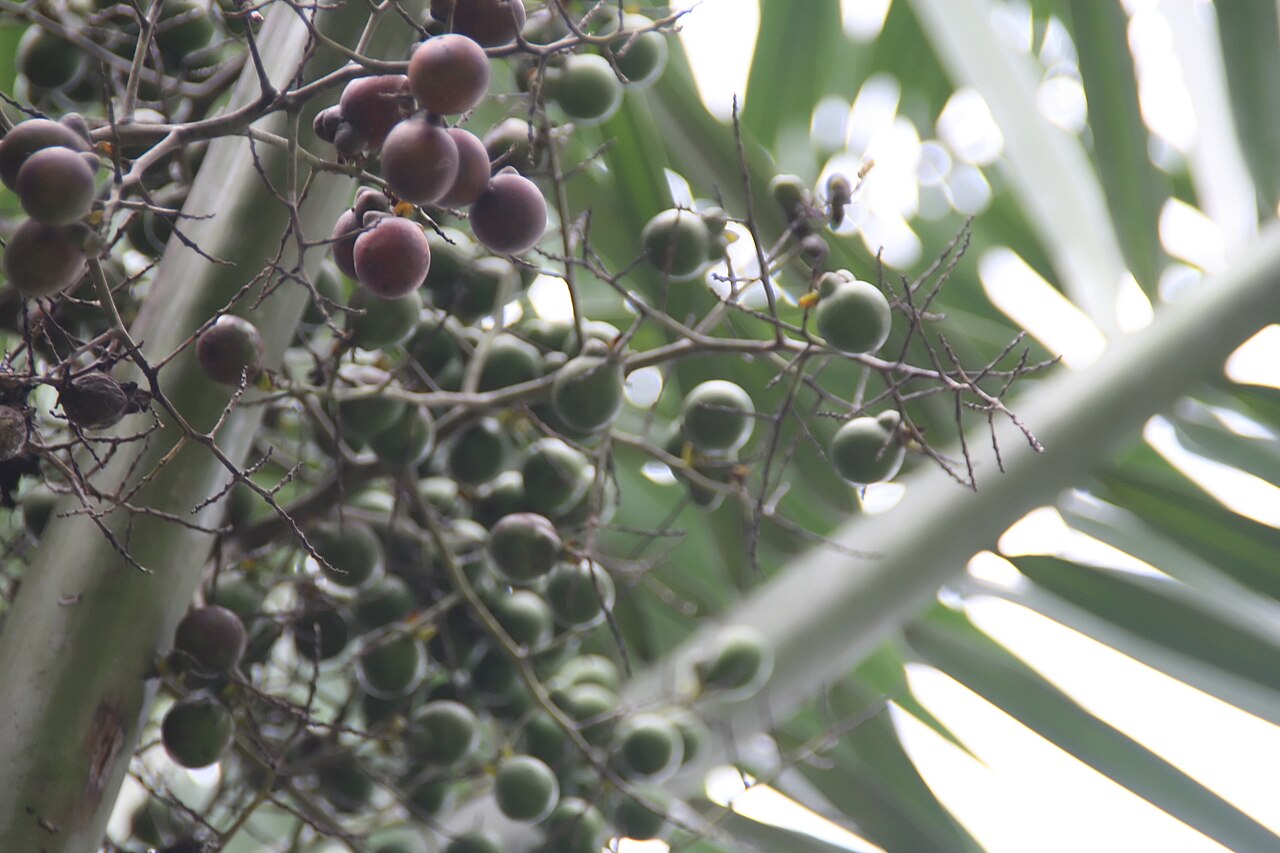
The fruit ripens from green to a glossy red, then deep maroon to nearly black, in rounded, cherry-like drupes about half an inch across, carried in drooping clusters that can hold scores of fruit. Each fruit holds one or two hard, round seeds; the conspicuous red-to-maroon fruit display is one of the palm’s main ornamental features and a reliable food source for wildlife in the hammock.
Quick Facts
| Scientific Name | Pseudophoenix sargentii |
| Family | Arecaceae (Palm) |
| Plant Type | Evergreen, solitary-trunked palm |
| Mature Height | 10–25 ft |
| Mature Spread | 6–10 ft (crown) |
| Growth Rate | Slow |
| Sun Exposure | Full Sun to Part Shade |
| Water Needs | Low once established; drought tolerant |
| Soil Type | Shallow, rocky, limestone-based soils |
| Soil pH | Alkaline |
| Bloom Time | Spring–summer |
| Flower Color | Pale yellow-green |
| Fall Color | Evergreen; no fall color (red-maroon fruit display in late summer–fall) |
| Fruit | Round, cherry-sized drupes, red ripening to maroon-black |
| Deer Resistant | Yes, generally |
| USDA Hardiness Zones | 10 – 11 |
Native Range
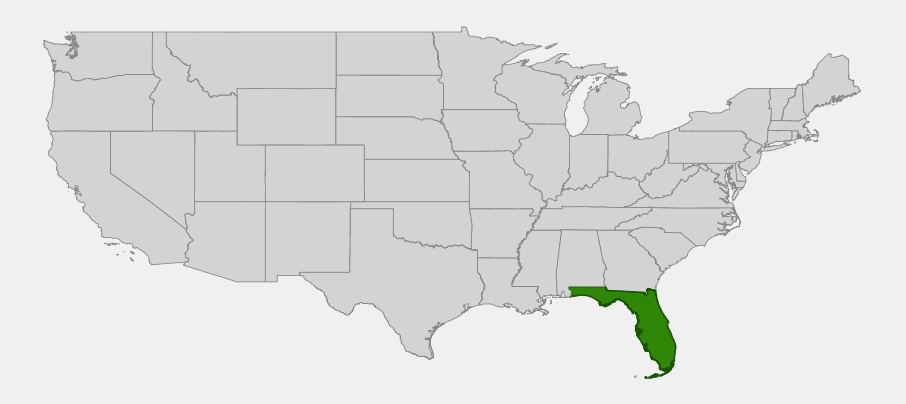
In the United States, buccaneer palm is native only to extreme South Florida, where wild populations are now confirmed on a small number of islands in the Florida Keys — notably in Monroe County — along with historical occurrences on the southern Miami-Dade County mainland and nearby keys. It is one of the rarest palms native to the continental U.S., and the State of Florida lists it as endangered; because of its rarity, a state permit is required to collect it from wild populations, and reputable growers propagate nursery stock from Florida-sourced seed to protect the genetics of the remaining wild plants.
The species occupies rockland hammock — dense, hardwood-dominated forest that develops on exposed, well-drained limestone outcrops just above the surrounding wetlands — where it grows in the dappled shade of taller hammock trees, typically rooted directly in solution holes and crevices in the bare rock rather than in deep soil. This habitat is naturally rare and has been further reduced by coastal development, making the palm’s range even more restricted today than its historical distribution.
Outside the United States, buccaneer palm is more widespread, occurring throughout the northern Caribbean (including Cuba, the Bahamas, and Hispaniola) as well as the Yucatán Peninsula of Mexico and Belize, where it also typically grows on limestone substrates near the coast.
📋 Regional plant lists featuring Buccaneer Palm: none yet — no plantnative.org regional list currently covers South Florida; see our full native plant directory for other Florida-native species.
Growing & Care Guide
Buccaneer palm is an excellent choice for a genuinely native South Florida landscape palm: slow-growing, compact, drought- and salt-tolerant once established, and far less common in cultivation than the look-alike Caribbean ornamentals often sold alongside it.
Light
It grows best in full sun to light, filtered shade, matching the partial canopy cover of its native hammock understory; young plants often establish more easily with some overhead shade before reaching the main canopy.
Soil & Water
Buccaneer palm is strongly adapted to shallow, rocky, alkaline limestone soils and tolerates the periodic drought typical of South Florida’s dry season extremely well once its root system is established. It also shows good tolerance of salt spray and brief saltwater intrusion, making it useful fairly close to the coast, though it is not a true tidal or mangrove-zone species.
Planting Tips
Because wild collection requires a state permit, always source buccaneer palm from a reputable native-plant nursery propagating from legally obtained Florida seed. Plant in well-drained, limestone-based or amended rocky soil, and avoid heavy, constantly wet sites — good drainage is more important to this palm than rich soil.
Pruning & Maintenance
Buccaneer palm is self-cleaning and needs very little pruning; removing only clearly dead fronds is generally sufficient. Because it is slow-growing and endangered in the wild, nursery specimens are typically small and should be given time to establish rather than pushed with heavy fertilization.
Landscape Uses
Its modest mature size and slow growth make buccaneer palm a good fit for residential-scale plantings where a large canopy palm would overwhelm the space:
- Specimen or accent palm near entries, patios, or garden focal points
- Native hammock-style landscaping under taller shade trees
- Coastal and near-coastal plantings where salt tolerance is valued
- Conservation and restoration plantings in South Florida hammock habitat
Wildlife & Ecological Value
As a rare but ecologically important component of rockland hammock, buccaneer palm’s fruit crop and sheltering canopy support a range of hammock wildlife, even though its overall footprint on the landscape is small.
For Birds
The red-to-maroon fruit clusters are readily eaten by fruit-eating birds that move through hammock canopy, including mockingbirds and other thrushes, helping disperse the palm’s seeds to new solution holes in the limestone.
For Mammals
Small mammals native to hammock habitat, such as raccoons and tree-climbing rodents, also feed on the fallen fruit, contributing to seed dispersal away from the parent palm.
For Pollinators
The perfect flowers, which carry both male and female parts in the same bloom, attract a range of small bees and other flower-visiting insects typical of South Florida hammock habitat.
Ecosystem Role
Buccaneer palm is a true hammock specialist, rooted directly in limestone solution holes alongside hardwoods like gumbo limbo and lignum vitae; its presence is often used by botanists as an indicator of high-quality, relatively undisturbed rockland hammock. Because its habitat is naturally limited and has been reduced by coastal development, every wild population contributes disproportionately to the species’ genetic diversity and long-term survival in Florida.
Cultural & Historical Uses
Buccaneer palm’s common name is said to reference its historical presence on the outer Florida Keys, islands once associated with pirates and wreckers working the reef line — though, unlike some palms, it has little documented history of significant indigenous or colonial-era practical use in Florida itself. Its close Caribbean relatives in the genus Pseudophoenix have at times been tapped for sap used to produce a traditional palm wine in parts of the West Indies, but this is not a documented historical practice for the Florida population.
In more recent decades, buccaneer palm’s rarity and distinctive ringed trunk have made it a prized specimen among palm collectors and South Florida native-plant enthusiasts, and it has become something of a flagship species for rockland hammock conservation efforts in the Florida Keys, where habitat protection for the palm often benefits the many other rare hammock species that share its narrow range.
Today, botanical gardens such as Fairchild Tropical Botanic Garden in Miami maintain and propagate buccaneer palm both for display and as part of broader efforts to conserve Florida’s native palm diversity, and legally propagated nursery stock has made it increasingly available to home gardeners who want an authentically native palm for South Florida landscapes.
Frequently Asked Questions
Is buccaneer palm endangered?
Yes. The State of Florida lists buccaneer palm as an endangered species, and wild populations are now confirmed on only a small number of islands in the Florida Keys. A state permit is required to collect it from the wild, so garden plants should come from nursery stock propagated from legally obtained Florida seed.
How can I tell buccaneer palm from other small palms?
Look for its smooth, pale gray trunk closely ringed with old leaf scars and often swollen near the base, combined with blue-green to gray-green arching fronds and, in season, clusters of cherry-sized red-to-maroon fruit. It has no green crownshaft, which helps separate it from royal palm and similar species.
Does buccaneer palm tolerate salt and drought?
Yes, reasonably well once established. It naturally grows on dry, rocky, alkaline limestone in habitat that is seasonally dry and occasionally exposed to salt spray, so it tolerates both conditions better than many ornamental palms, though it is not a true tidal species.
How big does buccaneer palm get?
It is a slow-growing, modestly sized palm, typically reaching 10 to 25 feet tall with a narrow crown, making it a good choice for residential landscapes where a tall, fast-growing canopy palm would be too large.
Where does buccaneer palm grow in the wild?
In the United States it grows only in rockland hammock habitat in the Florida Keys and historically on the adjacent South Florida mainland, rooted in limestone outcrops alongside hardwoods such as gumbo limbo and lignum vitae. Outside Florida it is more widespread across the northern Caribbean and the Yucatán Peninsula.

Looking for a nursery that carries Buccaneer Palm?
Browse our native plant nursery directory: Florida
For other rockland hammock associates, see our pages on Gumbo Limbo and Lignum Vitae. For more South Florida palm options, see our guide to palm trees for Florida.

