
Colicwood (Myrsine cubana)
Myrsine cubana (long known in Florida botany as Rapanea punctata or Rapanea guianensis), commonly called Colicwood or Guianese Colicwood, is a shrub to small tree of South Florida’s tropical hammocks and coastal strand. Like its hammock neighbor Marlberry, it belongs to the Primulaceae (formerly Myrsinaceae) and shares the family’s habit of quiet, near-continuous fruiting that makes it disproportionately valuable to wildlife for its modest size.
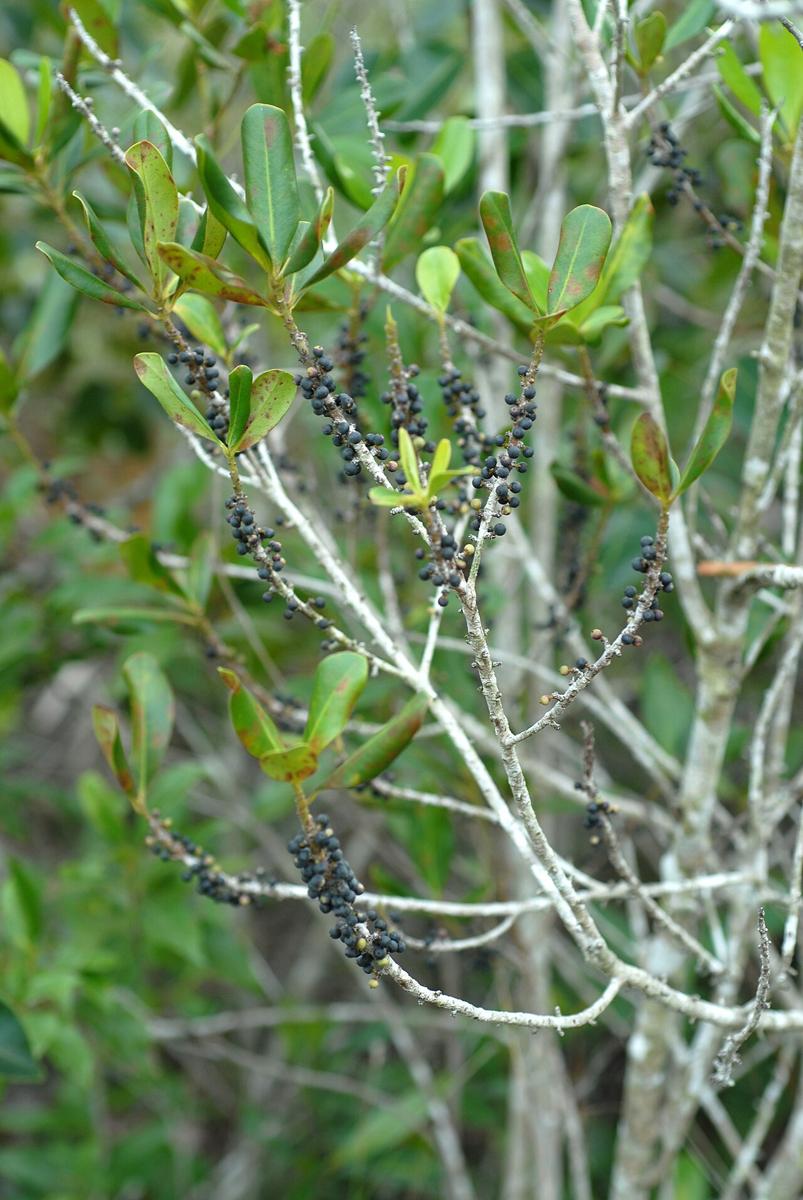
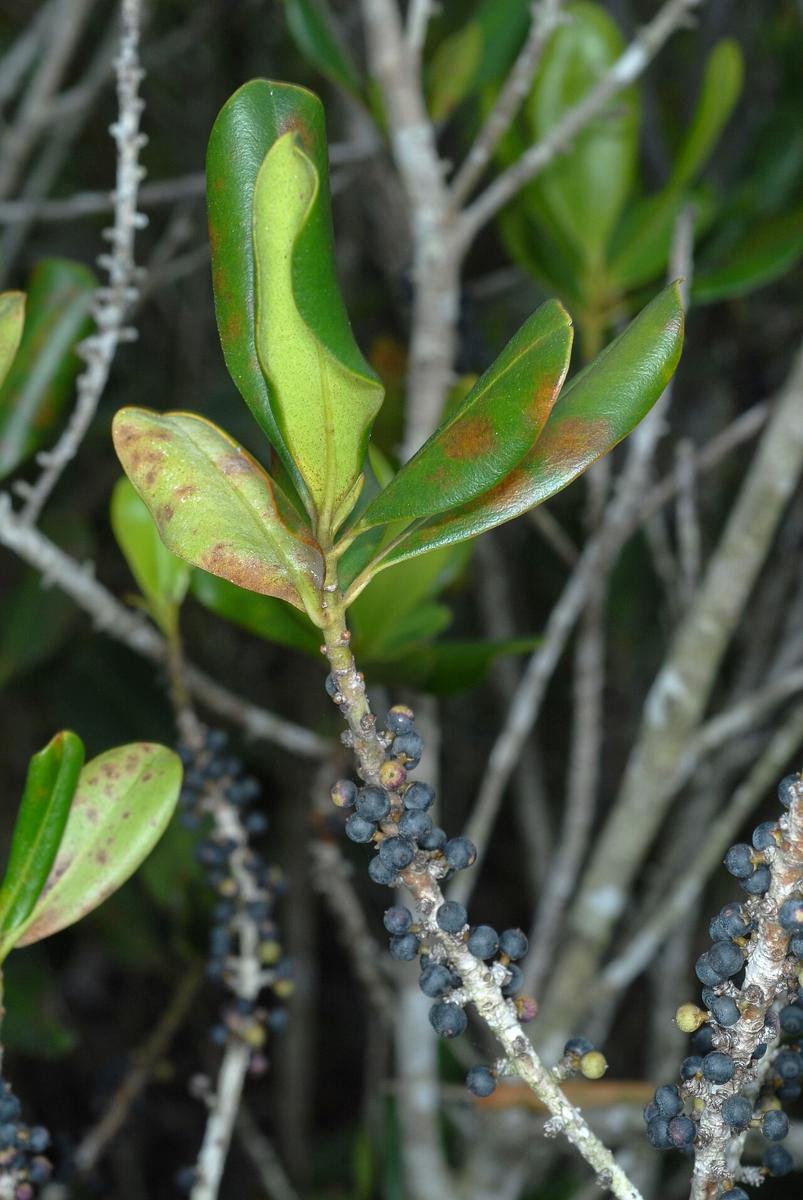
Colicwood typically grows as a many-branched shrub or small tree 8 to 15 feet tall, occasionally reaching 20 to 30 feet in favorable hammock conditions. Its narrow, leathery, dark olive-green leaves are dotted with tiny translucent and dark glandular punctations — visible when a leaf is held up to the light — a diagnostic trait shared across the Myrsine genus. The stems have a distinctive pale, almost whitish, finely textured bark that stands out against the dark foliage, and small white flowers give way to abundant round black fruit that lines the twigs in dense, bead-like clusters.
In the landscape, Colicwood is an undemanding, salt- and drought-tolerant native that works equally well as a clipped hedge, an informal screen, or a wildlife-focused understory planting. It asks little from the gardener and offers a steady, heavy crop of fruit that keeps resident and migratory birds coming back through the cooler months.
Identification
Colicwood is best identified by the combination of narrow, gland-dotted leaves, pale finely-textured twigs, and dense clusters of small black fruit held tight against the stems rather than on long dangling stalks.
Bark & Stems
Young twigs are pale gray to whitish and finely textured, often appearing almost silvery or lichen-dusted compared to the dark foliage above them — a useful field mark even from a distance. Older bark on the main stems is smooth to slightly rough, gray-brown, and the plant typically branches low into a multi-stemmed shrub form rather than a single clean trunk.
Leaves
Leaves are alternate, simple, leathery, and evergreen, narrowly elliptic to oblanceolate, 1.5 to 4 inches long, often widest above the middle and tapering to a short point. The margin is entire (untoothed) and slightly rolled under. Held to the light, the blade shows numerous tiny translucent dots and darker punctations — glandular structures typical of the Myrsine genus and a reliable way to separate it from similar-looking hammock shrubs.
Flowers
Flowers are tiny, pale green to white, and clustered in small, tight groups directly along the stems at the leaf nodes rather than in showy terminal sprays. They are easy to overlook, blooming intermittently through the warmer months, but their fragrance and small size are enough to draw in a range of tiny native pollinators.
Fruit & Seeds
The fruit is a round, single-seeded black drupe, roughly ⅛ to ¼ inch across, borne in dense, bead-like clusters pressed close along the twigs rather than hanging loosely. Fruit ripens mainly in fall and winter, and because flowering and fruiting are somewhat staggered, ripe black fruit, immature green fruit, and old flower remnants can often be found on the same branch at once.
Quick Facts
| Scientific Name | Myrsine cubana (syn. Rapanea punctata, R. guianensis) |
| Family | Primulaceae (formerly Myrsinaceae) |
| Plant Type | Evergreen Shrub / Small Tree |
| Mature Height | 8–15 ft (to 30 ft in favorable hammocks) |
| Mature Spread | 3–8 ft |
| Growth Rate | Slow to Moderate |
| Sun Exposure | Full Sun to Partial Shade |
| Water Needs | Low to Moderate once established |
| Soil Type | Sandy or limestone; well-drained |
| Soil pH | Neutral to alkaline |
| Bloom Time | Intermittent, warmer months |
| Flower Color | White to pale green |
| Fall Color | None (evergreen) |
| Fruit | Small round black drupes in tight clusters |
| Deer Resistant | Moderate |
| USDA Hardiness Zones | 10a–11 |
Native Range
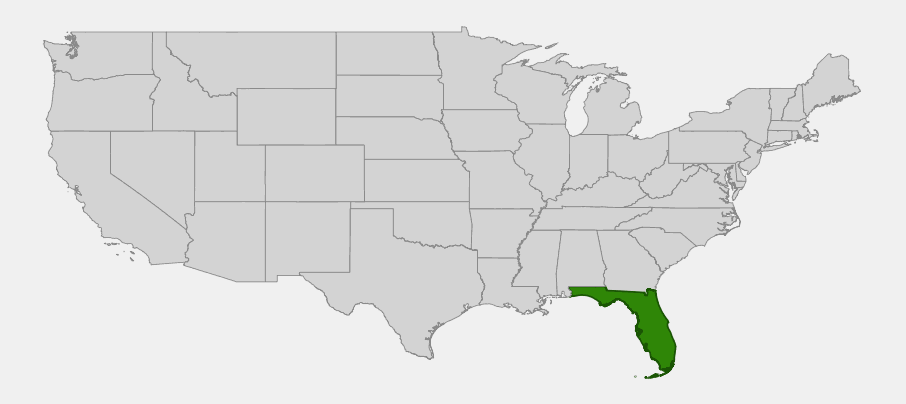
In the United States, Colicwood is native only to peninsular South Florida, where it grows in tropical hardwood hammocks and coastal strand from around the southern peninsula through the Everglades and Florida Keys. Outside the U.S., its range extends through the West Indies and south through Central America into South America, reflecting its broader Neotropical distribution.
Within Florida, Colicwood is concentrated in Miami-Dade, Monroe, and nearby southern counties, where it grows as a hammock understory and edge species alongside other tropical hardwood natives. It is strictly a warm-climate species with no populations surviving outside the subtropical tip of the state.
Ecologically, Colicwood occupies a similar niche to Marlberry — a shade-tolerant understory and edge shrub that can also handle full sun and salt exposure at the coast — making it a flexible component of both shaded hammock restoration and sunnier coastal landscaping projects.
📋 Regional plant lists featuring Colicwood: No Florida regional plant list currently covers this species; browse all Native Plant Profiles. For a closely associated hammock tree with similar growing needs, see Gumbo Limbo (Bursera simaruba).
Growing & Care Guide
Colicwood is a low-fuss native for South Florida gardens, tolerant of heat, salt, and the limestone-based soils common throughout its native range.
Light
It grows well from full sun to partial, dappled shade. In sunnier positions it stays denser and more compact, which suits hedge and screen use; in the shadier understory of a hammock garden it grows a bit more open and reaches taller. Either way, it adapts readily to the light conditions on hand, much like the companion trees recommended in our guide to shade trees for South Florida.
Soil & Water
Colicwood tolerates sandy and shallow limestone soils typical of coastal and South Florida hammock sites, and it needs good drainage rather than consistently wet ground. Once established, it is quite drought-tolerant and also handles salt spray and some salt in the soil, making it suitable for landscaping set back from the immediate beachfront.
Planting Tips
Plant container stock during the warm growing season — spring through early fall — to give roots time to establish before any winter cold. Space plants 3 to 6 feet apart for a hedge or screen; wider spacing works well for specimen or naturalistic plantings. It transplants readily and establishes without special soil amendments.
Pruning & Maintenance
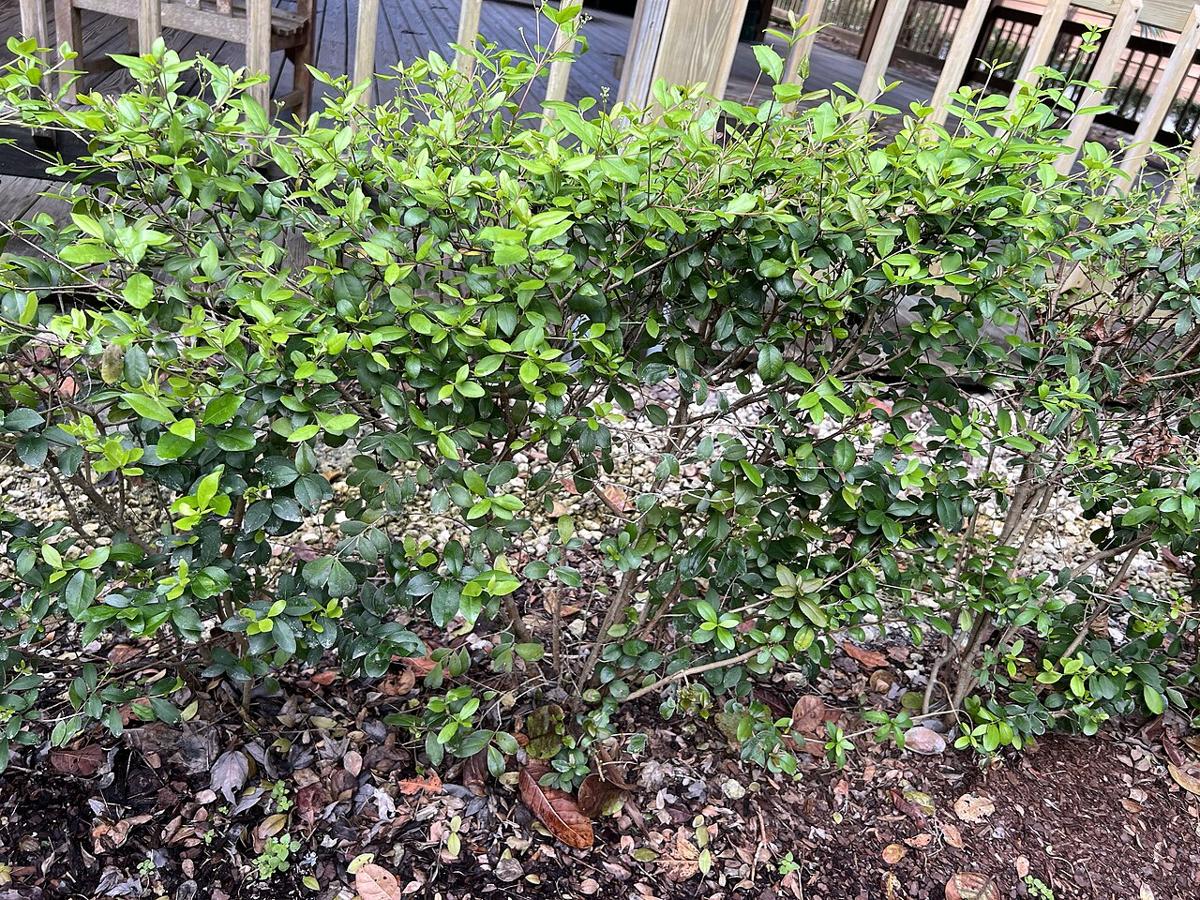
Colicwood takes well to shearing and can be kept as a tight formal hedge, or left loosely pruned for a more natural shrub form. Periodic light pruning after fruiting encourages denser growth. The species has no significant pest or disease issues reported in Florida landscapes, and mature plants need essentially no supplemental care beyond occasional shaping.
Landscape Uses
Its tolerance for sun, shade, salt, and poor soil makes Colicwood useful in several roles:
- Clipped or informal hedges for property screening
- Coastal and salt-tolerant landscaping set back from direct spray
- Hammock restoration as an understory and edge shrub
- Wildlife plantings that provide fall and winter fruit — a natural complement to the staggered bloom and fruit strategy described in our guide to attracting songbirds with native plants
- Privacy screens, often paired with the species listed in our privacy trees for Florida guide
Wildlife & Ecological Value
The heavy fall-to-winter fruit crop is Colicwood’s main contribution to South Florida’s wildlife gardens, arriving at a season when many other native food sources have already finished.
For Birds
The small black fruits attract a variety of resident and overwintering songbirds, including mockingbirds, catbirds, and various migratory thrushes and warblers that pass through South Florida in fall and winter. The dense, tightly clustered fruit along the stems makes for efficient, easy foraging compared to more widely spaced fruiting shrubs.
For Mammals
Raccoons and other small mammals opportunistically feed on the fruit where it falls or hangs within reach, and the dense branching structure provides useful ground-level cover in hammock understory settings.
For Pollinators
Though small and easy to overlook, the clustered flowers provide nectar for tiny native bees and other small pollinating insects during the warmer months, adding to the layered pollinator resources of a diverse hammock-edge planting.
Ecosystem Role
As a shade-tolerant, multi-branched shrub, Colicwood adds structural density to the hammock understory, and its reliable fall and winter fruiting helps support local and migratory bird populations through a season when fruit availability can otherwise dip. Seeds spread by fruit-eating birds help the species recolonize hammock edges and disturbed areas over time.
Cultural & Historical Uses
Colicwood is not a prominent species in the historical record of Florida ethnobotany, and no significant documented use for food, medicine, or craft materials by Indigenous or later communities has been established. Its common name likely reflects old vernacular usage rather than a specific, well-documented medicinal application, and no reliable historical source attributes a treatment use to the plant.
Botanically, the species has moved between several genus names over the past century — treated at various times as Rapanea punctata, Rapanea guianensis, and now Myrsine cubana — reflecting ongoing revisions to the classification of Myrsinaceae/Primulaceae within the New World tropics. Florida botanical surveys of the early 20th century, including those cataloguing South Florida’s tropical hammock flora, recorded it among the characteristic shrubs of these forests.
In recent decades, Colicwood has found a modest niche in the South Florida native-plant nursery trade, valued chiefly as a low-maintenance hedge and wildlife shrub rather than for any resource use — a straightforward, workmanlike native rather than a plant with a rich human history.
Frequently Asked Questions
Is Colicwood the same plant as Rapanea punctata?
Yes. Rapanea punctata and Rapanea guianensis are older names still widely used in Florida references; current taxonomy places the species in the genus Myrsine as Myrsine cubana.
Does Colicwood tolerate salt spray?
Yes — it is reasonably salt-tolerant and is a reasonable choice for coastal landscaping set back from direct beachfront exposure, similar to its hammock associate Marlberry.
How is Colicwood different from Marlberry?
Both are South Florida hammock shrubs in the same plant family with similar growing needs, but Colicwood has narrower, more leathery leaves with visible gland-dots, pale whitish twigs, and fruit held in tight clusters pressed against the stem, rather than Marlberry’s wavy-edged leaves and looser, branched fruit clusters.
Can Colicwood be grown as a hedge?
Yes — it takes shearing well and is commonly grown as a dense, fine-textured formal or informal hedge in South Florida landscapes.
Is Colicwood cold-hardy outside South Florida?
No. It is reliably hardy only in USDA zones 10a through 11 and will not tolerate the freezes common farther north in the state or beyond.

Looking for a nursery that carries Colicwood?
Browse our native plant nursery directory: Florida

