
Marlberry (Ardisia escallonioides)
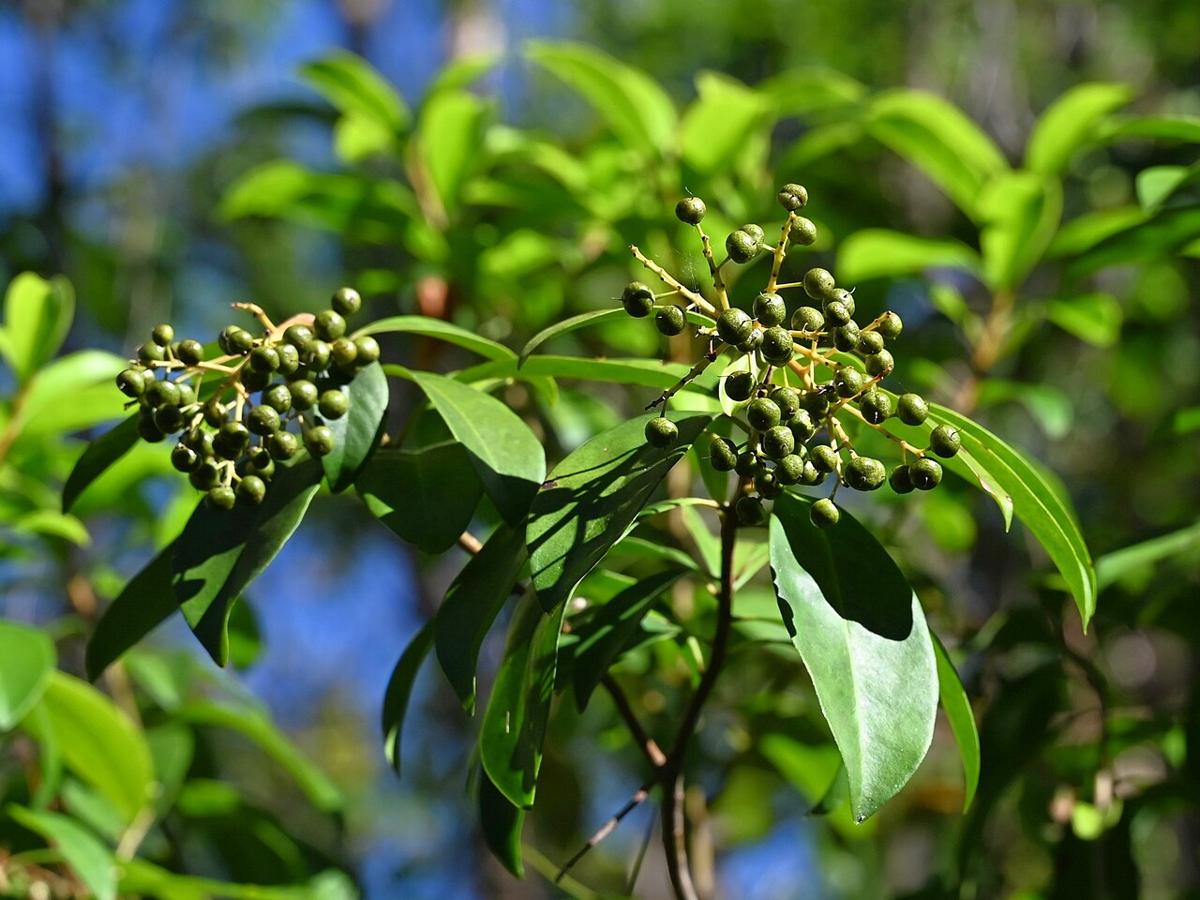
Ardisia escallonioides (also published as A. escallonoides), commonly called Marlberry or Island Marlberry, is a shrub or small tree of South and Central Florida’s hardwood hammocks, coastal strands, and pine rocklands. A member of the Primulaceae (formerly its own family, Myrsinaceae), Marlberry is one of the quiet workhorses of Florida’s native hammock understory — rarely the showiest plant in the forest, but almost always present, and almost always carrying fruit that something is eating.
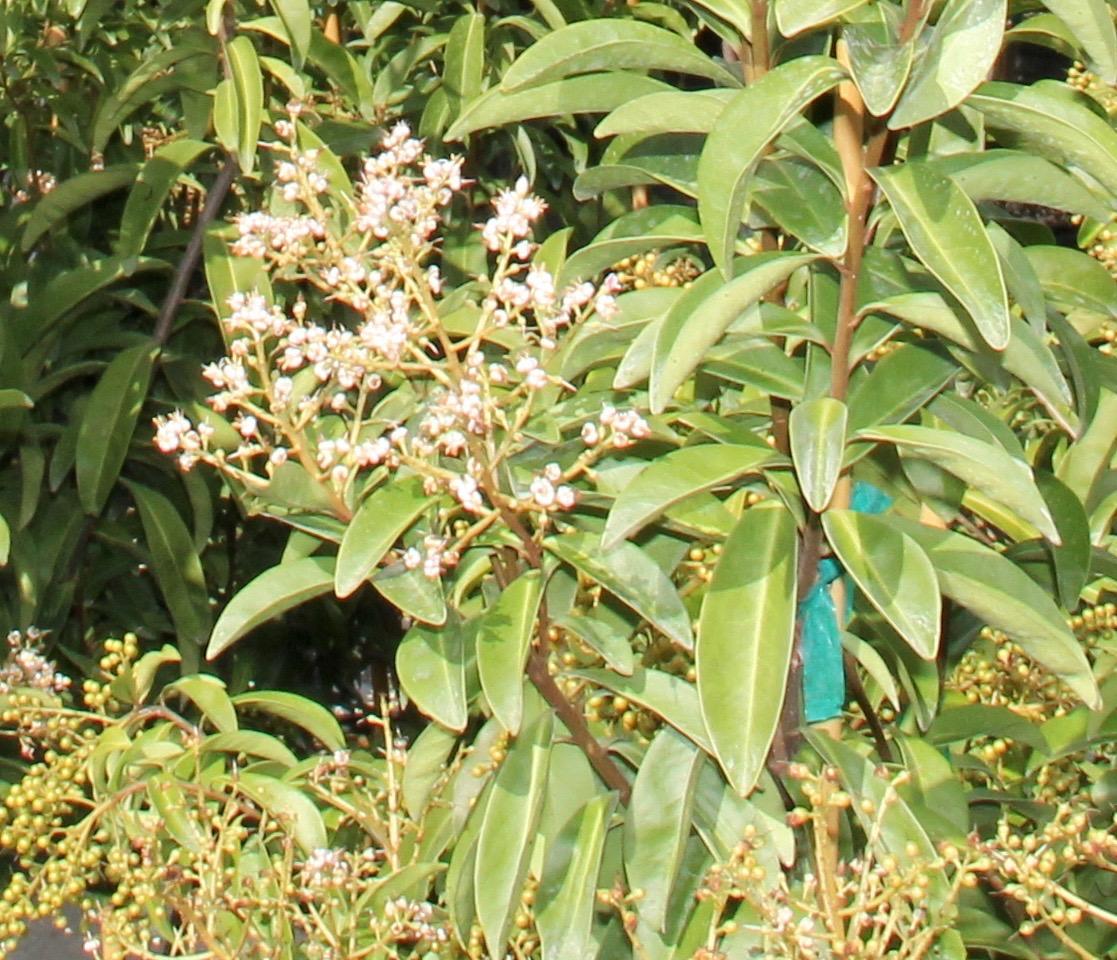
In the wild it grows as a multi-trunked large shrub or small tree, typically 6 to 15 feet tall but capable of reaching 20 feet or more in sheltered South Florida hammocks. The glossy, leathery, dark green leaves have a distinctive wavy or slightly scalloped margin, and the plant flowers and fruits more or less year-round, with peak bloom in late summer and fall. Small white to pink, star-shaped flowers in branched clusters give way to pea-sized berries that ripen from green to deep purple-black, often with several color stages present on the same branch at once.
Marlberry’s real value to a Florida native garden is ecological rather than ornamental: it is evergreen, shade-tolerant, salt- and drought-tough once established, and its fruit is eaten by an unusually wide range of birds and mammals nearly year-round. For anyone restoring hammock understory or building a low-maintenance wildlife hedge in Central or South Florida, it is one of the most dependable native shrubs available.
Identification
Marlberry is most easily recognized by the combination of glossy, wavy-margined leaves, year-round fruiting clusters, and a tendency to form dense, multi-stemmed thickets in hammock understory and edges.
Bark & Stems
Young stems are smooth and reddish-brown to gray, often somewhat angled or ridged near the growing tips. Older stems and trunks develop thin, smooth to slightly fissured gray bark. Plants typically branch low and multi-trunked rather than forming a single clean trunk, giving mature specimens a rounded, shrubby silhouette even when they reach small-tree size.
Leaves
Leaves are alternate, simple, leathery, and evergreen, 3 to 8 inches long and elliptic to oblong in shape, tapering to a point at the tip. The most distinctive field mark is the leaf margin: it is often slightly wavy or scalloped (undulate) rather than perfectly smooth, and the upper surface is glossy dark green while the lower surface is paler and dotted with tiny dark glands visible on close inspection — a trait shared with other Ardisia species.
Flowers
Flowers are small, about ¼ inch across, with five white to pale pink, backward-curving (reflexed) petals often flecked with fine dark dots, and prominent yellow anthers forming a small central cone. They are borne in branched, terminal or axillary clusters (panicles) and have a light, sweet fragrance. Bloom occurs intermittently through most of the year in South Florida, with the heaviest flush in late summer and fall.
Fruit & Seeds
The fruit is a round, one-seeded berry (technically a drupe) about ¼ to ⅓ inch in diameter, ripening from green through red to glossy purple-black. Because flowering is extended, a single plant commonly shows green, reddening, and fully ripe black berries in the same cluster at the same time. Each berry contains one hard seed; birds and mammals disperse the seeds widely after eating the pulp.
Quick Facts
| Scientific Name | Ardisia escallonioides (syn. A. escallonoides) |
| Family | Primulaceae (formerly Myrsinaceae) |
| Plant Type | Evergreen Shrub / Small Tree |
| Mature Height | 6–15 ft (to 20 ft in sheltered hammocks) |
| Mature Spread | 6–10 ft |
| Growth Rate | Moderate |
| Sun Exposure | Full Sun to Full Shade |
| Water Needs | Low to Moderate once established |
| Soil Type | Sandy, limestone or loamy; well-drained |
| Soil pH | Neutral to alkaline; tolerant of oolitic limestone |
| Bloom Time | Nearly year-round; peak late summer–fall |
| Flower Color | White to pale pink |
| Fall Color | None (evergreen) |
| Fruit | Round berries, green ripening to purple-black |
| Deer Resistant | Moderate |
| USDA Hardiness Zones | 9b–11 |
Native Range
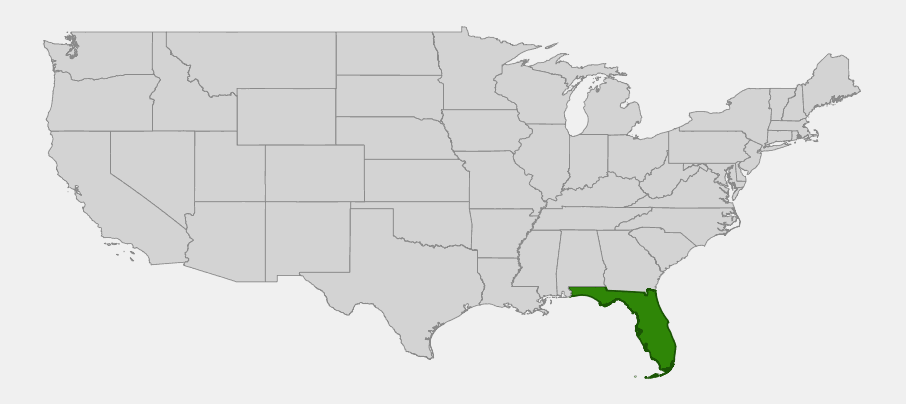
In the United States, Marlberry is native only to Florida, where it occurs from roughly the central peninsula south through the Everglades and the Florida Keys. It is a characteristic understory species of tropical hardwood hammocks, coastal hammocks and coastal strand, and it also turns up in the shaded margins of South Florida’s pine rocklands. Outside the U.S., its range continues through the Bahamas, the Caribbean, and south through Mexico and Central America into northern South America.
Within Florida, Marlberry is most abundant in Miami-Dade, Monroe, Collier, and the other southern counties, becoming less common and more restricted to the warmest coastal hammocks as you move north through the peninsula. It is a true subtropical species with no cold-hardy populations in the Florida Panhandle or anywhere outside the state.
Ecologically, Marlberry functions as a mid-story to understory shrub beneath the hammock canopy, tolerating the deep, dappled shade found under Live Oak, Gumbo Limbo, and Mastic, while also thriving in the brighter, more exposed conditions of coastal strand near Sea Grape and other coastal hammock edges. This flexibility — shade in the forest, full sun at the coast — is part of what makes it such a reliable garden plant.
📋 Regional plant lists featuring Marlberry: No Florida regional plant list currently covers this species; browse all Native Plant Profiles. For related South Florida hammock associates with full list coverage, see Gumbo Limbo (Bursera simaruba).
Growing & Care Guide
Marlberry is one of the easiest native shrubs to grow in Central and South Florida landscapes — tolerant of shade, sun, salt, drought, and the alkaline, rocky soils that frustrate many other ornamentals.
Light
Marlberry thrives from full sun to fairly deep shade, which is part of what makes it so useful. In full sun it grows denser and more compact and tends to flower and fruit more heavily; in shade beneath a hammock canopy it grows taller and more open, reaching for available light. This adaptability makes it equally at home as an understory planting or a sunny hedge, and as a companion shrub beneath the larger canopy species covered in our guide to shade trees for South Florida.
Soil & Water
It is not particular about soil, growing well in sandy, loamy, or shallow limestone (oolite) soils typical of South Florida, provided drainage is adequate — it does not tolerate standing water. Once established, Marlberry is quite drought-tolerant, though it looks and fruits best with occasional deep watering during extended dry spells. It also tolerates salt spray and some salt in the soil, making it a solid choice for coastal plantings set back from direct beach exposure.
Planting Tips
Plant container-grown Marlberry in spring through early fall to allow root establishment before any cool winter weather. Space plants 4 to 6 feet apart for a hedge or screen, or farther apart if grown as individual specimens. It transplants easily and establishes quickly in the warm months typical of its native range.
Pruning & Maintenance
Marlberry tolerates pruning well and can be shaped into a dense hedge or left to grow naturally into a loose, multi-trunked small tree. Light shaping after major fruiting flushes helps maintain a compact form; avoid heavy pruning in late fall in the rare years cold snaps are forecast, since fresh cuts are more cold-sensitive. The plant has no significant pest or disease problems in Florida landscapes.
Landscape Uses
Marlberry’s shade tolerance, salt tolerance, and near-constant fruiting make it valuable in several settings:
- Hammock restoration as a reliable understory shrub beneath existing canopy trees
- Wildlife hedges and screens that feed birds year-round — see our guide to native hedgerows for birds
- Coastal landscaping set back from direct salt spray
- Privacy screening alongside other dense-growing natives recommended in our guide to privacy trees for Florida
- Foundation plantings in shaded or partly shaded beds
- Naturalistic woodland gardens paired with other hammock natives
- Low-water landscaping once roots are established
Wildlife & Ecological Value
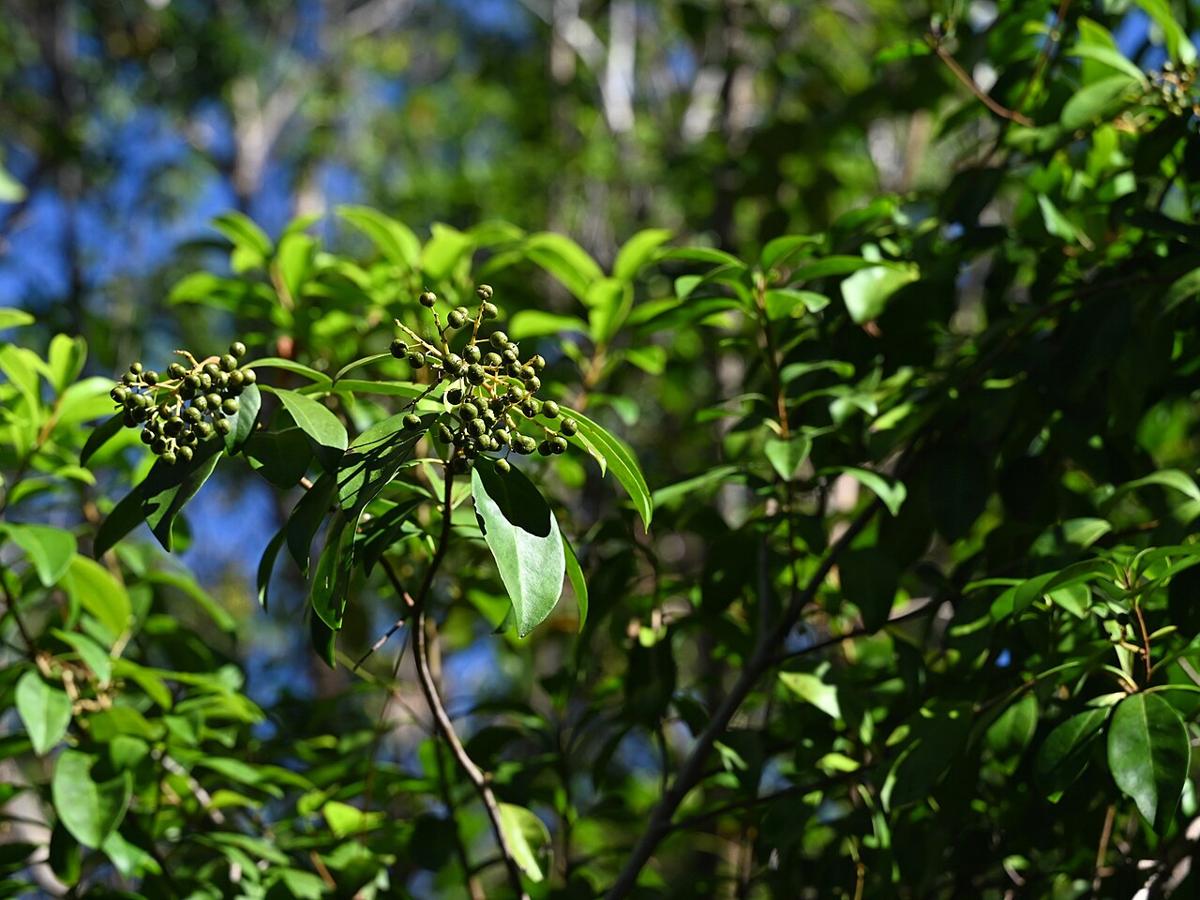
Few South Florida native shrubs offer as consistent a food supply as Marlberry, which flowers and fruits in overlapping cycles for much of the year.
For Birds
The berries are a staple food for many resident and migratory songbirds in South Florida, including Northern Mockingbirds, Gray Catbirds, Northern Cardinals, American Robins, and various thrushes and warblers passing through on migration. Because flowering and fruiting happen nearly continuously, Marlberry helps fill the seasonal gaps left by plants that fruit only once a year — exactly the kind of staggered food supply described in our article on attracting songbirds with native plants.
For Mammals
Raccoons and opossums readily eat the ripe berries, and in some areas white-tailed deer browse the foliage, though Marlberry is not a preferred deer food. The dense, multi-stemmed growth also provides good ground-level cover for small mammals moving through hammock understory.
For Pollinators
The small, fragrant flowers attract native bees and a variety of other pollinating insects, offering a nectar source during the warmer months when many hammock wildflowers are between bloom cycles.
Ecosystem Role
As a shade-tolerant understory shrub, Marlberry fills a structural niche in hammock vegetation layers, adding density and habitat complexity beneath the canopy trees. Its near-continuous fruit production makes it a dependable anchor species in the food web of South Florida’s hardwood hammocks, and its seeds — spread widely by fruit-eating birds — help the species recolonize disturbed or regenerating hammock edges.
Cultural & Historical Uses
Marlberry has a relatively modest documented history of use compared to larger hammock trees, reflecting its role as a common but unassuming understory shrub rather than a resource plant. Early Florida botanical surveys, including those by John Kunkel Small in the early 1900s, catalogued it among the characteristic shrubs of the state’s tropical hammocks, and it has long been recognized by Florida naturalists as a reliable indicator of healthy hammock understory.
In more recent decades, Marlberry has become a staple of the Florida native-plant nursery trade, valued by landscapers and restoration practitioners precisely because it requires so little intervention once planted — no unusual soil amendments, no special watering regime, and no serious pest issues. It is commonly included in hammock restoration plantings throughout Miami-Dade and Monroe County conservation areas.
There is no significant documented history of food, medicinal, or craft use of Marlberry among Indigenous or later Florida communities; its primary cultural role today is as a dependable, low-input native landscape plant and a visible, easily taught example of South Florida hammock vegetation for naturalists and students.
Frequently Asked Questions
Is Marlberry the same plant as Shoebutton Ardisia?
No. Shoebutton Ardisia (Ardisia elliptica) is a related but non-native, highly invasive species from Asia that is illegal to plant in Florida. Native Marlberry (Ardisia escallonioides) has wavier leaf margins and does not spread aggressively; always confirm the species before purchasing from a nursery.
Can Marlberry grow in full shade?
Yes — it is one of the more shade-tolerant native shrubs available for South Florida gardens, growing well beneath a hammock canopy, though it will be taller and more open-branched than plants grown in full sun.
How cold-hardy is Marlberry?
It is reliably hardy only in USDA zones 9b through 11 and is strictly a subtropical species. Hard freezes can cause significant dieback, though established plants in the warmer parts of its range typically recover.
Does Marlberry need regular watering once established?
No. Established plants are quite drought-tolerant and survive on rainfall alone through most of the year in South Florida, though occasional deep watering during extended dry spells keeps the foliage fuller and fruiting more consistent.
Are Marlberry berries edible for people?
They are not documented as a human food source and are best left for the birds and wildlife that rely on them; there is no reliable record of their edibility or safety for human consumption.

Looking for a nursery that carries Marlberry?
Browse our native plant nursery directory: Florida

