
Rough Strongbark (Bourreria succulenta)
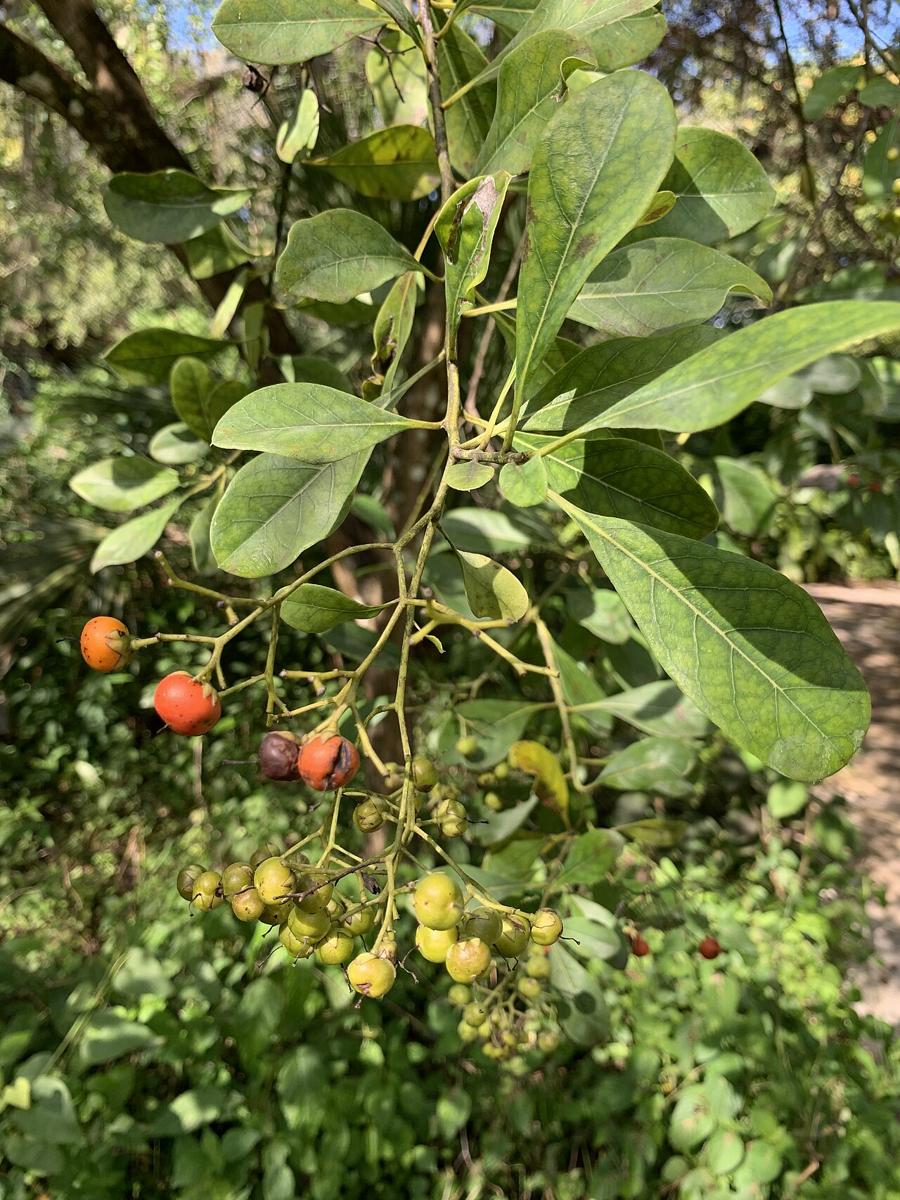
Bourreria succulenta, commonly known as Rough Strongbark, Bahama Strongbark, or Bodywood, is a small native tree of South Florida’s tropical hardwood hammocks and coastal uplands. It belongs to the Ehretiaceae (formerly placed in Boraginaceae), the borage family, and is closely related to the hammock tree Pineland Strongbark. The common names “Rough Strongbark” and “Bahama Strongbark” both refer to this same species — the plant has long circulated under the now-synonymous name Bourreria ovata, which current taxonomic authorities, including Kew’s Plants of the World Online and the Atlas of Florida Plants, treat as a synonym of Bourreria succulenta rather than a separate species.
Rough Strongbark typically grows as a shrub or small tree 10 to 15 feet tall, occasionally reaching 30 feet in favorable hammock conditions. It has large, leathery, somewhat rough-textured oval leaves and clusters of small, fragrant white flowers that bloom from summer into fall. The flowers give way to round fruit that ripens through a striking progression of green, yellow, and finally bright orange — often with several color stages visible in the same cluster.
Its tolerance for heat, drought, and moderate salt exposure, combined with fragrant flowers and showy fruit, makes Rough Strongbark a worthwhile small tree for South Florida native landscaping, whether as a hammock restoration component or a specimen tree near a patio where its bloom fragrance can be appreciated.
Identification
Rough Strongbark is best identified by its large, leathery, somewhat sandpapery-textured leaves, clustered white flowers, and fruit that ripens conspicuously from green through yellow to bright orange.
Bark & Stems
Young twigs are gray-brown and moderately stout, often with a slightly rough or hairy texture that contributes to the “rough” in the common name. The bark on established trunks is gray and relatively smooth, developing shallow furrows with age. Plants often branch low, forming a rounded, shrubby crown unless trained to a single leader.
Leaves
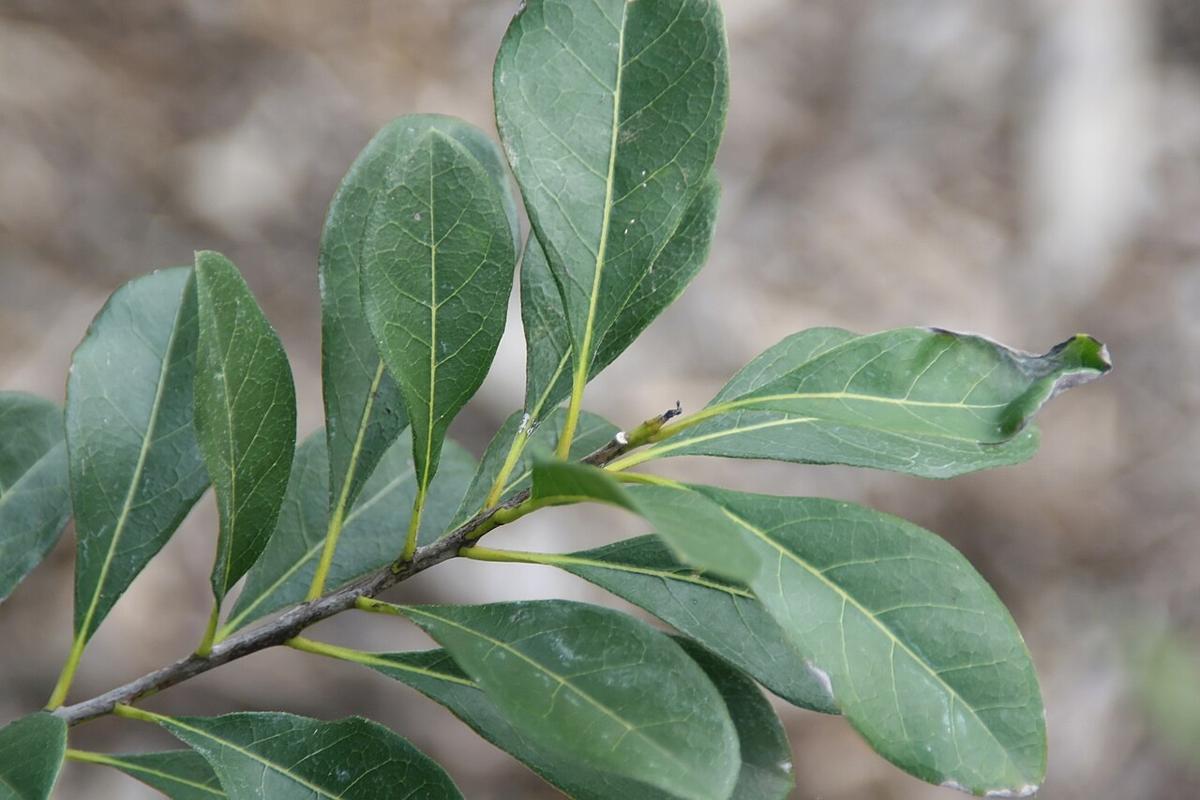
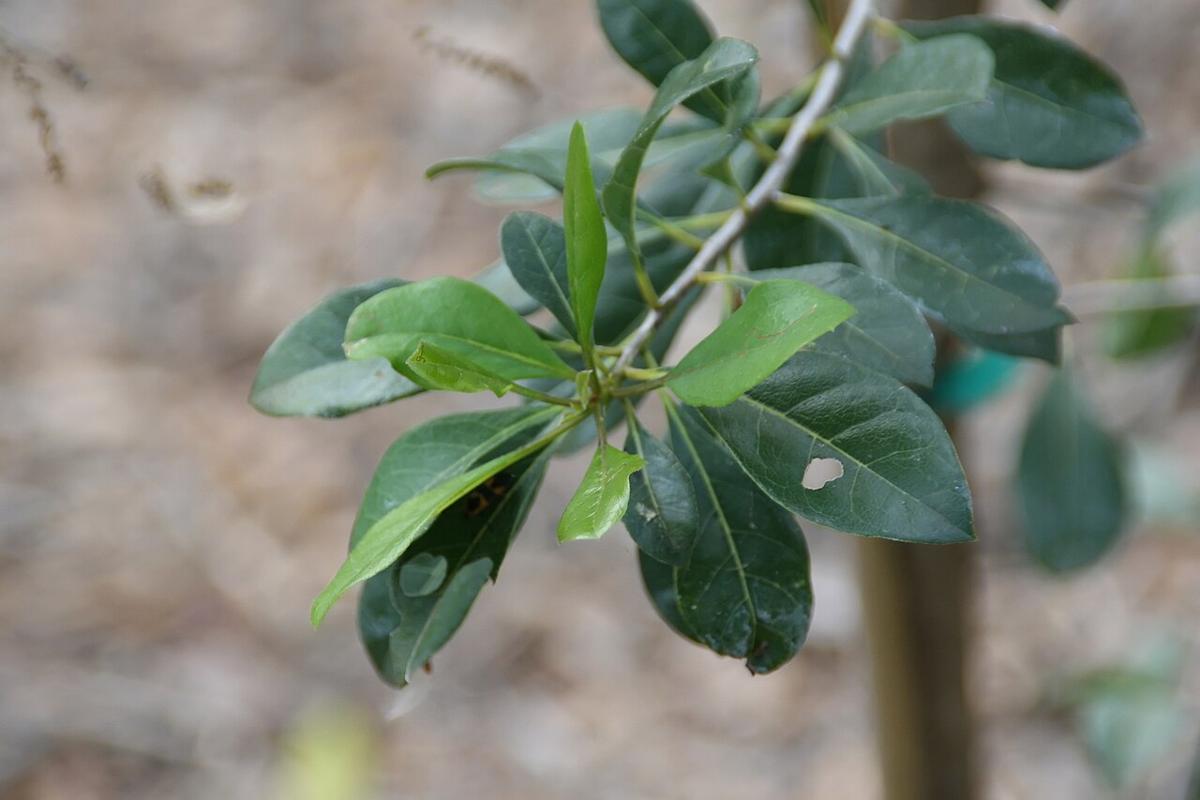
Leaves are alternate, simple, leathery, 2 to 5 inches long, broadly oval to obovate, with a rounded or notched tip. The upper surface has a somewhat coarse, rough texture to the touch — another contributor to the “rough” common name — while the lower surface is paler and often finely hairy. Leaves are often clustered toward the ends of the twigs.
Flowers
Flowers are small, white, and fragrant, roughly ¼ to ½ inch across, borne in loose, branched clusters at the branch tips. Bloom occurs mainly from summer through fall, and the sweet fragrance is noticeable even from a short distance, making flowering specimens a pleasant addition near outdoor living spaces.
Fruit & Seeds
The fruit is a round drupe, about ⅓ to ½ inch across, that ripens through a vivid color sequence — green, then yellow, then bright orange to red-orange at full maturity. Fruit typically follows the summer-fall bloom, and because flowering can be somewhat extended, fruit in several color stages often hangs on the same branch simultaneously.
Quick Facts
| Scientific Name | Bourreria succulenta (syn. B. ovata) |
| Family | Ehretiaceae (formerly Boraginaceae) |
| Plant Type | Evergreen Shrub / Small Tree |
| Mature Height | 10–15 ft (to 30 ft in favorable hammocks) |
| Mature Spread | 5–15 ft |
| Growth Rate | Moderate |
| Sun Exposure | Full Sun to Partial Shade |
| Water Needs | Low to Moderate once established |
| Soil Type | Sandy, limestone or loamy; well-drained |
| Soil pH | Neutral to alkaline |
| Bloom Time | Summer – fall |
| Flower Color | White, fragrant |
| Fall Color | None (evergreen) |
| Fruit | Round drupes, green ripening to orange |
| Deer Resistant | Moderate |
| USDA Hardiness Zones | 10a–11 |
Native Range
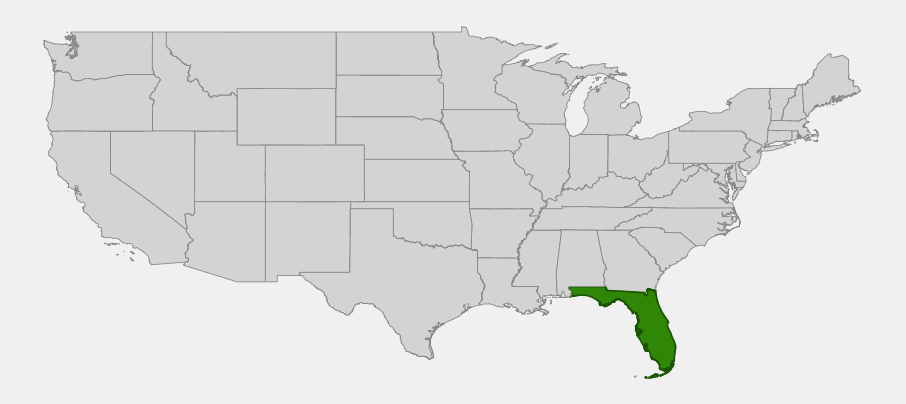
In the United States, Rough Strongbark is native only to South Florida, where it grows in tropical hardwood hammocks and coastal uplands from around the southern peninsula through the Florida Keys. Beyond Florida, its range continues through the wider Caribbean — including the Bahamas, Cuba, Hispaniola, Jamaica, Puerto Rico, and the Lesser Antilles — and south through southern Mexico into northern Venezuela, reflecting a broad Neotropical distribution centered on the Caribbean basin.
Within Florida, Rough Strongbark is concentrated in Miami-Dade and Monroe counties, where it grows alongside other tropical hardwood hammock species in both shaded interior hammock settings and more exposed coastal rock habitats. It is strictly subtropical to tropical, with no populations able to persist outside the warmest parts of the state.
Ecologically, it occupies both shaded hammock interiors and brighter hammock edges and coastal uplands, giving it a useful flexibility for restoration projects that span a range of light conditions within a single hammock remnant.
📋 Regional plant lists featuring Rough Strongbark: No Florida regional plant list currently covers this species; browse all Native Plant Profiles. For a closely related hammock associate with full list coverage, see Paradise Tree (Simarouba glauca).
Growing & Care Guide
Rough Strongbark is an adaptable, low-maintenance small tree well suited to South Florida’s heat, limestone soils, and occasional drought.
Light
It grows well from full sun to partial, dappled shade. Full sun produces a denser canopy and heavier bloom and fruit set, while hammock-shade specimens grow somewhat more open as they reach for available light — a flexibility shared with several other small trees in our South Florida shade tree guide.
Soil & Water
Rough Strongbark tolerates sandy and shallow limestone soils typical of South Florida, requiring good drainage above all else. Once established, it is drought-tolerant and needs supplemental water only during extended dry periods. It also has moderate salt tolerance, making it workable in coastal landscapes set back from direct spray.
Planting Tips
Plant container-grown trees in spring through early fall to allow roots to establish ahead of any cooler winter weather. Give it room to develop its naturally rounded crown — 10 to 15 feet of spacing works well for a specimen tree, while closer spacing suits an informal screen or hammock restoration planting.
Pruning & Maintenance
Minimal pruning is needed. Remove dead or crossing branches as they appear, and prune lightly after the main fall fruiting period if a tidier form is desired. Rough Strongbark has no significant pest or disease problems in Florida landscapes and needs little intervention once established.
Landscape Uses
Fragrant flowers, showy fruit, and tough constitution make Rough Strongbark useful in several settings:
- Specimen tree near patios or walkways where its flower fragrance can be enjoyed
- Hammock restoration plantings in both shaded and sun-exposed zones
- Wildlife gardens, complementing the staggered food strategy described in our guide to attracting songbirds with native plants
- Coastal landscaping set back from direct salt spray
- Informal screens, paired with ideas from our privacy trees for Florida guide
Wildlife & Ecological Value
Rough Strongbark’s fragrant summer-fall flowers and colorful fruit crop make it a valuable addition to South Florida wildlife gardens across two distinct seasons.
For Birds
The ripening orange fruit attracts a range of fruit-eating songbirds common to South Florida hammocks, including mockingbirds and various migratory species passing through in fall. Because fruit ripens over an extended period, a single tree can provide food across several weeks rather than all at once.
For Mammals
Raccoons and other small mammals feed opportunistically on fallen fruit, and the dense, rounded canopy offers useful shelter and cover in hammock and coastal upland settings.
For Pollinators
The fragrant white flowers are a strong draw for native bees, butterflies, and other pollinating insects through the summer and fall bloom period, making Rough Strongbark a genuinely useful nectar source rather than a purely ornamental bloomer.
Ecosystem Role
As a mid-canopy hammock tree, Rough Strongbark adds structural and seasonal diversity to South Florida’s tropical hardwood hammocks, bridging the gap between flowering season and fruiting season in a way that helps support pollinators and fruit-eating wildlife across a longer stretch of the year than single-season bloomers.
Cultural & Historical Uses
The genus Bourreria is named for Johann Ambrosius Beurer, an 18th-century German apothecary, reflecting the early botanical and pharmaceutical interest in this group of Caribbean trees. Across its wider Caribbean range, various Bourreria species, including this one, have a history of local folk medicinal use, though these traditional applications are historical in nature and not established as safe or effective by modern medical evidence; this page does not recommend medicinal use.
In Florida specifically, Rough Strongbark has long been recognized in botanical surveys of South Florida’s tropical hardwood hammocks as a characteristic small tree of the region, valued more for its role in hammock structure than for any documented resource use by Florida’s historical communities.
In recent decades, Rough Strongbark has become a modest staple of the South Florida native-plant nursery trade, appreciated by gardeners for its fragrant flowers and colorful fruit display as much as for its ecological value — a dual appeal that has helped keep it in cultivation even as wild hammock habitat continues to shrink.
Frequently Asked Questions
Is Rough Strongbark the same plant as Bahama Strongbark?
Yes. “Bahama Strongbark,” “Rough Strongbark,” and “Bodywood” are all common names for the same species, Bourreria succulenta. The scientific name Bourreria ovata, sometimes still seen in older references, is now treated as a synonym rather than a separate species by current taxonomic authorities.
Is Rough Strongbark fruit edible?
There is no reliable, well-documented record of the fruit being eaten as a human food; it is best regarded as a wildlife food source rather than a garden edible.
How fragrant are the flowers?
Noticeably so — the small white flowers have a sweet fragrance that carries a short distance, making a blooming specimen a pleasant addition near a patio, porch, or walkway.
Does Rough Strongbark tolerate salt spray?
It has moderate salt tolerance, making it suitable for coastal landscaping, though it performs best when set back from direct beachfront salt spray rather than planted immediately on the foredune.
How cold-hardy is Rough Strongbark?
It is reliably hardy only in USDA zones 10a through 11 and is strictly a subtropical to tropical species, unsuited to areas of Florida that experience regular winter freezes.

Looking for a nursery that carries Rough Strongbark?
Browse our native plant nursery directory: Florida

