
Jamaica Caper (Quadrella cynophallophora)
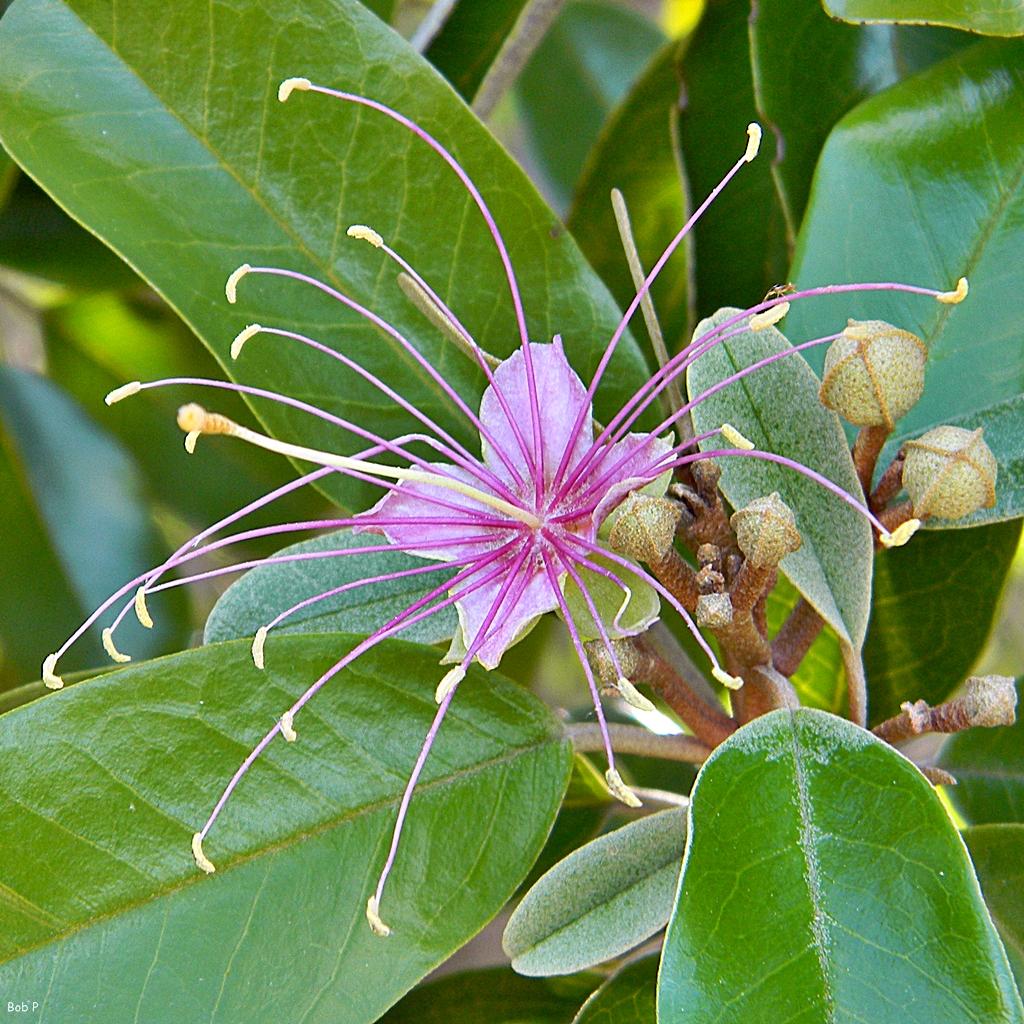
Quadrella cynophallophora, commonly called Jamaica Caper, is a shrub or small evergreen tree of South Florida’s tropical hardwood hammocks and coastal thickets, prized for its glossy leaves and spectacular, long-whiskered flowers that open white at dusk and fade to lavender-pink by morning. It is one of the quieter workhorses of the Florida hammock understory — unassuming in leaf, but briefly dazzling in bloom, and an important larval host plant for the Florida white butterfly.
In the wild it typically grows as a dense, multi-stemmed shrub 6 to 15 feet tall, though with age and good growing conditions it can form a small single-trunked tree to around 20 feet. Its thick, leathery, oval leaves hold up well to salt spray, drought and deep shade alike, which is part of why it has long been a popular, trouble-free landscape plant in South Florida for screening, hedging and informal borders.
A note on the name: USDA PLANTS lists the accepted name for this Florida native as Capparis cynophallophora (treating Quadrella jamaicensis as a synonym), but current taxonomic treatment — followed by the Atlas of Florida Plants and University of Florida/IFAS — recognizes Quadrella cynophallophora (true Capparis cynophallophora) as a separate species restricted to the Bahamas and Hispaniola. Under that treatment, the Florida and wider Caribbean-basin plant is properly Quadrella jamaicensis (basionym Capparis jamaicensis Jacq.), with the two taxa apparently intergrading only on Hispaniola (Iltis & Cornejo 2010). This page follows the assigned name Quadrella cynophallophora as used in USDA’s combined listing, but gardeners searching under Quadrella jamaicensis, Capparis cynophallophora or Capparis jamaicensis are looking at the same Florida native.
Identification
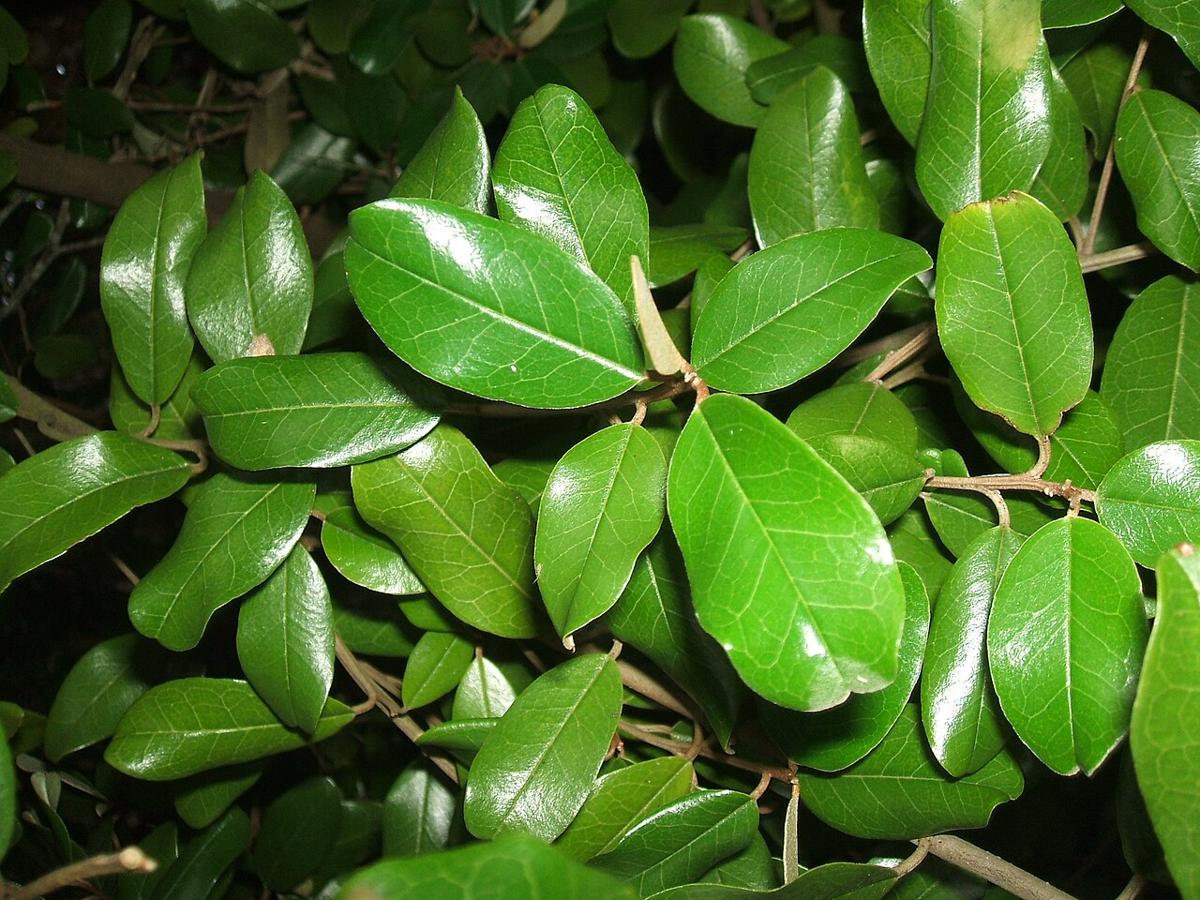
Jamaica caper is identified most easily by its thick, glossy, dark green oval leaves with a pale, finely scurfy (scaly) underside, paired with its unmistakable flowers: a cluster of long, thread-like pink to lavender stamens radiating out from a small four-petaled flower, giving each bloom a spidery, firework-like appearance.
Bark & Stems
Young stems are slender and gray-brown, often with a fine rusty or silvery scurf; older trunks develop smooth to slightly fissured gray bark. Plants branch low and densely when grown in sun, producing the full, hedge-like form valued in landscaping.
Leaves
Leaves are simple, alternate, elliptic to oblong, 2 to 5 inches long, thick and leathery with a glossy deep-green upper surface and a dull, pale underside dusted with tiny peltate scales that can give it a faintly silvery or rust-colored cast. The foliage is evergreen year-round.
Flowers
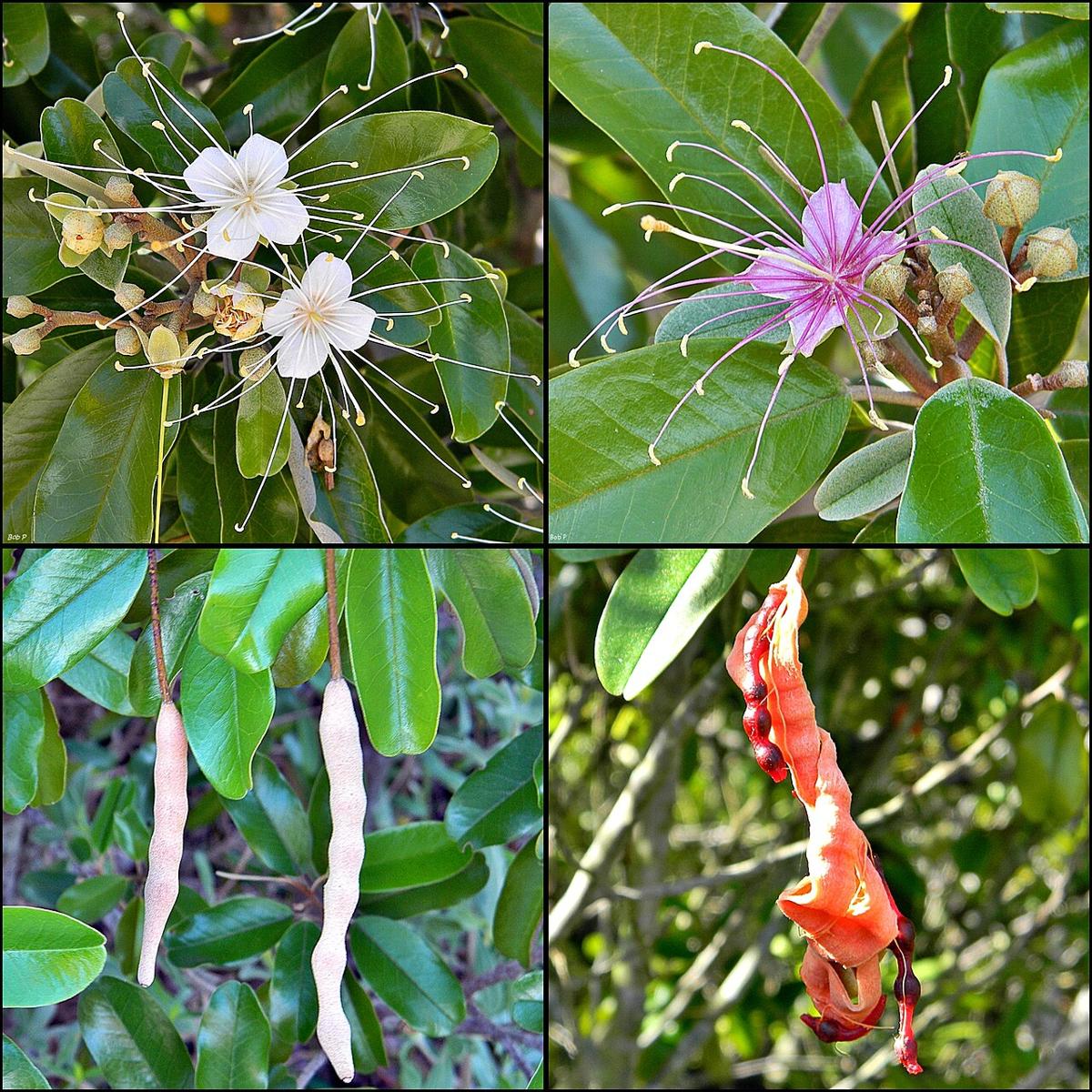
Flowers open in the evening or at night, starting pure white with a dense starburst of stamens 2 to 3 inches long; within a few hours of opening, the petals shift to lavender-pink while the stamens remain tipped with cream anthers. Flowering is sporadic through the warm months, often heaviest after rain, and the blooms carry a light, sweet fragrance that draws night-flying pollinators.
Fruit & Seeds
Flowers are followed by long, narrow, cylindrical seed pods 3 to 8 inches long that dangle from the branches on slender stalks. As pods ripen they split open and twist dramatically, exposing a bright orange-red to crimson fleshy inner lining studded with dark seeds — a striking, almost ornamental display that attracts seed-dispersing birds.
Quick Facts
| Scientific Name | Quadrella cynophallophora |
| Family | Capparaceae (Caper family) |
| Plant Type | Evergreen shrub or small tree |
| Mature Height | 6–20 ft |
| Mature Spread | 6–12 ft |
| Growth Rate | Slow to moderate |
| Sun Exposure | Full Sun to Full Shade |
| Water Needs | Low once established |
| Soil Type | Sandy or rocky limestone soils; well-drained |
| Soil pH | Neutral to alkaline, tolerant of limestone |
| Bloom Time | Sporadic, warm months (spring–fall) |
| Flower Color | White opening, fading lavender-pink |
| Fall Color | Evergreen; no seasonal color change |
| Fruit | Long twisting pods, orange-red lining, dark seeds |
| Deer Resistant | Yes, generally |
| USDA Hardiness Zones | 10 – 11 |
Native Range
Jamaica caper is native to coastal and southern Florida, including Miami-Dade and Monroe counties and the Florida Keys, where it grows in tropical hardwood hammocks, coastal berms and the margins of pinelands. Outside the continental U.S. it ranges through the Caribbean, including Jamaica, Cuba and the Bahamas, and into parts of Central America. It does not occur naturally outside Florida within the United States and has no cold tolerance beyond the warmest, frost-free parts of the state.
Within its native hammocks it grows alongside other tropical hardwood species, often in dappled shade beneath taller canopy trees, though it also tolerates full coastal sun in more open, rocky sites.
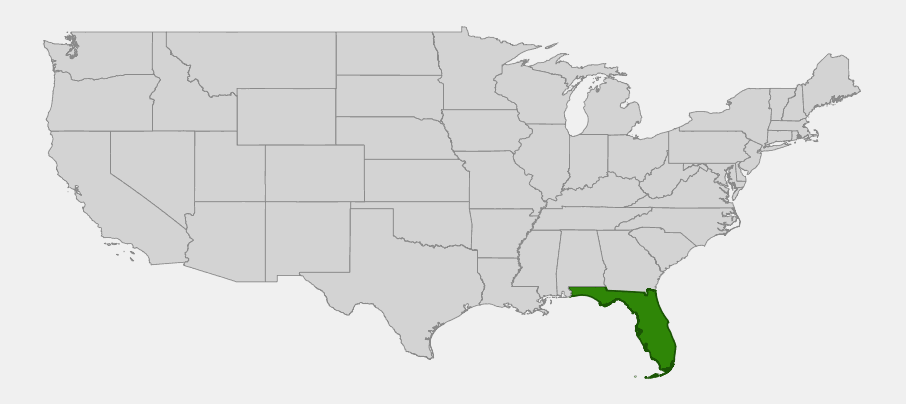
📋 Regional plant lists featuring Jamaica Caper: none yet — Jamaica Caper is native only to coastal South Florida and the Keys, and no plantnative.org regional list currently covers that area; see our full native plant directory for other South Florida natives.
Growing & Care Guide
Jamaica caper is an easygoing, tough landscape plant in its native range, tolerant of heat, drought, salt spray, alkaline limestone soils and both full sun and deep shade — but it is strictly a plant for the warmest, frost-free parts of Florida.
Light
It adapts to nearly any light level, from full sun on a coastal berm to the dense shade beneath a hammock canopy, making it unusually versatile for an understory planting or a sunny hedge alike.
Soil & Water
Jamaica caper thrives in sandy or rocky, limestone-derived soils typical of South Florida and tolerates drought well once established. Good drainage matters more than fertility; it has no particular need for rich soil and will grow readily in the thin, rocky ground of a pine rockland or hammock edge.
Planting Tips
Set out nursery-grown plants in warm weather so roots establish before any cool snaps, and allow 6 to 10 feet between plants if growing as a hedge or screen. Because it tolerates heavy shade, it is a useful choice for filling in beneath taller hammock trees where many other flowering shrubs struggle.
Pruning & Maintenance
It takes well to shearing and shaping, which has made it a traditional clipped hedge plant in older South Florida gardens, though it also looks attractive left to its naturally dense, rounded form. Little maintenance is needed beyond removing storm damage; established plants are notably low-care.
Landscape Uses
Jamaica caper’s shade tolerance and toughness suit a range of South Florida landscape roles:
- Clipped or informal hedges and property-line screens
- Understory planting beneath taller hammock trees
- Butterfly gardens, as a larval host for the Florida white butterfly
- Night gardens, for its evening-opening, fragrant flowers
- Coastal and limestone-soil landscaping where few shrubs tolerate the conditions
Wildlife & Ecological Value
Jamaica caper plays several wildlife roles in its native hammock habitat, from larval host plant to a food source for fruit- and seed-eating animals.
For Butterflies & Insects
Jamaica caper is a documented larval host plant for the Florida white butterfly (Appias drusilla), and its evening-opening, fragrant flowers attract night-flying moths and other pollinating insects that are active after dusk, a niche many day-blooming landscape plants don’t fill.
For Birds
When the long seed pods split open to reveal their bright red-orange lining and dark seeds, the display attracts fruit- and seed-eating birds, which help disperse the seeds; the dense evergreen foliage also provides year-round cover and nesting sites in the hammock understory.
Ecosystem Role
As a shade-tolerant understory shrub, Jamaica caper helps fill the mid-layer of tropical hardwood hammock communities, contributing structural diversity that supports a wider range of hammock wildlife alongside canopy trees like gumbo limbo and associated understory species.
Cultural & Historical Uses
Jamaica caper has long been grown as an ornamental hedge and screening shrub in older South Florida gardens, valued historically for its toughness in the poor, rocky soils common around Miami and the Keys, long before “native landscaping” became a formal design movement. Its relatives in the caper family include the commercially important Mediterranean caper (Capparis spinosa), whose flower buds are pickled as the culinary caper, though Quadrella cynophallophora itself has no significant food use and is grown strictly as an ornamental and wildlife plant.
Regional field guides and naturalists have long noted its dramatic, short-lived flowers as a highlight of a hammock walk — a reminder that some of Florida’s native plants save their best display for a few hours after dark.
Frequently Asked Questions
Is Jamaica caper the same plant as the caper used in cooking?
No. The edible caper of commerce comes from the Mediterranean species Capparis spinosa. Jamaica caper is in the same family but is grown purely as an ornamental and wildlife plant, not a food crop.
Why do Jamaica caper flowers change color?
The petals open white in the evening and shift to lavender-pink within a few hours as the flower ages — a natural color change rather than a sign of a different bloom; both colors can often be seen on the same plant at once.
Does Jamaica caper tolerate shade?
Yes, unusually well for a flowering shrub — it grows readily in full sun or the deep shade of a hardwood hammock canopy, which is part of why it has long been a favorite low-maintenance landscape plant in South Florida.
How cold hardy is Jamaica caper?
It is reliably hardy only in USDA zones 10–11 and has little tolerance for frost or freezing temperatures, restricting it to the warmest coastal and southern parts of Florida.
Is Quadrella jamaicensis the correct name for this plant?
Current Florida botanical authorities (the Atlas of Florida Plants and UF/IFAS) use Quadrella jamaicensis for the Florida native plant, treating true Quadrella cynophallophora as restricted to the Bahamas and Hispaniola. USDA PLANTS still lumps the two under Capparis cynophallophora; either name refers to the same plant discussed here.

Looking for a nursery that carries Jamaica Caper?
Browse our native plant nursery directory: Florida
For other South Florida hammock natives that pair well with Jamaica caper, see our pages on Florida Silver Palm and Pitch Apple. For a South Florida landscape, also check our guides to shade trees for South Florida, privacy trees for Florida, and attracting butterflies to your garden.

