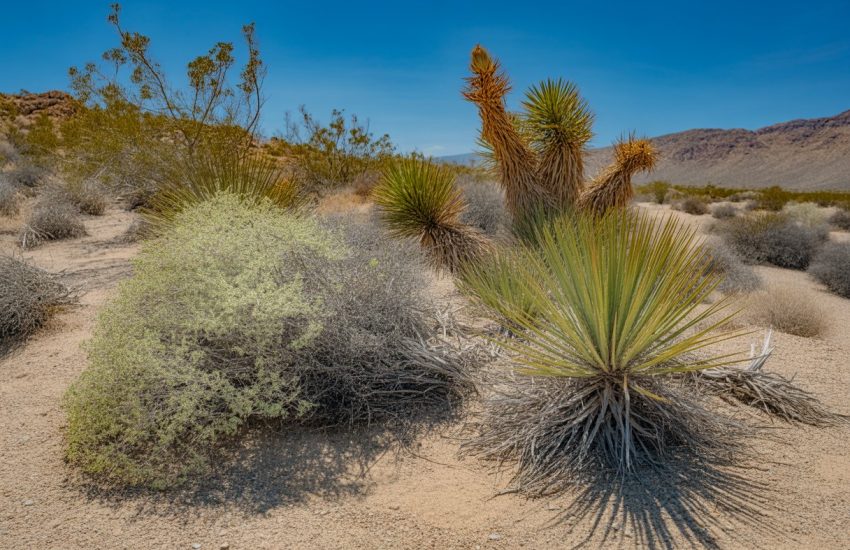
Lateleaf Oak (Quercus tardifolia)
⚠️ One of the rarest trees in North America. Lateleaf Oak (Quercus tardifolia) was believed extinct for years before a single surviving wild tree was rediscovered in Big Bend National Park in 2022. No photographs of this species are currently available under a usable license; the native range map below shows its only confirmed U.S. location.
Quercus tardifolia, known as the Lateleaf Oak or Chisos Mountains Oak, is a critically rare North American oak with one of the most precarious conservation stories of any native tree in the United States. Its entire known range is a tiny pocket of the Chisos Mountains inside Big Bend National Park, Texas, with a second historical area across the Rio Grande in the Sierra del Carmen of northern Coahuila, Mexico. For much of the early 21st century, botanists feared the species had gone extinct in the wild.
That changed on May 25, 2022, when a coalition of researchers — including scientists from The Morton Arboretum, the United States Botanic Garden, and the National Park Service — located a single surviving Lateleaf Oak high in the Chisos Mountains. The tree was found in dire condition, battling fungal infection and facing elevated wildfire risk linked to a warming, drying climate. Cuttings and acorns were collected under strict conservation protocols in an effort to propagate the species in botanical gardens before the wild population is lost entirely.
Lateleaf Oak gets its common name from its distinctive habit of leafing out later in the season than comparable oaks in its range. It is an evergreen tree in the red oak group, with gray bark, reddish-brown twigs, and flat, leathery, shallowly lobed leaves that are woolly on the underside. Because of how rare and fragile the species is, this page exists to document its identity and conservation status rather than to encourage any attempt to seek it out, collect from it, or plant it — there is, at present, no legal or practical way to obtain this species for a home landscape.
Identification
Lateleaf Oak belongs to the red oak group (section Lobatae) and is distinguished from the region’s other rare oaks — including Robust Oak, which shares its Chisos Mountains habitat — by its evergreen foliage and the particular combination of leaf shape, hair, and lobing described below. Because living material is so scarce, most identification notes come from herbarium specimens collected before the species was feared extinct, supplemented by observations of the 2022 rediscovered tree.
Bark & Stems
The bark is gray, and the twigs are a distinctive reddish-brown, a combination that helps distinguish this species from superficially similar oaks growing in the same high-elevation Chisos Mountains woodlands.
Leaves
Leaves are evergreen and flat, up to about 4 inches (10 cm) long, green on the upper surface, with woolly hairs covering the underside and a few shallow lobes along the margin. The late emergence of new leaves relative to other oaks in its range — the trait behind both its scientific epithet tardifolia (“late leaf”) and its common name — is one of its more useful field characteristics, though observing it requires access to the tree during the narrow window when nearby oak species have already leafed out.
Acorns
As a member of the red oak group, Lateleaf Oak acorns would be expected to take two growing seasons to mature, following the typical pattern for section Lobatae. Because the known wild population has been reduced to a single individual in declining health, acorn production and viability in recent years have been a central concern for the conservation teams working to propagate the species.
Quick Facts
| Scientific Name | Quercus tardifolia |
| Family | Fagaceae (Beech/Oak) |
| Plant Type | Evergreen tree (critically rare) |
| Mature Height | Data limited; herbarium records suggest a small to medium tree |
| Growth Rate | Unknown (insufficient living material studied) |
| Sun Exposure | Full Sun to Part Shade |
| Water Needs | Low (high-elevation desert-mountain woodland) |
| Soil Type | Rocky, well-drained mountain soils |
| Bloom Time | Spring (wind-pollinated catkins, after late leaf-out) |
| Flower Color | Greenish-yellow |
| Fall Color | None (evergreen) |
| Fruit | Acorn (red oak group, two-year maturation expected) |
| Conservation Status | Critically imperiled; IUCN Data Deficient; one confirmed living wild tree as of 2022 |
| USDA Hardiness Zones | 7–8 (estimated, based on Chisos Mountains elevation) |
Native Range
Lateleaf Oak has one of the smallest known ranges of any native North American tree. It has been documented in the Chisos Mountains inside Big Bend National Park in Trans-Pecos Texas, and historically in the nearby Sierra del Carmen across the Rio Grande in northern Coahuila, Mexico. For years, no living trees could be confirmed anywhere in this range, and the species was widely presumed extinct in the wild.
The 2022 rediscovery of a single surviving tree in the Chisos Mountains confirmed that the species still persists, but just barely. That individual was found struggling with fungal disease and sitting in an area at elevated risk from wildfire intensified by climate change — meaning the entire known living population of this species in the United States could, in principle, be a single disease outbreak or fire away from functional extinction in the wild. Conservation teams have since collected propagation material in hopes of establishing the species in protected ex situ collections.
Because its range is confined to a high-elevation, federally protected area, Lateleaf Oak has no history of cultivation, horticultural distribution, or planting outside this native site. It should not be sought out, disturbed, or collected from in the wild under any circumstances; doing so within Big Bend National Park is also illegal.
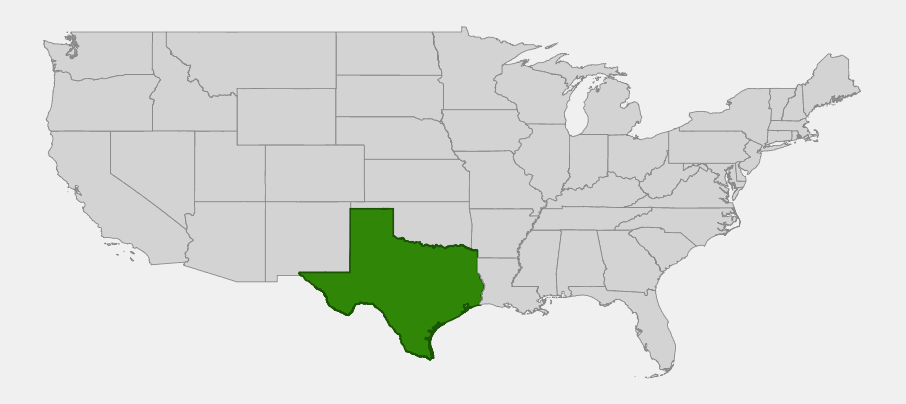
📋 Regional plant lists featuring Lateleaf Oak: South and West Texas
Growing & Care Guide
There is currently no legitimate way to grow Lateleaf Oak in a home landscape. With only one confirmed living wild tree as of its 2022 rediscovery, every effort around this species is focused on emergency conservation propagation by botanical institutions, not horticultural availability. The following notes describe what is known about its natural growing conditions, offered for context rather than as planting guidance.
Natural Growing Conditions
In the wild, Lateleaf Oak grows in rocky, high-elevation woodland within the Chisos Mountains sky island, a cooler and moister pocket of habitat than the surrounding Chihuahuan Desert lowlands. This elevation gradient is part of what makes the Chisos Mountains home to such an unusual concentration of rare oak species found nowhere else in the United States.
Conservation Efforts
Following the 2022 rediscovery, researchers from The Morton Arboretum, the U.S. Botanic Garden, and partner institutions collected cuttings and acorns from the surviving tree under permit, with the goal of establishing backup populations in protected botanical collections. This kind of “insurance” propagation is a standard strategy for species reduced to critically small wild populations, intended to preserve genetic material while conservationists work to protect and, if possible, restore the wild population.
What You Can Do
- Do not seek out or disturb the tree if visiting Big Bend National Park — its exact location is sensitive and protected
- Support botanical garden conservation programs working on rare oak propagation, such as The Morton Arboretum’s oak conservation initiatives
- Choose other native Trans-Pecos oaks, such as Gray Oak or Gambel Oak where appropriate to your site, for home landscaping instead
- Follow Big Bend National Park’s conservation updates for accurate information on the species’ status
Wildlife & Ecological Value
With only one known living wild tree, Lateleaf Oak’s current direct contribution to wildlife is necessarily minimal, but the species remains ecologically significant as part of the broader, unusually rich assemblage of rare oaks in the Chisos Mountains sky island. Historically, where it was more widespread, it would have contributed to the acorn mast and canopy structure that Chisos Mountains wildlife — including black bears, gray foxes, and numerous bird species — depend on.
Ecosystem Role
The Chisos Mountains support an exceptional concentration of localized, rare oak species, of which Lateleaf Oak is one of the most extreme examples. Protecting the handful of individuals and populations of these range-restricted oaks helps preserve the genetic and ecological diversity of a sky-island ecosystem that functions almost like a cool, moist island surrounded by Chihuahuan Desert.
Cultural & Historical Uses
Lateleaf Oak has no documented history of use by Indigenous peoples or settlers, a reflection of both its extreme rarity and the remoteness of the high-elevation Chisos Mountains terrain where it grows. It was formally described by botanist Cornelius Herman Muller, who documented a number of the region’s distinctive oak species in the early-to-mid 20th century.
Its significance today is almost entirely as a conservation case study: a species that went from presumed extinct to a single known living individual, illustrating both how precarious small, geographically isolated plant populations can be and how quickly a species can slip toward the edge of extinction when its entire range consists of one mountain range in one national park.
The 2022 rediscovery made international news as a rare piece of good conservation news amid widespread concern about biodiversity loss, and it has since become a touchstone example in discussions of oak conservation and the broader threats climate change poses to narrow-range mountain species.
Frequently Asked Questions
Is Lateleaf Oak really down to one tree?
As of its rediscovery in May 2022, researchers confirmed only one living wild individual in the Chisos Mountains. Conservationists have since worked to propagate the species from collected material, but the wild population itself remains critically small and its exact current status should be checked against the latest reports from Big Bend National Park and partner conservation organizations.
Can I buy or plant a Lateleaf Oak?
No. There is no commercial or legal source of this species for home landscaping. All known propagation material is held by botanical conservation institutions working to prevent the species’ extinction, not to supply the nursery trade.
What does “Lateleaf” refer to?
The name, and the species’ scientific epithet tardifolia, both refer to its habit of leafing out later in spring than other, more common oaks growing in the same part of the Chisos Mountains.
How is Lateleaf Oak different from Robust Oak, which also grows in the Chisos Mountains?
Both are extremely rare Chisos Mountains endemics first described by botanist Cornelius Herman Muller, but Lateleaf Oak is evergreen with woolly, shallowly lobed leaves in the red oak group, while Robust Oak is deciduous with larger, more coarsely toothed leaves. Their shared mountain range reflects how unusually rich in localized rare oaks the Chisos Mountains sky island is.
What threats does the species face?
The surviving tree found in 2022 was already struggling with fungal infection, and its high-elevation habitat faces increasing wildfire risk as the regional climate grows warmer and drier — both threats that could eliminate the last known wild individual.

Looking for a nursery that carries other native Trans-Pecos oaks?
Browse our native plant nursery directory: Texas