Mexican Holdback (Erythrostemon mexicanus)
Erythrostemon mexicanus — long known in gardens as Caesalpinia mexicana and still sold under that name by many nurseries — is commonly called Mexican Holdback, Mexican Bird of Paradise, Mexican Caesalpinia, or tabachín del monte. It is a showy, fine-textured, yellow-flowered shrub or small tree in the pea family (Fabaceae), and one of the few true native trees of the extreme southern tip of Texas. Within the United States, its wild range is confined to the Lower Rio Grande Valley — the handful of South Texas counties that brush against the Mexican border — making it one of the most range-restricted native trees in this guide.
Mexican holdback is beloved by landscapers across the warmer Southwest for its lush, locust-like compound foliage and its long bloom season: spikes of fragrant, yellow flowers appear from late winter through summer, sometimes continuing into fall, followed by tan, papery seedpods that split open and curl dramatically when ripe. In its native Rio Grande Valley habitat it grows as an airy, large shrub or small tree to about 15 feet, well adapted to heat, caliche soil, and long dry spells.
Because it is so widely planted as an ornamental across Texas, Arizona, and beyond, it is easy to forget that this species has a genuinely wild, native foothold only in the far southern tip of Texas and adjacent Mexico. Gardeners in the Rio Grande Valley get to grow a true local native; gardeners elsewhere in the Southwest are simply growing a well-adapted, drought-tolerant exotic from just across the state line.
Identification
Mexican holdback is a large, multi-stemmed shrub or small single-trunked tree, typically 10 to 15 feet tall and nearly as wide, with an airy, open, somewhat arching growth habit. It is essentially unarmed — unlike many of its thorny legume relatives in South Texas brush country — which makes it unusually pleasant to work around and gives rise to the alternate reading of “holdback” as a nod to its relatively tame, non-clawing nature compared to true thorny acacias.
Bark & Stems
Young stems are smooth and green to gray-green, aging to light gray-brown bark on older wood. The overall branching structure is loose and somewhat weeping, giving mature plants a graceful, fountain-like silhouette rather than a dense, clipped form.
Leaves
Leaves are bipinnately compound — twice-divided into small, oval leaflets roughly ½ to 1 inch long — giving the foliage a fine, ferny, almost mimosa-like texture. The plant is evergreen to semi-evergreen in the mild winters of the Lower Rio Grande Valley, though it may drop leaves and resprout after a hard freeze farther north in cultivation.
Flowers
Slightly fragrant, bright yellow flowers are borne in showy terminal spikes 3 to 6 inches long, each carrying 10 to 30 individual blossoms. Bloom is remarkably extended, running from February through July and often continuing sporadically into October — among the longest flowering seasons of any South Texas native shrub.
Fruit & Seeds
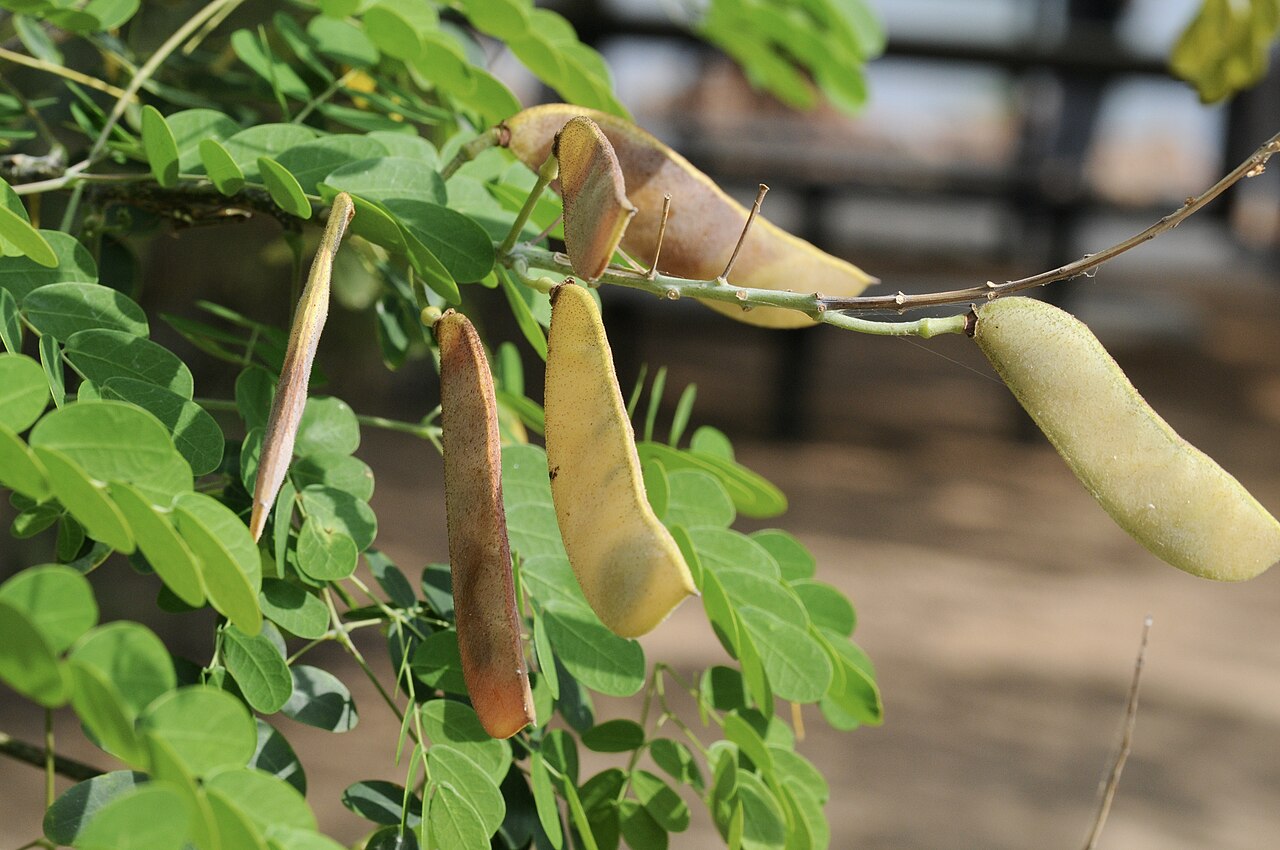
Flowers give way to flattened, dehiscent seedpods 2 to 3 inches long, tan to yellow-brown at maturity. When ripe, the pods split open explosively along both seams and the two halves often curl or twist, flinging the seeds a short distance from the parent plant — a classic legume seed-dispersal strategy.
Quick Facts
| Scientific Name | Erythrostemon mexicanus (syn. Caesalpinia mexicana) |
| Family | Fabaceae (Pea/Legume family) |
| Plant Type | Evergreen to Semi-evergreen Shrub / Small Tree |
| Mature Height | 10–15 ft |
| Mature Spread | 8–12 ft |
| Growth Rate | Moderate to fast |
| Sun Exposure | Full Sun |
| Water Needs | Low once established |
| Soil Type | Caliche, loam, or sandy; well-drained |
| Soil pH | Neutral to alkaline |
| Bloom Time | February – July, sporadically to October |
| Flower Color | Yellow |
| Fall Color | Evergreen to semi-evergreen; not a fall-color plant |
| Fruit | Flat, papery tan seedpods, splitting open at maturity |
| Deer Resistant | Good |
| USDA Hardiness Zones | 9–11 (damaged by hard freezes below roughly 25°F, resprouts from the base) |
Native Range
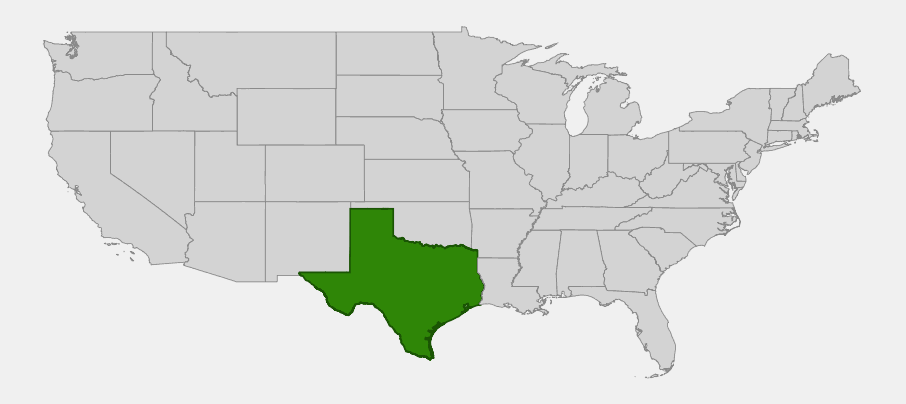
Mexican holdback’s confirmed wild native range in the United States is limited to the extreme Lower Rio Grande Valley of South Texas — principally Cameron, Hidalgo, and Starr counties along the Mexican border — with the bulk of its range continuing south into central and eastern Mexico. It is worth noting that the USDA PLANTS database currently lists the species as introduced for the Lower 48 overall, reflecting how heavily it has been planted as an ornamental across the Southwest; however, Texas native-plant references — including the Native Plant Project’s Rio Grande Valley shrub and tree handbook and the Lady Bird Johnson Wildflower Center — document genuinely wild, naturally occurring populations in the LRGV, and this page follows that regional-flora treatment.
In its native habitat, the species grows on dry brushland and resacas (old river channels) of the Tamaulipan thornscrub, often alongside other South Texas natives adapted to heat, caliche soil, and infrequent but sometimes heavy rainfall.
Because Mexican holdback is so widely sold and planted as a landscape shrub well outside the Rio Grande Valley — including across central and west Texas, Arizona, and southern California — gardeners should understand that a plant purchased at a nursery in San Antonio, Tucson, or Phoenix is not growing in its native range, even though it will often perform beautifully there. Only in the LRGV is this species a true native addition to a wildlife garden.
📋 Regional plant lists featuring Mexican Holdback: South and West Texas
Growing & Care Guide
Mexican holdback is an easy, rewarding shrub for warm, dry gardens, prized for its long bloom season and fine, graceful texture.
Light
Give it full sun for the heaviest, longest-lasting flower display. It will tolerate light shade but blooms noticeably less in reduced light.
Soil & Water
This species is unfussy about soil type as long as drainage is good, thriving in caliche, loam, or sandy ground. It is drought tolerant once established, though regular water during the growing season produces lusher foliage and more continuous bloom. Avoid soggy, poorly drained sites.
Planting Tips
Plant from container stock in spring after the danger of hard frost has passed, giving the roots a full growing season to establish before winter. In the Rio Grande Valley it can be used freely as a true native; gardeners farther north in Texas or in Arizona should know it will likely freeze to the ground in a hard winter and resprout from the base the following spring, behaving more like a large perennial than a permanent small tree in those colder zones.
Pruning & Maintenance
Prune after a freeze to remove dead wood, and lightly shape in late winter if a more compact form is desired — the natural arching habit is attractive left alone. The species responds well to hard pruning and resprouts vigorously from the base after cold damage.
Landscape Uses
Mexican holdback earns its popularity with real landscape versatility:
- Specimen flowering shrub or small patio tree with an extended bloom season
- Pollinator and hummingbird gardens in the Rio Grande Valley
- Informal hedges or screens given its size and density
- Xeriscape and low-water landscapes once established
- Wildlife restoration plantings within its true native LRGV range
Wildlife & Ecological Value
Mexican holdback’s long bloom season makes it an unusually reliable nectar source through much of the warm season.
For Pollinators
The fragrant yellow flower spikes attract native bees, honeybees, and butterflies over an exceptionally long season — often from late winter through summer — providing a dependable nectar source when many other South Texas natives have finished blooming.
For Birds
Hummingbirds visit the flowers for nectar, and the dense, fine-textured branching offers good cover for small songbirds. Seed-eating birds will take some of the seed once pods split open.
For Mammals
Being nearly unarmed and palatable, young growth may be browsed by deer and javelina where the species grows wild in South Texas brush country, though established plants tolerate moderate browsing pressure well.
Ecosystem Role
Within the Tamaulipan thornscrub of the Rio Grande Valley, Mexican holdback adds a flowering, nitrogen-fixing legume component to brush communities otherwise dominated by thornier, less showy species — its long bloom window helps support pollinator populations through seasons when fewer native flowers are available.
Cultural & Historical Uses
The Spanish common name tabachín del monte (“wild poinciana” or “wild bird of paradise”) links this species to its showier cultivated relatives in the same family, including red bird of paradise (Caesalpinia pulcherrima) and yellow bird of paradise (Erythrostemon gilliesii), both long popular in Southwestern gardens. “Holdback” in the English common name likely nods to its relatively tame, nearly thornless character compared to the many truly armed, “catclaw”-type legumes of the same brush country.
Mexican holdback has no major documented history of food, medicinal, or craft use among Indigenous peoples of South Texas, in contrast to some of the more utilitarian thorny acacias and mesquites of the region; its significance has always been primarily ornamental and ecological rather than economic.
In recent decades it has become a staple of xeriscape and water-wise landscaping across the warmer Southwest, prized by landscape architects for its reliable, long-season color with minimal water input — a popularity that, ironically, has sometimes obscured its much narrower status as a true Texas native confined to the Rio Grande Valley.
Frequently Asked Questions
Is Mexican holdback the same plant as Caesalpinia mexicana?
Yes. Caesalpinia mexicana is the older, still widely used name for this species; current taxonomic treatments place it in the segregate genus Erythrostemon as Erythrostemon mexicanus. Nurseries commonly still sell it under the older name.
Is Mexican holdback really native to Texas?
Yes, but only to the Lower Rio Grande Valley — Cameron, Hidalgo, and Starr counties along the Mexican border. Despite its popularity as a landscape plant across much of Texas and the Southwest, those widely cultivated plants are growing well outside the species’ actual native range.
How cold-hardy is Mexican holdback?
It is reliably evergreen in USDA zones 9–11 but will freeze to the ground in a hard freeze farther north or at higher elevation. Established plants typically resprout vigorously from the base the following spring after cold damage.
Does Mexican holdback have thorns?
No, or very few — it is essentially unarmed, unlike many other legume shrubs native to South Texas brush country, which makes it easier to plant near walkways and patios.
How long does Mexican holdback bloom?
Remarkably long for a South Texas native — typically February through July, with sporadic additional flowering into October, giving it one of the longest bloom seasons of any native shrub in this guide.

Looking for a nursery that carries Mexican Holdback?
Browse our native plant nursery directory: Texas
Related reading and associate species: Texas Persimmon · Cedar Elm · Best Trees for Privacy to Grow in Austin, Texas