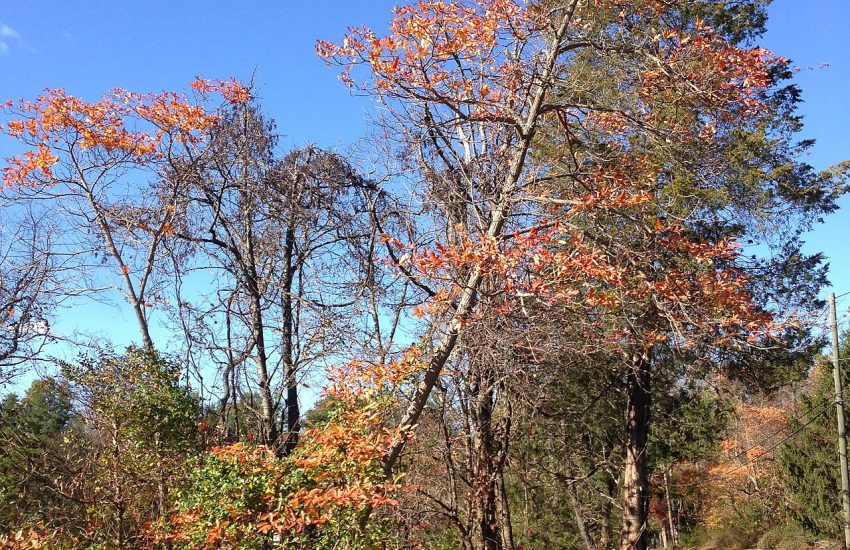
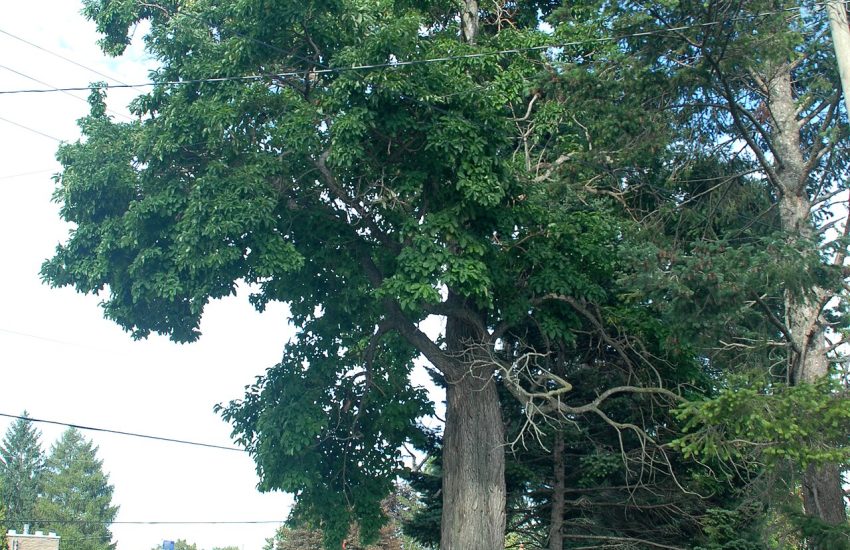
Copenhagen Hawthorn (Crataegus intricata)
Crataegus intricata, known as Copenhagen Hawthorn, thicket hawthorn, or entangled hawthorn, is a native shrub or small tree in the rose family (Rosaceae) found scattered across the northeastern and upper midwestern United States and adjacent Canada. The common name “Copenhagen” and the botanical epithet intricata (“entangled” or “intricate”) both trace back to Danish botanist Johan Lange, who described the species from material connected to Copenhagen’s botanical collections in the 19th century, even though the plant itself is entirely North American in origin.
True to its name, this is a tangled, thicket-forming shrub — typically broader than it is tall, with intertwining branches that create dense, nearly impenetrable cover. It is a modest, unassuming hawthorn rather than a showy specimen tree, but that very density and toughness make it valuable where a thorny, low-maintenance wildlife thicket is the goal.
Identification
Copenhagen hawthorn is a large shrub or small tree, generally 3 to 10 feet (1–3 m) tall though it can reach larger sizes in favorable sites, with a dense, twiggy, intricately branched habit. Branches carry curved thorns 1 to 1½ inches (2.5–4 cm) long.
Leaves
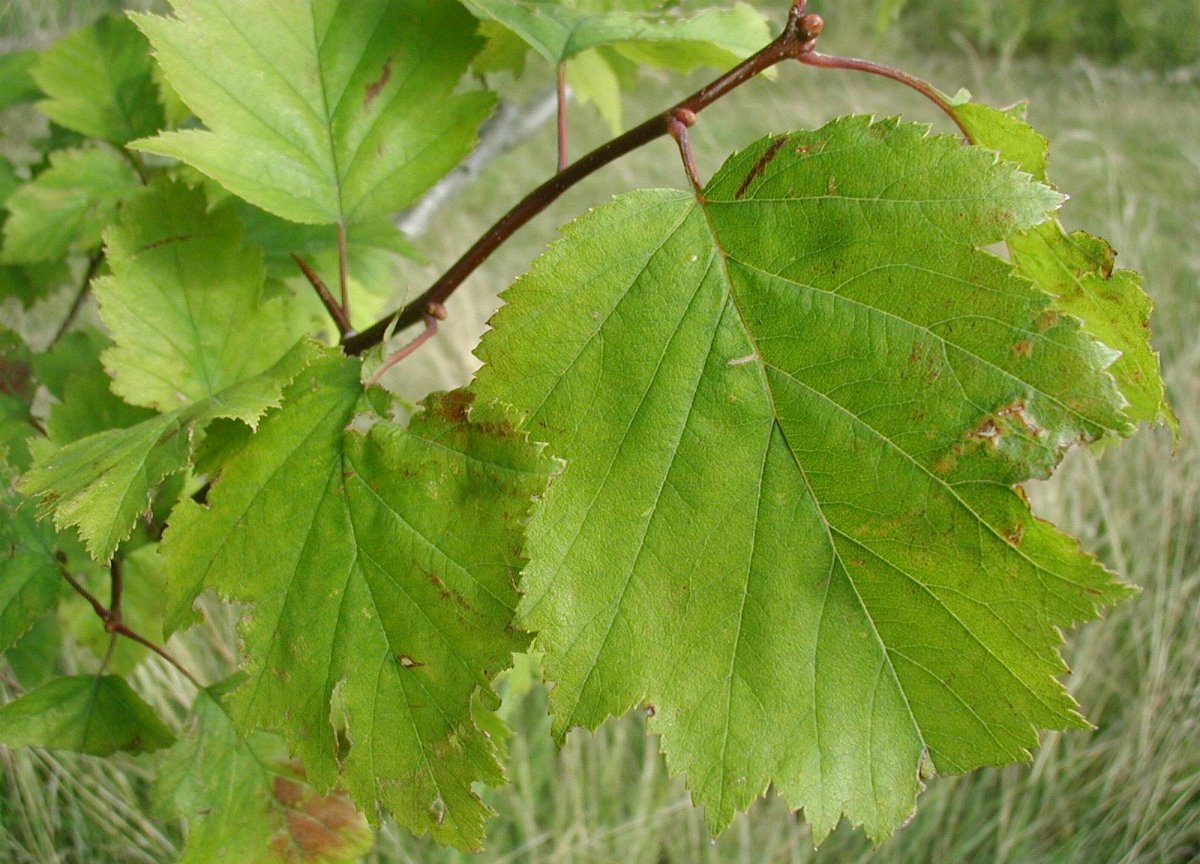
Leaves are broadest at or below the middle, with shallow, sharply pointed lobes and toothed margins. Foliage is dark green and ranges from smooth to lightly hairy depending on the individual plant — part of the variability typical of the hawthorn genus.
Flowers
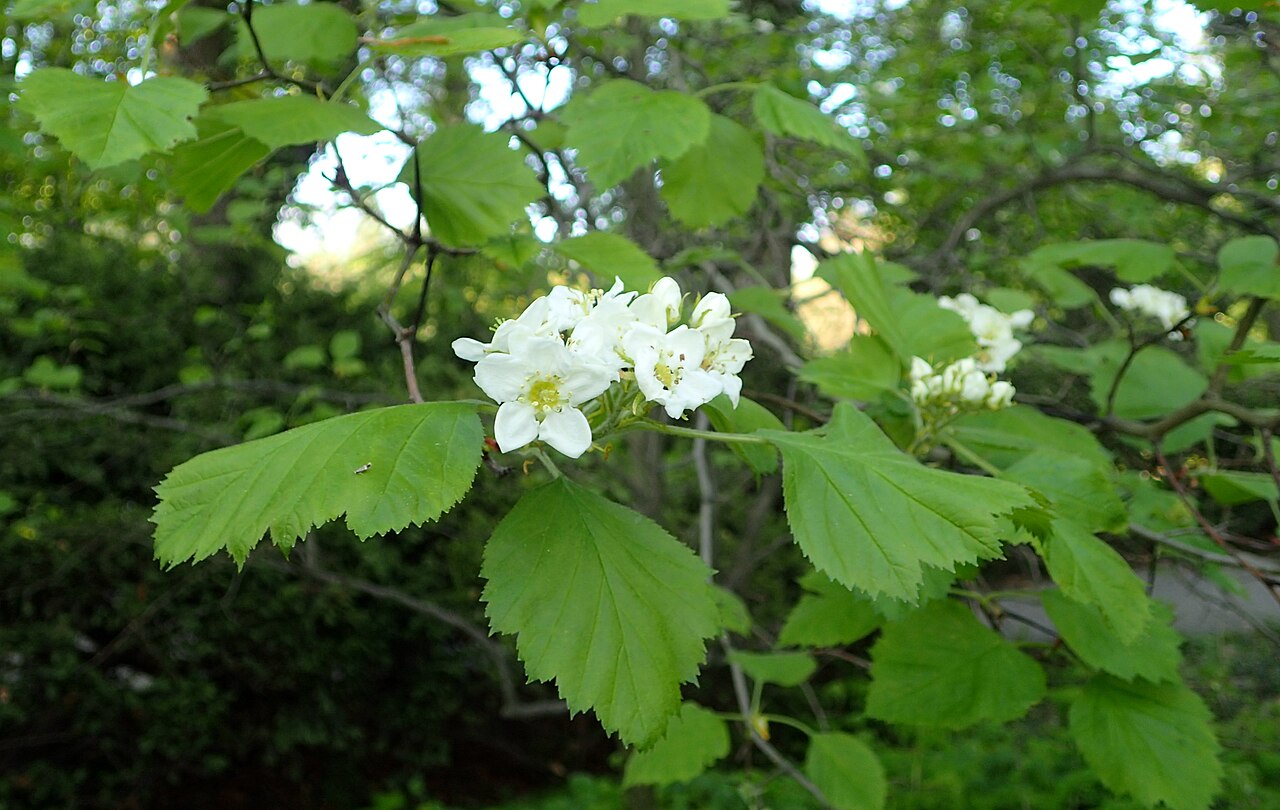
White, five-petaled flowers open in small clusters in May, typical in size and form for the genus, with a mild, slightly unpleasant scent characteristic of hawthorns that draws flies and small native bees rather than showier pollinators.
Fruit
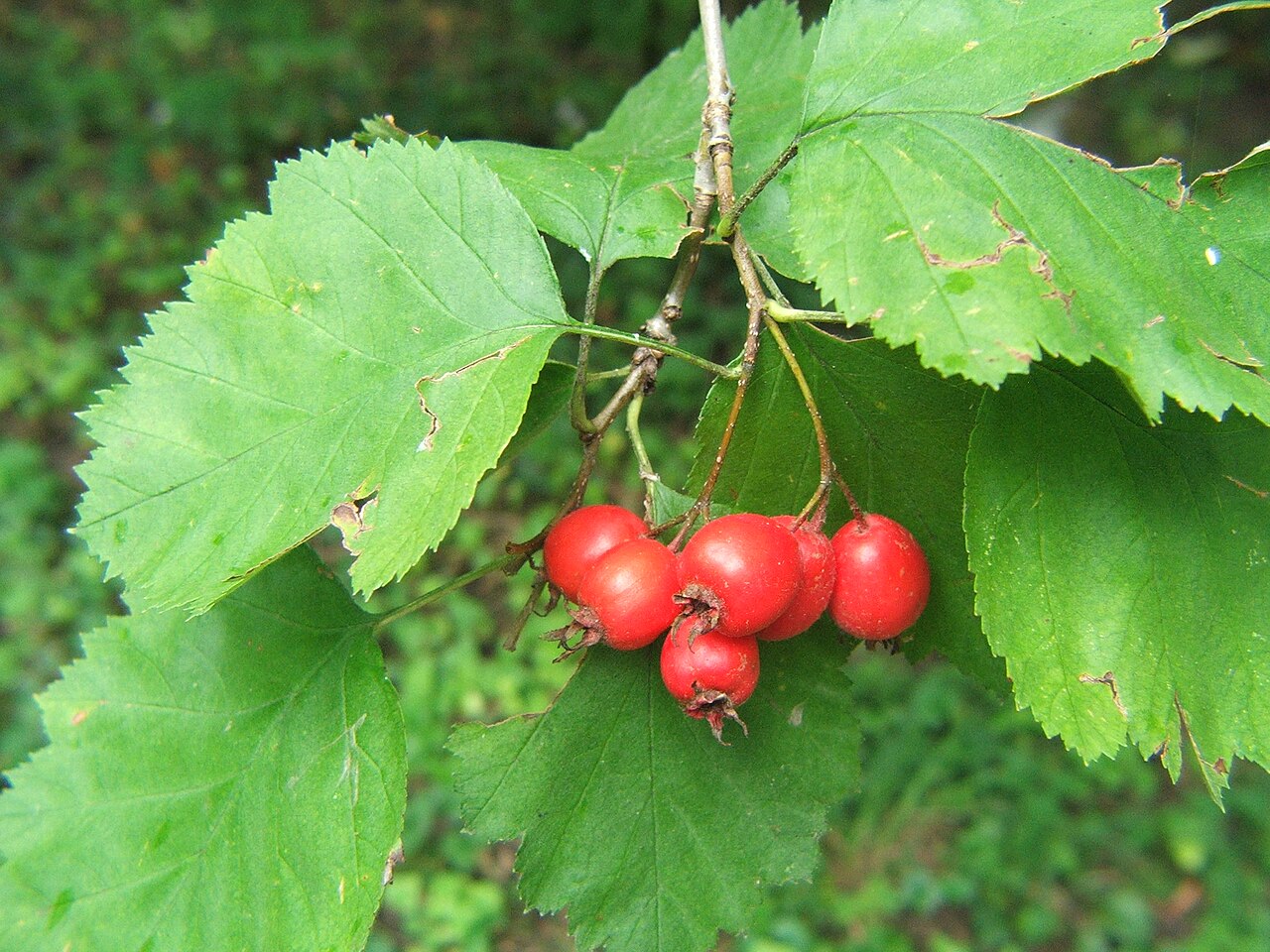
Fruits are broadest above the middle (obovoid) and ripen to red, orange, yellow, or green depending on the individual plant — an unusually variable trait for a single species, and one more reason “intricata” fits so well. They mature in fall and, like most hawthorn fruit, persist into early winter.
Quick Facts
| Scientific Name | Crataegus intricata Lange |
| Family | Rosaceae (Rose) |
| Plant Type | Deciduous shrub / small tree |
| Mature Height | 3–10 ft (1–3 m) |
| Growth Rate | Slow to moderate |
| Sun Exposure | Full sun to part shade |
| Water Needs | Tolerates wet soil when young; drought tolerant once established |
| Soil Type | Adaptable, well-drained loamy soils preferred |
| Bloom Time | May |
| Flower Color | White |
| Fruit | Red, orange, yellow, or green pomes, fall |
| Thorns | Yes, 1–1.5 in, curved |
| USDA Hardiness Zones | 4–7 |
Native Range
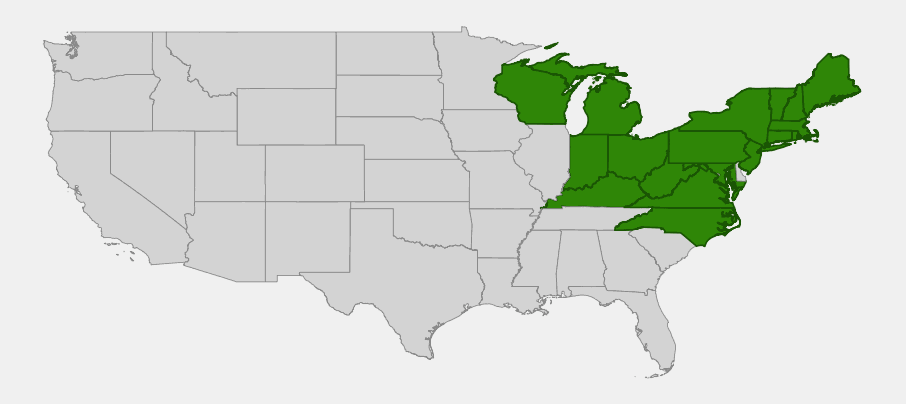
Copenhagen hawthorn is native to the northeastern United States, extending west through the Great Lakes to Michigan and south through the Ohio Valley to Indiana and North Carolina, with Canadian populations in Ontario and Quebec. The USDA National Plant Data Center’s plant guide for the species summarizes its core range as running “from Massachusetts to Michigan, south [to] North Carolina, and Indiana.” It grows on a wide variety of sites, from dry upland ground to streambanks and lower slopes, and is noted for being wind tolerant and reasonably tolerant of urban pollution — characteristics that made it historically useful for shelterbelt and erosion-control plantings.
The USDA PLANTS Database lists it as symbol CRIN3, native to the Lower 48 and adjacent Canada. Some broader regional atlases map a wider southern range for the Crataegus intricata complex into the Gulf states; this page follows the USDA/NRCS plant guide’s more conservative, better-documented core range for its regional-list recommendations below, given that hawthorn identification and range data from the southern part of the complex are considered less reliable.
📋 Regional plant lists featuring Copenhagen Hawthorn: New Hampshire, Maine & Vermont · Connecticut, Massachusetts & Rhode Island · New York, Pennsylvania & Northern New Jersey · Maryland, Virginia & West Virginia · North Carolina & South Carolina · Kentucky & Tennessee · Ohio & Indiana · Michigan, Wisconsin & Eastern Minnesota
Growing & Care Guide
Copenhagen hawthorn is an easy, tolerant shrub well suited to erosion control, shelterbelts, and informal thicket plantings rather than a tidy specimen role.
Light & Water
It succeeds in partial shade but performs best — denser growth, better flowering and fruiting — in full sun on well-drained loamy soil. It tolerates wet soils while young, gradually becoming more drought tolerant as it matures, and handles wind exposure unusually well for a shrub of this size, a trait historically put to use in shelterbelt plantings.
Soil & Planting
Adaptable to different soil types. Container stock should be planted no more than about 8 feet tall for best establishment, in fall or spring; balled-and-burlapped stock is best planted in early spring. Seed propagation requires acid scarification followed by warm stratification and prechilling — most gardeners will do better sourcing nursery-grown plants.
Pruning & Maintenance
Prune in winter or early spring to maintain a clear leader if a more tree-like form is wanted, or simply remove the weakest branches to thin a mature thicket. It tolerates atmospheric pollution and performs reasonably well in urban settings. As with other hawthorns, watch for (generally cosmetic) cedar-hawthorn rust near eastern redcedar.
Landscape Uses
- Shelterbelt and windbreak plantings
- Bank stabilization and erosion control on a variety of site types
- Dense wildlife thicket for nesting birds
- Urban and roadside plantings tolerant of pollution
Wildlife & Ecological Value
The variably colored fruit — ranging from red to orange, yellow, or green on different individuals — provides food for a range of fruit-eating birds through fall and into winter. The exceptionally dense, “intricate” branching gives this species some of the best nesting and predator-escape cover of any eastern hawthorn, valuable to small songbirds that favor thorny thickets over open branching. Spring flowers draw flies and small native bees during the brief May bloom window, and as with other hawthorns, the foliage hosts a number of native moth and butterfly larvae.
Frequently Asked Questions
Why is it called “Copenhagen” hawthorn if it’s native to North America?
The name honors Danish botanist Johan Lange, who formally described the species in a review of hawthorns cultivated in Denmark during the 19th century — a reminder that many North American plants were first formally described by European botanists working from cultivated or herbarium material, even though the species itself never grew wild in Europe.
Why does the fruit color vary so much?
Crataegus intricata is a genuinely variable species — individual plants can bear red, orange, yellow, or green fruit. This kind of variation is common across the hawthorn genus and is part of why the group is so taxonomically challenging; “intricata” (entangled, intricate) fits both the branching habit and the species’ complicated variability.
Is the fruit edible?
The pomes are not toxic and have the mealy, dry texture typical of hawthorn fruit. They are of minor culinary interest to people but a useful food source for birds through fall and winter.
Is it a good choice for a small garden?
Its naturally dense, thorny, thicket-forming habit is better suited to a hedgerow, windbreak, or wildlife corner than a tidy foundation planting. Give it room to sprawl, or commit to regular pruning if a more restrained form is needed.

Looking for a nursery that carries Copenhagen Hawthorn?
Browse our native plant nursery directory: CO–HI · ID–KS · KY–MT · NE–OK · PA–VA · WV–WY
More hawthorns to explore: Downy Hawthorn · Dotted Hawthorn. Related reading: Hawthorn Trees: Plant, Grow & Care and Planting Native Trees for Wildlife.