Spicebush Leaves Turning Yellow in Summer: What to Inspect First
Last updated: November 5, 2026
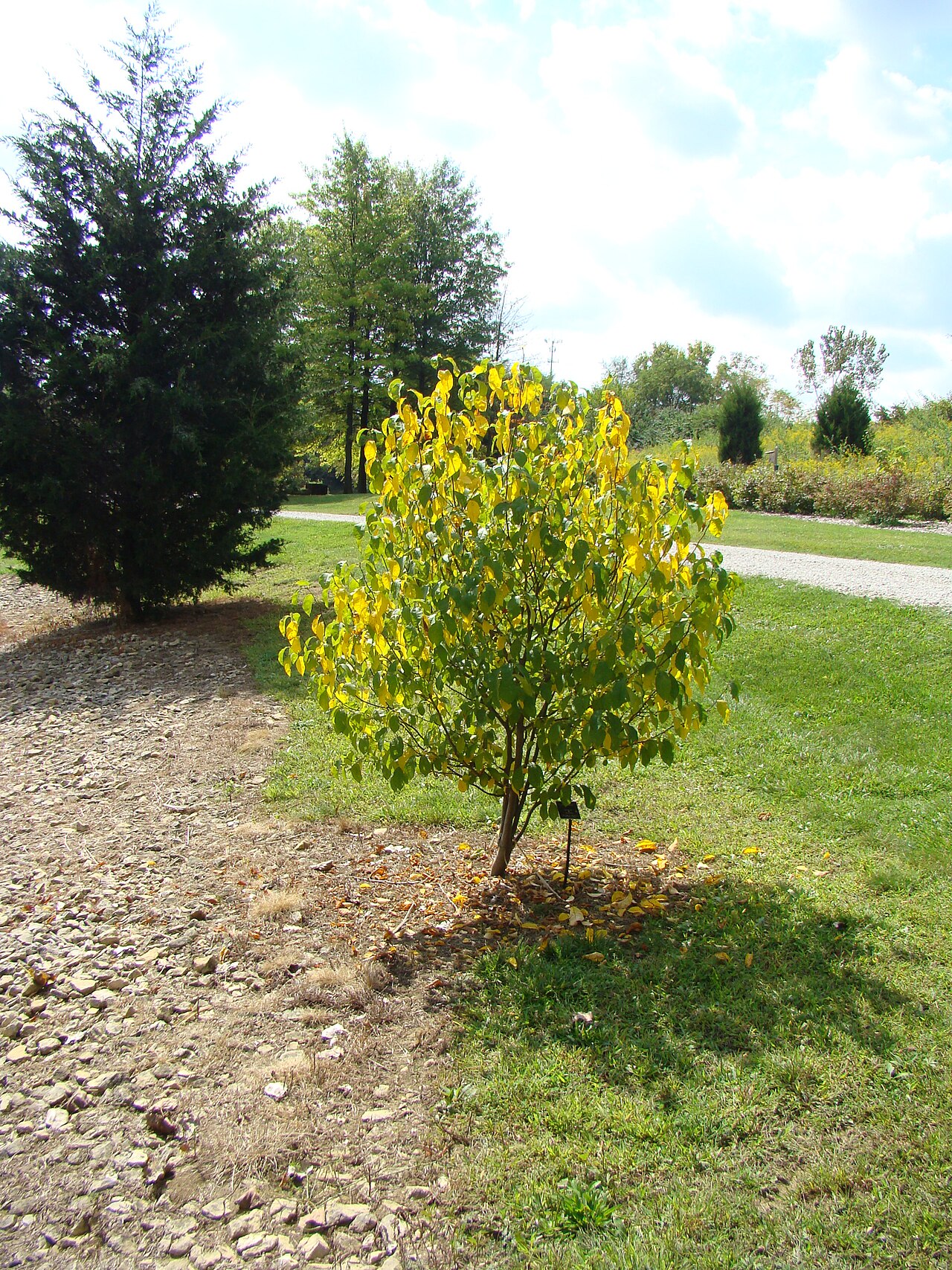
Spicebush is supposed to turn yellow. Its clear golden fall color is one of the best reasons to grow it.
But when leaves on your spicebush start yellowing in July or early August, while everything else in the yard is still green, it’s fair to wonder what’s going on.
Most summer yellowing on spicebush comes down to water, light, or ordinary leaf turnover. A few causes are more serious. This guide shows you what to inspect first, so you can tell the difference in a few minutes.
The Short Answer
Summer yellowing on spicebush (Lindera benzoin) is most often caused by:
- Dry soil. Spicebush is a moist-woods shrub, and drought shows up as yellowing, scorch, and early leaf drop.
- Too much sun or heat, especially for plants in open lawns or against hot walls.
- A struggling new planting whose root ball is drying out or sitting in soggy clay.
- Normal shedding of a few older, shaded inner leaves.
- Early fall color after a dry summer.
Less often, wilting branches with dark streaks under the bark can signal laurel wilt, a serious disease. That one needs an expert diagnosis.
Normal Yellowing vs. a Problem
Spicebush grows naturally in moist, rich woods, along streams, and in bottomlands. The USDA plant guide lists low woods, swamp margins, and streamsides among its common habitats.
Outside those conditions it still grows well, but it shows stress quickly. Its thin leaves are a good early warning system.
Before you change anything, note three things: which leaves are yellow, how fast it happened, and what the weather has been doing. The pattern usually points to the cause.
Reading the Yellowing Pattern
| A few older leaves inside the shrub | Normal turnover of shaded leaves. Usually nothing to fix. |
| Widespread yellowing after dry weather | Drought stress. Check soil moisture first. |
| Worst on the sunny side, brown edges | Sun and heat scorch, usually combined with dry soil. |
| New plant, yellowing and drooping | Root ball drying out, or soggy soil around it. |
| One branch wilts and yellows suddenly | Stem damage, a borer, or possibly laurel wilt. Inspect the stem. |
| Yellow spreading from late August on | Likely early fall color, often brought on by drought. |
Check 1: Note Where the Yellow Leaves Are
Stand back and look at the whole shrub, then look closely at a few branches.
A handful of yellow leaves low and inside the canopy, with healthy green leaves at the branch tips, is usually just the plant dropping older leaves it no longer needs. Those leaves get the least light.
Yellowing that’s general across the plant, or worst at the top and on the sunny side, points to water or heat. Yellowing confined to one stem or branch points to a problem in that stem.
Check 2: Test the Soil Moisture
Dry soil is the most common cause of summer yellowing on spicebush. Push a finger or trowel 3 to 4 inches into the soil under the outer branches.
The Morton Arboretum lists marginal leaf scorch, wilting, tip dieback, premature leaf drop, and chlorosis (yellowing) among drought symptoms. Spicebush is a shallow-rooted shrub of moist sites, so it can show them quickly.
If the soil is dry, water deeply and slowly. The Morton Arboretum recommends watering established trees and shrubs deeply every 10 to 14 days during dry periods, rather than giving frequent light sprinklings.
Add or refresh organic mulch over the root zone, keeping it off the stems. Shredded leaves suit spicebush well, since it grows in leaf litter in the wild.
Leaves that have already turned yellow won’t turn green again. What you’re looking for is new yellowing slowing or stopping within a week or two.
Check 3: Look at Sun and Heat Exposure
Spicebush tolerates sun, but in full sun it needs more water. NC State Extension notes that more watering is required if it’s grown in full sun.
Look for yellowing and browning concentrated on the south and west sides of the shrub. Check for reflected heat from pavement, walls, or a sunny driveway. Hot afternoon sun on a dry root zone is a classic combination for scorch.
A spicebush in an open lawn takes the full brunt of summer heat. Afternoon shade from a nearby tree, plus steady water, usually makes a visible difference.
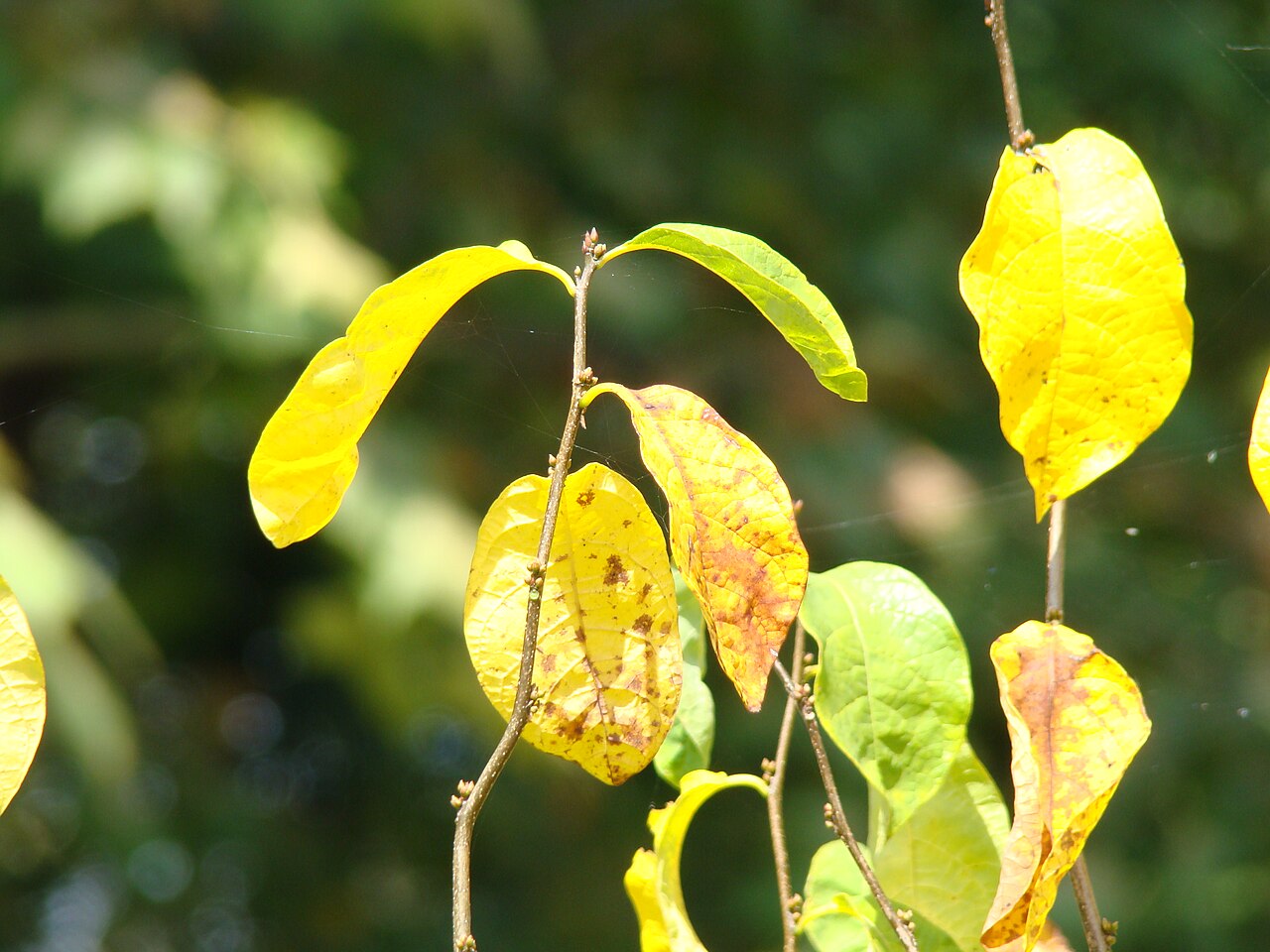
For a young shrub, the fix is consistent water and mulch through summer. For a plant that yellows every year, consider moving it to a spot with morning sun and afternoon shade while it’s dormant.
Check 4: Check New Plantings and Wet, Compacted Soil
A spicebush planted within the last year or two is the most likely to yellow in summer. Its roots are still mostly in the original root ball.
University of Georgia Extension notes that some shrubs show moisture stress first by yellowing older, inside leaves, rather than by wilting. A nursery root ball can dry out even when the soil around it feels damp. Our guide to watering a newly planted spicebush shows how to check it.
The opposite problem matters too. Spicebush tolerates wet sites, but a new root ball sitting in waterlogged clay can still decline. If the soil stays soggy for days and smells sour, ease off the water and improve drainage around the plant.
Compacted soil from foot traffic, construction, or vehicles also stresses roots. If the shrub sits beside a new patio, path, or addition, root damage may be behind the yellowing.
Check 5: Look Inside Folded Leaves
Spicebush is the namesake host of the spicebush swallowtail butterfly. Wikipedia notes that its caterpillars hide inside leaves they fold over with silk.
Folded, partly eaten leaves can turn yellow or brown. Open a few folds. A green caterpillar with large false eyespots, or a smaller brown-and-white one, means you’re hosting swallowtails, not fighting a disease.
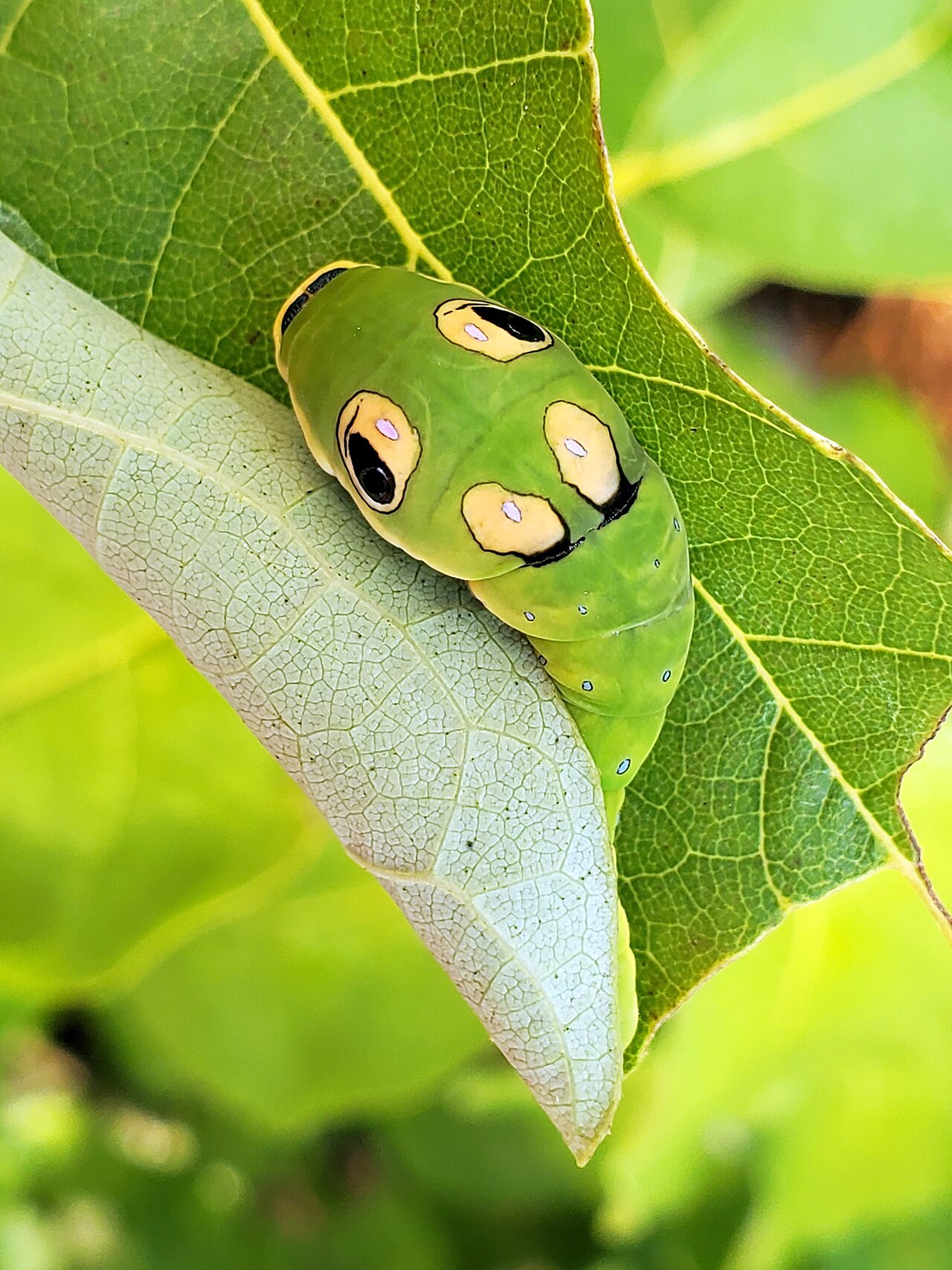
These caterpillars aren’t a reason to spray. According to Wikipedia, neither the swallowtail nor the promethea moth is ever present in numbers large enough to defoliate a medium or large spicebush, though a very small plant can be set back.
Illinois Wildflowers lists a few other insects that feed on spicebush, including the larvae of the sassafras borer and the spicebush stem gall midge. Those attack stems and are covered in the next check.
Check 6: Inspect the Stems for Wilting, Holes, or Sawdust
If yellowing or wilting is limited to one stem or a few branches, look closely at those stems from tip to base.
- Cracks, cankers, or mower and string-trimmer wounds near the base can cut off water to everything above.
- Small holes or swellings may point to a stem-boring insect or gall.
- Fine, toothpick-like strands of sawdust sticking out of the bark are a warning sign of ambrosia beetles.
That last sign matters because of laurel wilt. This lethal disease affects plants in the laurel family, including spicebush and its relative sassafras. NC State Extension lists spicebush as susceptible.
The Morton Arboretum explains that laurel wilt is spread by the non-native redbay ambrosia beetle. Its main symptom is wilting, followed by death of individual branches and eventually the whole plant. Peeling bark from an affected branch often reveals dark streaks in the wood.
Morton reports the disease has been found from North Carolina to Florida to eastern Texas, and north to Kentucky. If you live in or near that area and see these signs, don’t guess. Contact your state’s Cooperative Extension plant diagnostic clinic, and don’t move cut branches or firewood from the plant.
Morton notes there is no cure for infected plants. Removing a dead or dying stem is reasonable, but a sudden whole-shrub wilt in summer deserves a professional diagnosis first.
Check 7: Consider Soil pH and Nutrients
If the shrub is well watered and not in harsh sun, but new leaves are pale with green veins, think about soil chemistry. That pattern is often linked to nutrient uptake problems.
Spicebush is fairly adaptable here. The USDA plant guide describes its habitats as rich, mesic sites on acidic to basic soils. Problems are more likely in fill soil near foundations, where concrete and construction debris can raise pH and compact the ground.
Don’t guess with fertilizer. A soil test tells you the pH and what’s actually missing. Our soil testing tips for beginners walk you through sampling, and the best soil for spicebush guide covers adding organic matter.
Check 8: Is It Just Early Fall?
Spicebush fall color is a clear, bright yellow. In a dry year, that color can start showing in late August or early September.
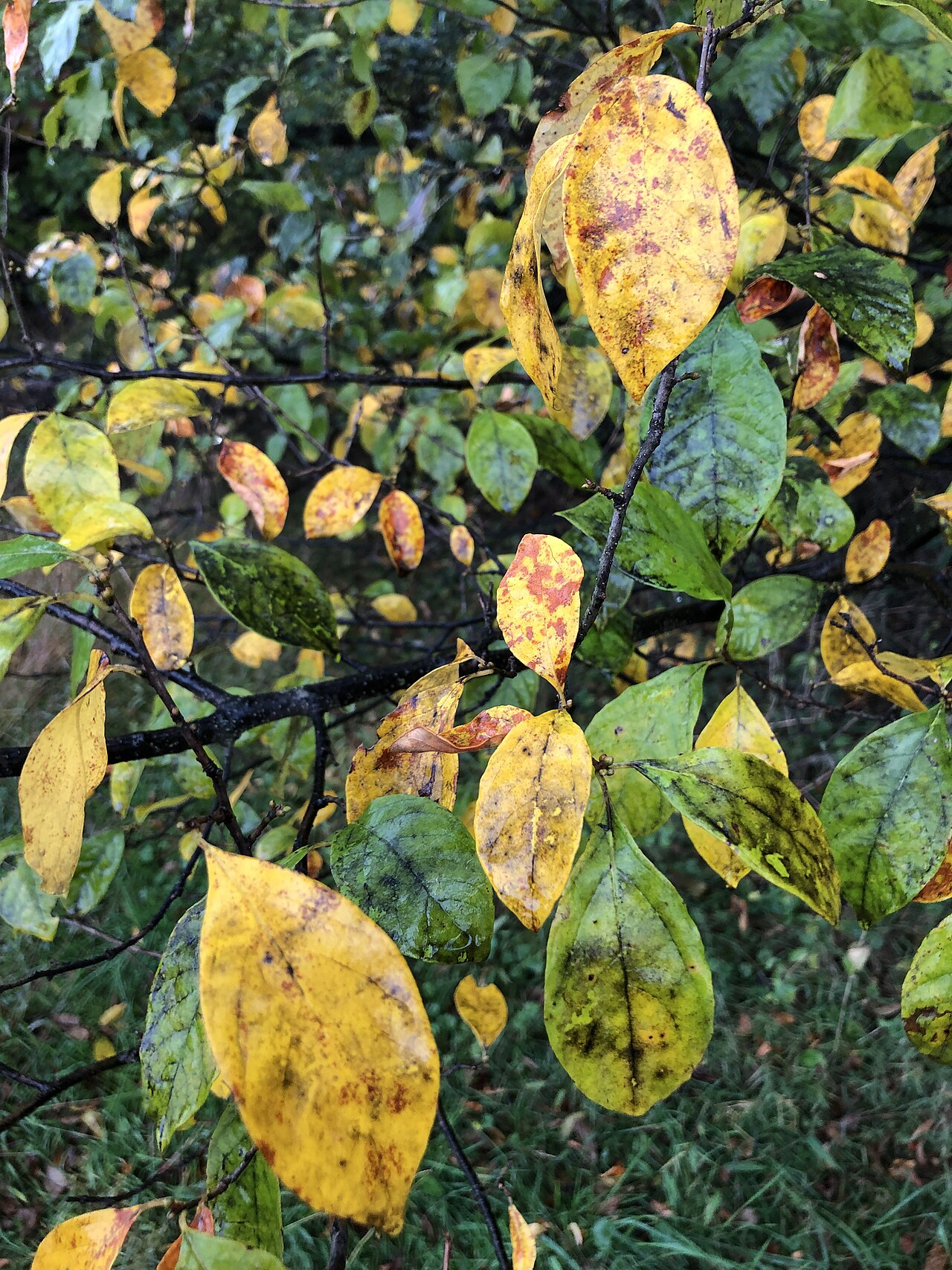
Even yellowing that starts at the outer canopy and spreads evenly, with no wilting or browning, is usually seasonal. Premature leaf drop is one of the drought symptoms the Morton Arboretum describes, so an early fall in a dry summer is a sign to water more next year, not a crisis.
Troubleshooting at a Glance
| Scattered inner leaves yellow | Normal shedding. No action needed. |
| Overall yellowing, dry soil | Drought. Water deeply every 10–14 days in dry spells and mulch. |
| Yellow and brown on the sunny side | Sun and heat scorch. Water, mulch, and consider afternoon shade. |
| New plant, yellowing and limp | Check the root ball. It may be dry inside damp soil, or waterlogged. |
| Folded leaves with caterpillars | Spicebush swallowtails. Leave them alone. |
| One branch wilts, sawdust strands | Possible ambrosia beetles or laurel wilt. Contact your extension clinic. |
| Pale new leaves with green veins | Possible soil or pH issue. Get a soil test before fertilizing. |
| Even yellowing from late August | Early fall color, often after a dry summer. |
What to Do Now
Start with the cheapest, most common fix. Check soil moisture today. If it’s dry, give the shrub a slow, deep soak and mulch the root zone.
If the soil was dry: keep up deep watering through the rest of summer and into fall during dry spells, then watch new growth next spring.
If the soil is moist and the shrub sits in full sun: keep it consistently watered and plan for afternoon shade, either by planting a companion tree or moving the shrub while it’s dormant.
If one branch is dying: inspect that stem closely. If you see sawdust strands, dark streaks under the bark, or rapid wilting of several branches in the laurel wilt region, get a diagnosis before cutting anything.
If nothing obvious turns up: it’s likely normal leaf turnover or an early fall. Note the date and the weather so you can compare next year. For more general causes of yellow foliage, see our guide to troubleshooting yellowing leaves.
A Season-by-Season Plan to Prevent Summer Yellowing
- Spring: refresh 2–3 inches of mulch over the root zone, pulled back from the stems. Clear lawn grass from under the shrub.
- Early summer: check soil moisture weekly. Water young plants more often, using the root ball test.
- Midsummer: during dry spells, water established shrubs deeply every 10 to 14 days. Look over stems and leaf folds when you water.
- Late summer: expect some early color in dry years. Keep watering during drought so stress doesn’t carry into next season.
- Fall and winter: let leaves fall and stay as natural mulch. If a shrub yellowed badly in full sun, move it to a shadier spot while dormant.
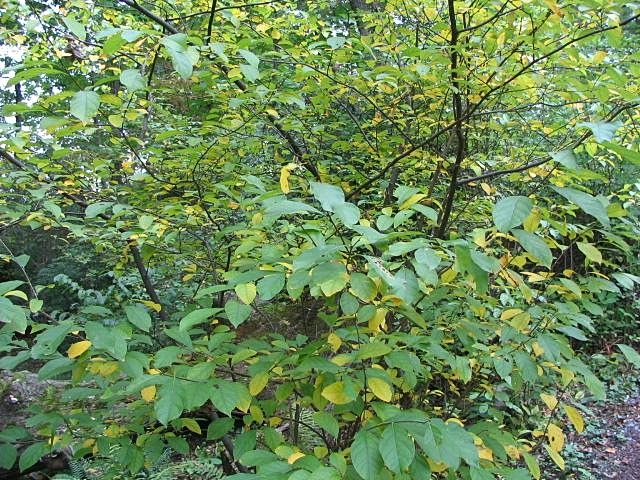
📋 More on this plant: read the full Spicebush (Lindera benzoin) profile, or see it in our native plant lists for New York, Pennsylvania & Northern New Jersey, Delaware, Southern New Jersey & Long Island, Maryland, Virginia & West Virginia, North Carolina & South Carolina, Ohio & Indiana, Illinois, Iowa & Missouri, Michigan, Wisconsin & Eastern Minnesota, and Arkansas, Louisiana, Eastern Oklahoma & Eastern Texas.
Frequently Asked Questions
Why are my spicebush leaves turning yellow in July?
The most common causes are dry soil and too much sun or heat, especially for young plants. Check soil moisture a few inches down first. If it’s dry, water deeply, mulch, and watch whether new yellowing stops.
Should I remove yellow leaves from my spicebush?
There’s no need. Yellow leaves will drop on their own, and removing them doesn’t help the plant. Focus on the cause instead.
Can overwatering turn spicebush leaves yellow?
It can on a new planting in heavy clay, where the root ball stays waterlogged. Established spicebush tolerates wet soil well, so overwatering is a less likely cause on older plants.
Will fertilizer fix yellow spicebush leaves?
Usually not. Most summer yellowing comes from water or heat stress, and fertilizing a stressed plant can make things worse. Use a soil test if you suspect a nutrient problem.
Do spicebush swallowtail caterpillars kill spicebush?
No. They chew and fold some leaves, but they don’t occur in numbers that defoliate a medium or large shrub. A very small plant can lose a lot of leaves to a single caterpillar, but it usually recovers.
Sources
- The Morton Arboretum, Drought Stress: drought symptoms including chlorosis and premature leaf drop, deep watering every 10–14 days.
- The Morton Arboretum, Laurel Wilt: hosts, beetle vector, symptoms, known range, diagnosis and lack of cure.
- North Carolina Extension Gardener Plant Toolbox, Lindera benzoin: more water needed in full sun; susceptibility to laurel wilt.
- University of Georgia CAES, Newly Planted Shrubs 'Still Container Plants': moisture stress showing as inner-leaf yellowing; root ball drying.
- USDA NRCS Plant Guide, Spicebush: habitats and soil range.
- Illinois Wildflowers, Spicebush: insects that feed on spicebush.
- Wikipedia, Lindera benzoin: swallowtail larvae in folded leaves, defoliation risk, fall color.