Crape Myrtle Not Blooming: A Light, Pruning, and Growth Checklist
Last updated: November 6, 2026
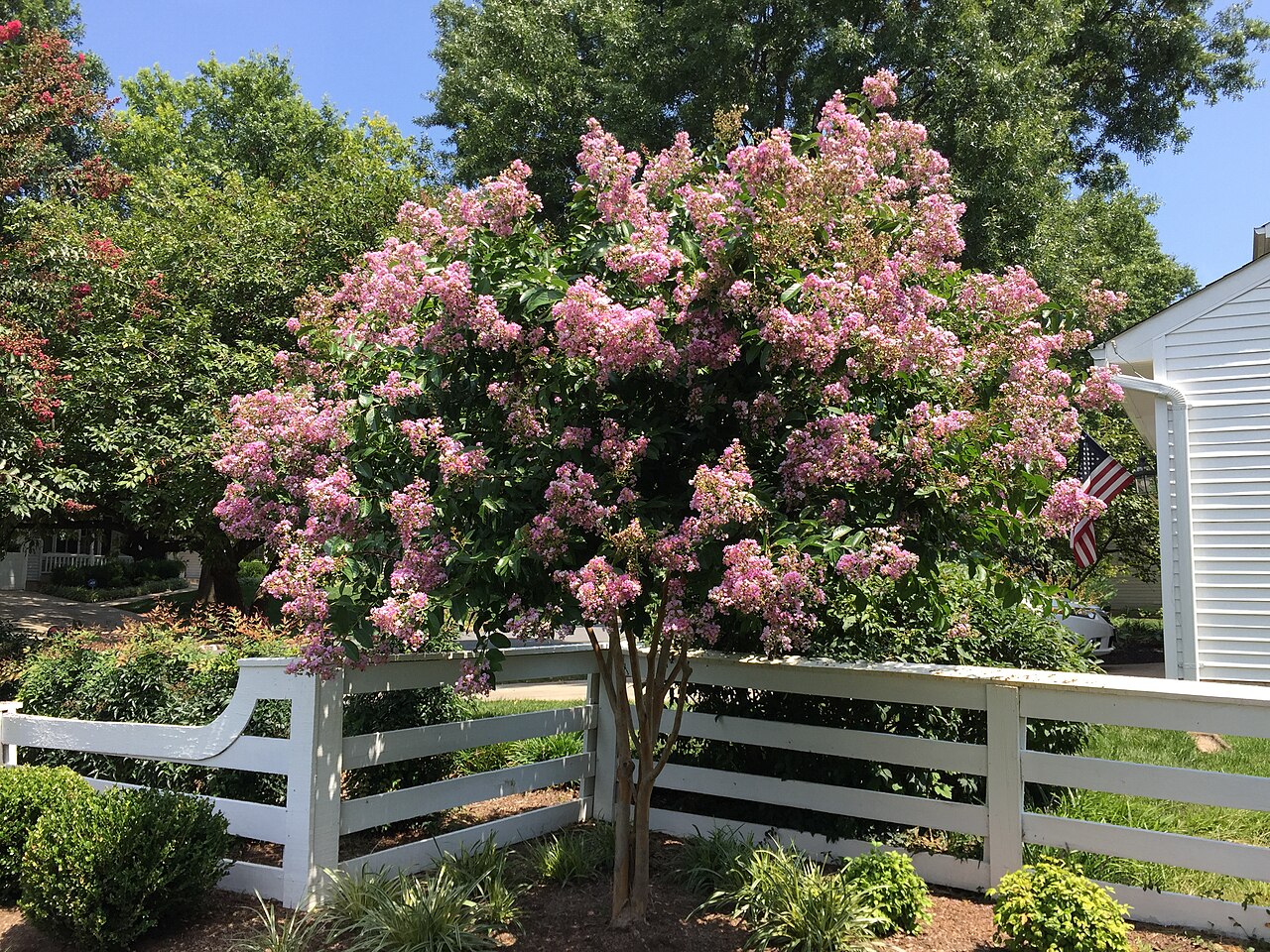
Your crape myrtle leafed out on schedule and looks healthy. July arrived, then August, and the flowers never came. Maybe you got only a few clusters at the very top.
Most people blame fertilizer first. Fertilizer can matter, but it usually isn’t the first thing to check. Light, pruning, and the way the tree was grown tend to explain more no-bloom crape myrtles.
Work through the checks below in order. Most take a few minutes and a little memory of what happened to the tree last winter and spring.
The Short Answer
Crape myrtle (Lagerstroemia) flowers at the tips of the current year’s shoots. A summer without flowers usually traces back to one of these:
- Not enough sun. Extension guidance calls for full sun, ideally about 8 hours a day.
- Pruning after spring growth began, or hard cutting that pushes leafy shoots instead of flowers.
- Too much nitrogen, often from lawn fertilizer spread around the tree.
- A cold winter or late spring that killed back stems or delayed new growth.
- Pests or disease: heavy aphids, crapemyrtle bark scale, or powdery mildew on the buds.
- Poorly drained soil or a tree that is simply too young or recently moved.
How a Crape Myrtle Makes Flowers
Crape myrtle doesn’t carry flower buds through winter the way a dogwood or fringetree does. The bare twigs you see in February have no flowers waiting in them.
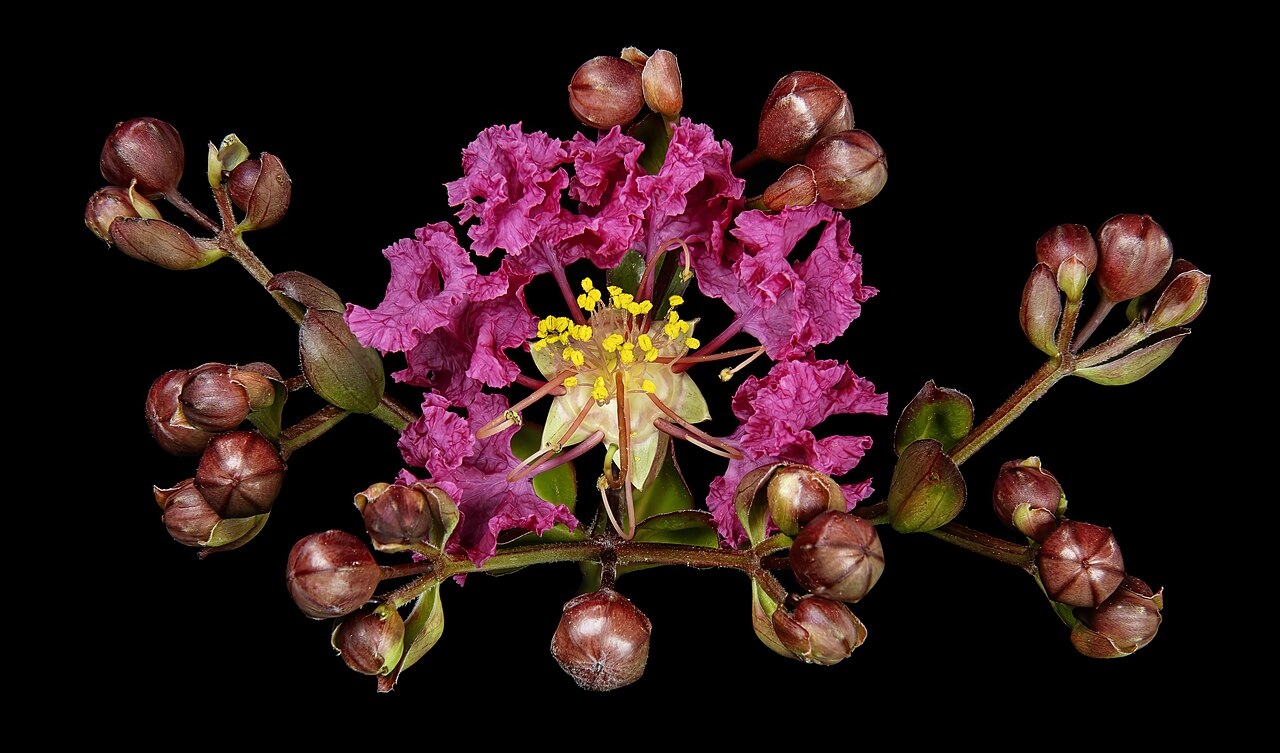
In spring, new shoots grow from the old wood. Virginia Cooperative Extension describes crape myrtle as a summer bloomer that flowers on new wood, the current season’s stems. Each vigorous shoot ends in a cluster of round buds that opens into a panicle of crinkled flowers.
Bloom time depends on the cultivar and the climate. NC State Extension lists July to September for common crape myrtle, and Clemson notes that some cultivars start in early summer and continue into fall.
The Crape Myrtle Year
| Late winter | Dormant. No flower buds yet. This is the window for any pruning. |
| Spring | Leaf-out and the main flush of new shoots that will carry this summer’s flowers. |
| Early to midsummer | Bud clusters swell at the shoot tips. Early cultivars begin to open. |
| Mid to late summer | Peak bloom for most trees. |
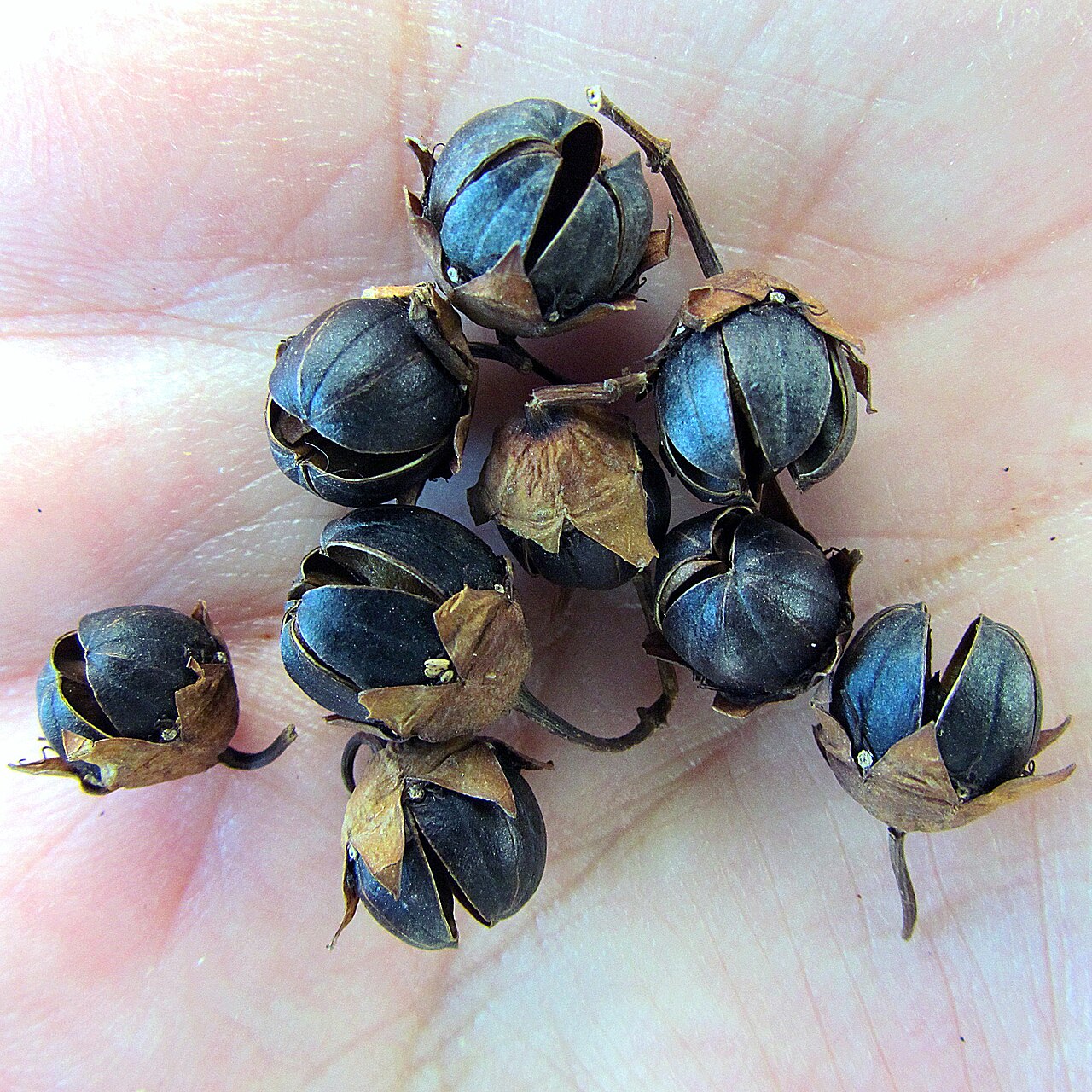
| Fall | Seed capsules form and leaves color. Don’t prune now. |
Check 1: Did It Form Buds at All?
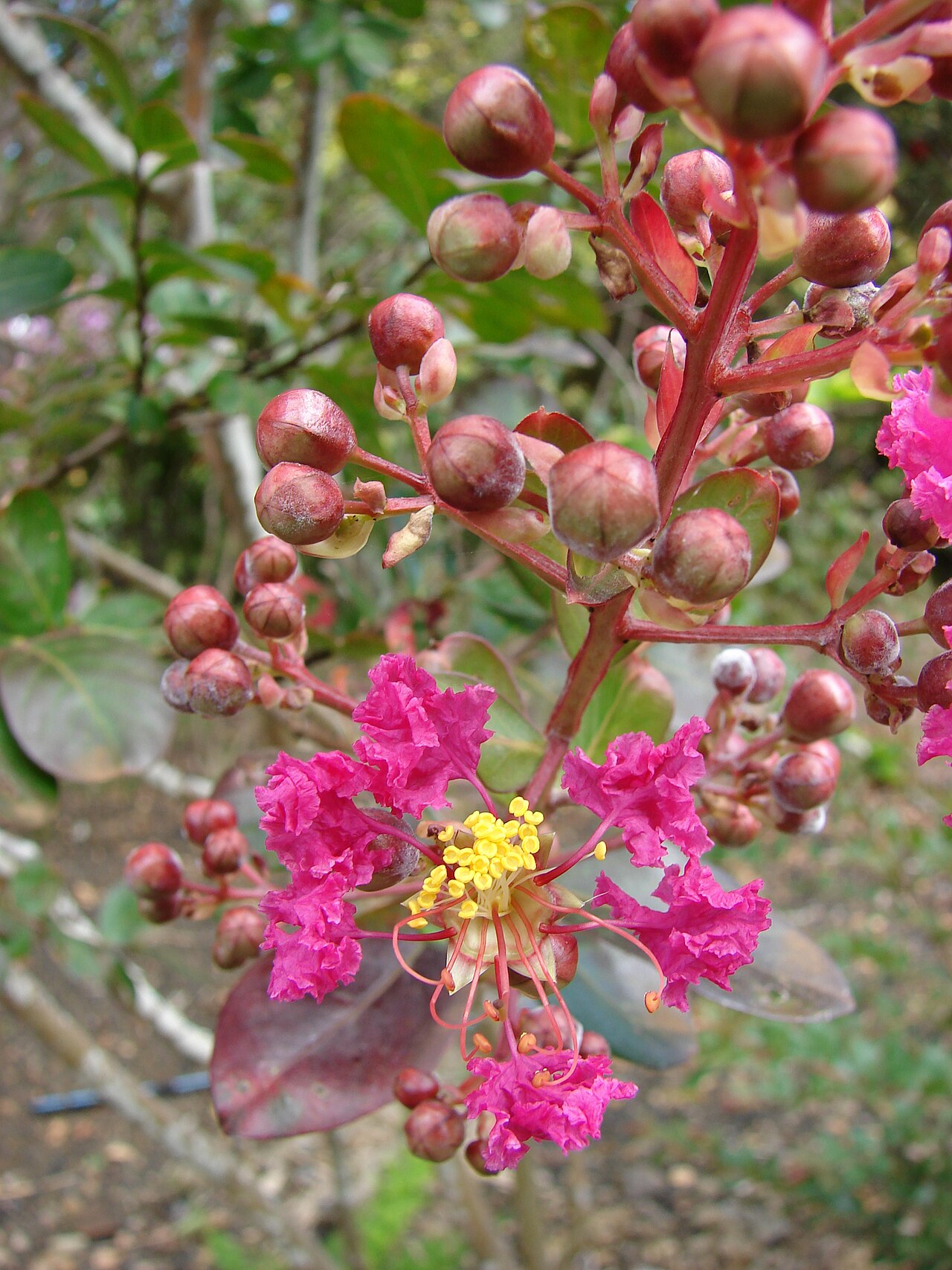
Look at the tips of this year’s shoots. Clusters of small, pea-sized green or reddish buds mean the tree tried to flower.
If you find buds that stayed closed, look for a white, powdery coating on them. Clemson’s Home & Garden Information Center notes that powdery mildew can keep heavily infected flower buds from opening. That points to Check 6, not to fertilizer.
If there are no buds anywhere, the tree never got the signal or the energy to flower. The next checks cover the usual reasons.
Check 2: Measure the Sun
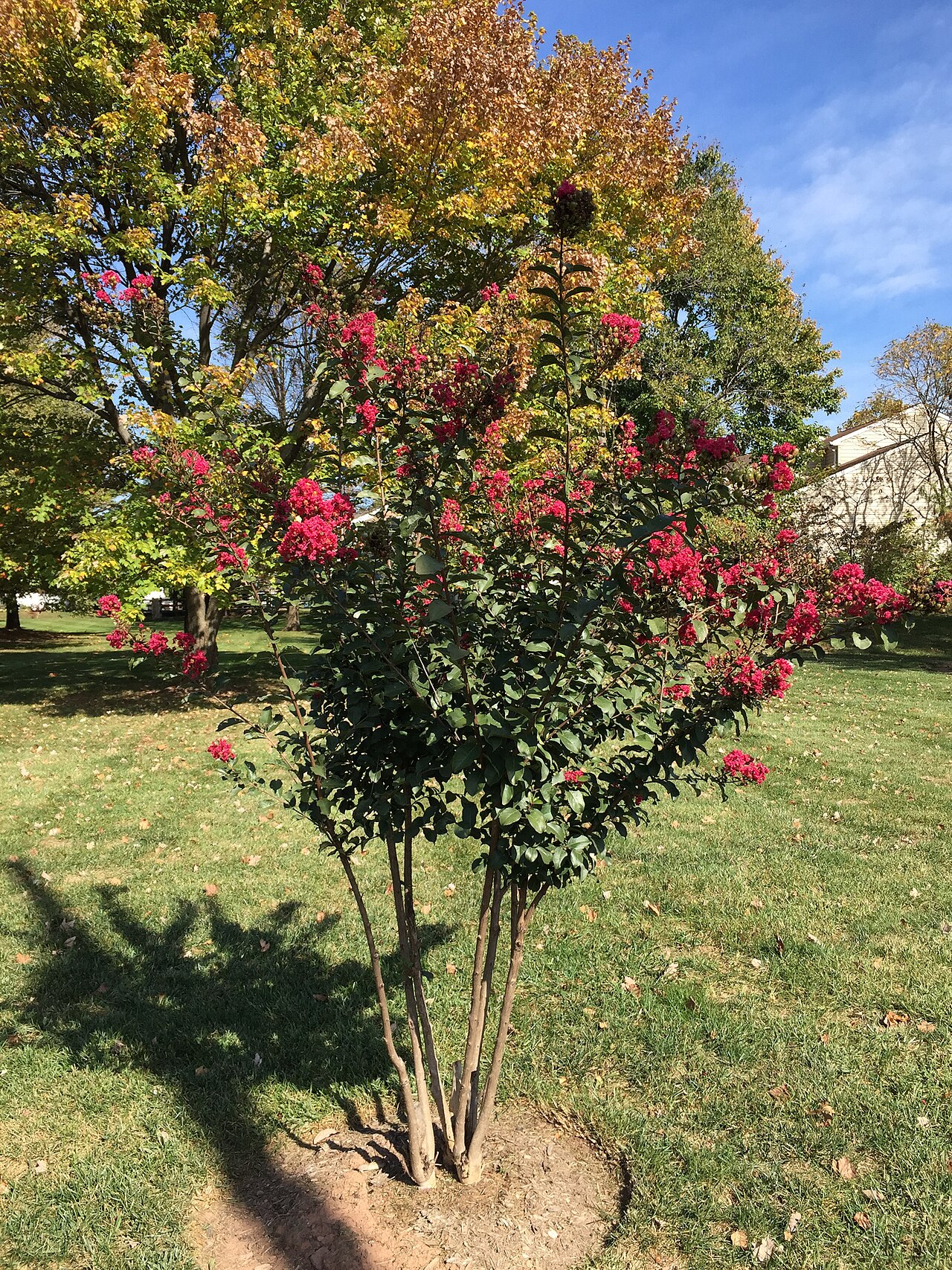
Light is a frequent culprit in established yards. LSU AgCenter says crape myrtles need 8 hours of full sun a day for best flowering. The University of Arkansas Cooperative Extension adds that trees getting less than 6 hours of direct sun won’t develop good bloom.
Sun changes as a yard matures. A tree that bloomed heavily 10 years ago may now sit under a neighbor’s oak or beside a house addition.
On a summer day, note when direct sun first reaches the canopy and when it leaves. Watch for these clues too:
- Flowers only on the top or on the sunny side.
- Long, leaning shoots reaching toward open sky.
- Crape myrtles planted so close that their canopies overlap. Arkansas Extension notes that crowded canopies shade each other and flower mostly on the outer edges and tops.
Shade causes a second problem as well. Clemson notes that crape myrtles in partial or full shade have reduced flowering and more disease.
Check 3: Think Back to Last Pruning
Ask who pruned the tree, when, and how hard. LSU AgCenter warns that drastic pruning, or pruning after new spring growth begins, can delay summer flowering. Drastic cuts may also push lots of leafy growth and fewer flowers.
A late-spring trim is easy to forget. A landscape crew that “cleans up” the tree in May removes the young shoots that would have carried this year’s flowers. The tree then has to grow replacement shoots, and bloom comes late or not at all.
Heavy topping causes a related problem. Virginia Cooperative Extension explains that topping produces a few large flower clusters at the ends of whip-like shoots. An unpruned tree carries many smaller clusters with staggered bloom times. Topping can reduce the number of bloom days, and the heavy clusters can snap the weak shoots in wind.
The fix is about timing. Virginia Tech, UF/IFAS, and NC State all point to late winter or early spring, before new growth starts. Virginia Tech also advises against pruning in late summer or early fall, because the new shoots that follow may not harden off before freezing weather. For basic cut types, see our guide on how to prune trees and shrubs.
Check 4: Look at Fertilizer and Lawn Care
A deep green tree with long, vigorous shoots and no flowers is a classic sign of too much nitrogen. Arkansas Extension says excess fertilizer, especially nitrogen, can lead to excessive growth and delayed or no flowering. Clemson adds that heavy nitrogen means fewer flowers and soft growth that may suffer winter injury.
The source is often the lawn. A crape myrtle in turf picks up every feeding meant for the grass.
The opposite can happen too. LSU AgCenter notes that crape myrtles need nutrients for new growth, and that poor spring growth from nutrient depletion can reduce flowering. Arkansas Extension has also linked poor flowering to too little potassium.
Since both too much and too little can be the problem, guessing is risky. Virginia Tech’s advice is to avoid fertilizing crape myrtles unless a soil test shows a specific need. Our soil testing tips walk through how to take a sample.
If the leaves are pale or yellow rather than lush, the issue may be water, drainage, or nutrition rather than excess. Our guide to why crepe myrtle leaves turn yellow covers those causes.
Check 5: Consider Winter, Spring, and Summer Weather
Crape myrtle is a heat lover. Wikipedia’s summary of the species notes that it needs hot summers to flower well. In cooler summers it blooms weakly and is more prone to fungal disease.
Cold matters at the other end of the year. NC State Extension notes that in zones 5 and 6, top growth is prone to winter injury. LSU AgCenter says that when cold weather delays new spring growth, flowering may be greatly reduced.
Signs of weather trouble include bare, brittle twigs in late spring, new shoots coming only from low on the trunks or from the ground, and a bloom that arrives weeks later than usual. Ask Extension notes that a crape myrtle killed back in a cold winter may resprout from the roots if they’re still alive. Those new shoots can still flower, though usually later and lower than before. Our guide to crape myrtle suckers explains which base shoots to keep.
Check 6: Inspect for Pests and Disease
Several common problems sap the energy a tree needs for flowering:
- Crape myrtle aphids. Small yellow-green insects under the leaves, with sticky honeydew and black sooty mold below. Arkansas Extension notes that heavy aphid infestations decrease flowering.
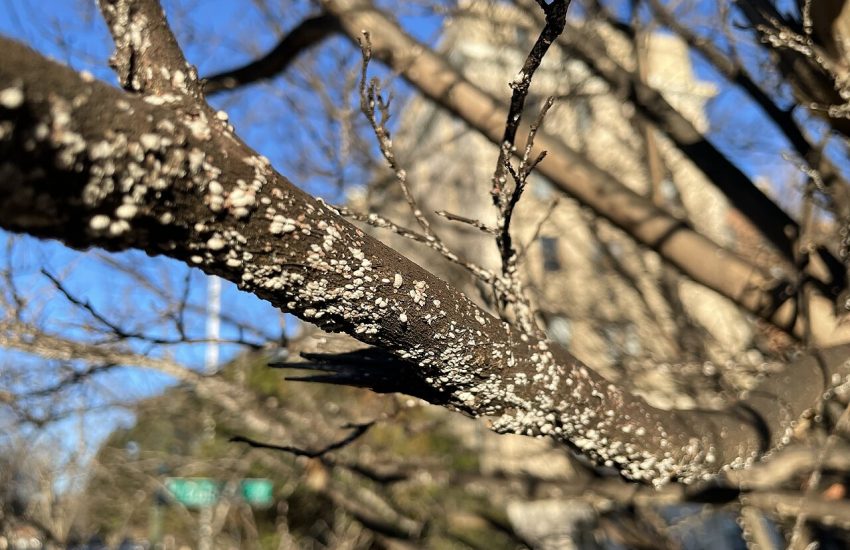
- Crapemyrtle bark scale. White to gray, felt-like crusts on the trunk and branches, often with black sooty mold. Clemson lists reduced flowering and smaller flower clusters among its effects.
- Powdery mildew. White powdery growth on new leaves, shoots, and buds, worst in shade and crowded plantings. Clemson recommends resistant cultivars and full sun as the best prevention.
If you find white crusts on the bark, don’t assume they’re harmless. Bark scale has spread across much of the South, and the treatment window matters. Our guide to white material on crape myrtle branches shows how to tell scale from lichens and mildew.
Check 7: Review the Site, Age, and Cultivar
Arkansas Extension says crape myrtles need well-drained soil to flower properly. A tree sitting in a soggy low spot is stressed even when everything else is right.
A recently planted or transplanted tree may bloom lightly while its roots establish. That usually resolves with a season or two of steady care.
Cultivar matters too. UF/IFAS notes that crape myrtles range from dwarf forms around 5 feet to trees reaching 20 to 30 feet. If yours has to be cut back hard every year to fit its space, the pruning itself will keep reducing the bloom. A smaller cultivar may be the real fix.
Troubleshooting at a Glance
| Flowers only on top or one side | Too much shade. Limb up neighbors or plan a move. |
| Pruned in late spring | Flowering shoots were removed. Prune only in late winter. |
| Lush, dark green, long whips | Excess nitrogen or hard topping. Stop feeding and get a soil test. |
| Buds formed but stayed shut, white coating | Powdery mildew. Improve sun and airflow; consider resistant cultivars. |
| Sticky leaves, black film | Aphids or bark scale. Inspect leaves and bark. |
| Late, weak bloom after a hard winter | Cold damage. Remove dead wood once growth shows what’s alive. |
| Planted in the last year or two | Establishment. Water during dry spells and be patient. |
What to Do Now
If it’s summer: don’t prune and don’t fertilize. Neither will bring flowers this year, and late cuts invite new growth that can be hurt by early freezes. Use the time to check sun and inspect for pests.
If it bloomed lightly: on smaller trees, Clemson notes you can encourage a second bloom by cutting off spent flower clusters right after they fade. Virginia Tech adds that this works best on cultivars that bloom before mid-July, and it isn’t needed for next year’s flowers.
If it’s late winter: this is the time for corrective work. Thin crossing and crowded branches, remove dead wood, and leave the main structure alone. If you inherited a topped tree, start a gradual repair rather than cutting back to the same knobs again. Our guide to repairing past crape myrtle topping walks through it.
If shade is the problem: limb up or thin nearby trees if they’re yours, or move a young crape myrtle while it’s dormant. If the spot will never get enough sun, consider a shade-tolerant flowering shrub instead. Summersweet is a native summer bloomer that flowers well in part shade. For a sunny spot, native sourwood is a summer-flowering small tree.
A Season-by-Season Plan for Next Year
- Late winter: make all pruning cuts now. Thin, don’t top. Remove seed heads only if you can reach them easily.
- Early spring: fertilize only if a soil test calls for it. Keep lawn fertilizer off the root zone and spread a thin layer of mulch instead of turf around the trunks.
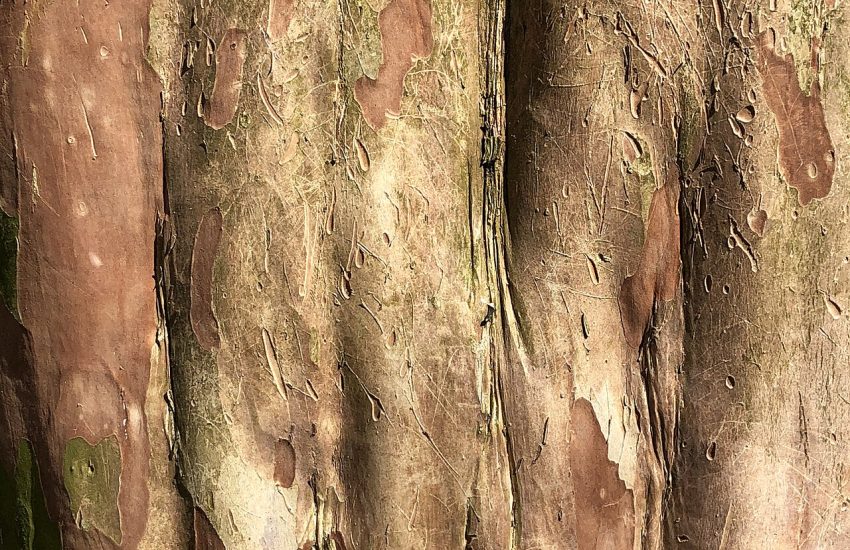
- Spring to early summer: leave new shoots alone. Check undersides of leaves for aphids and the bark for white crusts. Peeling bark by itself is normal; our bark peeling guide explains what isn’t.
- Summer: water deeply during long dry spells, especially in the first few years. Note where the flowers appear, since that tells you where the light is.
- Fall: no pruning and no feeding. Let the tree harden off for winter.
For planting depth, watering, and general care, see our full crape myrtle tree growing guide. If you’re troubleshooting a shrub that stopped flowering after a hard cut, our article on a lilac not blooming after pruning covers the opposite timing problem: a shrub that sets its buds the summer before.
Frequently Asked Questions
Why is my crape myrtle healthy but not blooming?
The usual causes are too little sun, pruning after spring growth started, or too much nitrogen. Check how many hours of direct sun the canopy gets, then think back to when it was last cut and fertilized.
Do you have to cut back crape myrtles to get flowers?
No. Virginia Tech and Clemson both note that crape myrtles flower well without heavy pruning. Old, unpruned trees often carry more clusters over a longer season than topped ones.
When is it too late to prune a crape myrtle?
Once new spring growth has started, major pruning will delay or reduce flowering. Do structural pruning in late winter or early spring before buds break, and skip pruning in late summer and fall.
Will a high-phosphorus “bloom booster” make it flower?
Not if light or pruning is the real problem. Arkansas Extension has linked poor flowering to imbalances such as too little potassium, while excess nitrogen suppresses bloom. A soil test shows what, if anything, the soil actually lacks.
How long does a new crape myrtle take to bloom?
A light bloom is common in the first season or two while roots establish. If the tree is in full sun and watered through dry spells, flowering should improve as it settles in.
Sources
- Virginia Cooperative Extension, Pruning Crapemyrtles: flowering on new wood, effects of topping on bloom, pruning timing, fertilizing only on soil-test need, second bloom.
- LSU AgCenter, Pruning and Fertilizing Crape Myrtles and Pub. 1466, Crape Myrtles: 8 hours of sun, drastic or late pruning, fertilization and cold weather.
- University of Arkansas Cooperative Extension, Crape Myrtle Problems: Why isn’t my crape flowering?: sun hours, crowding, aphids, excess nitrogen, potassium, drainage.
- Clemson Cooperative Extension HGIC, Crape Myrtle, Crape Myrtle Pruning and Crape Myrtle Diseases & Insect Pests: shade, nitrogen, powdery mildew on buds, bark scale, second bloom.
- UF/IFAS Extension, Crape Myrtle Pruning: cultivar sizes and late-winter pruning.
- North Carolina Extension Gardener Plant Toolbox, Lagerstroemia indica: bloom season, pruning window, winter injury in zones 5–6.
- Ask Extension, Dying crape myrtle: scratch test and resprouting after winter dieback.
- Wikipedia, Lagerstroemia indica: need for hot summers to flower well.