A Mixed Native Shrub Border Built Around Nannyberry
Last updated: November 6, 2026
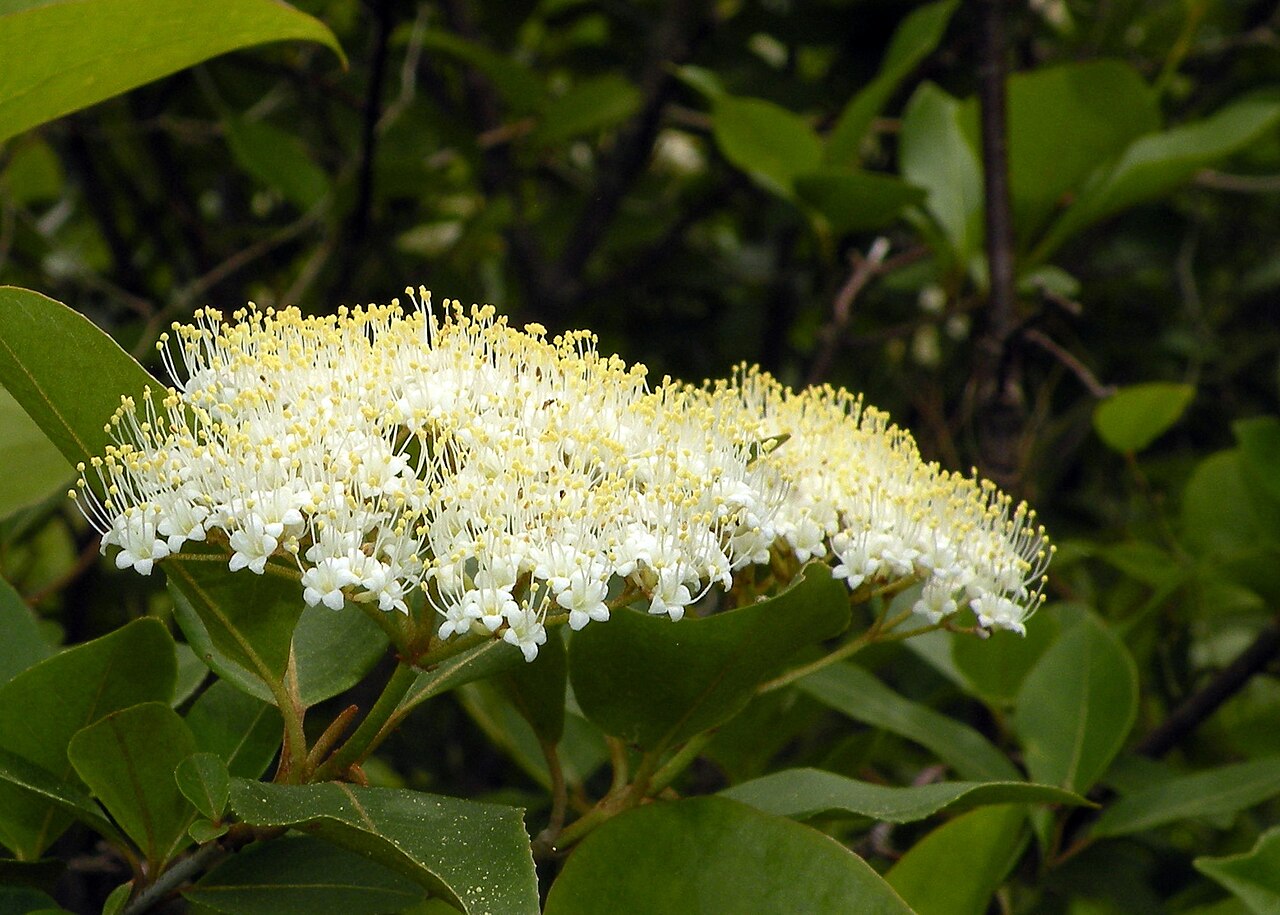
Nannyberry is a natural anchor for a mixed native shrub border. It grows into a large shrub or small tree, flowers in late spring, carries fruit that birds use into winter, and turns maroon-red in fall.
Built around one or two nannyberries, a border can screen a view, feed wildlife across several seasons, and need far less trimming than a clipped hedge.
This plan covers where to place the anchor, which shrubs to layer around it, how far apart to plant, and what to use instead if nannyberry isn’t native where you live.
Plan at a Glance
- Site: a back border, a screen along a property line, or a woodland edge.
- Size: a bed about 15 to 20 feet deep and at least 30 feet long for one nannyberry group plus layers.
- Sun: full sun to part shade; avoid deep shade, where mildew is more likely.
- Soil: adaptable, from dry to moist and wet sites, including alkaline soil.
- Maintenance: low. Prune right after flowering if needed; manage suckers at the edges.
- Best regions: the northern U.S. and southern Canada, from Quebec to Manitoba and Montana, south to Virginia, northeast Missouri, Nebraska and Wyoming.
Why Nannyberry Makes a Good Anchor
The Morton Arboretum describes nannyberry as a large shrub or small tree reaching 15 to 20 feet high and 10 to 15 feet wide, with slightly arching branches and a suckering habit. NC State lists 15 to 18 feet tall and 8 to 10 feet wide.
It is also unusually adaptable. Morton lists tolerance of alkaline soil, dry sites and wet sites, plus a moderate degree of salt tolerance. The Lady Bird Johnson Wildflower Center simply calls it adaptable to a wide range of conditions.
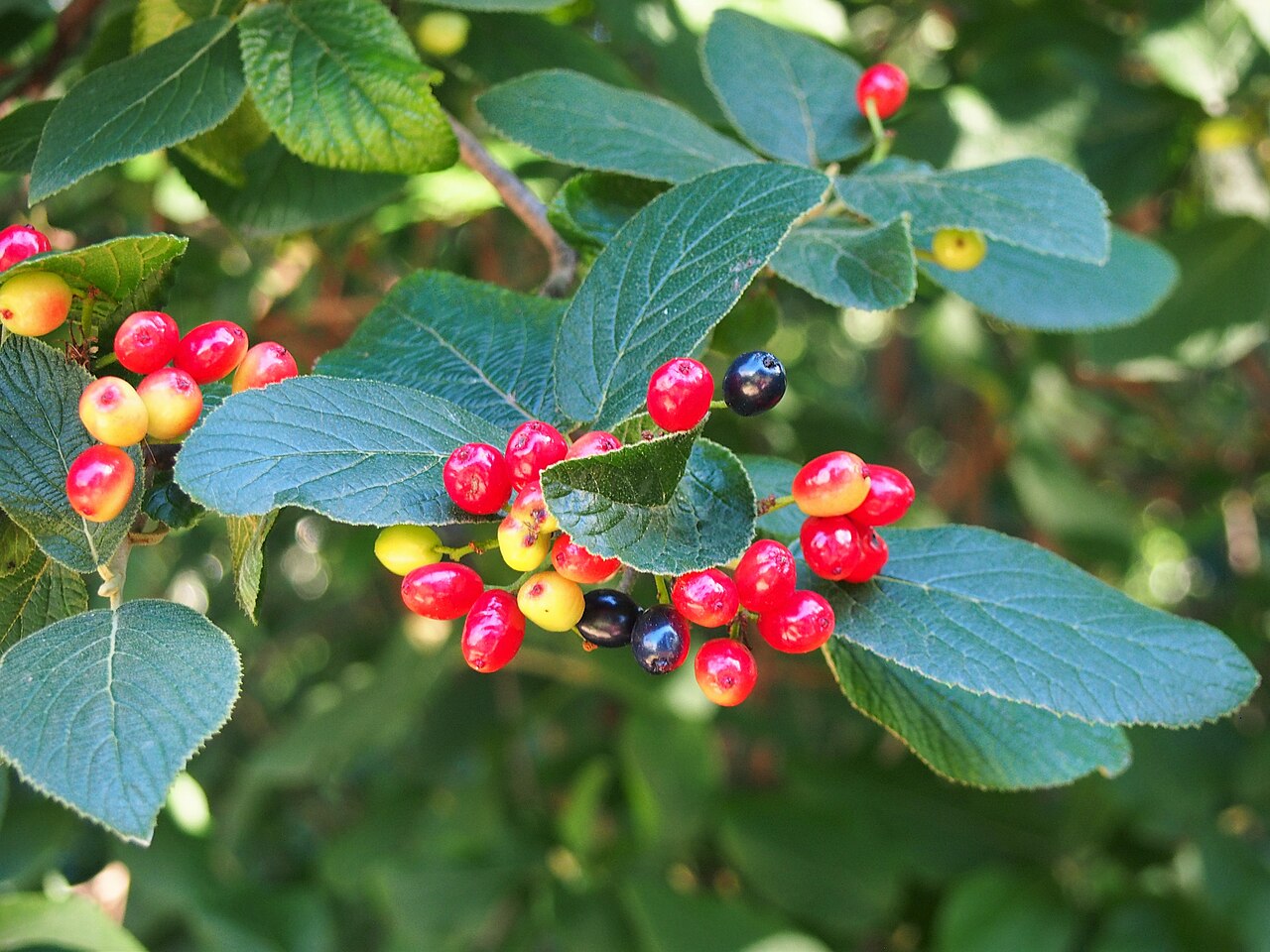
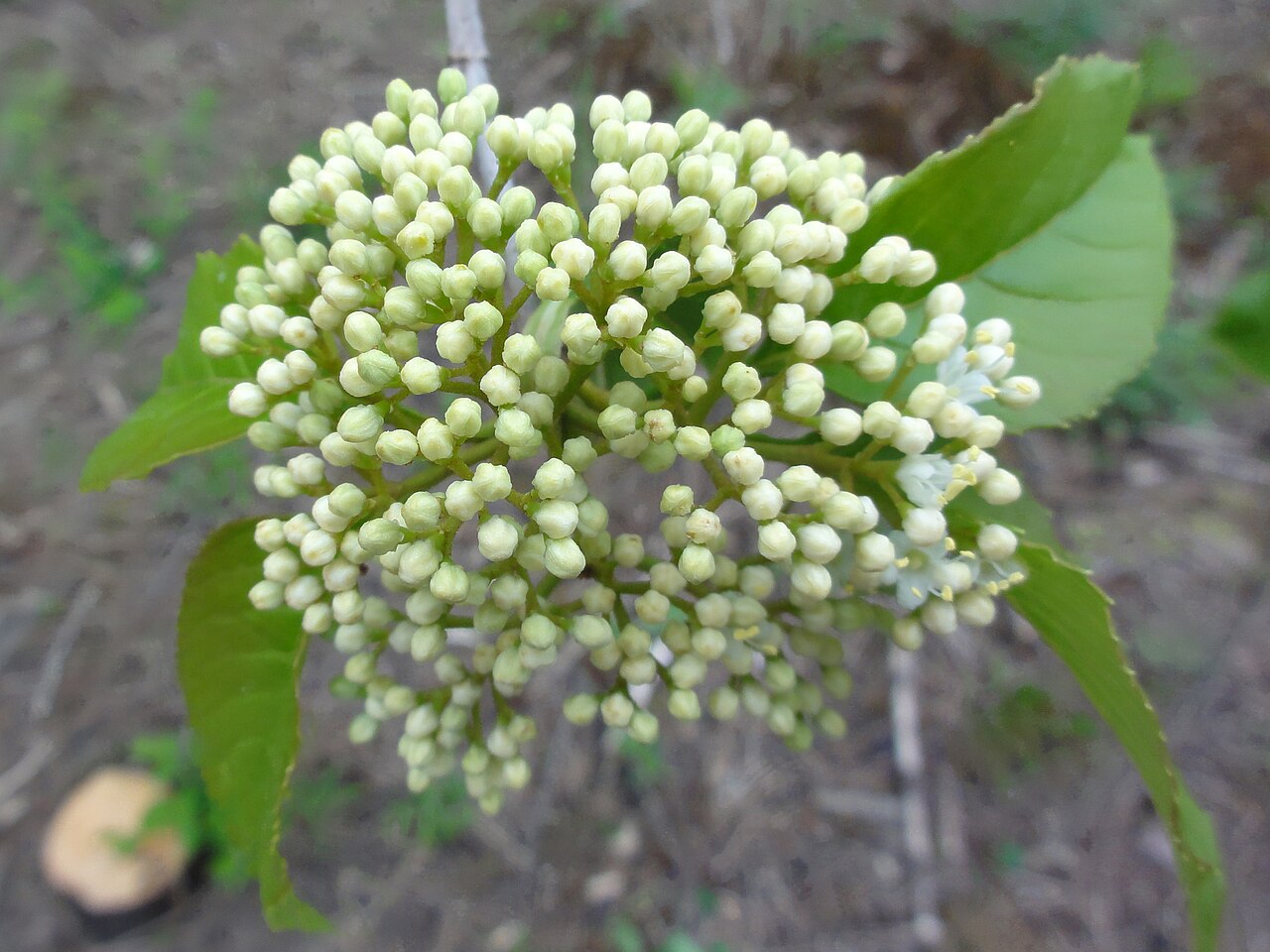
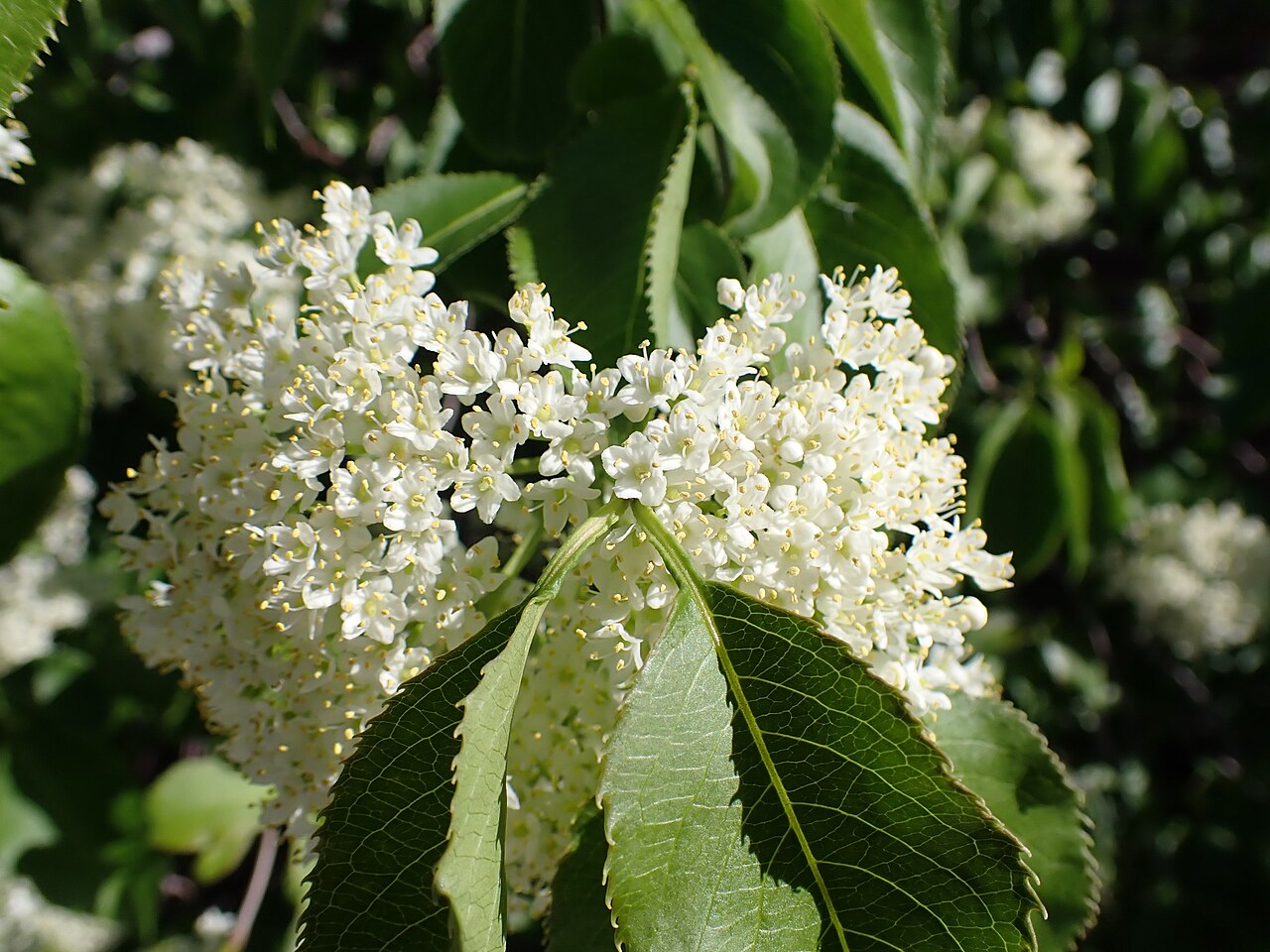
Its seasons stack nicely. Creamy flower clusters open in late spring. Fruit starts yellow and red and ripens to blue-black, and Morton notes birds use it from fall often into December. The leaves turn maroon-red in autumn.
Step 1: Assess the Site
Light. NC State recommends full sun to dappled shade. Both NC State and the Wildflower Center note that nannyberry can develop mildew in shady sites, so give the anchor the sunniest spot in the border.
Space. Measure the depth you can give the border. A 15- to 20-foot-tall shrub with a suckering habit needs room on all sides, and smaller shrubs in front need their own space.
Soil and water. Nannyberry handles dry to wet ground. Companion choices are more limited, so note where water collects and where the soil dries out.
Overhead and underground. Keep the tallest plants out from under power lines and away from where future growth will block windows or paths.
Step 2: Lay Out the Layers
A mixed border reads best in three height layers, with plants repeated in groups rather than scattered one by one.
- Back layer (12–20 ft): nannyberry, in a group of two or three.
- Middle layer (5–12 ft): medium shrubs such as ninebark and American highbush cranberry, set in front of and between the nannyberries.
- Front layer (2–4 ft): low, suckering shrubs such as northern bush honeysuckle, with a sedge groundcover at the very edge.
Stagger the plants so no layer forms a straight row. Let the back layer show through gaps in the middle layer; it looks more natural and lets light reach the lower shrubs.
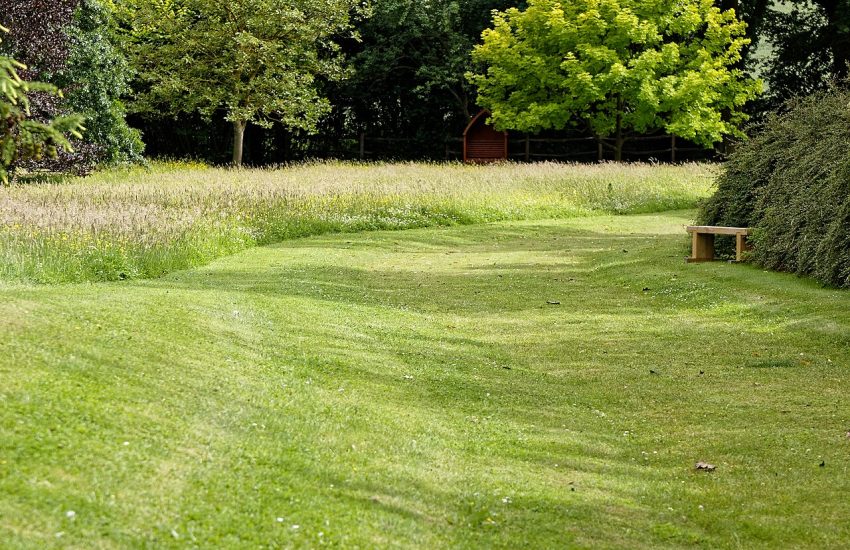
Leave a path or mown strip along the front. It gives you access for pruning and a clear line where suckers stop.
Sample Layout for a 40-Foot Border
| Back (8–10 ft from front edge) | 3 nannyberries, roughly 10 to 12 feet apart |
| Middle (4–6 ft from front) | 2 American highbush cranberries and 2–3 ninebarks, alternating, about 6 to 8 feet apart |
| Front (1–3 ft from front) | 5–7 northern bush honeysuckles in drifts, about 3 feet apart |
| Edge | Pennsylvania sedge plugs along the front, about 12 inches apart |
Spacings are design guidelines based on published mature widths; adjust to your bed and how quickly you want it to fill.
Step 3: Plan for Fruit
Nannyberry fruit is a big part of its value to wildlife, and NC State notes the ripe fruit can be eaten off the bush or used in jams and jellies.
Fruit set improves with more than one genetically different plant. Ask Extension advises buying seed-grown viburnums, or plants from different nurseries, to raise the odds of different parentage, and notes that plants within 50 to 100 feet can cross-pollinate.
That’s one reason to plant nannyberry in a group of two or three rather than as a single specimen. Ask Extension also notes that new shrubs may take a few seasons to bear after transplanting.
Step 4: Choose the Supporting Shrubs
Plant Palette
| Plant | Role | Height | Sun / moisture | Native range |
|---|---|---|---|---|
| Nannyberry (Viburnum lentago) | Back-layer anchor | 15–20 ft | Sun to part shade; dry to wet | Quebec to Manitoba and Montana, south to Virginia, NE Missouri, Nebraska, Wyoming |
| American highbush cranberry (Viburnum trilobum) | Middle layer; red fruit | 8–12 ft | Sun to part shade; moist | Alaska to Newfoundland, south to Pennsylvania, Iowa, Colorado |
| Common ninebark (Physocarpus opulifolius) | Middle layer; June flowers, peeling bark | 5–8 ft | Sun to part shade; average | Central and eastern North America |
| Northern bush honeysuckle (Diervilla lonicera) | Front layer; summer flowers | 2–4 ft | Sun to part shade; well-drained | Northeast, Great Lakes, Appalachians |
| Pennsylvania sedge (Carex pensylvanica) | Edging groundcover | Under 1 ft | Sun to shade; dry to moist | Nova Scotia to Georgia, west to Manitoba and Kansas |
Heights from The Morton Arboretum, NC State and our plant profiles. Ranges are broad summaries; confirm local status before planting.
American highbush cranberry adds bright red fruit in the middle layer. NC State lists 8 to 12 feet tall and wide in full sun to part shade, so it sits naturally below the nannyberries.
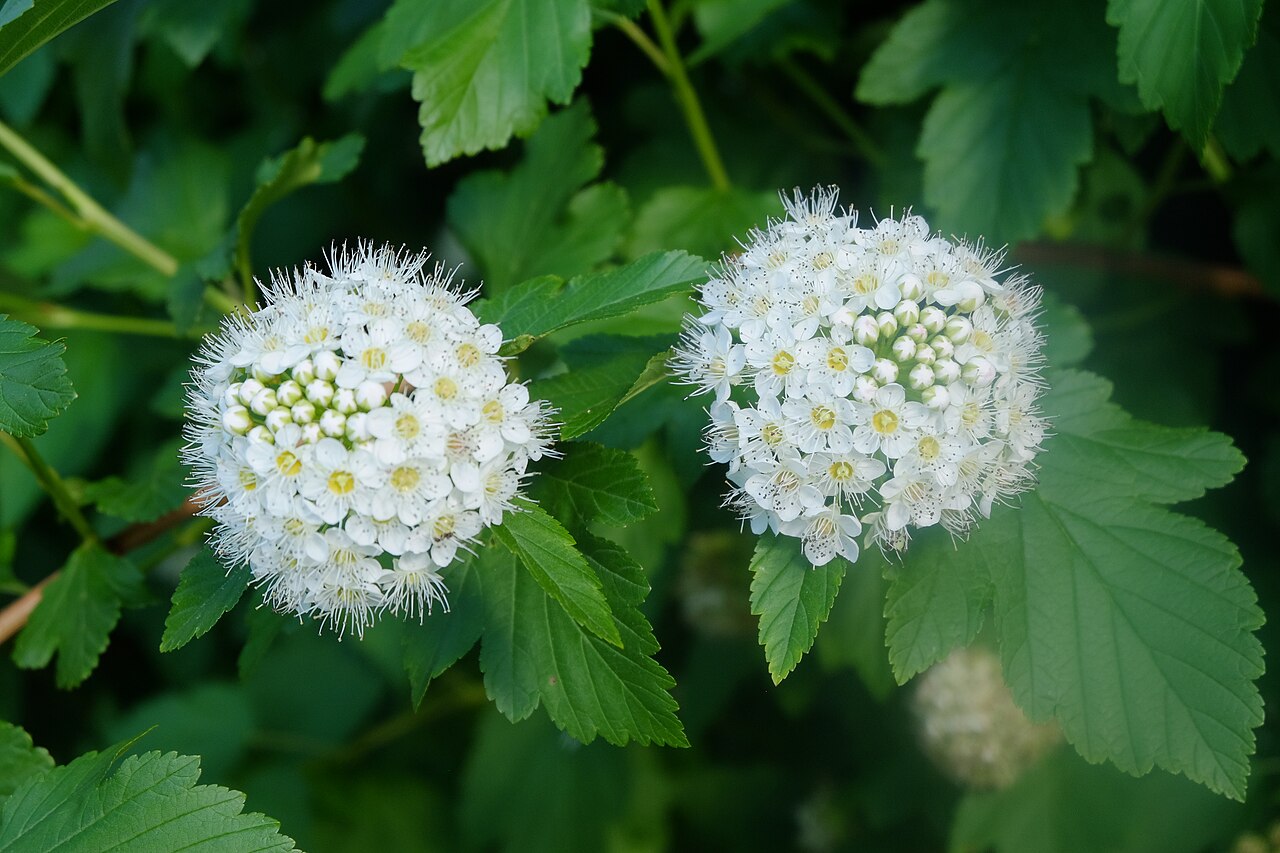
Common ninebark brings white or pink flowers from late spring into early summer, and peeling bark that shows best in winter. NC State lists it at 5 to 8 feet tall and 4 to 6 feet wide.
In front, northern bush honeysuckle stays 2 to 4 feet tall and suckers into a low mass. Finish the edge with Pennsylvania sedge, which tolerates sun to shade beneath the shrubs.
For more on why viburnums earn a place in native gardens, see our overview of the benefits of planting native viburnum.
Regional Alternates
Nannyberry is a northern species. The Wildflower Center gives its range as Quebec to Manitoba and Montana, south to Virginia, northeast Missouri, eastern Nebraska and Wyoming. South of that line, use a related viburnum as the anchor.
- Mid-Atlantic, Midwest and upper South: smooth blackhaw, which NC State lists at 12 to 15 feet tall in full sun to part shade.
- Southeast and Ozarks: rusty blackhaw, native from southern Illinois and Missouri to east Texas and South Carolina. NC State lists 10 to 20 feet.
- Pacific Northwest and northern California: western blackhaw, a smaller shrub of about 3 to 10 feet. Adjust the layers down accordingly.
Middle- and front-layer plants should change with the anchor. Highbush cranberry and northern bush honeysuckle are northern too, so southern borders need regional substitutes from your state’s native plant list.
Installation Steps
- Mark the bed. Outline the full border depth and the front edge with stakes or paint.
- Remove turf and weeds from the whole bed, not just the planting holes.
- Place the anchors first. Set the nannyberries in the sunniest part of the back layer.
- Fill the middle and front layers in groups of three or more, staggering positions.
- Plant at nursery depth and water each shrub thoroughly.
- Mulch the bed with wood chips, kept a few inches from the stems.
- Protect from deer if browsing is heavy. NC State rates nannyberry only mildly resistant to deer damage.
First-Three-Years Maintenance Calendar
- Year 1: water during dry spells and keep weeds out. Skip pruning except for broken stems.
- Year 2, spring: let front-layer shrubs knit together. Pull suckers from nannyberry that stray past the back layer.
- Year 2, late spring: if you need to shape nannyberry, do it right after flowering. Morton notes it blooms on old wood, so later pruning removes next year’s flowers.
- Year 3: thin crowded stems in the middle layer and check the front edge for strays.
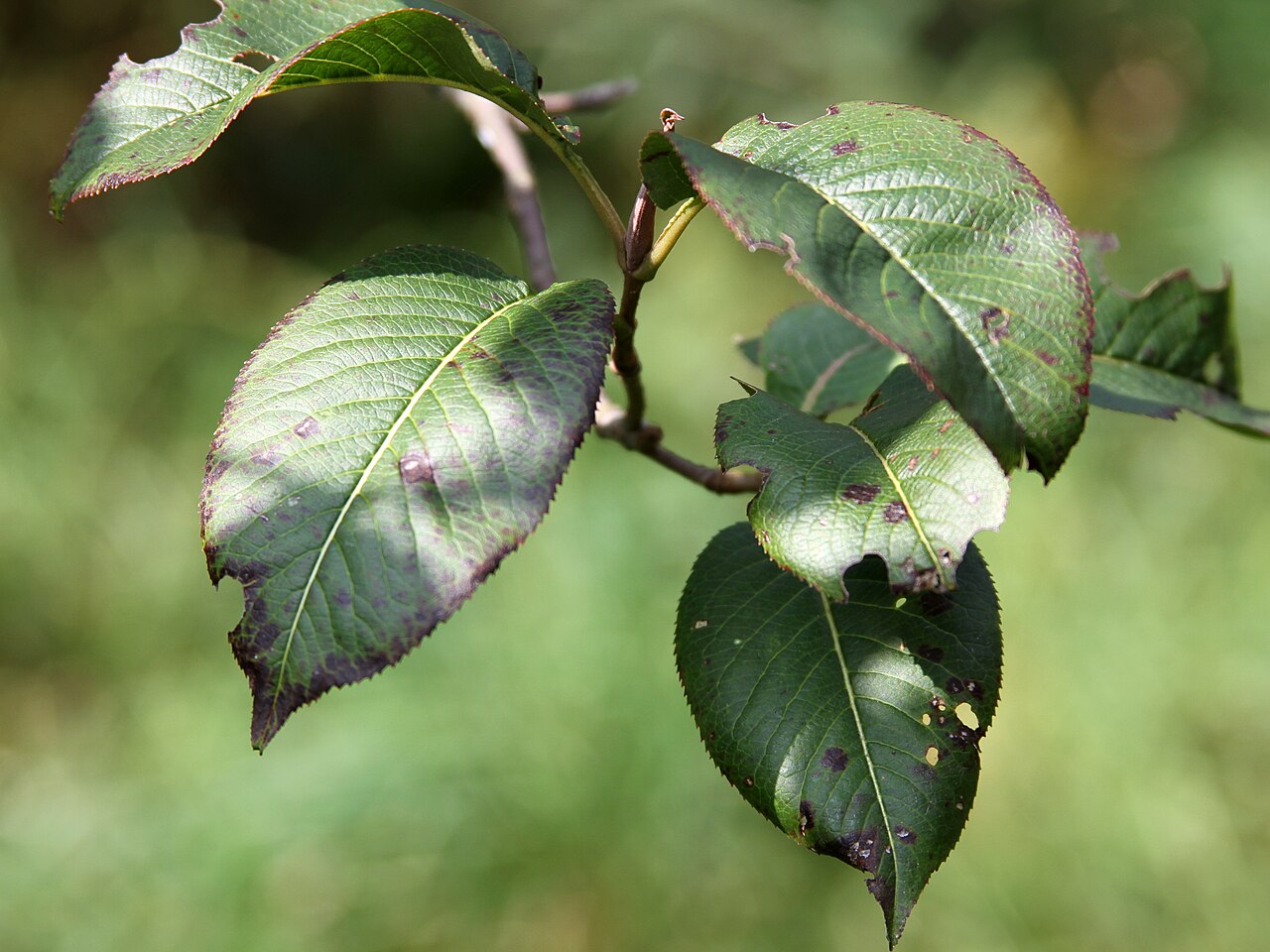
- Every year: watch for powdery mildew in summer. If it is persistent, improve sun and airflow by thinning nearby plants.
Mistakes to Avoid
- Underestimating size. Nannyberry can reach 15 to 20 feet tall. Don’t put it under a window or a low eave.
- Planting one and expecting heavy fruit. Group two or three from different seed sources.
- Siting it in deep shade. Mildew is more likely there.
- Pruning in late summer or fall. That removes next spring’s flowers.
- Lining every shrub up in rows. Staggered groups look more natural and fill in faster.
- Copying a northern plant list in the South. Switch the anchor and companions to regional natives.
If you have a fence line to fill as well, our plan for an American hazelnut boundary planting pairs well with a nannyberry border.
📋 Check your region: nannyberry appears in our native plant lists for New Hampshire, Maine & Vermont, New York, Pennsylvania & Northern New Jersey, Ohio & Indiana, Michigan, Wisconsin & Eastern Minnesota, and North Dakota, South Dakota & Western Minnesota.
Frequently Asked Questions
How big does nannyberry get?
The Morton Arboretum gives 15 to 20 feet tall and 10 to 15 feet wide. NC State lists 15 to 18 feet tall and 8 to 10 feet wide. It can be grown as a large shrub or small tree.
Does nannyberry spread?
Yes, somewhat. Morton describes it as thicket-forming with a suckering habit. A front edge strip makes stray suckers easy to remove.
Do I need two nannyberries for fruit?
Fruit set is better with genetically different plants nearby. Ask Extension recommends seed-grown plants or plants from different nurseries, within 50 to 100 feet of each other.
When should I prune nannyberry?
Right after it flowers. Morton notes it blooms on old wood, so pruning later in the year removes next year’s flowers and fruit.
Can nannyberry grow in shade?
It tolerates part shade, but NC State and the Lady Bird Johnson Wildflower Center both note it can develop mildew in shady sites. Give it as much sun as the border allows.
Sources
- The Morton Arboretum, Nannyberry: size, habit, suckering, site and salt tolerance, fruit timing, fall color, pruning after bloom.
- NC State Extension Gardener Plant Toolbox: Viburnum lentago, Viburnum trilobum, Physocarpus opulifolius, Viburnum prunifolium, Viburnum rufidulum: size, light, mildew, deer, edible fruit.
- Lady Bird Johnson Wildflower Center, Viburnum lentago: native distribution, habitat, adaptability, mildew in shade.
- Ask Extension, Pollination of viburnums: genetically different plants, seed-grown stock, planting distance, time to fruit.