Make a Native Front Yard Look Intentional: Paths, Repetition, and Sightlines
Last updated: November 7, 2026
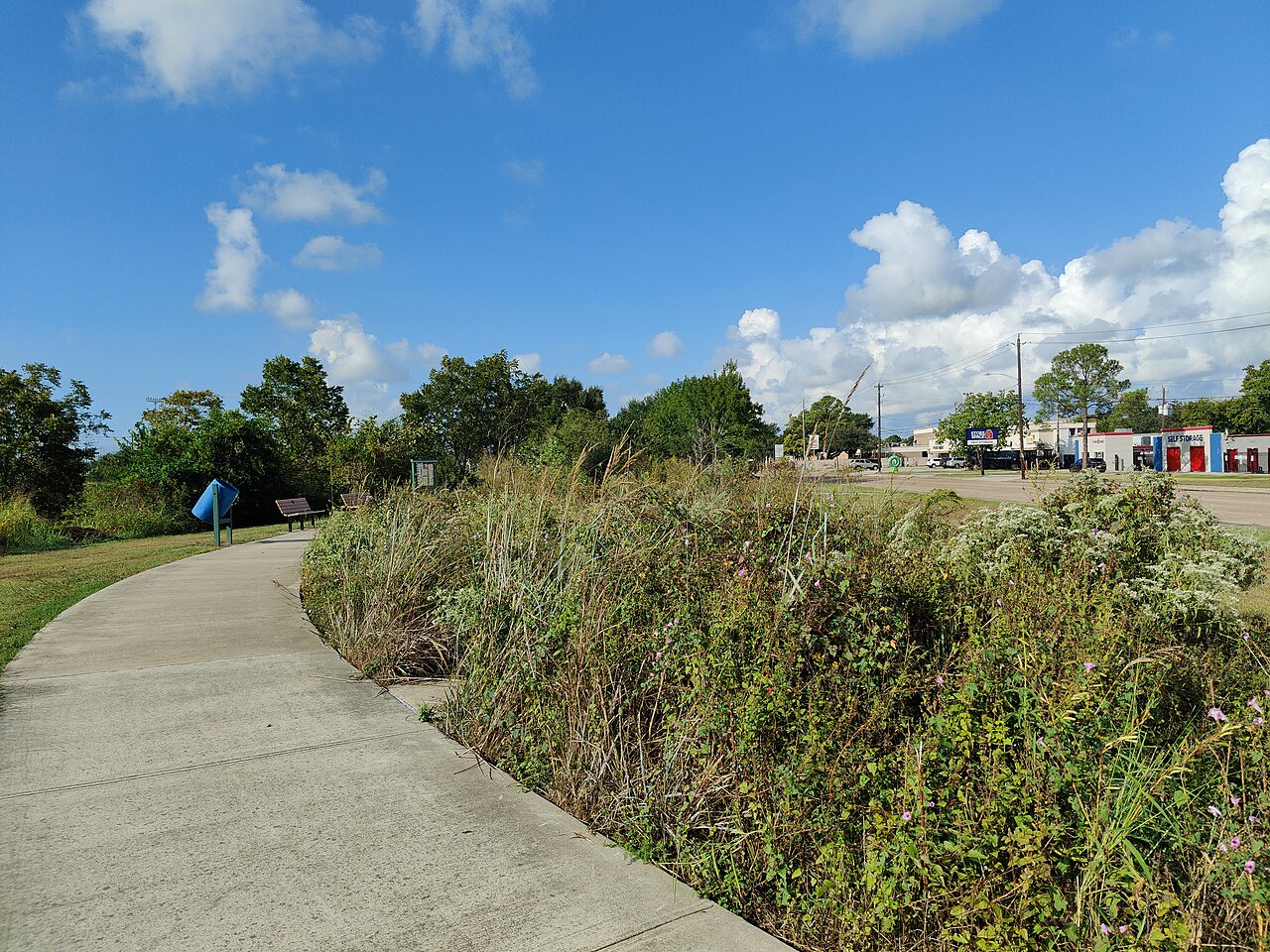
You replaced part of the lawn with native plants. The bees love it. A neighbor asked, kindly, whether you were “letting it go.”
That reaction usually has little to do with the plants themselves. It comes from the missing signals that tell a passerby someone is in charge: an edge, a path, a pattern, a clear view of the front door.
This guide is about adding those signals without giving up the habitat. You won’t need new plants for most of it. You’ll need a shovel, a mower, and a plan for where people’s eyes go.
Plan at a Glance
- Site: an existing or planned native front yard that reads as “messy” from the street.
- Size: any; the tools scale from a 6-foot bed to a whole lawn conversion.
- Sun: full sun to part shade (plant choices shift, the design rules don’t).
- Soil: whatever you have; choose plants that suit it rather than amending heavily.
- Maintenance: edging two or three times a season, one mown strip, a yearly cut-back.
- Best regions: all; the sample palette is for the eastern and central U.S., with swaps below.
Why Native Yards Get Called Messy
Landscape architect Joan Iverson Nassauer called the signals of stewardship “cues to care.” Her research found that people read a neat, orderly landscape as a sign of a neighborly, hard-working household.
In one study summarized by Wild Ones, residents near Minneapolis–St. Paul rated simulated yards with increasing amounts of native planting. A yard about half covered by oak-savanna plants, set in beds framed by lawn, came a close second to the conventional yard. Beyond that point, or with obvious neglect, ratings dropped.
The lesson isn’t “plant less.” It’s that the planting needs a visible frame. Nassauer described cues to care as a way to make unfamiliar landscapes familiar, not to force them back into a lawn.
Our broader guide to native landscaping for curb appeal covers plant selection and soil. This one focuses only on structure: the lines, repeats and views that make a planting look meant.
Walk the Street Before You Change Anything
Do this assessment from where other people actually see your yard. Stand on the far sidewalk, then sit in a car at the curb, then walk up the driveway.
From each spot, note three things:
- Where your eye lands first. If it’s a tangle of stems or a bare patch, that spot needs attention before anything else.
- Whether the front door is visible. UF/IFAS Gardening Solutions points out that people simply want to find the path from the street to the door.
- Where the edges are. Mark every place planting meets lawn, pavement, or a neighbor’s property. Fuzzy edges are the usual source of the “messy” read.
Take a photo from the street in each season. Photos flatten the view the way a passerby sees it, and they make problems obvious that you stop noticing up close.
Frame the Planting With Edges
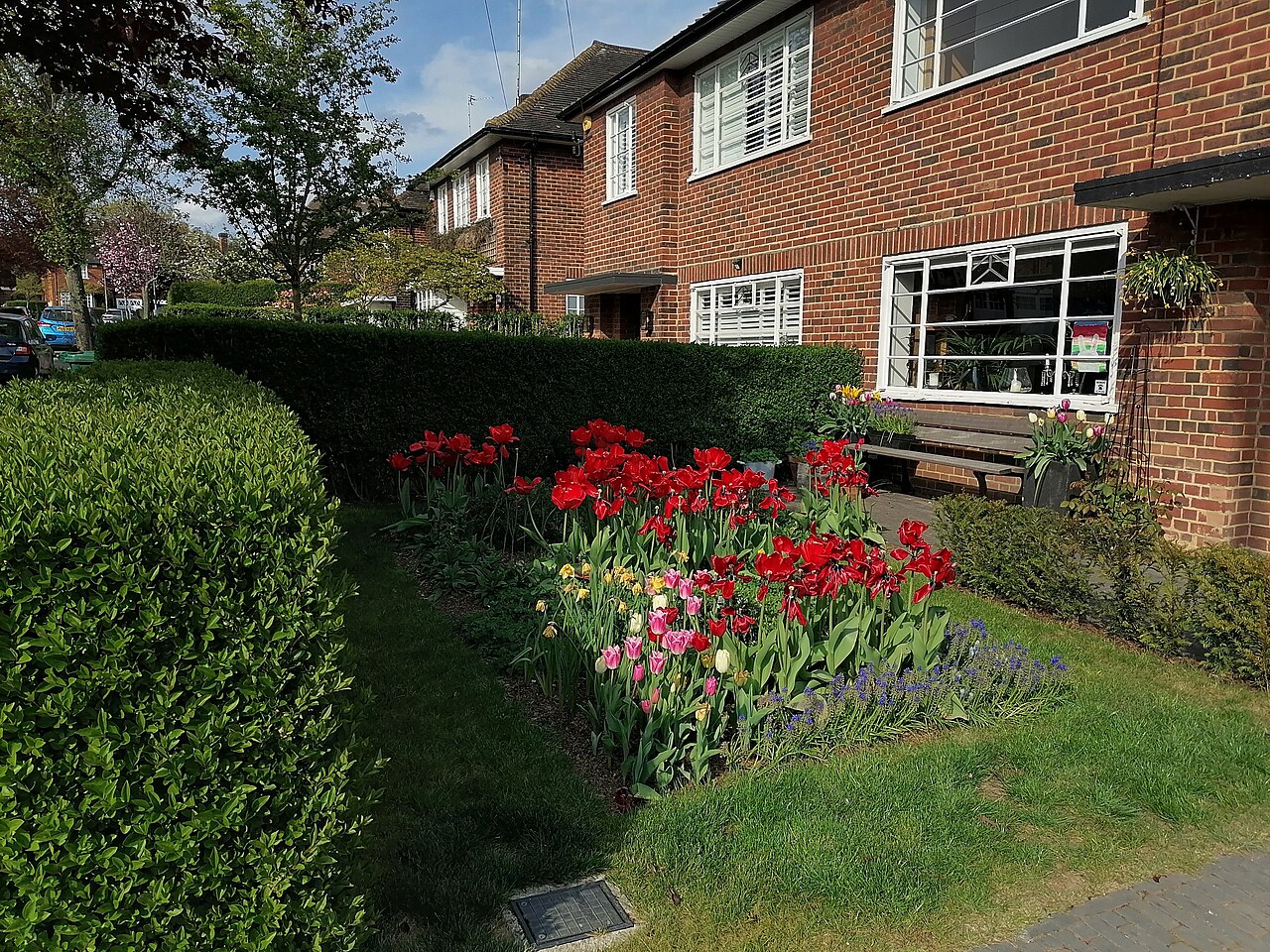
UF/IFAS calls clean edges probably the most effective cue to care. A sharp line between bed and lawn tells the viewer that what’s inside the line is on purpose.
You have several options, from cheapest to most permanent:
- A cut edge. Slice a shallow trench along the bed with a spade or half-moon edger. Cornell Cooperative Extension’s Putnam County office notes a string trimmer works too. Recut it a few times a season.
- A mown strip. Keep a band of mown lawn between the planting and the sidewalk, driveway, or property line. Wild Ones notes this also keeps tall, floppy plants from leaning onto walkers or a neighbor’s yard.
- A hard edge. Brick, stone, or steel edging laid flush with the lawn lets a mower wheel run along it, so the line stays clean with no extra trimming.
- A low fence. Where mowing isn’t practical, UF/IFAS suggests a fence or stone border gives the same orderly line.
Make the bed lines simple. A few long, smooth curves or straight runs read better from the street than many small wiggles, and they’re easier to mow along.
Give Every Planting a Path
A path tells people the garden is for humans as well as wildlife. Cornell’s extension volunteers suggest mown grass, stone, or mulch for the surface.
In a front yard, two paths matter most. The first is the route from the street or driveway to the front door. The second is a working path into the bed, so you can weed and cut back without trampling plants.
Make paths wide enough that plants can lean in and the middle stays clear. Designer Benjamin Vogt, quoted by Gardenista, recommends a “touch-less path down the middle” even after plants cascade over the edges.
If you’re working with a narrow side strip rather than an open front lawn, our guide to a narrow native garden between a fence and a path shows how to measure the clear walking width first.
Repeat Fewer Plants, in Bigger Groups
UF/IFAS puts it plainly: three identical plants dotted randomly around a yard look less cared for than the same three grouped together.
Cornell’s guidance goes further. Limiting the number of species and repeating them in blocks or drifts makes a landscape easier to “read.” In a small yard, repeat smaller groups, or limit the color range so mixed plantings don’t feel jumbled.
A practical rule for a front yard:
- Pick one structural plant (a shrub or grass) and repeat it at least three times across the frontage.
- Pick two or three flowering perennials and plant each in groups of three, five or more.
- Use one low edge plant along the front of every bed, so all beds share the same “hem.”
Our little bluestem front-yard border works through repetition with a single grass in detail, including spacing and quantities.
Control the Sightlines
A sightline is any line of view people rely on: street to front door, driveway to sidewalk, window to street. Native plantings tend to fail here because many prairie and meadow plants grow taller than the shrubs they replaced.
Keep the door and windows in view
Cornell notes that foundation plantings are expected to cover the foundation but not hide windows or doors. Keep the tallest plants away from the entry and toward the corners of the house.
For the bed against the house itself, see our native foundation planting that keeps windows and vents clear.
Keep low plants where drivers and walkers need to see
Many cities limit plant height near intersections and driveways. In Olivette, Missouri, for example, plantings in the corner triangle at street intersections are limited to 3 feet, and tree limbs must stay above 7 feet. Rules differ by town, so check your local code before planting a corner lot or driveway edge.
Even without a rule, keep the first few feet beside a driveway or sidewalk low. Cornell’s volunteers point out that plants spilling into walkways can reduce visibility and create awkward encounters for passersby.
Step heights up from the street
Arrange the planting like a theater: lowest at the curb and paths, mid-height in the middle, tallest at the back or corners. Cornell passes along designers’ tips to keep mature plant height no more than half the bed width and to repeat any tall “exclamation” plants rather than using one.
Sizing plants to the bed is the core of our 6-by-10-foot native front-yard bed guide if you want worked numbers for a small bed.
Add One Focal Point
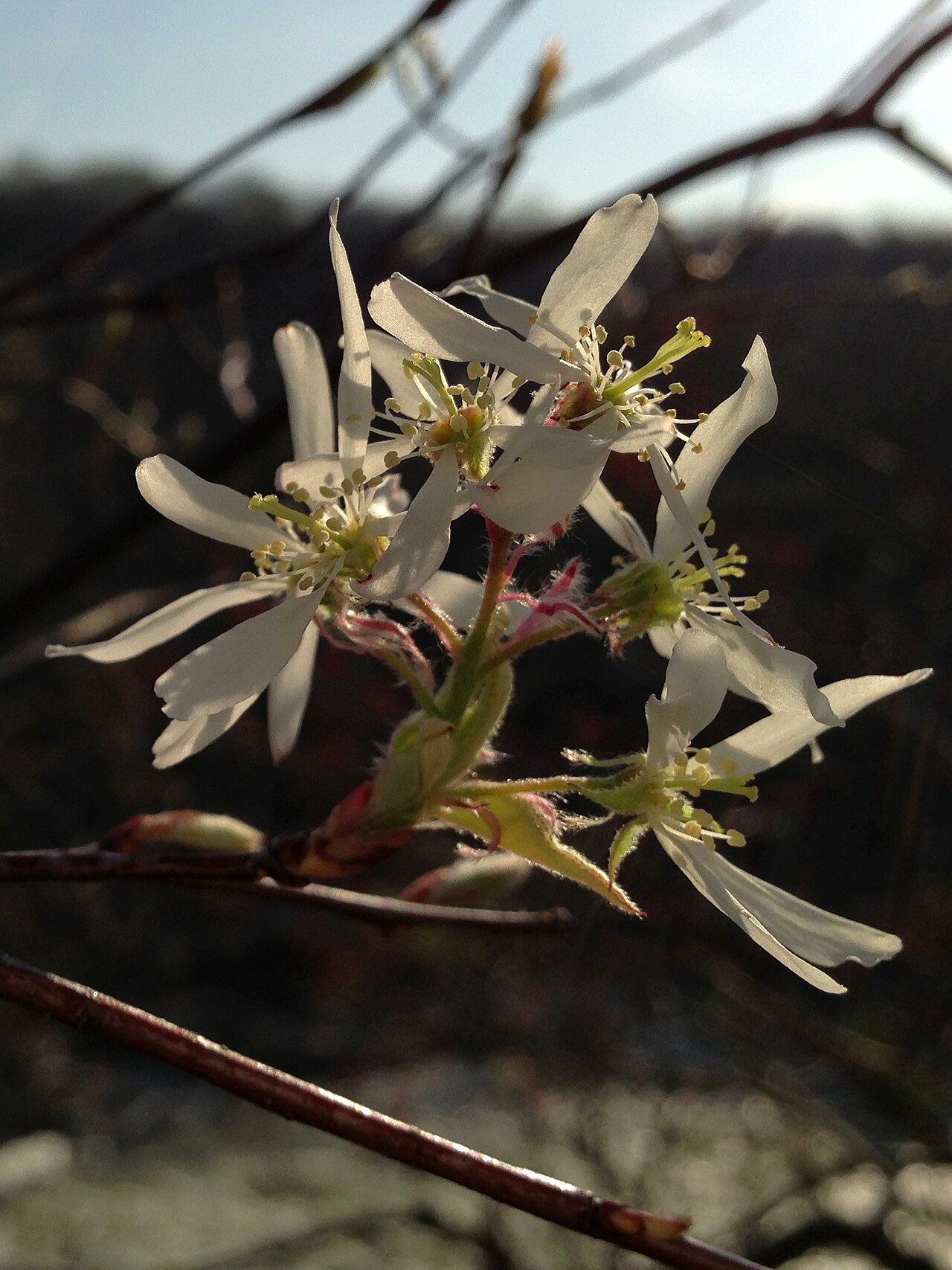
Wild Ones reports that, compared with shrubs or grasses, people are more likely to immediately appreciate trees. A single small native tree gives the eye somewhere to rest and anchors the rest of the planting.
Downy serviceberry is a common choice in the East. It flowers white in early spring and is usually 15 to 25 feet tall, according to the Lady Bird Johnson Wildflower Center. Place it at a corner of the house or yard, not centered in front of the door.
Other focal points work too. Cornell and UF/IFAS both mention benches, birdbaths, arbors and bird feeders as familiar objects that show a planting is in use. If you add a bench, our guide to a small seating area in a native garden covers sizing and planting around it.
Plant Palette
A sample eastern and central U.S. palette built for repetition. Heights and ranges are from the PlantNative profiles and the Lady Bird Johnson Wildflower Center. Confirm each plant is native to your county before buying.
| Plant | Role | Height | Sun / moisture | Native range |
|---|---|---|---|---|
| Downy serviceberry | Focal tree at a corner | Usually 15–25 ft | Sun to shade; moderate | New Brunswick to Florida, west to e. Minnesota, e. Nebraska and ne. Texas |
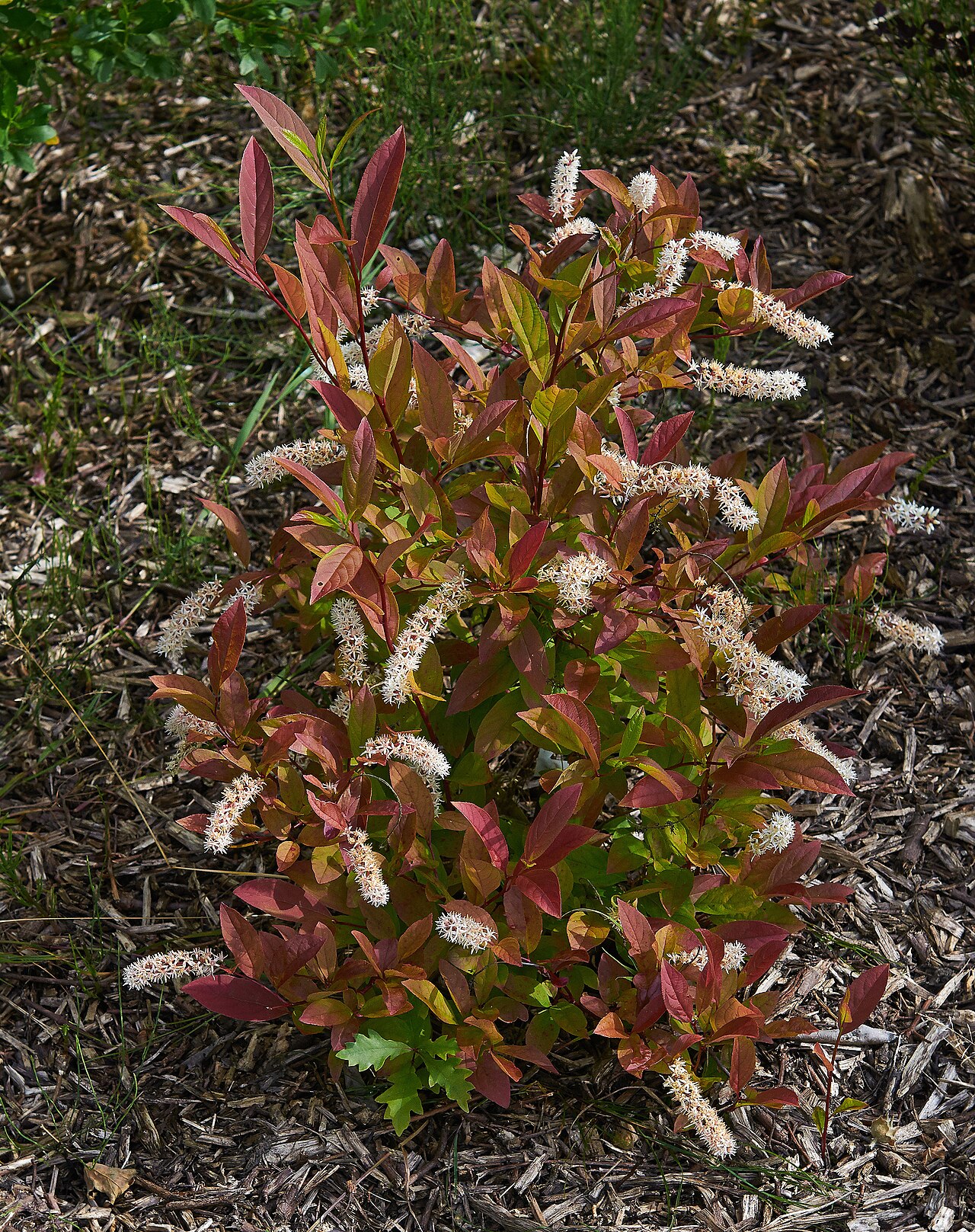
| Virginia sweetspire | Repeated shrub mass | Usually 3–6 ft | Sun to part shade; moist | S. New Jersey to Kentucky, s. Illinois, Missouri and Oklahoma, south to Florida and Texas |
| Inkberry | Evergreen backbone at corners | 4–8 ft | Part to full shade; moist, acidic | Atlantic Coastal Plain, Nova Scotia to Florida, west along the Gulf to Texas |
| Little bluestem | Repeated grass, winter color | 2–4 ft | Sun to part shade; dry | Most of the U.S. east of the Rockies, into southern Canada |
| Orange coneflower | Bold summer color in drifts | 18–36 in | Full to part sun; average to moist | New Jersey and Pennsylvania south to Florida, west to Missouri and e. Texas |
| Aromatic aster | Fall color mound mid-bed | 1–2½ ft | Full sun; dry to average | Eastern Great Plains through the Midwest to the mid-Atlantic and upper South |
| Prairie dropseed | Low, tidy edge “hem” | About 2 ft | Full sun; moderate | Scattered prairies from New England and the Carolinas to Montana and New Mexico |
Regional swaps. Sweetspire and inkberry are wetland-edge shrubs of the East and South. On dry Plains sites, lean on the grasses and asters instead, and use blue grama as the low edge. In the Mountain West, Southwest or Pacific Coast, keep the same structure but take every plant from your state’s native list.
Cues to Care: Quick Reference
| Edges | Recut bed lines; add a mown strip along sidewalks and property lines. |
| Paths | A clear route to the door and a working path into each bed. |
| Repetition | Fewer species, in groups, repeated across the frontage. |
| Sightlines | Door and windows visible; low plants at drives and walks. |
| Focal point | One small tree, bench or birdbath, off-center. |
| Signals | A habitat sign, fresh mulch, weeds kept small, no litter. |
Installation Steps
Step 1: Photograph and sketch. Take street-view photos and draw the yard to rough scale, marking the door, windows, driveway, sidewalk and any corner sight triangle.
Step 2: Draw the edges first. Lay a garden hose along the planned bed lines and look at it from the street. Adjust until the curves are long and simple, then cut the edge.
Step 3: Lay out paths. Mark the route to the door and the working paths before placing any plant. Plants fill around paths, never the other way around.
Step 4: Place the focal point and structural plants. Set the tree or bench, then place the repeated shrubs or grasses in their pots. Check the view from the street again.
Step 5: Fill in drifts and the front edge. Group the flowering perennials and run the low edge plant along every bed front.
Step 6: Mulch and water in. UF/IFAS recommends a 2- to 3-inch mulch layer for weed suppression. Keep mulch off stems and trunks.
The First Three Years
- Year 1, spring–summer: water through dry spells, pull weeds while small, recut edges every few weeks. Expect sparse beds; a habitat sign helps explain the gaps.
- Year 1, fall–winter: leave seed heads standing if your edges are crisp; the frame keeps them reading as intentional.
- Year 2, spring: cut back last year’s stems before new growth, top up thin mulch, and fill gaps with more of the same plants rather than new species.
- Year 2, summer: recheck sightlines; move or trim anything blocking the door, a window or the driveway view.
- Year 3: divide or edit plants that have spread past their spot, and keep the mown strip and edges as your standing routine.
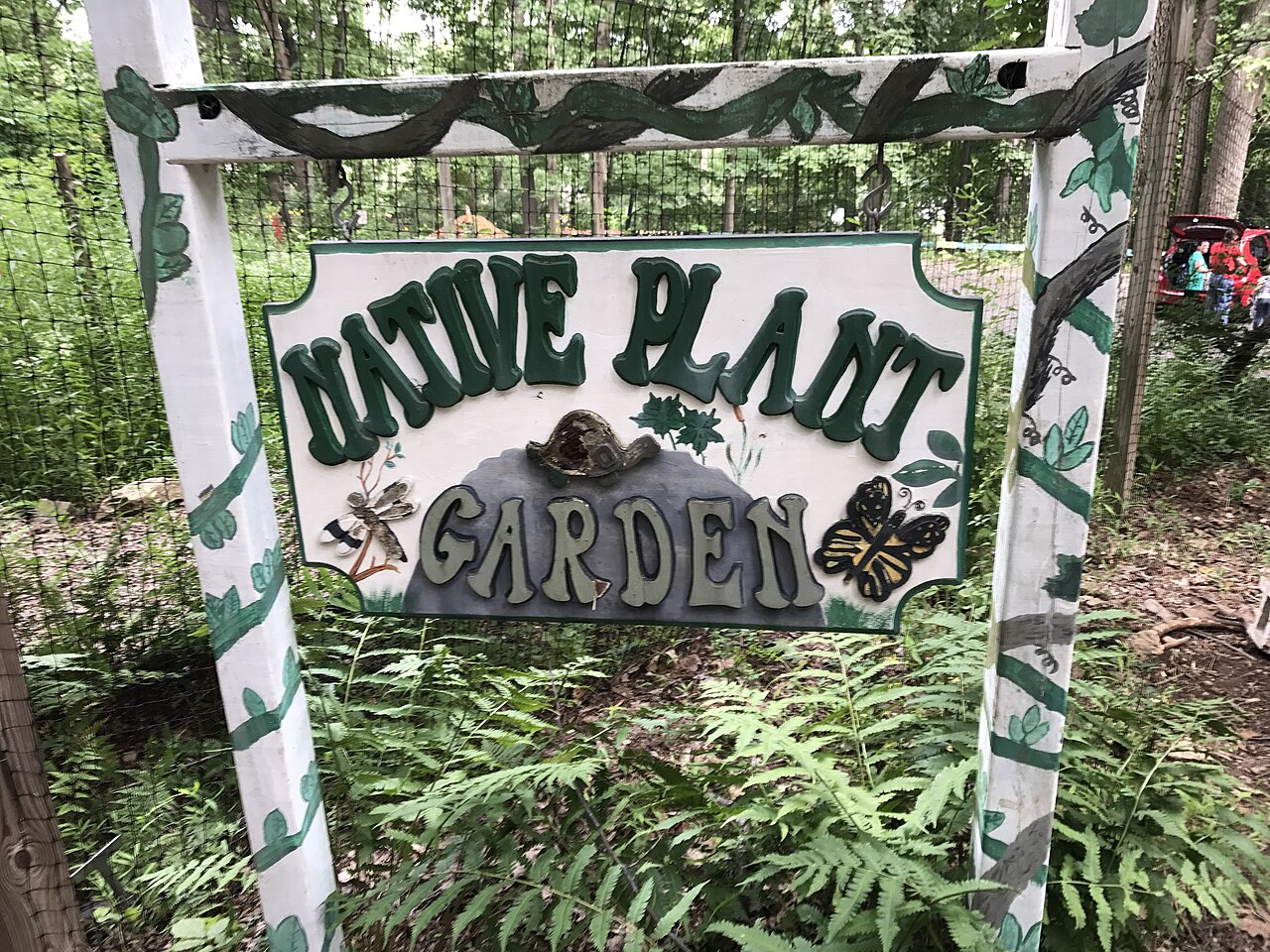
Cornell’s volunteers note signs are especially useful when a garden is new or in transition, and they start conversations with neighbors. Wild Ones adds that people often mistake small-flowered natives for weeds, so lean toward larger, showier flowers near the street in the first seasons.
Mistakes to Avoid
- Planting one of everything. A collection of single plants looks random from the street, however good each one is.
- Letting edges blur. An edge that hasn’t been recut in a season is the fastest way back to “messy.”
- Putting the tallest plants up front. Tall perennials at the curb hide the rest of the yard and block views.
- Blocking the front door. If visitors can’t see how to reach the door, the whole yard feels unfriendly.
- Ignoring spreaders. Colony-forming shrubs need a hard edge or room to roam (see below).
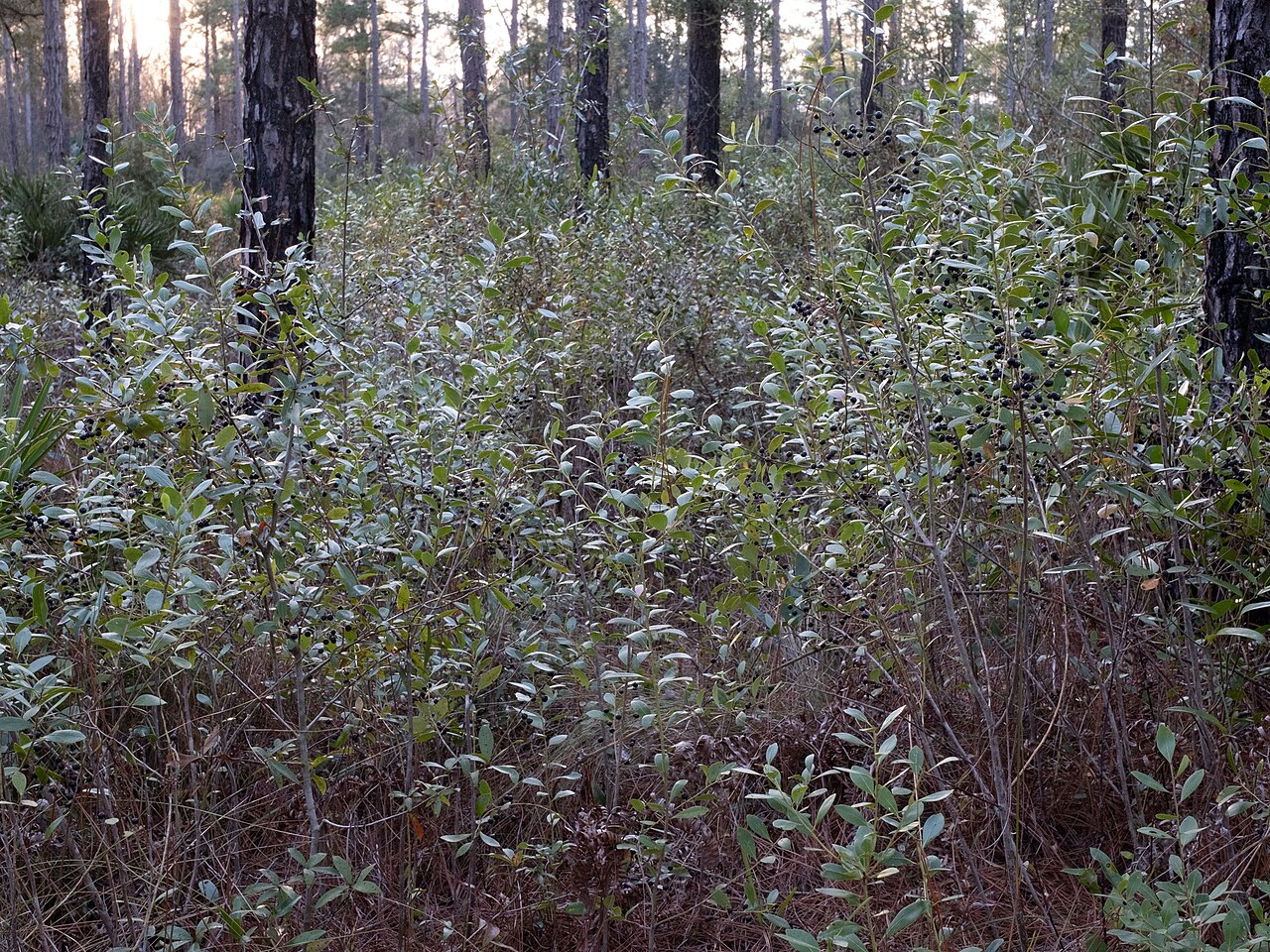
Inkberry spreads by underground runners into dense thickets, and sweetspire forms colonies the same way. That’s an asset in a large bed, but in a tight front yard, give them a firm edge or a lawn they can be mown against.
📋 Find plants for your region: see our native plant lists for Maryland, Virginia & West Virginia and Kentucky & Tennessee, or browse the list for your own state before you buy.
Frequently Asked Questions
Do I have to keep some lawn?
No, but a small amount helps. A mown strip along the sidewalk or a mown path is one of the clearest cues to care, and it’s easy to maintain.
Will my HOA accept a native front yard?
Rules vary, so read your covenants first. Clean edges, a clear entry, low plants at the street, and a sign go a long way toward showing the yard is maintained.
How many plant species should a small front yard have?
Fewer than you think. One structural plant, two or three flowering perennials and one edge plant, each repeated, reads more clearly than a dozen singles.
Should I cut everything down in fall to look tidy?
Not necessarily. Standing stems and seed heads look deliberate when the edges, paths and mown strip are crisp. Cut back in late winter or early spring.
What if the planting already looks overgrown?
Start with edges and paths, not plants. Recut the bed line, mow a strip, clear the route to the door, then decide what to move or remove.
Sources
- UF/IFAS Gardening Solutions: Cues to Care
- Cornell Cooperative Extension Putnam County: Is Your Pollinator Garden Messy? “Cues to Care” Can Help
- Wild Ones: Cues to Care, The Language of Neighborly Landscaping
- Gardenista: Cues to Care, How to Design Ecological Gardens That Look Neat and Tidy
- City of Olivette, Missouri: Planting in the Public Right of Way
- Lady Bird Johnson Wildflower Center: Amelanchier arborea
- Lady Bird Johnson Wildflower Center: Itea virginica
- Lady Bird Johnson Wildflower Center: Schizachyrium scoparium