A Native Foundation Planting That Keeps Windows and Vents Clear
Last updated: November 6, 2026
Most foundation plantings start out fine and end up as a problem. Within a few years the shrubs reach the window glass, swallow the dryer vent, and hide the gas meter the utility needs to read.
A native foundation planting can avoid that from day one. The trick is to map everything on the wall that needs to stay clear, then choose each plant for the height and width it will reach, not the size it is in the pot.
This guide walks through that process for a typical house front. The plant palette suits much of the eastern and central United States, with notes on swapping plants for your region.
Plan at a Glance
| Site | the strip along a house wall, usually 4 to 9 feet deep |
| Clear zones | windows, doors, dryer vent, meters, AC or heat pump, crawl space vents, hose bibs |
| Sun | works on sunny and shady sides, with different plants for each |
| Soil | average; inkberry wants moist soil |
| Maintenance | low once the right plants are in the right spots |
| Best regions | eastern and central U.S.; inkberry is a coastal-plain native, so swap it inland |
Map the Wall Before You Plant
Stand at the street and photograph the front of the house. Then walk the wall with a tape measure and mark everything that needs light, air, or access.
Write down the height of each window sill above the soil. That number is the maximum mature height for anything planted directly beneath it.
Next, note every vent, meter, spigot, and piece of equipment, along with the side of the house it is on. A rough sketch on graph paper is enough.
Cornell Cooperative Extension of Putnam County notes that people expect foundation plantings to cover the foundation without obscuring windows or doors. A planting that respects that expectation reads as cared for, even when it is made of native plants rather than clipped evergreens.
The Clear-Zone Rules
Windows: plan for the top of the height range
Use the highest number in a plant’s mature height range when you compare it with the sill. Plant labels often list the smaller figure, and many native shrubs vary a lot with soil and light.
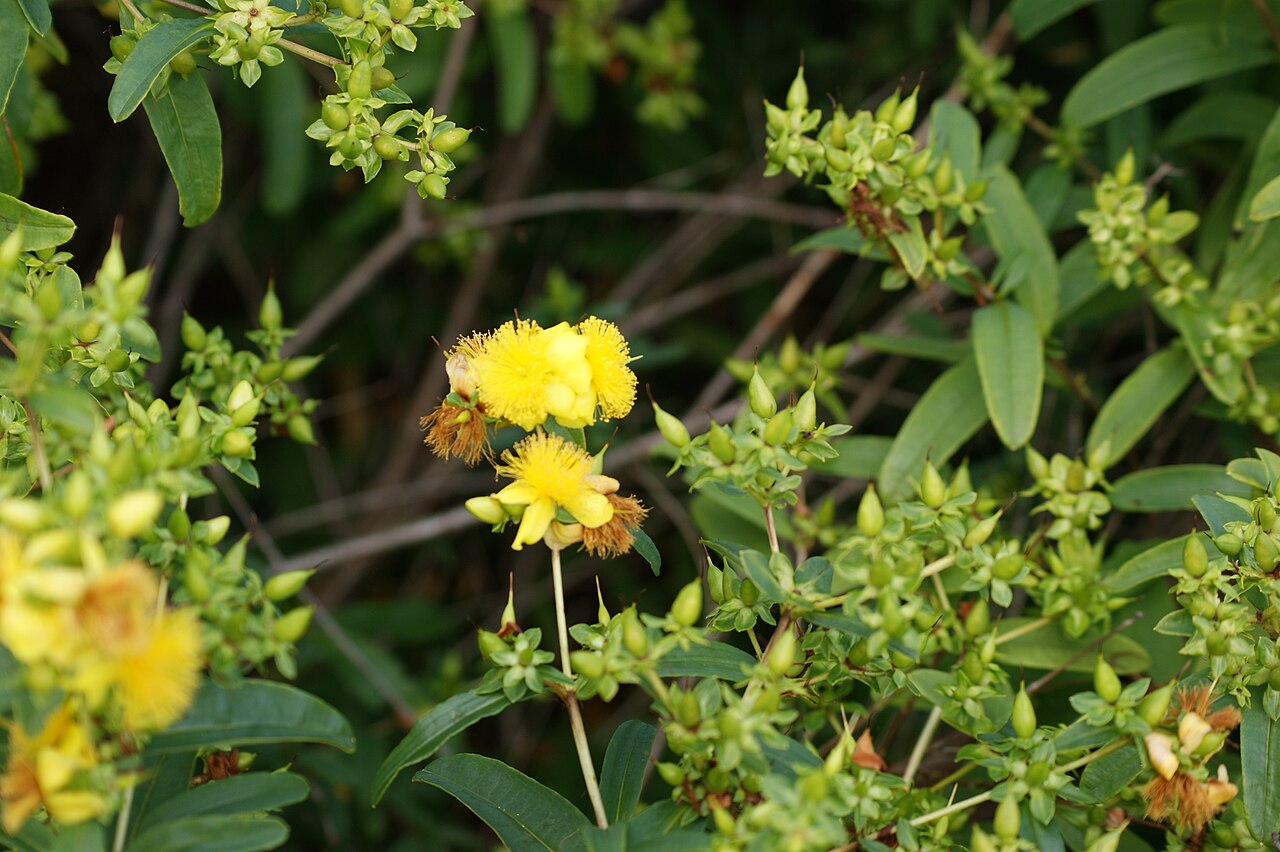
Shrubby St. John’s wort shows why. NC State Extension lists it at 1 to 5 feet tall, and the Lady Bird Johnson Wildflower Center says it can reach about 6 feet, though it is often shorter.
Distance from the wall
LSU AgCenter recommends planting small shrubs at least 3 to 4 feet from the house and large shrubs 5 to 6 feet away. That space keeps branches off the siding and leaves room to reach windows, paint, and clean gutters.
LSU also advises keeping wood mulch about 1 foot from the foundation to help prevent termite infestations. A strip of gravel or bare soil against the wall serves that purpose and gives you a narrow path for access.
Dryer vents
The U.S. Fire Administration’s dryer fire-safety tips include checking that the venting is not restricted and that the outdoor vent covering opens when the dryer runs. Keep shrubs well away from the vent hood and use only low ground cover, or gravel, beneath it.
Plan that patch as part of the gravel strip, which also keeps the vent hood easy to inspect and clean.
Meters, AC units, and other equipment
Gas and electric meters, air conditioners, heat pumps, and high-efficiency furnace intake and exhaust pipes each have clearance requirements. Follow the clearances in the equipment’s installation manual or from your utility rather than guessing.
In practice, that means leaving an open, mulched or graveled pocket in front of each piece of equipment and a path to reach it. Spreading shrubs belong somewhere else.
Clear-Zone Quick Reference
Use this as a planning checklist; exact clearances come from your utility and equipment manuals.
| Wall feature | What to keep clear | What can go nearby |
|---|---|---|
| Window | Glass and sill; nothing taller than the sill directly below | Sedge or alumroot below; shrubs between windows |
| Door and steps | Walking path and sight lines | Low edging plants set back from the path |
| Dryer vent | The vent hood must open freely | Gravel or low sedge only |
| Gas or electric meter | Access and readability per your utility | Low ground cover, with an open path to the meter |
| AC or heat pump | Airflow and service access per the manual | Nothing woody in the clearance zone |
| Crawl space vents and window wells | Airflow and light | Low ground cover only |
| Foundation itself | About 1 ft free of wood mulch (LSU) | Gravel strip |
Choose Plants by Height and Width
Height decides what can go under a window. Width decides what can go near a vent, meter, or path.
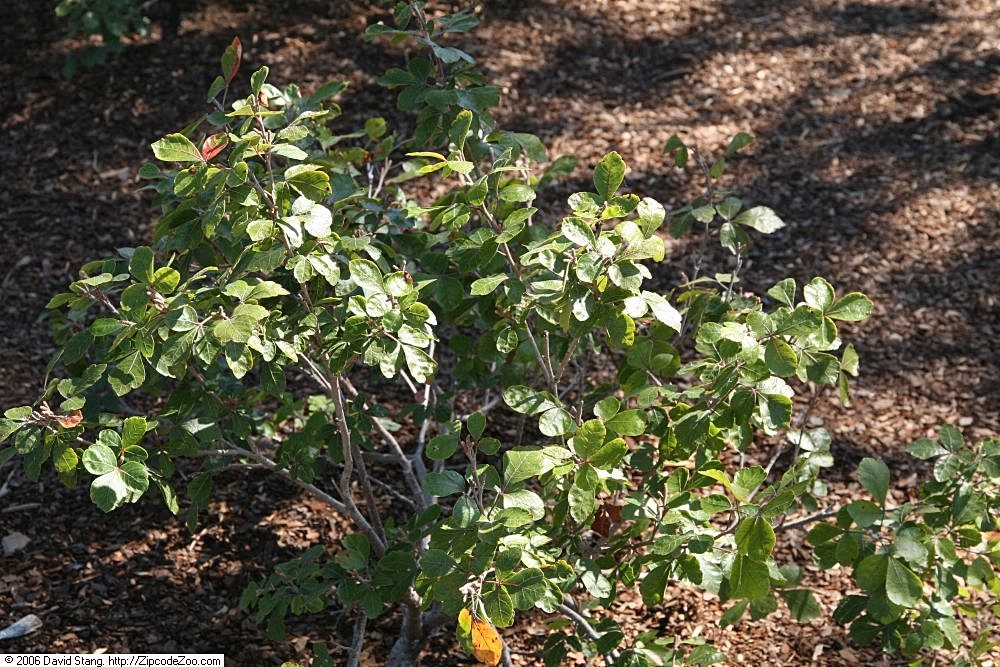
Fragrant sumac (Rhus aromatica) is a good example. The Wildflower Center lists the species at 6 to 12 feet tall and 4 to 6 feet wide, while NC State describes the ‘Gro-low’ cultivar as under 3 feet tall but spreading about 8 feet.
That low, wide habit makes ‘Gro-low’ excellent at an outside corner of the house or on a slope. It would bury a dryer vent or meter within a few seasons.
The Wildflower Center notes that fragrant sumac flowers in spring before its leaves appear and turns red, yellow, and orange in fall. It grows in sun to shade.
A Sample Layout
Picture a house front with a door in the middle, one window on each side, a dryer vent near one end, and a gas meter around the corner. Here is how the plan fills that wall.
- Against the wall: a gravel strip about 1 foot wide along the entire foundation.
- Under each window: a drift of alumroot on the shady side or a low mat of sedge on either side, all well below the sill.
- Between the windows and the door: one shrubby St. John’s wort on each side, set at least 3 to 4 feet out from the wall.
- At each front corner: an evergreen, such as a compact inkberry, where its height frames the house without covering glass.
- At the outside corners and slopes: ‘Gro-low’ fragrant sumac, kept away from equipment.
- Under the dryer vent and in front of the meter: gravel or Pennsylvania sedge, with an open path.
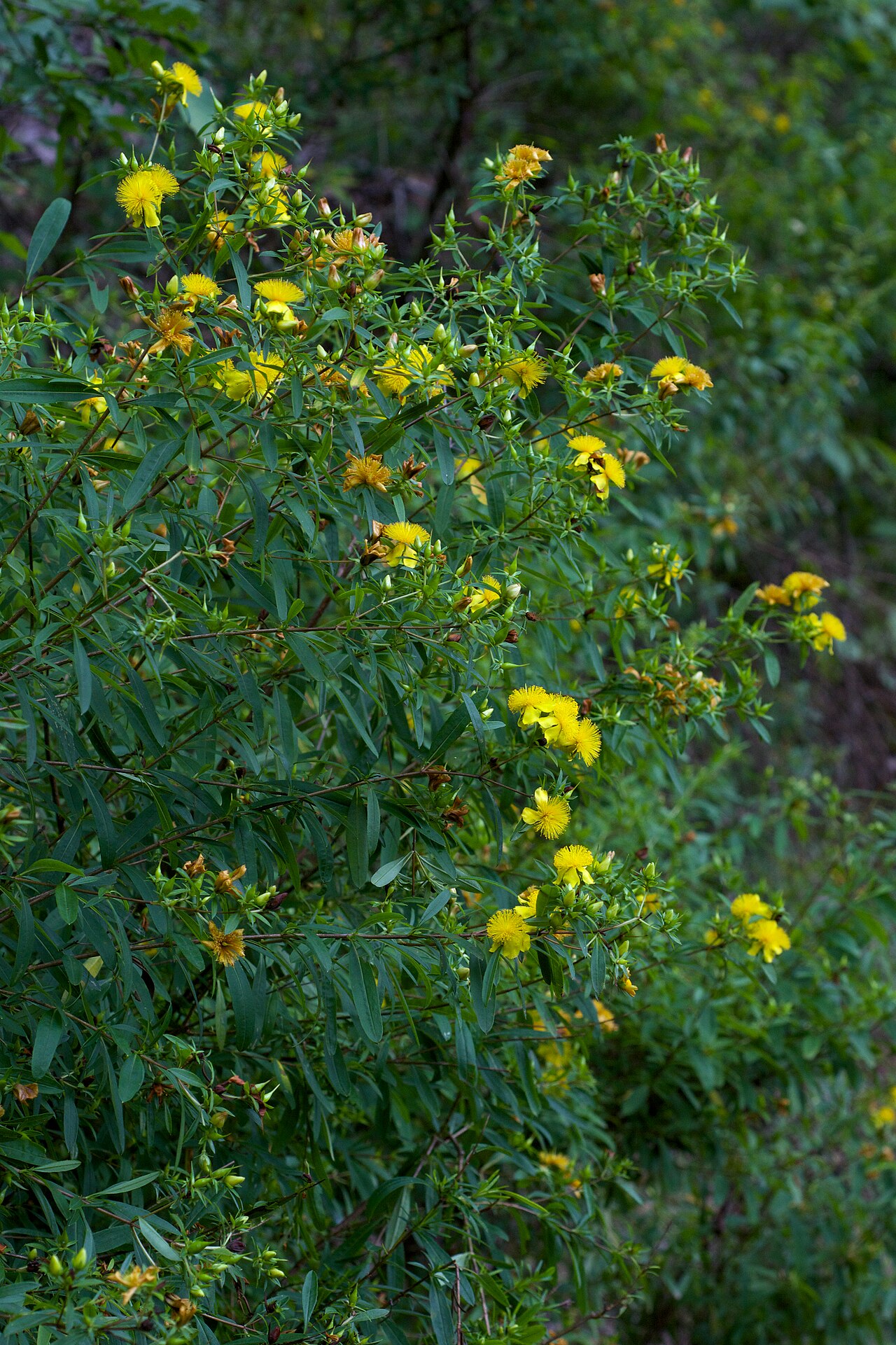
Shrubby St. John’s wort (Hypericum prolificum) carries the summer show. The Wildflower Center lists yellow flowers from June through August, and NC State gives a width of 1 to 4 feet.
Because it can top 5 feet, this plan keeps it between windows rather than under them. If your sills are high, measure before you decide; a tall sill may leave enough room.
Plant Palette
Heights and widths are from NC State Extension and the Lady Bird Johnson Wildflower Center; native ranges are from the Wildflower Center.
| Plant | Role | Height | Sun / moisture | Native range | |
|---|---|---|---|---|---|
| {{p:shrubby-st-johns-wort-hypericum-prolificum | Shrubby St. John’s wort}} | Summer-blooming shrub between windows | 1–5 ft (to 6 ft) | Sun to shade; dry to moist | New York to s. Michigan and Iowa, south to Georgia, Louisiana and Oklahoma |
| {{p:inkberry-ilex-glabra | Inkberry}} (compact cultivar) | Evergreen corners | ‘Shamrock’ 3–5 ft; species 5–10 ft | Sun to part shade; moist to wet | Coastal plain from Nova Scotia to Florida, west to Louisiana |
| {{p:fragrant-sumac-rhus-aromatica | Fragrant sumac}} ‘Gro-low’ | Low, wide outside corners and slopes | Under 3 ft; spreads about 8 ft | Sun to shade; dry to moist | W. Quebec to Michigan and Illinois, south to Georgia, Louisiana and Kansas, plus western populations |
| {{p:alumroot-heuchera-americana | Alumroot}} | Under windows on shady sides | Usually about 18 in (to 3 ft in bloom) | Part shade to shade; dry to moist | Connecticut to Ontario and Michigan, south to Georgia and Oklahoma |
| {{p:pennsylvania-sedge-carex-pensylvanica | Pennsylvania sedge}} | Ground cover under vents, meters and low windows | 1–8 in (NC State); to about 20 in (Wildflower Center) | Sun to shade; dry | S. Quebec to North Dakota and Montana, south to Georgia, Arkansas and Wyoming |
Evergreen Corners: Inkberry, With Care
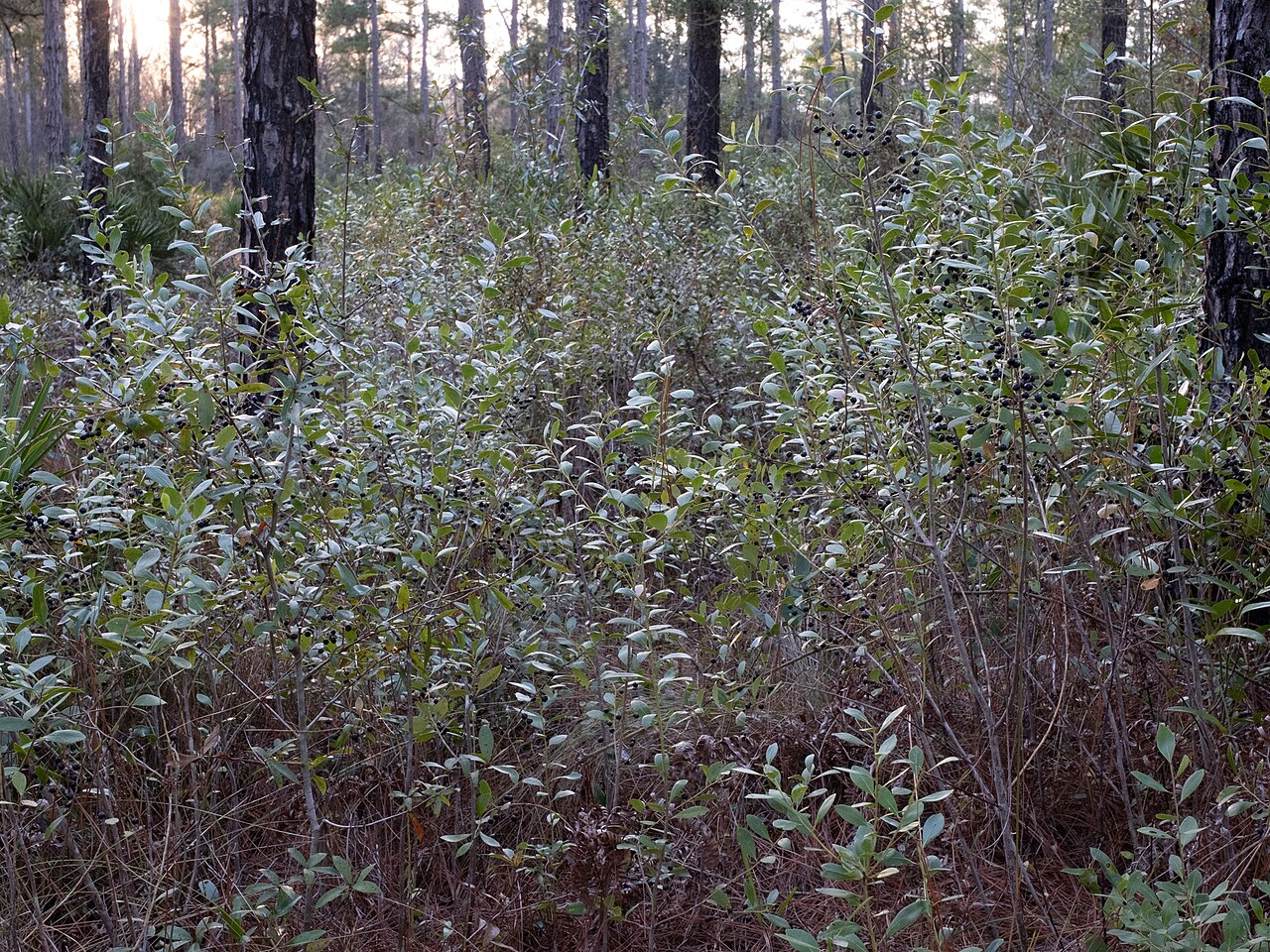
Inkberry (Ilex glabra) is one of the few native evergreen shrubs suited to foundation plantings. NC State lists the species at 5 to 10 feet tall and 5 to 8 feet wide, and the Wildflower Center notes extensive rhizomes that often form colonies.
For a foundation bed, choose a compact cultivar and check its tag. NC State describes ‘Shamrock’ as a compact form of 3 to 5 feet.
The Wildflower Center notes that you need both a male and a female plant for berries. It also lists inkberry as a plant of moist to wet coastal-plain soils, so it fits best near a downspout or on the moister side of the house.
NC State rates inkberry as highly flammable. If you live where wildfires occur, follow your local fire-safe landscaping guidance for plants next to the house before using it there.
Low Layers for Windows and Vents
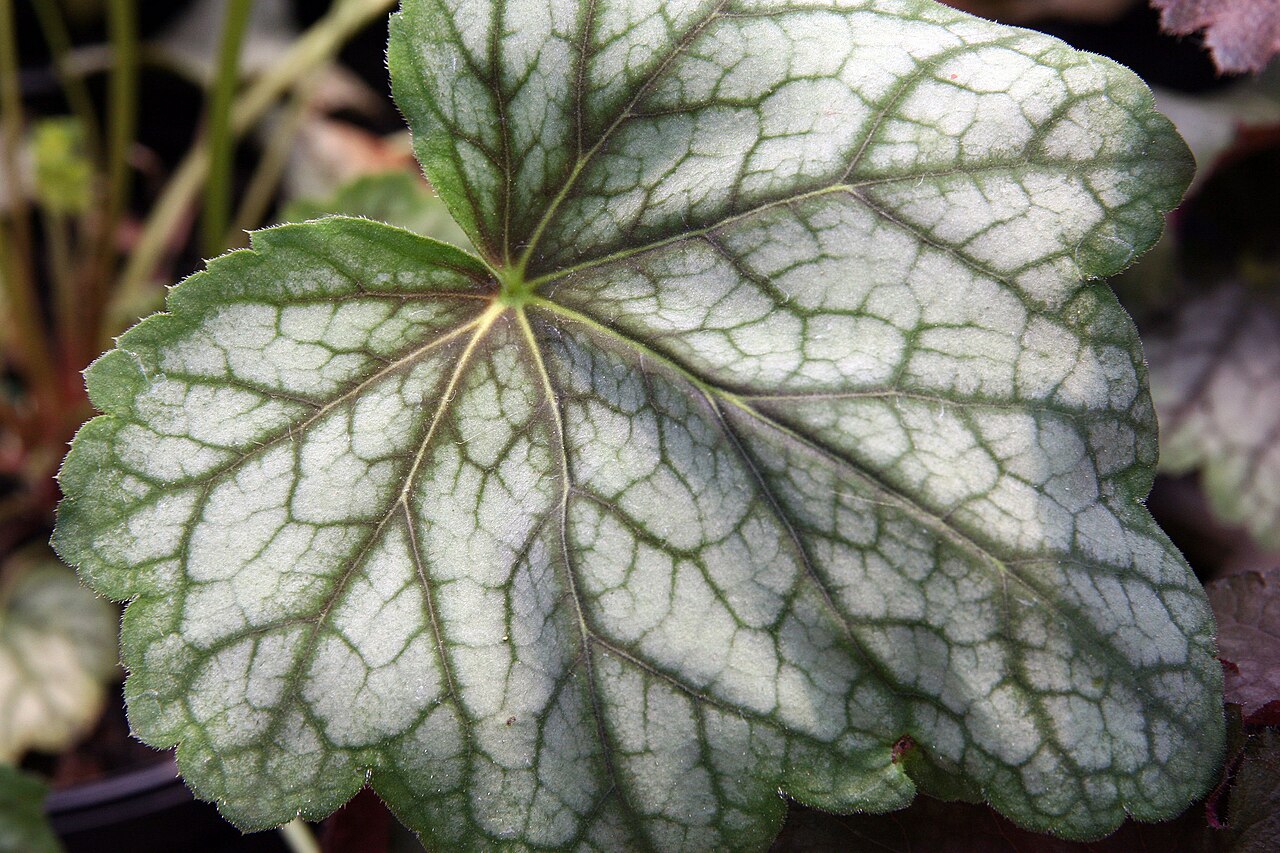
Alumroot (Heuchera americana) is the under-window plant for shady sides. The Wildflower Center describes it as usually about 18 inches high, though it can reach 3 feet, and values it as a foliage plant and ground cover in shady eastern gardens.
The center also notes that in sun its leaves take on a bronze cast as the season goes on. NC State lists it at 1 to 1.5 feet wide.
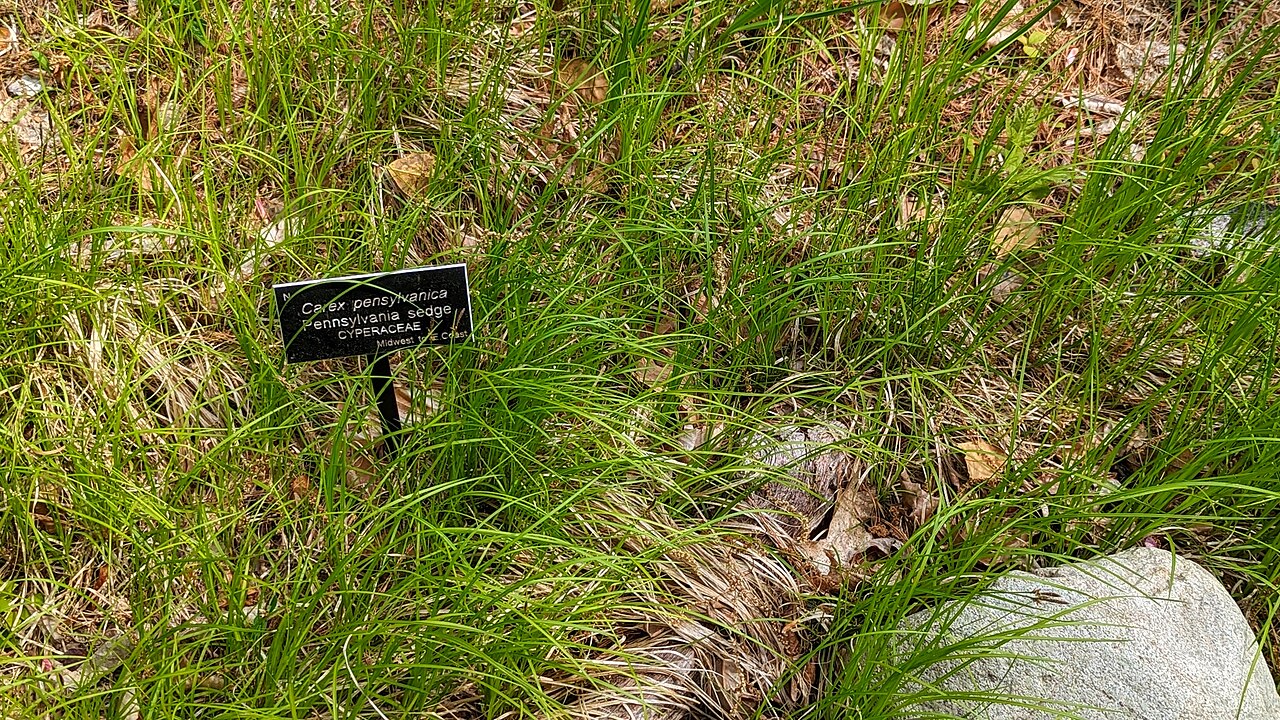
Pennsylvania sedge (Carex pensylvanica) is the low layer for clear zones. The Wildflower Center calls it a fine ground cover that spreads relentlessly by rhizomes, so give it the zones where you want coverage and edge it where you do not.
Regional Swaps
This palette fits much of the East and Midwest, but no foundation plan fits every state. Check each plant against your state’s native range before buying.
- Inland Midwest and Appalachians: inkberry is a coastal-plain native, so repeat shrubby St. John’s wort or ‘Gro-low’ fragrant sumac at the corners instead.
- Northeast and Great Lakes: shrubby St. John’s wort’s listed range reaches New York and southern Michigan, and alumroot’s reaches Connecticut and Ontario; north of those, use your state list.
- Plains and West: fragrant sumac has western populations, but use a regional list for the other plants.
For grass-based foundation beds, see our guide to a native grass border that keeps windows and walkways clear. If a downspout drains into the bed, our native plants for downspout areas guide covers that wetter spot.
Installation Steps
- Mark the clear zones first with flags or marking paint: the gravel strip, each window’s no-shrub zone, the dryer vent, the meter, and the equipment.
- Remove turf and old shrubs that are already too big for their spots.
- Lay the gravel strip along the foundation.
- Set each shrub at least 3 to 4 feet from the wall, measured to the center of the plant.
- Plant the low layers last, filling the clear zones with sedge or leaving them as gravel.
- Mulch the beds with shredded wood or leaves, keeping wood mulch out of the 1-foot strip.
- Water deeply after planting and through dry spells in the first season.
The First Three Years
- Year 1: Keep the clear zones open and weed-free. Water whenever the soil dries out.
- Year 2: Check each shrub against the window sills and vents. Edge Pennsylvania sedge where it creeps into the gravel.
- Year 3: Shrubs approach mature size. Remove any branch that touches the siding or the clearance zone around equipment, and confirm the dryer vent hood still opens freely.
- Every year: Before winter, check that meters, vents, and equipment are clear of leaves and stems.
Mistakes to Avoid
- Buying by the low number on the tag. Use the top of the height and width range.
- Planting the species when you need the compact form. Inkberry and fragrant sumac species both outgrow foundation spaces.
- Planting tight against the wall. Shrubs set 1 foot from the siding will lean on it within a few years.
- Hiding equipment. Utility workers and technicians need access, and blocked vents are a safety issue.
- Wood mulch against the foundation. Keep it about 1 foot away.
If you want to plan a bed away from the wall, see our 6-by-10-foot native front-yard bed plan, which uses the same mature-size approach.
📋 Check which of these plants are native in your area: Maryland, Virginia and West Virginia, North and South Carolina, Kentucky and Tennessee, and Illinois, Iowa and Missouri.
Frequently Asked Questions
How tall can plants under a window be?
No taller than the window sill at their mature height. Measure the sill from the soil and compare it with the top of each plant’s height range.
How far from the house should foundation shrubs go?
LSU AgCenter recommends at least 3 to 4 feet for small shrubs and 5 to 6 feet for large ones, measured from the wall.
Can I plant in front of my AC unit or gas meter?
Only low ground cover, and only outside the clearance listed by the equipment manufacturer or your utility. Leave a clear path for service.
Is there a native evergreen for foundation corners?
Inkberry is the main one in the eastern coastal plain; choose a compact cultivar such as ‘Shamrock’. NC State rates inkberry as highly flammable, so check fire-safe guidance if wildfire is a concern where you live.
What goes under a dryer vent?
Gravel or a low ground cover such as Pennsylvania sedge. The U.S. Fire Administration advises making sure the outdoor vent covering opens whenever the dryer is running.
Sources
- LSU AgCenter: Designing and planting foundation beds
- Cornell Cooperative Extension Putnam County: Cues to care
- U.S. Fire Administration: Clothes dryer fire safety
- Lady Bird Johnson Wildflower Center: Hypericum prolificum
- Lady Bird Johnson Wildflower Center: Ilex glabra
- Lady Bird Johnson Wildflower Center: Rhus aromatica
- Lady Bird Johnson Wildflower Center: Heuchera americana
- Lady Bird Johnson Wildflower Center: Carex pensylvanica
- NC State Extension Plant Toolbox: Hypericum prolificum
- NC State Extension Plant Toolbox: Ilex glabra
- NC State Extension Plant Toolbox: Rhus aromatica
- NC State Extension Plant Toolbox: Heuchera americana
- NC State Extension Plant Toolbox: Carex pensylvanica