Designing a Native Seedhead Garden for Winter: Flowers, Grasses, and Clear Paths
Last updated: November 6, 2026
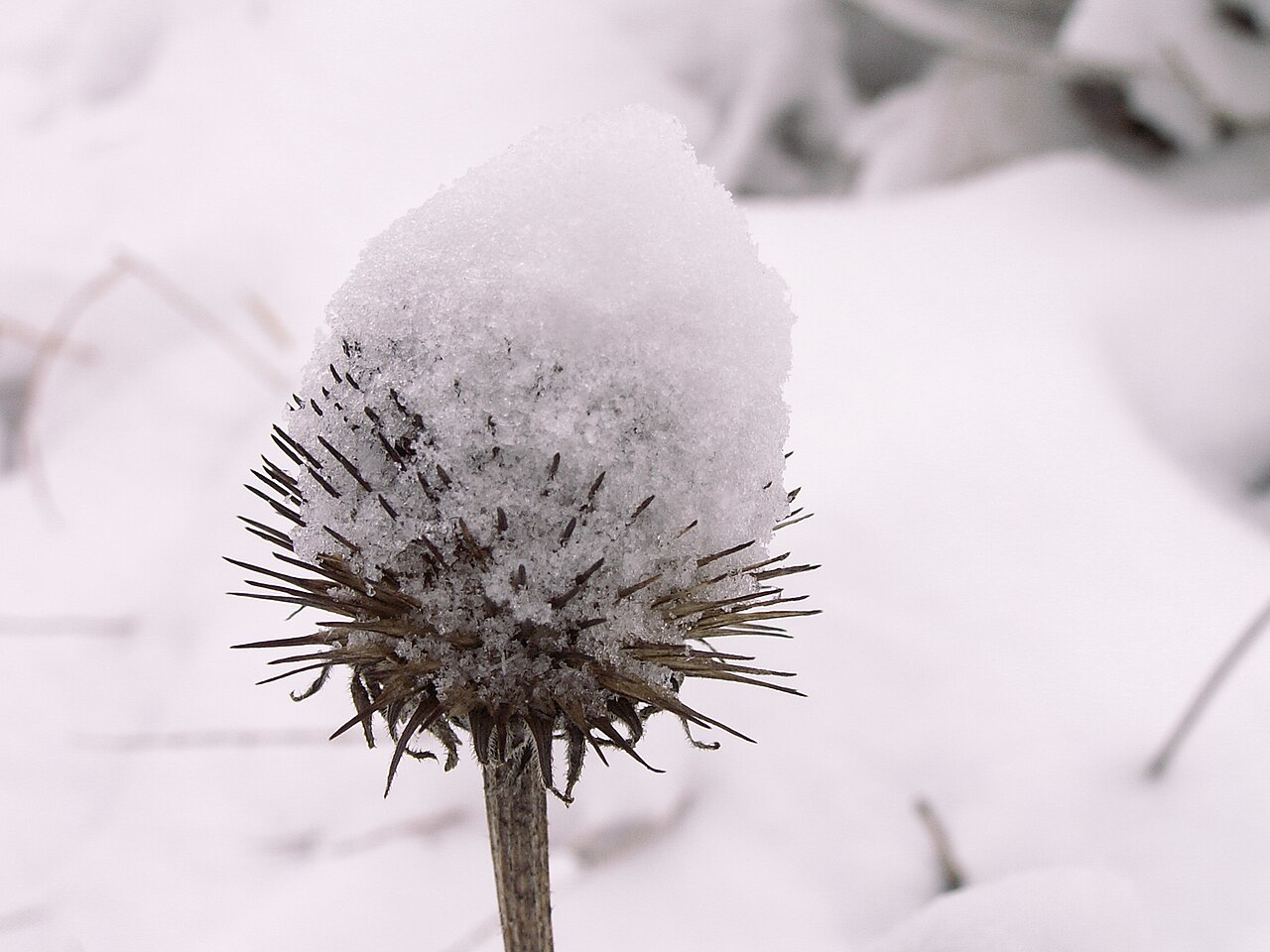
Most native gardens look their worst right after the first hard frost. That is when people cut everything down. A seedhead garden turns that around: the bed is planned so the dead stems, cones, spikes, and grass plumes are the winter show.
It works best when you design for it from the start. Pick plants whose seed heads stand up to wind and snow, put the strongest shapes where you see them from the house, and keep paths open so you can walk, shovel, and reach the bird feeder without trampling anything.
This guide covers the layout, the plants, and the paths. If your bed is mostly grasses, our native grass planting for winter interest goes deeper on which grasses hold up.
Plan at a Glance
| Site | A sunny bed you can see from a window or walk past every day |
| Size | The sample plan is 8 by 16 feet beside a path; the ideas scale to larger plantings |
| Sun | Full sun; at least six hours for strong stems |
| Soil | Average, well-drained soil; no rich amendments needed |
| Maintenance | One cut in late winter, plus path edging and some seedling pulling |
| Best regions | Eastern and central North America for the main palette; regional swaps are given below |
Plan From the Window First
Stand at the window you use most in winter and look at the bed. That view sets the layout. The plants with the boldest seed heads go in the middle distance, where they show against snow or a dark fence.
Then walk the route you take in winter: to the car, the shed, the compost, or a feeder. That is your path. A seedhead garden fails when the path runs through the middle of floppy plants, or when shoveled snow gets piled on top of the cones.
Note where snow drifts and where you will pile it. Leave a strip of lawn or gravel along one side of the path for snow, so it never gets dumped on the bed.
What Makes a Good Winter Seed Head
Not every native holds up. The plants in this plan were chosen for specific winter traits that sources describe.
Shapes that stand up
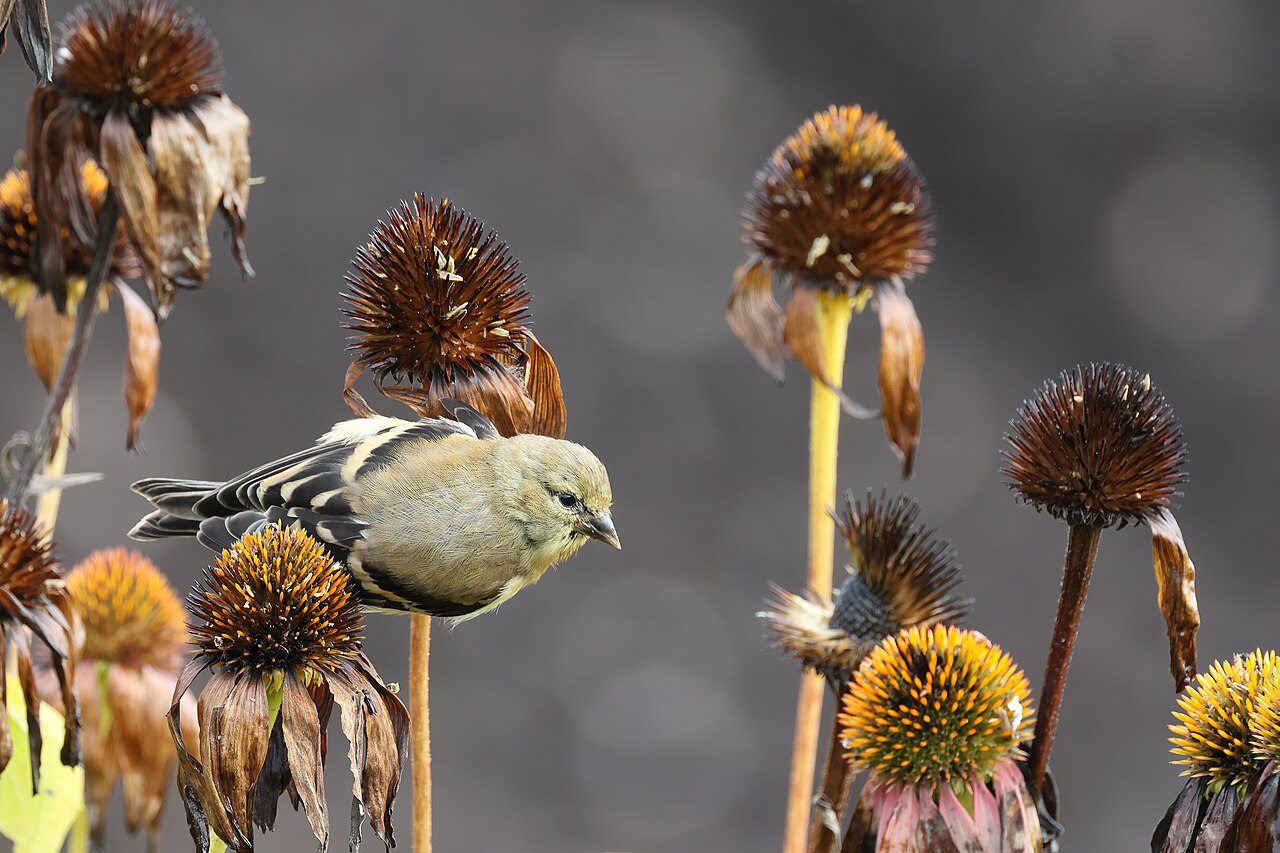
- Cones: Purple coneflower keeps a dark, spiny cone on a stiff stem. NC State Extension suggests leaving some heads on to produce seed for birds.
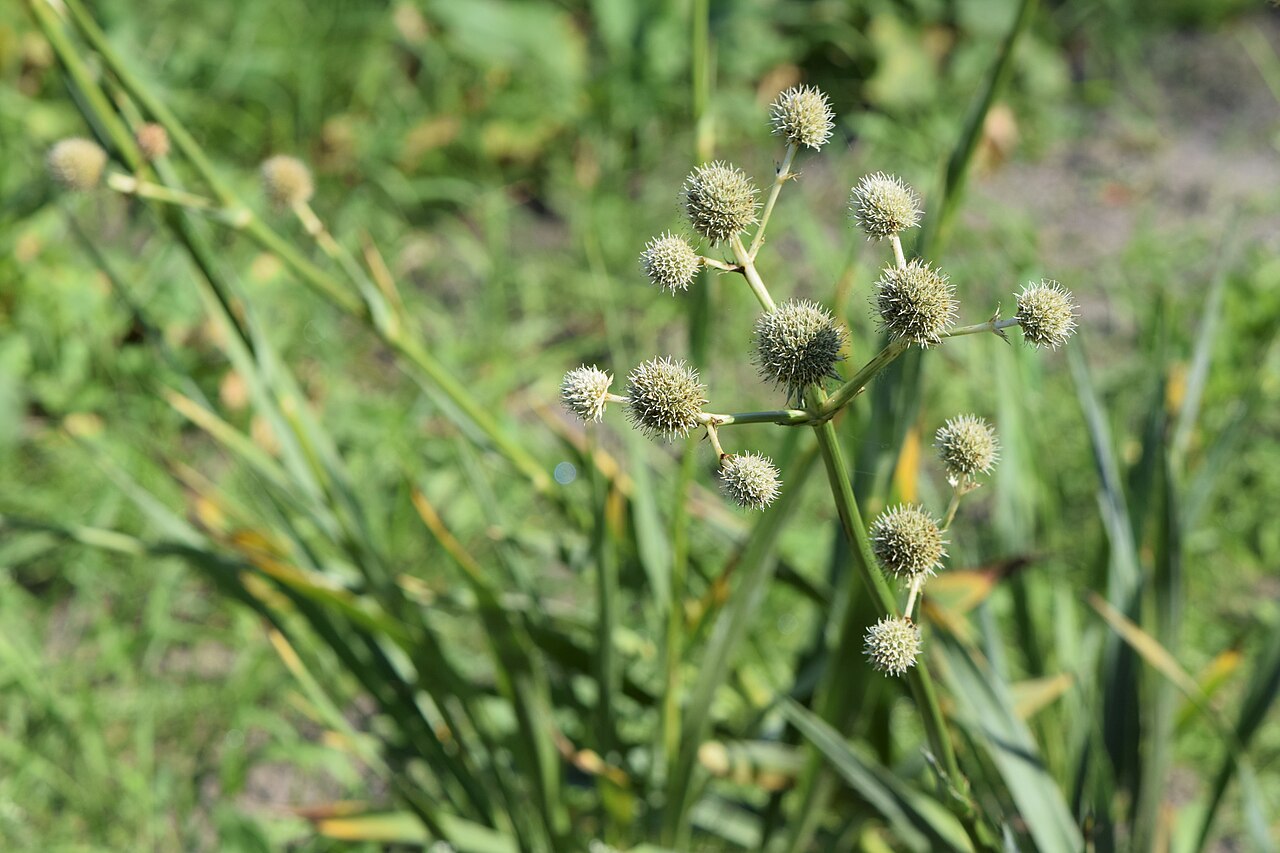
- Buttons: Rattlesnake master carries round heads on tall stems. NC State says leaving it uncut through winter “will add interest to any landscape.”
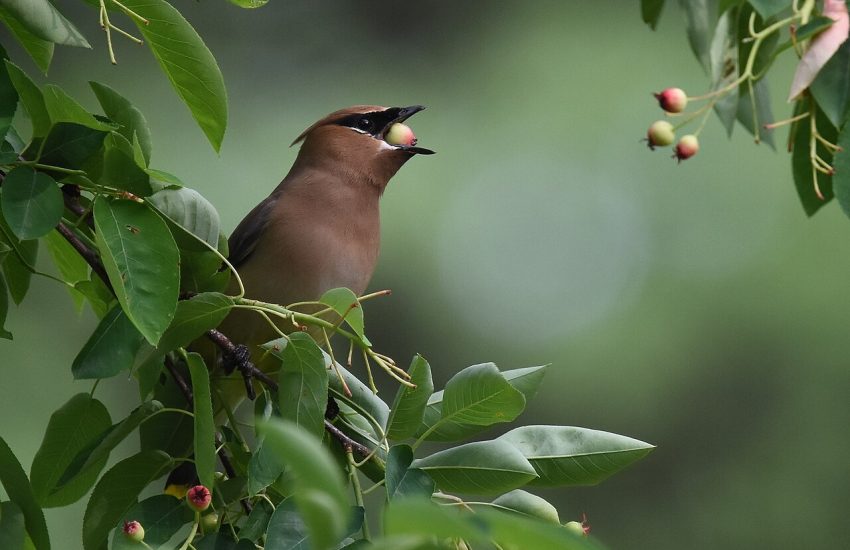
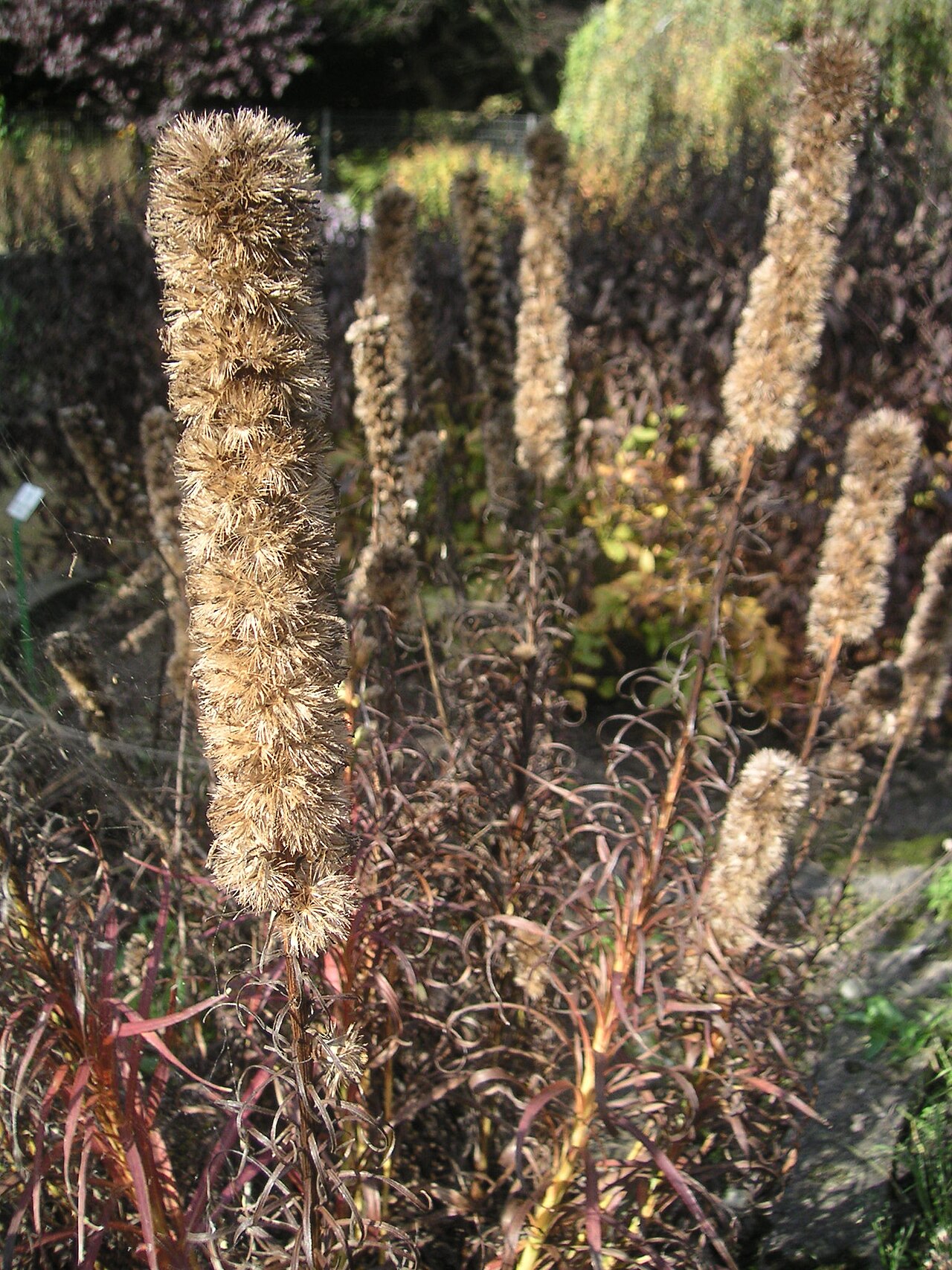
- Spikes: Dense blazing star turns into fluffy tan spikes. NC State notes that goldfinches eat the seeds and that stem-nesting bees use the dead stems.
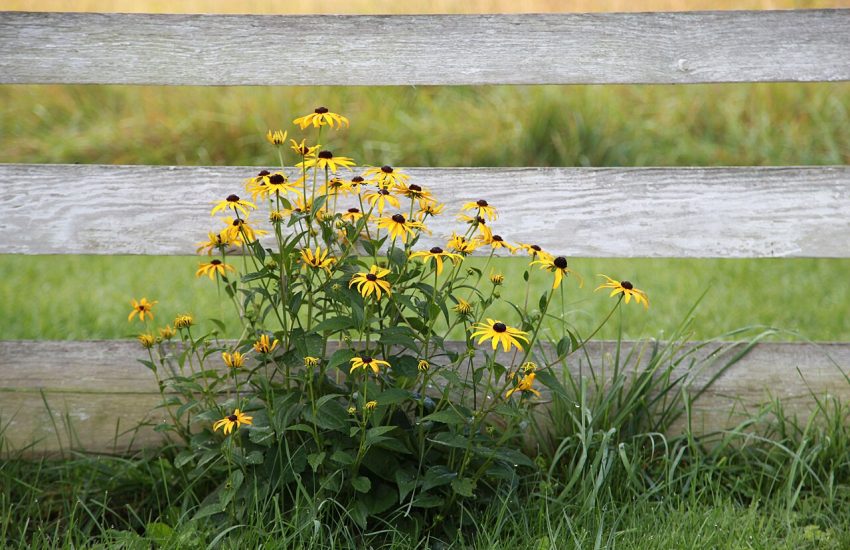
- Daisies gone to seed: Black-eyed Susan leaves small dark cones. NC State says American goldfinches eat the seeds in fall.
- Asters: New England aster seed heads, according to the Wildflower Center, stay intact for several weeks after the first frost.
Grasses that hold shape
- Little bluestem: The Wildflower Center describes mahogany-red fall color that “remains nearly all winter” and fuzzy seeds of “particular value to small birds in winter.”
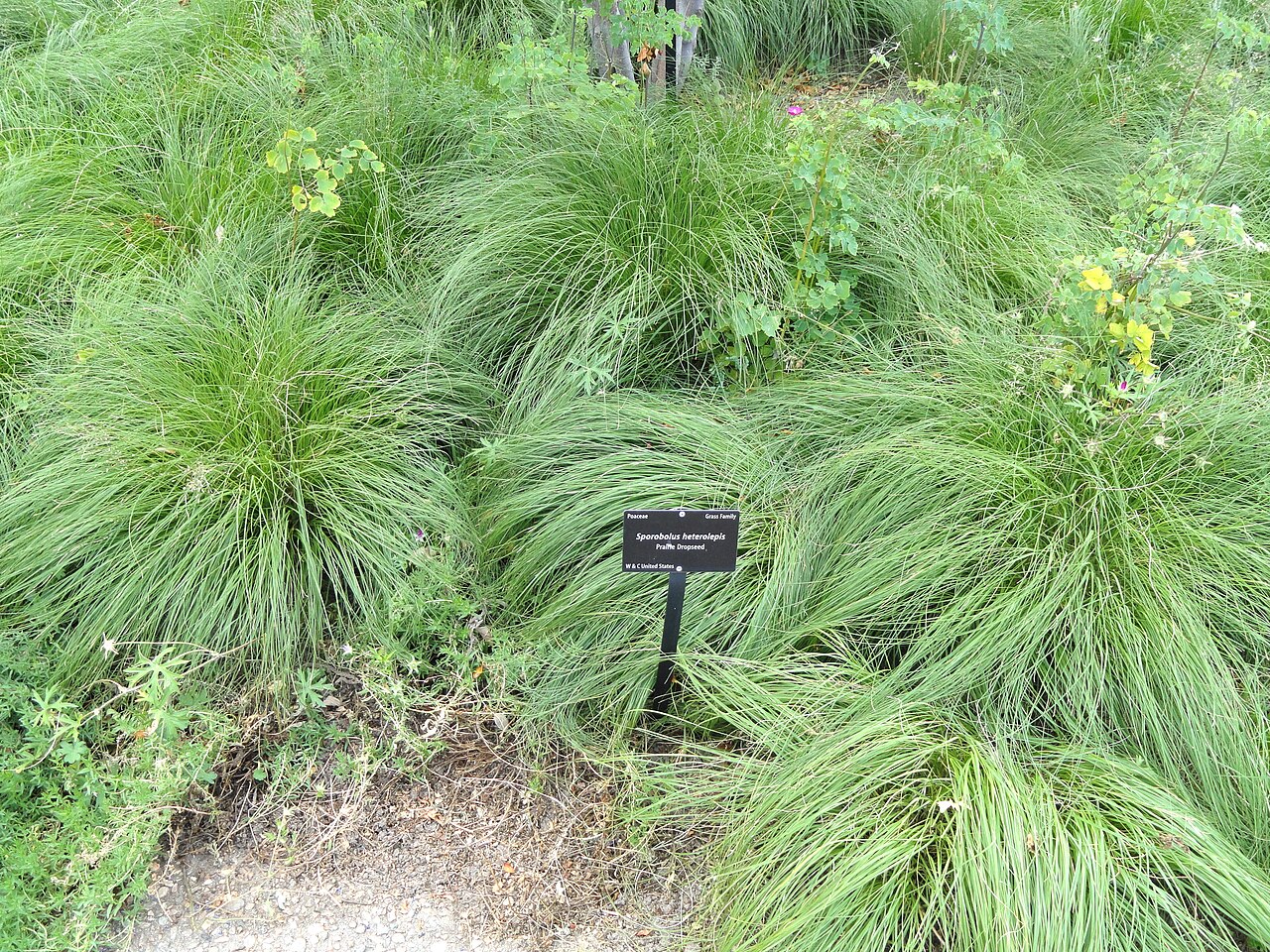
- Prairie dropseed: The Wildflower Center says snow does not flatten it, so it stays visible all winter.
- Switchgrass: The Wildflower Center notes its clumps last through winter and its seeds are eaten by ground-feeding songbirds.
Design the Layout
Put stiff plants near the path
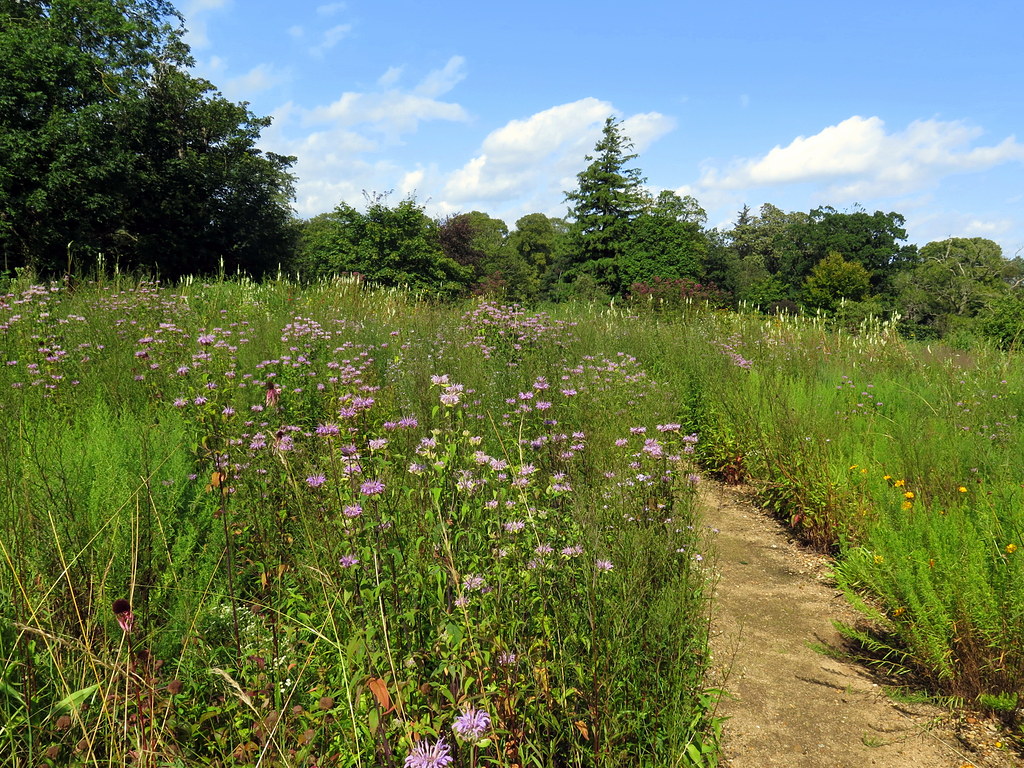
Plants beside a path get brushed, snowed on, and splashed with slush. Use the sturdiest ones there. Prairie dropseed is the best path-edge plant in this palette, since snow does not flatten it and its soft leaves do no harm when they spill over.
Keep rattlesnake master at least two feet back. NC State warns that its leaves end in stiff spines that “could be unpleasant” next to a walkway.
Put tall and loose plants at the back
New England aster grows 3 to 6 feet tall and switchgrass 3 to 7 feet, per NC State. Tall stems lean or break in heavy snow, so place them where a lean won’t block the path.
Repeat in drifts
Plant each flower in groups of five or more and repeat the groups. One coneflower looks like a dead plant in January, but a drift of thirty cones looks deliberate.
Contrast textures
Set fine grass against bold heads: coneflower cones in front of little bluestem, rattlesnake master buttons against switchgrass. The contrast is what makes the bed read from a distance.
Design the Paths
Width and surface
Make the main path wide enough for a snow shovel and a wheelbarrow, about 3 feet is a practical minimum. Gravel, wood chips, or mowed turf all work. Hard surfaces are easiest to shovel; turf and chips are softer underfoot.
A firm edge
Steel edging, a row of stones, or a mown strip keeps the path from narrowing as the plants fill in. It also gives the winter bed a crisp outline, which matters more when the plants are brown.
Watch for seedlings in gravel
Several of these plants self-sow. The Wildflower Center notes that little bluestem readily reseeds and rattlesnake master can be “an aggressive self-seeder.” Gravel paths make a perfect seedbed, so pull seedlings in spring while they are small.
Destinations and side paths
Give the path a destination: a bench, a feeder, the shed. A narrow stepping-stone side path into the bed lets you cut back and weed without compacting the soil. Our guide to paths and edges in a small meadow covers mown routes for larger plantings.
Plant Palette
Heights are from NC State Extension. Native ranges and moisture are from the Lady Bird Johnson Wildflower Center. Check each plant against your state.
| Plant | Winter feature | Height | Sun / moisture | Native range |
|---|---|---|---|---|
| Purple coneflower | Dark spiny cones | 3–4 ft | Sun to part shade; dry | GA to n.e. TX, north to NC, OH, IL, IA |
| Black-eyed Susan | Small dark cones | 2–4 ft | Sun to part shade; dry to moist | W. MA to Man. and WY, south to FL and NM |
| Rattlesnake master | Round buttons | 4–6 ft | Sun; moist, well-drained | FL to TX, north to NJ, w. IN, s. MN, NE |
| Dense blazing star | Fluffy spikes | 3–6 ft | Sun; moist | NJ to MI and IL, south to FL and LA |
| New England aster | Fluffy seed heads into early winter | 3–6 ft | Sun to part shade; moist | Que. and ME to SC, west to e. Great Plains |
| Little bluestem | Mahogany-red color, white seed tufts | 2–4 ft | Sun to part shade; dry | Much of the U.S. east of the Rockies |
| Prairie dropseed | Tan mounds that snow doesn’t flatten | 2–3 ft | Sun; dry | Que. to Sask., locally to NC, KY, e. TX, CO |
| Switchgrass | Tall upright clumps | 3–7 ft | Sun to part shade; dry to moist | Most of the U.S. except the far West |
Sample 8 x 16 Foot Bed Along a Path
Spacing follows the mature widths NC State lists; plants fill in by the third season.
| Zone | Plants | Spacing |
|---|---|---|
| Path edge (front 2 ft) | 8 prairie dropseed | About 2 ft apart |
| Front-middle | 7 black-eyed Susan, 9 purple coneflower in two drifts | About 18 in apart |
| Middle | 7 dense blazing star, 3 rattlesnake master (set 2+ ft from path) | 12–18 in; 3 ft for rattlesnake master |
| Back | 5 little bluestem, 3 New England aster, 2 switchgrass | About 2 ft; 3 ft for switchgrass |
Regional Swaps
Purple coneflower has a narrower native range than most people expect. The Wildflower Center lists it from Georgia to extreme northeast Texas, north to North Carolina, Ohio, Illinois, and Iowa. Gardeners in New England can lean on New England aster, little bluestem, and black-eyed Susan instead.
On the western Plains and in the dry interior West, dotted gayfeather (Liatris punctata) gives a similar spike; the Wildflower Center lists it from Alberta to New Mexico, east to Michigan, Iowa, Arkansas, and Texas. Blue grama makes a low, dry-site seedhead edge in the same region.
Installation Steps
- Mark the path first. Lay it out with a hose, then set edging before planting so the bed shape follows the path.
- Clear the turf. Smother with cardboard for a season or strip it. These prairie plants grow well in average soil, so skip the rich compost.
- Plant in spring or early fall. Use plugs or quart pots.
- Lay out drifts before digging. Start with the path-edge row, then the boldest seed heads, then the grasses behind.
- Water weekly the first summer when rain is short, then taper off.
- Mulch lightly with shredded leaves or fine chips, kept off the crowns.
First Three Years
- Year 1: Expect a thin winter show; young plants make few seed heads. Leave whatever stands. Keep the path edge clean.
- Year 2, late winter: Cut stems back once, before new growth starts. NC State Extension found that cutting stems in their first winter, leaving 12 to 24 inches of stubble, creates nesting habitat for stem-nesting bees. NC State adds that this trim can still give the garden a tidy, uniform look.
- Year 2, summer: Pull extra seedlings from paths. Note any plant that leans into the walkway.
- Year 3: The bed fills in. Move or remove anything that blocks the path in winter. Divide crowded clumps in spring.
For coneflower specifically, our guide to deadheading versus leaving seed heads lays out three routines, including keeping some heads for birds.
Mistakes to Avoid
- Cutting everything in fall. You lose the winter view and the seed for birds.
- Planting tall, loose plants along the path. They end up across it after the first heavy snow.
- Putting rattlesnake master at the edge. Its spiny leaves catch coats and ankles.
- No place for shoveled snow. Piles of snow break seed heads and bury the front row.
- One of everything. A single dried stem looks like a mistake; a drift looks like a plan.
📋 Check your region before buying. Purple coneflower, rattlesnake master, and dense blazing star all appear on the Arkansas, Louisiana, eastern Oklahoma, and eastern Texas list, and coneflower is on the Iowa, Illinois, and Missouri list.
If you are planning a mixed native bed, our milkweed bed plan uses many of the same grasses.
Frequently Asked Questions
Which native flowers have the best winter seed heads?
Purple coneflower, rattlesnake master, dense blazing star, and black-eyed Susan all hold distinct seed heads. Pair them with little bluestem and prairie dropseed for structure.
When should I cut back a seedhead garden?
In late winter, before new growth starts. NC State Extension recommends trimming stems in winter and leaving 12 to 24 inches of stubble for stem-nesting bees.
Do birds really eat the seeds?
NC State notes goldfinches eat black-eyed Susan and blazing star seed, and the Wildflower Center says little bluestem seed is valuable to small birds in winter. Visits vary from yard to yard.
How wide should a path through a native bed be?
About 3 feet is a practical minimum for a shovel or wheelbarrow. Keep sturdy, low plants at the edge so the path stays open in snow.
Will the seed heads cause too many seedlings?
Some will. Little bluestem and rattlesnake master self-sow readily, so pull extras in spring, especially from gravel paths.
Sources
- NC State Extension, Garden Cleanup for Pollinators: Trim Perennial Stems in Their First Winter: winter trimming, 12–24 inch stubble, stem-nesting bees.
- NC State Extension Plant Toolbox: Echinacea purpurea, Rudbeckia hirta, Eryngium yuccifolium, Liatris spicata, Symphyotrichum novae-angliae, Panicum virgatum: heights, widths, spines, bird and bee notes.
- Lady Bird Johnson Wildflower Center plant database: purple coneflower, black-eyed Susan, rattlesnake master, dense blazing star, New England aster, little bluestem, prairie dropseed, switchgrass, dotted gayfeather: native range, moisture, winter persistence, self-seeding.