Native Vines for a Trellis: Match Plant Vigor to the Structure
Last updated: November 7, 2026
A trellis is a promise about weight. A slim cedar fan or a wire obelisk can hold a delicate clematis for years, but it won’t hold a vine that grows 30 feet and thickens into woody trunks.
Clemson Extension puts it simply: many vines grow vigorously, and their weight can collapse a support that isn’t strong enough. The usual fix, after the trellis leans or snaps, is a hard cutback and a new structure.
This guide flips the order. Measure the structure you have, or the one you’re willing to build, then choose a native vine whose length, climbing method, and spread fit it.
Plan at a Glance
| Site | A trellis, obelisk, arbor, fence, or pergola you want to cover |
| Size | Light trellises suit vines that stay near 12 to 20 feet; arbors and pergolas suit the 30-foot-plus growers |
| Sun | Most flowering vines here bloom best in full sun; a few take part shade |
| Soil | Average, well-drained garden soil for most; moist for clematis and western honeysuckle |
| Maintenance | Low for the light vines; annual pruning and sucker control for the heavy ones |
| Best regions | Eastern and central U.S. for most vines listed, with Western alternates |
Site Assessment: Size Up the Structure First
What is it made of?
Look at the post size, how the posts are anchored, and what the climbing surface is. A lattice panel screwed to a fence, a freestanding fan trellis pushed into the soil, and a pergola with posts set in the ground are three different weight classes.
University of Missouri Extension recommends sturdy, durable materials for any vine support. It notes that copper or aluminum wire won’t rust, and that redwood, cedar, cypress, or treated lumber last longest.
How tall and wide is the climbing surface?
Measure the height and width you want covered. A vine that reaches 15 feet will fill a 6-foot trellis and then pile up at the top. A 40-foot vine will swallow it.
Vine lengths in this guide come from NC State Extension’s plant database and Clemson Extension. They’re typical ranges, not limits.
What is it attached to?
If the trellis leans against a house, check the siding. Missouri Extension warns never to grow clinging vines directly on walls with wood siding, because moisture collects underneath and can rot the wood.
Set trellises far enough off the siding for air to move behind the vine. Missouri suggests making the trellis removable so you can paint the wall without destroying the plant.
How much sun reaches it?
Count hours of direct sun on the climbing surface, not just at the base. A trellis on the north side of a fence may be in shade at ground level while the top gets afternoon sun.
Match the Climbing Method to the Support
How a vine climbs decides what it can grip. Illinois Extension groups vines into four methods, and each needs a different surface.
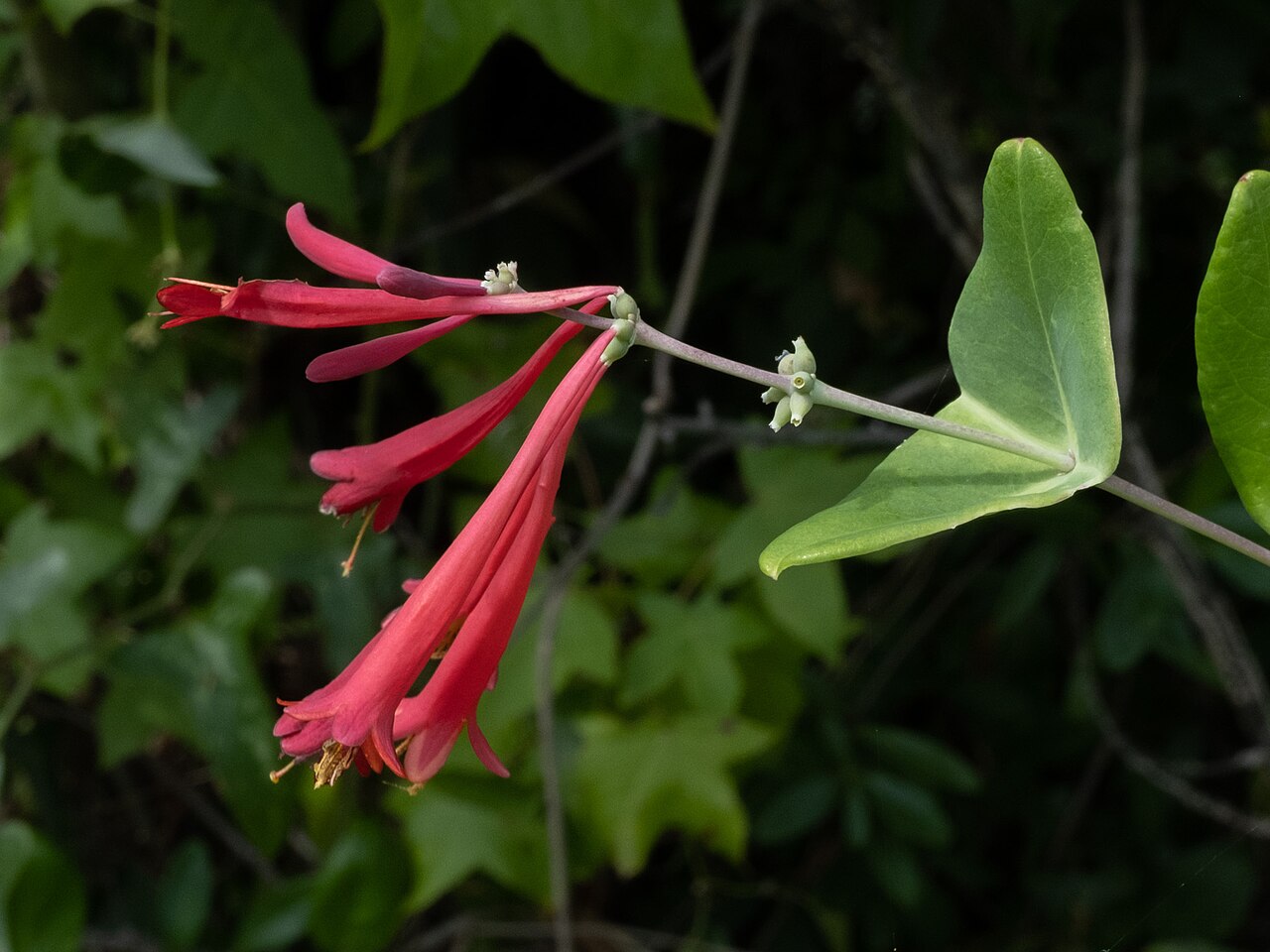
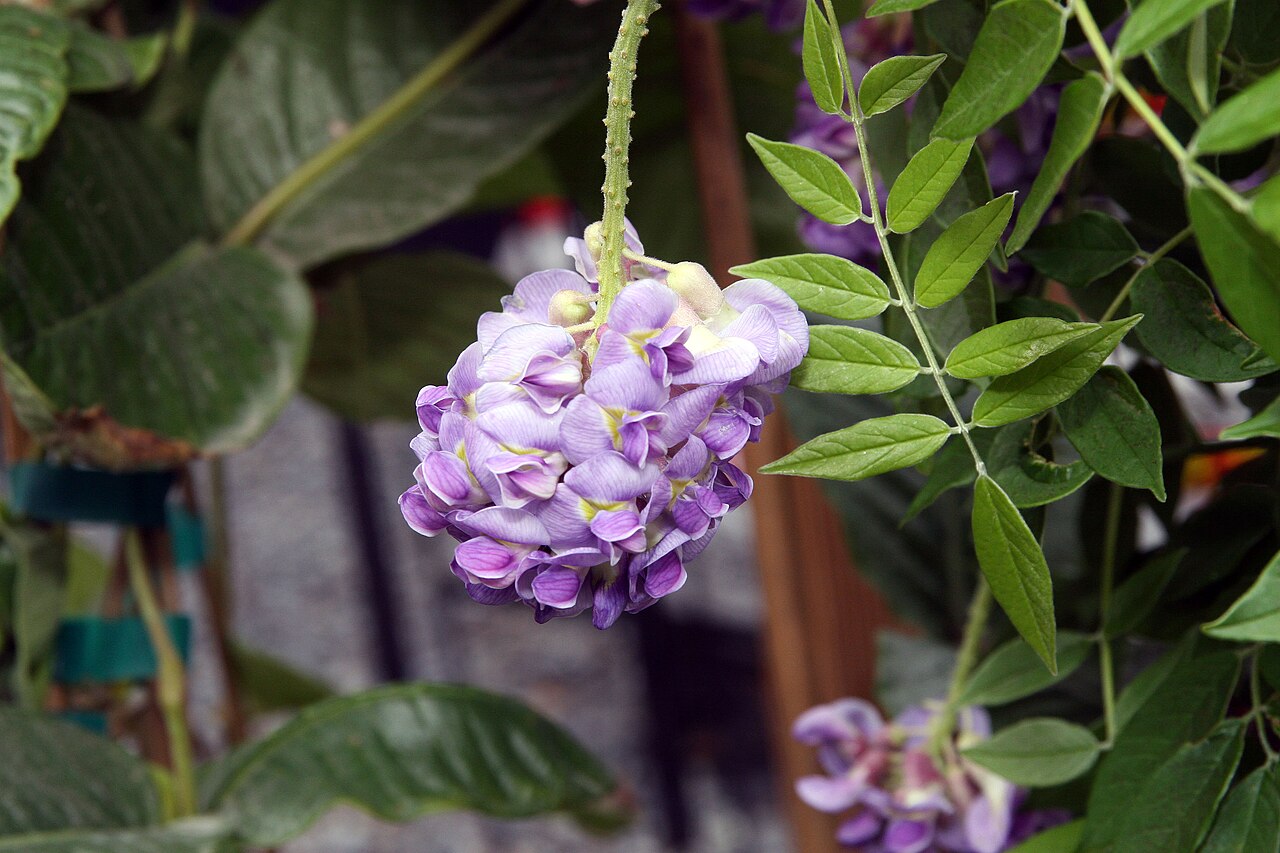
- Twining stems wrap themselves around a support. Poles, chain-link, wires, trellises, and arbors work best. Native examples include coral honeysuckle and American wisteria.
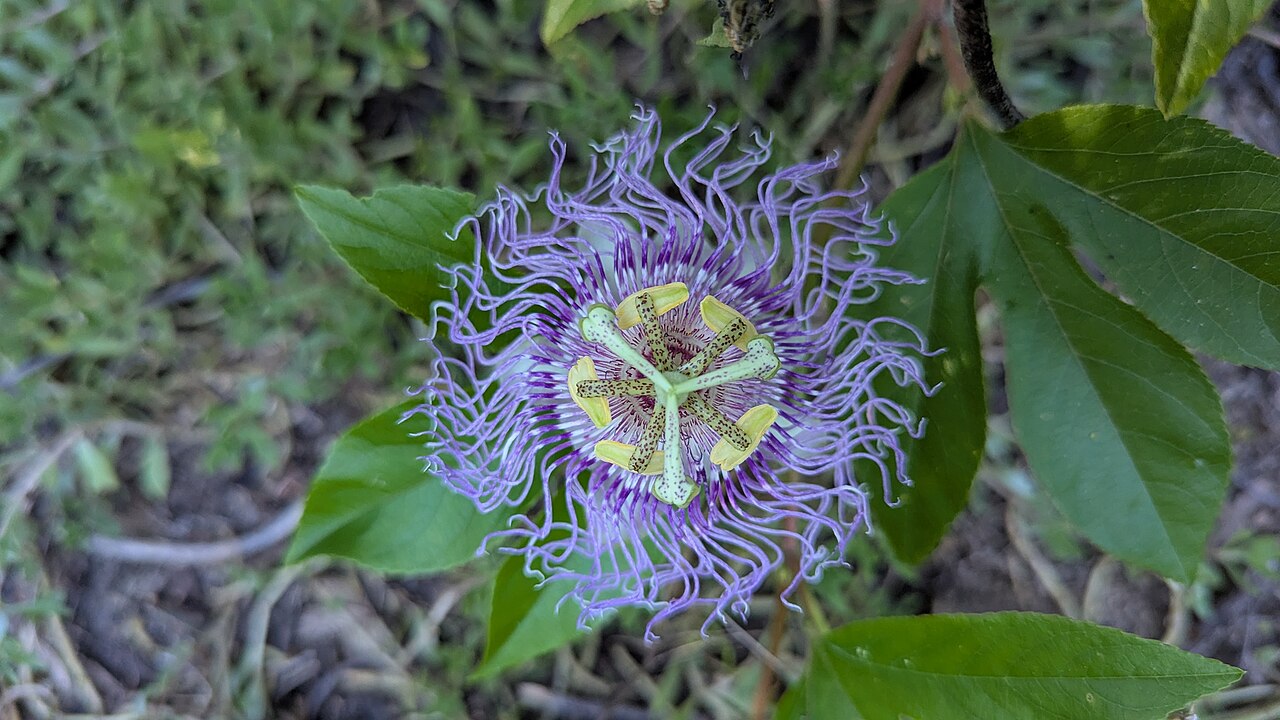
- Tendrils are thin, leafless shoots that coil around anything slender. Illinois suggests thin poles or light lattice no more than 3/4 inch thick, wire, twine, or chain-link. Purple passionflower climbs this way.
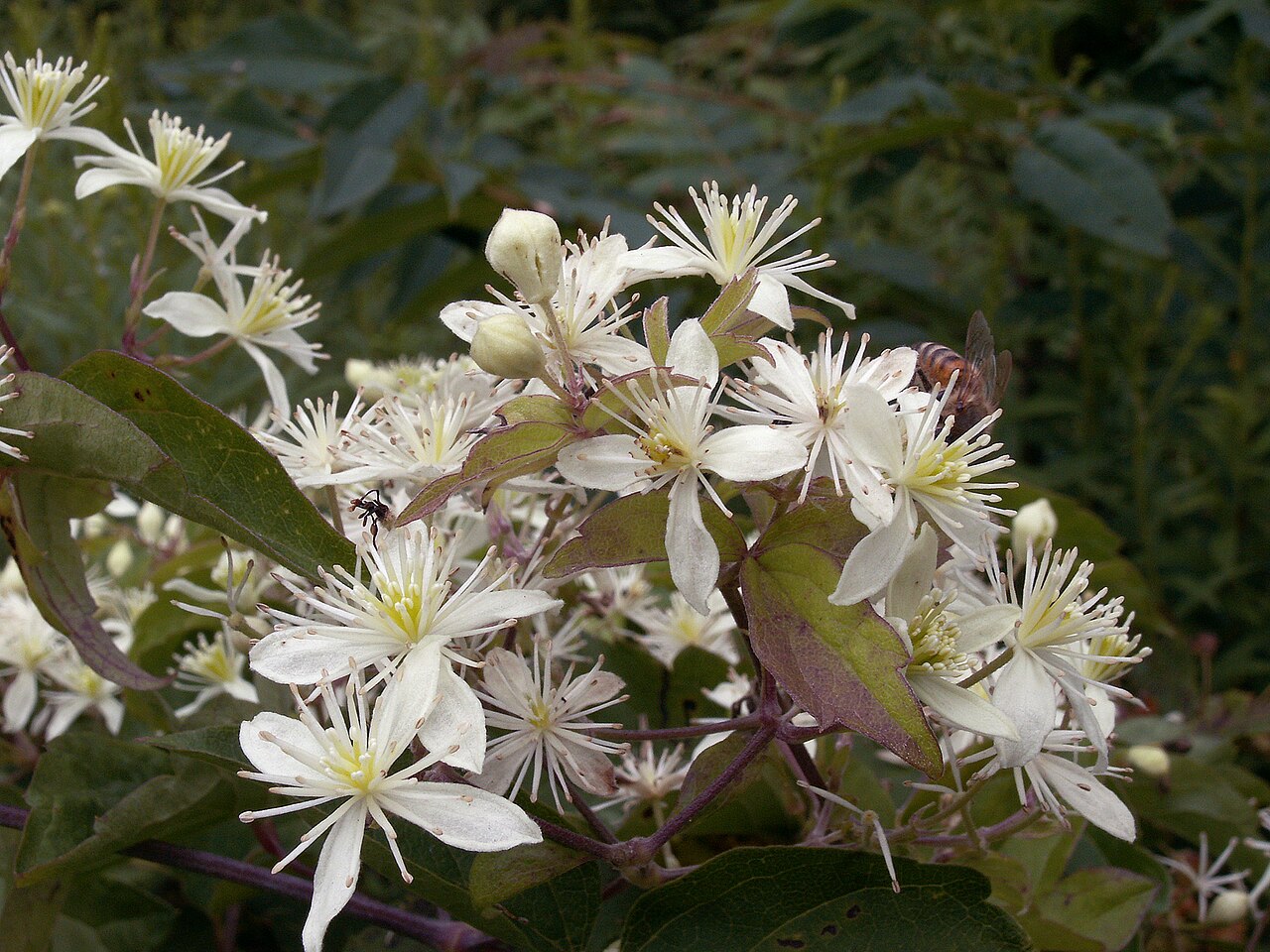
- Twisting leaf stalks are how clematis climbs. Its petioles need wire, chain-link, or small thin lattice to curl around. Wide flat slats give them nothing to hold.
- Aerial roots and adhesive disks let a vine cling to a surface on its own. Illinois lists Virginia creeper among the disk climbers. These vines don’t need a trellis at all, and they’re often the wrong choice for one.
Clemson Extension adds that some vines combine methods. It groups trumpet creeper, crossvine, and woodvamp as clinging vines whose rootlike holdfasts can work into cracks in brick, stone, or stucco.
Design: Three Weight Classes
Light structures: obelisks, fan trellises, wire panels
Choose vines that stay short or die back each winter. They won’t build heavy woody trunks.
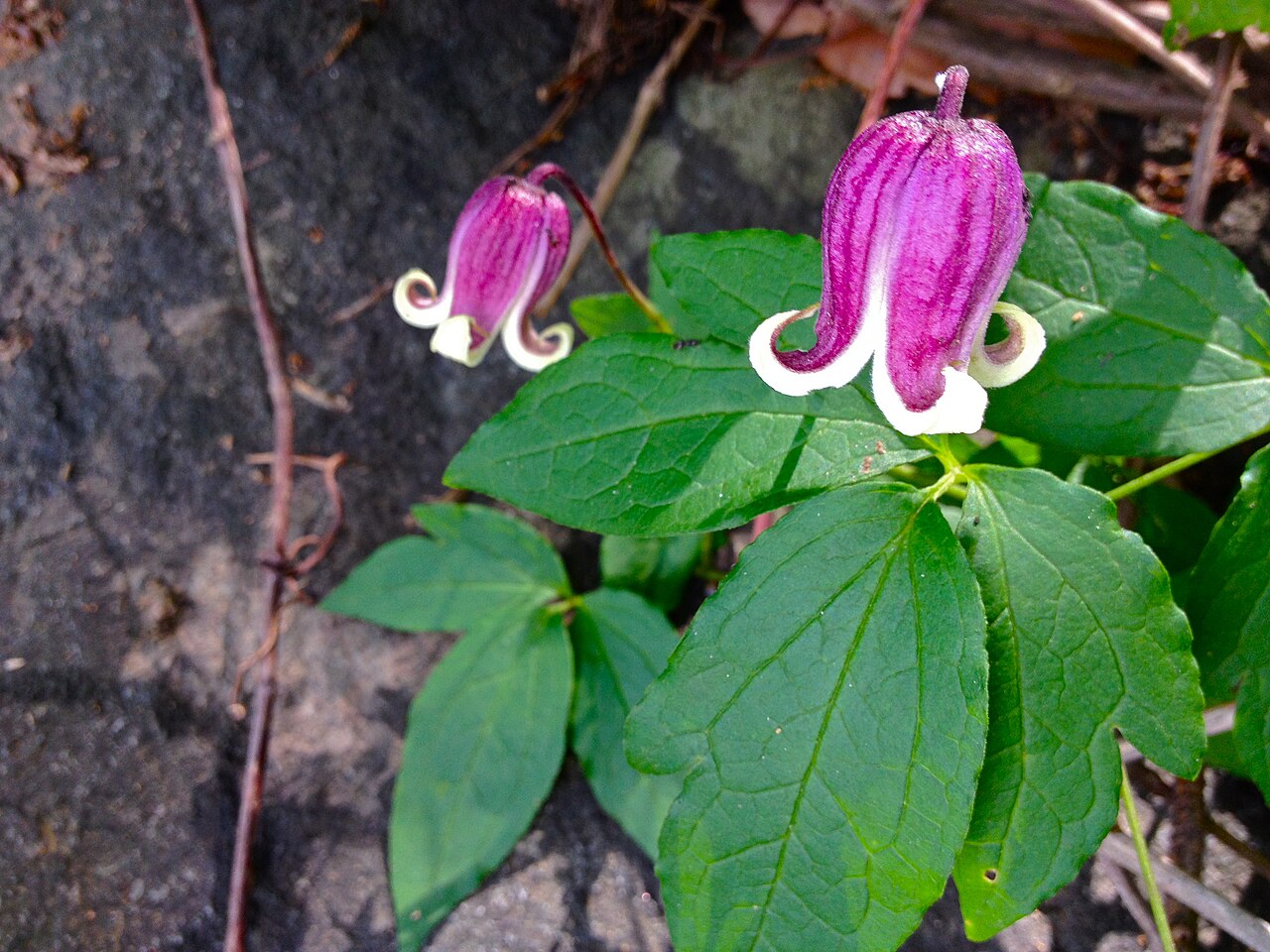
Vasevine, also called leatherflower, has twining stems up to about 12 feet, according to the Wildflower Center. NC State notes it dies back to a woody base in winter and gets cut back in spring. It prefers dappled light or part shade and moist, well-drained soil.
Purple passionflower is herbaceous and, per Clemson, dies back to the ground in winter. It’s a tendril climber, so a wire or thin-lattice trellis suits it. NC State warns that its roots can spread aggressively, so give it a bed where new shoots popping up nearby won’t be a problem.
Medium structures: anchored trellis panels, wire on a fence, small arbors
Coral honeysuckle belongs here. NC State lists it at 10 to 20 feet and Clemson at about 15 feet. It twines rather than clings, and Clemson says it flowers best in full sun.
The Wildflower Center notes it needs light, good air circulation, and drainage to avoid powdery mildew. That’s one more reason to grow it on an open trellis rather than buried in a fence corner. For hummingbird plantings built around it, see our plan for a native hummingbird corner with coral honeysuckle.
Virgin’s bower reaches 15 to 20 feet, and the Wildflower Center says its fast stems can grow 20 feet in one year. It climbs by twisting leaf stalks and blooms on new growth, so it needs a wire-faced support with real height, not a 4-foot obelisk.
In the West, western white clematis is a strong climber to 20 feet or more. The Wildflower Center suggests rejuvenating it by cutting back to a foot above ground every three to five years.
Western honeysuckle runs along the ground or clambers up trees, sometimes reaching 20 feet. Give it a medium trellis or a fence with wire, in moist soil.
Heavy structures: pergolas and arbors with set posts
These vines get long, woody, and heavy. Clemson specifically says to grow American wisteria, Dutchman’s pipe, and trumpet creeper on a sturdy support.
American wisteria grows 15 to 40 feet, per NC State, and twines counterclockwise. NC State calls it less aggressive and less damaging to buildings than Chinese or Japanese wisteria, but it still needs a sturdy structure for its weight.
Dutchman’s pipe twines to 15 to 40 feet, per NC State, and needs full sun to part shade and moist soil. Clemson notes it’s a larval host for the pipevine swallowtail.
Crossvine is listed at 30 to 50 feet by NC State and up to 60 feet by Clemson. It’s semi-evergreen and clings. NC State warns it spreads by seed and root suckers, so pull suckers as they appear.
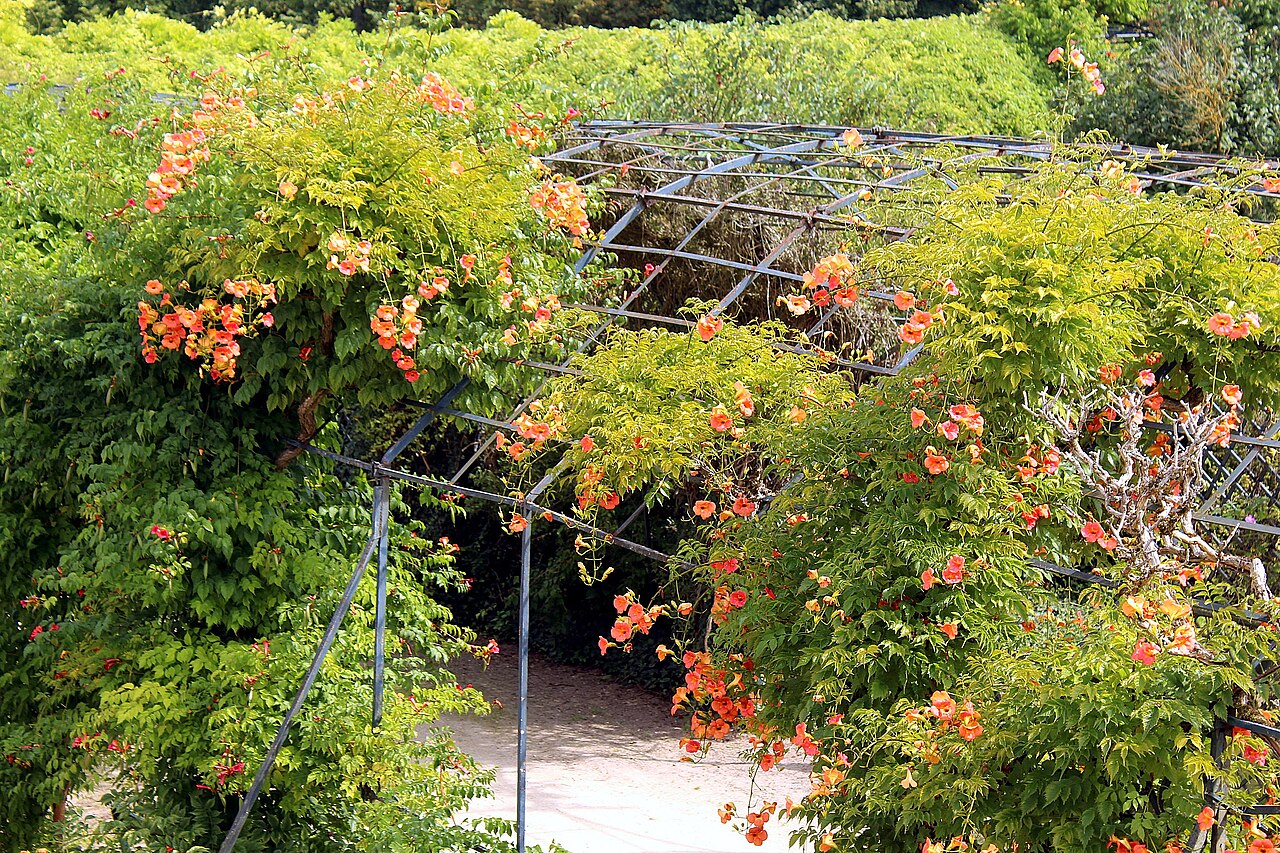
Trumpet creeper reaches 30 to 40 feet, and NC State describes it as an aggressive spreader. Give it a steel or heavy timber pergola well away from the house, and plan to deal with suckers.
No trellis needed: Virginia creeper
Virginia creeper climbs 30 to 50 feet with tendrils tipped in adhesive disks. It’s a good choice for covering a masonry wall or a large chain-link fence. It’s a poor choice for a decorative trellis, and Missouri Extension’s warning about wood siding applies.
Plant Palette
Lengths from NC State Extension and Clemson Extension; climbing methods from Illinois Extension and Clemson; ranges from the Lady Bird Johnson Wildflower Center or NC State. Confirm each vine is native to your county.
| Vine | Structure | Typical length | Sun / moisture | Native range |
|---|---|---|---|---|
| Vasevine | Light: wire obelisk, thin lattice | to about 12 ft | Part shade; moist, well-drained | North-central and eastern U.S. |
| Purple passionflower | Light: wire or thin lattice | 10–15 ft, dies back | Sun to part shade; average, well-drained | DE to MO, south to east TX and FL |
| Coral honeysuckle | Medium: anchored trellis, small arbor | 10–20 ft | Full sun for best bloom; well-drained | Southern ME to FL and east TX, inland to IL |
| Virgin’s bower | Medium: tall wire support | 15–20 ft | Sun to shade; moist, tolerates dry shade | Nova Scotia to Manitoba, south to GA, LA, OK |
| Western white clematis | Medium to heavy | 20+ ft | Sun to shade; moist, well-drained | BC to Baja CA, east to the Dakotas and NM |
| Western honeysuckle | Medium | to 20 ft | Sun to shade; moist | Southern BC to northern CA, east to NW MT |
| American wisteria | Heavy: pergola or arbor | 15–40 ft | Full sun; moist, well-drained | VA to IL, south to FL and TX |
| Dutchman’s pipe | Heavy: pergola | 15–40 ft | Sun to part shade; moist | SE Canada and eastern U.S. |
| Crossvine | Heavy: pergola, masonry | 30–60 ft | Full sun for best bloom | Southern Ontario and eastern U.S. |
| Trumpet creeper | Heavy: steel or timber pergola | 30–40+ ft | Full sun; tolerates heat and drought | Southeastern U.S. (NC State) |
| Virginia creeper | Masonry wall, large fence | 30–50 ft | Sun to shade; well-drained | Eastern Canada and U.S. to Mexico |
Quick Match: Structure to Vine
- 4- to 6-foot obelisk or fan trellis: vasevine, purple passionflower
- 6- to 8-foot trellis panel bolted to posts: coral honeysuckle; western honeysuckle in the Pacific Northwest
- Tall wire grid on a sturdy fence: virgin’s bower, western white clematis
- Arbor or pergola with posts set in the ground: American wisteria, Dutchman’s pipe, crossvine
- Large steel pergola away from the house: trumpet creeper
- Masonry wall, no trellis: Virginia creeper
Safety Notes Before You Buy
Several of these vines are toxic if eaten. NC State rates Dutchman’s pipe, Virginia creeper, and vasevine as highly toxic, and lists American wisteria, passionflower, and virgin’s bower as moderately toxic. Skip them beside a play area where children or pets might chew on leaves or fruit.
NC State also notes trumpet creeper is called cow-itch vine because some people get red, itchy skin after touching the leaves. Wear gloves when you prune it.
Installation Steps
- Build or reinforce the structure first. Set posts, add wire, or bolt a panel to existing posts before planting. Retrofitting support around a growing vine damages stems.
- Plant a foot or so out from the base. Give roots room away from the footing and any wall, then lean the young stems toward the support.
- Tie in the first shoots. Missouri Extension suggests tying new branches into position with soft cloth. Coral honeysuckle especially may need help getting started.
- Pinch for coverage. Missouri notes that vines often get sparse at the bottom and dense at the top. Pinching back the growing tips forces lower branching and evens out the coverage.
- Water and mulch. Water through the first season. Clemson suggests clematis likes cool, shaded roots and a sunny top, so mulch or a low plant at the base helps.
The First Three Years
- Year one: Train shoots weekly in spring and early summer. Expect modest top growth while roots establish.
- Year two: Spread stems across the full width of the support. Start pulling root suckers from crossvine, trumpet creeper, and passionflower where they aren’t wanted.
- Year three: Begin regular pruning. Clemson advises pruning spring-flowering vines right after they bloom, and most other vines in late winter. Coral honeysuckle and crossvine both flower in spring on old growth. Cut vasevine back in spring.
- Every year: Check ties, posts, and wires after storms. Clemson also says never to let a vigorous vine climb to the top of a tree.
Mistakes to Avoid
- Buying by flower photo alone. Check the mature length on the tag or in a plant database, then compare it to your structure. Our checklist for buying native plants online covers what else to confirm on a listing.
- Putting a clinging vine on a wooden trellis against siding. Holdfasts and rootlets cling to the house too.
- Using wide flat slats for clematis or passionflower. Leaf-stalk and tendril climbers need thin wire or lattice.
- Letting heavy vines climb a lightweight arbor. Wisteria, crossvine, and trumpet creeper need posts set in the ground.
- Confusing natives with their Asian relatives. Buy Wisteria frutescens, not Chinese or Japanese wisteria, and Clematis virginiana, not sweet autumn clematis.
For a broader look at species, our roundup of native vines for trellises covers more options and general care.
📋 Check your regional list before buying: Georgia, Alabama, and Mississippi (coral honeysuckle, American wisteria) or western Oregon and western Washington (western honeysuckle).
Frequently Asked Questions
What is the best native vine for a small trellis?
Vasevine and purple passionflower stay on the short side or die back each year. Coral honeysuckle works on a sturdier 6- to 8-foot trellis.
Can American wisteria grow on a regular trellis?
Not for long. NC State lists it at 15 to 40 feet, and both NC State and Clemson recommend a sturdy support. Use a pergola or arbor with set posts.
Is trumpet creeper good for a trellis?
Only a very strong one. It grows 30 feet or more, clings, and spreads aggressively. A heavy pergola away from buildings is a better fit.
Which native vines grow in shade on a trellis?
Virgin’s bower and western honeysuckle are listed for sun to shade by the Wildflower Center. Vasevine prefers dappled light or part shade. Expect fewer flowers in deeper shade.
Do native vines damage houses?
Clinging vines can. Missouri Extension warns against growing them directly on wood siding, and Clemson notes their holdfasts work into masonry cracks. Use a freestanding or removable trellis set off the wall.
Sources
- Clemson Cooperative Extension HGIC: Vine Selections for Landscaping
- University of Missouri Extension: Selecting Landscape Plants: Ornamental Vines (G6840)
- Illinois Extension: Vine Attachment Methods
- NC State Extension Plant Toolbox: Lonicera sempervirens
- NC State Extension Plant Toolbox: Wisteria frutescens
- NC State Extension Plant Toolbox: Campsis radicans
- NC State Extension Plant Toolbox: Bignonia capreolata
- NC State Extension Plant Toolbox: Clematis viorna
- NC State Extension Plant Toolbox: Clematis virginiana
- NC State Extension Plant Toolbox: Passiflora incarnata
- NC State Extension Plant Toolbox: Aristolochia macrophylla
- NC State Extension Plant Toolbox: Parthenocissus quinquefolia
- Lady Bird Johnson Wildflower Center: Lonicera sempervirens
- Lady Bird Johnson Wildflower Center: Clematis viorna
- Lady Bird Johnson Wildflower Center: Clematis virginiana
- Lady Bird Johnson Wildflower Center: Passiflora incarnata
- Lady Bird Johnson Wildflower Center: Clematis ligusticifolia
- Lady Bird Johnson Wildflower Center: Lonicera ciliosa