
Boston Fern (Nephrolepis exaltata)
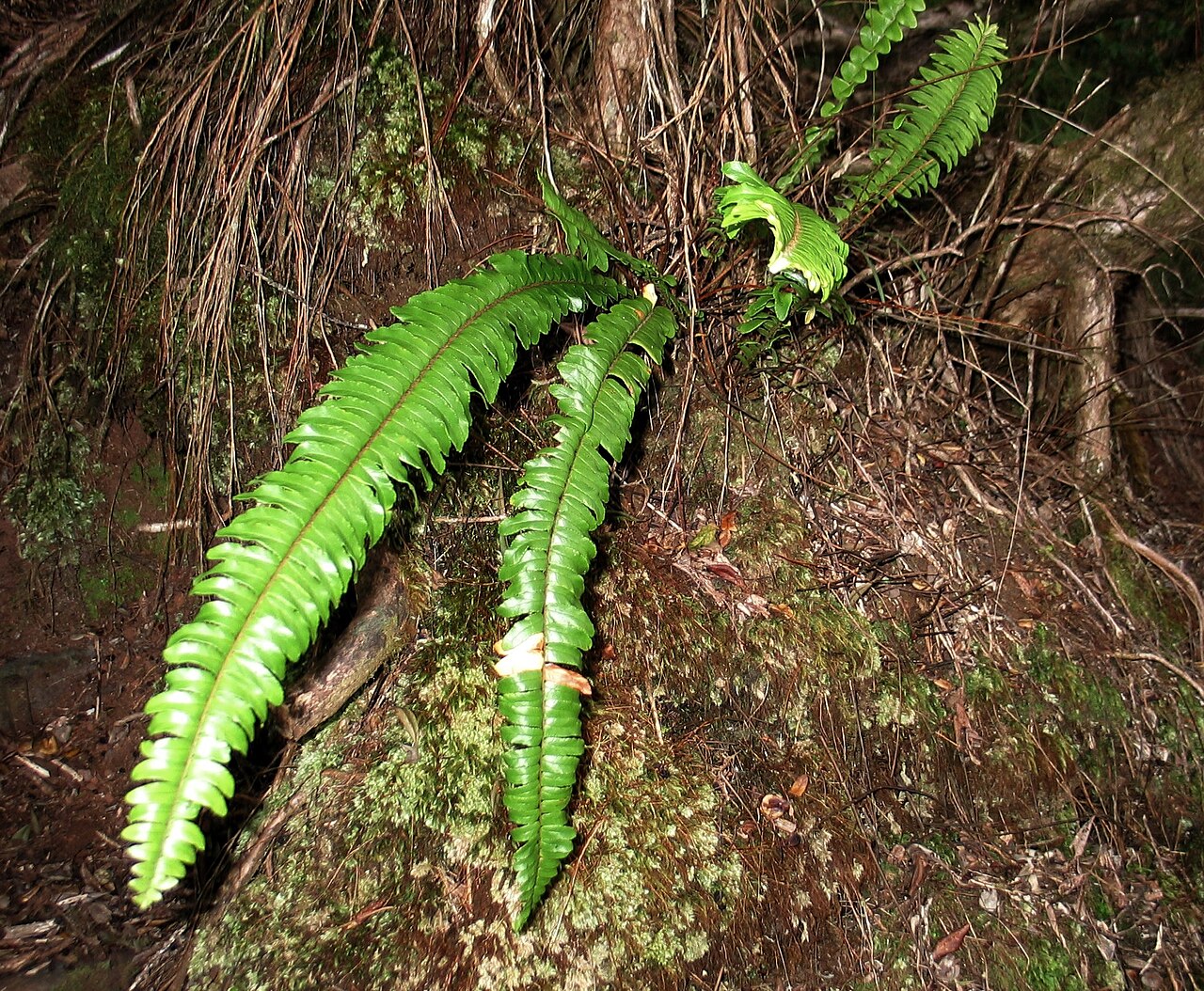
Nephrolepis exaltata, known as Boston Fern, Boston swordfern or wild Boston fern, is one of the most familiar ferns in the world. Millions of people grow its arching cultivated forms in hanging baskets and on porches. Fewer people know that the wild species is a native plant of the United States: it grows in the hammocks, swamps and palm forests of peninsular Florida, in Puerto Rico and the U.S. Virgin Islands, and, as a distinct native subspecies, in the forests of Hawaii.
In the wild, Boston fern forms clumps of stiff, upright to arching fronds 2 to 5 feet long and only a few inches wide, each divided once into many narrow, slightly toothed leaflets (pinnae). The plants spread by thin, wiry runners and grow both on the ground and as epiphytes on tree trunks, especially on the old leaf bases of cabbage palms. It belongs to the sword fern family (Nephrolepidaceae).
For gardeners in South and Central Florida and Hawaii, the native Boston fern is a good choice for shady, moist beds, under palms and oaks, and on palm trunks. Elsewhere it is grown as a houseplant. This guide covers how to tell the native species from its invasive look-alikes, where it grows wild, how to care for it indoors and out, and its long history in cultivation.
Identification
Boston fern is a typical sword fern: long, narrow, once-divided fronds rising from a short rhizome. In Florida it shares its habitats with two very similar non-native sword ferns that have become invasive, so careful identification is important before planting or collecting.
Rhizome & Runners
The plant grows from a short, upright rhizome covered with brown scales. From it grow many thin, wiry, scaly runners (stolons) that spread along the soil surface or through leaf litter and root to form new plants, so a single fern can become a broad colony. Native Boston fern does not form the small, round, scaly tubers along its runners that are typical of the invasive tuberous sword fern (N. cordifolia).
Fronds
Fronds are evergreen, erect to arching, 2 to 5 feet long (occasionally longer) and about 2½ to 6 inches wide, tapering at both ends. Each frond has 40 or more pairs of narrow, oblong pinnae, each 1 to 3 inches long, with finely toothed or wavy margins and a small ear-like lobe at the base on the upper side. The pinnae are attached to the midrib (rachis) at a joint and usually stand slightly apart from one another rather than overlapping.
Spores
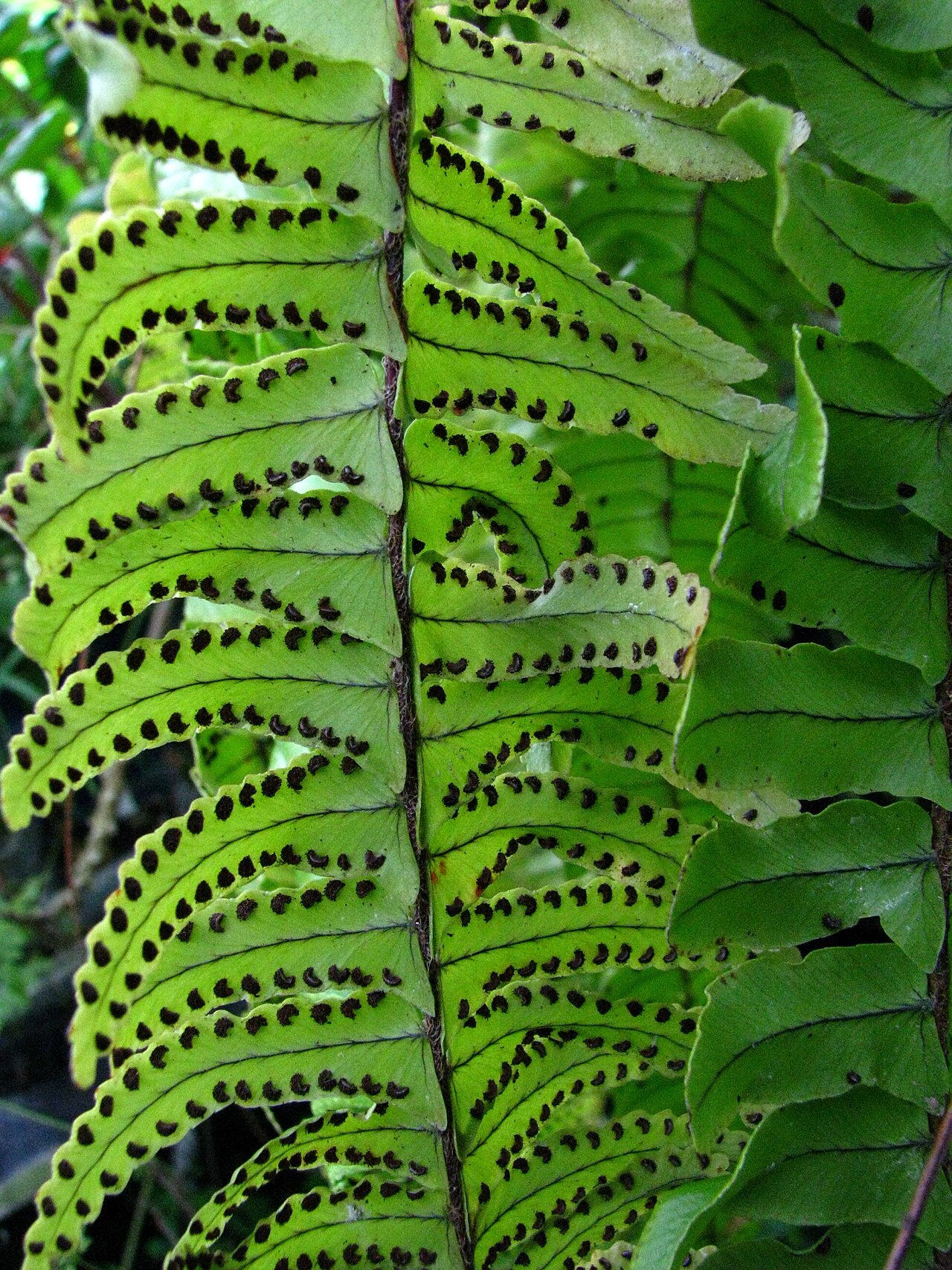
Fertile fronds carry round sori in a single row near the margin of each pinna, each covered when young by a kidney- or horseshoe-shaped flap (indusium). Spores are released in summer and fall. Many cultivated forms, including the classic arching ‘Bostoniensis’, rarely produce viable spores and are propagated by division and tissue culture.
Look-alikes
Tuberous sword fern (N. cordifolia) has shorter, narrower fronds with pinnae that often overlap, and it produces round tubers on its runners. Asian sword fern (N. brownii) has hairy fronds and pinnae with scattered pale hairs. Both are invasive in Florida, and in many parts of the state they are far more common in the wild than the native Boston fern. When in doubt, have plants identified by a local extension office or native plant society before buying or transplanting.
Quick Facts
| Scientific Name | Nephrolepis exaltata (L.) Schott |
| Family | Nephrolepidaceae (sword fern family) |
| Plant Type | Evergreen fern; terrestrial or epiphytic |
| Mature Height | 2–3 ft (fronds arching to about 5 ft long) |
| Mature Spread | 2–3 ft; spreads by runners into colonies |
| Growth Rate | Moderate to fast |
| Sun Exposure | Part shade to full shade (bright, indirect light indoors) |
| Water Needs | Moderate; keep soil evenly moist but not soggy |
| Soil Type | Moist, humus-rich soil; also limestone, leaf litter and palm trunks |
| Soil pH | About 5.0–7.5 |
| Bloom Time | None; reproduces by spores and runners |
| Flower Color | None (fern) |
| Fall Color | Evergreen; damaged by frost |
| Fruit | None; round sori with kidney-shaped indusia under the fronds |
| Deer Resistant | Moderate; deer seldom browse it heavily |
| USDA Hardiness Zones | 9–11 (houseplant elsewhere) |
Native Range
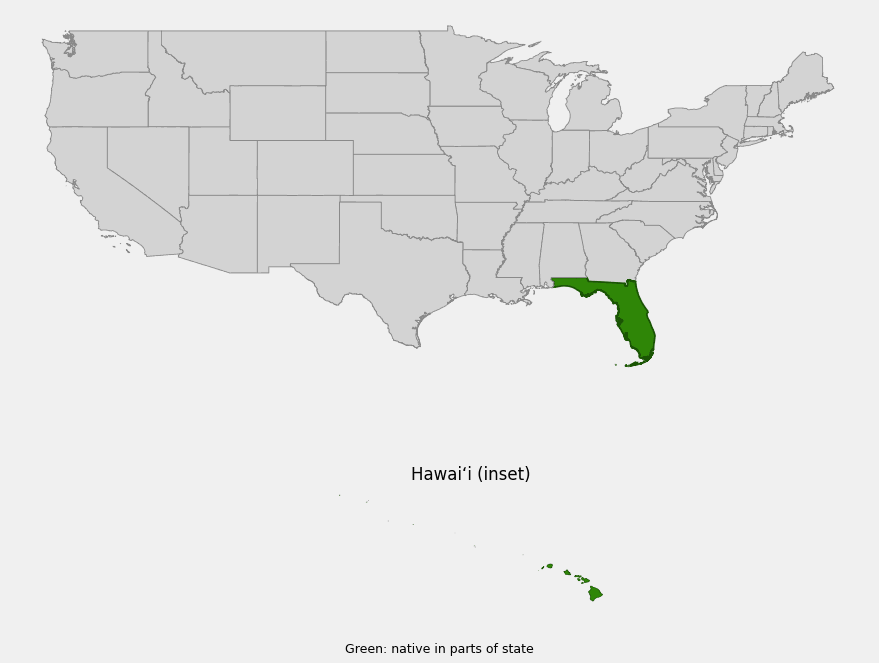
Boston fern is native to the tropical and subtropical Americas, from Florida, Mexico and the West Indies through Central America to northern South America. USDA PLANTS lists it as native in the continental United States (Florida), Hawaii, Puerto Rico and the U.S. Virgin Islands. The Lady Bird Johnson Wildflower Center also has records from Louisiana, Texas and Arizona, which may reflect plants escaped from cultivation rather than native populations.
In Florida it grows mostly in the peninsula, especially the central and southern parts, in hardwood hammocks, swamps, cypress and mixed swamp forests, floodplains and moist woods, both on the ground and as an epiphyte. It is particularly well known on the trunks of cabbage palms (Sabal palmetto), where it roots among the old leaf bases. Cold winters limit it farther north, though frost-killed plants often regrow from the rhizome in spring.
In Hawaii the native plant is Nephrolepis exaltata subsp. hawaiiensis, known in Hawaiian as ʻōkupukupu. It is indigenous to all the main islands except Niʻihau and grows in mesic to wet forests, on banks, cliffs and lava. It is often mixed with introduced sword ferns that have spread widely in the islands, so identification can be tricky there too.
📋 Regional plant lists featuring Boston Fern: North & South Florida · Hawaii
Growing & Care Guide
Boston fern is easy to grow outdoors in frost-free or nearly frost-free climates and is one of the most popular houseplants elsewhere. Outdoors in Florida and Hawaii, plant the native wild form or a known native source rather than the invasive look-alikes sometimes sold as “Boston fern.”
Light
Outdoors, give it part shade to full shade, such as under oaks or palms or on the shaded side of a building. Morning sun is fine, but hot afternoon sun scorches the fronds. Indoors, it needs bright, indirect light near a window; in dim rooms it becomes sparse and drops pinnae.
Soil & Water
Plant it in moist, humus-rich, well-drained soil, or in a loose potting mix with plenty of organic matter. Keep the soil evenly moist; it tolerates short dry spells better than many ferns but looks best when never allowed to dry out completely. Indoors it likes high humidity. Grouping plants, using a pebble tray or placing it in a bathroom helps in dry, heated homes.
Planting Tips
Outdoors, plant divisions or container plants in spring or the start of the rainy season, 2 to 3 feet apart, as a groundcover in shady beds or tucked into the leaf bases of cabbage palms with a little potting mix. In a basket or pot, choose a container with drainage holes and repot every year or two in spring when roots fill the pot.
Pruning & Maintenance
Remove brown or damaged fronds at the base. Outdoors, cut back frost-damaged plants in late winter; they usually regrow quickly from the rhizome. Feed potted plants lightly with a balanced, diluted fertilizer during the growing season. Watch indoor plants for scale insects and mealybugs. Outdoors, pull runners that spread where they are not wanted.
Propagation
The easiest way to propagate Boston fern is by division or by rooting the small plants that form at the ends of runners. Pin a runner onto a pot of moist mix and cut it once it has rooted. Wild plants can also be grown from spores sown on sterile, moist mix in a covered container, but this is slow, and most garden cultivars do not produce viable spores.
Landscape Uses
- Shade groundcover: for moist, shady beds under oaks and palms in South and Central Florida and Hawaii
- Palm trunk plantings: grows naturally among the old leaf bases of cabbage palms
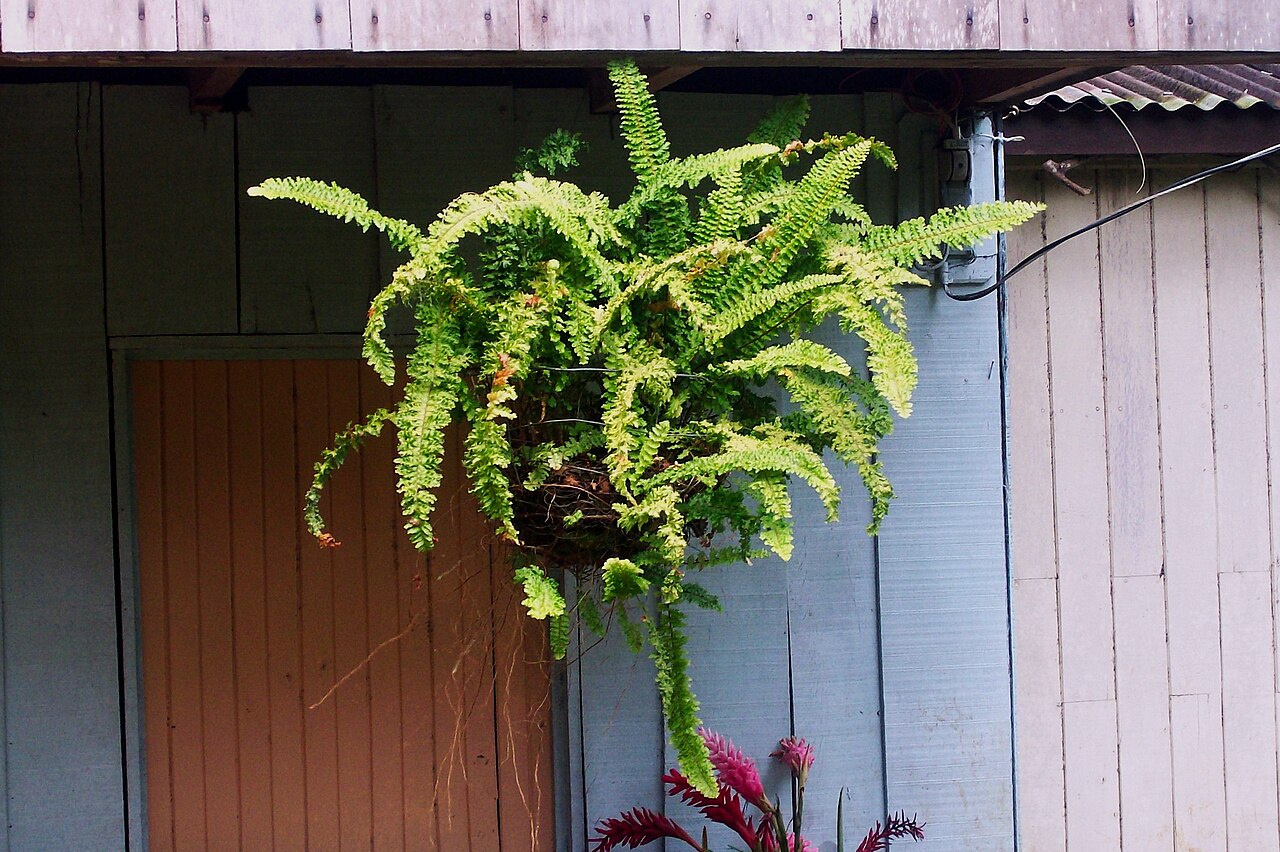
- Hanging baskets and containers: the classic porch and patio fern
- Houseplant: for bright, indirect light and humid rooms
- Hammock and woodland restoration: native-source plants for hardwood hammock understories within its range
Wildlife & Ecological Value
In its native habitats, Boston fern is part of the lush understory and epiphyte community of subtropical forests and swamps.
For Pollinators
As a fern, Boston fern has no flowers and offers no nectar or pollen. It does provide shelter for many small invertebrates in the humid microhabitat under its fronds.
For Birds
Its dense clumps and palm-trunk colonies provide cover and foraging habitat for small birds such as wrens, which hunt insects among the fronds. Some birds use dried fern fronds in their nests.
For Mammals
Boston fern is not a significant food source for mammals. It is generally considered non-toxic to cats and dogs, which is one reason it is a popular houseplant.
Ecosystem Role
As a groundcover and epiphyte, Boston fern helps hold moist forest soils, slows runoff and adds structure to the understory. On cabbage palm trunks it is part of a distinctive community of ferns, vines and other epiphytes. In Florida, the spread of invasive tuberous and Asian sword ferns into hammocks has displaced native plants, including native Boston fern populations.
Cultural & Historical Uses
Linnaeus described the wild plant as Polypodium exaltatum in 1759, and Heinrich Wilhelm Schott moved it into his new genus Nephrolepis in 1834. The famous Boston fern of the houseplant trade is a mutant form, ‘Bostoniensis’, with softer, more arching fronds. According to the most common account, it was discovered in 1894 in a shipment of wild ferns sent from Philadelphia to Boston. Another story recorded by the plant explorer David Fairchild credits Florida nurseryman John Soar with sending the plants to a friend in Boston. From those selections came dozens of cultivars, including frilly forms such as ‘Fluffy Ruffles’ and ‘Whitmanii’.
By the early twentieth century Boston ferns were a fixture of Victorian-style parlors and front porches, and they remain one of the most widely sold houseplants in the world. In Hawaii the native subspecies, ʻōkupukupu, is grown in native-plant gardens and landscapes as a locally adapted alternative to introduced sword ferns.
Boston fern is also a fixture of “air-purifying plant” lists. Those lists trace back to NASA-funded research in the late 1980s and later tests by B.C. Wolverton, in which plants removed pollutants such as formaldehyde from small, sealed chambers. Later studies have shown that houseplants have only a small effect on air quality in real homes compared with ventilation, but Boston fern remains a rewarding, humidity-loving plant to grow.
Frequently Asked Questions
Is Boston fern a native plant?
Yes. The wild species is native to peninsular Florida, Puerto Rico and the U.S. Virgin Islands, and a native subspecies grows in Hawaii. The arching hanging-basket forms are cultivars selected from it. In Florida, be careful not to confuse it with the invasive tuberous sword fern and Asian sword fern.
How do I tell native Boston fern from tuberous sword fern?
Tuberous sword fern (Nephrolepis cordifolia) forms small round tubers on its runners and has shorter, narrower fronds with crowded, often overlapping pinnae. Native Boston fern has no tubers and longer fronds with pinnae that usually stand slightly apart.
Can I grow Boston fern outdoors?
Outdoors year-round in USDA zones 9 to 11, in part to full shade with moist, rich soil. It may be damaged by frost but usually regrows from the rhizome. In colder areas, grow it in a pot and bring it indoors before frost.
Why is my Boston fern dropping leaves?
The most common causes are dry air, soil that dries out between waterings, too little light, or a pot full of roots. Move it to bright, indirect light, keep the soil evenly moist, raise the humidity and repot if it is rootbound.
Is Boston fern safe for pets?
Boston fern is generally listed as non-toxic to cats and dogs, which makes it a popular choice for pet-friendly homes. As with any plant, large amounts eaten may still upset a pet’s stomach.

Looking for a nursery that carries Boston Fern?
Browse our native plant nursery directory: Florida & Hawaii